Samuel Dreaded a Second Esau in David's Red Skin
Seven sons of Jesse crossed the yard while Samuel held a full horn. Heaven said no to every one of them, and the youngest was still with the sheep.
Table of Contents
 Click for full size
The Horn in Bethlehem
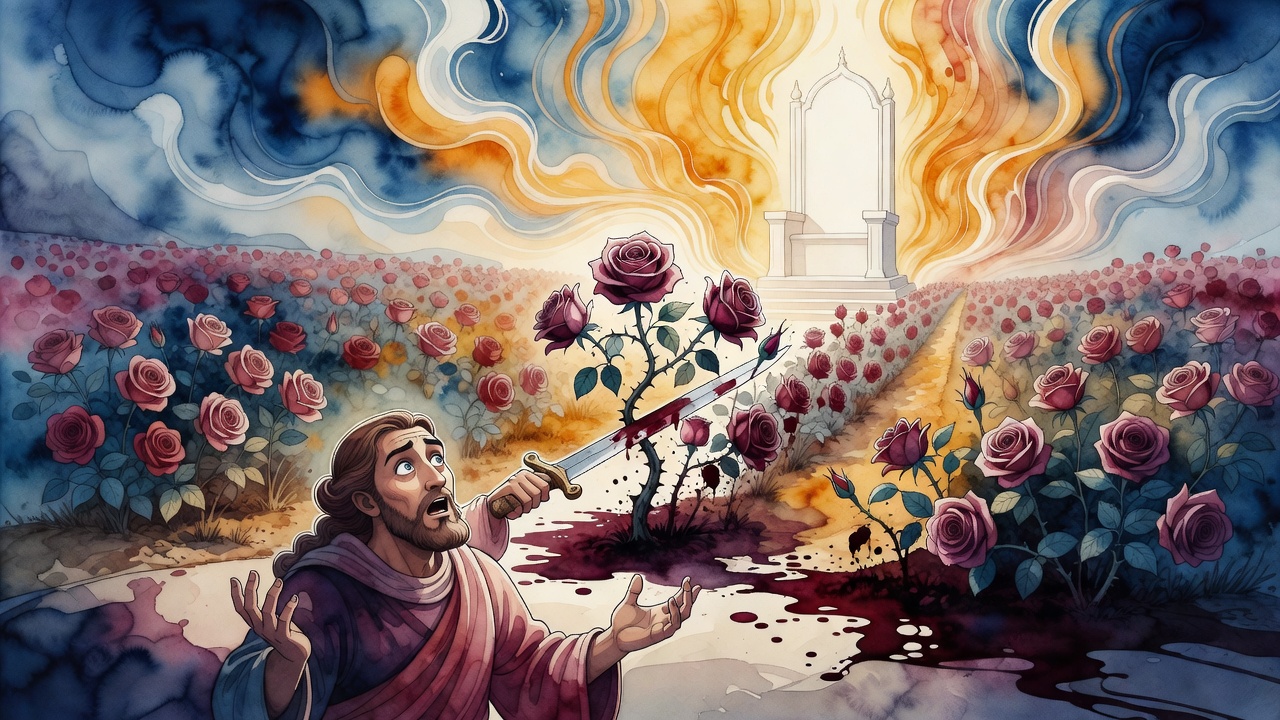
Samuel filled his horn with oil and went down to Bethlehem, because a voice had said, "I have provided Me a king among his sons." He carried the horn past the elders of the town. They trembled when they saw the old prophet coming, and he did not tell them why. He came to the house of Jesse and set the horn down among the sons, and he waited to be shown which of them heaven had chosen.
He was sure he would know the king by looking. He had already anointed tall Saul, a head above every man in Israel, and the height had seemed like proof. So when the sons of Jesse came before him in the yard, Samuel searched their faces for the same sign. Dust stuck to the oil on the rim of the horn. He kept his hand near it.
Seven Sons Pass
Eliab came first, the eldest, broad and straight. Samuel's heart leapt. "Surely the Lord's anointed is before Him," he thought, and he reached toward the horn.
"Look not on his appearance, nor on the height of his stature," God said, "because I have rejected him." Eliab was a hard man, quick to anger. A king who rules by his own heat scorches the people he governs. Man looks at the eyes. God looks at the heart. Samuel drew his hand back as if the horn had burned him.
Abinadab passed. Not this one. Shammah passed. Not this one. Seven sons of Jesse crossed before the prophet, each one a man a prophet might crown, and heaven refused every one. Samuel stood in the farmyard with a full horn and no king. The certainty of his own eyes lay in pieces at his feet. "Are these all the lads?" he asked. Jesse answered, "There remains yet the youngest, and he is tending the flock." "Send and fetch him," Samuel said, "for we will not sit down till he come."
The Boy Came In Red
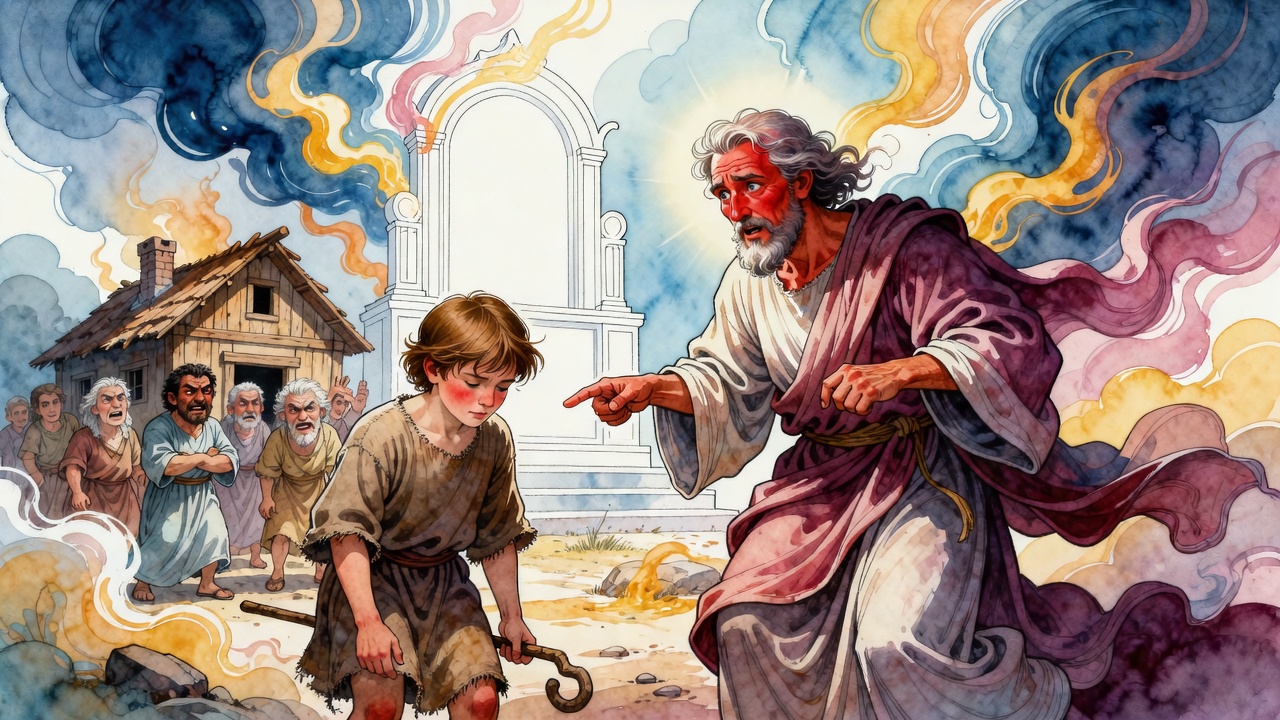
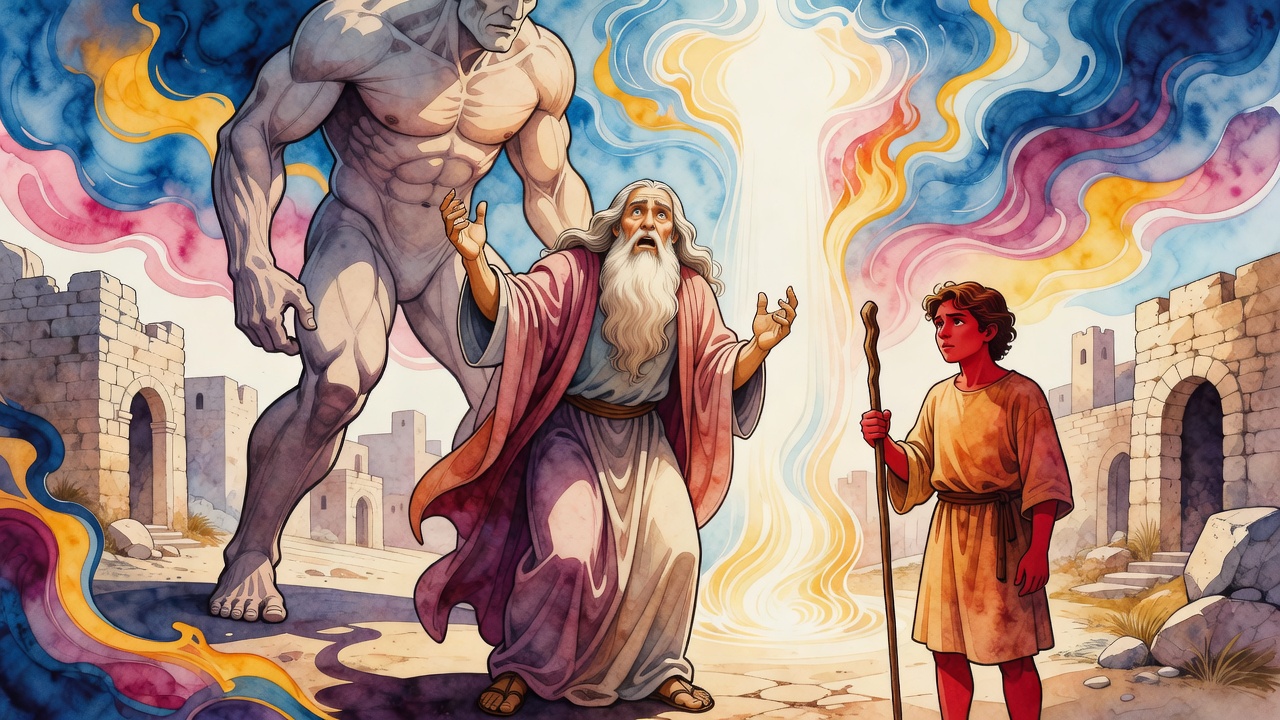
They sent to the pasture. The boy came in from the sheep with the smell of the field still on him. He was ruddy. The blood stood bright in his cheeks, red as a wound, red as fire in a dry month.
Samuel's own face went hot. He rose to his feet in dread. He had seen that red once before in the memory of Israel. "And the first came out ruddy" (Genesis 25:25). Esau, the hunter, the man who lived by the sword and filled the field with blood. "This one too is a shedder of blood," Samuel said. The horn stayed in his fist. He would not pour holy oil onto another Esau. His hand would not move. For a long breath the yard was only that color and that refusal.
Beautiful Eyes
"With beautiful eyes," God said. Look again. Look longer. "Esau kills by his own consent. This one kills only by the consent of the Sanhedrin." The red in Esau was appetite. The red in the boy was a blood that would wait for judgment, that would spill only after the court of the law had spoken. The same color, two hearts, and only God could tell them apart.
"Arise," God said. "Anoint him, for this is he." The word Arise carried a second command. Rise from before him. Stand up. You are in the presence of a king. Samuel rose. He and Jesse, the two great ones of that generation, had not sat down in the whole hour of waiting. Now they sat only when the boy stood between them, so the youngest son of the house of bread was set between a prophet and a father.
Samuel lifted the horn. The oil ran down over the red hair, over the beautiful eyes, into the collar of a shepherd's shirt. "This is he" in this world, God said, and "this is he" in the world to come.
The Yard Began to Sing
As the oil ran, a voice started in the yard, then another, as if the house had been given lines and could not keep them in.
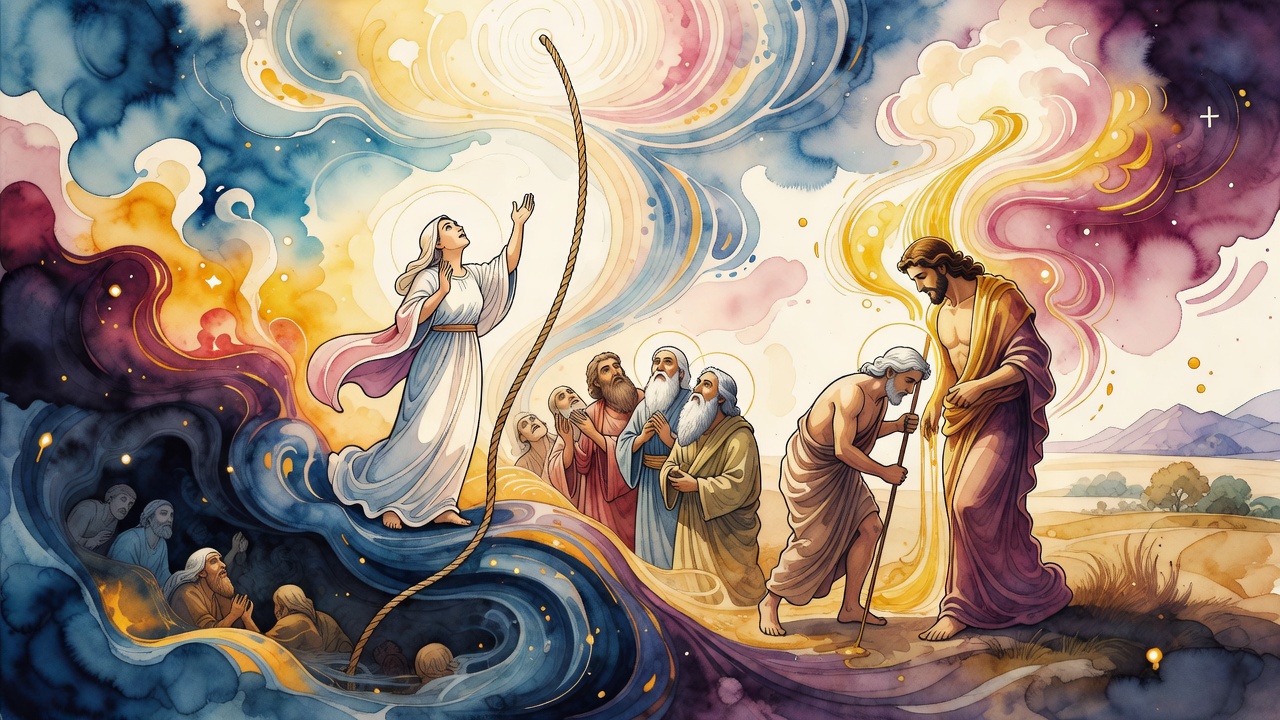
David, the anointed boy, spoke first. "I thank You, for You have answered me." Jesse answered, looking at the son he had left in the field, "The stone the builders refused has become the head of the corner." The brothers who had all been passed over said, "This is from the Lord." Samuel said, "This is the day the Lord has made. Let us rejoice and be glad in it."
The brothers cried, "Please, O Lord, save now." Jesse cried, "Please, O Lord, grant success now." Samuel blessed the boy, "Blessed is he who comes in the name of the Lord." All of them together, prophet and father and refused brothers, said, "We bless you from the house of the Lord." David lifted his voice over theirs. "You are my God, and I thank You." The whole house answered as one, "Give thanks to the Lord, for He is good, for His kindness endures forever."
The words for Me had gone out over the boy when God first sent Samuel south. Whatever heaven calls for Me does not move again. The priests are for Me. The Levites are for Me. The land is for Me. The anointing oil is for Me. Now a king was for Me, and a king called for Me does not budge, not in this world and not in the world to come. The oil dried on red hair in a Bethlehem yard, and the kindness that had chosen the least of eight sons stayed, like the last line they sang, without an end.
← All myths