5 min read

The Letter Zayin Asked to Begin Creation and God Refused the Request

The letter Zayin begged to begin creation with memory. God answered with Baal Peor, while Torah still chose careful words for Israel's sins.

Curated by Arthur · Told by Maggid ·
Table of Contents
  1. The Daughters of Moab
  2. How Torah Speaks of Sin
  3. Poverty, Curse, and the Land
  4. Standing Above the Curse

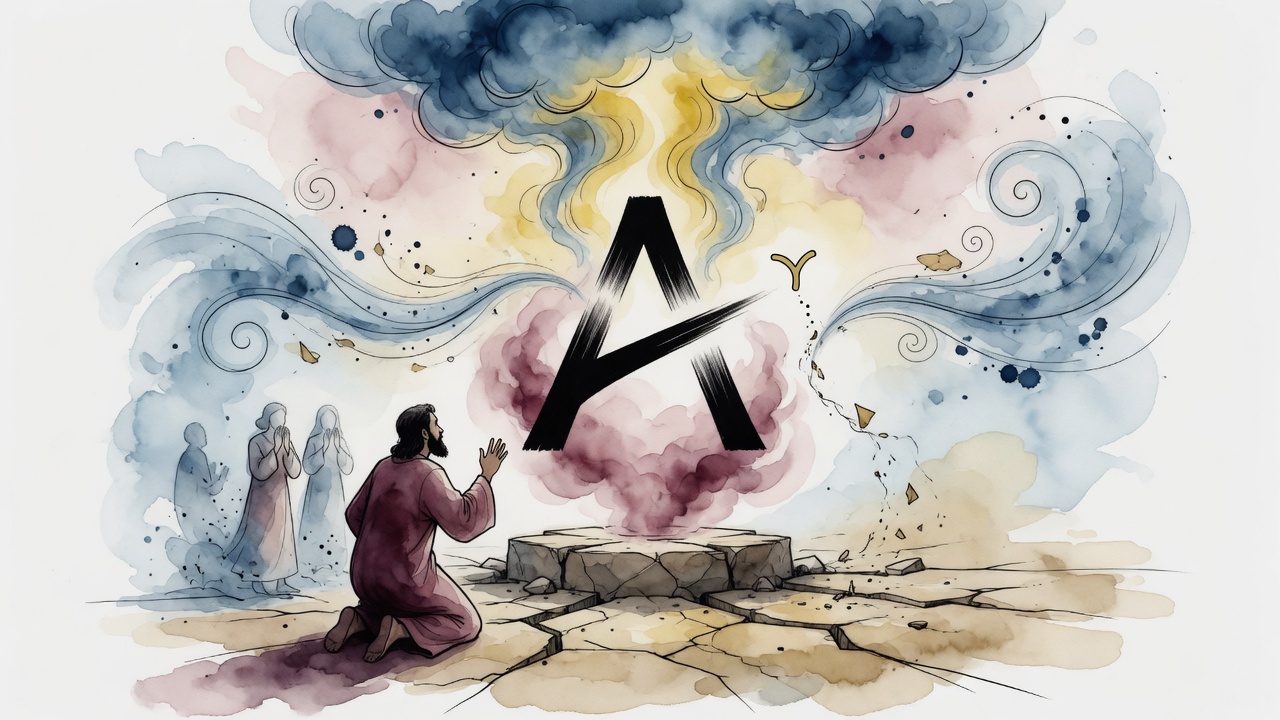
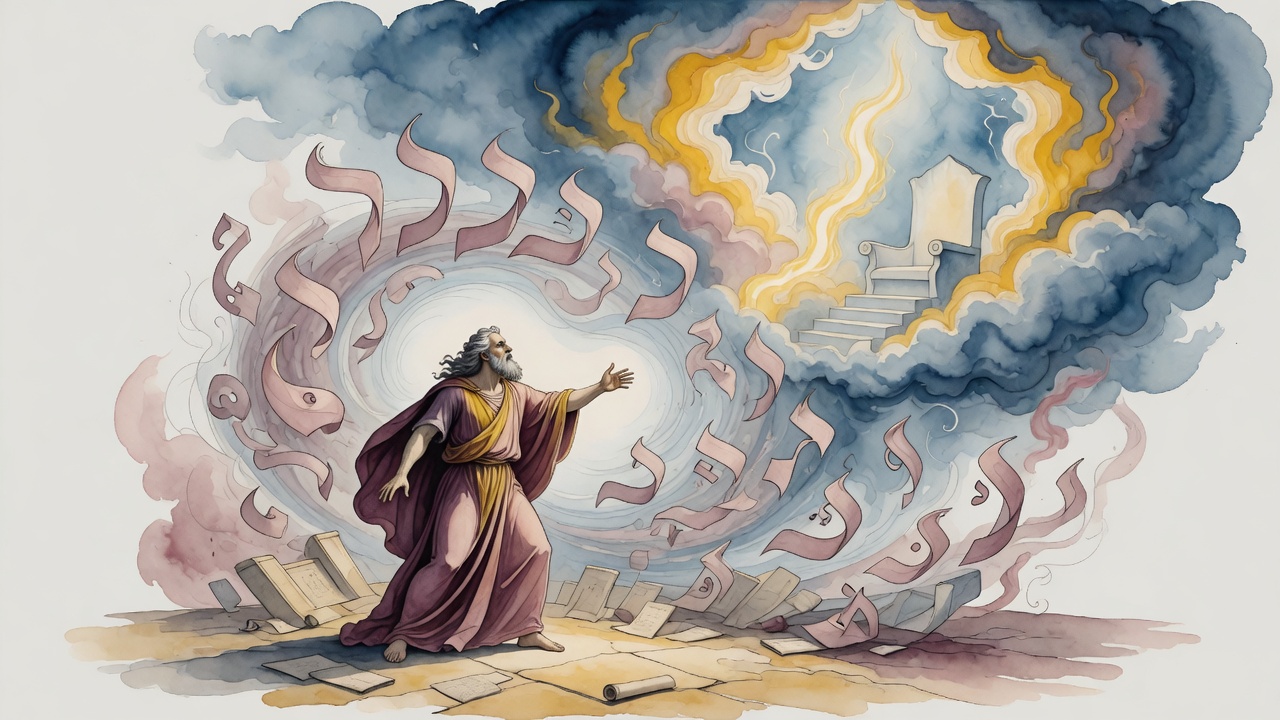
Zayin stepped forward among the letters and made its case for creation. Begin with me, it said. I am the letter of memory. I open the Name remembered from generation to generation. I open the wonders God makes remembered. Let the world start in holy recall, not in silence, not in chaos without a ledger.

The Letter Zayin Asked to Begin Creation and God Refused the Request Click for full size

The other letters waited. Zayin stood as if memory alone could keep a world from falling. God answered with a harder truth about the same shape of sound. The letter that wants to open memory also opens the language of going astray. The same path that can hold remembrance can hold betrayal. Creation would not begin with a letter that pretends the double edge is only one edge.

The Daughters of Moab

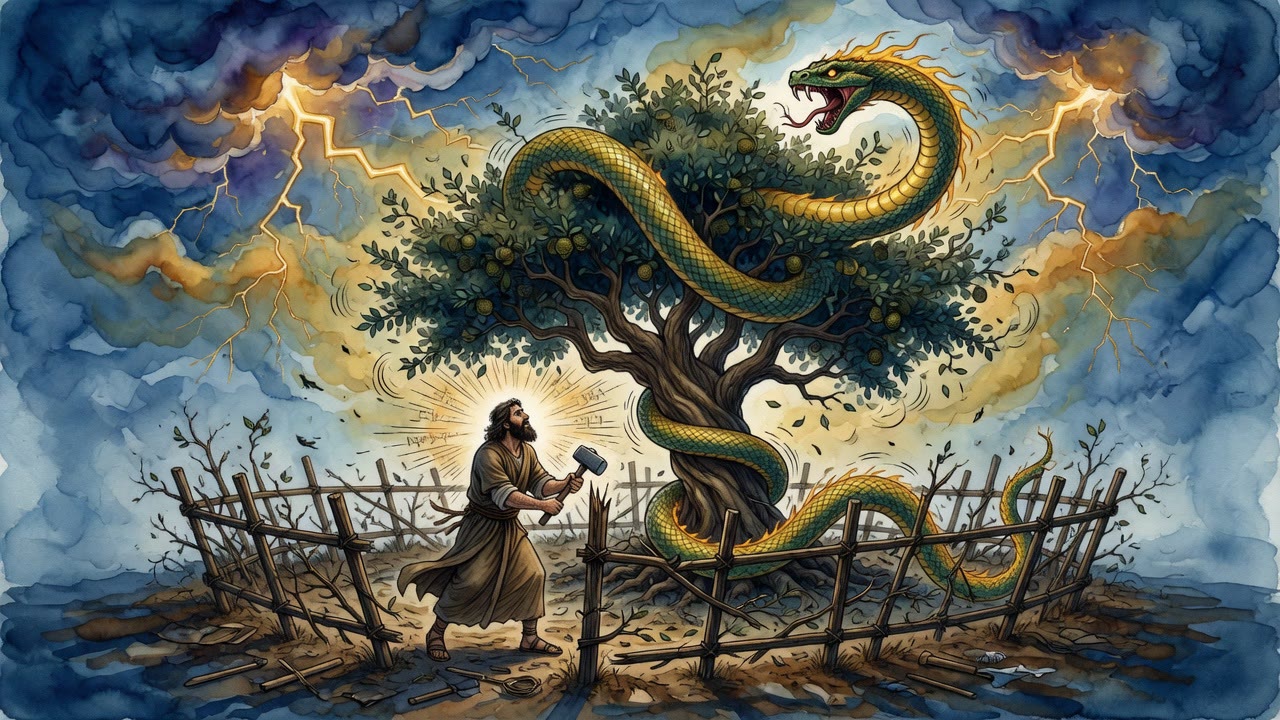
Israel turned toward the daughters of Moab, and the camp that had survived sea and desert stumbled into a different hunger (Numbers 25). Baal Peor rose like a cheap altar at the edge of the covenant. Men who had seen manna and cloud walked into a feast that asked for less courage and more forgetting. Twenty-four thousand fell in the plague that followed. Bodies that had crossed a sea on dry ground now fell in the dust of a foreign threshold.

Zayin's offer of sacred memory and Zayin's doorway into straying arrived in the same generation, in the same body of a people that could not keep one without risking the other. The letter did not cause the plague. The letter named the double edge. Memory is not automatic virtue. The mouth that recalls the Exodus can also learn the songs of a foreign feast if the heart grows bored with awe.

Phinehas rose with a spear. The plague stopped. The count of the dead remained. Memory had work left to do that was not pretty.

How Torah Speaks of Sin

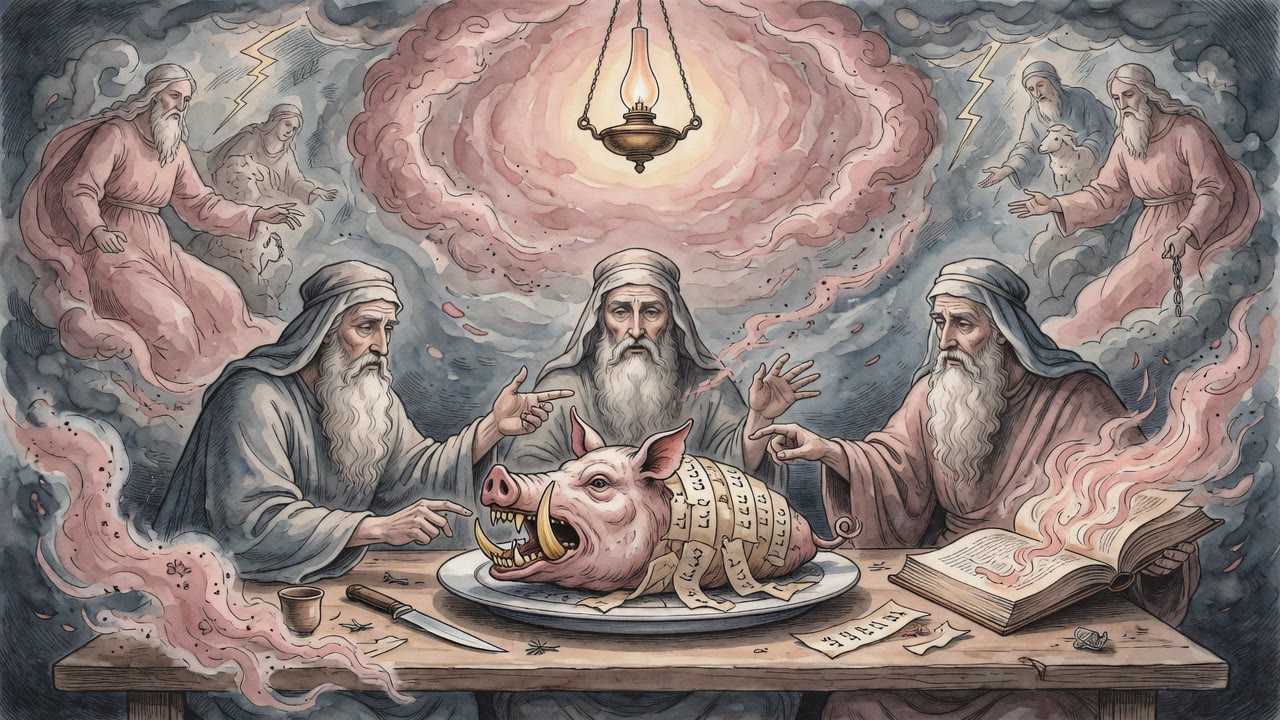
When the Torah later speaks of offerings, of something honorable, it says when a man among you sacrifices (Leviticus 1:2). "Among you" gathers the nation into the merit. The good act is framed as belonging to the people. When the subject turns shameful, skin disease on the flesh (Leviticus 13:2), the phrase "among you" drops away. The text will not pin a private affliction to the whole people as if the camp itself were the disease.

Rabbi Yehoshua of Sikhnin in the name of Rabbi Levi heard that care as love. Celebrate the good with inclusive language. Name the hard thing without drafting the entire people into guilt they did not earn. Speech itself becomes a form of justice between the individual and the camp.

Poverty, Curse, and the Land

Rabbi Shmuel bar Nahman tracked the same tenderness into Deuteronomy. There will be no indigent among you (Deuteronomy 15:4) holds a hope inside the people, a future tense of dignity. When reality forces the harder line, the poor will not cease from the midst of the land (Deuteronomy 15:11). Poverty is framed as a condition of the land, not as the people's essence. The verse moves the wound to the ground so the nation is not permanently named as the wound.

At the mountains of blessing and curse the language shifts again. These shall stand for the curse (Deuteronomy 27:13), not to curse the people. These shall stand to bless the people (Deuteronomy 27:12). Blessing aims at faces. Curse is held at a distance, as a category, not as a sentence poured over a nation's head in the same intimate grammar.

Standing Above the Curse

Rabbi Berekhya, Rabbi Helbo, and Rabbi Ami in the name of Rabbi Ilai read "for the curse" as "atop the curse." The righteous stand above calamity. They overcome it. The Hebrew word can carry both meanings, and the midrash chooses the one that keeps hope on its feet when plague and poverty and private shame all press at once.

Baal Peor was a real fall, counted in thousands. The Torah that records such falls still chooses words that refuse to make failure Israel's permanent name. Zayin wanted creation to begin with memory. God allowed memory and straying to share a letter so that neither would be forgotten: the plague that memory failed to prevent, and the careful speech that still shields a people while it tells the truth about what the people did.

A scribe copying the plague narrative paused before writing the number twenty-four thousand. He also paused before the soft phrasing of later laws that refuse to call a whole people by a single person's shame. Both pauses were acts of memory. Zayin had asked for holy recall. The ink gave him that, and the bill that comes when recall fails. A letter stands at the beginning of a petition. A plague stands at the edge of a camp. Between them runs a tradition that will not let language become either flattery or a permanent curse.


← All myths
From the tradition

Sources

2 sources

The texts behind this telling. Some cards carry a translation of the source; others are our own retelling of it, and each card says which. Every card links out to the original.

Aleph Bet of Rabbi Akiva, Version B, letter ZayinOtzar Midrashim, Aleph Bet of Rabbi Akiva

Translation of the source text.Hebrew Wikisource transcription of Aleph Bet of Rabbi Akiva, Version B, based on Eisenstein, Otzar Midrashim (CC-BY-SA 4.0) · CC-BY-SA

Afterward Zayin entered and stood before the Holy One, blessed be He. It said, "Master of the universe, do You wish to create Your world with me? For through me Your remembrance is called from generation to generation, as it says, 'This is My name forever,' and so on (Exodus 3:15). Not only that, but through me He is destined to make a remembrance of His wonders." The Holy One, blessed be He, answered and said to it, "No." It said to Him, "Why?" He said to it, "Because through you sexual betrayal is destined to come into the world, as it says, 'The land will surely go astray from following the LORD' (Hosea 1:2). Not only that, but through you Israel is destined to go astray with the daughters of Moab, and twenty-four thousand of them will fall, as it says, 'The people began to go astray,' and so on (Numbers 25:1), and it says, 'Those who died in the plague were twenty-four thousand' (Numbers 25:9). How shall I create the world with you?" Immediately it went out from before Him downcast.

Full source
Vayikra Rabbah 2:6Vayikra Rabbah

Retold in our words. Read the original at the link below.The Sefaria Midrash Rabbah, 2022 · CC-BY

Vayikra Rabbah, a Midrash – a collection of rabbinic teachings that explore the deeper meanings of the Torah – touches on just this. It explores how the Torah itself seems to choose its words carefully when discussing the Jewish people, particularly when dealing with less-than-ideal situations.

Rabbi Yehoshua of Sikhnin, quoting Rabbi Levi, points out a striking example. When the Torah speaks of offerings, of something honorable, it says, "When a man among you sacrifices" (Leviticus 1:2). The phrase "among you" includes everyone, sharing in the merit. But when it comes to something potentially shameful, like skin disease in (Leviticus 13:2), the text changes. It doesn't say, "A man among you, when he will have on the skin of his flesh.." but simply, "When he will have on the skin of his flesh.."

Why the omission? To avoid casting aspersions on the entire nation, to avoid generalizing a negative trait to the whole community. It's a subtle but powerful distinction. The text subtly shields the collective from individual failings.

Rabbi Shmuel bar Nahman brings further examples. Consider the verses about poverty in Deuteronomy. It's written: “However, there will be no indigent among you” (Deuteronomy 15:4). A beautiful aspiration! But then, a few verses later, when acknowledging the reality of poverty, it doesn't say "For the indigent will not cease from among you" but rather, "For the indigent will not cease from the midst of the land” (Deuteronomy 15:11). Again, a shift in language. Poverty is acknowledged, but it's framed as a condition of the land, not inherently a characteristic of the people.

Another example cited by Rabbi Shmuel bar Nahman comes from Deuteronomy 27. When listing those who will pronounce the curses, the Torah doesn't say, "These shall stand to curse the people," but "These shall stand for the curse" (Deuteronomy 27:13). But when it comes to the blessing? "These shall stand to bless the people" (Deuteronomy 27:12). The blessing is actively directed towards the people, while the curse is more generally "for" the concept of a curse.

This careful wording reveals a deep sensitivity to the collective reputation and well-being of the Jewish people.

But there's another layer to this, a more hopeful interpretation offered by Rabbi Berekhya, Rabbi Helbo, and Rabbi Ami in the name of Rabbi Ilai. They suggest that when calamity comes to the world, the righteous actually overcome it. They derive this from that same verse, "These shall stand for [al] the curse." The Hebrew word al can mean "for," but it also means "atop" or "above." So, they interpret the verse to mean that the righteous stand above the curse, they overcome it.

This is a powerful idea. Even in the face of adversity, even when things seem bleak, the righteous – those who strive to live ethically and morally – have the power to transcend the negativity, to rise above the challenges.

So, what does all this mean for us today? Perhaps it's a reminder to be mindful of the language we use when speaking about our communities. To celebrate the good, to acknowledge the challenges, but to always strive to see the potential for overcoming them. And maybe, just maybe, to remember that even in the darkest of times, we have the capacity to stand "above the curse," to create a better future.

Full source