6 min read

The Lips That Keep Murmuring Torah in the Grave

On the eighth string of a psalm the sages trace where the soul goes, and find the righteous still teaching Torah with murmuring lips inside the grave.

Curated by Arthur · Told by Maggid ·
Table of Contents
  1. The Student Who Hid in the Study Hall
  2. The Eighth String and the Plea Against Wrath
  3. The Way of Life That Does Not End at Sheol
  4. The Words That Keep a Dead Man Speaking
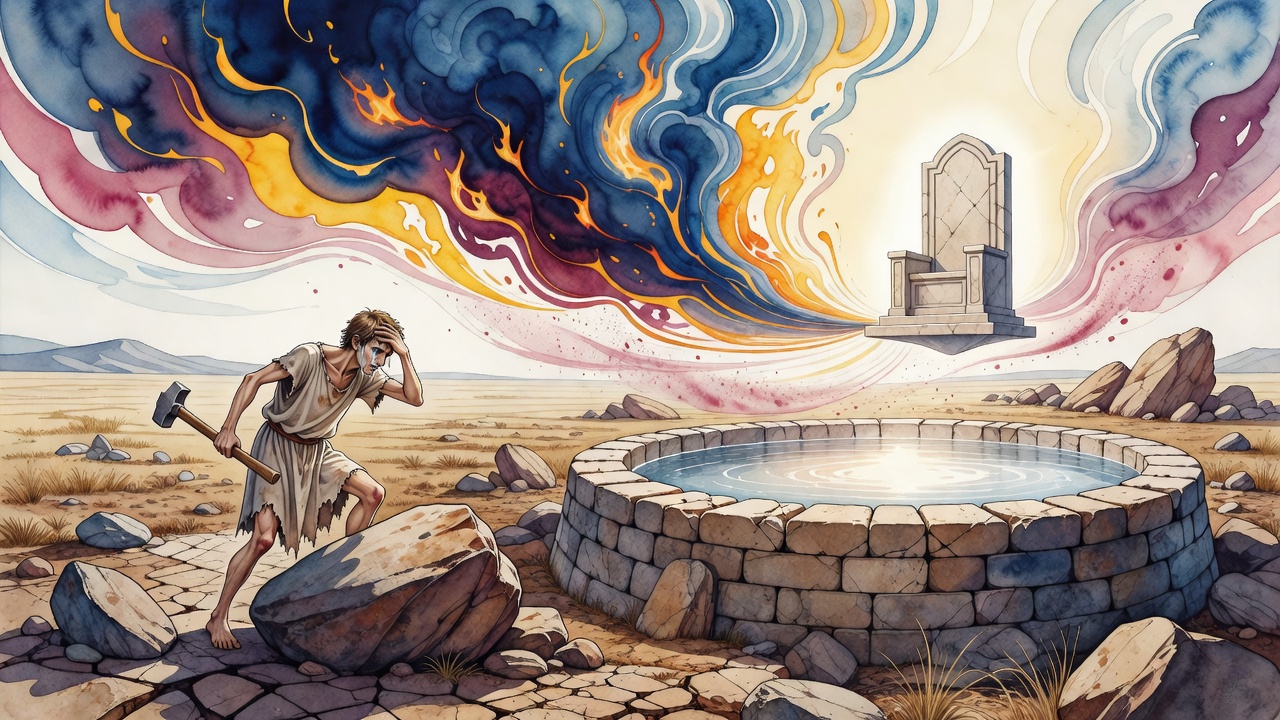
The Lips That Keep Murmuring Torah in the Grave Click for full size

The Student Who Hid in the Study Hall

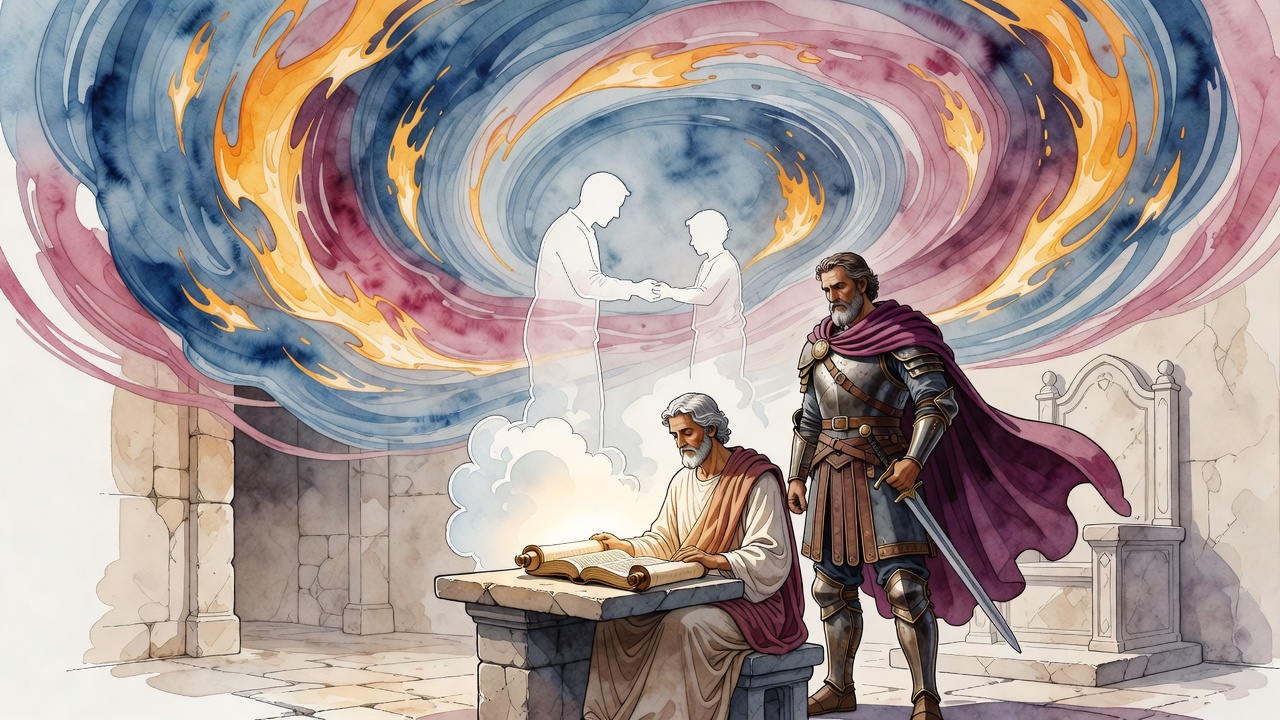
In the study hall at Tiberias, old Rabbi Yochanan walked leaning on the shoulder of his student Rabbi Yaakov bar Idi. Across the room Rabbi Elazar spotted his teacher coming and slipped behind a pillar to hide.

Yochanan felt the slight and named it aloud. "This man from Babylon has done two things to me," he said. "He did not stand up when I entered, and he does not repeat my teachings in my name."

Yaakov bar Idi tried to smooth it over. "In Babylon the lesser do not rise before the greater," he said. "They keep the verse, 'The young men saw me and hid themselves, and the aged rose up and stood.' He hid out of honor, not scorn."

"Then why," Yochanan pressed, "does he never say a teaching in my name?"

Yaakov bar Idi answered with a story of the hall itself. Here Rabbi Meir had once sat and expounded, and he would repeat teachings in the name of Rabbi Yishmael, never in the name of Rabbi Akiva, though everyone knew Meir was Akiva's own disciple. "And all the world knows," he said, "that Elazar is the disciple of Yochanan. His silence already says whose he is."

Then he leaned closer to the old man. "Would Yochanan really nurse a grievance over such a thing? Even David, king of Israel, once begged God for exactly this. He prayed, 'I will dwell in Your tent forever.'"

The Eighth String and the Plea Against Wrath

Long before the sages argued in Tiberias, David had already stood at the edge of that same fear. He set his harp against his shoulder. The psalm marked "upon the eighth," the sages said, was tuned to the string that sounds when every other has gone silent, the one a man reaches for when he is thinking about his own death.

On that string David did not sing triumph. He sang as a man afraid of being corrected past all bearing. "Rebuke me not in Your anger," he prayed. Anger and wrath, he knew, were the two escorts who walk a person down to death, and he begged instead for the measured hand, the discipline that corrects without destroying. "Correct me, but in due measure, not in Your anger, lest You bring me to nothing."

The Way of Life That Does Not End at Sheol

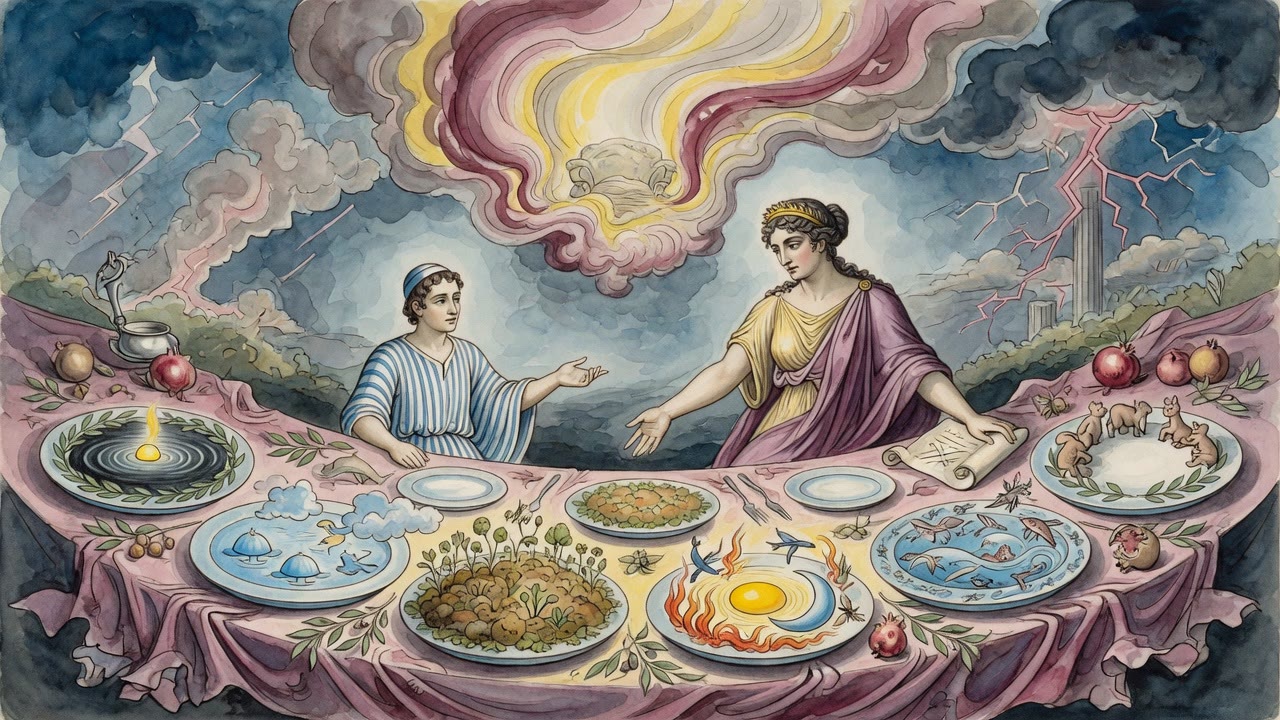
David did not stop at the fear of the grave. In another psalm he pressed further and asked for something almost impossible. "You will not abandon my soul to Sheol," he sang of the land of the dead, "nor let Your pious one see the Pit." The sages caught on that word, pious, hasid, and asked who had earned it. One answered plainly: whoever hears himself insulted and holds his tongue is called pious, and David, who heard his own disgrace and stayed silent, was that man.

Then came the request that mattered most. "Teach me the way of life," David asked, and the sages crowded the question like men who had each found a different door in one wall. Rabbi Yudan said the way of life was the fear of the Lord, which adds days to a person. Rabbi Azariah said it was the Torah, a tree of life to all who hold fast. Rava said it was to do good and eat well, for pleasantness waited at God's right hand. Two others pointed at the study benches themselves, at the students who come to learn Torah and the scribes who teach children their letters, the ones set to sit in the shadow of the Holy One.

One more voice added the strangest reading. Do not read the verse as "satisfied with joy," Rabbi Avin said, but as "satisfied sevenfold," for there are seven ranks of the righteous who will see the face of the Divine Presence in the world to come, bright as the sun when it goes out in its strength.

The Words That Keep a Dead Man Speaking

This was what David had been reaching for when he prayed to dwell in God's tent forever. In Yochanan's name the sages taught what the king had truly asked: "Let me merit that my words be spoken in the synagogues and the houses of study." Not marble. Not a monument. Words in living mouths.

What good would that do a man already in the ground? Bar Nazira's answer turned the whole quarrel over honor into something enormous. Whoever repeats a teaching in the name of the one who first said it, he taught, makes the dead man's lips move in his grave. He read it out of the Song of Songs: "moving gently the lips of those that are asleep." A name spoken aloud in the study hall runs down like juice from a pressed cluster of grapes, and far below, in the dark, the mouth that first shaped those words stirs and works them again.

Two more sages could not leave the image alone. It is like a man who has drunk spiced wine, said one, and like old wine, said the other. He has swallowed the cup down, and still the taste lingers on his tongue long after it is empty.

Back in Tiberias, Elazar stayed behind his pillar, and the small quarrel had grown teeth. To rise when a teacher entered, to say a teaching in his name, was no courtesy owed to an old man's pride. It was the one gift a student could hand across the grave, a way to keep Yochanan's lips at work after the benches emptied and the teacher lay in the ground. David had reached for the same mercy on the eighth string, in a psalm about dying, and the answer had come back. The way of life did not end at Sheol. It ran through the study hall, along the breath of every man who spoke the words and still remembered whose they were.


← All myths

From the tradition

Sources

3 sources

The texts behind this telling. Some cards carry a translation of the source; others are our own retelling of it, and each card says which. Every card links out to the original.

Midrash Tehillim 16:10Midrash Tehillim

Retold in our words. Read the original at the link below.Rabbi Mike Feuer, Jerusalem Anthology · CC-BY

Midrash Tehillim, a collection of rabbinic interpretations on the Book of Psalms, offers a fascinating glimpse into this very question, and it all starts with a single verse: “For you will not abandon my soul to Sheol; you will not allow your pious one to see the Pit” (Psalms 16:10).

The Midrash (rabbinic interpretive commentary) immediately latches onto the phrase “pious one.” Who is this hasid? It suggests that the Holy One, blessed be He, can be considered the "pious one," referencing (Jeremiah 3:12), "For I am pious, says the Lord." But it doesn’t stop there. David himself also used this term, as we see in (Psalms 86:2), "Guard my soul, for I am pious."

Rabbi Alexandri takes it in a truly human direction. He says that anyone who hears themselves being disgraced and remains silent is called a pious one. It's not about being perfect or performing great feats, but about the strength to hold your tongue in the face of personal attack. The Midrash points out that David heard his disgrace and remained silent, therefore he is called a pious one. Humility, it seems, is a key ingredient.

The Midrash then pivots to the next verse: "Teach me the way of life." What is the way of life? How do we find it? David, according to this Midrash, asks God this very question. And the answers, as you might expect, are many-sided.

Rabbi Yudan suggests that God's response is, "You desire life? Look to the fear of the Lord, for fear of the Lord adds days." Fear of the Lord, in this context, isn’t about being scared, but about a deep reverence and awareness of God's presence.

Rabbi Azariah offers another perspective. He suggests that God tells David, “You desire life? Look to the Torah, for it is a tree of life to those who hold fast to it." (Proverbs 3:18) The Torah, then, becomes a pathway to a long and meaningful life.

Rava adds another layer. According to him, God's answer is, "You desire life? Do good and eat well, for pleasantness is in your right hand, and victory." This connects a life of goodness with tangible blessings.

And then we have two Amoraim – rabbinic scholars from the Talmudic period – offering different explanations. One says "the way of life" refers to those who come to study Torah, referencing (Deuteronomy 33:2): "From His right hand came a fiery law for them." The other says it refers to scribes and teachers of children, who are destined to dwell in the shadow of the Holy One, blessed be He, echoing the sentiment of (Psalms 16:8), "I have set the Lord always before me."

Rabbi Avin offers yet another interpretation, connecting "the way of life" to the proper reading of the Torah on Rosh Hashanah (the Jewish New Year) and Yom Kippur, and the seven species of the Land of Israel.

The Midrash concludes by exploring the phrase "Satiated with joy from Your countenance." But here's a twist: Rabbi Avin tells us, "do not read 'satiated', but rather 'satiated sevenfold.'" These are the seven classes of righteous individuals who will see the face of the Divine Presence in the World to Come, and the verse should read not “fullness” of joys, but “sevenfold”. It also alludes to the verse in (Judges 5:31), "And those who love Him are like the sun when it goes forth in its might."

So, what does it all mean? This short passage from Midrash Tehillim offers a tradition of ideas about piety, life, and connection to the Divine. It suggests that the "way of life" isn't a single path, but a confluence of humility, reverence, Torah study, good deeds, ritual, and a deep connection to community and tradition. And perhaps, most importantly, it reminds us that even in moments of disgrace, we have the opportunity to choose silence, and in doing so, become a little more hasid, a little more pious.

Full source
Midrash Shmuel 19:4Midrash Shmuel

Translation of the source text.Midrash Shmuel, Krakow 1893, Public Domain, on Sefaria · CC-BY-SA

"And Samuel did that which the LORD spoke, and came to Bethlehem; and the elders of the city came to meet him trembling, and said: 'Comest thou peaceably?'" (I Samuel 16:4). Rabbah inquired into the welfare of Rabbah. Once Rabbi Yochanan was leaning upon Rabbi Yaakov bar Idi, and Rabbi Elazar saw him and hid himself from before him. He said: "This Babylonian has done two things to me. One, that he did not rise before me; and the other, that he did not report a teaching in my name." He said to him: "Such is the custom in Babylon, that the lesser does not stand before the greater, for they uphold this verse: 'The young men saw me and hid themselves, and the aged rose up and stood' (Job 29:8)." He said to him: "And why did he not report the teaching in my name?" "You pass before the image of Ridos." He said to him: "What is it to pass before it?" He said to him: "How do you apportion it honor, pass before it and put out its eye." "You pass before a certain house of study." He said to him: "Here Rabbi Meir used to sit and expound, and he would report a teaching in the name of Rabbi Yishmael, but he would not report a teaching in the name of Rabbi Akiva." He said to him: "All the world knows that Rabbi Meir was the disciple of Rabbi Akiva." He said to him: "And all the world knows that Rabbi Elazar is the disciple of Rabbi Yochanan." He said to him, Rabbi Yaakov bar Idi: "You know how to appease him! Is it possible that Rabbi Yochanan would be particular about these matters? Even David sought mercy concerning them: 'I will dwell in Thy tent for ever' (Psalms 61:5)." Rabbi Pinchas and Rabbi Yirmiyah in the name of Rabbi Yochanan: David said, "May I merit that my words be spoken in synagogues and houses of study." What benefit is it to him? Bar Nazira said: Whoever reports a teaching in the name of its sayer, his lips murmur in the grave, as it is written: "moving gently the lips of those that are asleep" (Song of Songs 7:10), like this cluster of grapes that flows of its own accord. Rabbi Chanina bar Pappa and Rabbi Simon: one said, like one who drinks spiced wine, and one said, like one who drinks old wine, although he has drunk it, its taste remains in his mouth.

Full source
Midrash Tehillim 6:6Midrash Tehillim

Retold in our words. Read the original at the link below.Rabbi Mike Feuer, Jerusalem Anthology · CC-BY

Midrash Tehillim, a collection of rabbinic interpretations on the Book of Psalms, wrestles with this very idea. Specifically, Midrash Tehillim 6, drawing inspiration from the phrase "on the sheminith" (often interpreted as the eighth key or mode), dives deep into the nature of discipline, punishment, and, perhaps surprisingly, the role of anger.

The Midrash (rabbinic interpretive commentary) immediately adds a crucial caveat: "..strike him.with a rod that will not cause his death." Discipline, yes. Destruction, absolutely not.

This idea of measured discipline extends to our relationship with God, too. The text quotes (Psalms 39:11): "You rebuke with punishment for sin; like a moth, You consume what is dear to him. Something precious being slowly eaten away. But even in this divine rebuke, there's a limit.

Here’s where it gets interesting. The Midrash then makes a rather bold statement: "Rebellion is good, but anger is not." Wait, what? Rebellion good? The Hebrew here, meri (rebellion) can also be understood as bitterness or resistance. It's not advocating outright defiance, but rather acknowledging the inherent human struggle against suffering. It’s about confronting the challenges life throws at us, questioning, and even pushing back. But never succumbing to uncontrolled anger.

Why? Because, the Midrash argues, anger and wrath are "two harbingers of death." Strong words! It quotes (Jeremiah 10:24): "Correct me, O Lord, but in due measure; not in Your anger, lest You bring me to nothing." The key here is due measure. We're asking for guidance, for correction, but pleading that it be tempered with compassion, not fueled by wrath.

The Midrash reinforces this with Solomon's words in (Proverbs 16:14): "The fury of a king is as messengers of death." And even Moses, arguably the greatest prophet in Jewish tradition, admits in (Deuteronomy 9:19): "For I was afraid of the anger and wrath." If Moses, standing before God on Mount Sinai, felt fear in the face of divine anger, who are we to think we can withstand it?

The passage concludes with a poignant plea: "Rebuke me not in Your anger." It's a recognition of human frailty, an acknowledgement that suffering, while potentially transformative, can also be crushing. "Suffering is good," the Midrash concedes, "but I lack the strength to withstand it, neither in anger nor in wrath."

So, what does this all mean for us? It suggests that even in the face of hardship, even when we feel like we're being disciplined by a higher power, there's a limit. We can, and perhaps even should, resist the feeling of being overwhelmed. We should strive for balance, seeking correction and growth without succumbing to the destructive forces of anger and despair. It’s a reminder that even divine discipline should be measured, tempered with compassion, and ultimately aimed at our growth, not our destruction. And maybe, just maybe, that's a message we all need to hear.

Full source