6 min read

The Bundle of the Living and the Sling Beyond the Firmament

Abigail knelt in David's path and named where the dead go. The righteous bound in the bundle of life, the wicked slung out past the sky.

Curated by Arthur · Told by Maggid ·
Table of Contents
  1. The Bundle Bound in the Highest Heaven
  2. The Spirits Who Have Not Yet Been Born
  3. The Two Who Were Slung Past the Firmament
  4. No Place in All the World to Set Them Down

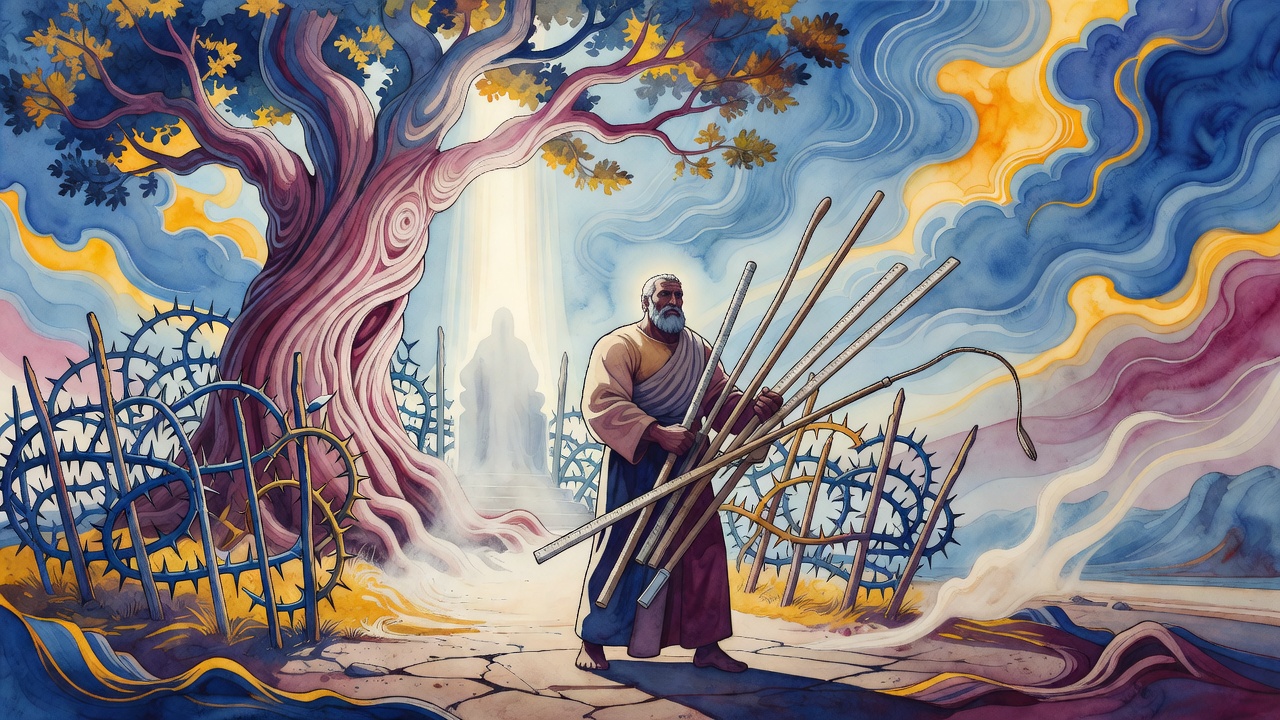
Abigail came down the ravine on a donkey loaded with bread and roasted grain and dressed sheep, and she saw four hundred men climbing toward her with swords on their hips. At the head of them rode David, and his jaw was set to kill. Her husband Nabal had spat on David's messengers and sent them away empty, and David had sworn to leave nothing of Nabal's household breathing by morning.
The Bundle of the Living and the Sling Beyond the Firmament Click for full size

Abigail slid off the donkey and fell on her face in the dust of the road. She did not beg for Nabal. She spoke instead of David's own soul, and what she said cracked open a door in the sky.

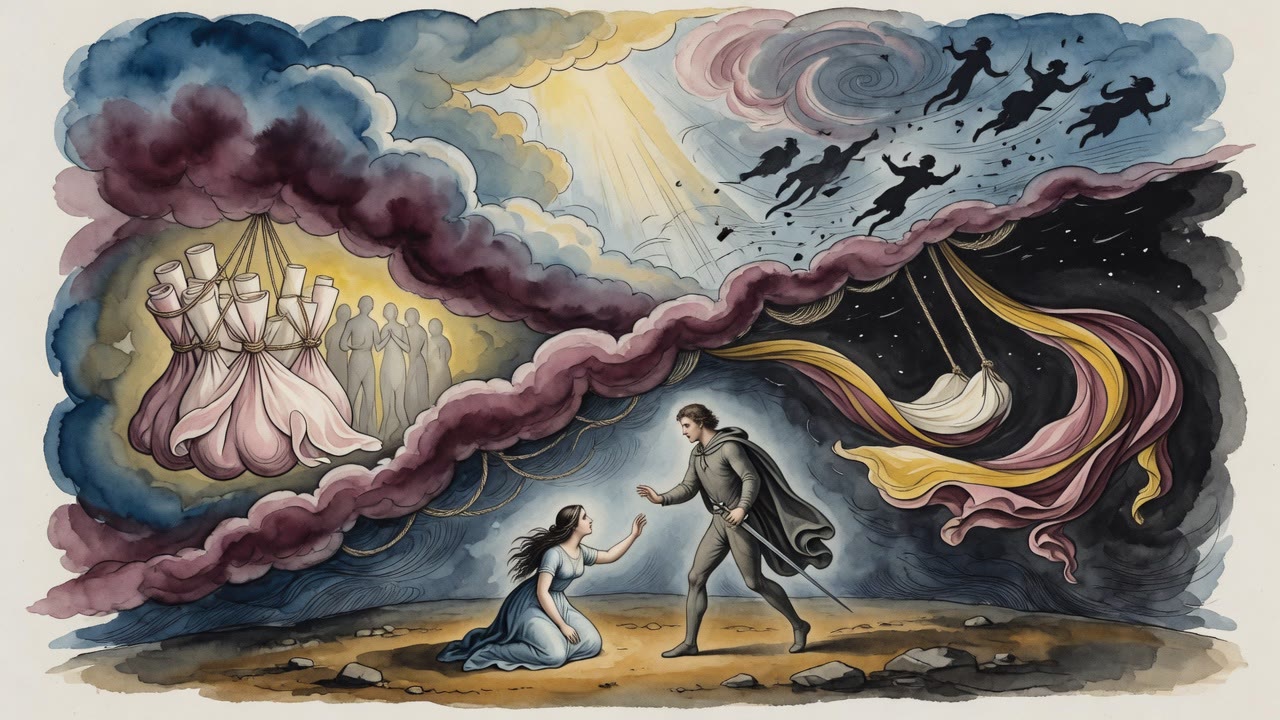
"The soul of my lord," she told him, "will be bound in the bundle of the living, kept close with the LORD your God. But the souls of your enemies he will sling out, the way a stone leaves the hollow of a sling."

The Bundle Bound in the Highest Heaven

The bundle Abigail named is no figure of speech. It hangs in Aravot, the seventh and highest heaven, where the storehouses of the world are kept in the open like grain in a barn. There sit righteousness and justice and the giving of alms. There stand the storehouses of life and the storehouses of blessing, sealed and full. And bound in among them, gathered like sheaves after a harvest, rest the souls of the righteous, waiting.

To be bound in that bundle is to be kept where nothing is spilled and nothing is lost. A soul set there is not stored the way a coin is stored. It is held the way a living thing is held, close against the one who keeps it, in a heaven so high that peace itself is warehoused there. When Gideon built his altar he called the place by a single word, "The LORD is Peace," and that same peace is stacked in Aravot in bins that never empty.

The Spirits Who Have Not Yet Been Born

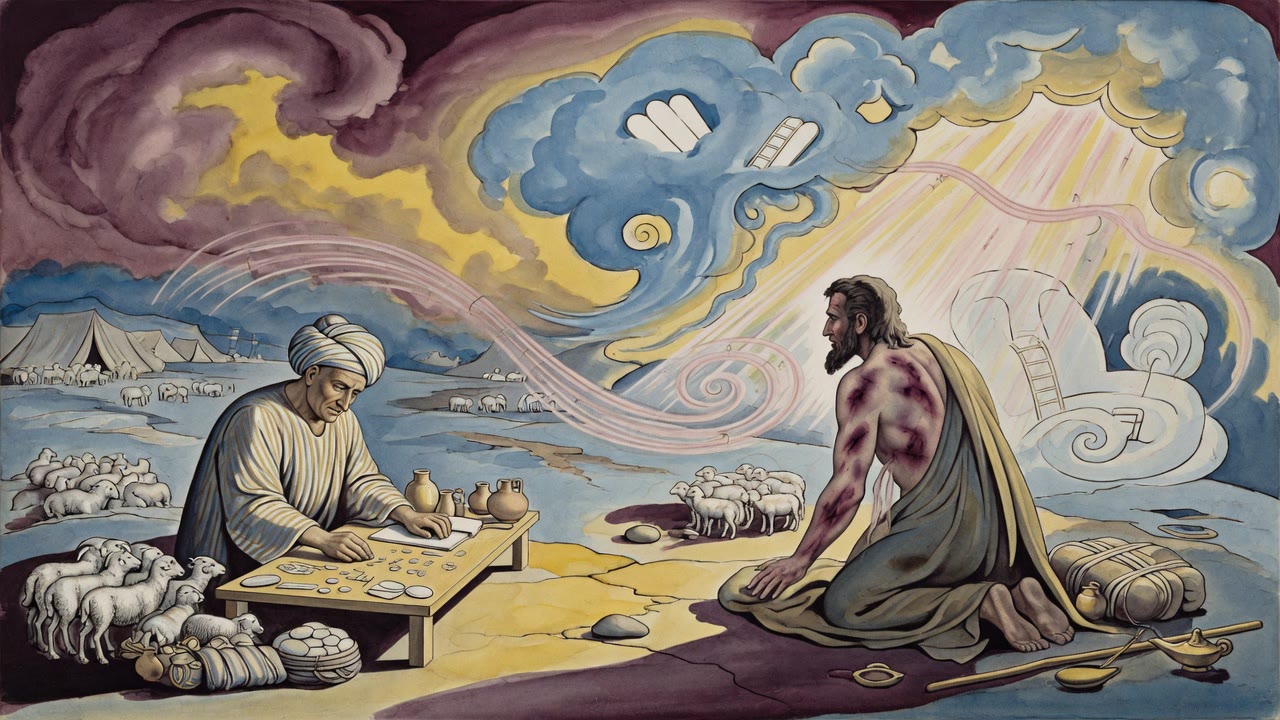
The strangest storehouse in Aravot holds no one who has ever lived. In it wait the spirits and the souls that have not yet been created, crowded at the edge of time, each one a person the world has not yet met. Every birth still coming draws a soul down out of that room. Every cradle that will ever be filled is filled from there.

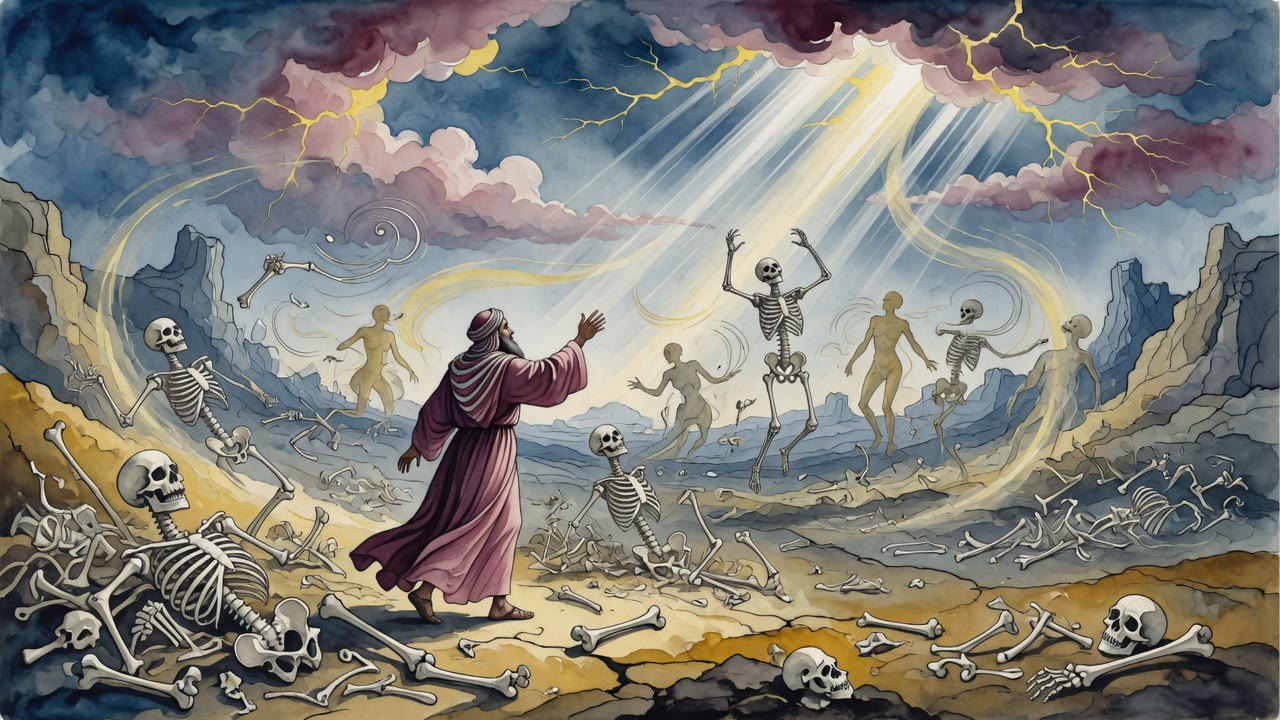
Beside them stands a vessel of dew. It is the dew the Holy One has set aside to wake the dead when the ages turn, the moisture that will fall on dry bones and make them stand. So Aravot keeps the whole span of a life at once, the not-yet-born packed in one storehouse and the dew for the already-dead in the next. The bundle of the living runs from before the first breath to after the last.

The Two Who Were Slung Past the Firmament

Not every soul is bound. Some are thrown.

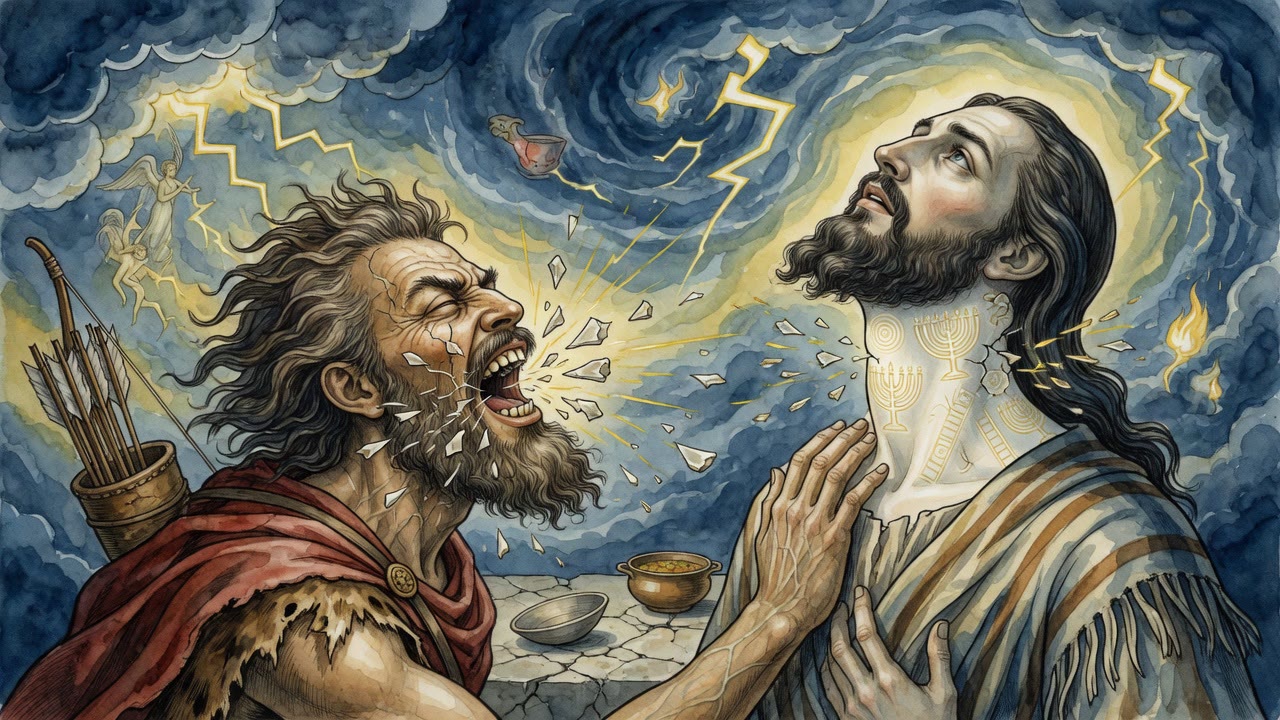
Doeg knew Torah. The sages did not deny it. He could argue law from morning to night, and Ahithophel beside him was sharper still. Doeg used what he knew to steal the sheep and kill the shepherd and turn the sword on Israel, and when the question was asked whether so learned a man might still be saved, the answer came back hard and flat. There is no salvation for him. Knowledge had not bound his soul into the bundle. It had only made his choosing worse.

Then there is Esau, the father of the kingdoms that would grind Israel down through the centuries. When the Psalmist cried "Grace me, O LORD, grace me," the sages counted three letters of grace in the word and heard three kingdoms in them, three faces of one old hatred, all of it running back to the brother of whom the prophet said, "And Esau I hated." Doeg and Esau are not bound in Aravot. They are flung out past the firmament, hurled beyond the sky that holds the storehouses shut.

No Place in All the World to Set Them Down

A slung stone does not rest in the sling. It is loosed to fly, and the souls of the wicked fly the same way, cast from one end of the world to the other with nowhere the arc allows them to fall. They are like chaff, the sages said, the light husk the wind lifts off the threshing floor and scatters until there is nothing left to catch. Doeg's learning cannot weigh him down enough to land. Esau's kingdoms cannot build him a floor.

The end of the arc is downward. The wicked return to Sheol, and not to its upper rooms but to the lowest rung of it, the deepest pit under the pit, the gate of death out of which the Psalmist begged God to lift him and from whose depths only mercy pulls a soul back. Still, the door out of Aravot is never bolted from spite. A nation that falls silent before God, that stops its boasting long enough to listen, is granted a beautiful share and is not thrown at all. The sling is loaded only for those who knew the weight of what they did and swung the sword anyway.

So the two destinations hang over every life at once. On one side the bundle in the high barn of Aravot, where the righteous are kept close and the unborn wait their turn and the dew stands ready for the dead. On the other side the open sky past the firmament, where a soul is loosed like a stone and finds, from one end of the world to the other, no place to come to rest.


← All myths
From the tradition

Sources

4 sources

The texts behind this telling. Some cards carry a translation of the source; others are our own retelling of it, and each card says which. Every card links out to the original.

Yalkut Shimoni on Nach 62:3Yalkut Shimoni on Nach

Translation of the source text.Yalkut Shimoni on Nach (Sefaria) · CC-BY-NC

Our rabbis said: In Aravot [the highest heaven] are righteousness and justice and charity, and the storehouses of life, and the storehouses of blessings, and the souls of the righteous, and the spirits and souls yet to be created, and the dew with which the Holy One, blessed be He, will in the future revive the dead, and the storehouses of peace, as it is written, "And the LORD called it Peace" (Judges 6:24) (referenced at hint 339).

Full source
Midrash Tehillim 3:5Midrash Tehillim

Retold in our words. Read the original at the link below.Rabbi Mike Feuer, Jerusalem Anthology · CC-BY

One interpretation, attributed to Rabbi Shmuel, focuses on figures like Doeg and Ahithophel, known for their Torah knowledge but also their wicked deeds. The midrash (rabbinic interpretive commentary) claims some argued that even if someone is capable of terrible things – “stealing a sheep, killing the shepherd, and killing Israel with a sword” – they could still find salvation. The midrash firmly rejects this notion. “There is no salvation for him.” It's a stark reminder that knowledge alone isn't enough; actions have consequences.

Then comes a shift: “But you, O Lord, are a shield for me.” This is the heart of the passage – the unwavering belief in God's protection. The text asserts that this protection extends to all those guarded "through the merit of my forefathers." It's a beautiful idea: that the righteousness of past generations can act as a shield for those who come after.

What is the speaker's glory? It’s “through my senses, which have been established by Him.” It's a recognition of the divine gift of perception, the ability to experience the world and connect with God through our senses. And the lifting of the head? That comes "through Nathan the prophet, who said to me in your name (2 (Samuel 12:1)3), 'The Lord has also put away your sin.'" This is a direct reference to King David's repentance after his transgression with Bathsheba. Nathan's words offer forgiveness, allowing David (and by extension, all of us) to lift his head in hope.

The Midrash then turns its attention to the nations of the world, referencing (Isaiah 17:12), "Woe to the multitude of many people." Again, the "many" are speaking, casting doubt. Perhaps, they say, even a nation that heard God directly proclaim "You shall have no other gods before me" (Exodus 20:3), but then worshipped the Golden Calf just forty days later (Exodus 32:4), could find salvation. Once more, the midrash emphatically denies it: “There is no salvation for him.”

However, the passage immediately pivots back to the idea of divine protection: "But you, O Lord, who agreed with them in the Torah (Exodus 22:19), 'He who sacrifices to any god other than the Lord must be destroyed.' You are a shield for me, because if not for their protection, my father would have destroyed us.” It’s a complex statement, hinting at God’s covenant and the protection it offers. The speaker's glory isn't in his own righteousness, but in the fact that God's presence dwells among them: "And let them make me a sanctuary, that I may dwell among them" (Exodus 25:8). That is the Shekhinah, the divine presence, residing within the community.

Finally, the lifting of the head in this context stems from obligation and divine provision: "we are obligated to you and you have given us a suspended head, as it says (Exodus 30:12), 'When you take a census of the people.'" The idea of a "suspended head" is a little cryptic, but it likely refers to the redemption offering given during the census, a symbolic act that atones for potential sins and ensures the continued protection of the community.

So, what does it all mean? This passage from Midrash Tehillim is a powerful reminder that while we may face doubt, negativity, and the consequences of our actions, the possibility of divine protection and redemption always remains. It's about acknowledging our imperfections, remembering the covenant, and trusting in God's unwavering presence, even when surrounded by voices that tell us we are beyond saving. Is that not the most hopeful message of all?

Full source
Midrash Tehillim 9:15Midrash Tehillim

Retold in our words. Read the original at the link below.Rabbi Mike Feuer, Jerusalem Anthology · CC-BY

The ancient rabbis felt that too. And they found echoes of that feeling in the Psalms, in the very words of King David.

Take Psalm 9, for instance. It contains the plea: "Chananeni Hashem, chananeni" – "Grace me, O Lord, grace me." (Psalm 9:14). A simple enough prayer. But in Midrash Tehillim (Midrash on Psalms), the rabbis see something deeper. They notice that the word "Chananeni" is spelled with three nuns, the Hebrew letter 'n'. And these three nuns, they suggest, correspond to… three kingdoms.

Three kingdoms all bearing down, all causing affliction.

The Midrash (rabbinic interpretive commentary) connects this idea to the verse "See my affliction from those who hate me," (Psalm 9:14) linking it back to a powerful, and perhaps unsettling, statement from the prophet Malachi: "And you hated Esau." (Malachi 1:3).

Now, why Esau? Well, traditionally Esau is seen as the progenitor of the nations that historically oppressed the Jewish people. So, the three kingdoms represented by the three nuns in "Chananeni" could be seen as different faces of that same, ancient animosity.

A single word, "Grace me," becomes a plea against the weight of historical oppression.

The Psalm continues: "You have lifted me up from the gates of death, from Gehenna's depths." Gehenna, often translated as "hell," is the ultimate place of suffering. The Psalmist is saying, "You, God, have rescued me from the very brink!"

And what will the response be to this divine rescue? "I will recount all of your praise. And when your divine presence ascends to the gates of Zion, I will rejoice in your salvation." It's a promise of unwavering devotion, a commitment to celebrate God’s presence when it returns to Zion, to Jerusalem.

But here's where it gets really interesting. Rabbi Abbahu, a prominent Amoraic sage, says something remarkable about this Psalm. He calls it "one of the five difficult verses whose salvation is that of the Jewish people and the salvation of the Holy One, blessed be He."

Difficult, because it implies that God's salvation is somehow intertwined with the salvation of the Jewish people. It’s a reciprocal relationship. Our redemption is, in a way, God’s redemption too. What does it mean for God to need "salvation?" It’s not that God needs saving in the literal sense, of course. Rather, it means that God's presence in the world, God's very Kavod (glory), is diminished when we suffer. When injustice prevails, God's light is obscured. Our liberation, our flourishing, allows God’s presence to shine more brightly in the world.

So, the next time you read Psalm 9, remember the three nuns of "Chananeni." Remember the weight of history, the echoes of ancient hatred. But also remember the promise of redemption, the intertwined destinies of God and people. And remember that even in the darkest of times, a plea for grace can be a powerful act of faith.

Full source
Midrash Tehillim 9:18Midrash Tehillim

Retold in our words. Read the original at the link below.Rabbi Mike Feuer, Jerusalem Anthology · CC-BY

The Talmudic sages definitely grappled with that question. to a fascinating, and perhaps a little unsettling, passage from Midrash Tehillim (Midrash on Psalms), specifically Psalm 9.

The verse in question? "The wicked shall return to Sheol." Now, Sheol – often translated as "the grave" or "the underworld" – isn't exactly a cheerful destination. But who exactly is destined for this shadowy realm?

Rabbi Elazar boldly declares, "All nations have no share in the World to Come." Woah. Does that mean everyone who isn't Jewish is automatically excluded from eternal bliss?

Thankfully, Rabbi Yehoshua steps in with a crucial nuance. He counters, "You would have said well if you had stated, 'All nations that are silent have a beautiful share.'" Silent how? Perhaps silent in their acceptance of God, their willingness to listen, to learn, to be better. It’s a powerful distinction. It suggests that salvation isn’t about nationality, but about attitude, about a recognition of something greater than oneself.

And what's the scriptural support for this idea of national "forgetfulness" of God? Rabbi Yehoshua points to (Psalm 83:14), "Be like the chaff of the nations." Chaff, light and easily blown away, suggests a lack of substance, a fleeting and superficial engagement with the divine.

Now, Rabbi Nechemia throws another curveball into the mix. He states, "Every word that was not given to Moses at Sinai was given to him in the end." What does that even mean? It’s a cryptic comment on revelation. Does it mean that understanding deepens over time? That even the most profound initial encounter with the divine isn't the final word? He uses the example of Jacob's journey, "[(Genesis 28:10)] 'And Jacob went out from Beer-Sheba' [literally 'And he went out to Charan']." The verse, Rabbi Nechemia suggests, alludes to Sheol, perhaps implying a hidden, deeper meaning beneath the surface.

Finally, Rabbi Abba bar Zavdi chimes in, clarifying that this refers to "the lowest level of Sheol." So, we're talking about the absolute bottom rung, the deepest, darkest pit.

What are we to make of all this? It's easy to get caught up in the literal meaning of these verses, in the idea of reward and punishment, of who's in and who's out. But maybe the sages are trying to tell us something deeper. Maybe it's not about a divine scorecard, but about the choices we make, the attitudes we cultivate, and the depth of our connection to something beyond ourselves. Maybe Sheol isn’t a place, but a state of being. A state of forgetfulness, of disconnection, of being adrift like chaff in the wind. And maybe, just maybe, we all have the power to choose a different path.

Full source