Ezekiel Walked Through a Valley of Dry Bones and They Stood Up
God carried a prophet to a valley full of sun-bleached bones, asked whether they could live, and waited for the answer before giving one of his own.
Table of Contents
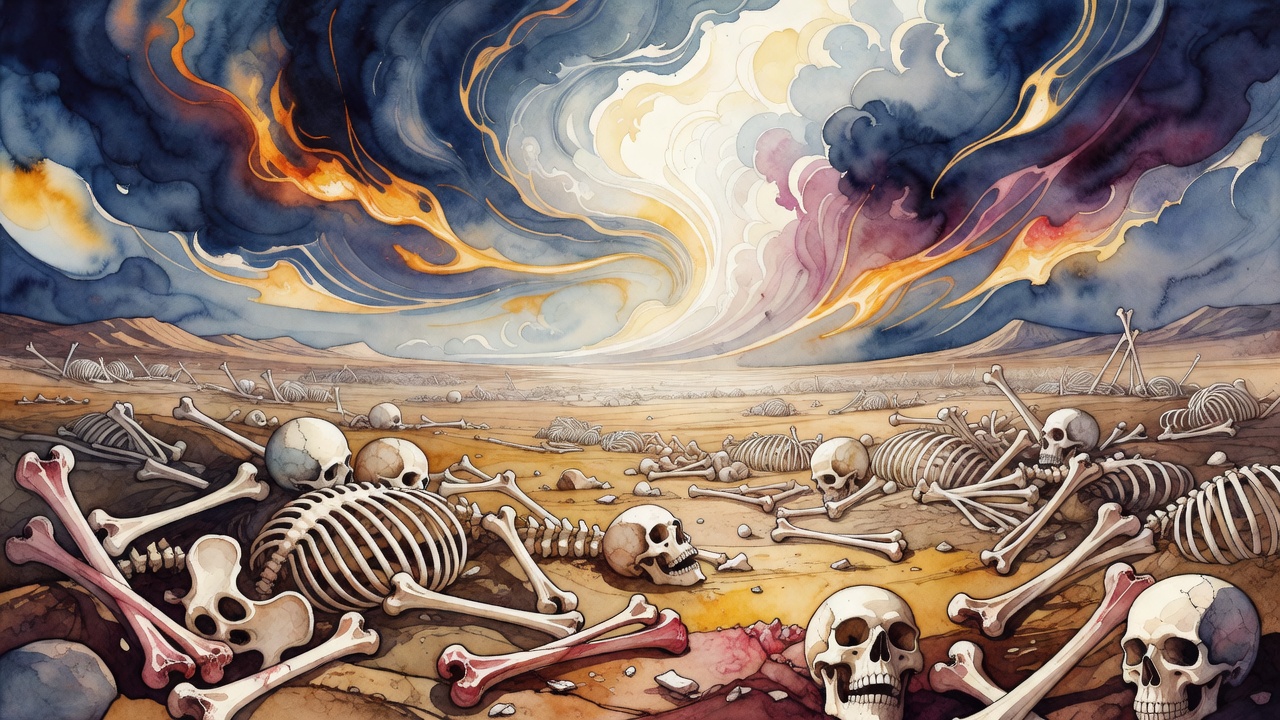
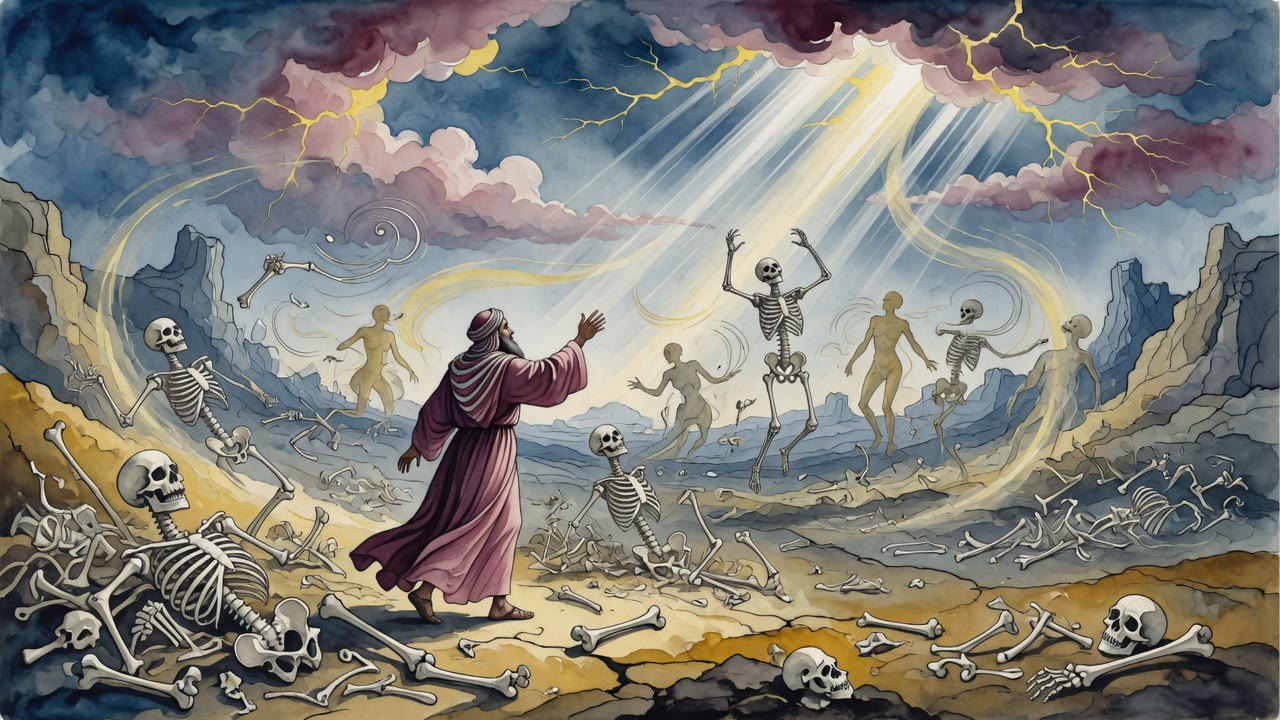
The hand of God came upon Ezekiel, and the spirit lifted him up and set him down in the middle of a valley. The valley was full of bones. He was made to walk through them, past them, around them, until he had seen every one. There were very many, the text says, and they were very dry. Not recently dead. Not still damp with the memory of being alive. Bleached. Sun-stripped. Old enough that whoever these people had been, no one alive remembered them.
 Click for full size
Then God asked him a question with no safe answer. Son of man, can these bones live?
The Question a Prophet Could Not Answer
Ezekiel did the only thing a prophet standing in a valley of strangers' skeletons could do. He handed the question back. O Lord God, you know. Not yes, which would have been presumptuous. Not no, which would have been a denial of the God he served. Just: you know. The rabbis reading this later treated the answer as a spiritual technique. When God asks you a question, you return it. You do not answer for God.
The plain sense of the passage was political and metaphorical. The house of Israel, exiled in Babylon, was saying exactly the language of dry bones: our bones are dried up, our hope is lost, we are cut off. The vision was the divine reply to that despair. But the rabbis of the Talmud refused to leave it metaphorical. They asked whether the resurrection Ezekiel witnessed was historical, and some answered: yes.
Who the Bones Had Been
Targum Jonathan on Exodus contains one of the strangest identifications in all of ancient translation. The dry bones in the valley were the Ephraimites, the tradition said, the two hundred thousand armed warriors from the tribe of Ephraim who had left Egypt thirty years before the appointed time, marched toward Canaan, fought the Philistines at Gath, and been slaughtered. Their bones had been lying in the valley of Dura since before Moses was born.
This is why, the Targum says, God did not lead the Israelites out of Egypt by the road of the Philistines. The official text of the Torah says God avoided that road lest the people see war and return to Egypt. The Targum rewrites the reason: God avoided the road so the current generation would not see the bones of their Ephraimite cousins and panic. The valley of dry bones was a road hazard. Ezekiel's vision was its resolution centuries later.
The Sons of Ephraim Who Could Not Wait
Joseph on his deathbed had made his descendants swear not to leave Egypt until the true redeemer came. He knew something they did not know about timing and about what early departure would cost. The sons of Ephraim calculated the end of the predicted exile themselves. They counted four hundred years from the covenant with Abraham and decided that their count was correct and that they should act on it immediately. Joseph had said wait for the redeemer. They said they were the redeemers.
They marched out armed. They were strong and confident. At Gath in the land of the Philistines, the Philistines came out against them and killed them, all thirty thousand or two hundred thousand of them depending on which source counted. The tribe of Ephraim went back to Egypt smaller than it had come out, to wait for Moses and the real departure.
The Breath That Came From Four Directions
God told Ezekiel to prophesy to the bones. He did. There was a noise and a rattling as the bones came together, bone to its bone. Then sinews came on them, and flesh, and skin covered them. But there was no breath. Ezekiel was told to prophesy to the breath, to call the four winds, to say: come from the four directions and breathe on these slain so they may live. He prophesied. Breath came into them. They stood on their feet, an exceedingly great army.
God said: these bones are the whole house of Israel. They say their bones are dry and their hope is lost. Say to them: I am going to open your graves and bring you back to the land of Israel. Then you will know that I am God. The vision that had started with the bones of men who had left too early ended with a promise to the people who were afraid they had arrived too late.
← All myths