6 min read

The Weeping Farm Boy Who Became a Cistern That Lost No Drop

Hyrkanos moved his son off the stony field onto the best soil he owned. Eliezer cut one furrow in it and wept again. He was twenty-eight years old.

Curated by Arthur · Told by Maggid ·
Table of Contents
  1. The Boy Who Wept on Good Soil
  2. Two Weeks of Hunger Until Elijah Came
  3. He Wept Again Before the Master
  4. The Master Who Was Himself the Least
  5. A Cistern That Loses Not a Drop
The Weeping Farm Boy Who Became a Cistern That Lost No Drop Click for full size

The Boy Who Wept on Good Soil

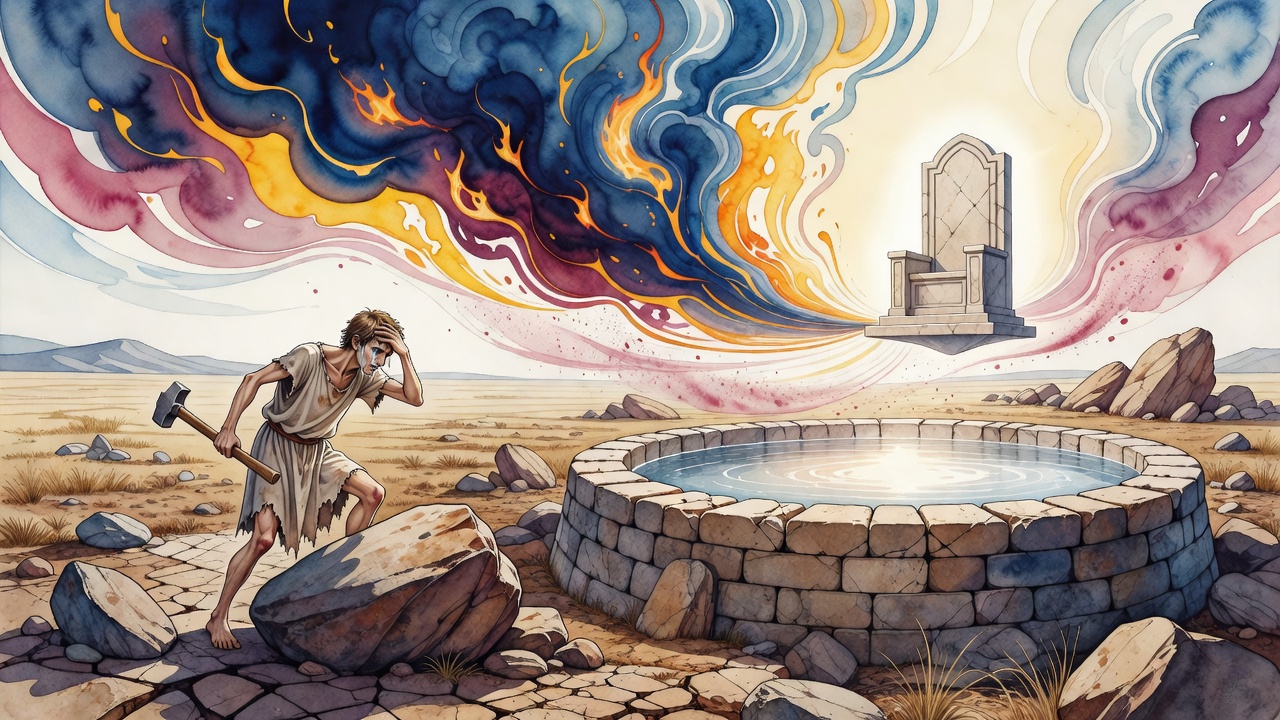
Hyrkanos owned more land than a man could cross in a day, and he had sent his son to the worst of it. The field was all stone. Eliezer stood among the rocks with an ox and a plow that snagged on every buried edge, and instead of breaking the ground he sat down in it and wept.

His father came out to the field. "Why are you crying?" Hyrkanos asked. "Does the hard ground grieve you?" A practical man keeps a practical remedy close, so he moved the boy to a smooth, rich stretch of soil, the kind a farmer prays for. Eliezer cut one furrow there and wept over that field too.

"What is it now?" Hyrkanos said. "You have good earth under you and you weep anyway."

Eliezer told him the thing he had been swallowing. "I weep because I want to learn Torah."

His father stared at him. The boy was twenty-eight years old. "You are a grown man," he said. "Marry. Raise sons. Send them to study when the time comes." In his reckoning, learning belonged to boys, or to men with leisure to burn, not to a landowner's heir with fields waiting on him.

Two Weeks of Hunger Until Elijah Came

Eliezer did not argue. He stopped eating.

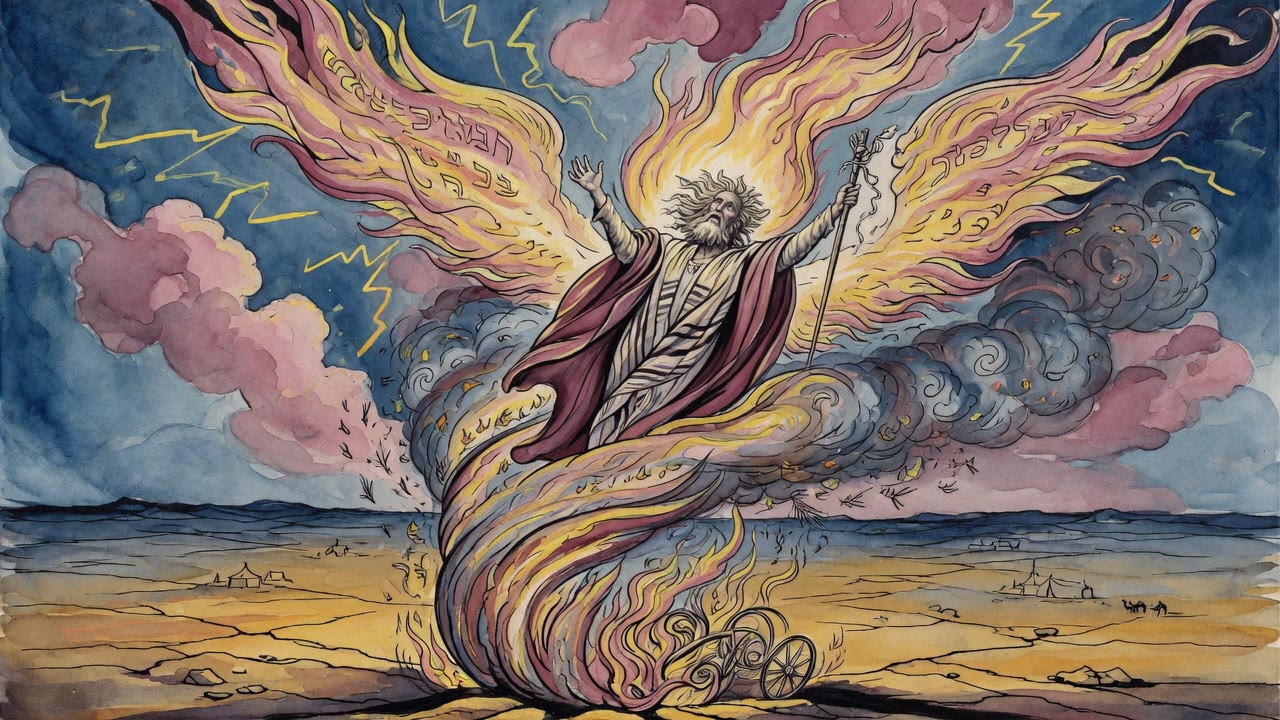
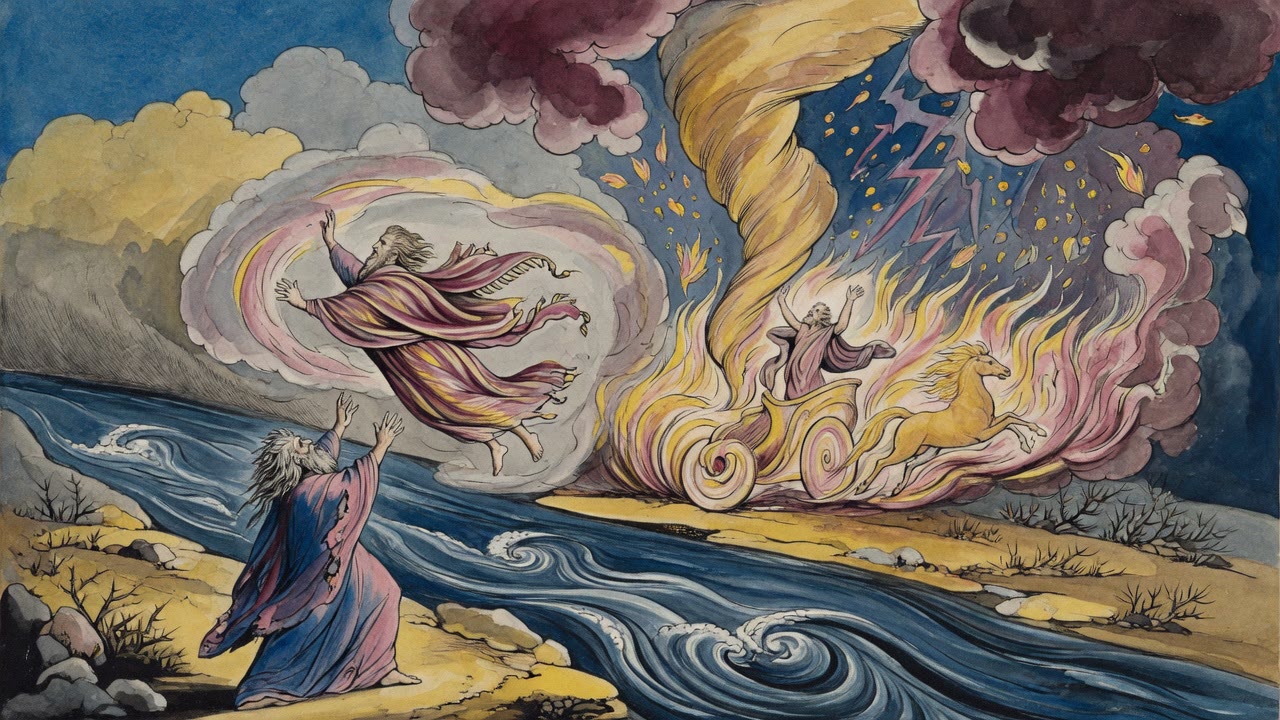
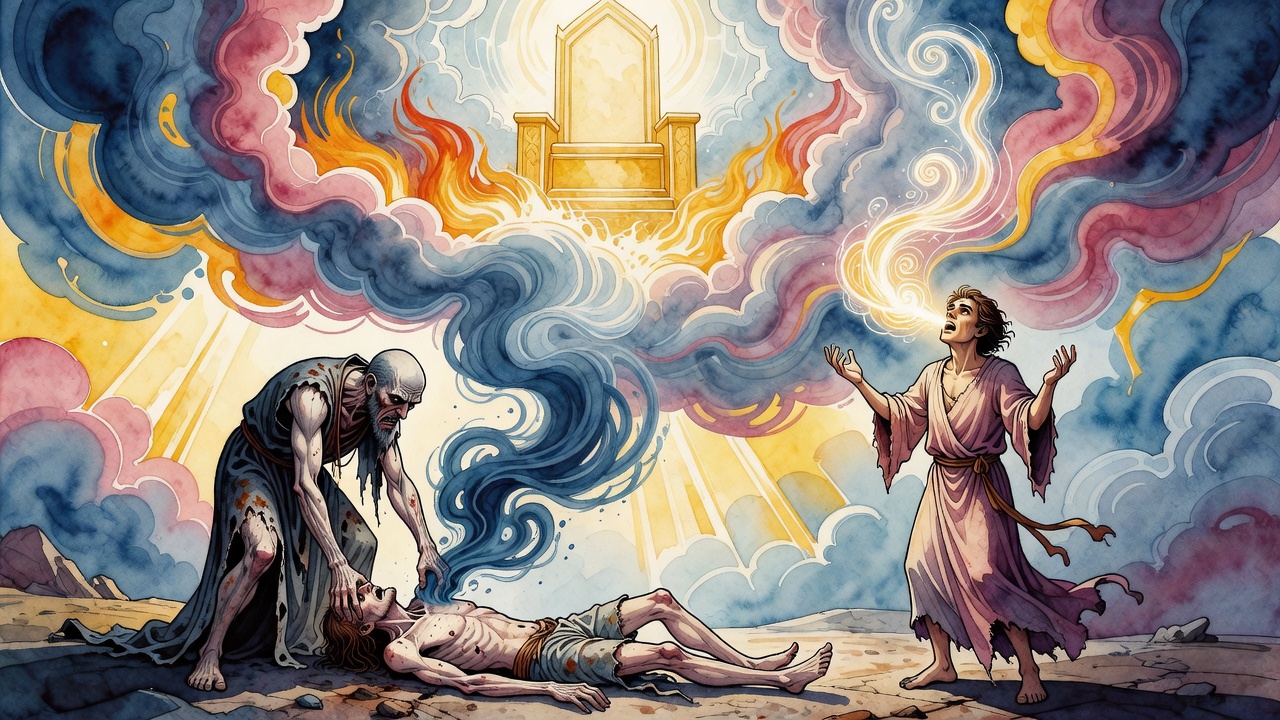
One day, then another, then a full week, then a second week, until his body was a rattle of bone and the hunger had burned everything out of him but the one wish. On the far side of that fast a figure stood before him whom no farmer can summon. It was Elijah the prophet, may his memory be a blessing.

"Son of Hyrkanos," Elijah said, "why do you weep?"

The answer had not changed through all the starving. "Because I want to learn Torah."

Elijah did not scold the fast or march him home. He handed him a road instead. "If you want to learn Torah," he said, "go up to Jerusalem, to Rabban Yochanan ben Zakkai."

The heir of all that land walked off it with nothing in his hands.

He Wept Again Before the Master

Eliezer reached Jerusalem, found the sage, and in front of the greatest teacher of the age he did the one thing he seemed to know how to do. He sat down and wept.

"Why do you weep?" Yochanan asked.

"Because I wish to learn Torah."

"Whose son are you?"

The young man went silent. He had run from a wealthy father's house to sit on the floor of a study hall, and the one question that could open the door or shut it was his own name, and he would not give it. He held the silence and he stayed. Poor, unfed, stubborn past reason, he sat under the master year after year and took in everything set before him, and what went into him did not leak back out.

The Master Who Was Himself the Least

The man Eliezer had run toward carried a strange rank of his own. Hillel the Elder once had eighty disciples. Thirty of them were worthy for the Divine Presence to rest on them as it had rested on Moses, and their generation was not worthy of it. The greatest of the eighty was Jonathan ben Uzziel. The least of all of them was Yochanan ben Zakkai.

The least of Hillel's eighty had left no word of Torah unlearned. Scripture and Mishnah, the fine points of the Law and the fine points of the scribes, the arguments and the old stories, all of it sat inside him in order. "If you have learned much Torah," he used to say, "claim no credit for yourself, because this is the very thing you were made for." The smallest vessel in Hillel's house had turned out to hold the whole tradition, and now that vessel was pouring into others.

A Cistern That Loses Not a Drop

Years on, Yochanan weighed his five students aloud, and he weighed them in water. Eleazar ben Arak he called a swelling spring, a fountain that gathers force and floods past its banks. Joshua ben Hananiah he called a threefold cord not quickly snapped. Jose the priest he called the righteous one of the generation. Simeon ben Nathaniel he called an oasis in the desert that never lets its water sink away.

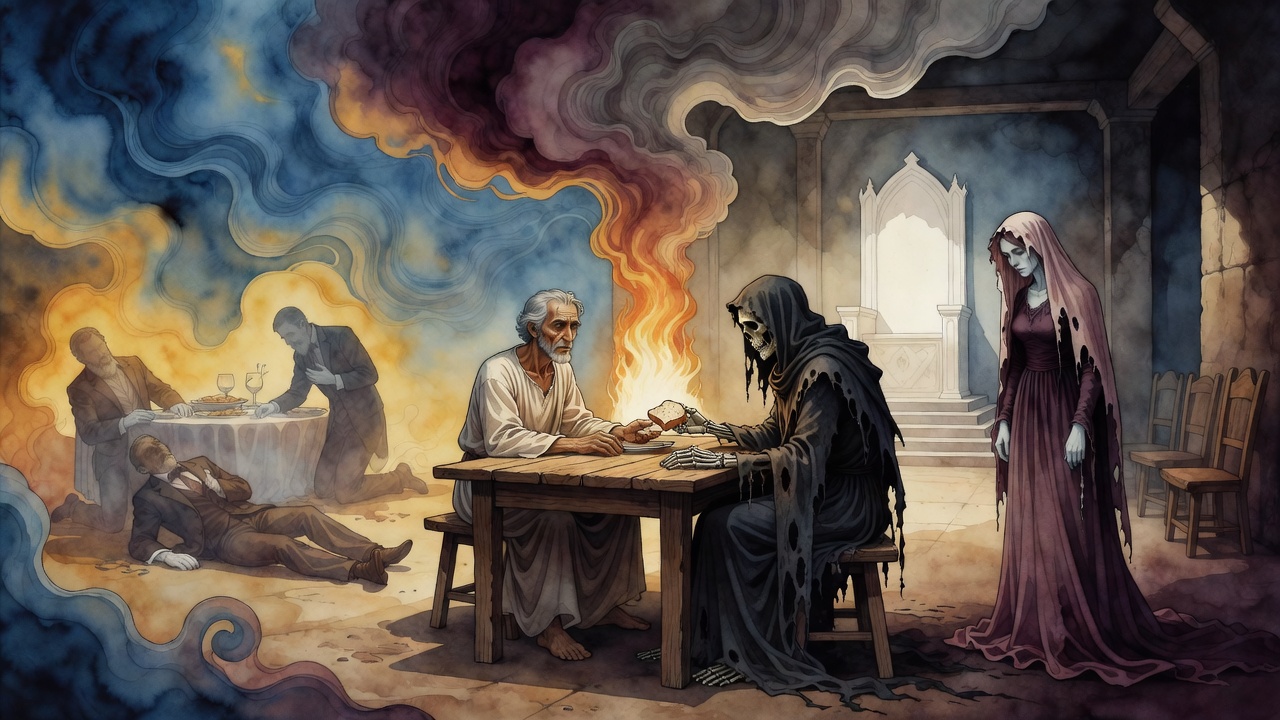
And Eliezer, the farm boy who had wept on good soil, the master named a plastered cistern that loses not a drop, a glazed pitcher that keeps its wine. Whatever was poured into him stayed at the level it was poured. "If every sage in Israel stood in one pan of the scale," Yochanan said, "and Eliezer ben Hyrkanos in the other, he would outweigh them all."

One voice pushed back. Abba Saul said the master had told it differently, that with Eleazar ben Arak set in the far pan the flooding spring would outweigh even Eliezer and all Israel beside him. The overflowing fountain against the sealed cistern, and the house of study never fully settled which pan dropped.

The spring did not end well. Eleazar followed sweet water to a pleasant town of warm springs and soft living, far from the other scholars, and his renown in Torah drained away in that comfort. The cistern kept its charge. The boy who could not stop weeping on his father's rocks held every drop the master ever poured, and carried the tradition down the years without spilling it.


← All myths
From the tradition

Sources

2 sources

The texts behind this telling. Some cards carry a translation of the source; others are our own retelling of it, and each card says which. Every card links out to the original.

Pirkei DeRabbi Eliezer 1:1Pirkei DeRabbi Eliezer

Retold in our words. Read the original at the link below.Pirke de Rabbi Eliezer, trans. Rabbi Gerald Friedlander, London (1916) · CC-BY

His father, Hyrkanos, a wealthy landowner, has him toiling away on a rocky, unproductive patch of land. Eliezer sits down and weeps.

"Why are you crying, my son?" Hyrkanos asks. "Are you upset because the ground is so difficult?" He moves Eliezer to better land, but the tears still flow. "What is it now? Are you unhappy even with the good soil?"

Eliezer finally confesses, "I weep because I desire to learn Torah!"

Hyrkanos, practical man that he is, is baffled. "You're twenty-eight years old! Shouldn't you be marrying, raising a family, and then sending your sons to study?" It wasn't uncommon then (or even now!) for people to believe learning was for the young, or for those with the leisure to pursue it.

But Eliezer’s desire was unshakeable. He was driven by something deeper. He fasted for two whole weeks, denying himself everything, until Elijah the Prophet himself, may his memory be a blessing, appeared to him.

"Son of Hyrkanos," Elijah asked, "Why do you weep?"

"Because I desire to learn Torah," Eliezer replied, his voice surely hoarse with fasting.

Elijah’s answer? Simple, direct, and life-changing. "If you desire to learn Torah, go up to Jerusalem to Rabban Yochanan ben Zakkai."

Rabban Yochanan ben Zakkai, a towering figure, was one of the most important sages of his time, a pivotal leader during a period of immense upheaval in Jewish history.

So, Eliezer does just that. He travels to Jerusalem, finds Rabban Yochanan ben Zakkai, sits down, and weeps again. This grown man, overcome by his longing to learn, weeping before the great sage.

Rabban Yochanan asks him, "Why do you weep?"

Eliezer repeats his plea, "Because I wish to learn Torah."

Rabban Yochanan then asks a simple question: "Whose son are you?"

And here, the story pauses. We're left hanging, wondering why Eliezer doesn't immediately answer. What's holding him back? Is he ashamed of his father's lack of understanding? Is he afraid that his privileged background will somehow disqualify him in the eyes of the great teacher?

The Pirkei DeRabbi Eliezer doesn't tell us explicitly. But this small detail speaks volumes about the obstacles, both internal and external, that often stand in the way of pursuing our deepest passions.

This story, though ancient, still resonates. And sometimes, all it takes is a little divine intervention, and the courage to follow the path, even when it leads us to weep before a great teacher. What is your Torah? What calling are you being drawn towards?

Full source
Avot DeRabbi Natan 14Avot DeRabbi Natan

Retold in our words. Read the original at the link below.The Minor Tractates of the Talmud, trans. A. Cohen, Soncino Press (1965) · CC-BY

RABBAN JOḤANAN B. ZAKKAI RECEIVED THE TRADITION FROM HILLEL AND SHAMMAI.Hillel the Elder had eighty disciples:1Cf. the parallel passage in Suk. 28a (Sonc. ed., p. 123) and B.B. 134a (Sonc. ed., p. 563). thirty of them were worthy that the Divine Presence should rest upon them as upon Moses our teacher, but their generation was not worthy of it; thirty of them were worthy that the intercalation of the years2The calculations were made only by the leading members of the Sanhedrin (the supreme rabbinic court). should be determined by them; and twenty were average. The greatest of them all was Jonathan b. ’Uzziel,3[Meg. 3a (Sonc. ed., p. 9) names him as the author of an Aramaic translation of the Prophets. The extant Targum is not by him.] and the least of them all was Rabban Joḥanan b. Zakkai. It was said of Rabban Joḥanan b. Zakkai that he mastered4lit. ‘he had not left (unstudied)’. Scripture, Mishnah (the earliest code of rabbinic law), Gemara (the rabbinic commentary on the Mishnah), halakoth, ’aggadoth, toseftoth, the minutiae5The subtle points of exposition. of the Torah, the minutiae of the Scribes, and all the hermeneutical rules of the Sages. Not a word in the Torah did he not master, fulfilling the text, That I may cause those that love me to inherit substance, and that I may fill their treasuries.6Prov. 8, 21.

HE USED TO SAY: IF YOU HAVE OBSERVED7In Aboth 2:9 (Sonc. ed., II, 8, p. 17) ‘learnt’. MUCH TORAH CLAIM NO MERIT FOR YOURSELF, FOR TO THIS END YOU WERE CREATED; inasmuch as human beings were created solely for the purpose of occupying themselves with the Torah.

Rabban Joḥanan b. Zakkai had five disciples whom he described in these terms: Eliezer b. Hyrḳanos as ‘a cemented cistern that loses not a drop’ and ‘a glazed pitcher that preserves its wine’; Joshua b. Ḥananiah as ‘a threefold cord that is not quickly broken’;8Eccl. 4, 12. This is no doubt intended as alluding to three virtues of Joshua b. Ḥananiah, but they are not specified. Jose [24a] the priest as ‘the righteous one of the generation’; Ishmael b. Ḥananiah9In conformity with Aboth 2:10 (Sonc. ed. II, 8, p. 18) GRA emends to ‘Simeon b. Nathaniel’. This paragraph corresponds to Aboth 2:10f, but with several variants. as ‘an oasis10A doubtful word; some emend it to ‘arugah, ‘a garden bed’ or ‘grove’, a term applied to a scholar in DEZ I, p. 567 below. in the desert which retains its waters’. Happy the disciple whose teacher acknowledges and describes him [in such terms]! Eleazar b. ‘Arak he described as ‘a swift-running stream and a vigorous fountain whose waters increase and overflow abroad’, thus fulfilling the verse, Let thy springs be dispersed abroad, and courses of water in the streets.11Prov. 5, 16.

HE USED TO SAY: IF ALL THE SAGES OF ISRAEL WERE IN ONE SCALE OF THE BALANCE AND R. ELIEZER B. HYRḲANOS IN THE OTHER, HE WOULD OUTWEIGH THEM ALL. ABBA SAUL SAID IN HIS NAME: IF ALL THE SAGES OF ISRAEL WERE IN ONE SCALE OF THE BALANCE, INCLUDING R. ELIEZER B. HYRḲANOS, AND R. ELEAZAR B. ‘ARAK WAS IN THE OTHER, HE WOULD OUTWEIGH THEM ALL.

HE SAID TO THEM: GO FORTH AND SEE WHICH IS THE GOOD WAY TO WHICH A MAN SHOULD CLEAVE SO that thereby he may enter the world to come. R. ELIEZER came forward, and SAID: A GOOD EYE.12Denoting generosity, freedom from envy which is termed ‘an evil eye’. R. JOSHUA came forward and SAID: A GOOD FRIEND.13Indicating the quality of friendliness. R. JOSE came forward and SAID: A GOOD NEIGHBOUR,14Implies sympathy and goodwill. ‘A good impulse’, etc., is omitted in Aboth 2:13 (Sonc. ed., II, 9, p. 19). a good impulse and a good wife. R. SIMEON SAID: ONE WHO FORESEES THE CONSEQUENCES OF AN ACTION.15The virtue of foresight and prudence. V inserts in brackets, ‘As, for instance, Mordecai the Jew who foresaw the consequences of an action’. R. ELEAZAR came forward and SAID: A HEART THAT IS GOOD16i.e. unselfishness. towards Heaven and is good towards [all] creatures. THEREUPON HE SAID TO THEM: I PREFER THE WORDS OF R. ELEAZAR B. ‘ARAK TO YOUR WORDS, BECAUSE IN HIS WORDS YOURS ARE INCLUDED.HE THEN SAID TO THEM: GO FORTH AND SEE WHICH IS THE EVIL WAY THAT A MAN SHOULD SHUN SO that he may enter the world to come. R. ELIEZER came forward and SAID: AN EVIL EYE. R. JOSHUA came forward and SAID: AN EVIL FRIEND. R. JOSE came forward and SAID: AN EVIL NEIGHBOUR, an evil impulse and a bad wife.17So according to GRA, giving the reverse of R. Jose’s previous statement. V reads, ‘An evil eye, an evil neighbour, and an evil wife’. R. SIMEON came forward and SAID: ONE WHO BORROWS AND DOES NOT REPAY, SINCE HE WHO BORROWS FROM MAN IS AS ONE WHO BORROWS FROM THE ALL-PRESENT, as it is stated, The wicked borroweth, and payeth not; but the righteous dealeth graciously, and giveth.18Ps. 37, 21. R. ELEAZAR came forward and SAID: A HEART THAT IS EVIL towards Heaven and is evil towards [all] creatures. THEREUPON HE SAID TO THEM: I PREFER THE WORDS OF R. ELEAZAR B. ‘ARAK TO YOUR WORDS, BECAUSE IN HIS WORDS YOURS ARE INCLUDED.

When the son of Rabban Joḥanan b. Zakkai died, his disciples came in to console him. R. Eliezer came and sat before him and said, ‘My master, is it your wish that I say a word in your presence?’ He replied to him, ‘Speak’. Thereupon he said, ‘Adam, the first man, had a son who died, and he allowed himself to be comforted in his loss. And whence do we know that he accepted condolence? For it is stated, And Adam knew his wife again.19Gen. 4, 25. Therefore do you also accept condolence’. He retorted, ‘Is it not sufficient for me to bear my own grief that you have to mention Adam’s grief?’ Then R. Joshua20‘One must assume that the disciples came in one by one, each ignorant that his line of approach had been previously tried without success. Joḥanan’s irritation must have increased with each successive attempt’ (Montefiore and Loewe, Rabbinic Anthology, p. 672). entered and said, ‘My master, is it your wish that I say a word in your presence?’ He replied to him ‘Speak’. Thereupon he said, ‘Job had sons and daughters who all died in one day and he allowed himself to be comforted; you too accept condolence. And whence do we know that Job accepted condolences? For it is stated, The Lord gave, and the Lord hath taken away; blessed be the name of the Lord.21Job 1, 21. He retorted, ‘Is it not sufficient for me to bear my own grief that you have to mention Job’s grief?’ Next R. Jose entered, sat before him and said, ‘My master, is it your wish that I say a word in your presence?’ He replied, ‘Speak’. Thereupon he said, ‘Aaron had two grown sons and both died in one day, yet he allowed himself to be comforted, as it is stated, And Aaron held his peace,22Lev. 10, 3. the phrase held his peace implying that he accepted condolence. Therefore do you also accept condolence’. He retorted, ‘Is it not sufficient for me to bear my own grief that you have to mention Aaron’s grief?’ Then R. Simeon entered and said, ‘My master, is it your wish that I say a word in your presence?’ He replied, ‘Speak’. Thereupon he said, ‘King David had a son who died, and he allowed himself to be comforted; do you also accept condolence. And whence do we know that David accepted condolence? For it is stated, And David comforted Bathsheba his wife, and went in unto her; and she bore a son, and called his name Solomon.232 Sam. 12, 24. Therefore do you also accept condolence’. He retorted, ‘Is it not sufficient for me to bear my own grief that you have to mention King David’s grief?’ Finally R. Eleazar b. ‘Arak24In V the name is incorrectly printed as ‘R. Eleazar b. Azariah’. entered. When [Rabban Joḥanan saw him approaching] he said to his attendant, ‘Take my clothes and follow me to the bath-house, because this man is distinguished and I cannot appear before him as I am’.25i.e. in the clothes of a mourner. Then R. Eleazar came in and sat before him and said. ‘Let me tell you a parable. To what is the matter like? To a man with whom a king had deposited an article of value. Daily the man wept and exclaimed, “Woe is me! when will I be free from the responsibility of this trust?” You, too, my master, had a son versed in the Torah, who had studied the Pentateuch,26The usual connotation of this word, מקרא, is ‘Scripture’, but in this context the Pentateuch is intended. Prophets and Hagiographa, Mishnah, halakoth and ’aggadoth. He has departed sinless from this world. Surely you should derive comfort from having returned your trust intact!’ Rabban Joḥanan said to him, ‘Eleazar my son, you have comforted me as men can comfort’.27i.e. as far as lies within the power of human beings to comfort.When they left his presence, R. Eleazar said [to his colleagues], ‘I will go to Dimsith,28In Shab. 147b (Sonc. ed., pp. 749f) the name is given as Diomsith which Jastrow identified with Emmaus, a town in the plain of Judah renowned in Talmudic days for its warm springs and luxurious life. [On this passage, cf. Bacher, Ag. d. Tannaiten, I, p. 71, n. 3, who thinks that Tiberias is meant.] a delectable spot with excellent and refreshing waters’. The others said, ‘We will go to Jabneh,29Or Jamnia, a town north-west of Jerusalem, near the coast, the seat of the Sanhedrin after the destruction of Jerusalem. a place abounding with scholars and lovers of Torah’. Because he went to Dimsith, a delectable spot with excellent and refreshing waters, his fame in the Torah waned;30Cf. Shab. loc. cit. (Sonc. ed., p. 750). whereas they who went to Jabneh, a place abounding with scholars and lovers of the Torah, their renown in Torah increased.

Full source