6 min read

Elisha Inherits Elijah's Fire at the Jordan

Elisha refused every farewell Elijah offered. At the Jordan he asked for a double spirit, then watched fire take his master.

Curated by Arthur · Told by Maggid ·
Table of Contents
  1. The Road Refused Privacy
  2. Fifty Men Stood Far Off
  3. A Firstborn Request
  4. Fire Made the Decision
  5. The Cloak Came Back Alone
  6. Sixteen Wonders and a Fever of Fire

Three times Elijah tried to leave Elisha behind.
Each refusal sounded gentle. Stay here. The road goes on without you. God has sent me farther. Bethel waited. Jericho waited. The Jordan waited. Elisha answered every time with the same oath, by God's life and by his master's life, he would not leave. The older prophet walked toward the edge of the world. The younger one walked beside him and refused every honorable escape.

The Road Refused Privacy

At Bethel, the disciples of the prophets came out with the knowledge everyone already carried. Today the master would be taken from over Elisha's head. They said it aloud, as if grief became more useful when announced.

Elisha cut them short. He knew. Be silent. Then the road repeated itself at Jericho. Another band of prophets. Another warning. Another command for silence. There are departures too holy to narrate while the feet are still moving.

Elijah kept giving him doors. Elisha kept closing them.

Fifty Men Stood Far Off

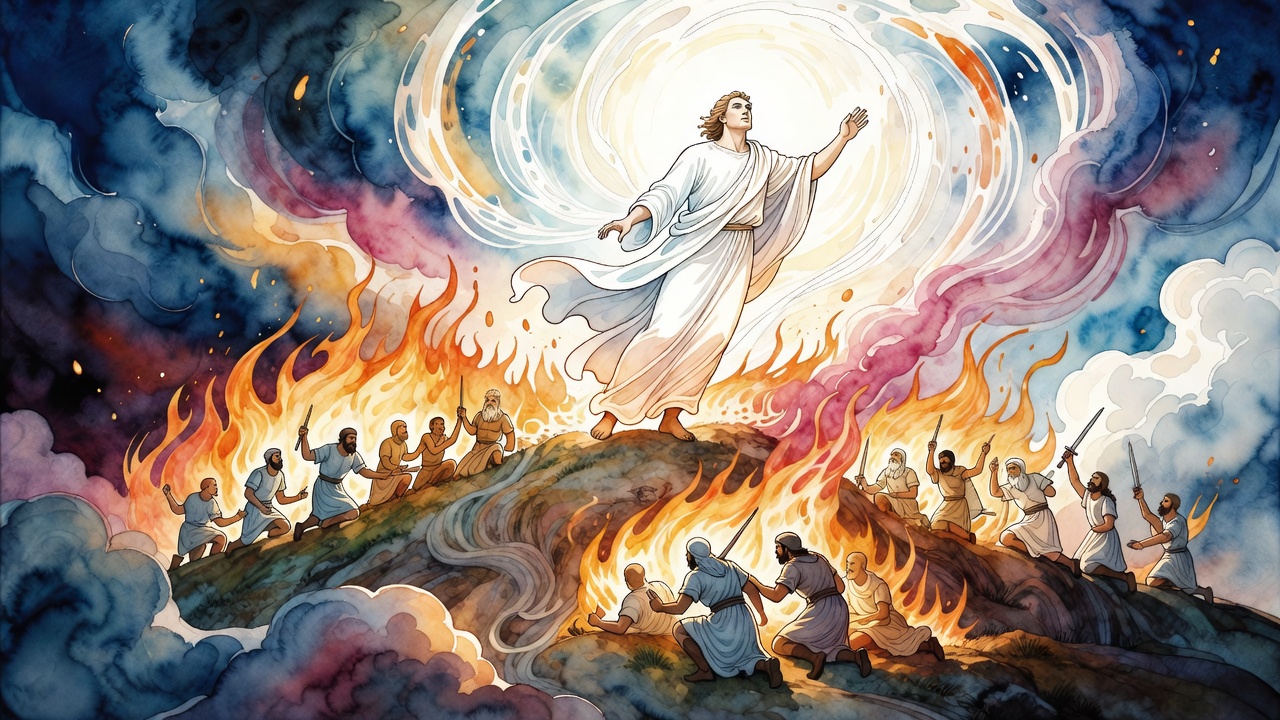
By the Jordan, fifty men from the disciples of the prophets stopped at a distance. They did not crowd the riverbank. They stood opposite, near enough to witness, far enough to survive whatever heaven was about to do.

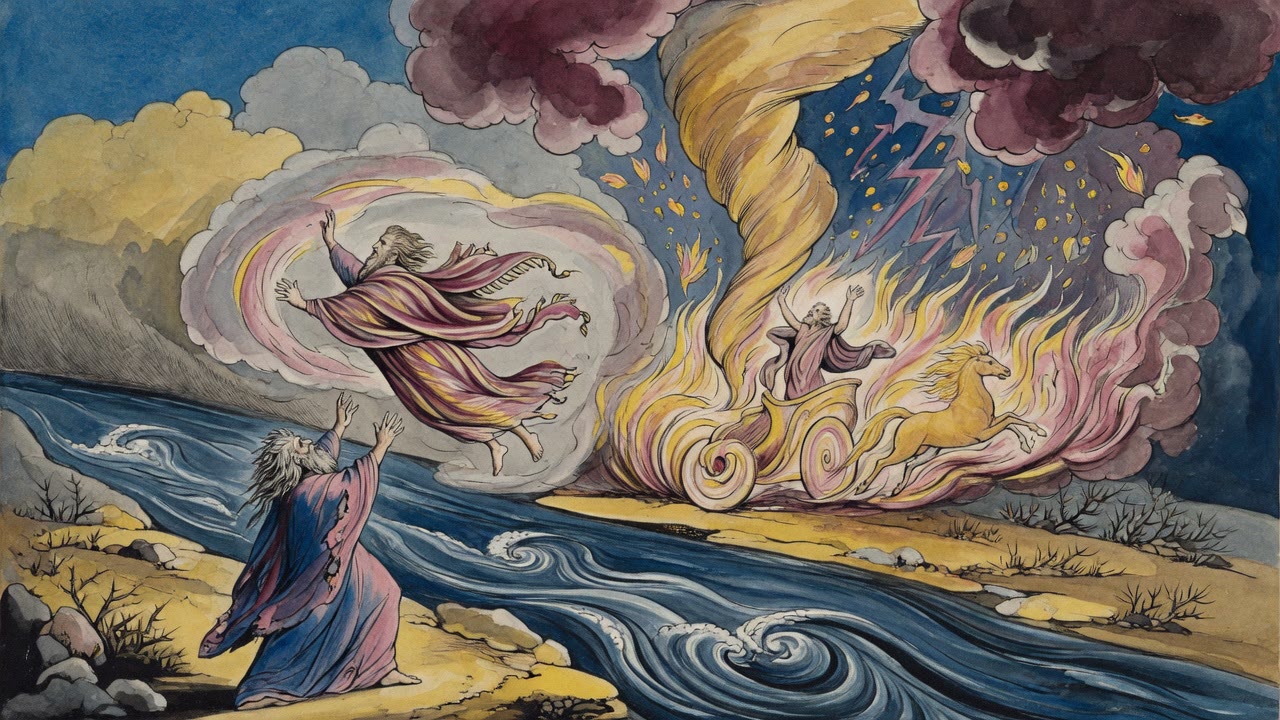
Elijah took his mantle, rolled it in his hands, and struck the water. The river opened to one side and the other. Dry ground appeared where water had been. Master and disciple crossed together, two righteous men walking through a path that had not existed a moment before.

Only after the crossing did Elijah ask. What should be done for you before I am taken from you?

A Firstborn Request

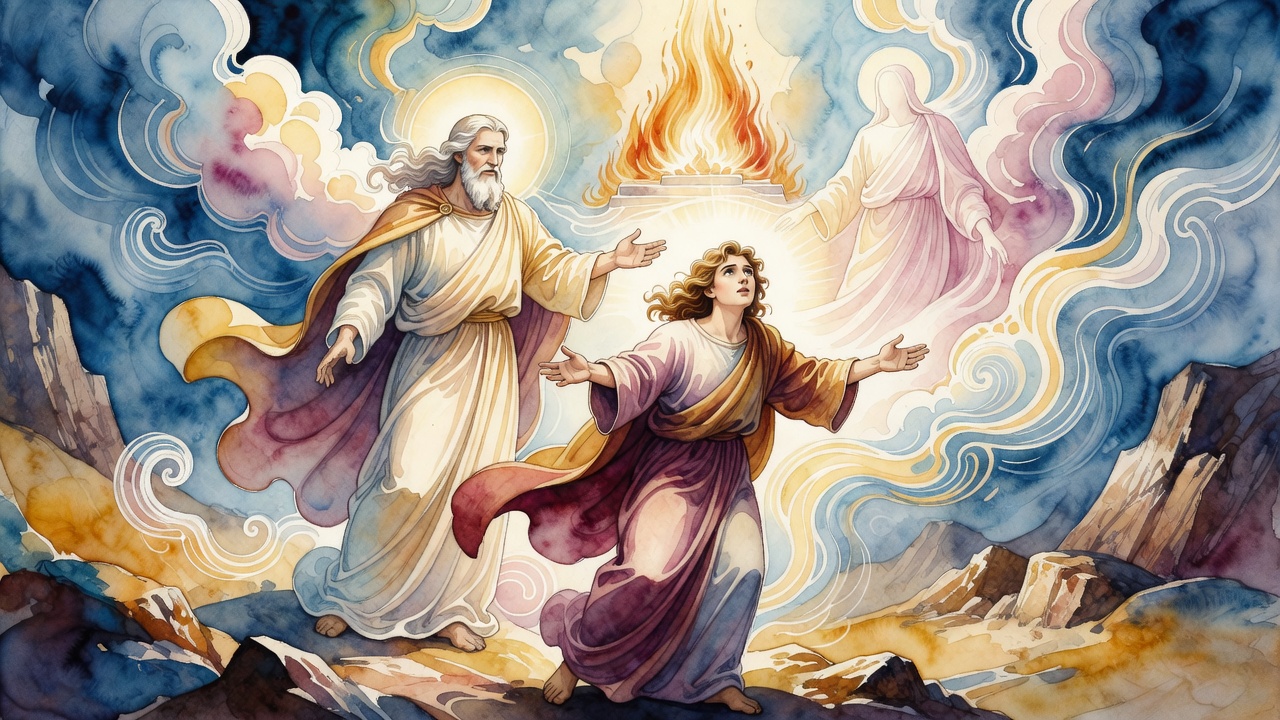
Elisha did not ask for comfort. He did not ask for a private blessing to soften the loss. He asked for inheritance. Let a double portion of your prophetic spirit be with me.

The words carried the weight of a firstborn son. A double portion was not greed. It was the burden of the one who must keep the house standing after the father is gone. Elisha was asking to become the heir of a fire that had scorched kings, fed widows, called down judgment, and stood alone when Israel shook.

Elijah did not flatter him. You have asked a hard thing. The answer would not be settled by affection. If Elisha saw him taken, the portion would be his. If not, the request would fall to the ground.

Fire Made the Decision

They went on walking and speaking. That is how the world looked in the instant before it opened: two prophets mid-conversation, the river behind them, the fifty watchers across the distance, the mantle still warm from Elijah's hand.

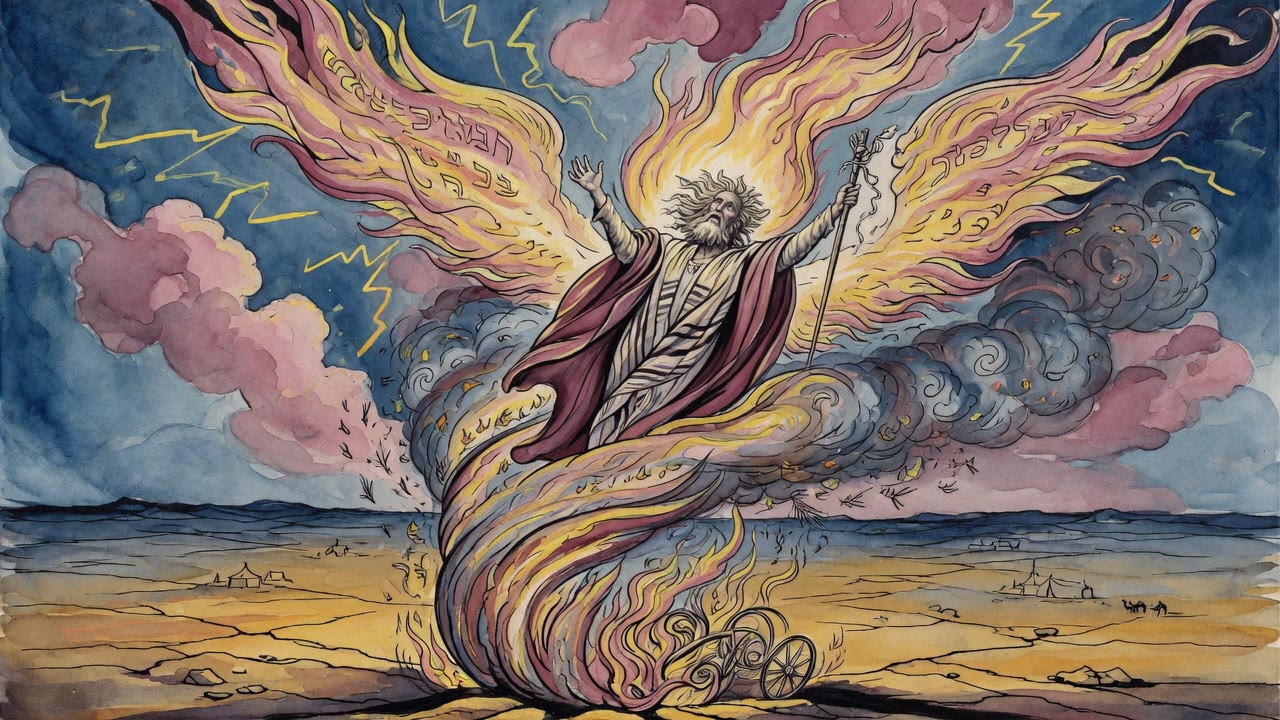
Then fire came between them. Chariots of fire. Horses of fire. Not gently, not as a glow on the horizon, but as a force that split master from disciple. Elijah rose in the storm toward heaven, and the space where his body had been filled with heat, wind, and absence.

Elisha saw. That was the condition, and it was also the wound. He cried for his master, his father, the chariot and horsemen of Israel, the man whose prayer had defended the nation better than an army. Then there was nothing left to see. He tore his garments into two pieces.

The Cloak Came Back Alone

Elijah was gone. The mantle was not.

Elisha picked up the cloak and returned to the Jordan alone. The first crossing had been great because two righteous men crossed together. The second would be harder. One man stood where two had stood. One hand lifted what had belonged to another.

He struck the water. The river opened. The double portion had begun, not as a feeling inside him, but as a path through water under his feet. The witnesses at a distance could measure the change: the master had vanished, and the disciple now carried the force that had divided the Jordan.

Sixteen Wonders and a Fever of Fire

The inheritance did not stay clean. Elijah had eight wonders. Elisha would have sixteen. The number sounds simple until the wonders begin to cost him.

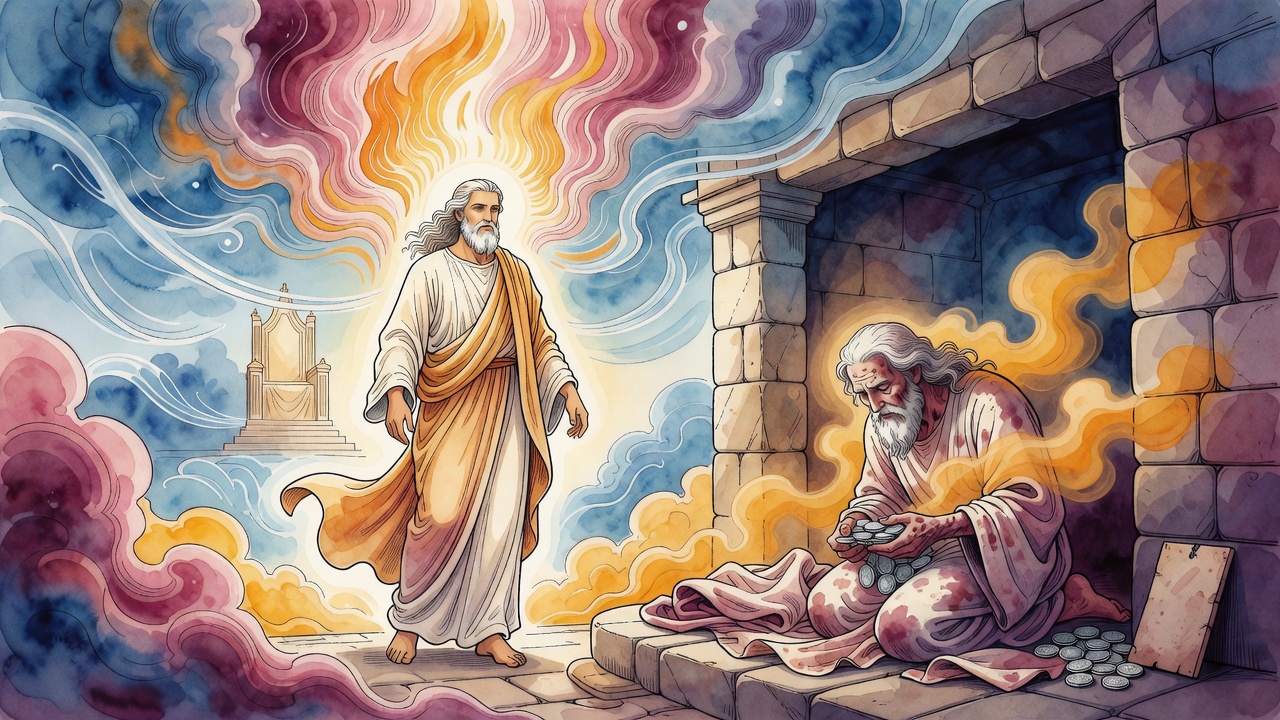
At Jericho, he healed bitter water and made it drinkable. The people who had lived by selling good water saw their trade collapse. Anger rose against the prophet, and Elisha's own anger rose to meet it. A curse left his mouth. A forest sprang up. Bears came from it and devoured the murmuring men. The power was real, and so was the danger of passion inside the man who wielded it.

He paid for that fire in his body. A serious sickness came upon him as correction, because he had yielded to wrath the way Elijah had once yielded to zeal. Later, when prophecy left him during a rebuke of King Jehoram, he had to struggle to awaken it again. The spirit he inherited did not turn him into a machine of miracles. It made him responsible for fire.

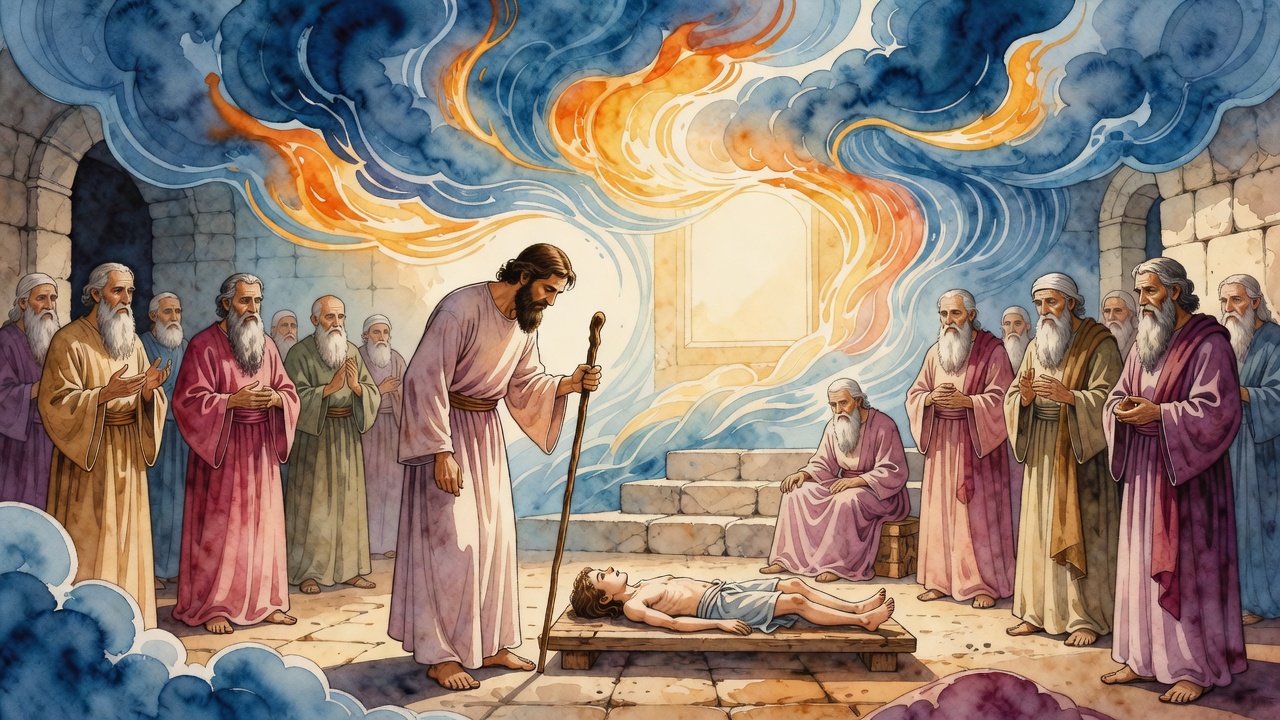
In another house, a dead child lay still while Gehazi carried the prophet's staff and laughed at the task. A staff in a mocking hand remained wood. Elisha had to come himself. Face to face, eyes to eyes, hands to hands, he prayed that the God who had raised the dead by Elijah would let the child live. Breath returned in seven sneezes.

That was the double portion: river, water, judgment, sickness, music, breath. Elijah went up in fire. Elisha stayed below with the cloak, strong enough to split a river and vulnerable enough to be corrected by the power he inherited.


← All myths

From the tradition

Sources

4 sources

The texts this telling draws on, in full. Open a card to read inline, or expand it for a wider, quieter read.

Legends of the Jews 8:5Legends of the Jews

Legends of the Jews turns to Elisha Receives a Double Portion of Elijah's Spirit.

Elijah had promised Elisha a "double portion" of his spirit. And according to Legends of the Jews, that promise was fulfilled instantly. In fact, Elisha performed sixteen miracles during his lifetime, doubling the eight attributed to his master.

The first miracle, crossing the Jordan River, is particularly striking. Elijah had crossed it with Elisha at his side. But Elisha? He traversed the river alone. As the saying goes, two righteous ones always have more power than one.

With great power, as they say, comes great responsibility. And Elisha's next miracle, the "healing" of the waters of Jericho, proves that being a prophet isn't always easy. The story goes that the water was undrinkable, so Elisha purified it, making it safe. Sounds good. Well, not for everyone.

Imagine you're a water merchant, selling clean water for a living. Suddenly, the prophet makes the local water source drinkable, and your business dries up. According to Legends of the Jews, these tradesmen were, let’s just say, not the most virtuous bunch. Elisha, with his prophetic insight, knew that they, their ancestors, and their descendants had "not even the aroma of good about them."

So, he cursed them.

Suddenly, a forest sprang up, and bears emerged, devouring the complaining merchants. Yikes!

Now, we might think they deserved it, but even with their wickedness, Elisha’s actions had consequences. That Elisha was struck with a serious sickness as a "correction" for giving in to passion. It seems even prophets aren't immune to the pitfalls of wrath.

This reminds us of Elijah, who also struggled with letting anger and zeal take over. God, it seems, wanted both of these great prophets to be cleansed of this fault. We find this echoed later in the narrative, when Elisha rebukes King Jehoram of Israel. In that moment, the spirit of prophecy actually left him, and he had to find ways to reawaken it within himself. He had to actively work to regain that connection.

What does this tell us? Perhaps it's that even those chosen for greatness are still fundamentally human, wrestling with the same emotions and challenges as the rest of us. That even with divine power, self-control and compassion are virtues to be constantly cultivated. It's a reminder that being a force for good requires not only power, but also wisdom and a constant striving for inner balance. And that, perhaps, is the most miraculous lesson of all.

Full source
Targum Jonathan on II Kings 2:1-12Targum Jonathan on Prophets

When the LORD raised Elijah in a whirlwind toward the side of heaven, Elijah and Elisha went from Gilgal.

Elijah said to Elisha, "Stay here now, for the LORD has sent me as far as Bethel." Elisha said, "As the LORD lives, and as your soul lives, I will not leave you." They went down to Bethel.

The disciples of the prophets who were in Bethel came out to Elisha and said to him, "Do you know that today the LORD is taking your master from over your head?" He said, "I too know. Be silent."

Elijah said to him, "Elisha, stay here now, for the LORD has sent me to Jericho." He said, "As the LORD lives, and as your soul lives, I will not leave you." They came to Jericho.

The disciples of the prophets who were in Jericho drew near to Elisha and said to him, "Do you know that today the LORD is taking your master from you?" He said, "I too know. Be silent."

Elijah said to him, "Stay here now, for the LORD has sent me as far as the Jordan." He said, "As the LORD lives, and as your soul lives, I will not leave you." The two of them went on.

Fifty men from the disciples of the prophets went and stood opposite them at a distance, while the two of them stood by the Jordan.

Elijah took his mantle, wrapped it, and struck the waters. They split this way and that way, and the two of them crossed on dry ground.

As they crossed, Elijah said to Elisha, "Ask what I should do for you before I am taken from you." Elisha said, "Let there now be a double portion of your prophetic spirit with me."

He said, "You have made a hard request. If you see me when I am taken from you, it shall be so for you. If not, it shall not be."

As they were going on and speaking, behold, chariots of fire and horses of fire separated the two of them, and Elijah went up in a whirlwind toward the side of heaven.

Elisha saw it and cried out, "My master, my master, whose prayer was better for Israel than chariots and horsemen!" He saw him no more. He took hold of his garments and tore them into two pieces.

Full source
2 Kings 2:1-12Prophets (Nevi'im)

And it came to pass, when the LORD was about to take up Elijah by a whirlwind into heaven, that Elijah went with Elisha from Gilgal. And Elijah said to Elisha: Stay here, please, for the LORD has sent me as far as Bethel. And Elisha said: As the LORD lives, and as your soul lives, I will not leave you. So they went down to Bethel. And the disciples of the prophets who were at Bethel came out to Elisha and said to him: Do you know that today the LORD will take your master from over your head? And he said: Yes, I also know it; be silent.

And Elijah said to him: Elisha, stay here, please, for the LORD has sent me to Jericho. And he said: As the LORD lives, and as your soul lives, I will not leave you. So they came to Jericho. And the disciples of the prophets who were at Jericho drew near to Elisha and said to him: Do you know that today the LORD will take your master from over your head? And he answered: Yes, I also know it; be silent. And Elijah said to him: Stay here, please, for the LORD has sent me to the Jordan. And he said: As the LORD lives, and as your soul lives, I will not leave you. So the two of them went on.

And fifty men of the disciples of the prophets went and stood opposite them at a distance, while the two of them stood by the Jordan. And Elijah took his mantle and rolled it up and struck the waters, and they were divided to this side and to that side, and the two of them crossed over on dry ground. And it came to pass, when they had crossed over, that Elijah said to Elisha: Ask what I shall do for you before I am taken from you. And Elisha said: Let a double portion of your spirit be upon me, please.

And he said: You have asked a hard thing. If you see me taken from you, it shall be so for you; but if not, it shall not be. And it came to pass, as they continued walking and talking, that behold, a chariot of fire and horses of fire separated the two of them, and Elijah went up by a whirlwind into heaven. And Elisha saw it, and he cried out: My father, my father, the chariot of Israel and its horsemen! And he saw him no more. And he took hold of his own garments and tore them into two pieces.

Full source
Pirkei DeRabbi Eliezer 33:8Pirkei DeRabbi Eliezer

Let me tell you a story from Pirkei DeRabbi Eliezer that might sound familiar. It's about miracles, doubt, and what it really takes to bring something back to life.

You remember Elijah. The one who ascended to heaven in a whirlwind! Big shoes to fill, for sure.

Anyway, Elisha is faced with a tragedy: a child has died. He sends his servant, Gehazi, ahead with his staff, instructing him to lay it on the boy's face. Simple enough. But Gehazi… well, Gehazi wasn't exactly a believer.

The whole thing was "laughable in his eyes." Can you imagine? He goes around asking people, "You really think this stick is going to raise the dead?" Seriously undermining the mission!

And guess what? Nothing happens. The staff, in Gehazi's hands, is just a piece of wood.

So Elisha has to go himself. And this is where it gets interesting. He doesn't just wave his hand or speak a command. He identifies with the child, completely and utterly. The text says he put his face upon the face, his eyes upon the eyes, his hands upon the hands. He becomes a mirror image of the boy.

Then, he prays. And what does he say? "Sovereign of all the worlds! Just as Thou didst perform miracles by the hand of Elijah, my master, and brought the dead to life, likewise let this child live." He acknowledges the past, the legacy of his teacher, and asks for that same power to flow through him.

He doesn't just pray once, either. (2 (Kings 4:3)5) tells us, "Then he returned, and walked in the house once to and fro; and went up, and stretched himself upon him." He pours his energy, his very being, into this act. He walks back and forth, building up the tension, the anticipation. He stretches himself out on the child again. More identification. More prayer.

And finally, "the child sneezed seven times." Seven times! Life returning, breath by breath. A miracle.

What’s the takeaway here? Is it just about Elisha’s power? I don't think so. It's about the power of belief, the necessity of empathy, and the corrosive effect of doubt. Gehazi's skepticism became a self-fulfilling prophecy. He couldn't perform the miracle because he didn't believe it was possible. Elisha, on the other hand, threw himself completely into the task, body and soul.

So, the next time you're facing a seemingly impossible situation, ask yourself: Are you approaching it with the faith of Elisha, or the skepticism of Gehazi? And what "staff" are you holding that needs a little more belief to work its magic?

Full source