The Mouth That Doubted God Became the Mouth That Sang at the Sea
Miriam stood at the Nile waiting to see if her prophecy was true. Moses opened the Song with the same word he had used to accuse God of abandoning Israel.
Table of Contents
 Click for full size
Miriam Stood at the River to See if Her Voice Had Lied
Before Moses was born, his older sister had made a claim. She had stood in front of her parents and said that their mother would give birth to the one who would save Israel. She was a child. She spoke with the certainty of a prophet. The family believed her enough to let the belief shape their actions.
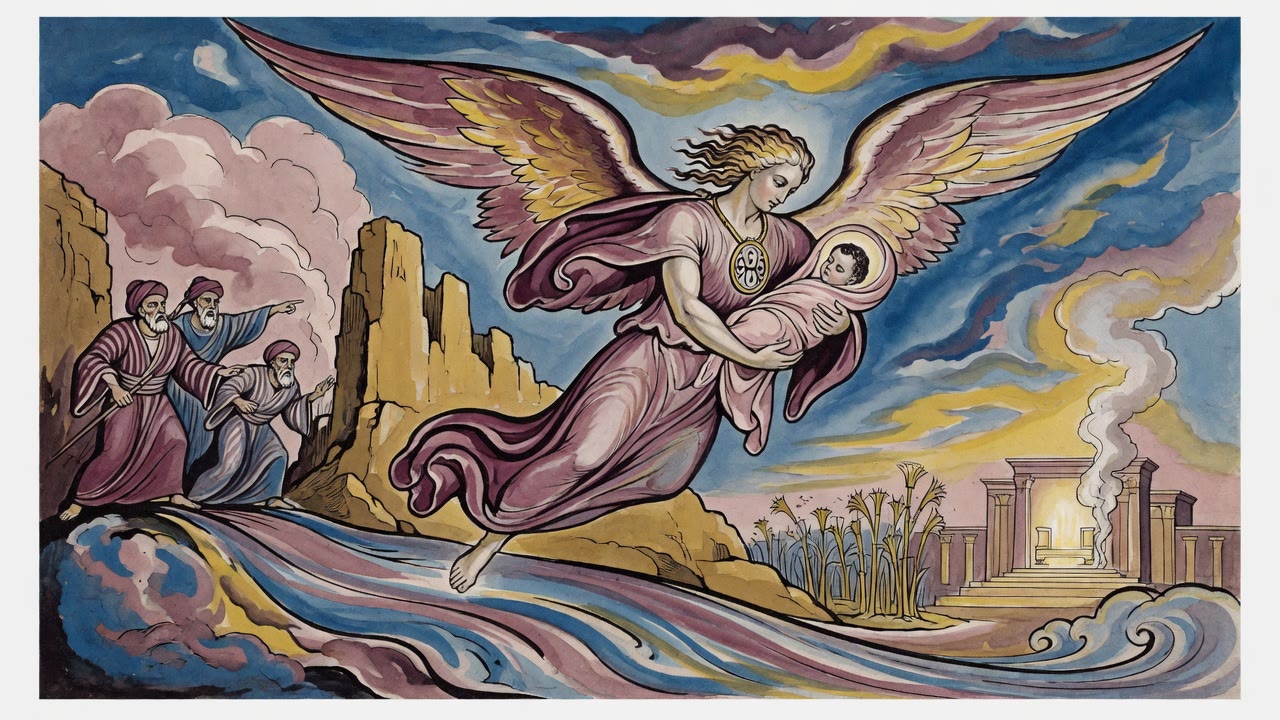
Then Moses was born and the house filled with light and her father kissed her on the head. Then Pharaoh's decree came and the baby went into a basket and the basket went into the river. Her mother, standing on the bank watching the basket move with the current, turned to the girl who had made the prophecy and asked: "where is your prediction now? What does your vision say about a baby in a basket in the Nile?"
Miriam did not retreat. She walked down the bank and positioned herself across the water and watched. She was not there out of sisterly feeling, though she had that too. She was there to find out whether the voice that had spoken through her had told the truth or whether she had been a child playing at prophecy. The Exodus opens with a girl standing at a river, waiting to learn if her own mouth had betrayed her.
Moses Learned What It Costs to Speak for God
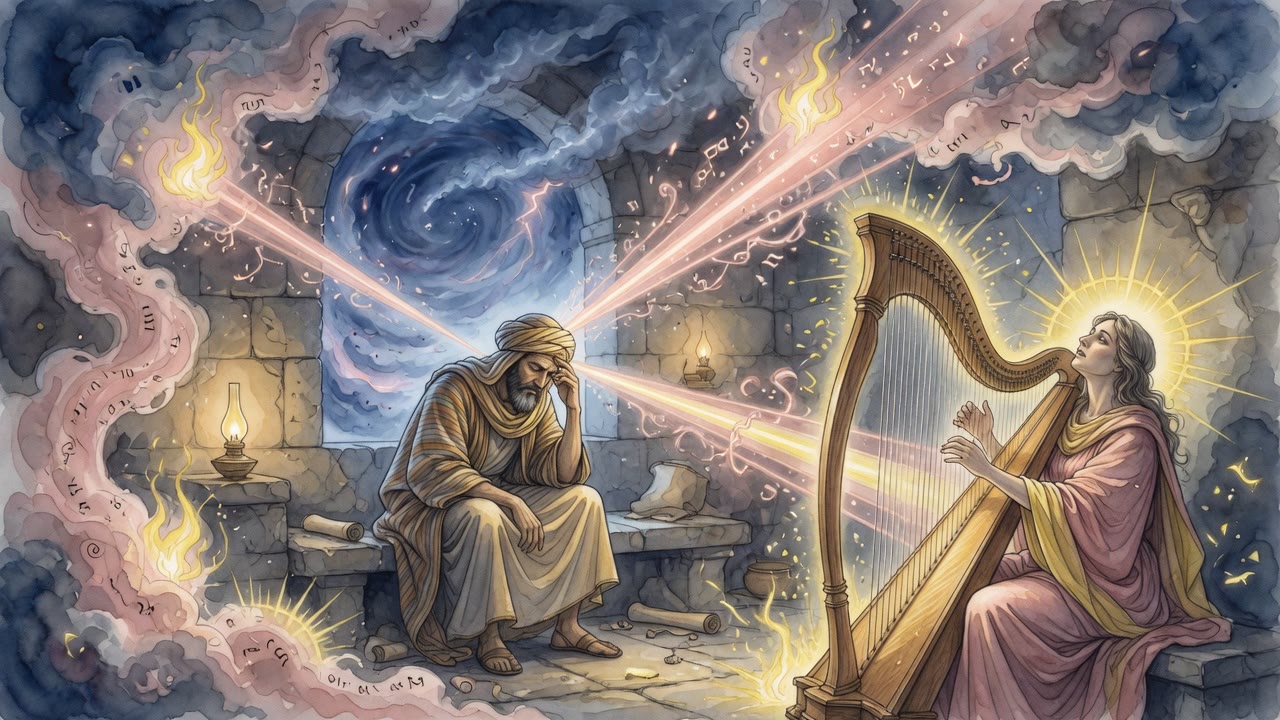
Miriam's silence on the bank became Moses's stammer at the bush. By the time God sent Moses back to Egypt, he had been in the wilderness for forty years and had long since stopped thinking of himself as a person whose words carried authority. He told God he could not speak. He meant it.
He also told God that Israel would not believe him. God had already guaranteed him the opposite, but he said it anyway. Shemot Rabbah called this slander: Moses had accused the children of Abraham of being faithless, when their lineage proved the opposite. Aaron was sent as his spokesman in part because Moses had doubted the people who were going to carry the mission.
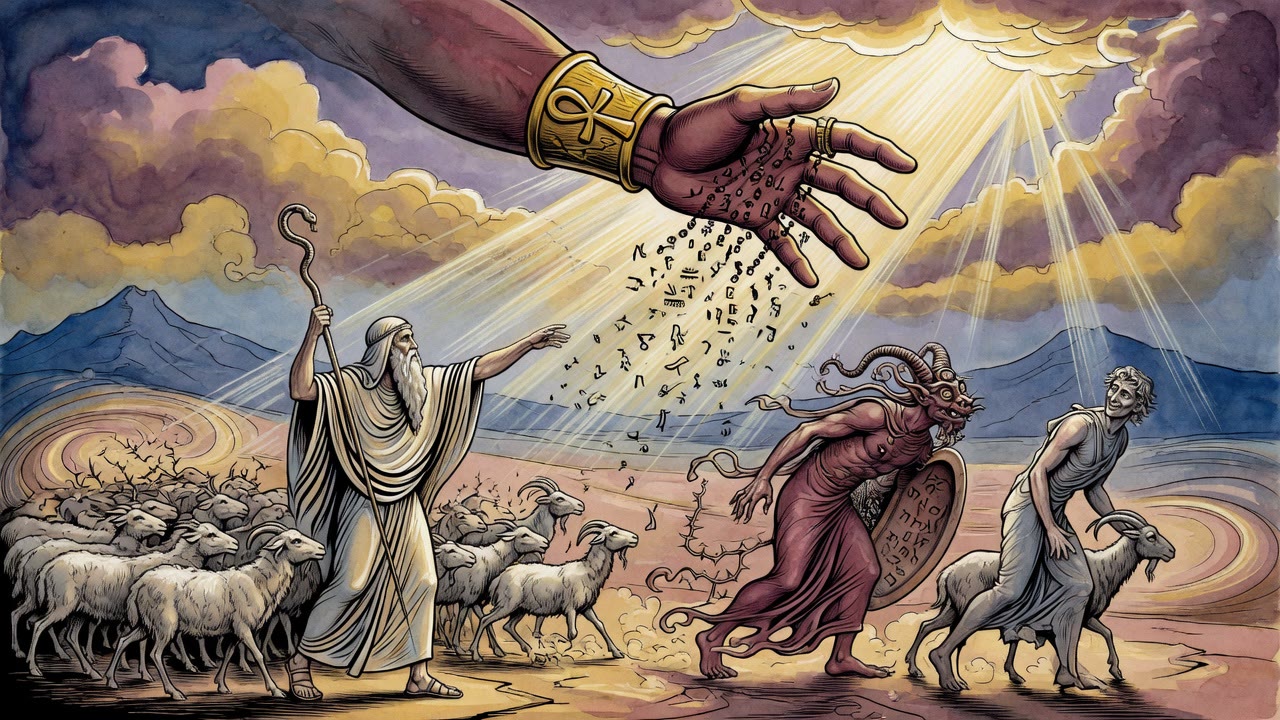
When Moses finally stood before Pharaoh and the signs began and the plagues followed, the thing that changed was not Moses's eloquence. He was still the man who could not speak cleanly. What changed was the weight behind the words. He had been wrong about Israel. He had been wrong about himself. The correction of those two errors was the education the wilderness had spent forty years preparing him for.
Aaron Carried Every Word Moses Gave Him
Moses told Aaron every word and sign God had commanded. He did not summarize. He did not edit. He handed the material over complete, the way a person who has learned to be precise hands off precision. Aaron's job was to hold what Moses gave him and transmit it accurately to Pharaoh and to the people.
The rabbis noted the symmetry. Moses could not speak easily. Aaron could speak very well. But Aaron only spoke what Moses gave him. The man who could not speak became the source. The man who could speak became the channel. The limitation and the gift were distributed between two brothers, and neither one was whole without the other. This was not an arrangement God had to settle for. It was the arrangement God designed.
The Word That Carried Both an Accusation and a Song
Moses opens the Song at the Sea with the word az: then. Az sang Moses and the children of Israel. It is the same word Moses had used months earlier when he stood before Pharaoh the first time and the situation had gotten worse instead of better. He said: "from az, from the time I came to Pharaoh to speak in Your name, he has done evil to this people, and You have not rescued Your people at all." The word that opened his accusation against God opened his greatest hymn of praise.
Shemot Rabbah heard that echo and did not let it go. The rabbis read the whole Song at the Sea not as pure celebration but as Moses making something right with a single word. He had used az to accuse God of abandonment. Now he used az to confess that the abandonment had not been abandonment at all. The delay had been preparation. The silence had been architecture. The man who had doubted Israel's faithfulness and God's rescue was now standing on the far bank of the Sea singing the confession that the doubts had been wrong.
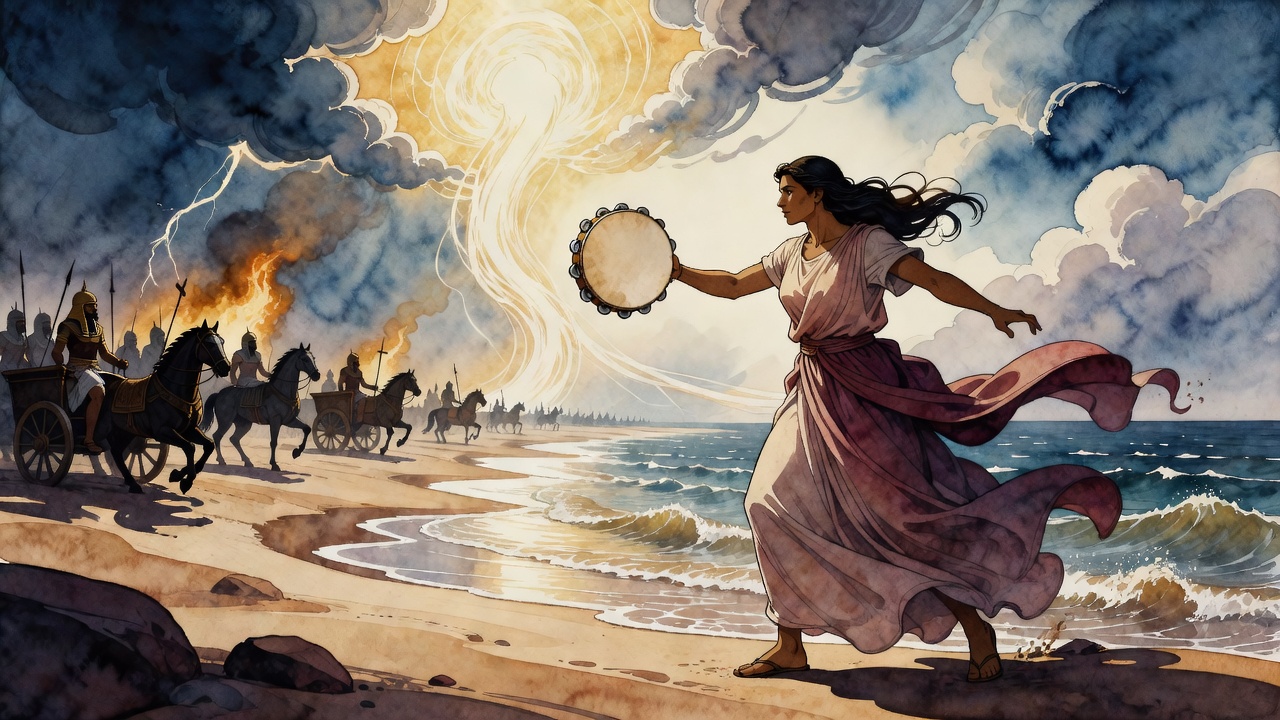
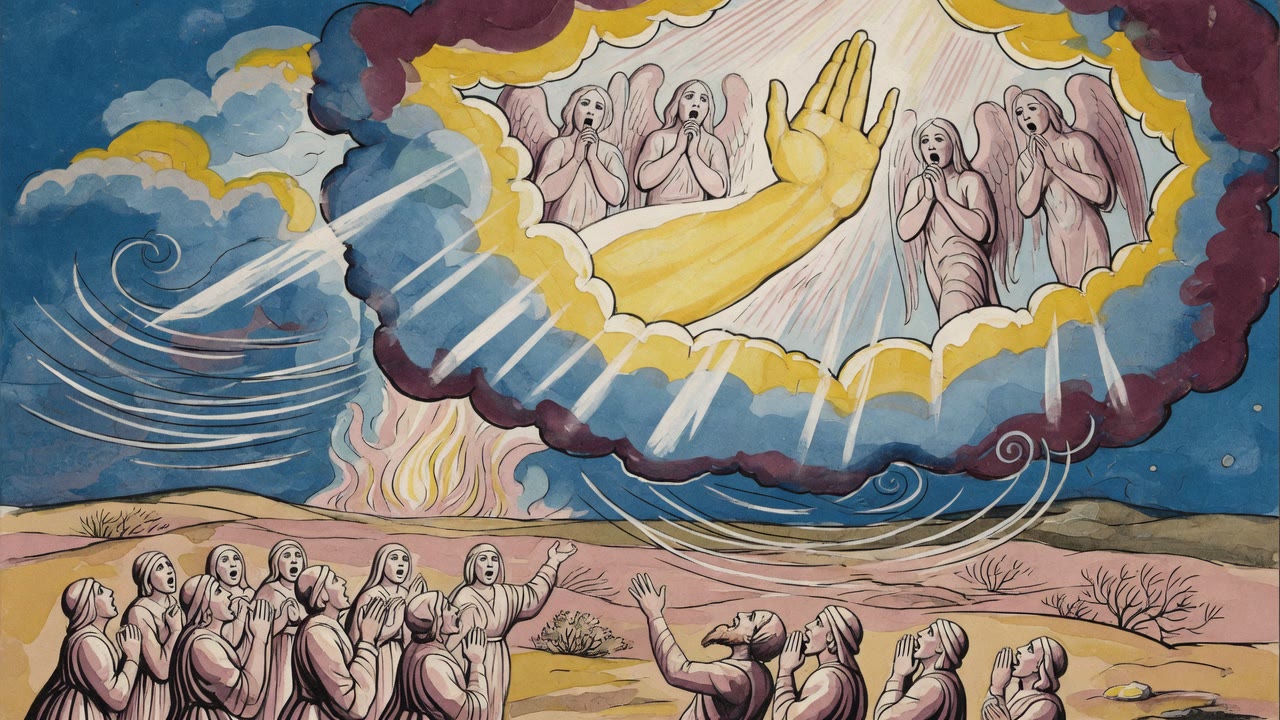
Miriam took up a timbrel and danced. She had waited at the river to find out if her prophecy was true. It was. The voice that had spoken through a child had delivered a boy in a basket to the household of Pharaoh's daughter, and the boy had grown into the man who was now singing on the dry ground between the water walls. She had earned the dance. She danced.
← All myths