The Net Maker Who Claimed No Mind for Torah
A scoffer said heaven never gave him understanding for study. The teacher asked who taught him to weave nets, and the man wept.
Table of Contents
 Click for full size
The Scoffer on the Road
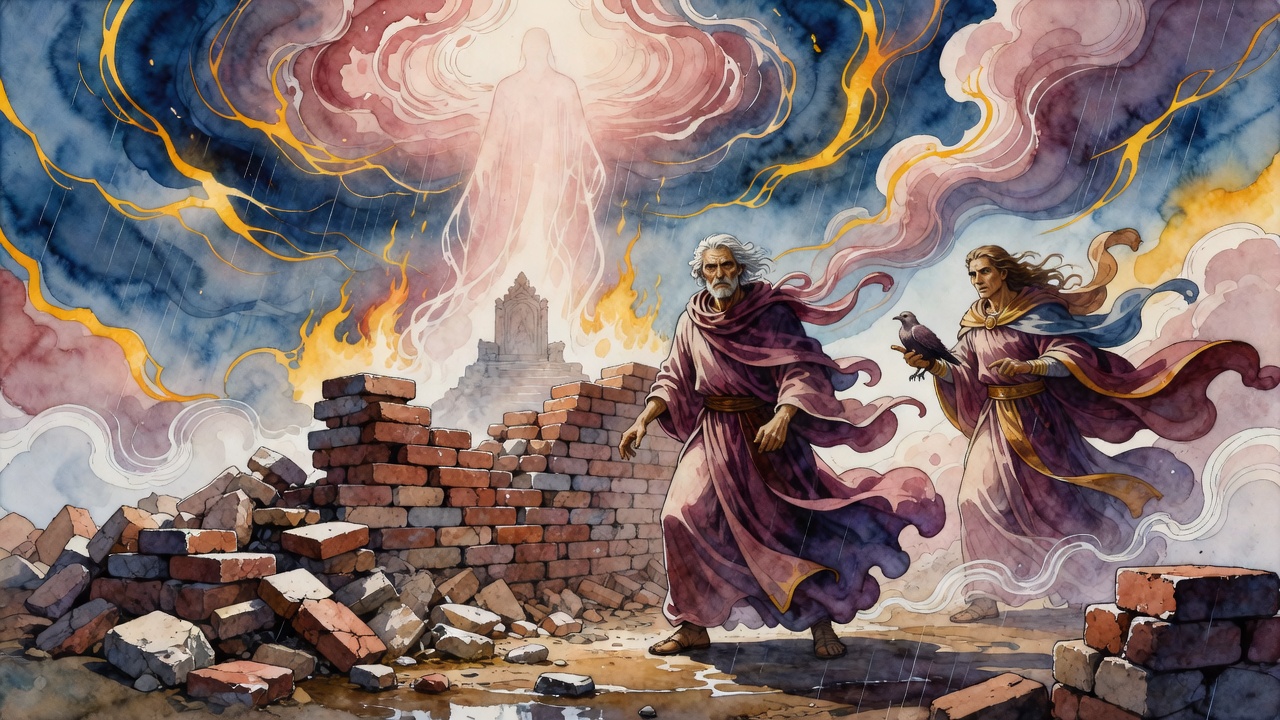
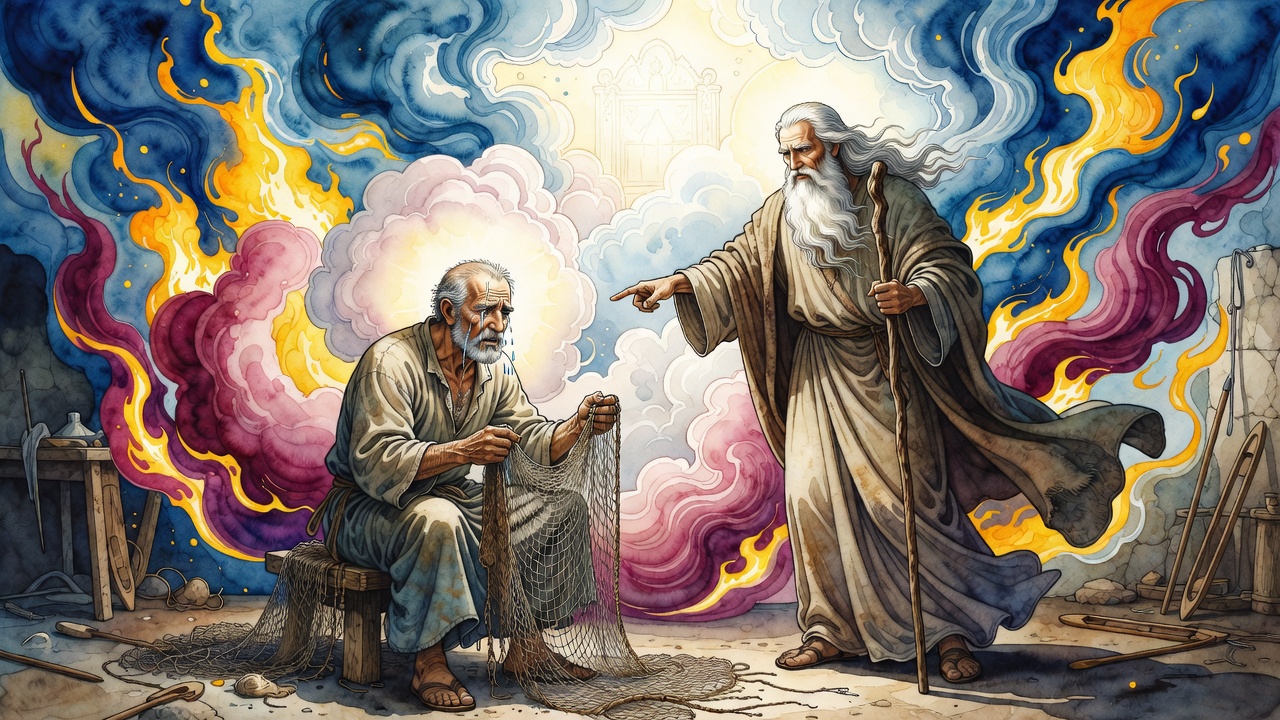
While traveling from place to place, the teacher met a man who knew neither Scripture nor Mishnah, a scoffer who came at him with mockery. The teacher asked gently: my son, what will you say to your Father in heaven on the day of judgment? The man had his defense ready. Understanding was never given to me from heaven, he said, so how could I have studied?
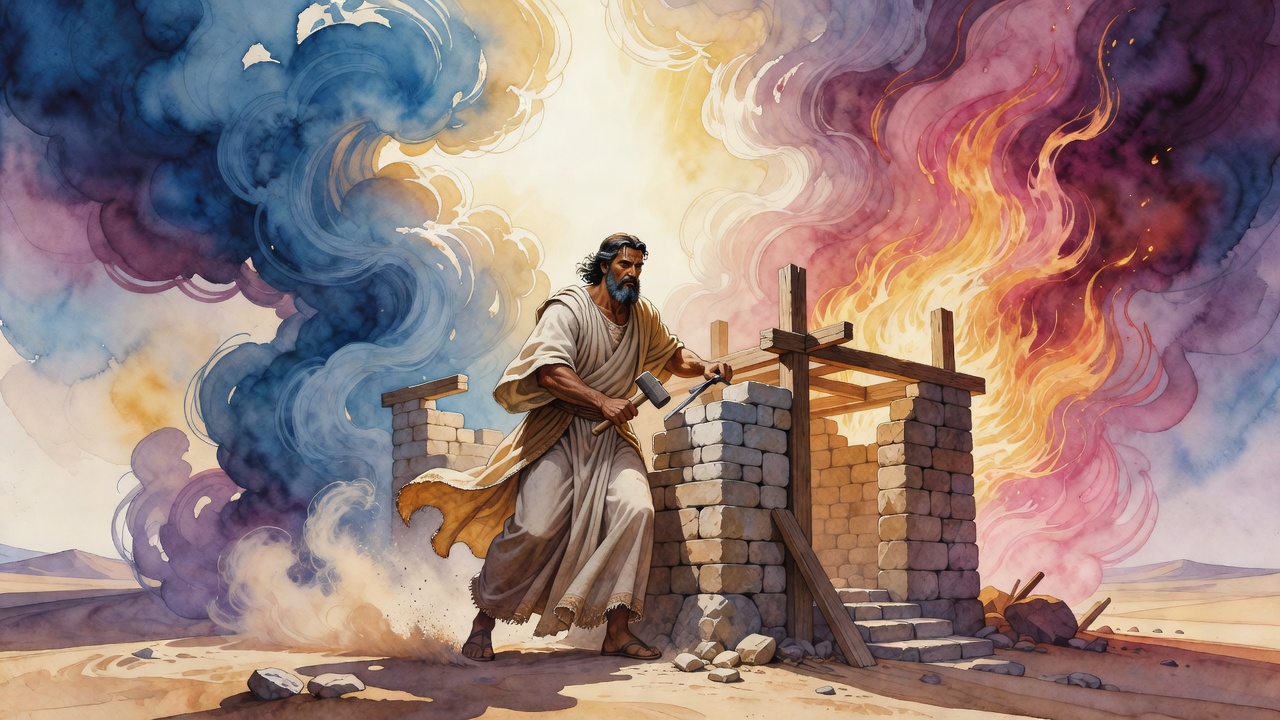
The teacher did not argue theology. He asked about the man's trade. A fisherman, the man said. And who taught you to take flax, weave it into nets, cast them into the sea, and haul up the fish? At that the man answered proudly that for this, heaven had given him understanding and knowledge.
The Trap Closes Softly
Then the teacher closed the trap: for nets and fishing you were given wisdom, but for Torah, which is as near to you as your own mouth and heart, you claim you were given none? The man broke down and wept. The teacher comforted him, explaining that every person offers this excuse about whatever craft occupies him, but their own deeds testify against them.
The beginning and end of everything is the fear of Heaven and good deeds. Learning without reverence is empty. The chapter warns against laziness and excess in eating, drinking, and sleeping, which impoverish a person, for the words of Torah settle only in the heart of one who wears himself out for them. The reward, the teacher added, is staggered, doubled and redoubled in the days to come.
How Redemption Starts
How is Israel finally redeemed? Not out of suffering or bondage alone, but out of ten people sitting together, each studying aloud with his fellow. So it was in Egypt, where the ancestors clung to Torah even before Sinai, and so it will be again. The fisherman who thought he had no mind for letters had already proven he could learn a hard craft that feeds bodies. The same mind could feed a soul.
He wiped his face with a hand that still smelled of rope and salt. The scoffer posture had fallen off him the way a wet net falls when the haul is done. What remained was a man who had just heard his own skill used as evidence against his excuse.
Bread and Water of the Soul
Elsewhere the same school taught what happens when a person sins. He is, in effect, wishing the world undone, pushing away the feet of the Divine Presence whose glory fills the earth. So God may exile such people from their homes and lands. The difference between one fate and another comes down to whether a person reads and studies.
Picture a king with many sons whom he loves completely. He sends them off to learn Scripture and Mishnah and good conduct, then waits, longing for them to visit. When they do not come, he goes to them himself, finds them bent over their studies, and gathers them up, kissing and embracing them, carrying some on his shoulders and some on his arms back to his city. That is how God gathers His people, like a shepherd carrying the lambs in his bosom.
Never Enough, Always Near
No one should ever say he has studied enough. After an hour comes death. Better to lift your eyes to the sun, moon, and stars that rise early and stay late to do their Creator's will, and resolve to rise early and stay late for Torah in the same way. The words of the Torah are like bread and water, without which a person cannot last even an hour. They are like wine and milk too, raising the young as milk raises a child and gladdening the heart as wine restores the soul.
The fisherman went back toward the water with a different question in his mouth. Not "how could I have studied," but "who taught me the net." If heaven had already answered the second, the first was no longer a wall. It was a door he had been leaning against without trying the latch.
Salt crusted the man's wrists. His hands were rope-hard. His chest lifted when he spoke of knots, tides, and the weight of a full net at dawn. Tears cut clean lines through the dust on his face. He wiped his eyes with a sleeve that still smelled of the boat.
The arms that haul nets can also hold a page steady. Behind him the teacher kept walking. Ahead of him the sea waited, and beside the sea, for the first time, a book did not seem impossible. If heaven had taught him the sea, heaven had not locked the book.
← All myths