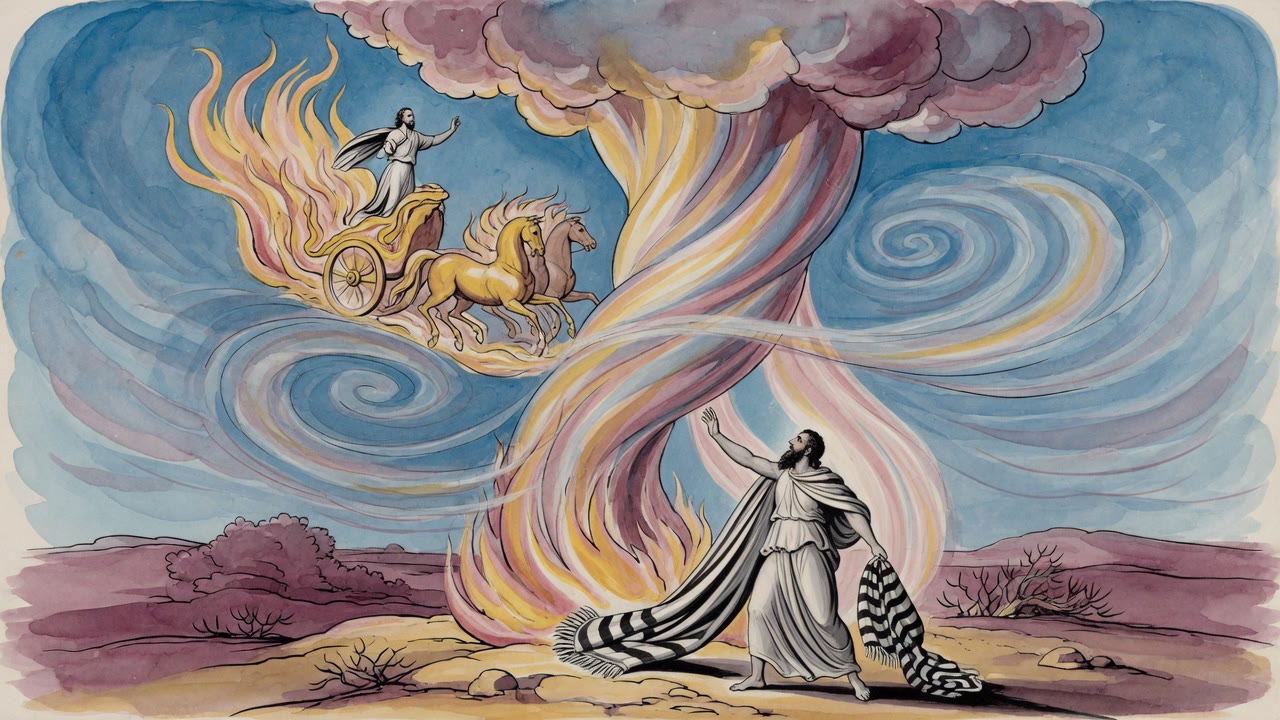
The Oath by the Gazelles and the Blood No One Will Claim
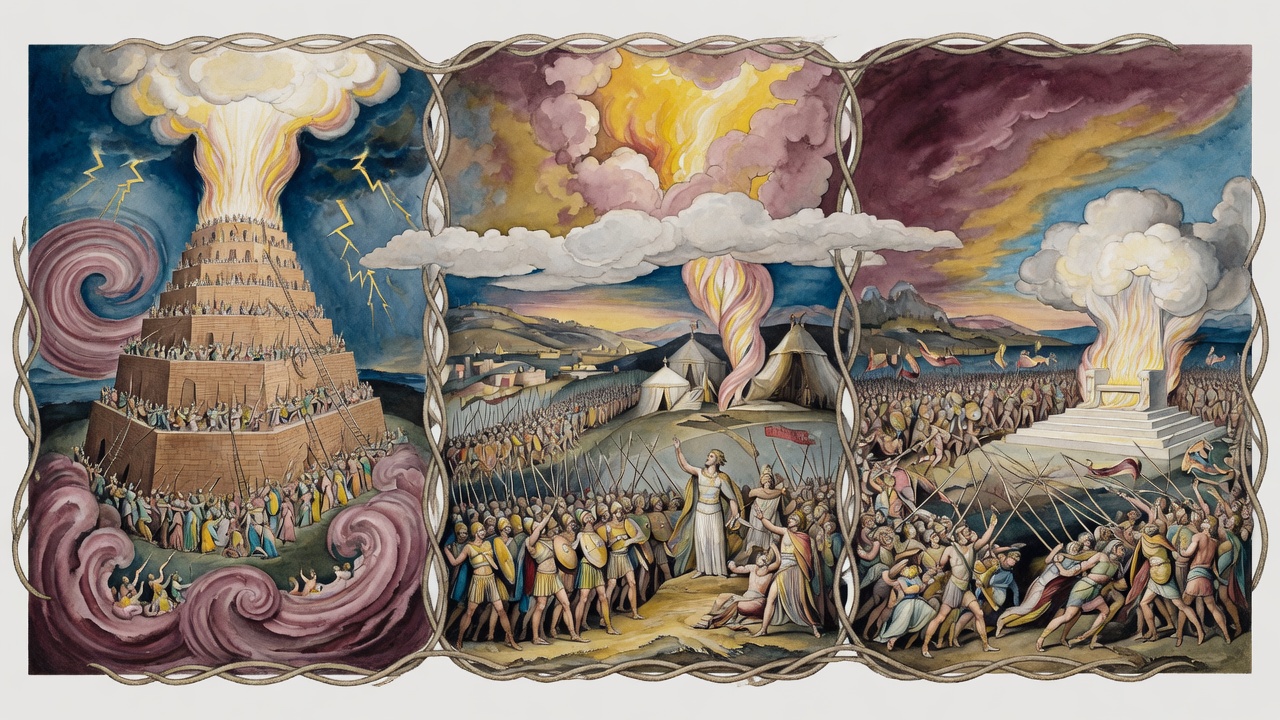
Moses turned their faces off the drowned wheels. What is coming is greater, he said. Gog was already counting the fools who had tried Israel first.
Table of Contents
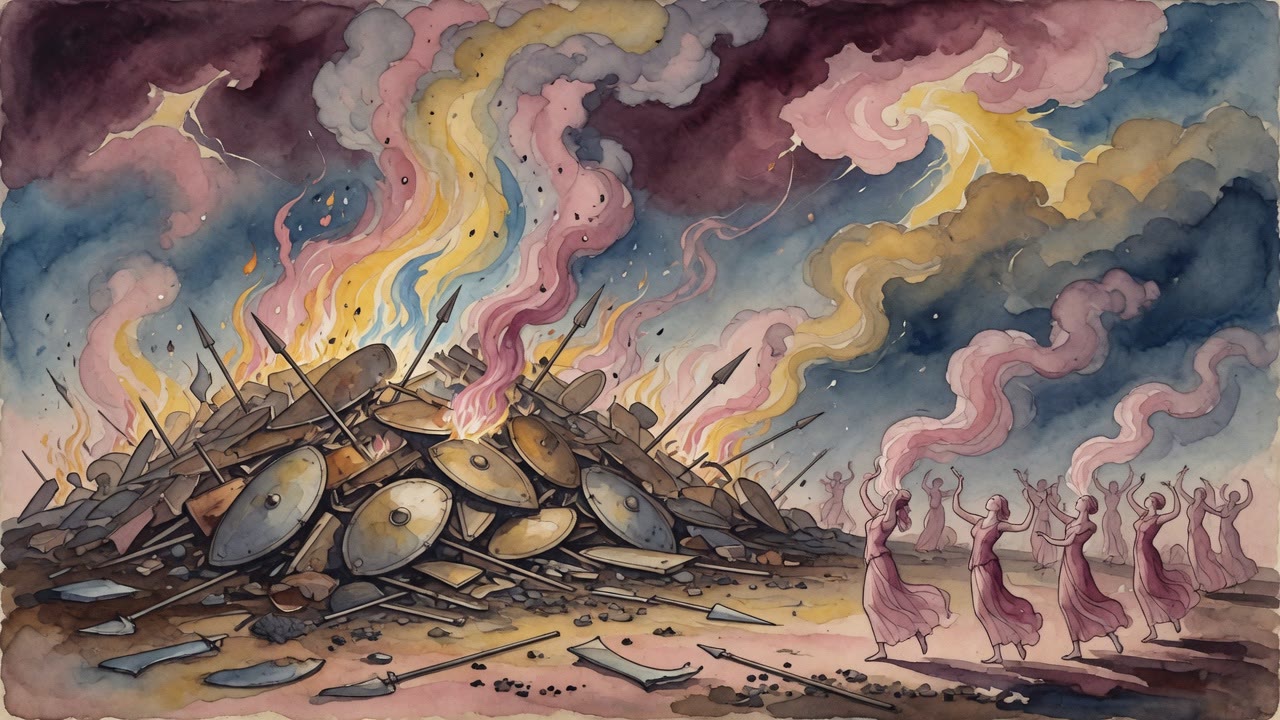
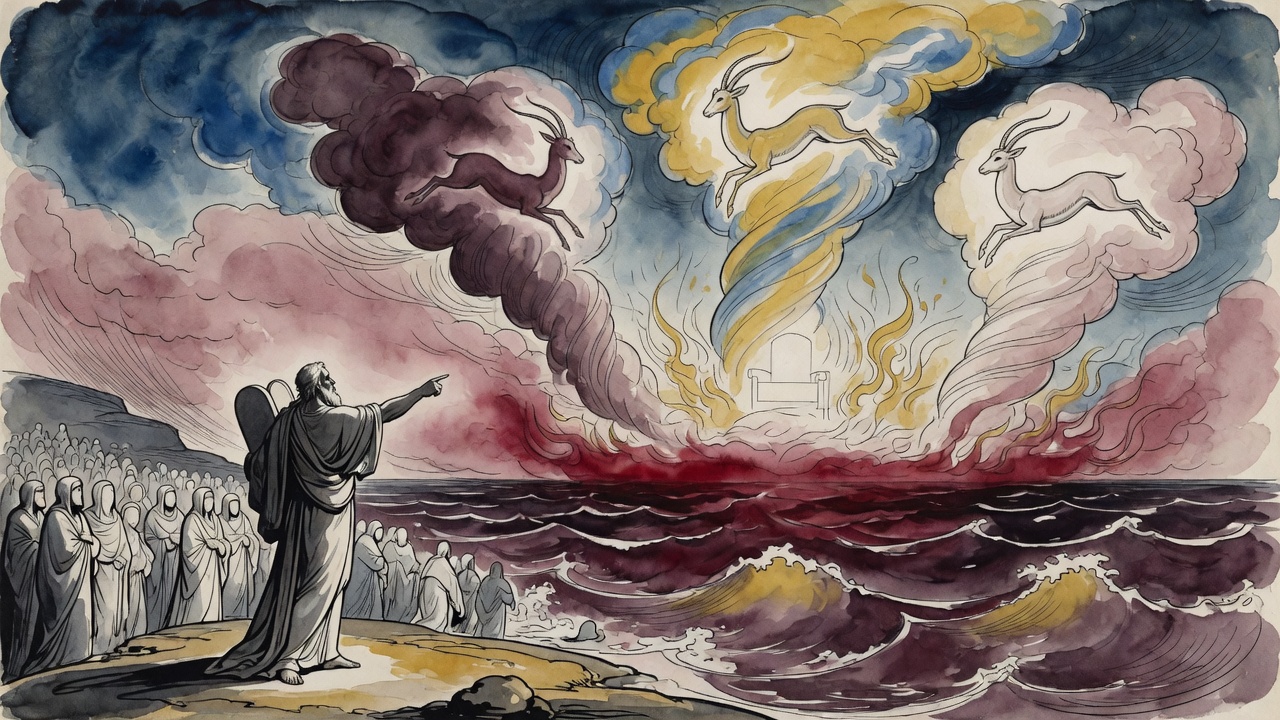
The sea gave the army back in pieces. Wheels. Breastplates. The padded collars of horses, riding in on the foam while the drums went quiet in the women's hands. Moses stood in the wet sand and would not let the people look down. He turned their faces east, past the wreckage, and told them the wreckage was the smaller thing.
 Click for full size
"You have seen what He did here," he said. "What is coming is greater."
He showed them the world they were standing in. Wars in it. The evil inclination working under a permit. Ha-Satan the Accuser under a permit. The Angel of Death licensed to walk here and nowhere else. In the world coming there would be no servitude, no permits, and no tears left on any face.
Moses had heard the shape of it in Egypt, before Aaron opened his mouth in front of Pharaoh. "In this world I collect from Egypt with ten plagues," God had told him. "In the world to come I collect from Gog the same way, with pestilence and blood, torrential rain and hailstones, fire and brimstone."
Gog Counts the Fools Who Went Before Him
The vision ran forward and the shore dropped away. Israel sat in its own land with no king and its gates unbarred. Word of that reached Gog. He took seventy-one nations by the collar and marched them toward Jerusalem, talking the whole way up so the men behind him would hear how clever the war was.
"Pharaoh was a fool," he said. "He decreed death for the boys and left the girls alive. Balak was stupid, hiring a mouth to curse them without learning that their God blesses them. Haman was out of his mind, wanting them slaughtered without asking whether their God could pull them out. I make war on their God first. After that the people are nothing."
The answer came before the siege lines were dug. "Wicked one. You want a war with My people? By your life, I will finish you." The hailstones kept in the firmament came down on the seventy-one armies. The plague went into the men still standing. Flesh left the bone while the legs held. Tongues dissolved in the mouths that had cheered him.
Gog had counted the old enemies as fools for striking Israel and leaving God unfought. He got the war he asked for. He did not get a second speech.
The King With One Ear Stopped
Out of that wreck another king stood up, bald and brazen in the face, one eye small and one large, a right arm a handbreadth long and a left arm two and a half cubits, leprosy across his forehead. His right ear was stopped shut and his left hung open. Good news got the stopped ear. Anything vicious got the open one, and Armilus leaned in.
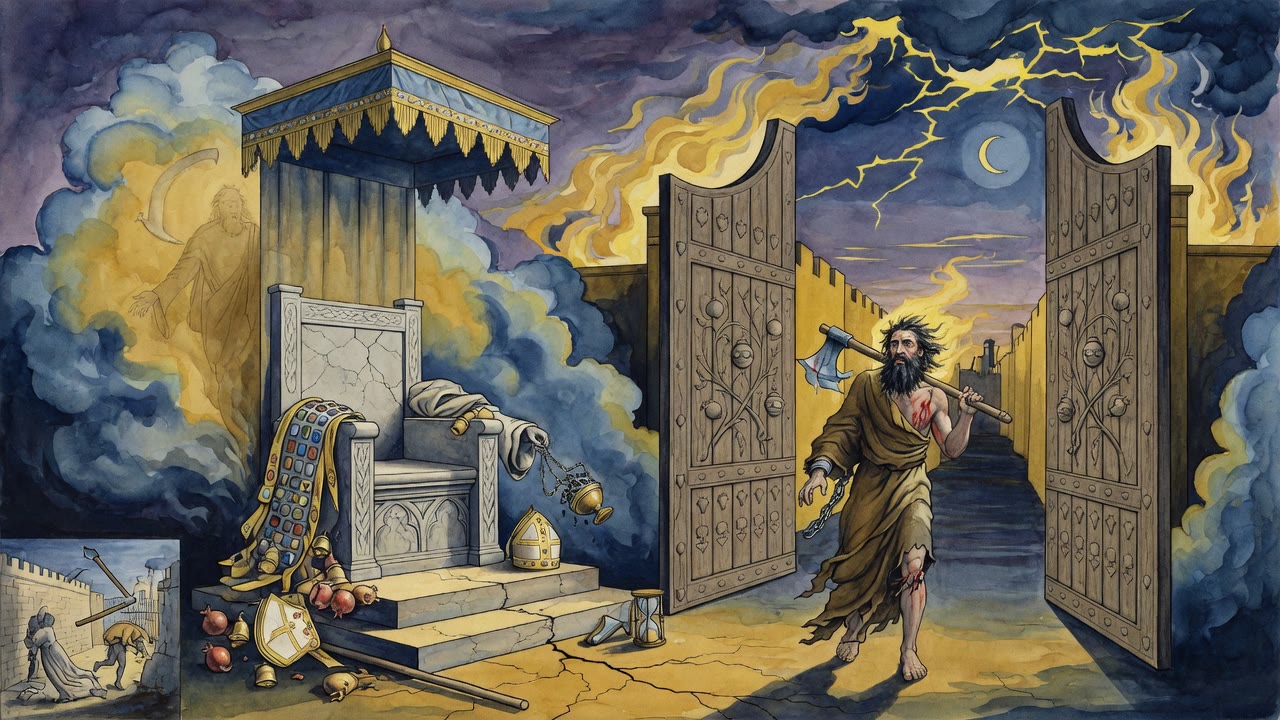
He made war on Israel three months. Then he went up to Jerusalem and killed Messiah son of Joseph in the open, in front of the people who had waited for a different ending. The mourning over that body was the mourning of a house that has lost its only son. No one closed the gates in time. No one got the body out of the street before the wail started.
Then the cloud came down. Messiah son of David rode it with dominion and a kingdom put into his hands, and he drew nothing. He breathed. Armilus dropped as if a string had been cut, the open ear still turned toward whatever cruelty had been coming next.
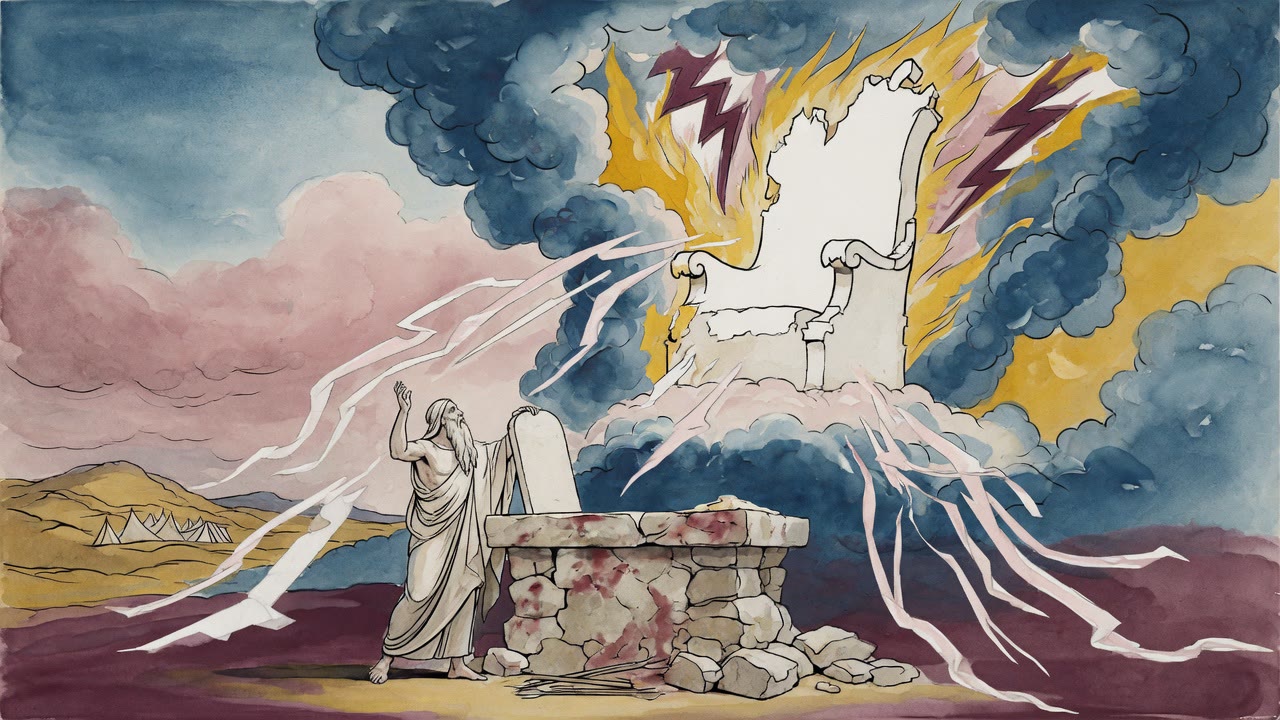
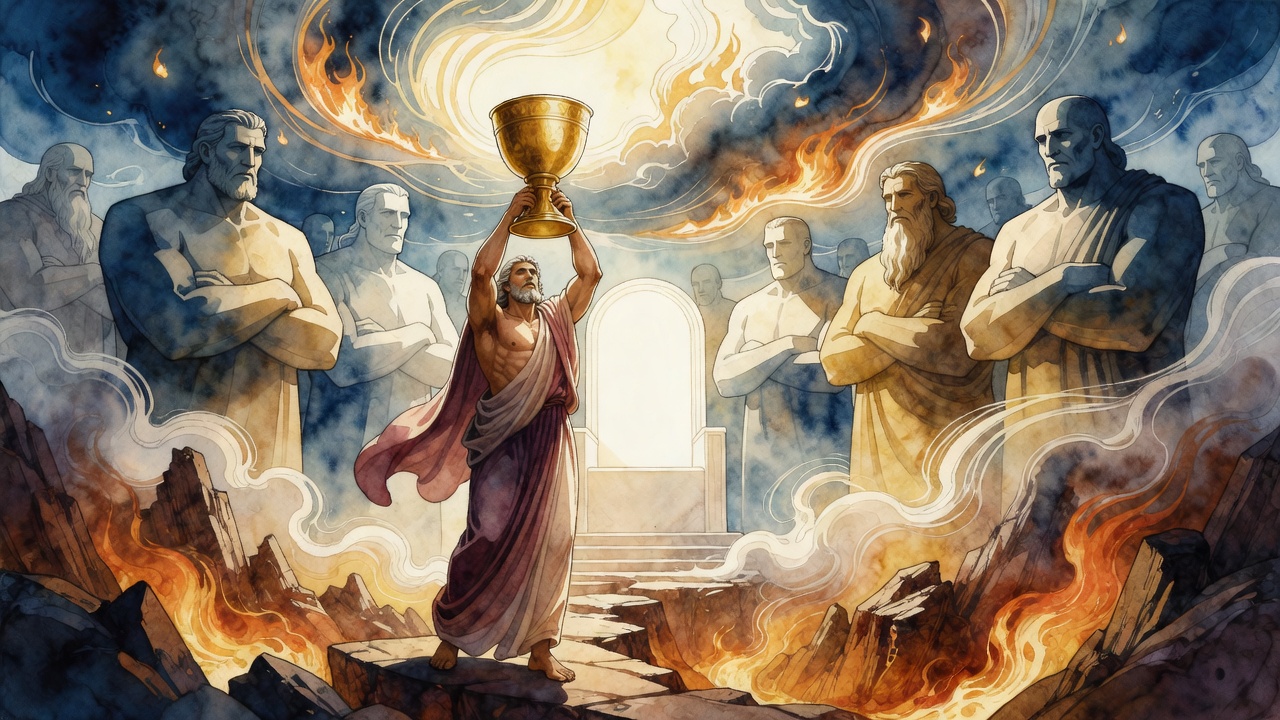
After that the scattered came home. Seventy-two pearls hung over Jerusalem, burning from one end of the world to the other. The Temple came down out of heaven finished. Israel ate the Leviathan there two thousand years. Then the throne of judgment went up in the valley of Jehoshaphat and every nation was asked whom it had served. "Idols of silver. Idols of gold." God said, "Walk into this fire with them and let them save you if they can."
The Oath Sworn on the Gazelles
The vision shut like a door. Moses was back on the sand with drowned collars at his feet, and the people still had a wilderness to walk.
Forty years later the men who had stood in that wet sand were bones under it, and their sons had circled the same mountain in Seir until they knew every gully on its flank. The word came into the camp. "You have circled this mountain long enough. Turn north."
The marching order came with terms attached, and the terms were sworn ones, three of them, taken on the gazelles and on the hinds of the field. Israel would not reveal the End. Israel would not press for the End. Israel would not rebel against the kingdoms that would hold them.
Then the other half. "Uphold them and it goes well with you. Break them, and I permit your flesh like the gazelle's and the hind's in the open field, which nobody owns and nobody comes looking for. I will not ask after your blood."
Nobody argued. A gazelle that falls in open country does not get a burial. It does not get a name on a stone. It gets weather. The tents came down and the camp turned north carrying an oath with no expiry written into it anywhere.
The Name That Outlasts Every Sword
Generations later, in a study house with the lamp burning low, Rabbi Elazar Hamodai put the question nobody in the room wanted answered. When does the name of Amalek go out of the world?
A student started to speak about Rephidim, where Moses had to keep his hands up all day or the battle tipped. Elazar cut him off. Not there. Not by any army after it. Amalek's name goes when idolatry is pulled out of the world by the root, it and its servants together, and not one hour sooner. "The Lord will go out and He will war against those nations," Elazar said, and, "the Lord will be King over all the land." The one name burns off on the day the other Name is the only one left.
Outside the study house a smith was hammering silver leaf over a wooden core for somebody's household god. The sound came in through the doorway between Elazar's sentences. While that hammer kept going, Amalek had a place to stand, the oath held, and the blood in the field lay where it had fallen with nobody coming to claim it.
← All myths