Parshat Shemini6 min read

Gog's Weapons Burned Seven Years Before the Dance Began

The world aged into ruin, Gog came up against Jerusalem, and the survivors burned his spears for seven winters before the dancing started.

Curated by Arthur · Told by Maggid ·
Table of Contents
  1. The Generation That Grew Old Before It Grew Up
  2. Sons Who Accused Their Fathers in the Street
  3. Seven Pillars for the Seven Years of Gog
  4. The Winters Israel Warmed Itself on Spears
  5. The Circle Where Every Finger Pointed Inward
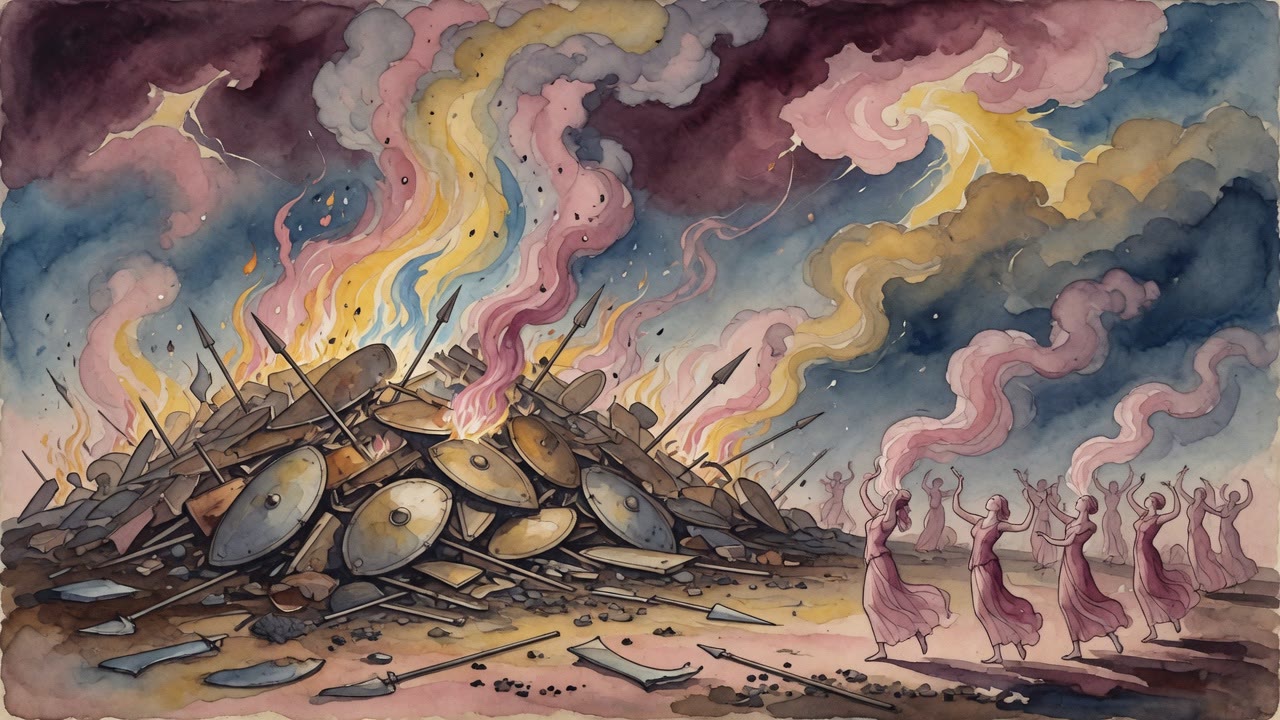
Gog's Weapons Burned Seven Years Before the Dance Began Click for full size

The Generation That Grew Old Before It Grew Up

A boy three weeks out of the womb lay in his cradle with a head of grey hair. His mother counted the days twice and got the same number both times. She carried him into the lane to show the neighbors, and the neighbors barely turned their heads, because their own sons had come in from the barley that morning stooped like men of a hundred years.

The vines had failed the season before. Not a thin crop. No seed of the vine at all, and no oil in the presses, and the presses stood cracked and dry in the sun.

Then the animals began to go. Cattle dropped in the yards with their legs folded under them. Birds fell out of the air onto the roofs and stayed there. Fishermen rowed out before dawn and rowed back with nets full of dead silver, and the smell of the shore reached the town ahead of the boats.

Sons Who Accused Their Fathers in the Street

The quarrels started small and never stopped. A son stood in his father's doorway and would not step aside. "You let the covenant go," he said. "You and the elders who taught you." His father struck him across the mouth. The boy did not move, and the neighbors came out to watch, and the neighbors took the boy's side.

It ran the same way in every town, the young against the old and the old against the young, the poor against the rich, the low against the great, the beggar against the prince. One beggar walked up to a prince's gate and refused to beg. He demanded. The prince sent men with staves to drive him off, and he came back the next morning with forty men behind him and a torch in his hand.

Every mouth spoke iniquity. Every work of their hands was uncleanness and an abomination, and the earth was going to be spent paying for all of it.

Seven Pillars for the Seven Years of Gog

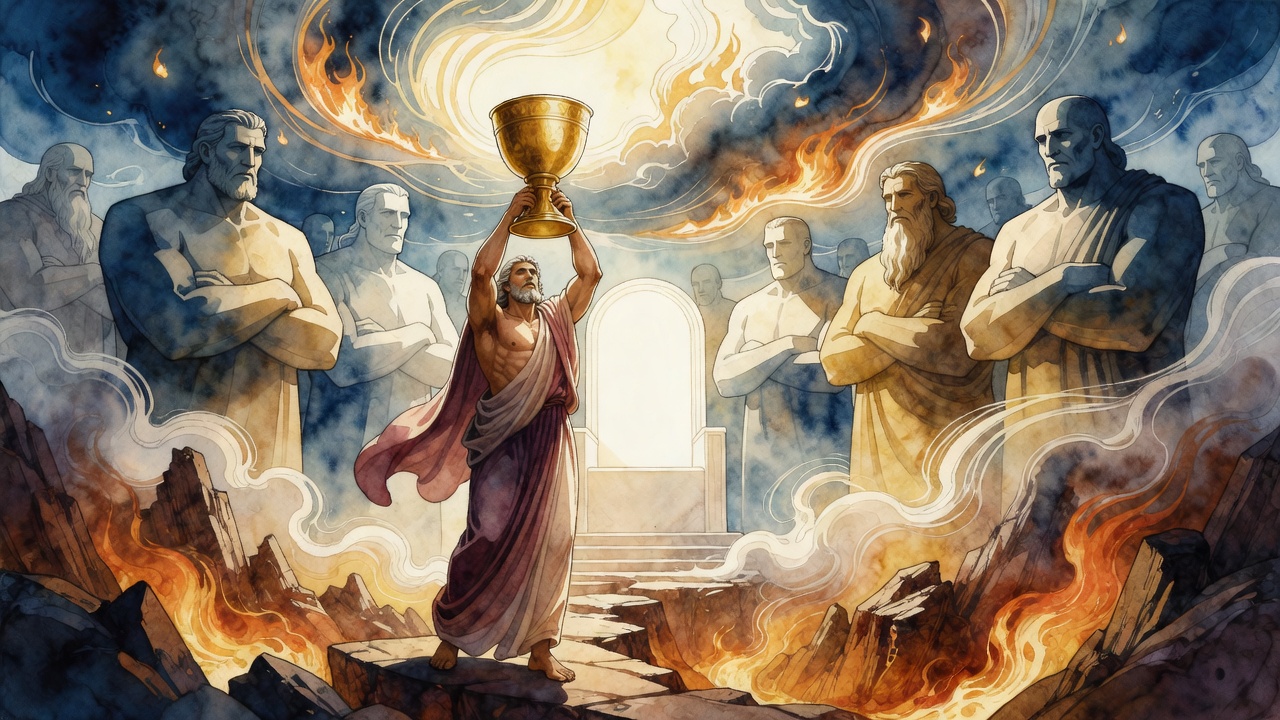
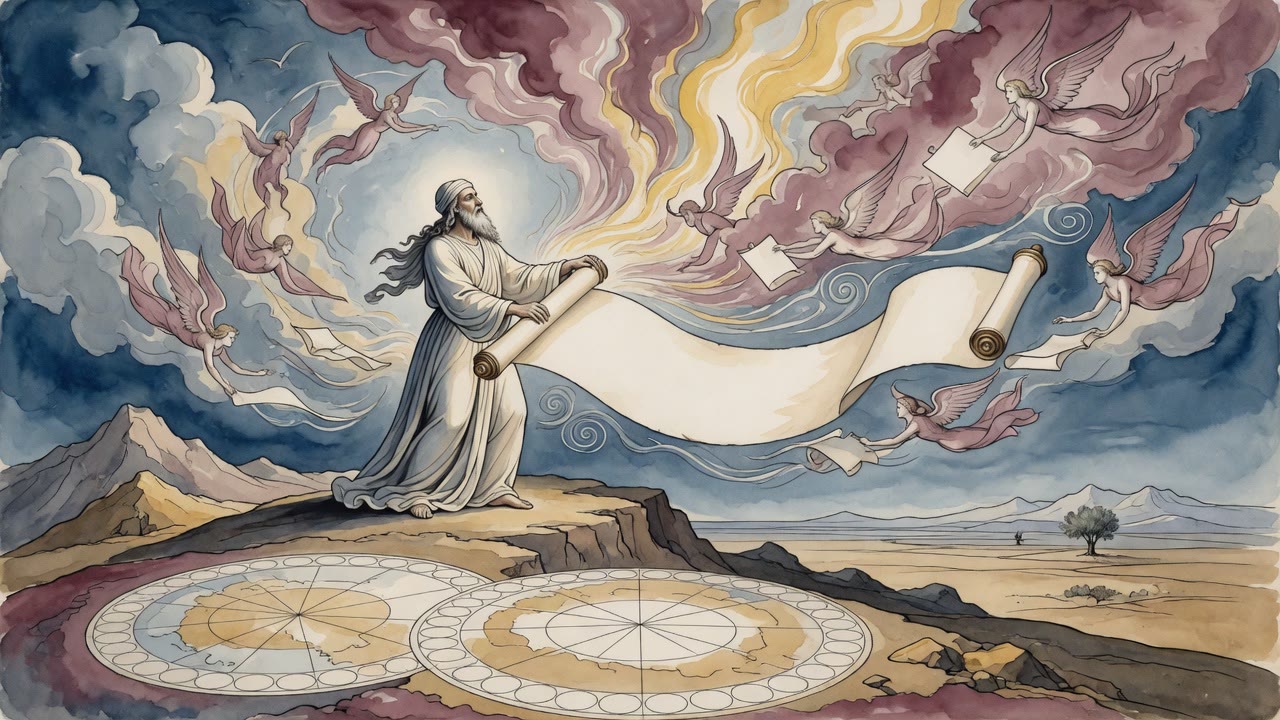
Wisdom had built her house long before on the mountain in Jerusalem and hewed out seven pillars to hold it up, and the pillars were not stone. They were seven years that had not arrived yet, and they belonged to Gog.

He came up in his own time. The land of Magog emptied itself behind him, and the nations came behind Magog, and the dust of the horses hung over the hills north of the city for days before anyone could see what raised it. The watchmen on the wall counted standards until counting stopped meaning anything.

Seven years the war ran. Men born into the grey-haired generation fought it and buried each other in it, and the house on the mountain stood while the armies broke against the slope.

Then Gog fell, and the noise went out of the world all at once.

The Winters Israel Warmed Itself on Spears

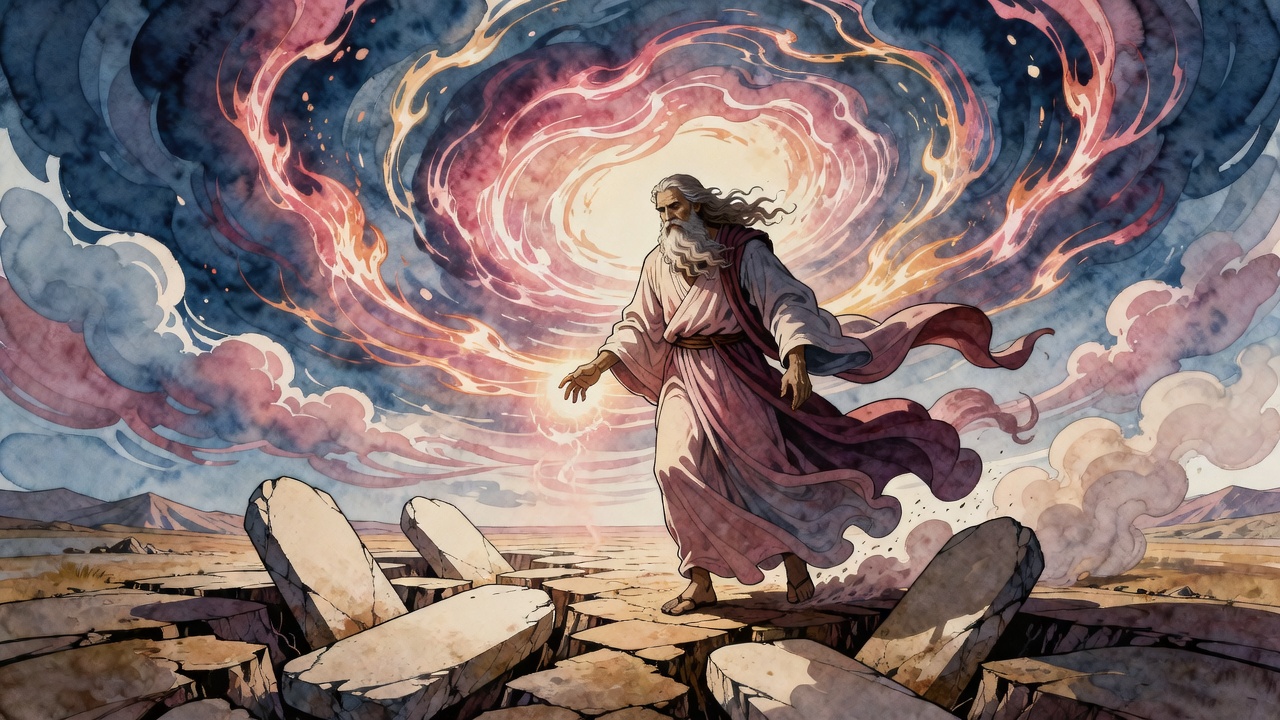
The inhabitants of the cities went out to the field and gathered the weapons. Swords, spears, knives, bucklers, bows, the shafts of the war carts. They carried them home in armloads and stacked them against the walls of their houses like cordwood.

Nobody put an axe to a tree that year. The orchards had come back so heavy that the branches of the figs bent to the ground under their own fruit, and a tree with fruit on it does not go into a fire while there are spears lying in the grass.

So Israel cooked on Gog's arsenal. Bread baked over broken lances. Wives banked the coals at night with the flat of a shield. A woman who had buried two sons in the seven years handed a bundle of arrows to her granddaughter and told her to feed the oven, and when the child asked how long the burning would last, the old woman said, "Seven years, and then the wedding. Whoever eats at the betrothal feast eats at the wedding feast."

The betrothal feast was already spread. Ezekiel stood over the valley of the fallen and called out to every winged bird and every beast of the field. "Gather and come," he cried. "Assemble yourselves from all around to My feast that I am preparing for you." They came down out of the sky and in from the hills, and they ate the flesh of the mighty and drank the blood of the princes of the earth, and at that table they were satiated with horses and chariots.

The Circle Where Every Finger Pointed Inward

The righteous came up after that, into the world that comes after this one, and they did not come up slowly.

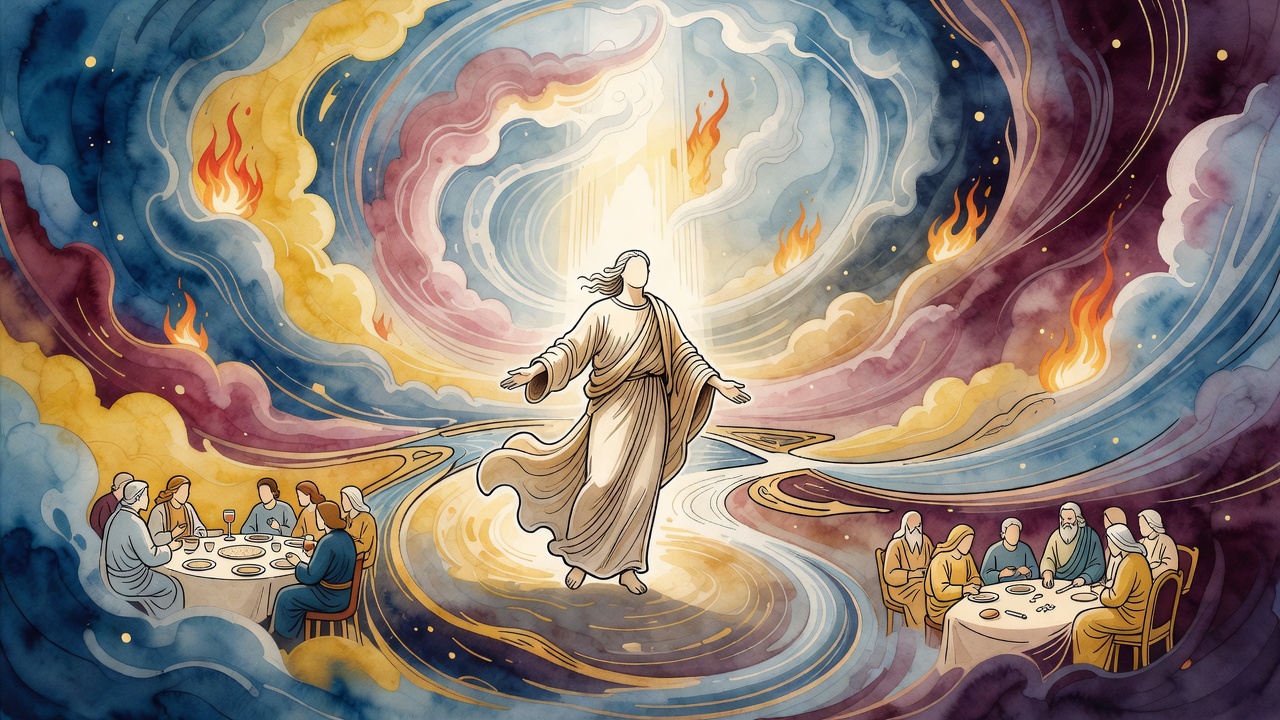
They ran. They came with the quickness of young women beating timbrels in a procession, and old age did not follow them in through the door. God was already standing at the head of a ḥola, a ring of dancers, holding the place where a leader holds it. The circle closed. It turned.

And every one of them lifted a hand toward the center and pointed with a finger, the way a child points at a thing long promised and finally shown, and they sang it out together. "For this is God, our God, forever and ever. He will guide us beyond death."

The words went two ways in their mouths. Beyond death, and also no death at all. He will guide us in this world, and He will guide us in the world to come.

The circle kept turning, and no one let go, and the fingers stayed up.


← All myths
From the tradition

Sources

3 sources

The texts behind this telling. Some cards carry a translation of the source; others are our own retelling of it, and each card says which. Every card links out to the original.

Book of Jubilees 23:31Book of Jubilees

Retold in our words. Read the original at the link below.Sefaria Community Translation · CC-BY

The Book of Jubilees, an ancient Jewish text that expands on the stories in Genesis and Exodus, certainly felt that way. It paints a stark picture of a world spiraling downward, choked by the consequences of human actions.

Specifically, in Jubilees 23, we get a glimpse into a future, or perhaps a warning, about the state of the world. “For all have done evil,” the text laments, “and every mouth speaketh iniquity and all their works are an uncleanness and an abomination, and all their ways are pollution, uncleanness and destruction. A complete breakdown of morality and ethics.

A world where everything touched is tainted, every word spoken is a lie. That’s the world Jubilees describes. The text isn't shy about the consequences: “Behold the earth will be destroyed on account of all their works, and there will be no seed of the vine, and no oil; for their works are altogether faithless.” No wine, no oil – staples of life and symbols of blessing – gone. Vanished. A direct result of human failings.

It gets even bleaker. It's not just humanity that suffers, but the entire natural world. "They will all perish together," Jubilees warns, "beasts and cattle and birds, and all the fish of the sea, on account of the children of men." The interconnectedness of all living things is brutally highlighted here. Our actions don't just affect us; they ripple outwards, impacting every creature on Earth.

But perhaps the most disturbing image is the breakdown of social order. The text continues, describing a society tearing itself apart from within: "And they will strive one with another, the young with the old, and the old with the young, the poor with the rich, and the lowly with the great, and the beggar with the prince."

It's a vision of utter chaos, a world consumed by internal conflict, where respect for elders is gone, and the inherent dignity of every human being is disregarded. The haves and have-nots are at each other’s throats. The social contract has completely dissolved.

What are we to make of this? Is it a prophecy? A cautionary tale? Maybe it's both. The Book of Jubilees, while ancient, speaks to a timeless human struggle.

It forces us to ask: what kind of world are we building? What legacy are we leaving behind? And what can we do, here and now, to turn the tide?

Full source
Vayikra Rabbah 11:2Vayikra Rabbah

Retold in our words. Read the original at the link below.The Sefaria Midrash Rabbah, 2022 · CC-BY

The rabbis of old certainly did, and they painted some pretty wild pictures! One fascinating glimpse comes from Vayikra Rabbah, a collection of rabbinic interpretations on the Book of Leviticus. It may seem like an odd place to find end-of-days prophecy, but the rabbis saw connections everywhere.

Rabbi Yona, quoting Rabbi Abba bar Yirmeya, explores the future, specifically the era of Gog. Now, who is Gog? Gog, often paired with Magog, is a figure who appears in the Book of Ezekiel and is traditionally understood as a future enemy of Israel who will wage a final, apocalyptic war. A pretty big deal, then!

The verse they focus on is from (Proverbs 9:1): "Wisdom has built her house." Rabbi Yona interprets this "house" as none other than the Temple in Jerusalem. It all ties back to (Proverbs 24:3), which states, "With wisdom a house is built." See how they weave it together?

Here's where it gets really interesting. The text continues, "Has hewed her seven pillars' – these are the seven years of Gog.” Rabbi Yona, this time quoting Rabbi Abba bar Kahana, says that for seven years after Gog's downfall, the people of Israel will use the weapons left behind to fuel their fires. all feeding the flames!

Why weapons instead of wood? Well, according to Maharzu's commentary, all the trees will be bearing fruit, and Jewish law prohibits chopping down fruit trees unnecessarily. Talk about a time of abundance! This imagery comes straight from (Ezekiel 39:9): "The inhabitants of the cities of Israel will go out and kindle and burn with weapons… and they will kindle fires with them for seven years. A world transformed, even the mundane act of making fire becomes evidence of the messianic age.

These seven years, the midrash (rabbinic interpretive commentary) tells us, will be a "precursor for the righteous in the future." What does that even mean? Well, it uses a cool saying as a memory aid: "One who eats in the pre-wedding feast will eat in the wedding feast." In other words, those who merit to experience this initial period of peace and prosperity will also be around for the ultimate, glorious messianic era.

The midrash then uses Proverbs 9 to describe this future feast, tying it back to Ezekiel's prophecies. “She has prepared her meat” – that's "the flesh of the mighty you will eat" (Ezekiel 39:18). “Mixed her wine” – that's "the blood of the princes of the earth you will drink" (Ezekiel 39:18). And “Also set her table” – that's "You will be satiated at My table with horses and chariots" (Ezekiel 39:20). Heavy imagery. It paints a vivid, if somewhat unsettling, picture of divine victory and the ultimate banquet.

Finally, “She has sent her young women; she will call” refers to the prophet Ezekiel himself, who is tasked with summoning all the birds and beasts to this great feast, as described in (Ezekiel 39:17): “So said the Lord God: Say to every winged bird and all the beasts of the field: [Gather and come, assemble yourselves from all around to My feast that I am preparing for you… and you will eat flesh and drink blood].”

So, what do we make of all this? It's easy to get caught up in the literal details – burning weapons, feasting on flesh. But perhaps the real message is about transformation. A world where even the tools of war become sources of warmth and sustenance. A world where abundance replaces scarcity. A world where the divine promise is finally fulfilled. It’s a powerful vision, and one that continues to inspire hope for a better future, even today. What kind of world will we help build to usher in that era?

Full source
Vayikra Rabbah 11:9Vayikra Rabbah

Retold in our words. Read the original at the link below.The Sefaria Midrash Rabbah, 2022 · CC-BY

It might sound… unexpected, even a little irreverent. But Jewish tradition, in its beautiful, often surprising way, sometimes paints just such a picture.

There's a fascinating passage in Vayikra Rabbah (Leviticus Rabbah), a collection of rabbinic homilies on the Book of Leviticus, that offers a glimpse into this idea. It comes to us through a chain of rabbis: Rabbi Berekhya, Rabbi Ḥelbo, Ulla Bira’a, and Rabbi Elazar, all citing Rabbi Ḥanina. They say that in the future, in the world to come, the Holy One, blessed be He, is destined to stand at the head of a dance circle – a ḥola (חֹלָה) – for the righteous.

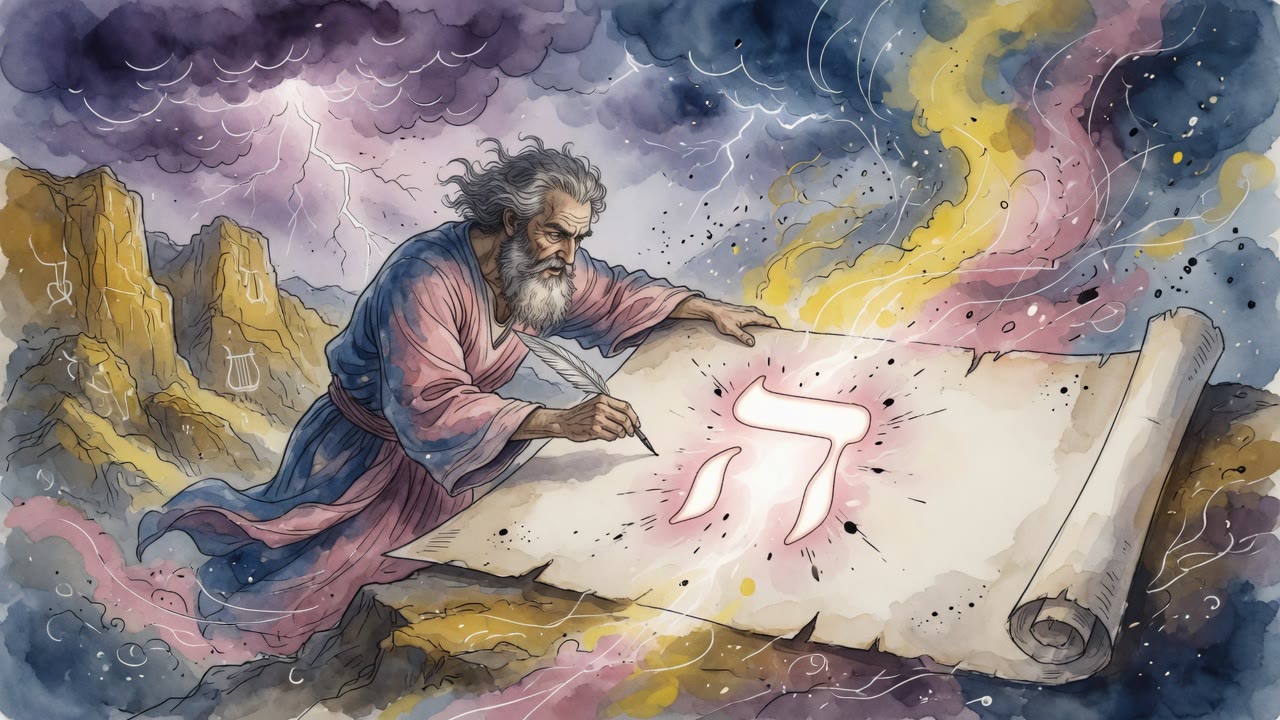
Where does this idea come from? It’s rooted in a clever interpretation of (Psalm 48:14): "Pay attention to its ramparts [leḥeila]." But here's the thing: the word leḥeila (לְחֵילָה) – "its ramparts" – is written in a slightly unusual way in the original Hebrew. Grammatically, it should have a dot in the heh (ה), which would clearly indicate the possessive form ("its"). But it's written without the dot.

This tiny difference opens up a whole new world of meaning. As Rabbi David Luria points out, without the dot, the heh (ה) appears to be part of the word itself, rather than a suffix. And if that's the case, the word becomes very similar to ḥola (חֹלָה) – a dance circle! So, the verse isn't just talking about ramparts; it's hinting at a future dance with God.

And what about the dancers? Well, they ascend to Him be’almut (בְּעַלְמוּת) – with alacrity, with youthful energy. They point to Him, as it were, with a finger, and proclaim, "For this is God, our God, forever and ever, He will guide us beyond death [al mut]!" (Psalm 48:15).

The text then makes a connection between almut and young women – ulemta (אוּלֶמְתָּא), like those young women [alamot] playing timbrels, as we see in (Psalm 68:26). There's a sense of joy, of celebration, of vibrant life surrounding this encounter with the Divine.

And then there's Aquilas, who translated the Bible into Greek. He offers another layer of understanding. He translates al (עַל) with an ayin (ע), as though it were al (אַל) written with an alef (א): al mut (אַל מָוֶת) – no death. Immortality.

So, al mut (עַל מוּת) in (Psalm 48:15) becomes not just "beyond death," but "in two worlds [olamot (עוֹלָמוֹת)]" – He will guide us in this world, and He will guide us in the World to Come.

What does this all mean? God, not as a distant, unapproachable figure, but as the center of a joyful dance, surrounded by those who love Him. It speaks to a deep yearning within us for connection, for meaning, and for a future where death is not the end. It suggests that our relationship with the Divine can be one of exuberance, of movement, and of eternal life. The Zohar tells us similar things, expanding on the nature of the World to Come.

So, the next time you hear a joyful melody, or feel the urge to dance, remember this image from Vayikra Rabbah. Remember the possibility of a future dance, led by the Divine, where joy and connection transcend even death itself. Maybe, just maybe, that future is closer than we think.

Full source