6 min read

Three Times the Nations Massed to Break Heaven's Cords

At Babel, under Joshua, and at the end with Gog, the world massed to break heaven's cords, and three times the plot recoiled on the plotters.

Curated by Arthur · Told by Maggid ·
Table of Contents
  1. The Kings of Canaan Gather With One Mouth
  2. The Tower and the Words Aimed at the One
  3. The Rulers Take Counsel Against the Anointed
  4. Gog Marshals the Nations in the Valley of Decision
  5. The Ten Horns Come Home
Three Times the Nations Massed to Break Heaven's Cords Click for full size

The Kings of Canaan Gather With One Mouth

Word ran through the hill country faster than the chariots could roll. Jericho's walls had dropped flat into their own dust. The sun had hung motionless over Gibeon until an army was finished dying beneath it. The kings of Canaan heard, and their hands went cold.
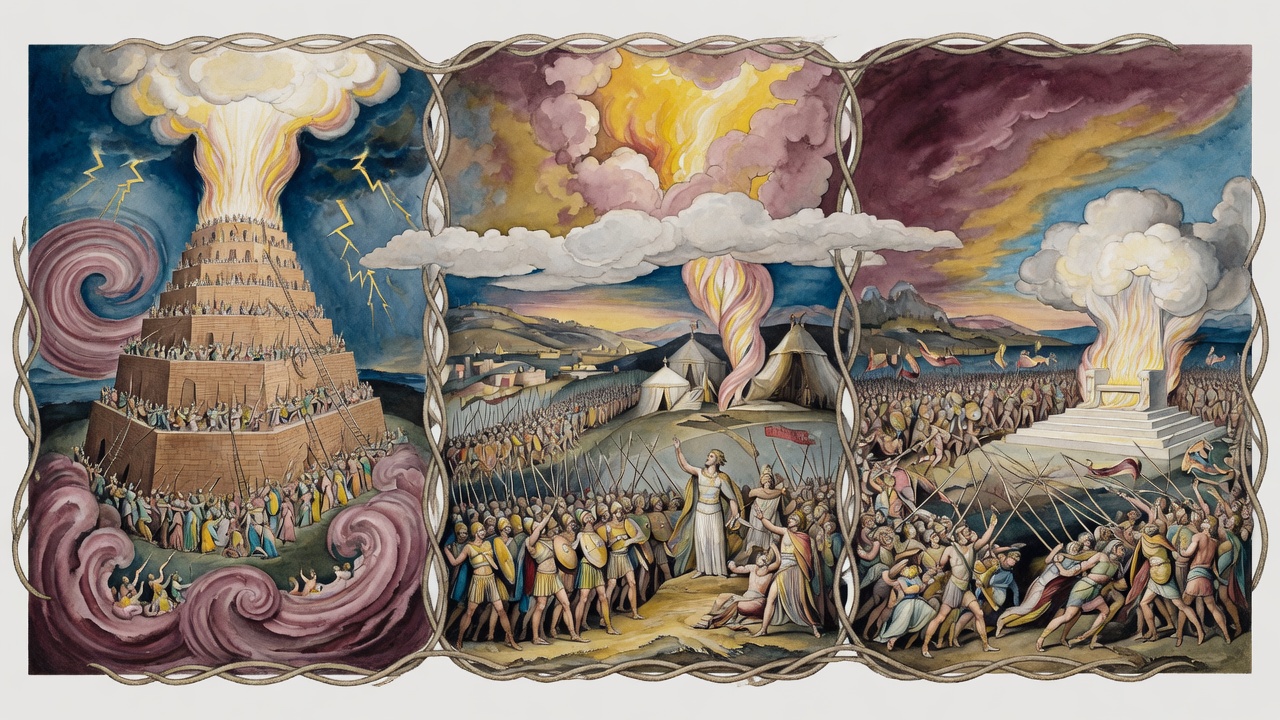
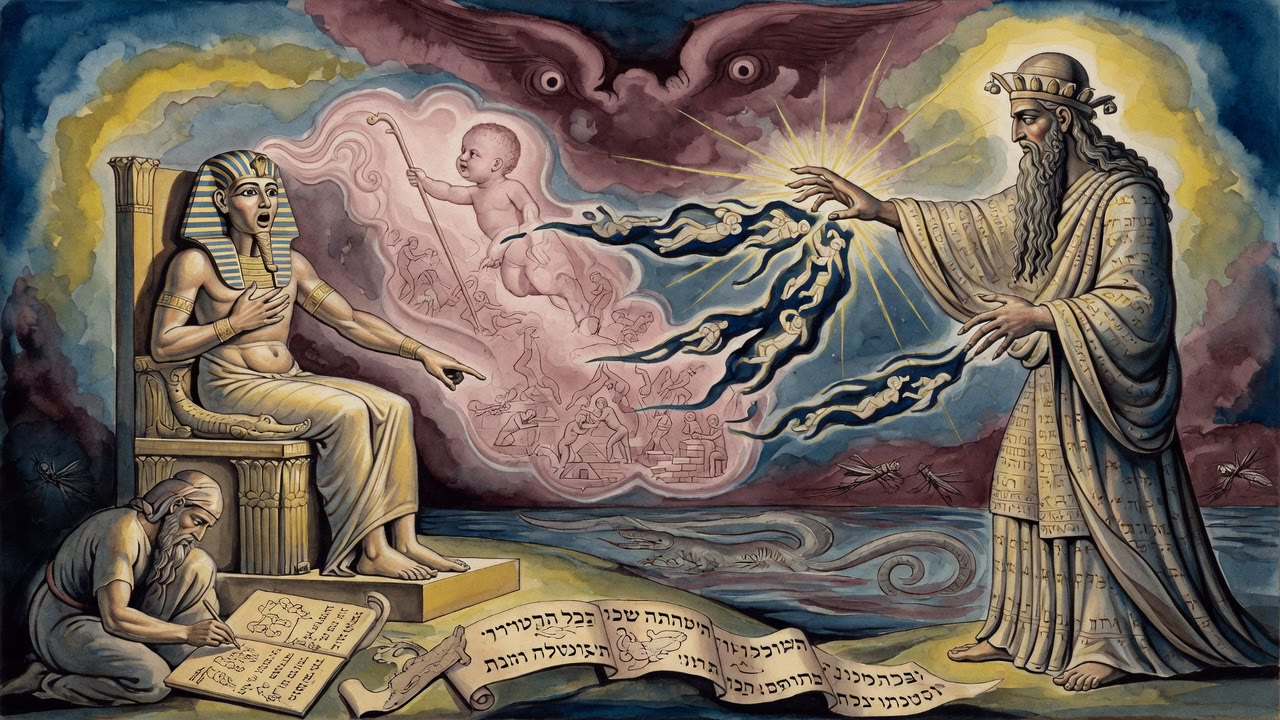
So they did what frightened kings do. They gathered. From the coast and the Jordan and the high passes they brought their horses and their iron, and when the armies met they came together "with one mouth" to fight against Joshua and against Israel. Rabbi Aibu, teaching in the name of Rabbi Eleazar son of Rabbi Yose the Galilean, refused to let that phrase pass as ordinary. One mouth. Not one plan, one mouth. They had thrown their whole strength against the sentence Israel says twice a day, "Hear, O Israel, the LORD our God, the LORD is One." The chariots were an argument. The argument was that heaven had no single King.

The Tower and the Words Aimed at the One

It had happened before. Long before Canaan, on a plain in Shinar, "the whole earth was of one language and of one speech." The rabbis pressed on that second phrase, one speech, devarim achadim, and heard in it something colder than shared grammar. The builders were speaking words. Words of blasphemy, aimed like bricks at the One. They stacked their tower to climb above the only throne and haul it down. That was the first time the inhabitants of the world stood together and contended against the Holy One, blessed be He.

Canaan was the second. Both times the plot was the same, and both times it broke on the same rock, because no army can storm a throne that holds up the very sky it stands under.

The Rulers Take Counsel Against the Anointed

The third time is still coming.

A psalm saw it early. "The kings of the earth set themselves, and the rulers take counsel together, against the LORD and against His anointed." Their war cry is almost tender in its arrogance. "Let us break their bonds asunder, and cast away their cords from us." They mean the cords that tie earth to heaven, the pull they have felt their whole lives and hated. They want the sky to let go of them.

Gog Marshals the Nations in the Valley of Decision

At the end of days the counsel becomes an army, and the army has a name. Gog comes against the land of Israel, and Magog with him, and behind them every ruler who ever wanted the cords cut. Joel heard the mustering call. "Proclaim ye this among the nations, prepare war, stir up the mighty men. Beat your plowshares into swords and your pruning hooks into spears, let the weak say, I am strong." The whole earth reforges its farm tools into blades and marches on one small country.

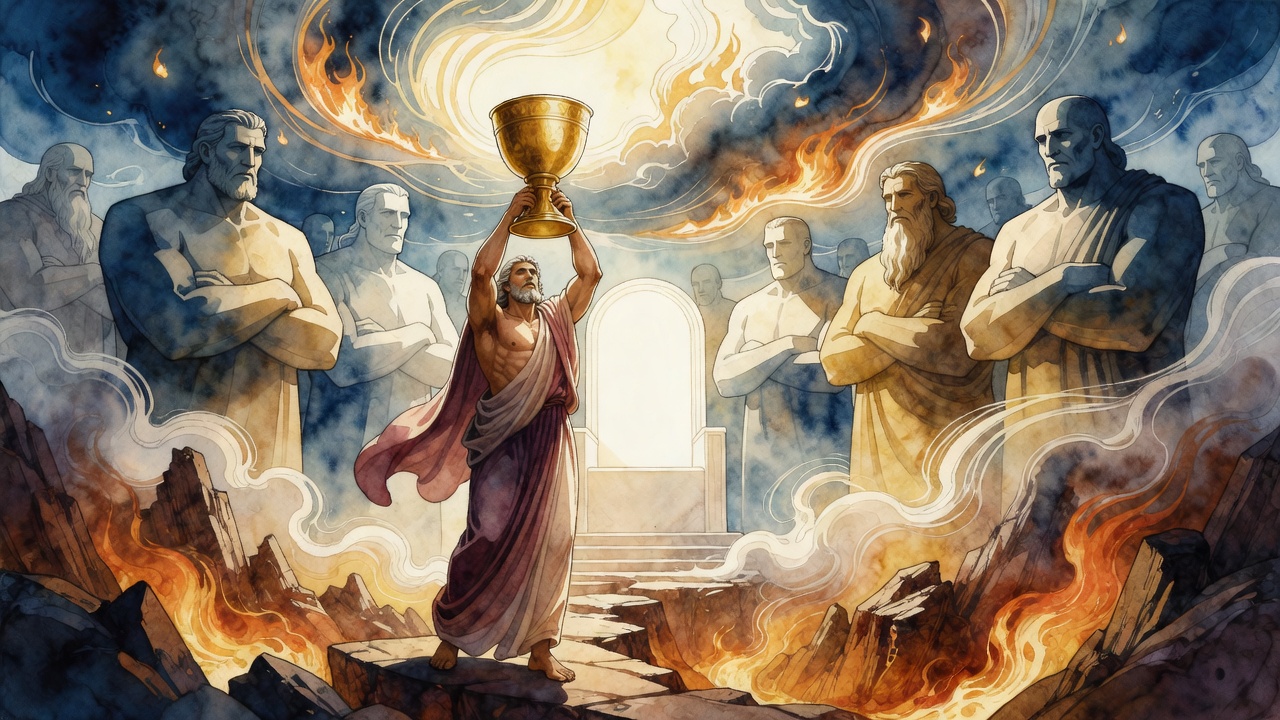
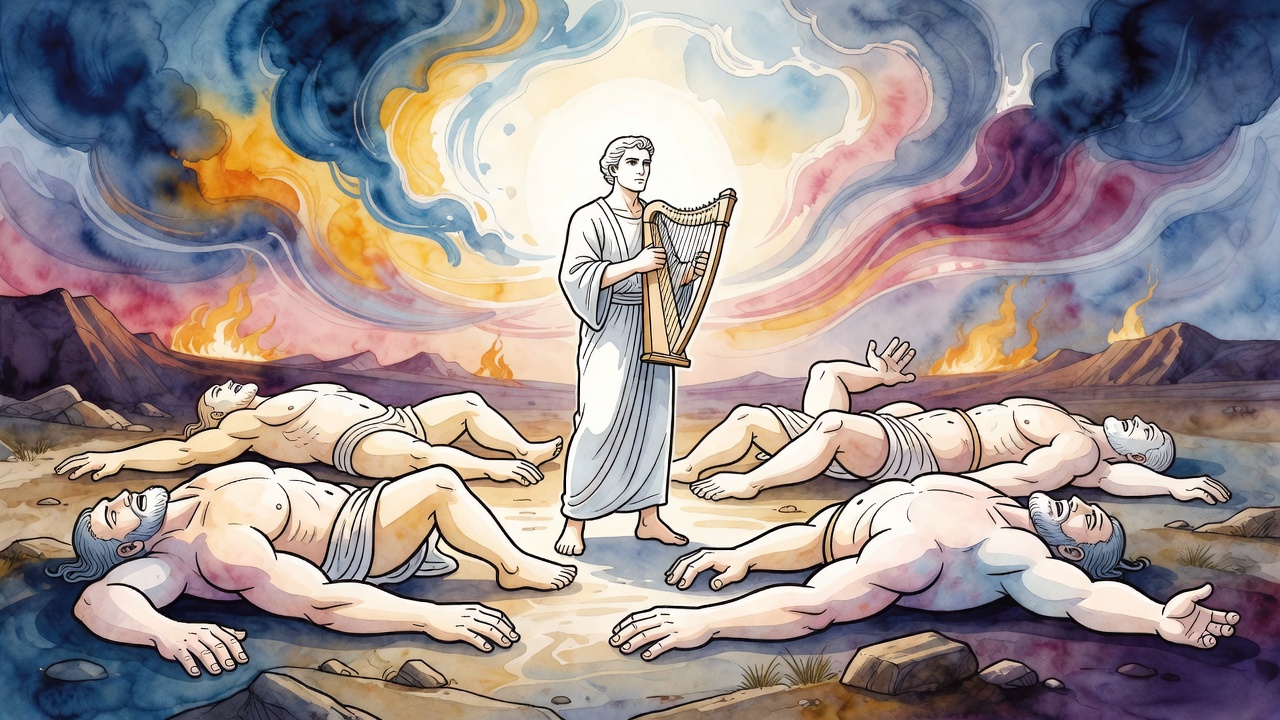
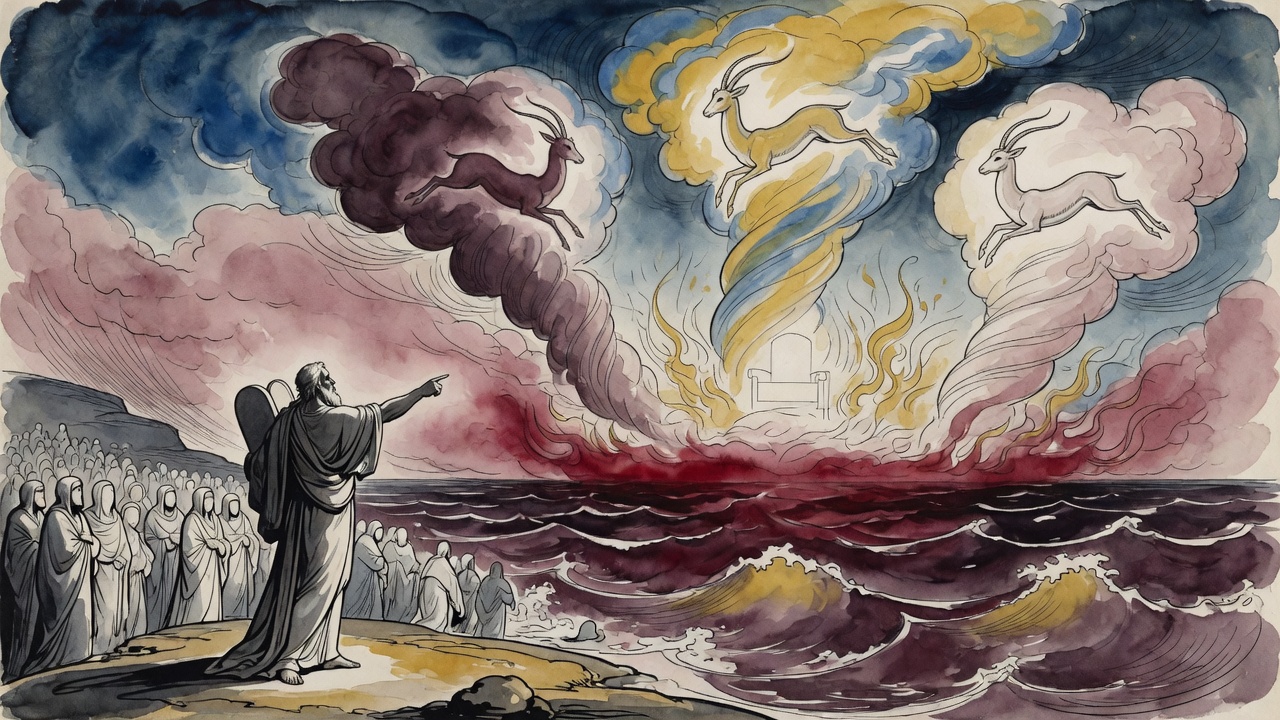
Then the Messiah turns to God, and instead of lifting a sword he lodges a complaint. "There is a certain nation," he says, "that has rebelled against you." The answer is not a battle plan. It is a sentence of fire. God gathers the nations down into the valley of Jehoshaphat, the valley of decision, the place the prophet also named as where the LORD would plead for His scattered people, and there the horde that beat its plows into swords finds no war to fight. "He shall smite the earth with the rod of his mouth, and with the breath of his lips shall he slay the wicked." No iron. Breath. The slain of the LORD stretch from one end of the earth to the other.

The survivors bend. The very rulers who begged to have the cords cut come stumbling toward the one they marched to destroy, and they kneel. "The heads of the earth will kneel before him." The bonds they hated turn out to be the only thing that ever held them up.

The Ten Horns Come Home

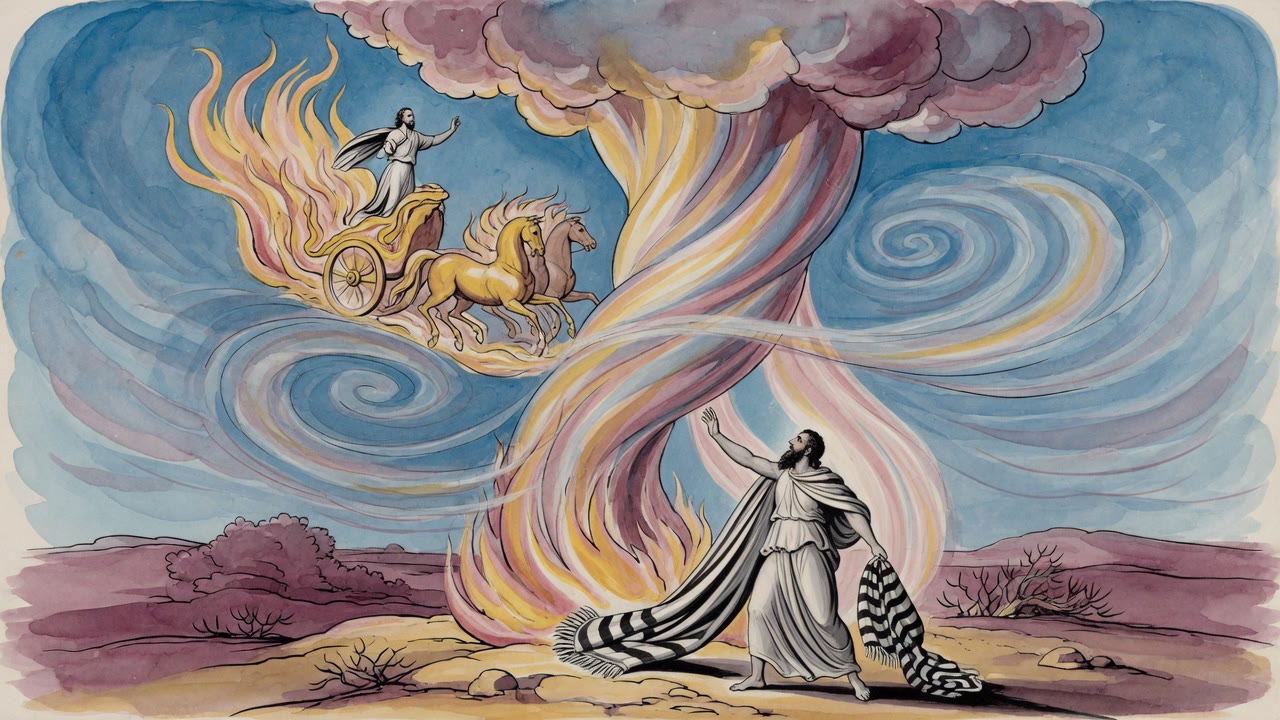
There is an older debt buried in this ending. Ten horns of power once sat on the head of Israel. When Israel sinned, the horns were stripped away and handed to the nations of the world, and the prophet mourned it plainly. "He has cut down in fierce anger every horn of Israel." Those are the ten horns Daniel later saw crowning the beast in his vision. They were never the nations' by right. They were Israel's, on loan to the wicked for the length of a punishment.

Rabbi Abba bar Kahana followed the horns to the end. When Israel turns back, God brings them home. "All the horns of the wicked I will cut off, the horns of the righteous shall be exalted." And the hour of the return is fixed. It comes when the horn of the King Messiah is raised, when God "shall give strength to His king, and exalt the horn of His anointed." The same verse had already warned the enemy. "The LORD, His adversaries shall be shattered." One foe, he falls. Two foes, they fall. Let them climb into the heavens themselves, God says, and from the heavens I will thunder and bring them down.

Three times the world massed to break the cords. Babel with its words, Canaan with its chariots, Gog with the reforged plows of every nation. Each time the plot recoiled onto the plotters. And on the far side of the last assault, the ten scattered horns swing back to the head that first wore them, and the small country the whole earth marched against stands with the strength that was only ever lent away.


← All myths
From the tradition

Sources

4 sources

The texts behind this telling. Some cards carry a translation of the source; others are our own retelling of it, and each card says which. Every card links out to the original.

Midrash Tehillim 8:6Midrash Tehillim

Retold in our words. Read the original at the link below.Rabbi Mike Feuer, Jerusalem Anthology · CC-BY

Midrash Tehillim, a collection of rabbinic interpretations on the Book of Psalms, offers a fascinating glimpse into this very idea, particularly in its eighth section.

Our journey begins with a quote from Isaiah (5:16): "And the LORD of hosts shall be exalted in justice." But when, exactly, will this exaltation occur? The Midrash (rabbinic interpretive commentary) answers: When God executes judgment upon the nations of the world. It paints a picture of a dramatic reversal – (Isaiah 5:15) tells us, "And the mean man shall be brought down, and the mighty man shall be humbled." Only then, after this leveling, will God be truly exalted in judgment. It's a powerful image of divine justice.

The Midrash then weaves together other prophetic voices, creating a cohesive vision. Ezekiel (38:18) speaks of a time "when Gog shall come against the land of Israel." And Joel (4:9-11) cries out, "Proclaim ye this among the nations; prepare war; stir up the mighty men… Beat your plowshares into swords and your pruning hooks into spears; let the weak say, I am strong." Can you feel the building tension? The sense of impending conflict?

Joel continues (4:2), "And I will also gather all nations, and will bring them down into the valley of Jehoshaphat, and will plead with them there for my people and for my heritage Israel, whom they have scattered among the nations, and parted my land." This Valley of Jehoshaphat, the Midrash explains, is where the Lord will judge the nations. Some translations render this as the "Valley of Decision," and (Joel 3:14) echoes this, calling it "the valley of decision: for the day of the LORD is near in the valley of decision." The Midrash connects this to Jeremiah (25:33), envisioning "the slain of the LORD" stretching "from one end of the earth even unto the other end of the earth." A truly apocalyptic scene!

But there's hope amidst this destruction. (Joel 4:17) promises, "So shall ye know that I am the LORD your God dwelling in Zion, my holy mountain." Out of the chaos, a new understanding of God's presence will emerge.

The text then shifts its focus, asking, "When will the Lord be seen upon Gat?" This references (Micah 1:10): "Declare ye it not at Gat, weep ye not at all: in the house of Aphrah roll thyself in the dust." The Midrash suggests that victory will be given to Him at that time, a victory perhaps born from humility and repentance.

Finally, we arrive at the phrase "To the chief Musician upon Gittith." The Midrash identifies four Gittiths, associating them with the sons of Korah (Psalm 8) and Psalm 81, which urges us to "Sing aloud unto God our strength, make a joyful noise unto the God of Jacob." What is Gittith? The term itself is debated, some suggesting it refers to a musical instrument, perhaps a type of harp, or a melody originating from the city of Gat. Regardless, it emphasizes the importance of music and praise even in the face of judgment.

So, what does it all mean? This Midrash isn't just about predicting the future. It's about understanding the cyclical nature of history, the consequences of our actions, and the enduring promise of divine justice.

Full source
Midrash Tehillim 2:3Midrash Tehillim

Retold in our words. Read the original at the link below.Rabbi Mike Feuer, Jerusalem Anthology · CC-BY

Psalm 2 definitely gets that feeling. “Kings of the earth will stand up, and rulers will band together, against the Lord and against His anointed, saying, 'Let us break their bonds asunder, and cast away their cords from us.

What happens next? That's where Midrash Tehillim, a collection of rabbinic teachings on the Book of Psalms, offers a fascinating, albeit intense, glimpse into the future. It takes that verse from Psalms and imagines a conversation, a plea, even, from the Messiah himself.

In Midrash, (rabbinic interpretive commentary), in this future time, the Messiah will turn to God and say, "There is a certain nation that has rebelled against you." And the reply? A terrifying prophecy: "Gog and Magog will come and destroy it."

Who are Gog and Magog? Their names echo through Jewish apocalyptic literature. They represent the ultimate enemy, the forces of chaos and destruction that will rise up against God and His people in the end times. Think of them as the final boss battle of history.

The Midrash even cites (Isaiah 11:4) to underscore the devastation: "He shall smite the earth with the rod of his mouth, and with the breath of his lips shall he slay the wicked." It’s a powerful image, suggesting that the Messiah's very words will be enough to defeat these forces.

But the story doesn't end there. There's a twist, a glimmer of hope amidst the darkness. The Midrash continues, telling us that when the nations see their great distress, "they will come and bow before the Messiah." (Isaiah 49:23) is invoked here: "Then the heads of the earth will kneel before him."

So, after all the rebellion, after the cataclysmic arrival of Gog and Magog, there's a moment of recognition, of submission. The very forces that sought to break free from God's bonds ultimately acknowledge His power.

What are we to make of this? It's easy to get caught up in the dramatic imagery of destruction and divine retribution. But maybe, just maybe, the Midrash is pointing to something deeper. Perhaps it's about the ultimate triumph of good over evil, the inevitable return to God, even after periods of intense rebellion. And isn't that a message we can all use, especially now?

Full source
Yalkut Shimoni on Nach 19:1Yalkut Shimoni on Nach

Translation of the source text.Yalkut Shimoni on Nach (Sefaria) · CC-BY-NC

"And they gathered together to fight with Joshua" (Joshua 9:2). Rabbi Aibu said in the name of Rabbi Eleazar son of Rabbi Yose the Galilean: in three places the inhabitants of the world contended against the Holy One, blessed be He.

One was in the generation of the Dispersion: "And the whole earth was of one language" (Genesis 11:1). And what is meant by "and of one speech" ["devarim achadim"]? They were speaking words of blasphemy against the Holy One, blessed be He [reading "achadim" as words aimed at the One].

And one was in the days of Gog and Magog: "The kings of the earth set themselves, and the rulers take counsel together, against the LORD and against His anointed" (Psalms 2:2).

And one was in the days of Joshua, as it says, "And they gathered together to fight with Joshua and with Israel with one mouth ["peh echad"]." What is meant by "one mouth"? That they contended against the Holy One, blessed be He, concerning whom it is said, "Hear, O Israel, the LORD our God, the LORD is One" (Deuteronomy 6:4).

Full source
Midrash Shmuel 5:17Midrash Shmuel

Translation of the source text.Midrash Shmuel, Krakow 1893, Public Domain, on Sefaria · CC-BY-SA

"The LORD, His adversaries shall be shattered" (1 Samuel 2:10), it is written "His adversary" (in the singular). Rabbi Abba bar Kahana said: If there is one, he shall fall; and if there are two, they shall fall. "Against him He shall thunder in the heavens", it is written "they go up." Rabbi Abba bar Kahana said: The Holy One, blessed be He, said: If they go up to the heavens, from there I thunder with My voice and bring them down.

"The LORD shall judge the ends of the earth", Rabbi Abba bar Kahana said: These are the nations of the world, whose covenant is cut off from their Creator. "And He shall give strength to His king, and exalt the horn of His anointed", there are ten horns. How so? At first, they were all given upon the head of Israel; but when Israel sinned, they were taken from them and given to the nations of the world. This is what is written: "He has cut down in fierce anger every horn of Israel" (Lamentations 2:3). And it says: "And concerning the ten horns that were upon its head" (Daniel 7). And when Israel does repentance, the Holy One, blessed be He, returns them to their place. This is what is written: "And all the horns of the wicked I will cut off; the horns of the righteous shall be exalted" (Psalms 75:11), and those horns which the Righteous One of the world cut off shall be exalted. And when does the Holy One, blessed be He, return them to their place? When the horn of the King Messiah is exalted, as it is written: "And He shall give strength to His king, and exalt the horn of His anointed."

Full source