Bitter Water and the Promise That Outlived Its Witness
A priest swears a suspected wife over a cup of dust and ink. Centuries away, God makes a promise to a man who will die before he can collect it.
Table of Contents
 Click for full size
The priest prepares the cup
A husband suspects his wife. He has no proof. In the ancient world, suspicion without proof was enough to ruin a woman, and the Torah knew this. So it built a ritual that could answer the question without needing witnesses.
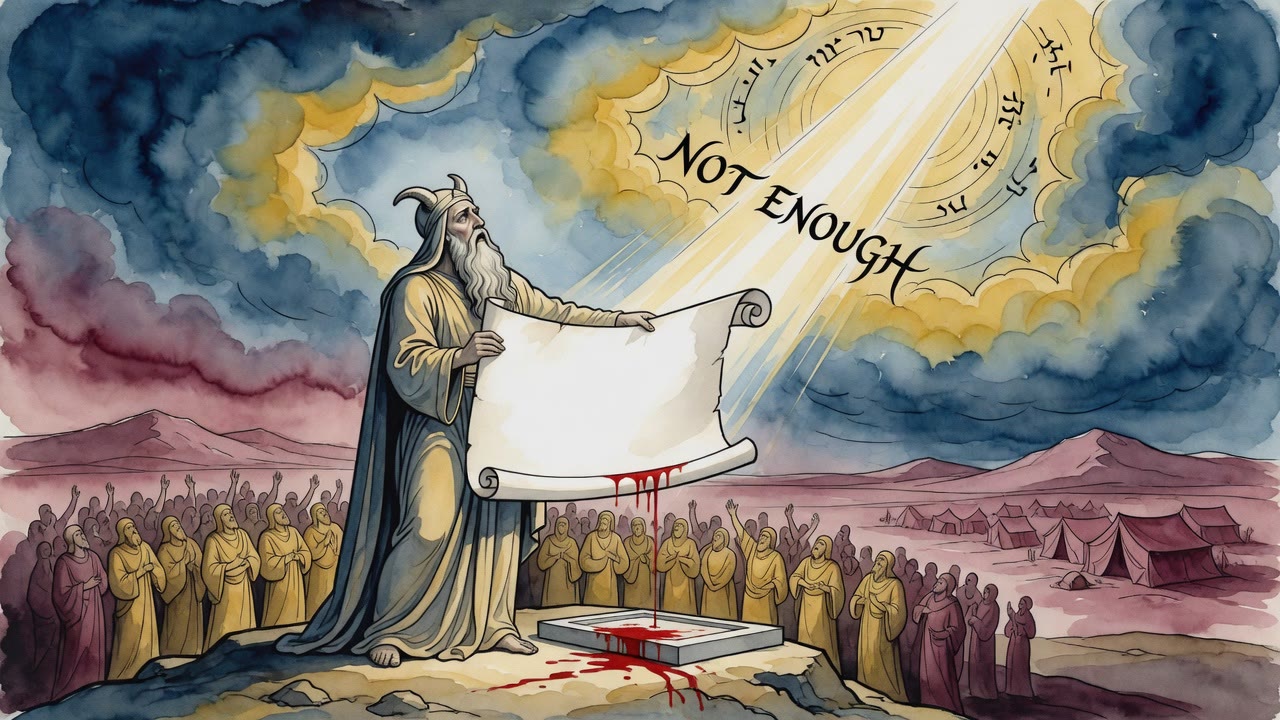
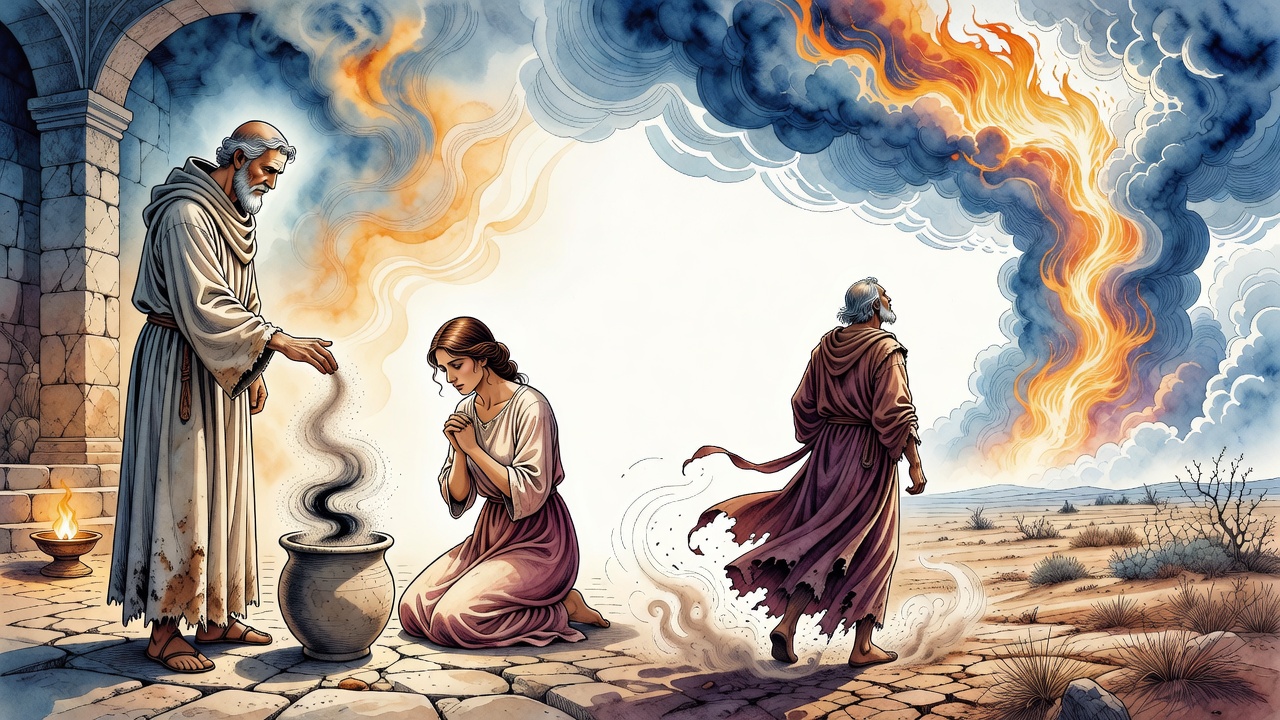
The priest pours water into a clay vessel. He scrapes dust from the floor of the sanctuary and stirs it in. He writes a curse on a scroll, the specific words of what will happen to a guilty woman, and holds the scroll over the cup. Then he washes the ink off the parchment directly into the water. The curse dissolves into the liquid. The woman will drink her own verdict.
But before she drinks, the priest must swear her. He stands before her and speaks the oath out loud: if a man has not lain with you, if you did not go astray, then be absolved of this bitter water. If you did, may what you drink do its work on your body.
The oath has to land
Bamidbar Rabbah 9 tears the ritual apart syllable by syllable, and the most striking detail the rabbis found was about language. If the woman standing before the priest does not speak Hebrew, Rabbi Yonatan ruled, an interpreter must stand beside her and translate every word until she understands what she is agreeing to. The oath is not valid if it does not land in the language she actually thinks in.
This was not a procedural mercy. It was a statement about what an oath is. An oath that a person does not understand is theater. God does not conduct theater in a sanctuary. The rabbis also noticed that the priest, not the woman, initiates the oath. She is sworn, not swearing. The precision of who holds the rope matters.
They read the verse like prosecutors. If a man has not lain with you includes the very first moment of contact. No technicality of incomplete action saves her. The water judges the specific truth, not an approximate one.
The promise that did not die with its recipient
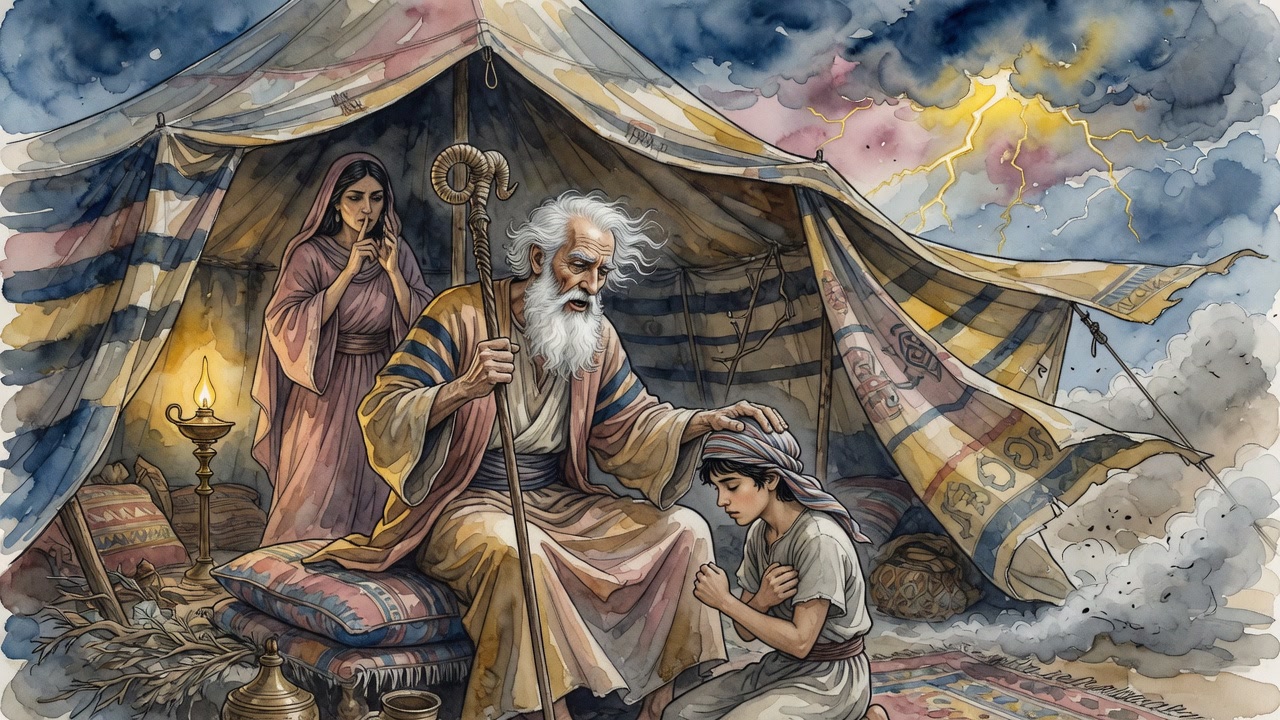
Something stranger sits in the same collection. A Roman king, the parable goes, loved a certain man very much. He said to him: come with me on a journey, and I will give you a great gift. The beloved companion agreed. Halfway through the journey, before they reached the destination, the man died.
The king did not close the account. He found the man's son and said: your father died, but I am not retracting the gift I promised him. You come and receive it in his place.
The parable is reading Isaiah 40:8, the verse that says the grass withers and the flower fades but the word of God stands forever. Rabbi Aha the Great used this verse to explain why the land God promised Abraham was still Israel's inheritance centuries after Abraham himself had been buried at Machpelah.
Two oaths, one logic
Abraham never stood on the soil he was promised. He walked through it as a stranger, dug a grave in it, and died before he could call it his. The promise made to him in motion, on a journey, did not expire when he stopped walking. God does not retract what He has spoken simply because the person He spoke to ran out of time.
The same logic that makes the bitter water oath indelible makes the covenant with the patriarchs indelible. The woman drinks water mixed with dissolved words, and the words do their work inside her. The land sits waiting for descendants who never met the man God first addressed. Both oaths assume that the spoken word does not dissolve when its original context disappears. The ink persists. The clay vessel breaks, the patriarch dies, and the words remain exactly where they were placed.
← All myths