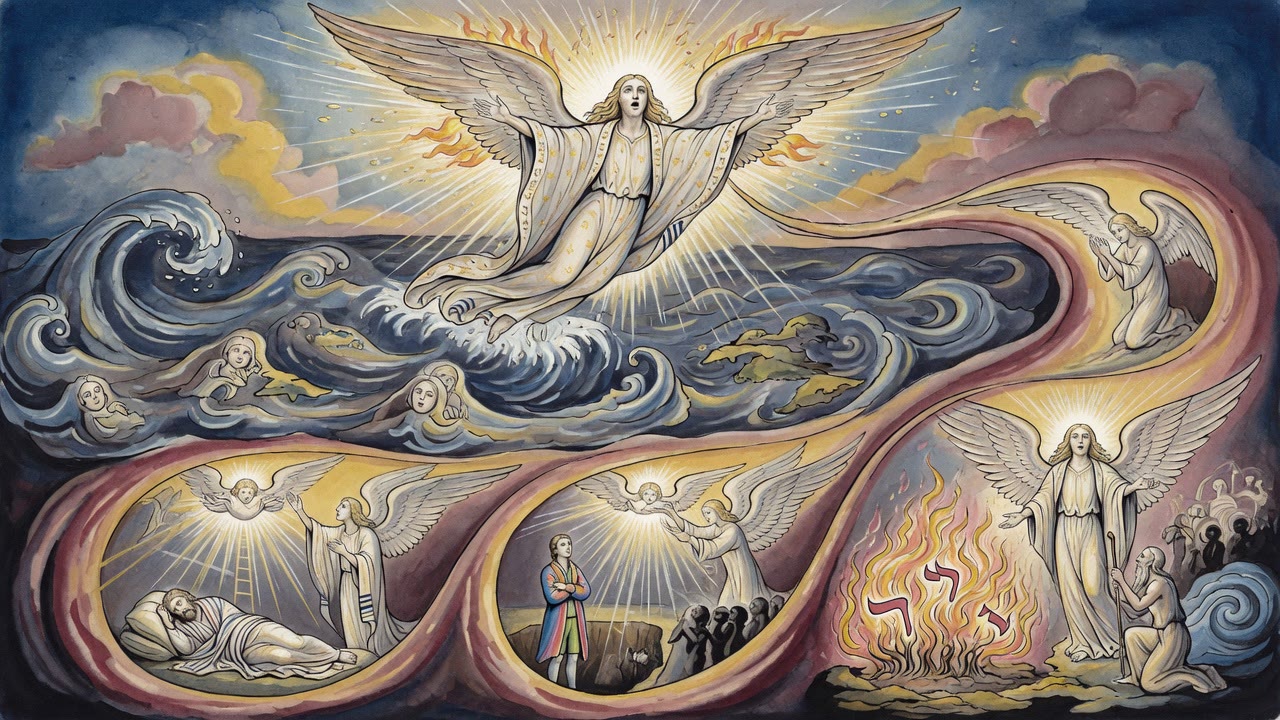
The Pit That Followed Joseph Across Four Generations
The Midianites followed circling birds looking for water. They found a boy in a dry pit. Years later Joseph looked into that hole again and blessed God.
Table of Contents
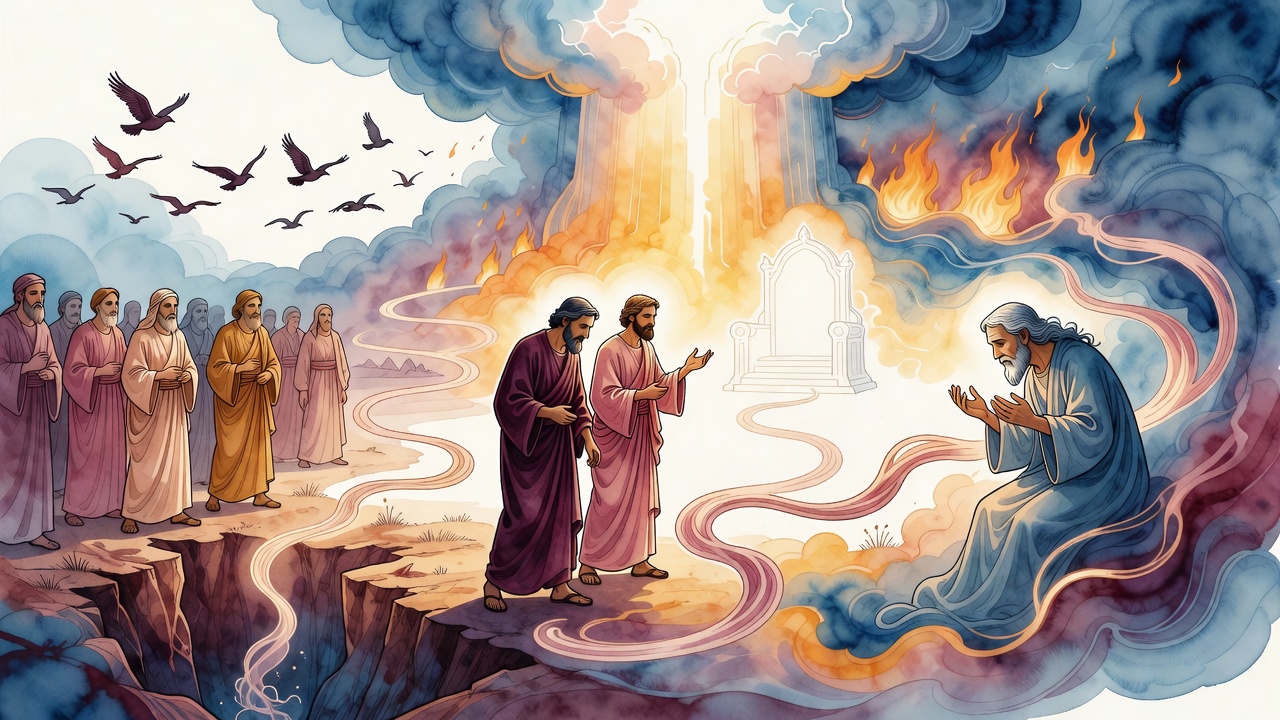
Seven Midianite traders were thirsty. They had been traveling the hill country of Canaan when they saw birds circling over a low place in the ground and assumed there was water below.
 Click for full size
They went to look. What they found at the bottom of the pit was not water. It was a boy.
He was screaming. He was beautiful in a way that made any cover story thin. They dragged Joseph up and asked who he was, who had thrown him into a pit in the wilderness.
Swords at the Rim
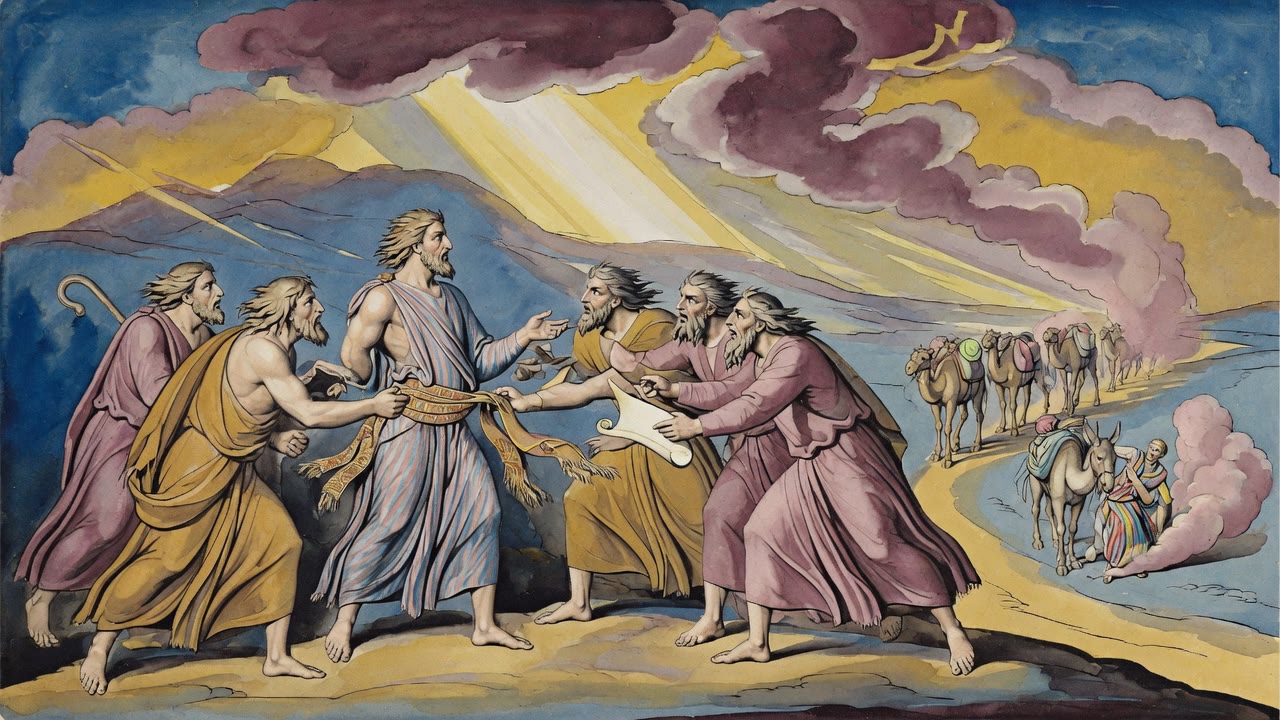
They had to pass the brothers. The brothers called out. "Why have you stolen our slave? We threw the lad into the pit because he was disobedient. Give him back."
The Midianites looked from the boy to the men and laughed. "This lad, you say, is your slave? More likely you are slaves to him. In beauty he excels you all. Why will you speak lies? We found him in the wilderness, in a pit, and we will carry him away."
"Restore our slave," the sons of Jacob said, "lest you meet death at the edge of the sword."
The merchants held their ground. They paid the price. They took the boy south toward Egypt. The brothers stood at the edge of the pit they had thrown him into, holding twenty pieces of silver, watching the caravan disappear. The purchase was too cheap for what they had taken, and none of them yet knew the debt would travel.
Why Midian Paid Later
When Moses led the campaign against Midian in the wilderness, the old sale came due. Midian had handled Joseph. They had been the hands that moved a free son into slavery in a foreign country. They had profited from a transaction in which a person was sold.
The accounting did not come for a vague wickedness. It came for a specific afternoon when birds had circled over a boy in a hole and led thirsty merchants to the worst bargain of their lives. Four generations would touch that hole before it was done traveling.
Manasseh Between Two Tongues
Joseph rose in Egypt and became second in the land. He had sons. The eldest was Manasseh, who stood as interpreter when the brothers came down in the famine.
The brothers did not know the viceroy understood Hebrew. They spoke freely. Manasseh translated both ways, a young man fluent in a language his uncles did not think the throne could hear. He did not know he was standing at the rim of the same pit.
Joseph decided to keep Simeon as hostage. Simeon and Levi had advised that Joseph be put to death. Reuben and Judah had saved him. Joseph did not detain Levi too. He feared that if both remained, Egypt might suffer what Shechem had suffered. Simeon was the one who had lowered him into the pit. That grudge was particular. Manasseh spoke the words that bound Simeon, and still did not know whose wound he was touching.
Jacob Heard and Did Not Believe
When the brothers came home arrayed in gifts and said Joseph lives, he is ruler over all Egypt, Jacob's heart went numb. He had been living inside his son's death for twenty years. Liars are not believed even when they finally tell the truth, and these sons had lied to him before.
Joseph had known that. He had given them a sign. "Tell him that when I left to see whether it was well with you, he had been teaching me the law of the heifer whose neck is broken in the valley." They repeated it. The last of Jacob's doubt went out.
"Great is the steadfastness of my son Joseph," he said. "In spite of all his sufferings he has remained constant. Never did I hope to set eyes upon Joseph again, and now I shall go down to him and behold him before my death."
The Blessing Over the Same Hole
After Jacob died and was buried in the Cave of Machpelah, Joseph passed the pit on the way back. Esau's sons were already losing their independence to Kittim, where Abimenos ruled until the thirty-eighth year of his reign. Joseph was not looking at Kittim. He was looking down into the hole.
"Blessed be God who permitted a miracle to come to pass for me here."
The brothers heard gratitude and counted it as a threat. Their father was gone. Joseph had stopped seating them at his table, not from hatred but because he would not sit above Judah the king and Reuben the firstborn now that Jacob was not there to command it. They did not know that. They sent a message and claimed Jacob had left instructions.
"Forgive now the guilt of your brethren and their sin, for they committed evil against you. Forgive, I beseech you, the guilt of the servants of the God of your father."
Joseph wept. "Am I in the place of God? You meant evil against me, and God meant it for good."
He had looked into the pit and blessed. They had looked at the same pit and feared. The hole in Canaan had not closed. It had followed them into Egypt, into a son's interpreting mouth, into a father's last hope, and back to the rim where a grown man finally said the blessing his brothers could not trust.
← All myths