The Plague Left His Wall and Went Looking for His Skin
The green sat under the plaster like pond water. He had moved a story across two courtyards and stayed quiet when the priest named it.
Table of Contents
 Click for full size
The Wall Answered First
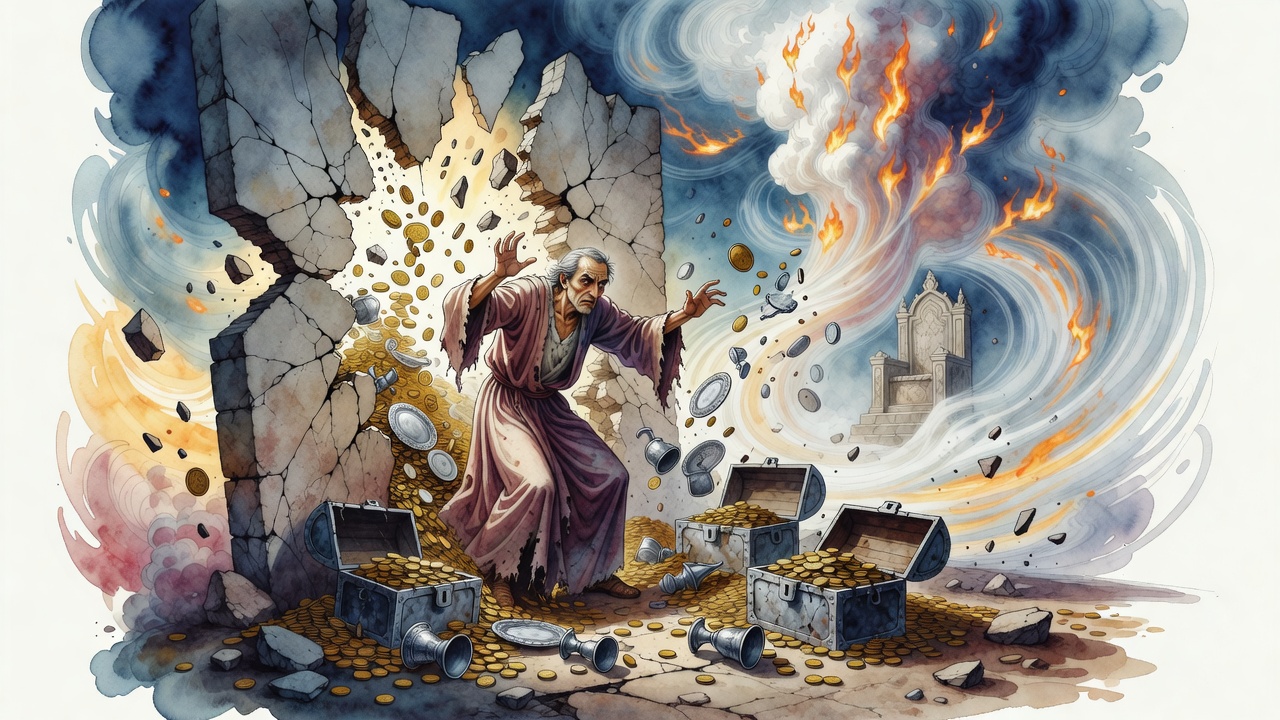
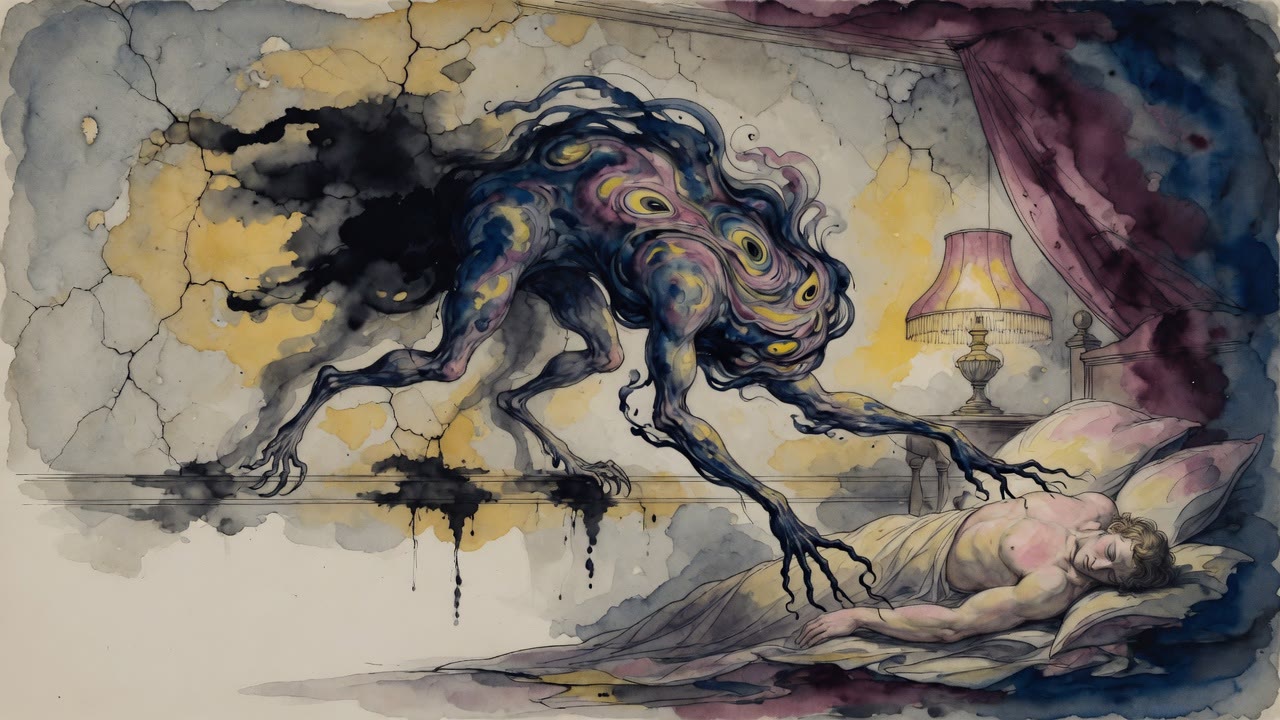
He hung his heavy wool cloak on the peg beside the door of a house he had not built. The good houses in Canaan came that way in those years, ready-made, waiting for a man who meant to stay. On the fourth morning he put his palm against the north wall to steady himself while he worked a pebble out of his sandal, and his hand came away smeared green.
He scrubbed at the place with a wet rag until the plaster went soft. The green did not lift. It sat under the surface, down in the stone, the color of standing pond water. Within a week the streak had put out a second arm near the floor, and the hollow around it had sunk deep enough to lay a finger in.
He said nothing about it for eleven days.
The Priest Counted Eleven Doors
When he finally went for the priest, the law had already put the words in his mouth, and he spoke them at the threshold with his eyes on the packed dirt. "Something like a plague has appeared to me in the house."
The priest made him carry everything out into the sun first, since whatever stayed inside would be condemned with the walls.
"Eleven things bring this," the priest said. "I will name them, and somewhere in them you will hear yourself."
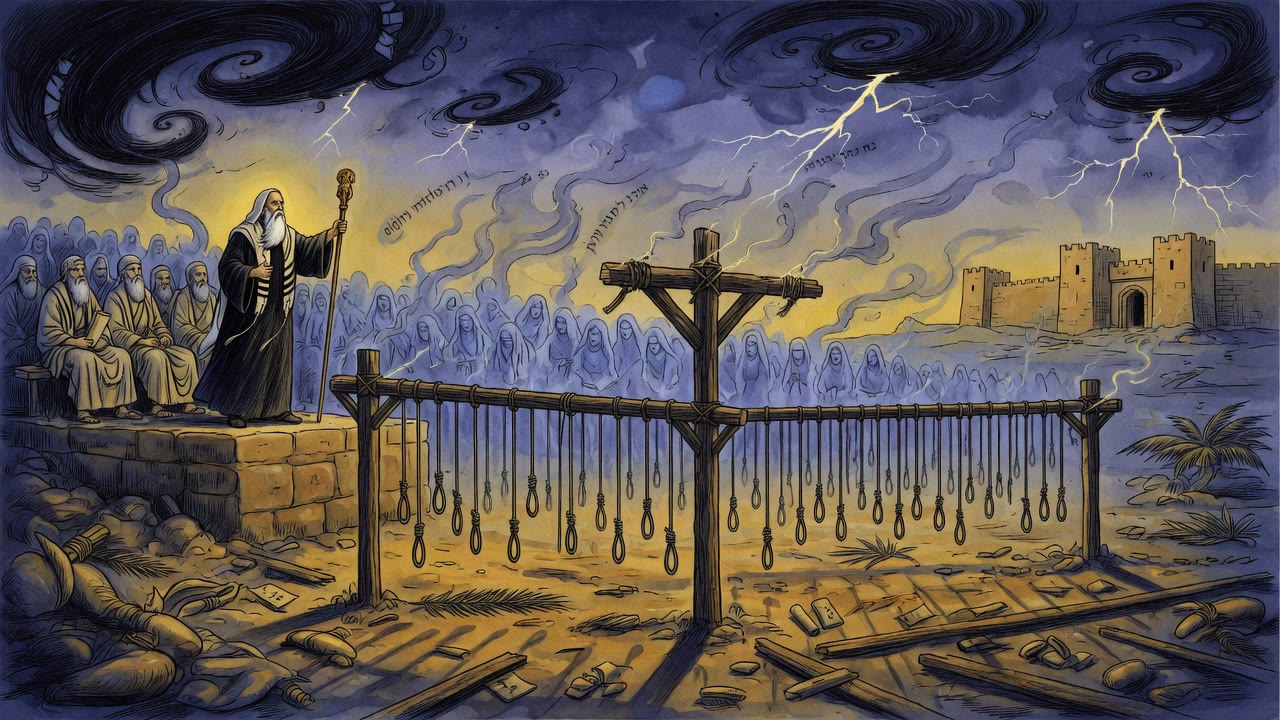
He counted them off against his fingers, unhurried. Worship of idols. Cursing the Name. Forbidden unions. Theft. Evil speech. False witness. A judge who bends a verdict. An oath sworn over nothing. A man who shoves into a domain that is not his. A man who sits quietly and builds lies in his head. A man who sets brothers against each other.
"Some add a twelfth," the priest said. "The grudging eye."
He shook his head at each one, and kept shaking it.
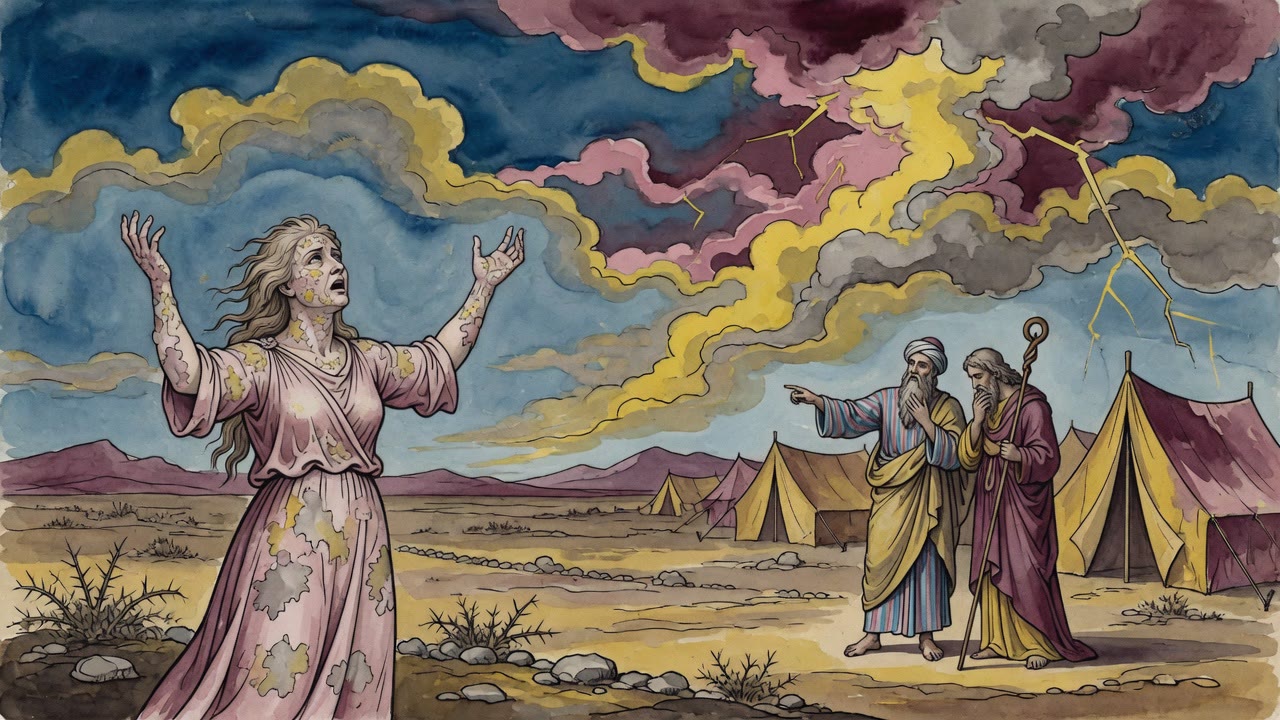
"Miriam spoke against her brother and went white as snow before the cloud had finished lifting," the priest said. "Gehazi wanted silver from Naaman and carried off Naaman's disease with it. Uzziah reached for a priesthood that was not his and stayed a leper to the day he died. A plague does not invent an accusation. It repeats one."
He said he had done none of it. The priest sealed the door and shut the house for seven days.
The Stones Went Out Unclean
On the seventh day the green had spread, and the priest gave the order. Pull out the stones, every one the plague has touched and the ones on either side, and carry them beyond the city to an unclean place.
Men with iron bars worked the marked stones loose while the neighbors watched. The pits left behind made the house look as though it were sinking into the ground under a weight nobody could see.
Three months earlier he had carried something across two courtyards about his wife's brother. He had not invented it. He had only moved it, the way a man moves a coal on a shovel, and by the time it came back it had grown a second arm of its own. The brothers no longer ate at one table. He knew which of the eleven the priest had held out to him, and he had let the priest walk on past it.
The Mark Came Back on the Cloak
The new plaster dried pale and clean, and for eleven days he slept in a house that smelled of wet lime and nothing else. Then the green came back through it.
This time nobody sealed the door. The house was condemned whole, and he watched his own roof beams pass him on other men's shoulders, out along the road to the unclean place.
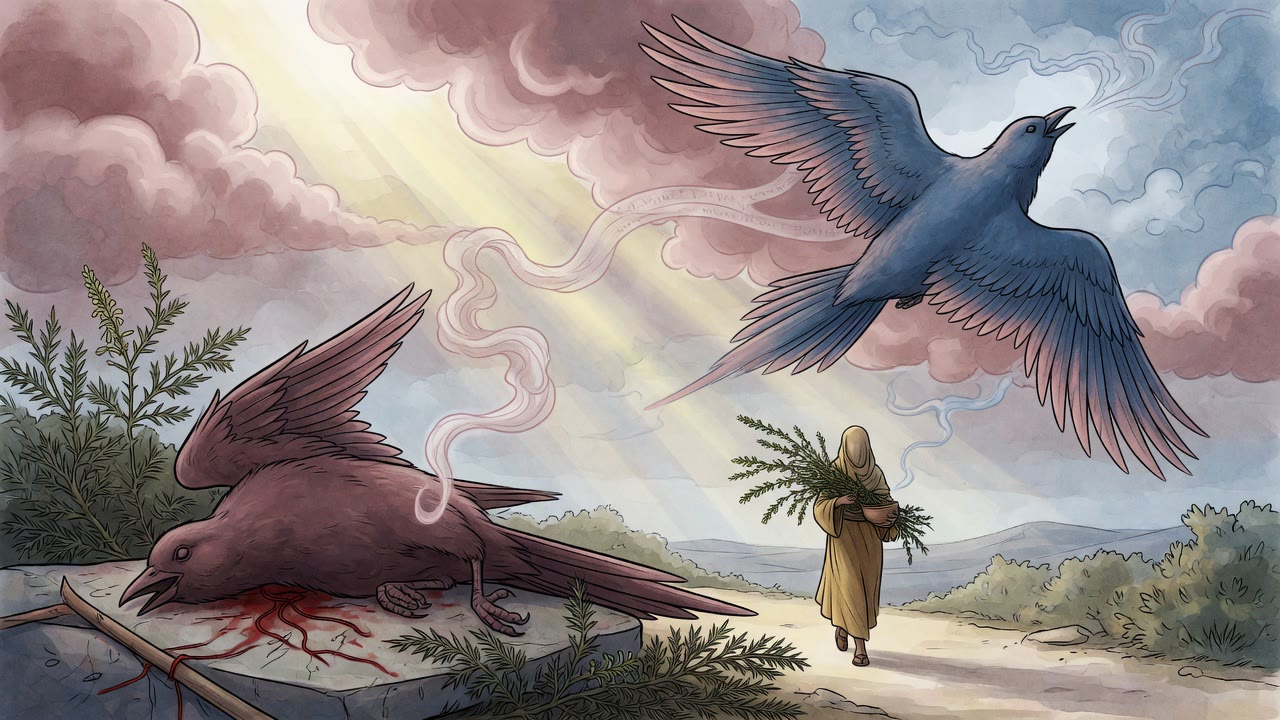
The cloak he had rescued lay folded in a basket. When he shook it loose he found the stain low in the wool, greenish, deep in the weave where no washing reaches. The priest shut the garment away seven days, looked again, and told him what the law tells everyone. Burn it. He built the fire himself at dusk and stood downwind while his own good wool went up smelling like scorched hair.
It Settled in His Flesh
The swelling rose on his forearm in the second week, and the hairs inside it had turned white. That is tzara'at (צרעת), the plague that begins in a wall and finishes in a body.
A man of flesh and blood who wants to discipline his servants has to fetch something first. He takes down whips. He drags out chains. God does not go looking. He had given this man dominion over the works of His hands, over the flocks and the fish of the sea and the beasts of the field, and when the ruler of all of it sinned, the sentence rose out of the ruler's own skin.
The priest looked at the arm and said the word that ends a man's residence among his neighbors.
So he tore his clothes at the shoulder and let the hair of his head go loose and uncovered, the way the people had stood exposed at the foot of the mountain on the day of the calf. He drew his cloth over his upper lip, because a mouth that had carried a thing across two courtyards was now required to go about wrapped. Then he walked past the last houses, to where the stones of his house lay in a heap, and sat down alone.
Anyone approaching that boundary heard him before they saw him. "Impure. Impure." Two words called out at a distance, in a voice the neighbors had known for years.
Nobody had to ask what he had done. The wall had been saying it for a month, and the cloak after the wall, and now the arm.
← All myths