Parshat Shoftim5 min read

The Nations Demanded Their Wages and God Handed Them a Sukkah

At the final reckoning the nations crowd in for Torah's wages, kick apart the one booth God grants them, and the whole account falls to a single line.

Curated by Arthur · Told by Maggid ·
Table of Contents
  1. The Scroll Against His Chest
  2. Rome Counts Its Marketplaces
  3. Persia Counts Its Bridges and Its Wars
  4. One Easy Commandment in the Heat
  5. The Idols Vanish and the Account Falls to One
The Nations Demanded Their Wages and God Handed Them a Sukkah Click for full size

The Scroll Against His Chest

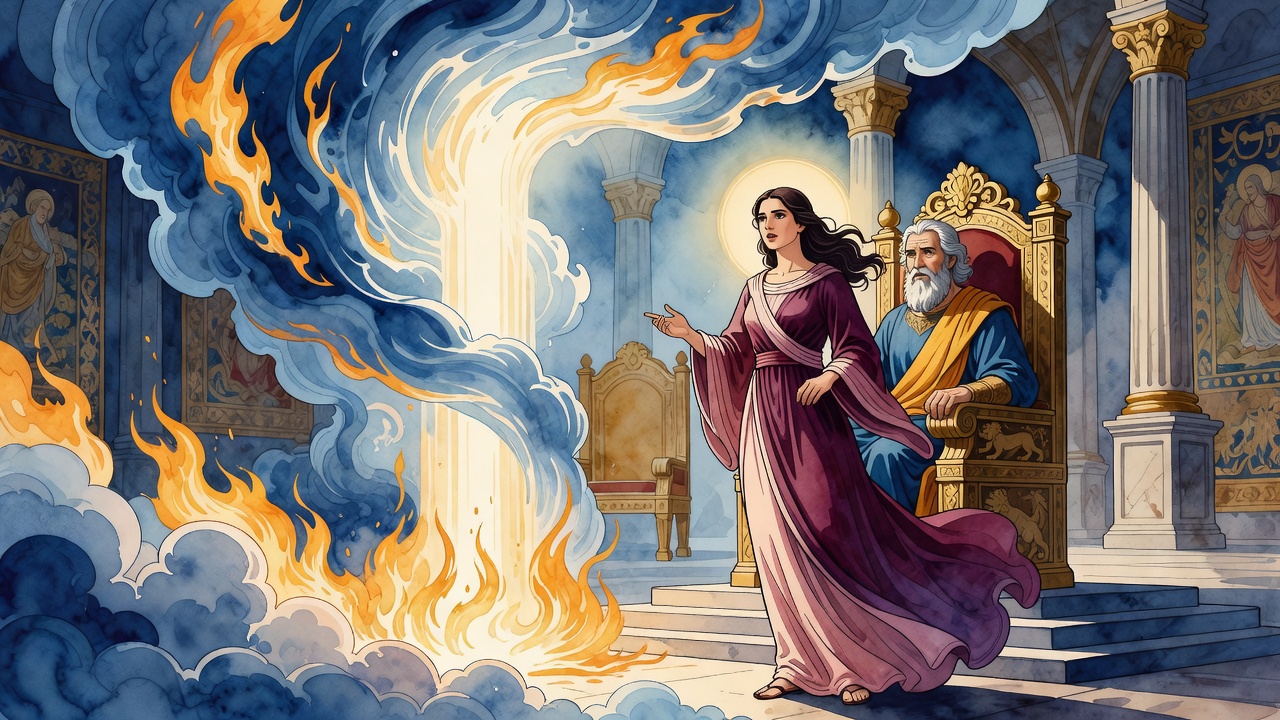
At the end of days the Holy One took a Torah scroll and held it against His chest, the way a man holds the one possession he will not set down. Then He called out across the whole gathered world, "Whoever labored in Torah, let him come and collect his wages."

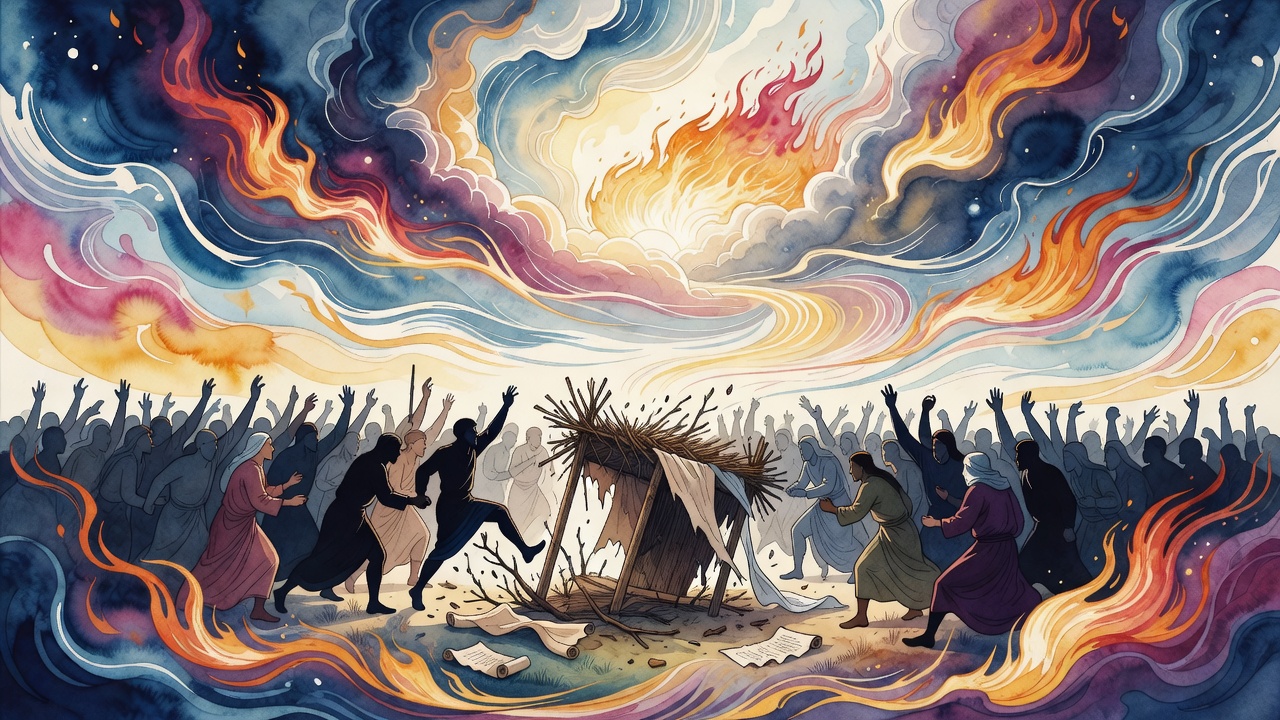
The nations came at once, and they came in a crush. They pushed and shouldered and shouted over one another, every kingdom certain the pay was already owed. The noise of them was the noise of a marketplace at closing, and the Holy One let it ring a moment before He spoke. "Do not crowd in like this," He said. "Let each nation come with its own scribes, one people at a time, and state its case."

Rome Counts Its Marketplaces

Rome stepped forward first, as Rome always did, sure of its standing. "With what did you occupy yourselves?" the Holy One asked.

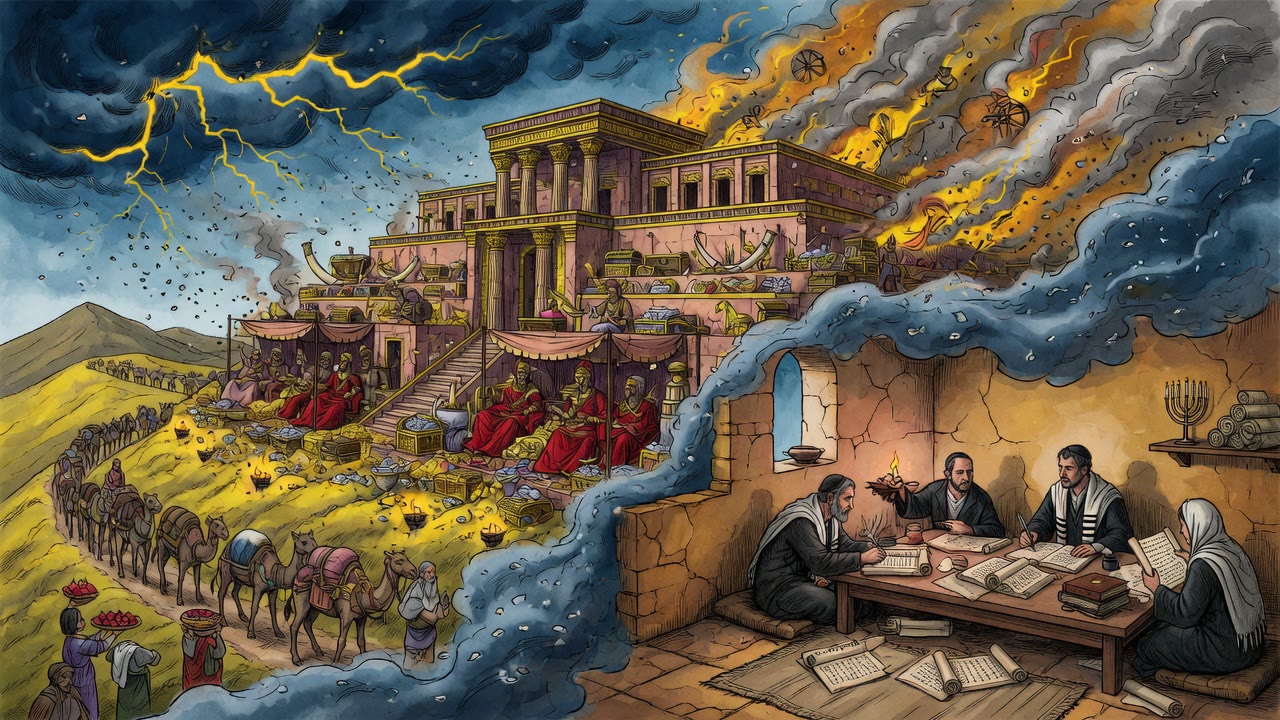
"We built marketplaces without number," Rome said. "We raised bathhouses in every city. We heaped up silver and gold past counting. And all of it, every coin and column, we did so that Israel would be free to sit and labor in Torah."

The Holy One did not raise His voice. "Every stone of it you laid for yourselves," He answered. "You filled the marketplaces to seat harlots in them. You raised the bathhouses to pamper your own flesh. As for the silver and the gold, they were never yours to bring. Mine is the silver and Mine is the gold." Rome had no second sentence.

Persia Counts Its Bridges and Its Wars

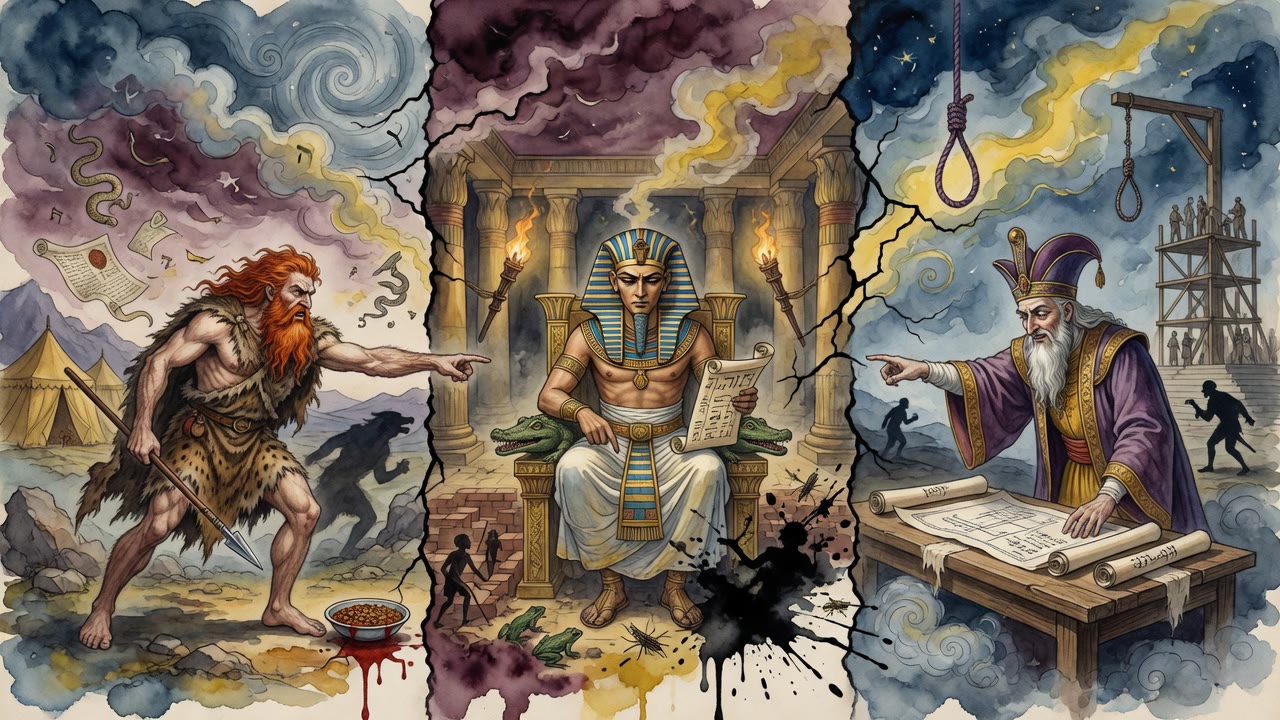
Then Persia came, and Persia had built things too. "We conquered cities beyond number," it said. "We threw bridges across every river. We waged war after war. And all of it we did for Israel's sake."

"You took the cities to break men under forced labor," the Holy One said. "You raised the bridges to stand on them and collect the toll. And the wars were never yours. I am the one who is a man of war." He looked across the whole assembly of them and asked one question. "Is there a single one among you who can stand up and declare this?" And this was nothing but the Torah, the Torah that Moses set before Israel. Not one of them opened his mouth.

One Easy Commandment in the Heat

The nations found their voice all at once. "Did You ever offer it to us, and we refused?" they said. But He had carried it to every nation of the world. He had shone out from Seir upon them, and each in turn had handed it back. Now they changed their plea. "Master of the Universe, give it to us again, fresh, and this time we will keep it."

"I will not weigh you by the whole of it," He said. "I will give you one small commandment. Keep that one, and I will pay you as I pay Israel." He told them, "Go and make a sukkah." And every nation ran and cut branches and raised its booth, glad the price had come down so far.

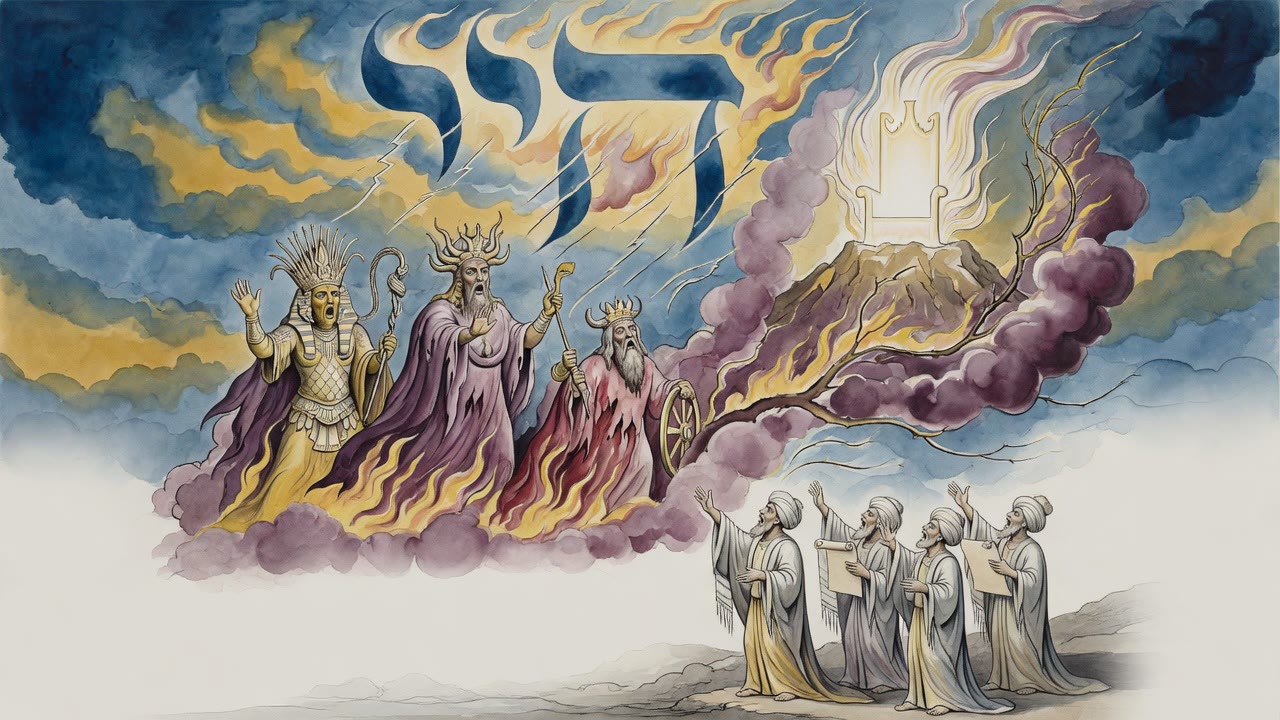
Then the Holy One reached up and drew the sun out of its sheath. The heat came down without mercy on every roof of leaves. And the nations, who had built marketplaces and bridges and could not sit one afternoon in a hut of branches, kicked their booths apart and stormed out into the open, snarling, "Let us tear off their cords." The One who sits in heaven laughed. He mocked them as they went.

The Idols Vanish and the Account Falls to One

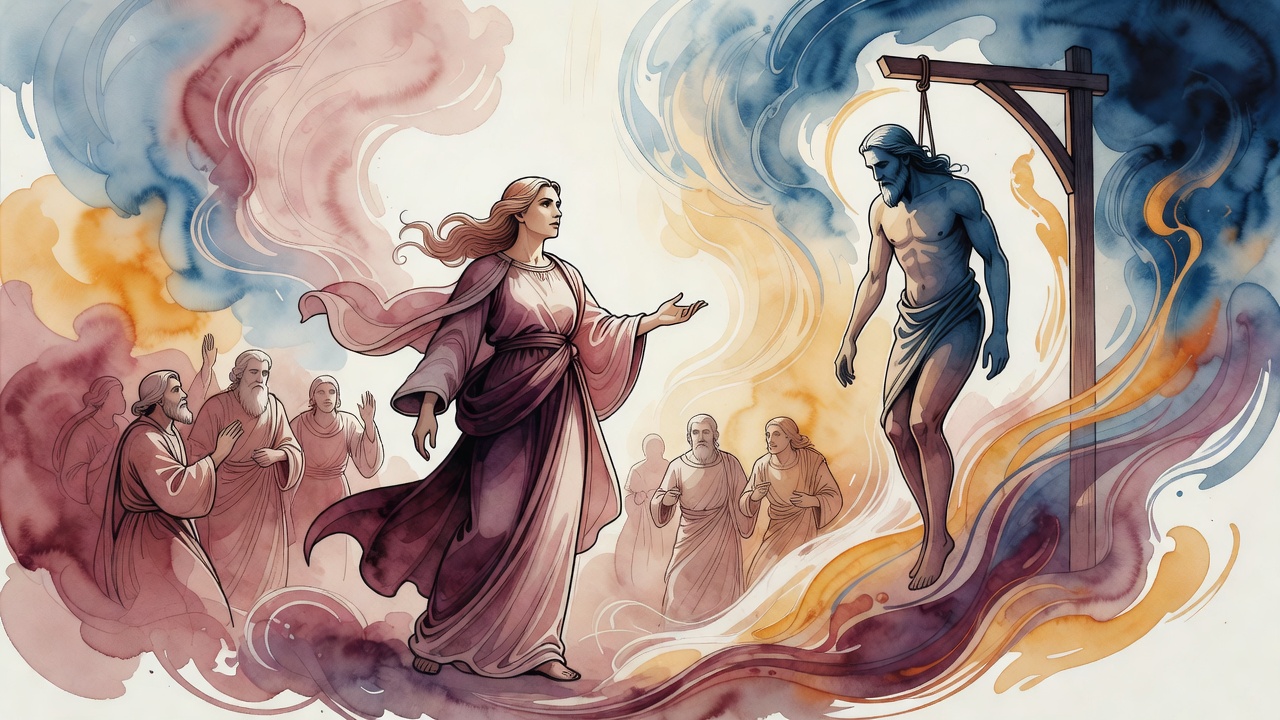
Outside their broken booths the nations rounded on the gods they had carried so far. "Come and bow with us before the Holy One," they said to the images in their arms, "for it was you who led us astray." And in that instant the idols passed away, every one of them, gone like breath off a cold morning. The nations who had served carved things stood shamed with nothing in their hands, and the ground opened them a road down to Gehinnom (the fiery place of punishment after death).

Israel remained, a third of the world, the children of the three fathers, the only people who could declare the thing the nations could not. And the thing itself had never been the mountain of works the empires tried to stack in their defense. Rabbi Simlai could count how small it had become. Six hundred and thirteen commandments were spoken to Moses at Sinai. David came and stood them on eleven. Isaiah came and stood them on six. Micah pressed them down to three, "to do justice, to love kindness, and to walk humbly with your God." Amos pressed them to two, "Seek Me and live." And Habakkuk came and set the whole of it on one line, "The righteous shall live by his faithfulness."

That single line was the wage the nations had come to collect and could not, the one booth they would not sit inside, while Israel had carried it out of every fire the world lit beneath them.


← All myths
From the tradition

Sources

2 sources

The texts behind this telling. Some cards carry a translation of the source; others are our own retelling of it, and each card says which. Every card links out to the original.

Midrash Tanchuma Buber, Shoftim 9:1Midrash Tanchuma Buber, Shoftim

Translation of the source text.Midrash Tanchuma (Buber), Public Domain, on Sefaria · CC-BY-SA

Rabbi Hama bar Hanina said: What is the meaning of (Isaiah 43:9), "All the nations are gathered together"? In the time to come the Holy One, blessed be He, brings a Torah scroll and places it in His bosom, and says, "Whoever occupied himself with Torah, let him come and take his reward." Immediately all the nations gather together in confusion, as it is said, "All the nations are gathered together [etc.]." The Holy One, blessed be He, said to them, "Do not gather in confusion; rather, let every nation and its scribes [come], [as it is said] (ibid.), 'and let the peoples be assembled.'"

The kingdom of Rome entered. The Holy One, blessed be He, said to them, "With what did you occupy yourselves?" They say, "We established many marketplaces, we built many bathhouses, and we multiplied silver and gold; all of it so that Israel could occupy themselves with Torah." He said to them, "Everything you did, you did for your own needs: marketplaces, to seat harlots in them; bathhouses, to pamper yourselves; the silver and gold are Mine, as it is said (Haggai 2:8), 'Mine is the silver and Mine is the gold.'"

The kingdom of Persia entered. He said to them, "With what did you occupy yourselves?" They say, "We conquered many cities, we built many bridges, we waged many wars; all of it for the sake of Israel." He said to them, "Everything you did, you did for your own sake: cities, to impose forced labor in them; bridges, to collect tolls; as for wars, I waged them, as it is said (Exodus 15:3), 'The LORD is a man of war.' Is there any among you who declares this? as it is said (Isaiah 43:9), 'Who among them will declare this?' And 'this' is nothing but the Torah, as it is said (Deuteronomy 4:44), 'And this is the Torah which Moses set [before the children of Israel].'"

They say before Him, "Did You give it to us and we did not accept it?" [Concerning them He says (Deuteronomy 33:2), "The LORD came from Sinai and shone forth from Seir upon them." This teaches that the Holy One, blessed be He, went around to all the nations of the world, and they did not accept it.] They say before Him, "Master of the Universe, give it to us anew and we will perform it." He said to them, "I will give you a minor commandment; if you observe it, I will give [you reward] like Israel." He said to them, "Go and make a sukkah." Immediately each and every one goes and makes himself a sukkah. And the Holy One, blessed be He, brings the sun out from its sheath, and each one kicks at his sukkah and goes out; as it is said (Psalms 2:3), "Let us tear off their bonds." And the Holy One, blessed be He, laughs at them, as it is said (ibid. 2:4), "He who sits in heaven laughs, the LORD mocks them."

Full source
Midrash Tanchuma Buber, Shoftim 10:2Midrash Tanchuma Buber, Shoftim

Translation of the source text.Midrash Tanchuma (Buber), Public Domain, on Sefaria · CC-BY-SA

Another interpretation of (Psalms 97:7): "Bow down to Him, all you gods." The nations of the world say to their gods: Come, let us bow down before the Holy One, blessed be He, for you have led us astray. Immediately (Isaiah 2:18), "And the idols shall utterly pass away." And the Holy One, blessed be He, brings the nations of the world down to Gehinnom. Therefore it is said (Psalms 97:7), "Let all who serve images be put to shame," and so forth.

(Zechariah 13:8) "And it shall come to pass throughout all the land, says the LORD, that two parts in it shall be cut off and perish, but the third shall remain in it." These are Israel, who are a third of the world, the children of three patriarchs. Another interpretation of "but the third shall remain in it": that they will only settle in their land in the third redemption. The first redemption is the redemption from Egypt; the second is the redemption of Ezra; the third has no interruption.

Rabbi Simlai said: Six hundred and thirteen commandments were spoken to Moses at Sinai. David came and established them upon eleven, as it is said (Psalms 15:1-2), "LORD, who shall sojourn in Your tent?... He who walks blamelessly," and so forth, until (Psalms 15:5), "He who does these things shall never be moved." Isaiah came and established them upon six, as it is said (Isaiah 33:15), "He who walks in righteousness, and speaks uprightly, who despises the gain of oppressions, who shakes his hands free from holding a bribe, [who stops his ears from hearing of bloodshed,] who shuts his eyes from looking upon evil." And it is written after it (Isaiah 33:16), "He shall dwell on the heights; the strongholds of the rocks shall be his refuge; his bread shall be given him, his water shall be sure." Micah came and established them upon three, as it is said (Micah 6:8), "He has told you, O man, what is good, and what the LORD requires of you: only to do justice, and to love kindness, and to walk humbly with your God." Amos came and established them upon two, as it is said (Amos 5:4), "For thus says the LORD... Seek Me and live." Habakkuk came and established them upon one, as it is said (Habakkuk 2:4), "But the righteous shall live by his faithfulness."

Full source