6 min read

The Plow Cow That Refused to Work on Shabbat

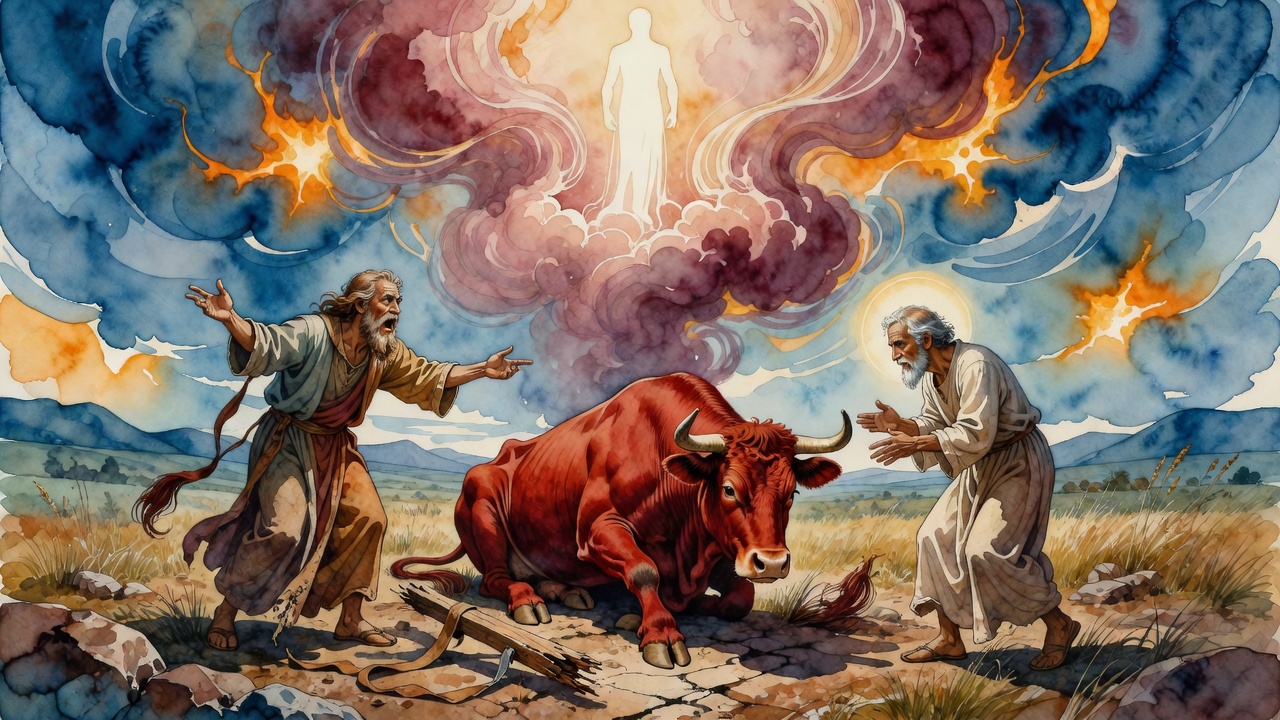
The new owner struck her and she would not rise. He struck again. Dust settled on the unused plowshare and birds came down on the quiet dirt.

Curated by Arthur · Told by Maggid ·
Table of Contents
  1. Sold Under a Hard Hand
  2. A Whisper in the Ear
  3. Ashes That Look Like Sorcery
  4. Statute for Moses, Mystery for Us
  5. Recognition Without a Lecture
The Plow Cow That Refused to Work on Shabbat Click for full size

Sold Under a Hard Hand

The Jewish man's fortune shrank until he had one cow left for plowing, and then he did not even have that. Debt pressed. Neighbors watched. He sold her to a non-Jewish neighbor and walked home lighter in property and heavier in shame. Six weekdays she pulled the plow as she always had, muscle moving under hide, furrow opening behind her. On the seventh day the new owner harnessed her for work as if the calendar were only a human whim.
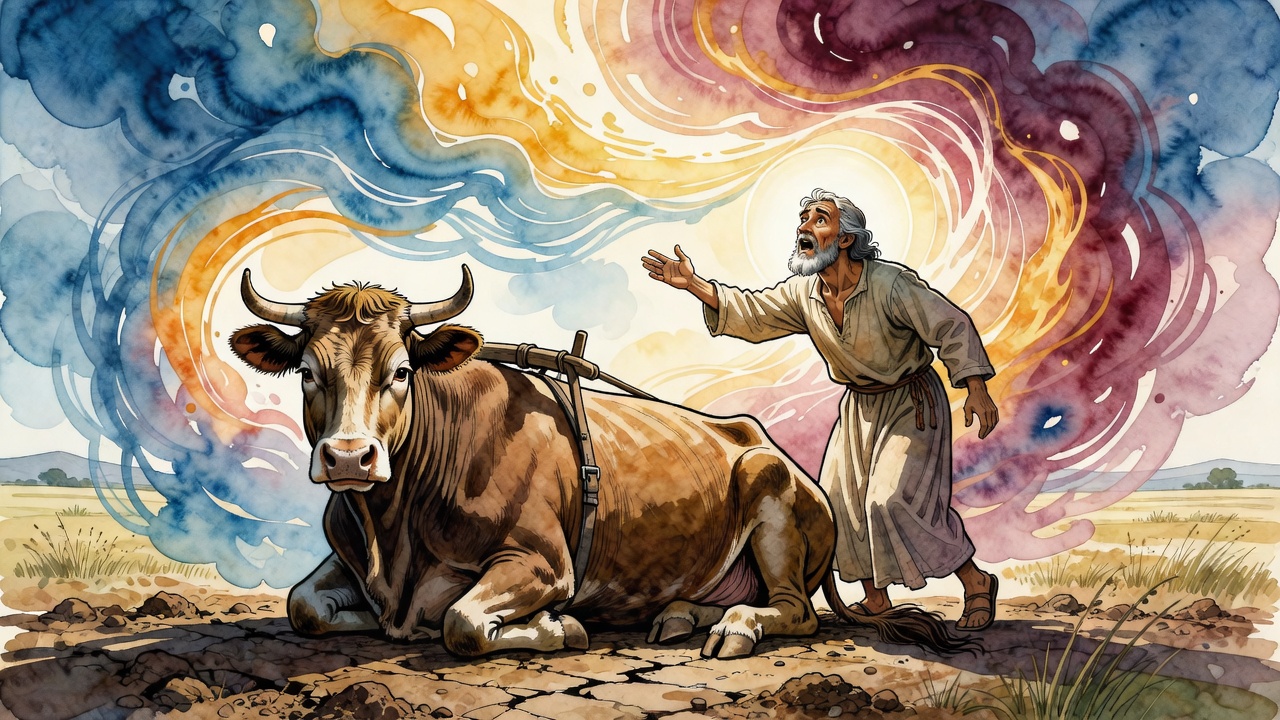
She lay down under the yoke.

He struck her. She did not rise. He struck again. The field waited. Dust settled on the unused share. Birds landed on the quiet dirt. At last he went back to the seller, angry and a little afraid. "Take your cow. She must be hurt. I hit her and she will not move."

A Whisper in the Ear

The Jewish man understood at once. This was not pain. This was Shabbat. She had learned rest the way a child learns a mother's face. He said, "Come. I will make her stand."

"Cow, you know that when you were in my possession you plowed on the days of the week and on Shabbat you rested. Now I have been afflicted by suffering, and you are in the hands of a non-Jew. I am asking you to stand up and plow." He bent to her ear as he spoke.

She stood. She plowed. The new owner stared as if the ground itself had changed religion under his feet. Sweat cooled on his neck in a way that had nothing to do with weather. "I will not let you go," he said, "until you tell me what you did in her ear. I struggled with her and hit her and she did not stand."

The Jewish man tried to soothe him. "I did no magic or sorcery. I spoke to her this way." The neighbor felt something crack open. If a cow without speech can recognize her Creator, he thought, how can I, formed in His image and given understanding, refuse to walk and recognize mine? He converted. He studied. The rabbis later called him Yochanan ben Tortah, and they reported law in his name. A beast under a yoke had pulled a man under the wings of the Presence.

Ashes That Look Like Sorcery

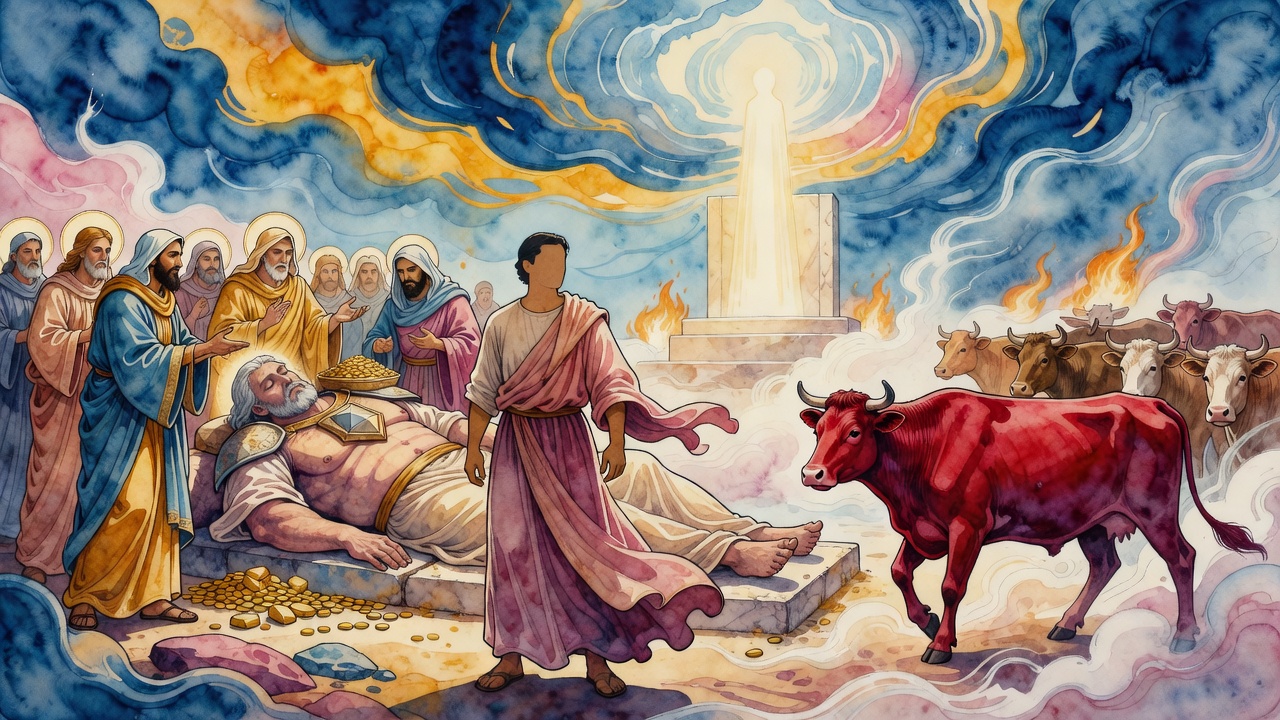
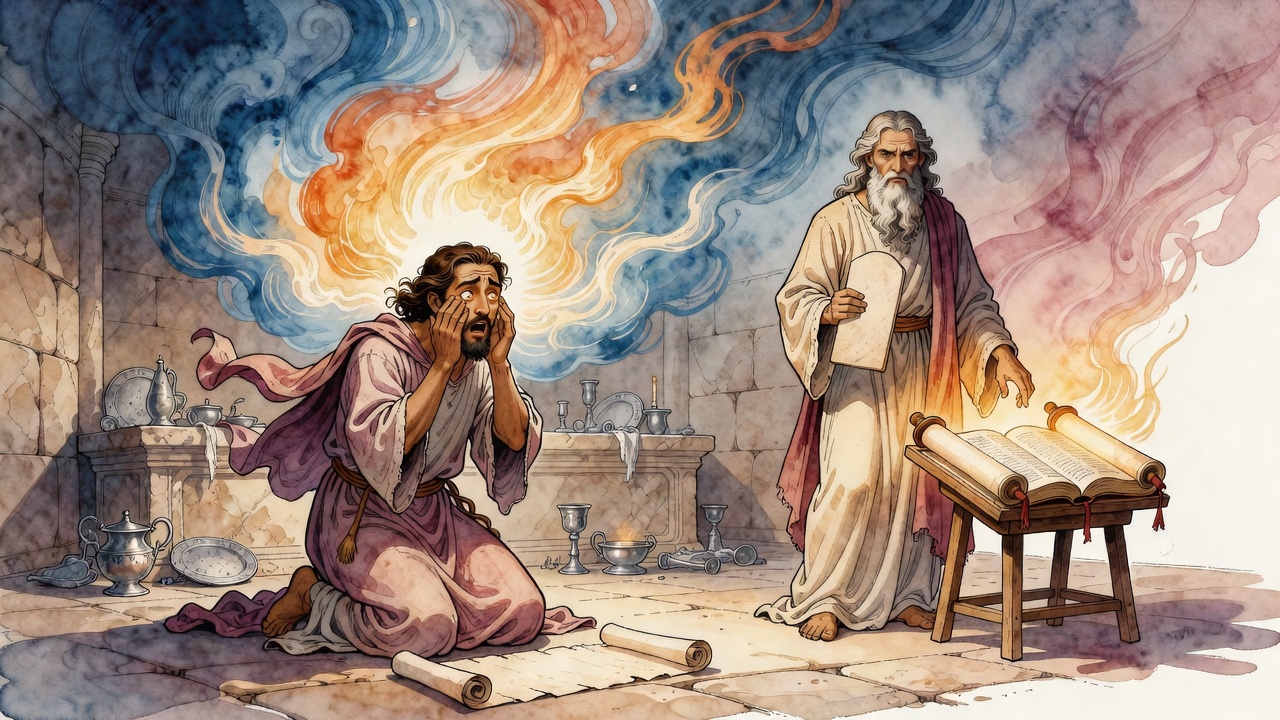
Another cow stands at the center of Israel's purity: the red heifer, burned to ash, mixed with water, sprinkled on one who touched the dead. A gentile once faced Rabbi Yohanan ben Zakkai with a hard sneer. "Your ceremony looks exactly like witchcraft. You burn a cow, grind it, sprinkle ash-water, and call a man clean. This is sorcery."

Yohanan did not flinch. "What do your people do when someone is possessed by a demon?" The gentile admitted herbs and fumigation. "Then let your ears hear your mouth," Yohanan said. "If herbs and smoke can drive out a spirit, how much more the sacred ashes under divine authority."

The gentile left satisfied. The students did not. They waited until the outsider's footsteps faded. "Master, you brushed him off with a straw. What is the real answer?"

Yohanan looked at them gravely. "By your lives, the dead body does not make impure of itself, and the water does not make pure of itself. It is a decree of the Holy One. He said: I have set a statute. I have issued a decree. You are not permitted to transgress My decree."

Statute for Moses, Mystery for Us

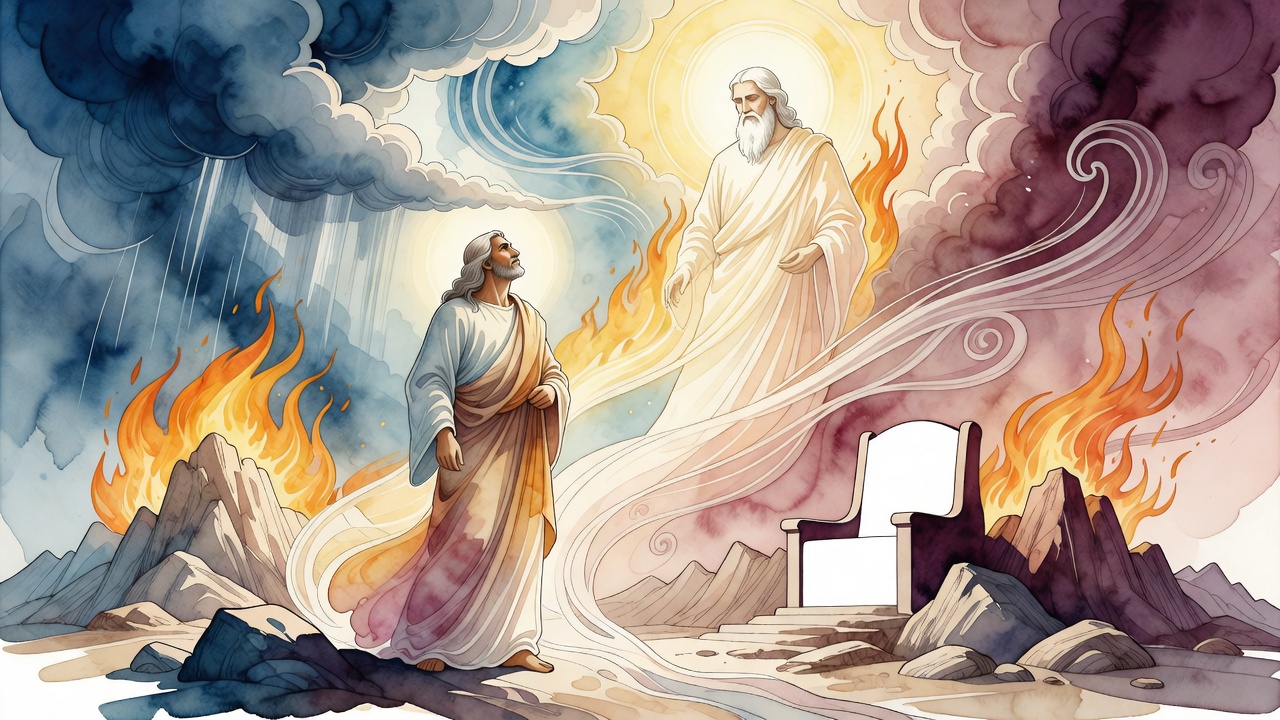
The same statute presses on Moses. "To you I am revealing the reason for the heifer," the Holy One says in the teaching of Rabbi Jose bar Hanina, "but to others it is an unquestioned statute." Things hidden in this world will clear in the world to come, like a blind person who gains sight. Some say matters not shown even to Moses were shown later to Rabbi Akiva and his colleagues. The red cow remains the commandment that does not kneel to human logic on demand.

The plow cow and the red heifer are not the same animal, and the midrash knows it. Still they pull one yoke of meaning. One cow teaches rest by lying down in a field. One cow teaches purity by becoming ash in a rite. Both force a human being to admit that Heaven's rule is not a trick he can reverse-engineer whenever a whip or a foreign challenge demands a full map.

Recognition Without a Lecture

The convert of the field did not need a legal brief. He needed a body that refused the seventh day of labor. The students of Yohanan needed the opposite honesty: when a foreigner demands a natural proof, give him a temporary answer that meets him where he stands; when your own disciples demand the root, tell them the root is decree. Different audiences, different depths, one refusal to pretend that mystery is shame.

Israel's purity and Israel's rest both begin where explanation runs out and obedience begins. The cow that would not plow still stands in the furrow of memory. The ashes still wait in the statute book. Between them walks every person who has ever asked why, and then chosen to rest, or to sprinkle, or to convert, because a creature without words knew her Maker better than a man with a whip. That is not a small teaching. It is a whole education in how a people lives under a command that sometimes looks, from the outside, like magic, and from the inside, like loyalty.


← All myths

From the tradition

Sources

3 sources

The texts behind this telling. Some cards carry a translation of the source; others are our own retelling of it, and each card says which. Every card links out to the original.

Pesikta Rabbati 14Pesikta Rabbati

Retold in our words. Read the original at the link below.Rabbi Mike Feuer, Jerusalem Anthology · CC0

Our rabbis taught: An incident once took place with a Jewish man who had one cow [which he used] for ploughing. [Then], his hand [fortune] was diminished and he sold her [the cow] to a non-Jewish man and it ploughed with him [for the] six day of the week. On Shabbat (the Sabbath) he took her out to plough with him and she laid down under the yoke. He then walked [to the cow] and hit her, and she did not move from her place. Since he saw it was so, he walked and said to the Jewish man who sold her to him: "Come [and] take your cow, perhaps she has some [debilitating] pain since [no matter] how many times I hit her and she [still] does not move from her place." The Jewish man understood [the cause of the cow's action], saying [to himself] this is for the sake of Shabbat, [for] she has learned to rest on Shabbat. He [the Jew] said to him [the non-Jew]: "Come, I will make her stand up." When he neared [the cow], he spoke into the cow's ear: "Cow, you know that when you were in my possession you would plough during the days of the week and on Shabbat you would rest. [But] now that I have been afflicted by suffering, and you are in the hands of a non-Jew I am asking you to stand up and plough." Immediately, she stood up and ploughed. The non-Jew said to him: "I had not asked you to take the cow until now, and I did not come to you to address any matter apart from this. And I will not let you go until you tell me what you did to her in her ear, [for] I struggled with her and I hit her and she did not stand up." The Jewish man began to appease him and said: "I did no magic or sorcery, rather in this specific manner did I divert her." Immediately, the non-Jew was awestruck, saying [to himself]: If a cow which does not have [the ability of] speech nor understanding can recognize her Creator, then how can I - who was formed in His image, and who was given understanding - not walk and recognize my Creator. Immediately, he went and converted. And he studied and became worthy of [teaching] Torah. And they called his name "Yochanan be Tortah" and [even] until today, our Rabbis have reported Halacha (Jewish religious law) in his name. And if you will wonder how it came to be that a cow led one man to be gathered under the wings of the Divine Presence, in fact, on the account of a cow all of Israel became pure as we read concerning [the Red Heifer] "This is the statute of the Torah" (Numbers 19:2)....

Full source
Exempla of the Rabbis, No. 33Exempla of the Rabbis (Gaster, 1924)

Retold in our words. Read the original at the link below.The Exempla of the Rabbis, Moses Gaster (1924) · Public Domain

A gentile once confronted Rabbi Yohanan ben Zakkai with a cutting observation: "Your ceremony of the red heifer looks exactly like witchcraft. You take a cow, burn it, grind it up, mix the ashes with water, sprinkle it on a person who touched a dead body, and declare him clean. This is sorcery."

Rabbi Yohanan did not flinch. "Tell me," he replied, "what do your own people do when someone is possessed by a demon?"

"We take certain herbs," the gentile admitted, "make a fumigation, and the demon departs."

"Then let your own ears hear what your mouth has spoken," Rabbi Yohanan said. "If herbs and smoke can drive out a spirit through natural means, how much more effective are the sacred ashes of the heifer, which carry divine authority, for driving away the spirit of impurity?"

The gentile left, apparently satisfied. But Rabbi Yohanan's students were not. "Master," they said, "you brushed him off with a straw. What is the real answer?"

Rabbi Yohanan looked at them gravely. "By your lives," he said. "The dead body does not actually make a person impure, and the water does not actually make him pure. Rather, it is a decree from the Holy One, blessed be He. God said: 'I have set down a statute. I have issued a decree. You are not permitted to transgress My decree.'" The Pesikta (40a) and the Midrash Hagadol record this as the definitive teaching on the red heifer, the ultimate commandment that defies human logic and demands pure obedience.

Full source
Midrash Tanchuma, Chukat 8Midrash Tanchuma

Retold in our words. Read the original at the link below.Townsend 1989 translation of Midrash Tanhuma, S. Buber Recension · CC-BY

(Numb. 19:2, cont:) “That they bring unto you [a red heifer without blemish].” R. Jose bar Hanina said, “The Holy One, blessed be He, said to Moses. ‘To you I am revealing the reason for the heifer, but to others it is an unquestioned statute.’” As Rav Huna said, “It is written (in Ps. 75:3), ‘For I will set a time, when I Myself will judge with equity.’ It is also written (in Zech. 14:6), ‘On that day there shall be no light of cold (yqrot) and frost.’ Things that are hidden from you in this world are going to be clear to you in the world to come, as with the blind person who gains his sight. Thus it is stated (in Is. 42:16), ‘I will lead the blind by a road they do not know, [… these things I have done].’ ‘I will do’ is not stated here, but ‘I have done,’ in that I have already done them for R. Aqiva and his colleagues.” Another interpretation: Things that were not revealed to Moses were revealed to R. Aquiva and his colleagues (as found in (Job 28:1)0), “his eye sees every precious thing.” R. Jose bar Hanina said, “It was implied (in Numb. 19:2) was that all heifers perish, but [Moses’] lasts forever.” R. Aha said in the name of R. Jose bar Hanina, “When Moses ascended into the firmament, he heard the voice of the Holy One, blessed be He, sitting and being occupied with the parashah of the [red heifer], and he was reciting a halakhah (i.e., a passage of oral Torah) in the name of its author (from Parah 1:1), ‘My son, Eliezer says, “The calf [whose neck is to be broken] is to be one year old, but the [red] heifer is to be two years old.”’ Moses said, ‘Master of the world, do not the realms above and below belong to you? Now you are citing a halakhah in the name of flesh and blood?’ He said to him, ‘A righteous man is going to arise in my world and is first going to begin [his teaching] with the parashah of the [red] heifer, R. Eliezer says, “The calf [whose neck is to be broken] is to be one year old, but the [red] heifer is to be two years old.”’ He told Him, ‘Master of the universe, may it be [Your] will that he come from my loins.’ He said to him, ‘By your life, he is to be from your loins.’ Thus it is stated (of Moses' offspring in Exod. 18:4), ‘And the name of the one was Eliezer,’ [i.e.,] the name of that particular one [who would begin his teaching with Tractate Parah] was Eliezer. A certain stranger questioned Rabban Johanan ben Zakkay, “These things which you do seem like a kind of sorcery. You bring a heifer, burn it, pound it, and take its ashes. Then [when] one of you is defiled by a corpse, they sprinkle two or three drops on him, and you say to him, ‘You are clean.’” He said to him, “Have you ever had a bad spirit of madness enter you?” He told him, “No.” He said to him, “Perhaps you have seen someone into whom a bad spirit has entered?” He told him, “Yes.” He said to him, “So what did you do for him?” He said to him, “They bring roots and burn them beneath him. Then they sprinkle water on [the spirit], and it flees.” He said to him, “Let your ears hear what you are uttering with your mouth. Similarly is this spirit an unclean spirit. Thus it is stated (in Zech. 13:2), ‘and I will also remove the prophets and the unclean spirit from the land.’ They sprinkle the purifying water upon him, and he flees.” After the gentile had left, [R. Johanan's] disciples said to him, “Our master, you repelled this one with a [mere] reed [of an answer]. What have you to say to us?” He said to them, “By your lives, a corpse does not defile, nor does a heifer purify, nor does water purify. Rather, the Holy One, blessed be He, has said, ‘I have enacted a statute for you. I have issued a decree, [and] you are not allowed to transgress against my decree.’” Thus it is written (in Numb. 19:2), “This is the statute of the Torah.” And for what reason are all the sacrifices male and female, while that one is [only] female? R. Ayyevu said, “It is comparable to the son of a female slave who defiled a king's palace. The king said, ‘Let his mother come and clean up the excrement.’ Similarly has the Holy One, blessed be He, said, ‘Let a heifer come and atone for the incident of the [golden] calf.’”

Full source