Translation of the source text.Pesikta Rabbati, ed. Meir Friedmann (Ish-Shalom), Vienna 1880 · Public Domain
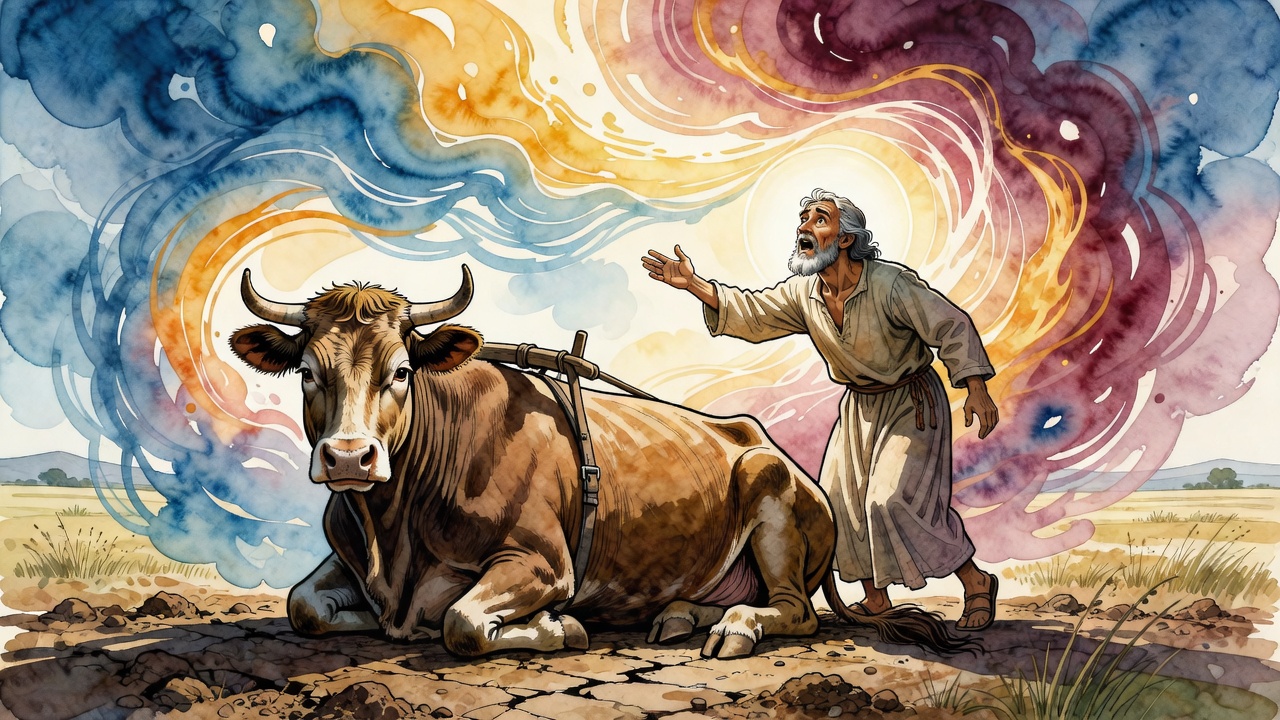
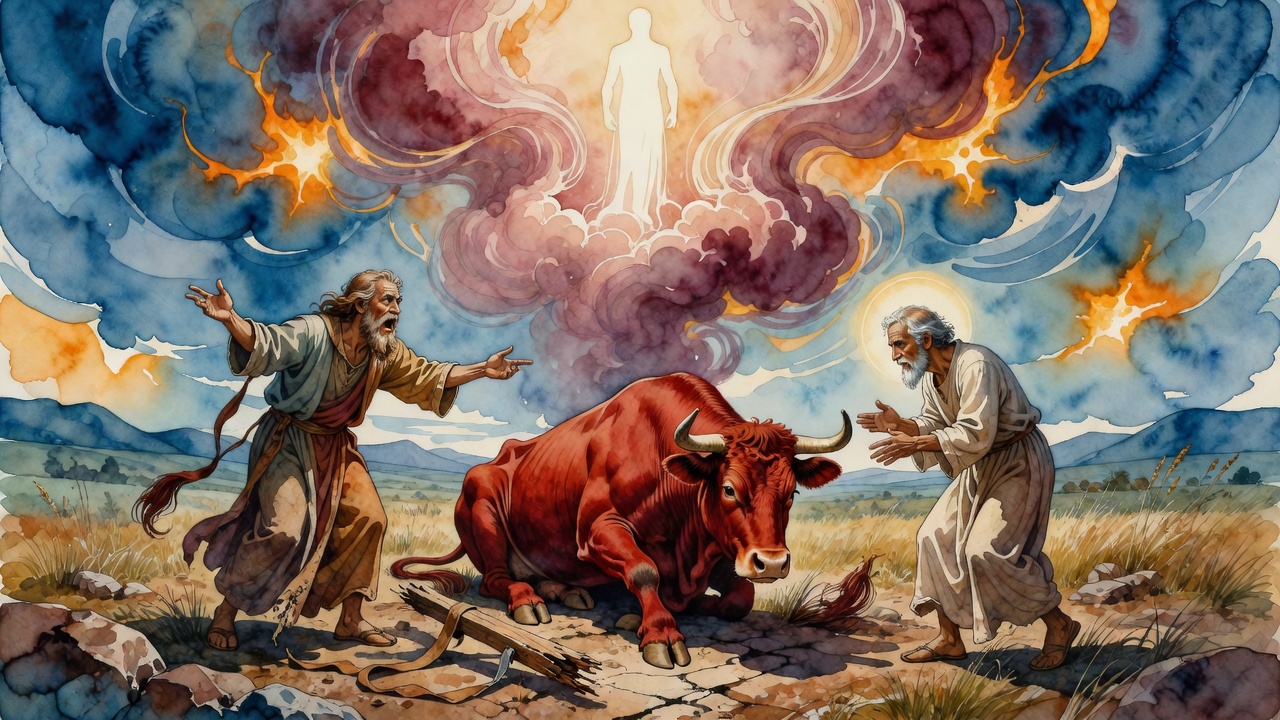
"This is the statute of the Torah which the LORD commanded, saying: Speak to the children of Israel, that they bring you a red heifer without blemish, in which there is no defect, upon which no yoke has come" (Numbers 19:2). Let our master teach us: when the red heifer was prepared, was it permitted for Israel to buy it from a gentile? Thus our Rabbis taught: one does not buy a red heifer from a gentile, according to Rabbi Eliezer. The sages say: one may buy it. What is Rabbi Eliezer's reason for saying one does not buy a red heifer from gentiles? Because gentiles are suspected of transgressions and of causing Israel to sin. Rabbi Pinhas the priest son of Hama said in the name of our Rabbis: there was a case in which Israel needed a red heifer and could not find one. Later they found one with a certain gentile. They went and said to him: sell us the heifer you have, for we need it. He said to them: give its price and take it. How much was its price? Three or four gold coins. They said: we will give it. While they went to bring the money, that gentile realized why they needed the heifer. When they came back and brought its price, he said to them: I will not sell it to you. They said to him: perhaps you want to increase its price. If you want that, we will give you whatever you ask. The wicked man, seeing them pressed, raised the matter against them. They said to him: take five gold coins. He did not want it. Take ten. Take twenty. Until they reached one hundred, and he still did not want it. Some of our Rabbis say they reached the point of offering him one thousand gold coins. When he agreed to give it to them for one thousand gold coins and made terms with them, they went to bring him the gold. What did that wicked man do? He said to another gentile, his companion: come and see how I will play with these Jews. They want it and give me all this money only because no yoke has ever come upon it. I will take the yoke and put it on her, and I will play with them and take their money. So he did. He took the yoke and put it on her all night. This is the sign of a heifer upon which no yoke has come: there are two hairs on its neck at the place where the yoke is set. As long as no yoke has come upon it, the two hairs stand upright. Once a yoke has been put on it, the two hairs bend. It has another sign as well: before a yoke has come upon it, its eyes are level; once a yoke has come upon it, its eyes shift, it squints, and it looks toward the yoke. When they came to take it from him, with all that gold in their hands, and showed him the gold, he immediately went in, removed the yoke from the heifer, and brought it out to them. Once he brought it out, they began looking at it and saw its sign, those two hairs that had been upright and were now bent, and the eyes that had fallen because of the yoke. They said to him: take your heifer. We do not need it. Mock your mother. When that wicked man saw that they returned his heifer to him and that he came out empty of all those gold coins, the same mouth that had said, "I will play with them," began saying, "Blessed is He who chose this nation." He went into his house, hung a rope, and strangled himself. So may all Your enemies perish, O LORD. Thus you learn that a heifer may be bought from anywhere, whether from Israel or from a gentile. Do not say that because the Torah writes that a heifer must be taken from Israel, it may be bought only from Israel. From where do we know even from a gentile? From what we read in the matter: "Speak to the children of Israel, that they bring you," and so forth. Let our master teach us: how many days before the burning of the heifer did they separate the priest who burns it from his house to the chamber facing the fortress? Thus our Rabbis taught: seven days before the burning of the heifer, they separate the priest who burns the heifer from his house to the chamber facing the fortress (Mishnah Parah 3:1). They asked about it: what is "the fortress"? Rabbi Yohanan and Resh Lakish differed. Rabbi Yohanan said: a tower stood on the Mount of Olives, and its name was Fortress. Resh Lakish said: the whole city was called Fortress, as it says, "and to build the fortress which I have prepared" (1 Chronicles 29:19). Why did they not burn a bull, which is brought upon the altar, but a heifer? Rabbi Levi said: whatever the Holy One, blessed be He, wants, He does. When He wished, He called sacrifices by masculine language, "an ox, or a sheep, or a goat" (Leviticus 22:27). When He wished, the Holy One, blessed be He, called them by feminine language, "that they bring you a red heifer." Our Rabbis said: there was a case of one Israelite who had one cow for plowing. His hand became diminished, and he sold it to a certain gentile. Once the gentile bought it, he plowed with it for the six weekdays. On the Sabbath, he brought it out to plow with him, and it crouched under the yoke. He kept going and striking it, but it did not move from its place. When he saw this, he went and said to the Israelite who had sold it to him: come take your cow. Perhaps it is in pain, for however much I strike it, it does not move from its place. That Israelite understood and said: it is because of the Sabbath, for it was used to resting on the Sabbath. He said to him: come, and I will make it stand. When he came, he said in its ear: cow, cow, you know that when you were in my possession, you plowed on weekdays and rested on the Sabbath. Now that my sins have caused you to be in a gentile's possession, please stand and plow. Immediately it stood and plowed. The gentile said to him: I ask you, take your cow. Until now I would have to keep going after you so that you come and make it stand. Apart from this and that, I will not let you go until you tell me what you did in its ear. I wore myself out with it and struck it, and it did not stand. The Israelite began appeasing him and said: I did no sorcery and no spells. I only said such and such into its ear, and it stood and plowed. Immediately the gentile became afraid and said: if a cow, which has neither speech nor understanding, recognized its Creator, then I, whom my Maker formed in His image and gave understanding, shall I not go and recognize my Maker? Immediately he came and converted, studied, and merited Torah. They called his name Yohanan ben Torta. To this day our Rabbis say a law in his name. If you are astonished that through a cow one person came near beneath the wings of the Shekhinah, behold, through a heifer comes the purification of all Israel, from what we read in the matter: "This is the statute of the Torah." "This is the statute of the Torah." Rabbi Tanhuma bar Abba opened thus: "The righteous man walks in his integrity; happy are his children after him" (Proverbs 20:7). This is Abraham, "Walk before Me and be wholehearted" (Genesis 17:1). "Happy are his children after him." Rabbi Elazar said in the name of Rabbi Simon: everything Abraham did for the angels, the Holy One, blessed be He, repaid to his children. Abraham said, "I will fetch a morsel of bread" (Genesis 18:5), and the Holy One, blessed be He, repaid his children, "Behold, I will rain bread from heaven for you" (Exodus 16:4). He said, "Rest yourselves under the tree" (Genesis 18:4), and the Holy One, blessed be He, repaid his children, "I made the children of Israel dwell in booths" (Leviticus 23:43). He accompanied the angels, "Abraham went with them to send them off" (Genesis 18:16), and the Holy One, blessed be He, accompanied his children, "the LORD went before them by day" (Exodus 13:21). Rabbi Yehoshua the priest son of Rabbi Nehemiah said: he brought water before the angels, as it says, "Let a little water be fetched, and wash your feet" (Genesis 18:4), and likewise, "Abraham ran to the cattle" (Genesis 18:7). The Holy One, blessed be He, said to him: this will be the purification of your children. They will put some of the ashes of the heifer into water, sprinkle, and become pure. "That they bring you a red heifer." This is what Scripture says: "The words of the LORD are pure words, silver refined in a furnace on the earth" (Psalms 12:6). What are "the words of the LORD are words"? A flesh-and-blood person says a thing and does not do it because he lacks the power to do it. Even if he has power to do it, he may not do it. How can this be? Because he is flesh and blood and passes away. Today he says he will do a thing, but he does not do it; he sleeps and does not rise, and the thing he said he would do is canceled. His word and statement are canceled because today he is here and tomorrow he is not, today alive and tomorrow dead. But the Holy One, blessed be He, His statement is a statement and His word is a word. He decrees and does. Why? Because He lives and endures forever. Jeremiah said, "the LORD God is truth" (Jeremiah 10:10). Why? Because everything the Holy One, blessed be He, speaks is words of truth, for He lives and endures forever: "the LORD God is truth," because "He is the living God and an everlasting King" (Jeremiah 10:10). Thus, "the words of the LORD are words." What is "pure"? Every statement of the Holy One, blessed be He, is in holiness and purity. You find that when Noah's generation became liable and He brought the flood upon them, the Holy One, blessed be He, said to Noah: Noah, your generation is liable to destruction, and I am destined to destroy the world. Even so, I am destined to turn back upon My world in mercy, to make it fruitful and multiply it. From where will it be fruitful and multiply? Stand, make the ark, and take for yourself from each kind into the ark, so that when you leave the ark the world will be ready to endure and ready to be fruitful and multiply. "Of every clean beast" (Genesis 7:2). What does He say of the unclean beast? "Of the beast that is not clean" (Genesis 7:2). Rabbi Yohanan said: the Holy One, blessed be He, bent several verses to say "of the beast that is not clean." Why all this effort and all this addition? It needed only to say, "of the unclean beast." Rather, it was so as not to mention a matter of impurity. Everything is in holiness and purity. Thus, "the words of the LORD are pure words." Rabbi Yehudah son of Rabbi Menashe said: even when the Holy One, blessed be He, wished to give Moses the signs of clean and unclean animals and beasts, what does He say? "Whatever parts the hoof, and is wholly cloven-footed, and chews the cud" (Leviticus 11:3). If it has these two, it is clean and permitted to eat, as it says, "that you may eat." These are the signs of the clean. Only afterward does He come to the signs of impurity and say the signs: "Nevertheless these you shall not eat of those that chew the cud or of those that part the hoof" (Leviticus 11:4-8). So He details each one by itself. Rabbi Yehudah son of Rabbi Menashe said: the camel, the pig, the hare, and the hyrax are made impure here, and since He came to forbid them to Israel, He should have begun with their signs of impurity. This would have been fitting, but He does not do so. What does He do? He begins with their signs of purity. From where? "The camel, because it chews the cud" (Leviticus 11:4), this is a sign of purity in it. Only afterward does He say, "but does not part the hoof." So too with the pig, it should have said, "because it does not chew the cud," but it does not say so. Rather, "the pig, because it parts the hoof," and only afterward, "but does not chew the cud" (Leviticus 11:7). So too with the hare and hyrax, it did not need to say "because they chew the cud," but should have said first, "because they do not part the hoof," and afterward, "they chew the cud." Instead He opens with purity, so as not to bring a word of impurity out of His mouth. Thus, "the words of the LORD are pure words." What is "silver refined"? Just as refined silver enters the furnace and is refined and sifted until it stands in its beauty, so the Torah is sifted and purified with forty-nine faces. "Purified seven times" (Psalms 12:6). What is "purified seven times"? Rabbi Yohanan ben Pazi said: the Torah is expounded in forty-nine faces, and this section too is "purified seven times," for it contains forty-nine purities. How so? It has seven heifers, seven burnings, seven sprinklings, seven priests, seven impure ones, seven pure ones, and seven washings. Moreover, when they sought to burn the sin-offering bull, what would they do? They would sprinkle upon it all seven days, with seven sprinklings each day. Thus you find forty-nine sprinklings. Why so? Just as the Torah is expounded in forty-nine faces, so this section has forty-nine faces, for it is weighed as equal to the whole Torah. Another interpretation: "This is the statute of the Torah." Rabbi Aha said in the name of Rabbi Yosi bar Hanina: when Moses ascended on high, he found the Holy One, blessed be He, occupied, with His book in His hand, reading this section, the section of the red heifer: "This is the statute of the Torah." Why? The Holy One, blessed be He, said: I am occupied only with the purification of Israel. From where? "The mouth of the righteous speaks wisdom, and his tongue speaks judgment" (Psalms 37:30). The mouth of the Righteous One of the world speaks wisdom; He studies Torah. Which Torah? "This is the statute of the Torah." Another interpretation: "This is the statute of the Torah." Solomon said, "All this I tested with wisdom" (Ecclesiastes 7:23), with every wisdom and every knowledge in the world. "All this I tested with wisdom." Afterward he returned to his words, passed beyond his first understanding, and said, "I said, I will become wise, but it was far from me" (Ecclesiastes 7:23). What did Solomon see that made him say this? Solomon said: I entered into all sections of Torah and all depths of wisdom, and I stood upon them. "All this I tested with wisdom." Why does he return and say, "I said, I will become wise"? He cried out this about this section: "I will become wise." And lest you say that wisdom was given to him only when he was great, entered into understanding, and advanced in years, no. Wisdom was given to him when he was a youth, as it says, "God gave Solomon wisdom, and very much understanding, and breadth of heart" (1 Kings 4:29). What is "God gave Solomon wisdom and understanding"? Rabbi Yohanan said in the name of Rabbi Shimon ben Yehotzadak: to what is the matter like? To a king who had a beloved friend, and the king loved him exceedingly. He said to him: ask yourself a reward, and I will give you whatever you ask before Me. That beloved friend was very clever. He said: what reward shall I ask from the king? If I ask him to make me a prefect, that is all I will get. If I ask him to make me a duke, that is all I will get. Rather, I will ask for something to which all things are secondary, honor and reward included. He said to him: my lord, since you have emboldened my heart and told me to ask before you, I ask you to marry your daughter to me, so that I become your son-in-law. He said to him: by your life, I will do so. So too, when the Holy One, blessed be He, appeared and said, "Ask what I shall give you" (1 Kings 3:5), Solomon said: what shall I ask? If I ask for silver and gold, that is all I will get. If I ask for honor, that is all I will get. Solomon said: Master of the worlds, I ask for wisdom, that You give me wisdom and knowledge. The Holy One, blessed be He, said to him: since you asked for wisdom, by your life, all things are secondary to wisdom. "Wisdom and knowledge are granted to you, and I will give you riches, possessions, and honor" (2 Chronicles 1:12). "God gave Solomon wisdom and understanding," He gave him wisdom as a gift. "God gave Solomon wisdom... and breadth of heart like the sand on the shore of the sea" (1 Kings 4:29). What is "like the sand"? His wisdom was equal to all Israel, who are compared to sand, as it says, "The number of the children of Israel shall be like the sand of the sea" (Hosea 2:1). How so? The sages have knowledge according to their age, the scribes have knowledge, the sons of Torah have knowledge; each has knowledge. If you set all Israel on one side and Solomon on the other, Solomon's wisdom is equal to all Israel. Thus, "like the sand." Another interpretation: why "like the sand"? Rabbi Levi said: if this sand did not encircle the ocean and serve as a boundary for it, the ocean would rise and flood the whole world and destroy it. Rather, the sand stands before it like a wall and a boundary and does not let it rise over the world. So Solomon's wisdom surrounded him like a boundary and wall, like the sand around the sea. Why? When a person wants to do something improper and his wisdom does not surround his impulse and stand before it like this wall, every evil is found within him. Solomon said: to what is the matter like? To a city made with breaches and no wall. "He that has no rule over his spirit is like a city that is broken down and without walls" (Proverbs 25:28). A city breached has every evil in it; bandits enter it, and wild beasts enter it. So anyone whose wisdom does not surround his impulse does many improper things and makes many quarrels. But Solomon, when he wanted to act improperly, what did he do? His wisdom stood before his impulse as the sand stands before the ocean. Thus, "breadth of heart like the sand on the shore of the sea." "Solomon's wisdom exceeded the wisdom of all the children of the east" (1 Kings 4:30). What is the wisdom of the children of the east? All the children of the east are expert in the constellations and wise in every knowledge, in astrology. Come and see Solomon's wisdom, for his knowledge and wisdom defeated the wisdom of the children of the east. Thus, "more than all the wisdom of the children of the east." "And all the wisdom of Egypt" (1 Kings 4:30). What wisdom was found in Egypt? When Solomon was occupied building the Temple, he sent to Pharaoh king of Egypt and said to him: send me craftsmen, artisans, and builders for the Temple. What did Pharaoh king of Egypt do? When he received his letters, he sent and called all his magicians and sorcerers. He said to them: see for me by sorcery who among these craftsmen is destined to die this year, so that I can come against Solomon with a complaint and say to him, give me the value of the craftsmen you killed. Immediately they brought before him people who were destined to die that year, and Pharaoh sent them to Solomon. When they came to Solomon, he looked at them and saw that they were destined to die. He stood and sent them back to Pharaoh, writing by their hand: if you needed burial garments, you did not need to send men for this. Here are burial garments and coffins for you; bury your dead. He gave them burial garments and sent them away. Thus, "more than all the wisdom of Egypt."
"He was wiser than all men" (1 Kings 4:31), this is Adam the first man. What was Adam's wisdom? When the Holy One, blessed be He, sought to create Adam the first man, He consulted the ministering angels. He said to them: "Let us make man." They said before Him: Master of the worlds, "What is man, that You are mindful of him?" (Psalms 8:4). He said to them: this man whom I seek to create in My world, his wisdom is greater than yours. What did He do? He gathered every beast, animal, and bird and passed them before them. He said to them: what are their names? They did not know. Once He created Adam the first man, He gathered every beast, animal, and bird and passed them before him. He said: what are their names? Adam said: this one is fitting to be called ox, this one horse, this one camel, this one eagle, this one lion. This is what is written, "the man called names to all," and so forth (Genesis 2:20). He said to him: and you, what is your name? He said: Adam. He said: why? He said: because I was created from the ground, adamah. He said to him: and I, what is My name? He said to Him: the LORD. He said to him: why? He said: because You are master over all Your works. Rabbi Ahi said: the Holy One, blessed be He, said, "I am the LORD; that is My name" (Isaiah 42:8). It is My name that Adam the first man called Me, My name that I stipulated between Myself and Myself, My name that I stipulated between Myself and the ministering angels. "Than Ethan the Ezrahite, and Heman, and Calcol, and Darda, the sons of Mahol" (1 Kings 4:31). Ethan is Abraham our father, "A Maskil of Ethan the Ezrahite" (Psalms 89:1). Heman is Moses, "he is faithful in all My house" (Numbers 12:7). Calcol is Joseph, "Joseph sustained his father and his brothers" (Genesis 47:12). The Egyptians said: did a slave rule over us except by his wisdom? What did they do? They took seventy tablets and wrote on them seventy languages, throwing them before him, and he read each one in its language. Moreover, he spoke in a language they did not know how to understand. This is what is written, "He appointed it in Joseph for a testimony, when he went out over the land of Egypt; I hear a language I did not know" (Psalms 81:5). Darda is the generation of the wilderness. Why was it called Darda? A generation in which all were full of knowledge, de'ah. "Sons of Mahol" are the children of Israel, for the Shekhinah forgave them, mehalah, for the deed of the calf. "He spoke three thousand proverbs" (1 Kings 4:32). Rabbi Shmuel bar Nahmani said: we went through all Scripture and found that Solomon prophesied only close to eight hundred verses, yet you say, "three thousand proverbs." Rather, this teaches that each verse he prophesied had two or three meanings, as it says, "As an earring of gold, and an ornament of fine gold" (Proverbs 25:12). "His song was a thousand and five" (1 Kings 4:32). Rabbi Eliezer bar Avina said in the name of Rabbi Aha, and the Rabbis differed. Rabbi Eliezer bar Avina said: "He spoke three thousand proverbs" on each and every matter, and "his song was a thousand and five," one thousand and five meanings for each and every matter. The Rabbis say: three thousand proverbs on each and every verse, and one thousand and five meanings for every proverb and proverb, and his song was the proverb's song. "He spoke about the trees, from the cedar that is in Lebanon to the hyssop that comes out of the wall" (1 Kings 4:33). Is it possible for a person to speak about trees? Rather, Solomon said: why is the leper purified with the highest of the high and the lowest of the low, with cedar wood, hyssop, and scarlet thread? Because when a person exalts himself like a cedar, he is struck with tzaraat; once he lowers himself like hyssop, he is healed with hyssop. "He spoke about the beast and about the bird" (1 Kings 4:33). Is it possible for a person to speak about beasts and birds? Rather, Solomon said: why is a beast permitted by two signs and a bird by one sign? Because the beast was created from dry land and the bird from the sea. One verse says from the dry land, "the LORD God formed from the ground every beast of the field and every bird of the heaven" (Genesis 2:19), and one verse says from the sea, "Let the waters swarm... and let birds fly above the earth" (Genesis 1:20). Bar Kappara says: birds were created from the mud of the sea. Rabbi Avin said in the name of Shmuel of Cappadocia: even so, the feet of roosters resemble the scales of fish. "And about creeping things" (1 Kings 4:33). Is it possible for a person to speak about creeping things? Rather, Solomon said: why, with the eight creeping things in the Torah, is one who traps them or wounds them liable, while with other small creatures and creeping things, one who traps them or wounds them is exempt? Because those eight have skins. "And about fish" (1 Kings 4:33). Is it possible for a person to speak about fish? Rather, Solomon said: why do every beast, animal, and bird require slaughter? Jacob of Kefar Nevurin ruled in Tyre that fish require slaughter. Rabbi Haggai heard and brought him. He said to him: from where did you rule? He said to him: from this, as it is written, "God said, Let the waters swarm with swarms of living creatures, and let birds fly" (Genesis 1:20). Just as birds require slaughter, so fish require slaughter. Rabbi Haggai said: give him lashes. He said to him: should a person who says words of Torah be lashed? He said to him: you did not rule well. He said: from where? He said: from this, as it is written, "Shall flocks and herds be slaughtered for them, to suffice them? Or shall all the fish of the sea be gathered together for them, to suffice them?" (Numbers 11:22). Fish require only gathering. He said to him: strike your striking, for it is good to receive it. Jacob of Kefar Nevurin also ruled in Tyre about the son of a gentile woman, that he may be circumcised on the Sabbath. Rabbi Haggai heard and brought him. He said to him: from where did you rule? He said: from this, as it is written, "they declared their pedigrees by their families, by their fathers' houses" (Numbers 1:18), and it is written, "a son of eight days shall be circumcised" (Genesis 17:12). Rabbi Haggai said: give him lashes. He said: should a person who says words of Torah be lashed? He said: you did not rule well. He said: what is the source? He said: sit down, and you will hear. If a gentile comes to you and says, I wish to become Jewish on condition that you circumcise me on the Sabbath day or on Yom Kippur, do we desecrate the Sabbath or Yom Kippur for him, or do we not desecrate the Sabbath and Yom Kippur for him? You must say: we do not desecrate the Sabbath and Yom Kippur except for the son of an Israelite woman. He said to him: from where? He said to him: from this, as it is written, "Now therefore let us make a covenant with our God to put away all the wives, and those born of them, according to the counsel of the Lord" (Ezra 10:3). He said: you lash me from the tradition? He said: it is written there, "let it be done according to the Torah" (Ezra 10:3). He said: from which Torah? He said: from that which says, "You shall not intermarry with them; your daughter you shall not give to his son" (Deuteronomy 7:3). Why? "For he will turn your son away from following Me" (Deuteronomy 7:4). Your son from an Israelite woman is called your son; your son who comes from a gentile woman or from a slave woman is not called your son, but her son. He said to him: strike your striking, for it is good to receive it. Solomon said: I stood upon all these, but this section of the heifer, once I reached it and expounded it and investigated it, I said, "I will become wise, but it was far from me." Another interpretation: "This is the statute of the Torah." "Who is like the wise man? And who knows the interpretation of a matter? A man's wisdom makes his face shine, and the boldness of his face is changed" (Ecclesiastes 8:1). "Who is like the wise man?" This is the Holy One, blessed be He, as it is written, "The LORD by wisdom founded the earth" (Proverbs 3:19). "And who knows the interpretation of a matter?" He interpreted Torah to Moses. "A man's wisdom makes his face shine." Rabbi Yudan said: great is the power of the prophets, for they compare the image of the Power above to the image of a person, as it says, "I heard a man's voice" (Daniel 8:16). Rabbi Yudan bar Simon said: there is another verse clearer than this one: "upon the likeness of the throne was a likeness as the appearance of a man upon it above" (Ezekiel 1:26). "And the boldness of his face is changed," from the attribute of judgment to the attribute of mercy for Israel. Another interpretation: "Who is like the wise man?" This is Adam the first man, of whom it is written, "You seal up the sum, full of wisdom" (Ezekiel 28:12). "And who knows the interpretation of a matter?" He interpreted names for all, as it says, "the man called names to all cattle and to the birds of the heaven" (Genesis 2:20). "A man's wisdom makes his face shine." Rabbi Levi said in the name of Rabbi Shimon ben Menasya: the ball of Adam the first man's heel dimmed the orb of the sun. Do not be astonished. It is the practice of the world that when a person makes two dishes, one for himself and one for the people of his house, which does he make more beautiful? His own. So Adam the first man was created for the service of the Holy One, blessed be He, and the orb of the sun was created for the service of creatures. How much more should the ball of Adam the first man's heel dim the orb of the sun. If the ball of his heel dimmed the sun, how much more the form of his face. Rabbi Levi said in the name of Rabbi Hama bar Hanina: the Holy One, blessed be He, tied thirteen canopies for Adam the first man in the Garden of Eden. This is what is written, "You were in Eden, the garden of God; every precious stone was your covering: ruby, topaz, diamond, beryl, onyx, jasper, sapphire, carbuncle, emerald, and gold" (Ezekiel 28:13). Rabbi Shimon ben Lakish says eleven. The Rabbis say ten. They do not disagree. The one who says thirteen counts "every precious stone" and "gold" as three. The one who says eleven makes them one. The one who says ten does not count any of them. After all this praise, "for dust you are, and to dust you shall return" (Genesis 3:19). "And the boldness of his face was changed," when he said, "the woman whom You gave to be with me" (Genesis 3:12). The Holy One, blessed be He, also changed his face, and he was changed from the Garden of Eden, as it says, "the LORD God sent him forth from the Garden of Eden" (Genesis 3:23). Another interpretation: "Who is like the wise man?" These are Israel, as it is written, "surely this great nation is a wise and understanding people" (Deuteronomy 4:6). "And who knows the interpretation of a matter?" They know how to expound the Torah forty-nine faces impure and forty-nine faces pure. "A man's wisdom makes his face shine." Rabbi Yannai of Shaab said in the name of Rabbi Shmuel bar Nahman: you find that when Israel stood at Mount Sinai and said, "All that the LORD has spoken we will do and we will hear" (Exodus 24:7), radiance from the upper Shekhinah was given to them. This is what is written, "Your renown went forth among the nations for your beauty, for it was perfect through My splendor which I had put upon you" (Ezekiel 16:14). Once they said regarding that deed of the calf, "These are your gods, O Israel, who brought you up from the land of Egypt" (Exodus 32:8), they became enemies of the Holy One, blessed be He. This is what is written, "and the boldness of his face is changed," read yissane, "is hated," with a samekh. The Holy One, blessed be He, also changed the words against them: "Nevertheless, like men you shall die" (Psalms 82:7). Another interpretation: "Who is like the wise man?" This is a disciple of the sages. "And who knows the interpretation of a matter?" One who knows how to explain his Mishnah. "A man's wisdom makes his face shine," when he is asked and answers. "And the boldness of his face is changed," when he is asked and does not answer. Rabbi was sitting and teaching, "From where do we know that one does not exchange a firstborn?" His face shone and brightened. Bar Padyon said: this one knows what I am sitting and teaching. A gentile saw Rabbi Yehudah bar Ilai and saw that his face was bright. He said: this man has one of three things in him: either he is drunk with wine, or he lends on interest, or he raises pigs. Rabbi Yehudah bar Ilai heard his voice and said to him: may that man's spirit burst, for not one of them is in me. I do not raise pigs, for it is forbidden for an Israelite to raise pigs, as we learned, "A person may not raise pigs anywhere" (Bava Kamma 7:7). I do not lend on interest, as it is written, "You shall not lend upon interest to your brother, interest of money, interest of food, interest of anything that is lent on interest" (Deuteronomy 23:19). I am not drunk with wine, for the four cups of wine I drink on the night of Passover hurt my head from Passover until Atzeret. Rabbi Mana said: they hurt his head from Passover until the Festival. He said to him: then why is your face bright? He said to him: it is Torah that brightens my face, as it is written, "A man's wisdom makes his face shine." Rabbi Abbahu went to Caesarea and came back from there with his face shining. His students saw him and came and said to Rabbi Yohanan: Rabbi Abba has found treasure. He said to them: why? They said: because his face is shining. He said to them: perhaps he heard a new Torah teaching. Rabbi Yohanan went up to him and said: what new Torah did you hear? He said to him: an old Tosefta. He applied to him the verse, "A man's wisdom makes his face shine." Another interpretation: "Who is like the wise man?" This is Moses, of whom it is written, "A wise man scales the city of the mighty" (Proverbs 21:22). "And who knows the interpretation of a matter?" He interpreted the Torah to Israel. "A man's wisdom makes his face shine." Rabbi Mana of Shaab said in the name of Rabbi Yehoshua of Sikhnin, in the name of Rabbi Levi: regarding each and every matter the Holy One, blessed be He, said to Moses, He told him its impurity and its purity. When He reached the section, "Say to the priests, the sons of Aaron" (Leviticus 21:1), Moses said before Him: Master of the worlds, if one of them becomes impure, what is his purification? The Holy One did not answer him at that hour, and Moses' face darkened. This is what is written, "and the boldness of his face is changed." When He reached the section of the heifer, the Holy One, blessed be He, said to him: Moses, regarding the statement I said to you, "Say to the priests," when you said to Me, if they become impure, what is their purification, and I did not answer you, this is it: "they shall take for the impure person some of the ashes of the burning of the sin-offering" (Numbers 19:17). Another interpretation: "This is the statute of the Torah." "Moses and Aaron among His priests, and Samuel among those who call on His name" (Psalms 99:6). Rabbi Yudan said in the name of Rabbi Yosi son of Rabbi Yehudah bar Berekhiah, in the name of Rabbi Yehoshua ben Korhah: all those forty years that Israel were in the wilderness, Moses did not refrain from serving in the high priesthood. This is what is written, "Moses and Aaron among His priests." Rabbi Berekhiah said in the name of Rabbi Simon: he heard it from this, "The sons of Amram: Aaron and Moses; and Aaron was separated, that he should sanctify the most holy things... but Moses the man of God, his sons were named among the tribe of Levi" (1 Chronicles 23:13-14). Moses is called "the man of God," but his sons are named among the tribe of Levi. Rabbi Eliezer son of Rabbi Yose said: it is plain to us that Moses served in the wilderness in a white tunic. Rabbi Tanhum bar Yudan taught concerning it: all seven days of installation, Moses served in the high priesthood, and the Shekhinah did not rest through his hands. Once Aaron came and served, the Shekhinah rested through his hands. This is what is written, "for today the LORD appears to you" (Leviticus 9:4). "They called to the LORD, and He answered them" (Psalms 99:6). This one called and was answered, and that one called and was answered. "He spoke to them in the pillar of cloud" (Psalms 99:7). We have heard regarding Moses that He spoke with him in the pillar of cloud, as it is written, "the LORD descended in the cloud" (Exodus 34:5). Regarding Aaron, that He spoke with him in the pillar of cloud, as it is written, "He came down in a pillar of cloud" (Numbers 12:5). But regarding Samuel, we have not heard it. Where do we hear it? From this verse: "They answered them and said, He is; behold, he is before you" (1 Samuel 9:12). Rabbi Yudan said in the name of Mari Yaakov: the women said to them, do you not see the cloud tied above? "There is" means only cloud, as it is written, "and when the cloud was" (Numbers 9:20). "They kept His testimonies, and the statute that He gave them" (Psalms 99:7). We have heard regarding Moses that the Torah was written in his name, "Remember the Torah of Moses My servant" (Malachi 3:22). Regarding Samuel, a book was written for him, "he wrote it in a book and laid it up before the LORD" (1 Samuel 10:25). But regarding Aaron, we have not heard it. Rather, this teaches that this section was given to him, so that it would not move from him, nor from his sons, nor from his sons' sons, until the end of all generations. "This is the statute of the Torah." Rabbi Yehoshua said in the name of Rabbi Levi: the evil impulse challenges four things, and concerning all of them Scripture writes "statute." These are: a brother's wife, mixed kinds, the sent-away goat, and the red heifer. A brother's wife, from where? "You shall not uncover the nakedness of your brother's wife" (Leviticus 18:16). If he died without children, she is permitted to him, and Scripture writes regarding it, "You shall keep My statutes" (Leviticus 18:26). Mixed kinds, from where? "You shall not wear shatnez" (Deuteronomy 22:11), yet a linen sheet is permitted with tzitzit, and it is written regarding it, "You shall keep My statutes: you shall not let your cattle breed with a mixed kind" (Leviticus 19:19). The sent-away goat, from where? "He who lets go the goat for Azazel shall wash his clothes" (Leviticus 16:26). It itself atones for others, and Scripture writes regarding it, "this shall be an everlasting statute" (Leviticus 16:34). The red heifer, as we learned there: everyone occupied with the heifer from beginning to end renders garments impure, yet it itself purifies others, and Scripture writes regarding it, "This is the statute of the Torah." "That they bring you." Rabbi Lulyani bar Kovrim said in the name of Rabbi Isaac Kitriki, Rabbi Azariah said that Rabbi Isaac and Rabbi Yosi son of Rabbi said: the Holy One, blessed be He, said to Moses: to you I reveal the reasons of the Torah, but to others it is a statute. For Rav Huna said: "When I take the appointed time, I will judge uprightly" (Psalms 75:2), and it is written, "On that day there shall not be light, but precious things shall be congealed" (Zechariah 14:6). It is written yiqpa'un, "they shall congeal," meaning that the things hidden from you in this world are destined to be set aside for you like sealed tablets. As it is written, "I will bring the blind by a way that they did not know... I will make darkness before them light... these things I have done" (Isaiah 42:16). It does not write, "I will do these things," but "I have done these things." I have already done them for Rabbi Akiva and his companions. Rabbi Aha said: things not revealed to Moses were revealed to Rabbi Akiva, "and his eye saw every precious thing" (Job 28:10), this is Rabbi Akiva. "To you." Rabbi Yosi son of Rabbi Hanina said: all the heifers are nullified, but yours remains. Rabbi Aha said in the name of Rabbi Yosi bar Hanina: when Moses ascended to heaven, he heard the voice of the Holy One, blessed be He, sitting and occupied with the section of the heifer, saying a law in the name of those who say it: Rabbi Eliezer says, a calf is in its first year and a heifer in its second (Mishnah Parah 1:1). Moses said before the Holy One, blessed be He: Master of the worlds, the upper beings and lower beings are in Your authority, and You sit and say a law in the name of flesh and blood? The Holy One, blessed be He, said to him: Moses, one righteous man is destined to arise in My world, and he will open first in the section of the heifer: Rabbi Eliezer says, a calf is in its first year and a heifer in its second. Moses said before Him: Master of the worlds, may it be Your will that he come from my loins. The Holy One, blessed be He, said to him: by your life, he is from your loins, as it says, "the name of the one was Eliezer" (Exodus 18:4), the name of that special one was Eliezer.
There we learned: Abba Shaul says, high priests make the ramp of the heifer from their own money (Mishnah Shekalim 4:2). None of them would bring out his heifer on his fellow's ramp. Instead, he would tear it down and rebuild it from his own. Rabbi Aha said in the name of Rabbi Hanina: he would spend more than sixty talents of gold on it, out of pride. But was it not taught that Shimon the Righteous brought out two heifers, and not on the ramp on which he brought out the first did he bring out the second? Can you say of that righteous man that he was proud? Rabbi Avin said in the name of Rabbi Eliezer: it was for the adornment of the heifer. A gentile asked Rabban Yohanan ben Zakkai: these things that you do look like a kind of sorcery. You bring a heifer, burn it, crush it, take its ashes, and if one of you becomes impure by a corpse, you sprinkle two or three drops on him and say, you are pure. He said to him: has a spirit of frenzy ever entered that man? He said: no. He said: have you not seen what they do for him? They bring roots, make smoke beneath him, and sprinkle water upon him, and it flees. He said to him: let your ears hear what your mouth is saying. So too, this spirit is a spirit of impurity, as it is written, "I will also cause the prophets and the spirit of impurity to pass out of the land" (Zechariah 13:2). When the gentile left, his disciples said to him: Rabbi, you pushed him away with a reed. What do you answer us? He said to them: the corpse does not make impure and the waters do not purify. Rather, it is the decree of the Omnipresent. The Holy One, blessed be He, said: I engraved a statute, I decreed a decree, and you are not permitted to transgress My decree. "A red heifer." Why do all sacrifices come as males, while this one comes as a female? Rabbi Aibu said: it is like the son of a maidservant who soiled the king's palace. The king said: let his mother come and wipe up the filth. So the Holy One, blessed be He, said: let the heifer come and atone for the deed of the calf. "Heifer," this is Egypt, "Egypt is a very fair heifer" (Jeremiah 46:20). "Red," this is Babylon, "you are the head of gold" (Daniel 2:38). "Without blemish," this is Media, for they were wholehearted, and the Holy One, blessed be He, had against them only that they served the idolatry they received from their ancestors. "In which there is no defect," this is the kingdom of Greece. When Alexander of Macedon saw Shimon the Righteous, he would stand on his feet and say: blessed is the God of Shimon the Righteous. The members of his palace said to him: before a Jew you stand? He said to them: when I go down to battle, I see his image and I win. "Upon which no yoke has come," this is Edom, which did not accept upon itself the yoke of the Holy One, blessed be He. It was not enough that it did not accept it; it blasphemes and says, "Whom have I in heaven?" (Psalms 73:25). "You shall give her to Eleazar the priest, and he shall bring her outside the camp," for He is destined to push its princess away from a great city, outside its boundary. "He shall slaughter her before him," "for the LORD has a sacrifice in Bozrah, and a great slaughter in the land of Edom" (Isaiah 34:6). Rabbi Berekhiah said: "a great slaughter in the land of Edom." "He shall burn the heifer," "and it was given to the burning fire" (Daniel 7:11). "Her skin and her flesh," this is its dukes, prefects, and generals, "your wealth and your wares... those who repair your breaches, your traders, all your men of war who are in you, and in all your assembly that is within you, shall fall in the heart of the seas" (Ezekiel 27:27). Rabbi Shmuel bar Isaac said: even those who came from My assembly and joined your assembly, they too will fall in the heart of the seas. Another interpretation: "Heifer," these are Israel, "For Israel has rebelled like a stubborn heifer" (Hosea 4:16). "Red," "their bodies were more ruddy than pearls" (Lamentations 4:7). "Without blemish," "My dove, My perfect one" (Song of Songs 6:9). "In which there is no defect," "You are entirely beautiful, My companion, and there is no defect in you" (Song of Songs 4:7). "Upon which no yoke has come," for they did not accept upon themselves the yoke of the Holy One, blessed be He. "You shall give her to Eleazar the priest," this is Jeremiah, "of the priests who were in Anathoth" (Jeremiah 1:1). "He shall bring her outside the camp," "and He exiled His people to Babylon" (Ezra 5:12). "He shall slaughter her before his eyes," "they slaughtered the sons of Zedekiah before his eyes" (2 Kings 25:7). "He shall burn the heifer before his eyes," "he burned the house of the LORD and the king's house" (2 Kings 25:9). "Her skin," and so forth, "and all the houses of Jerusalem, and the great house, he burned with fire" (Jeremiah 52:13). Why does it call it "the great house"? This is the house of study of Rabban Yohanan ben Zakkai, where they would declare the greatness of the Holy One, blessed be He. "He shall take," this is wicked Nebuchadnezzar. "Cedar wood, hyssop, and scarlet thread," these are Hananiah, Mishael, and Azariah. "And cast it into the midst of the burning of the heifer," "they killed them in the midst of the burning fiery furnace" (Daniel 3:17, paraphrased by the midrash). "A pure man shall gather up all the ashes of the heifer," this is the Holy One, blessed be He, of whom it is written, "He shall set up a banner for the nations, and shall gather the outcasts of Israel" (Isaiah 11:12). "A man," this is the Holy One, blessed be He, of whom it is written, "the LORD is a man of war" (Exodus 15:3). "Pure," this is the Holy One, blessed be He, "of purer eyes than to behold evil" (Habakkuk 1:13). "The ashes of the heifer," these are the exiles of Israel. "He shall lay it outside the camp in a pure place," this is Jerusalem, which is pure. "It shall be kept for the congregation of the children of Israel as a guard." In this world, they purify and render impure by the mouth of a priest. But in the time to come, it will not be so. The Holy One, blessed be He, is destined to purify them from all their sins and from all their impurities, as it says, "I will sprinkle clean water upon you, and you shall be clean; from all your impurities and from all your idols I will cleanse you" (Ezekiel 36:25).

 Click for full size