Yochanan Answers the Idolater With Red Ash
The idolater called the heifer a street trick. Yochanan matched him with smoke. His students got a different answer. The King does not explain Himself.
Table of Contents
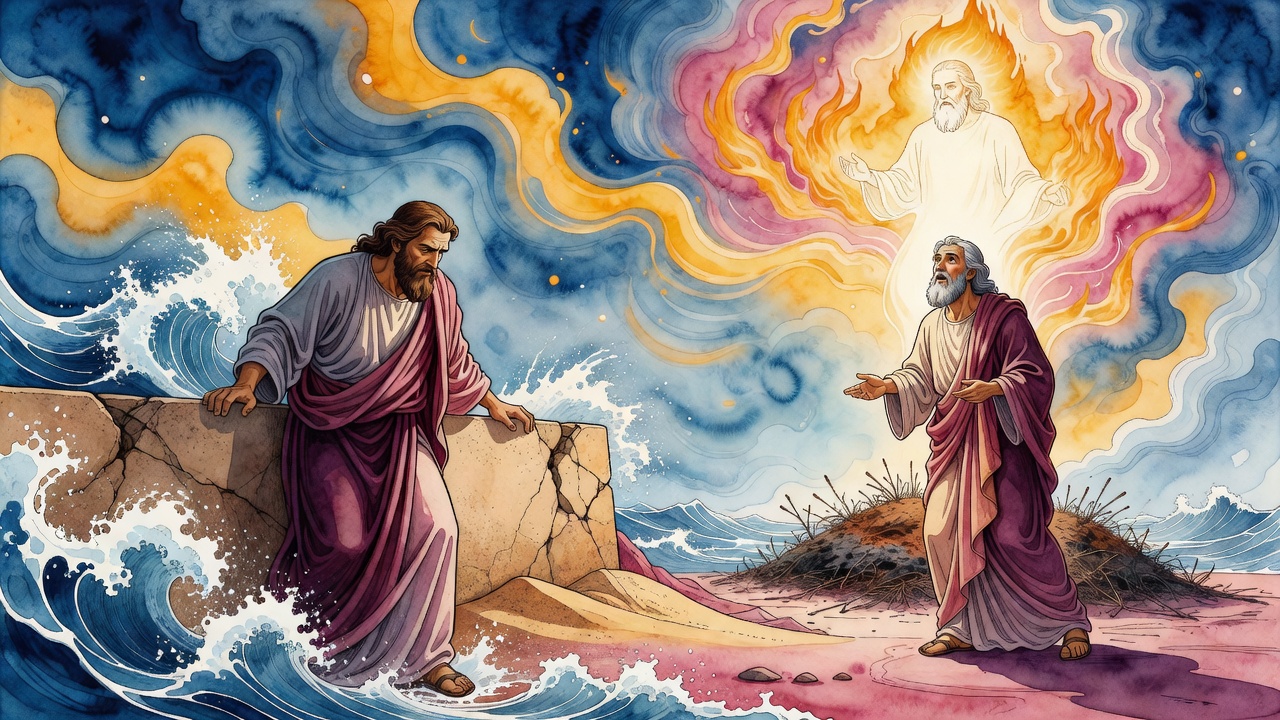
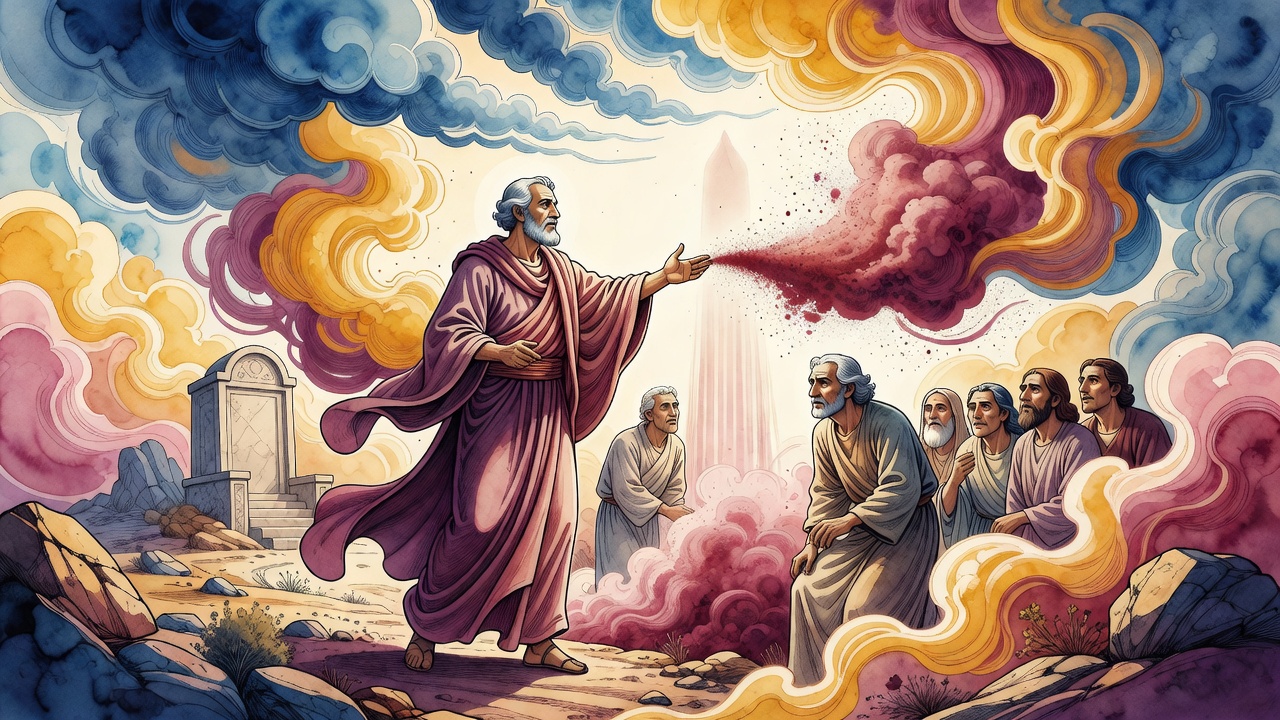
Rabban Yochanan ben Zakkai did not choose the hour. An idolater found him where the ash of the red heifer still clung to memory, and the man sneered the way a man sneers when he thinks he has caught a nation in a trick.
 Click for full size
"Your rite looks like sorcery," he said. "You burn a cow, grind it, sprinkle a few drops on a man who touched the dead, and pronounce him pure. What is this?"
Smoke in the Courtyard
The sage did not open a scroll. He asked a question that put the idolater's own body on the table. "Has the spirit of madness ever seized you?"
"No."
"Have you seen it seize another?"
"Yes."
"And what do your people do?"
The answer came quick and proud. "We light smoking roots beneath him, pour water over it, and the spirit flees."
Yochanan's smile was small. "Let your ears hear what your own mouth has spoken. The waters of separation drive out the spirit of impurity, just as your smoke drives out yours."
The idolater left satisfied, as if the courtyard had agreed with him. The disciples did not leave satisfied. Their faces still held the shame of being compared to a street cure for madness. Dust from the stranger's sandals still marked the stones where the argument had stood.
The Reed He Used on the Stranger
"Him you pushed off with a reed," they pressed. "What will you tell us?"
Now the master spoke without theater. "By your lives, the corpse does not defile and the water does not purify. It is the decree of the King of the kings of kings. The Holy One said: I engraved a statute, I decreed a decree, and you may not transgress it."
The red ash was not an argument. It was an order that survived argument. The students felt the ground change under their feet. Outside, the idolater still thought he had won a comparison. Inside the circle of disciples, comparison died. What remained was a throne that does not explain itself to smoke or to ash.
They had wanted a reason a stranger's mind could applaud. They received a King who does not campaign for applause. One student opened his mouth and closed it again. There was nothing left to refine. The statute, the chukkah (חקה), sat in the air like heat after a fire.
The Mother Sent for the Calf
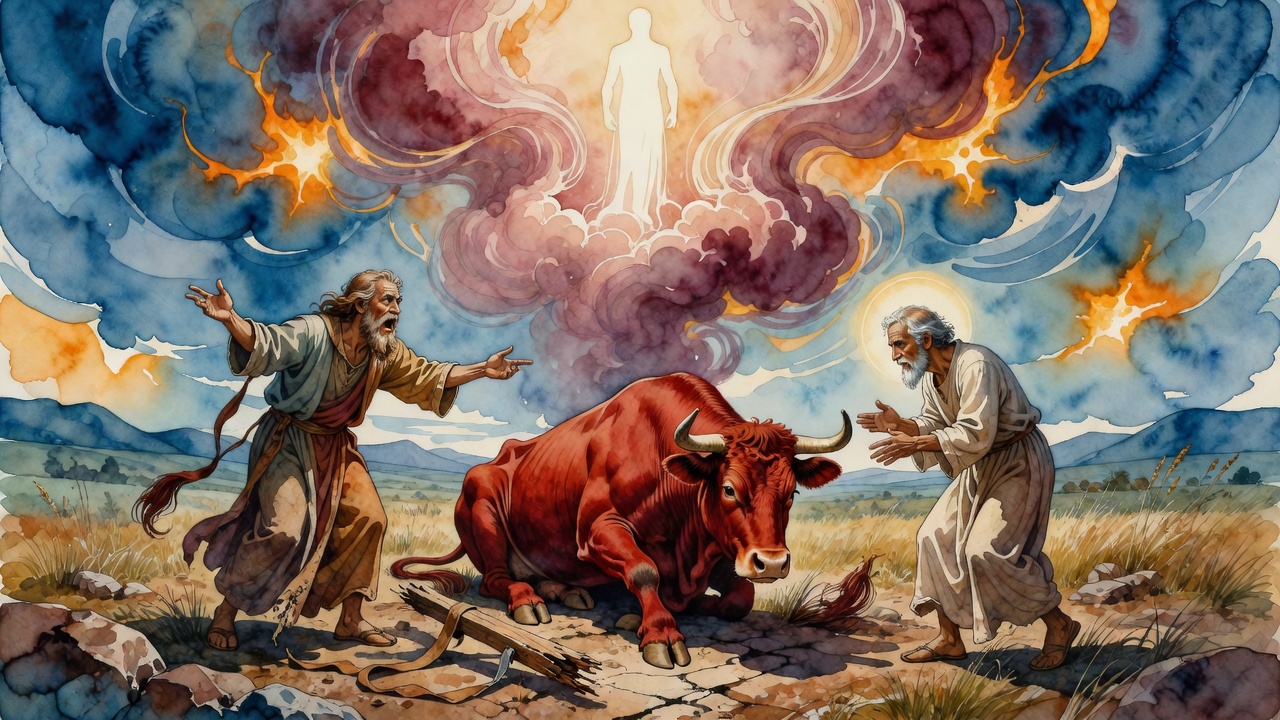
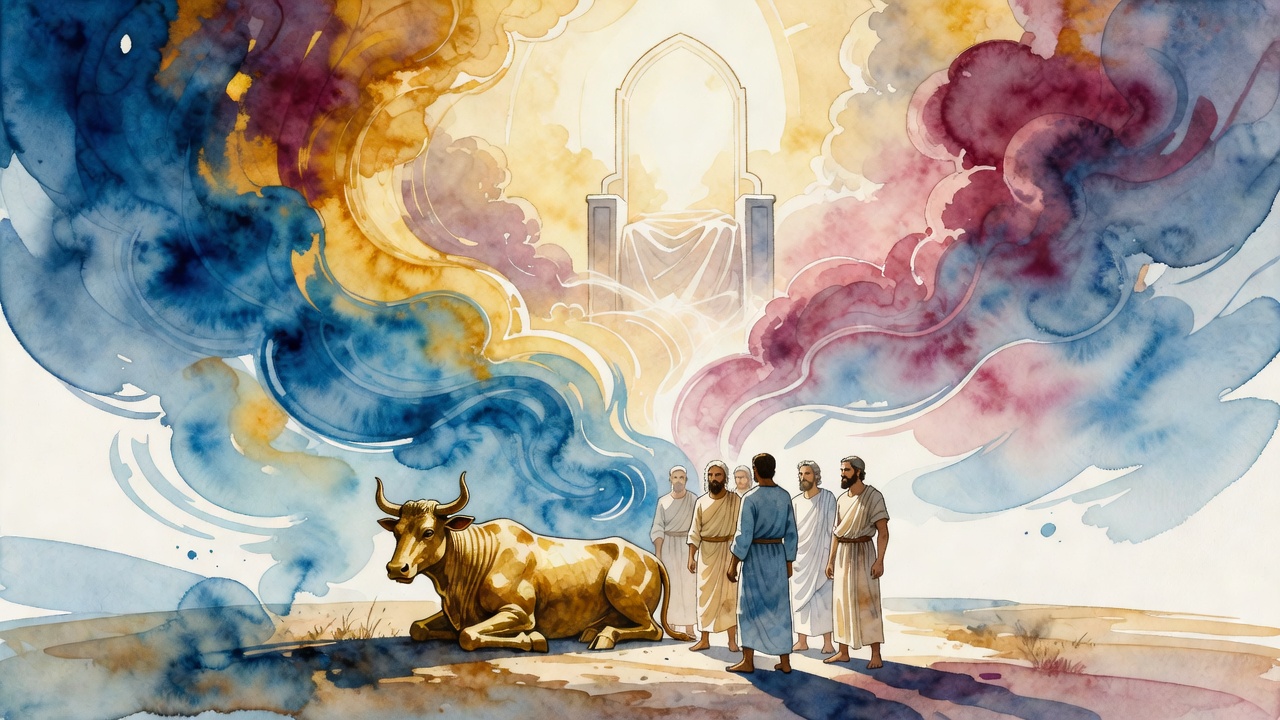
Rabbi Ayyvu added a second pressure, not as a theory but as a palace scene he made them stand inside. Why is this offering female when nearly all others are male? When a maidservant's child soils the king's floor, the king does not call a stranger to wipe it. He commands the mother. So the heifer comes for the calf. The golden calf had left a stain in the household of Israel. The red mother, whole and unworked, is sent to clean what the child of idolatry dirtied.
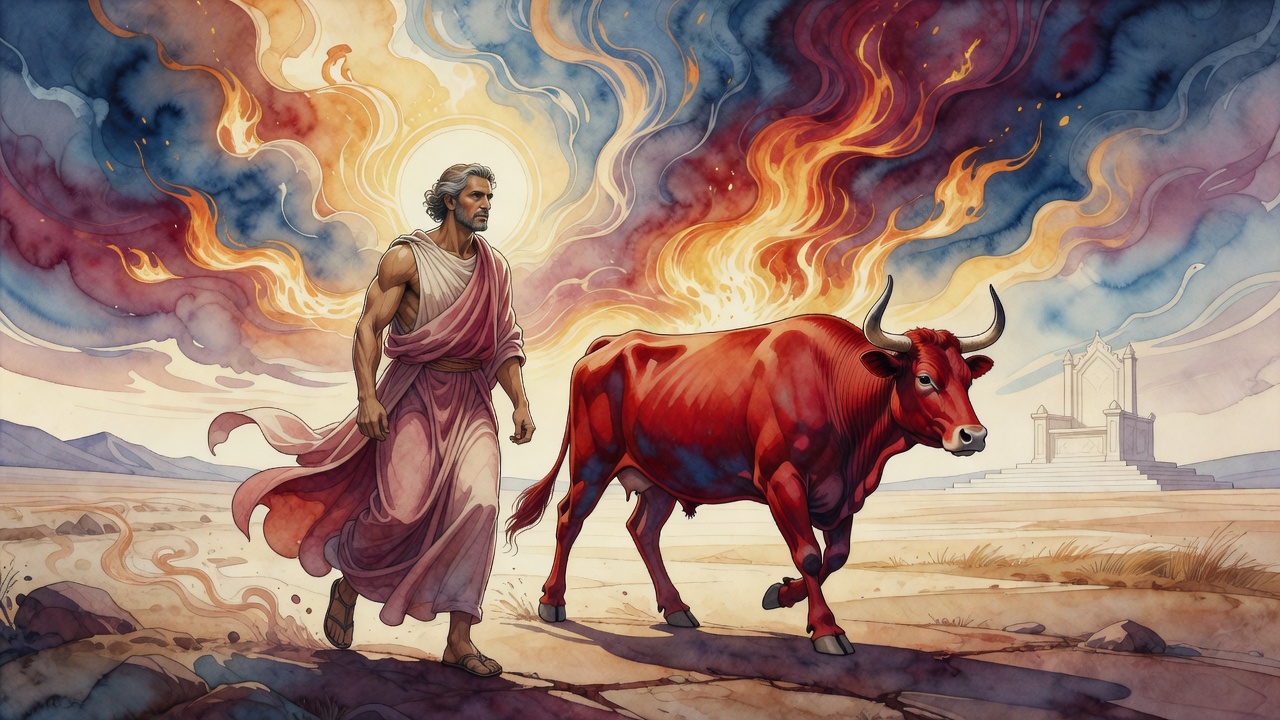
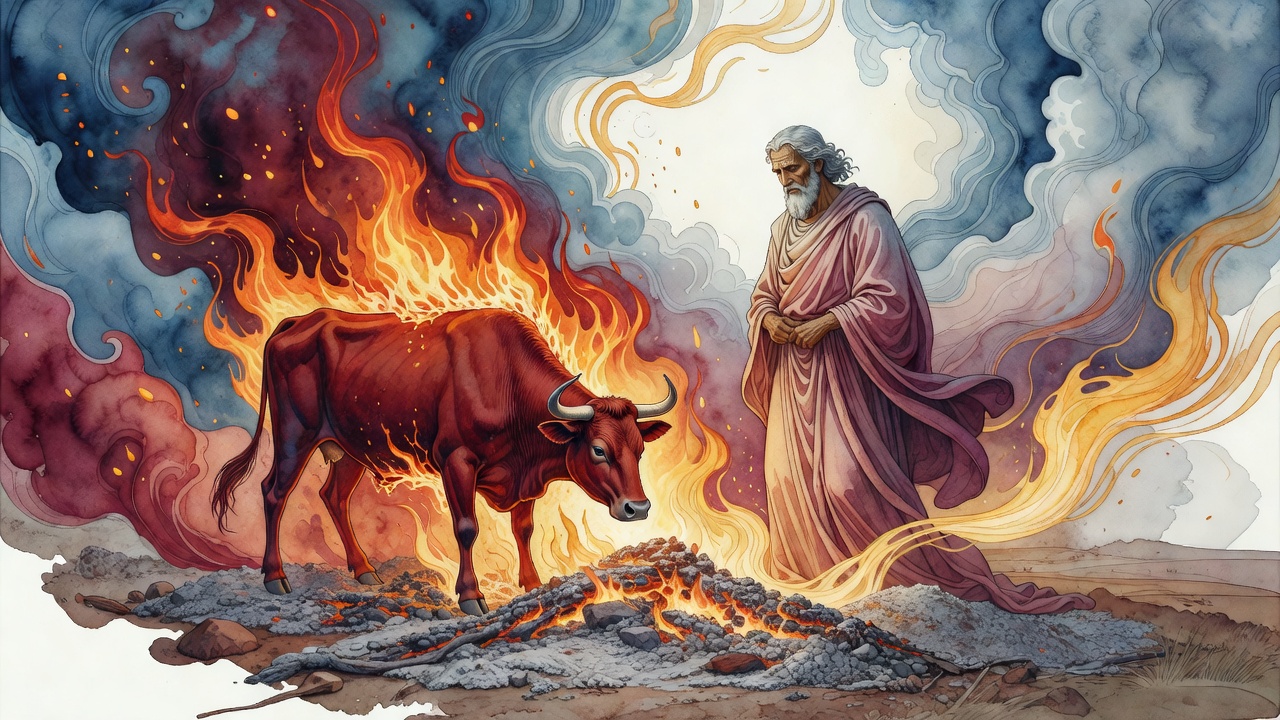
The image is not gentle. A cow burns so that death can lose its grip. The ash is stored, mixed, sprinkled. People walk away from the graveyard carrying the smell of fire on their clothes and the status of purity in their names. None of it pretends to be ordinary chemistry. A statute can smell like a barn and still rule a people. The heifer does not argue her case. She is led, inspected, burned, and reduced to the powder that will touch the impure.
The Sentence Moses Already Carried
Years earlier, before the Tabernacle stood finished, Moses had already heard a sentence that would later break his brother's heart. When Nadav and Avihu died after offering unauthorized fire, Moses turned to Aaron and said, "This is as the Lord spoke: With My near ones I will be sanctified" (Leviticus 10:3). Aaron was silent. The silence was not agreement. It was a man taking a blow he had been told would come.
Where had God spoken it? Back when the Tent was still being built. "And I will be appointed there for the children of Israel, and it will be sanctified by My glory" (Exodus 29:43). Read bikhvodai, "My glory," as "by My honored ones," and the verse turns. The sanctuary would be consecrated through the death of those nearest to God. Holiness at full strength is not safe. The ones who stand closest burn first when the fire is wrong, and sometimes even when the fire is right.
Moses had carried that knowledge like a stone in his pocket until the day it became a grave. Aaron's hands, which had known the calf's gold, now knew only the weight of two sons who would not rise. The King who would not explain the heifer to Yochanan's students had not explained this to Aaron either. He had spoken it early, then waited.
Ash in the Vessels
The courtyard emptied. The idolater took his comparison home. The students stayed. They had wanted a reason they could argue across a border. Yochanan gave them a King instead. The ash waited in its vessels, red dust that had been a mother cow, stored for the day a living body would need to walk back from the dead.
Aaron's silence still hung somewhere behind the statute. Nearness to God is glory, and glory is not tame. Smoke and ash and unauthorized fire all arrived as decree. Approach carefully. Obey when the statute will not explain itself. Live with the smell of what holiness costs.
← All myths