5 min read

The Priest Who Stopped at the Cemetery Edge

A kohen hears an animal thrash among graves, his father's voice orders him in, and the law tells him to forbear at the boundary of death.

Curated by Arthur · Told by Maggid ·
Table of Contents
  1. Help That Must Wait
  2. Seven Days That Follow a Touch
  3. The Sound in the Graves
  4. Father and Son at the Line
  5. After the Crying Stops

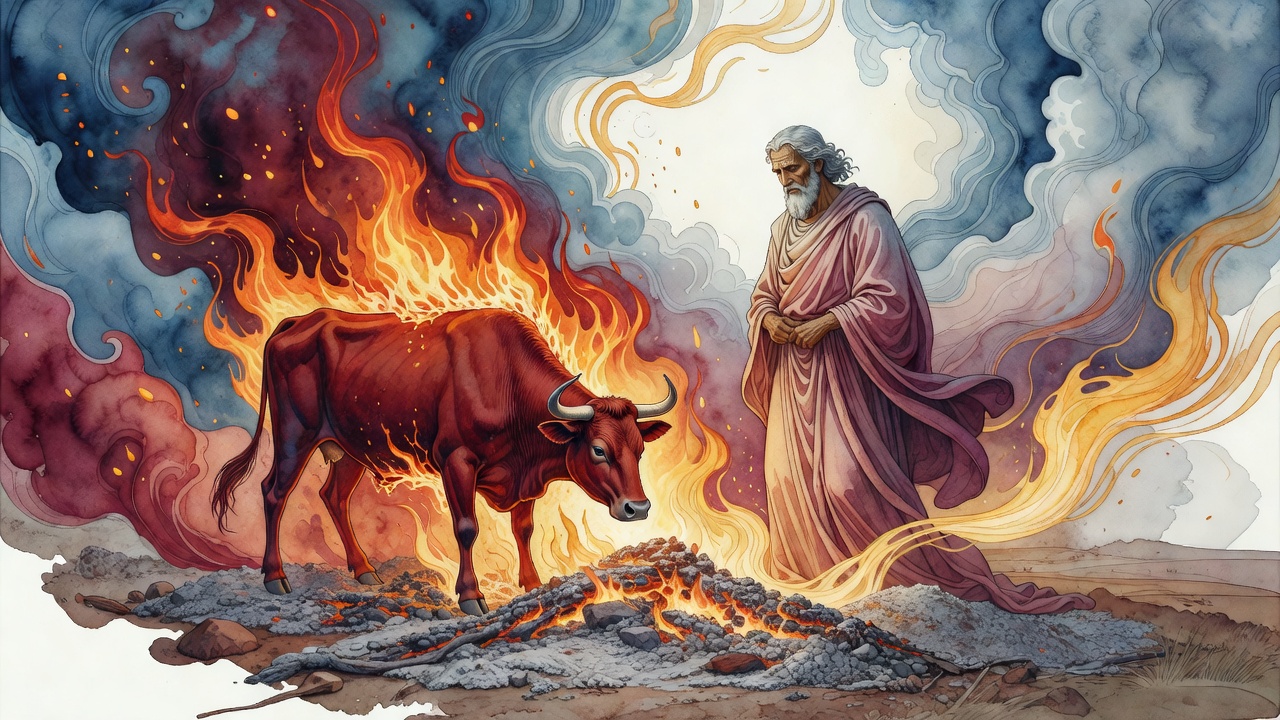
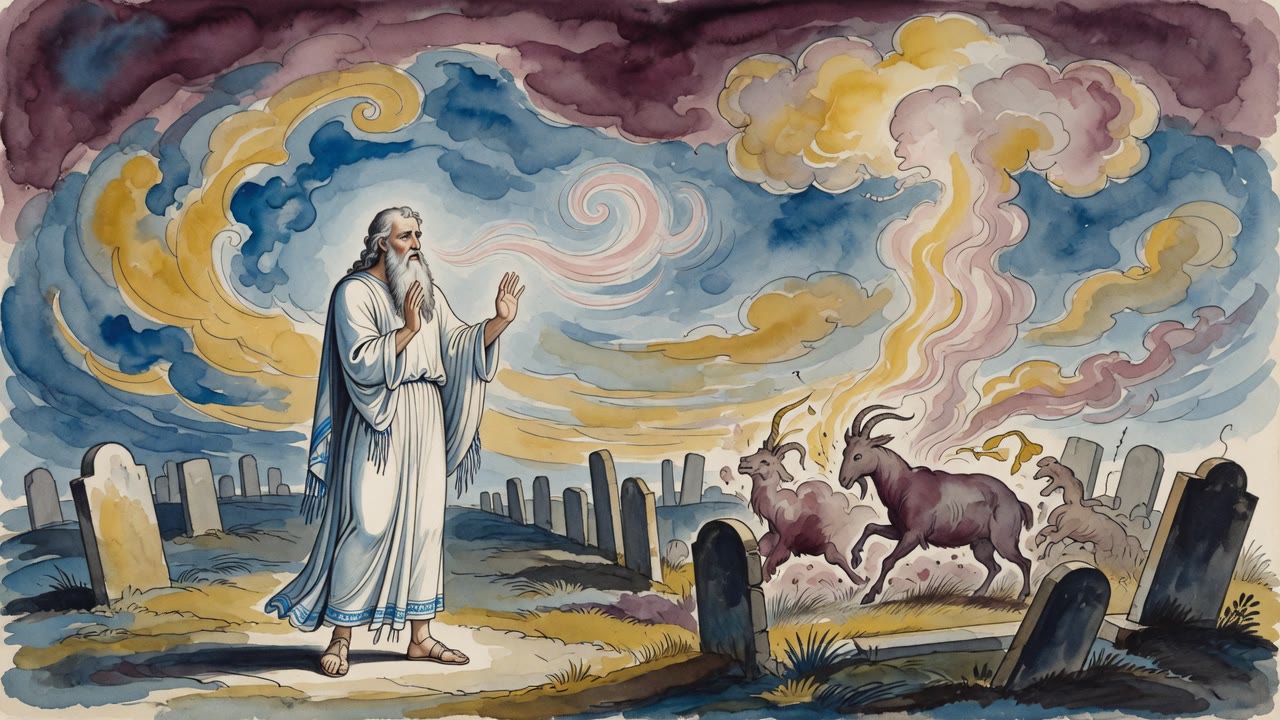
The animal's cry came from among the stones. A hoof struck a marker. Dust and the sweet-rot smell of old offerings to time rose together. The kohen stopped as if a wall had grown out of air.
The Priest Who Stopped at the Cemetery Edge Click for full size

He could see the beast tangled near a grave. He could also see the white of bone-memory that his lineage was not allowed to touch. Two commandments stood on either side of his body and pulled.

Help That Must Wait

Return lost property. Help an animal in distress. The Torah wants both. It also forbids a priest to make himself impure for the dead outside a narrow family list. The Mekhilta sets the conflict without romance. The kohen does not enter the cemetery for the animal. He stays out. Priestly purity overrides the pull of the thrashing body beyond the wall of graves.

Then the harder case. The father speaks. "Go into the cemetery and make yourself impure." Honor of parents is a positive command that often outranks a negative. Even so, the son may not obey. There are times the Torah itself names forbearance as the right act. This is one. Filial love cannot conscript a priest into death's domain for a beast.

The father's face may harden. The son's feet still refuse the path between the stones.

Seven Days That Follow a Touch

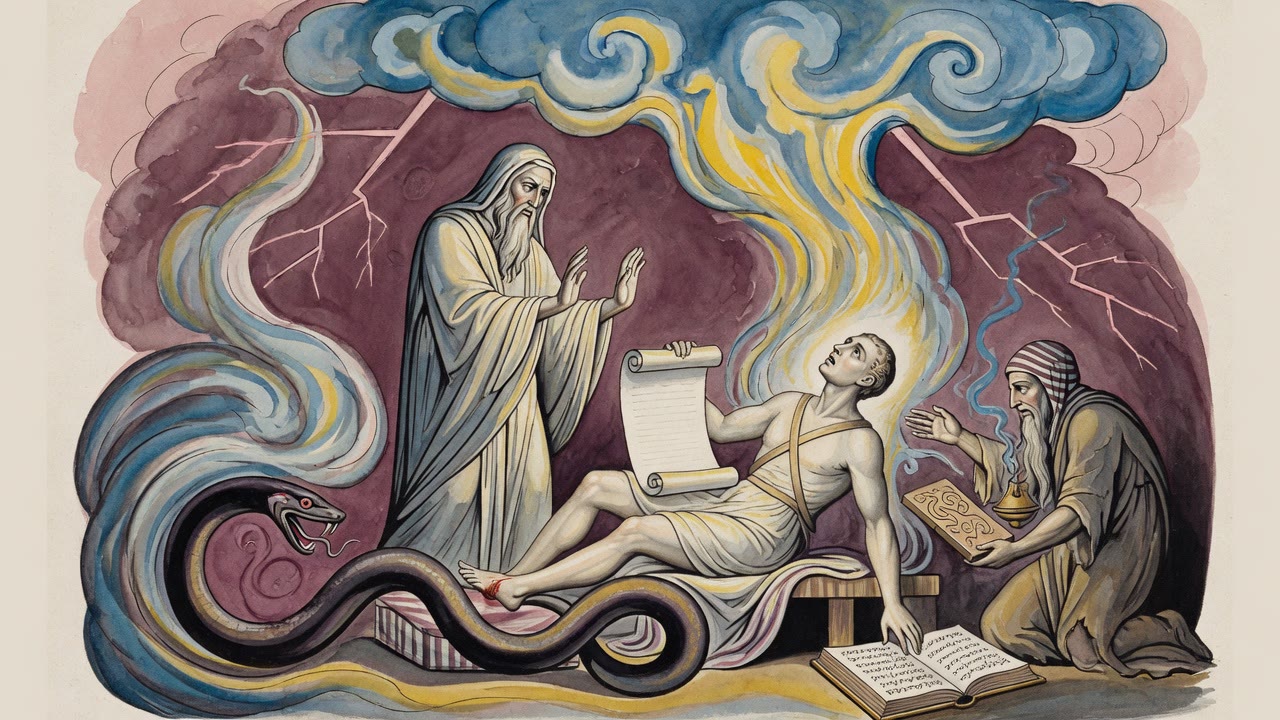
"One who touches the dead body of any man shall be unclean for seven days" (Numbers 19:11). The sages ask why the verse is needed if a corpse already defiles by tent. Rabbi Yishmael hears inclusion of an eight-month birth that died, a small body someone might have wanted to exclude. Rabbi Akiva hears blood as well as flesh in "all the soul of a man." They argue because death's reach must be mapped with cruel care.

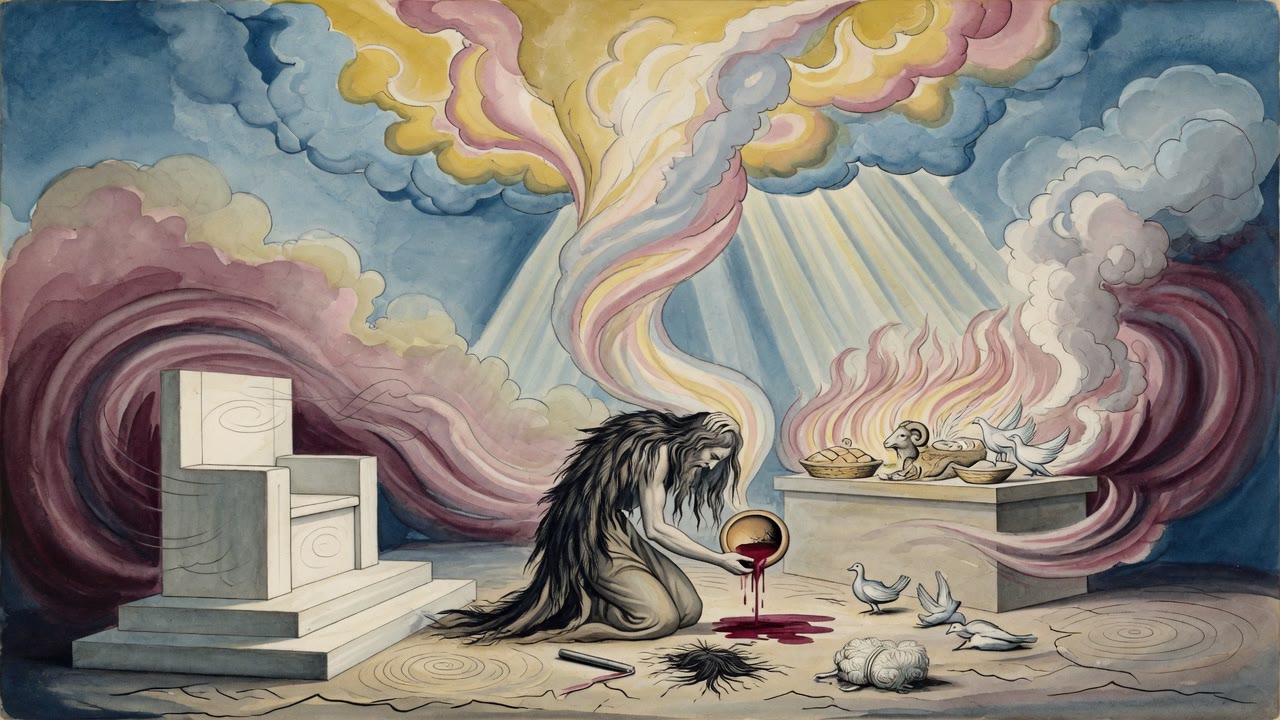
Sprinkling on the third day and the seventh, ashes prepared in the prescribed way, water that is not a casual wash: the purification is as exacting as the ban. Impurity is not a mood. It is a schedule. A person who has touched the dead lives a week inside a changed status, counted in sunsets.

The kohen at the edge is not only avoiding a feeling. He is avoiding a seven-day world he is not permitted to enter for this reason.

The Sound in the Graves

The animal still cries. Compassion is not erased by the ruling. The priest can shout for a non-priest. He can run for a Yisrael who may step where he may not. What he cannot do is pretend his oil-anointed line is a costume he may remove when pity spikes.

Some laws feel cold until you remember the Tabernacle's fire and the dead that cling. Holiness that never costs is decoration. This cost is a stopped foot while a living creature suffers a few yards away. The stopped foot is the sacrifice.

A bird landed on a stone and tilted its head at the man who would not cross. The bird had no lineage rules. The man did.

Father and Son at the Line

If the father understands, the house will hold a different silence that night, the silence of a command refused for a higher claim. If the father does not understand, the son will carry two griefs: the animal and the anger. The Mekhilta still does not move the boundary. "You forbear to help him" becomes, in this scene, forbearance toward the father's order as well.

Israel needs priests who remain priests when love and pity both argue for exception. The dead are not a field for proving devotion. They are a field that rewrites the living for a week and more.

After the Crying Stops

Someone else eventually frees the beast, or the beast frees itself, or the story ends with a cry that simply ends. The kohen walks home with clean hands and a dirty conscience that the law refuses to call dirty. That tension is the point. The tradition does not promise that right action will feel pure. It promises a map.

Seven days for those who must touch. Zero steps for this man into that dust for this reason. Between them, a people learns that death is heavy and that some shoulders are assigned to stay light for service that is not burial.

He sent a boy for a Yisrael who could enter. The boy's feet were fast and unburdened by oil of anointing. While they waited, the kohen spoke soft nonsense to the animal the way people speak to pain they cannot touch. The beast flicked an ear. The graves kept their quiet majority.

Rabbi Akiva and Rabbi Yishmael would have filled this pause with blood and stillbirth and the grammar of "all the soul." The priest filled it with sweat. Theory of impurity is a luxury of the study house. At the edge, the theory is a stopped sandal and a father whose command has just been refused without a raised voice.

When the Yisrael freed the animal, no one cheered. The kohen thanked him with a nod too small for the debt. Walking home he passed houses where corpses had been washed that month, houses still counting to seven. He did not envy them their mitzvah (a commandment) of presence. He carried his own: absence that protects a different service, the service of hands that must stay eligible for gifts and fire.


← All myths
From the tradition

Sources

2 sources

The texts behind this telling. Some cards carry a translation of the source; others are our own retelling of it, and each card says which. Every card links out to the original.

Mekhilta Tractate Kaspa 2:33Mekhilta DeRabbi Yishmael

Retold in our words. Read the original at the link below.Mechilta, translated by Rabbi Shraga Silverstein · CC-BY

The Mekhilta presents a striking conflict between two obligations. A Kohen, a priest, encounters a lost or struggling animal in a cemetery. Jewish law prohibits a Kohen from entering a cemetery and becoming ritually impure through contact with the dead. But the Torah also commands returning lost property and helping animals in distress.

Which obligation takes priority? The Mekhilta rules: the Kohen does not become impure for the animal. He stays out of the cemetery. The prohibition against priestly impurity overrides the obligation to return lost property.

The Mekhilta then considers a more difficult scenario. What if the Kohen's father says to him: "Go into the cemetery and make yourself impure"? A child is obligated to honor and obey his parents. The command to honor parents is a positive commandment. The prohibition against priestly impurity is a negative commandment. In general, a positive commandment overrides a negative one.

Even so, the Kohen may not obey. The Torah says "and you forbear to help him", there are times when forbearance is correct. This is one of those times. The Torah's inclusion of a "forbearance" option specifically addresses situations where other commandments conflict with the helping obligation. The Kohen forbears because his priestly status takes precedence. Not even filial obedience can compel him to violate it.

Full source
Sifrei Bamidbar 125:1Sifrei Bamidbar

Retold in our words. Read the original at the link below.Sifrei by Rabbi Shraga Silverstein · CC-BY

It might seem morbid, but understanding these rituals offers a fascinating glimpse into the values and beliefs of our ancestors. to a passage from Sifrei Bamidbar, a collection of legal interpretations on the Book of Numbers, specifically chapter 19, verse 11, which deals with ritual impurity, or tumah, contracted from contact with a dead body.

The verse states, "One who touches the dead body of any man shall be unclean for seven days." Now, The first reading, it seems straightforward: touching a corpse makes you ritually impure for a week. But the rabbis of old weren't content with simple readings. They delved deeper, asking why this verse was even necessary. Couldn't we have figured it out on our own? The text suggests that if a dead body can impart impurity within a contained space like a tent, wouldn't direct contact certainly make you impure?

R. Yishmael offers an explanation: this verse is needed to include an eight-month birth that died. Without the verse, we might have excluded a premature infant from the laws of ritual impurity surrounding death. He goes on to specify that the verse refers to "the soul of a man" to exclude the blood of the deceased from also conferring tumah.

R. Akiva disagrees! He reads "all the soul of a man" to include the blood. These different interpretations highlight the meticulous way the Rabbis examined every word in the Torah.

The text then brings up the phrase "He shall be cleansed with it" (Numbers 19:12). What does "it" refer to? The Sifrei Bamidbar explains that "it" specifies that the ashes used for purification must have been processed according to the prescribed manner.

And what about the instruction to be sprinkled "on the third day and on the seventh day"? Is that a requirement, or a suggestion? The text presents a series of challenges: perhaps you only need to be sprinkled on the third day to be purified on the seventh? The text answers these challenges by emphasizing the necessity of both sprinklings for complete purification. The verse repeats itself to emphasize the point!

Then, the text asks: Why is it written, "And if he is not cleansed on the third day, then he shall not be clean on the seventh day?" Isn't that obvious? The answer is fascinating. It clarifies that the punishment for not being properly purified isn't the severe penalty of kareth (spiritual excision), but rather simply remaining in a state of impurity.

The Sifrei Bamidbar then returns to the original verse, "Everyone who touches a dead body in the soul of a man". It reiterates R. Yishmael’s point: this excludes an eight-month birth. The text then draws a parallel between a human corpse and a sheretz (a creeping thing). If a corpse doesn't transmit impurity until death, then surely a sheretz shouldn't either! Then it flips the argument! If a sheretz transmits impurity even while convulsing, then shouldn't a human corpse, which is considered "graver," also transmit impurity even while convulsing? The Sifrei Bamidbar concludes that a dead body only conveys impurity once death has occurred.

What about the phrase "and he not be cleansed?" Rebbi interprets this as referring to someone who hasn't brought the required offering for purification, such as in the case of a zav (a man with an unusual discharge) or a leper.

The text also clarifies that defiling either the mikdash (the Temple) or the mishkan (the Tabernacle) carries the same consequences. And the terms kareth and "death" in this context are essentially interchangeable.

Finally, R. Yoshiyah argues that the phrase "tamei shall he be" includes other types of impurity besides contact with a corpse. However, R. Yonathan disagrees, pointing out that Leviticus already covers this. Instead, R. Yonathan understands "tamei shall he be" to address specific scenarios: what if someone was sprinkled only once, or sprinkled but didn't immerse, or sprinkled and immersed but didn't wait for sunset? In each case, the person remains impure.

This passage from Sifrei Bamidbar isn't just a dry legal discussion. It displays the brilliant minds of the rabbis, meticulously analyzing scripture, debating interpretations, and drawing profound conclusions about ritual purity, impurity, and the very nature of life and death.

Full source