5 min read

The River Took the Stolen Field Before Dawn

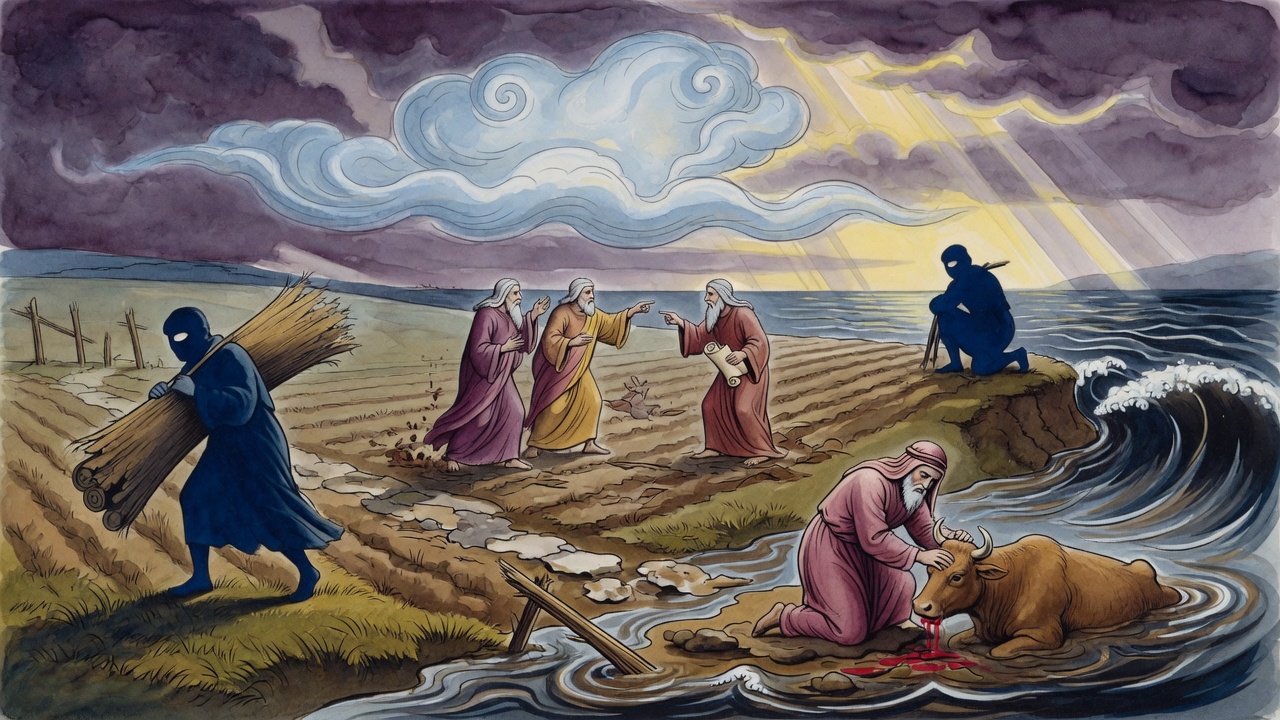
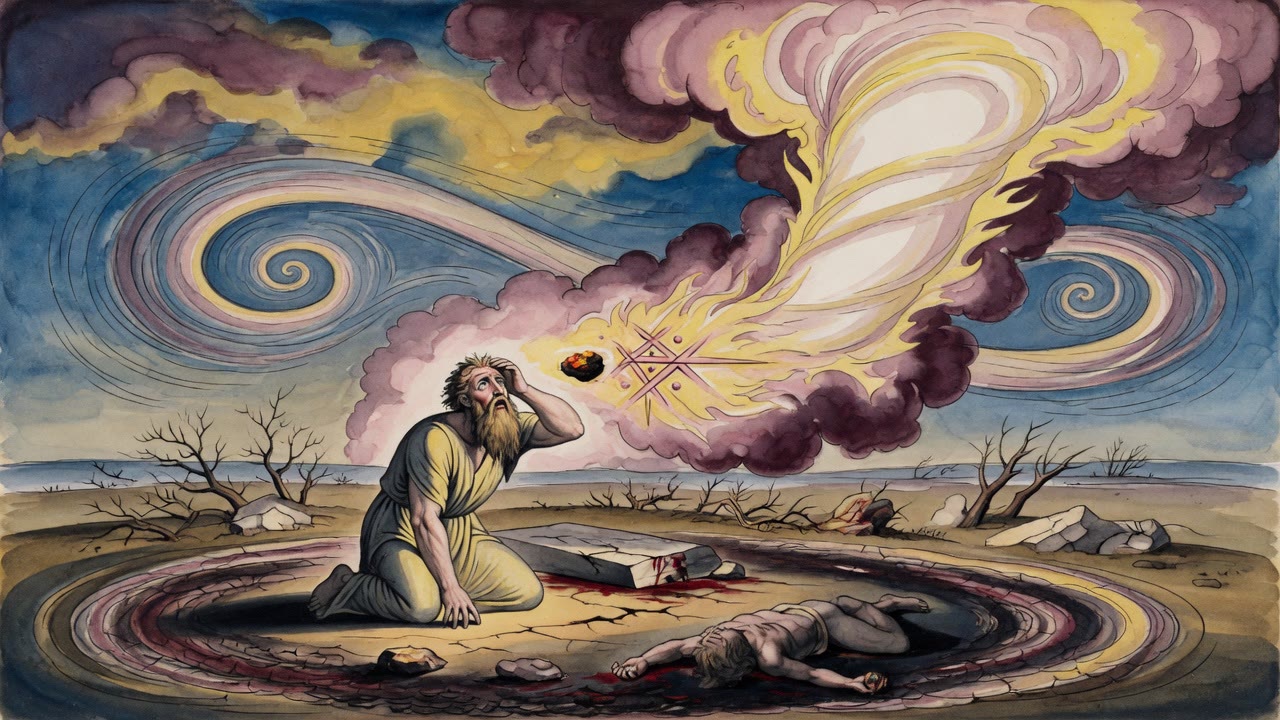
The owner would come at first light. The thief stood on the high bank rehearsing a speech about accidents, with mud where the barley had been.

Curated by Arthur · Told by Maggid ·
Table of Contents
  1. Water Over the Furrows
  2. Two Readings of One Loss
  3. When an Ox Kills
  4. Absolved From What
  5. What the Mud Still Owes
The River Took the Stolen Field Before Dawn Click for full size

Water Over the Furrows

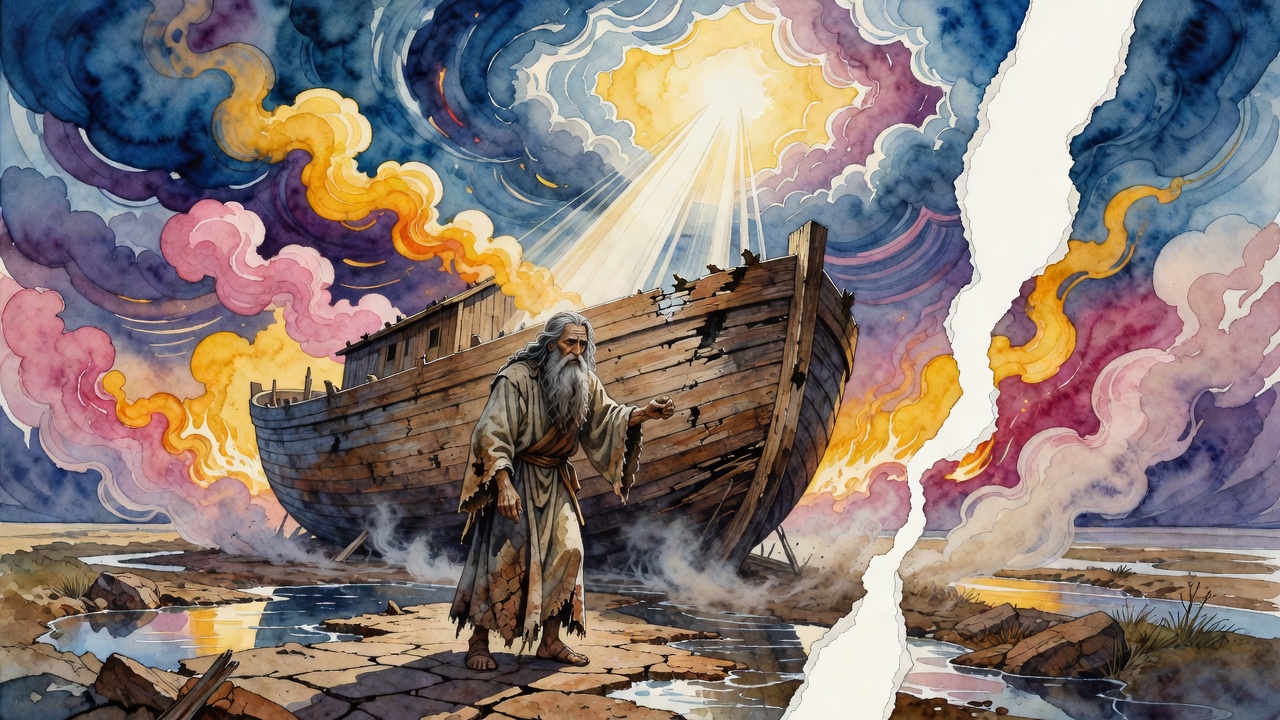
He had taken the field in the dry season, when the boundary stones still looked firm and the neighbors were busy with their own harvest. By the time fear found him, the river had already risen. Brown water slid across the low end first, then chewed the middle, then left only a slick of mud where barley should have stood. The owner of the land would come at first light. The thief stood on the high bank and tasted metal in his mouth.

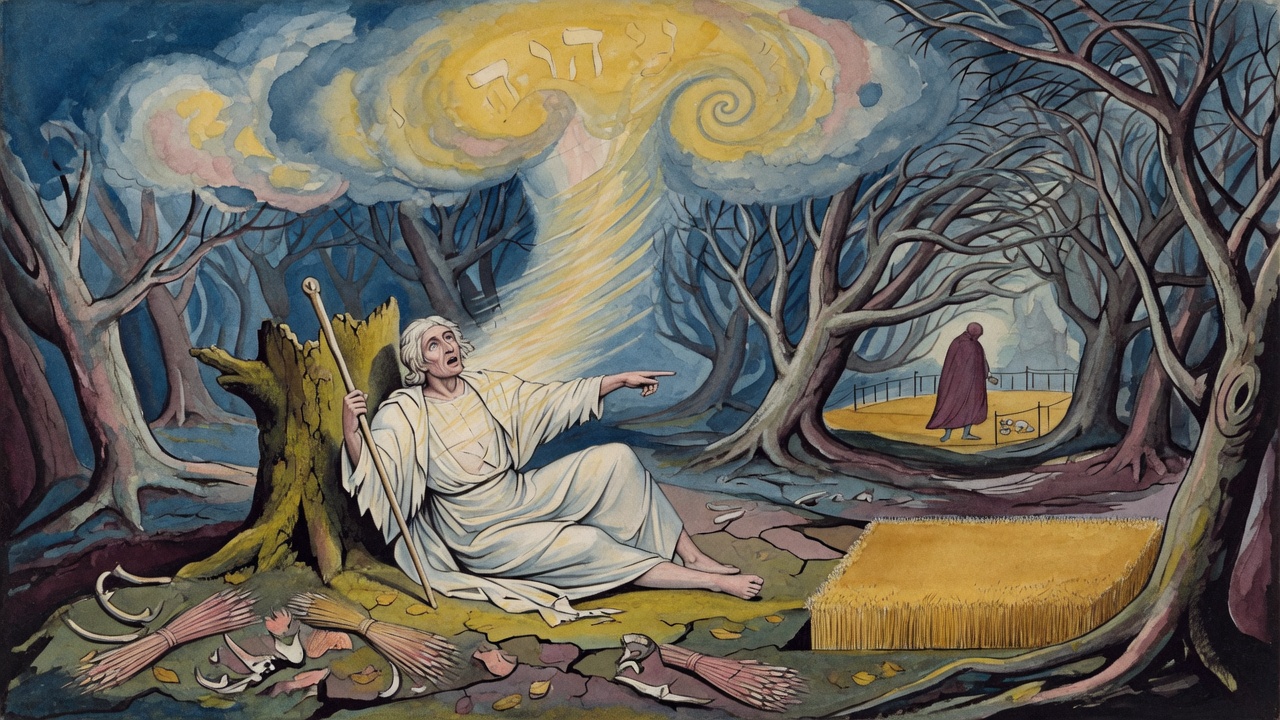
Could he point at the water and call the debt settled? Could he say, here is your field, take it as the river left it? Or must he cut another plot from his own inheritance and hand it over whole? Night insects sang as if the world had not just rearranged guilt. He tried to rehearse a speech about accidents. The river did not care about his speech.

Two Readings of One Loss

Rabbi Eliezer said yes, make the victim whole with another field. The Sages said no. Stand the man at the edge of the wreck and speak the hard sentence. Here is your field. Take it back as it is. In Yalkut Shimoni the fight is not about mud alone. It turns on how one hears the Torah's own examples of things that must be returned.

Rabbi Eliezer reads with a wide net, amplification that pulls nearly everything into the duty of return. The Sages read with a narrow one, generalization and specification that anchors law to the examples the verse actually names. The verse speaks of deposits, pledges, and robbery, things that move, things whose substance is money. Land does not walk. Slaves are likened to land. Documents move, yet parchment is not wealth the way coins are.

Even Rabbi Eliezer grants that the added fifth and the guilt offering track only cases that resemble the verse's own movable examples. There is no sacrifice for a false oath about acreage. The thief on the bank learns that some wrongs leave you facing water with no ritual to make the story pretty.

When an Ox Kills

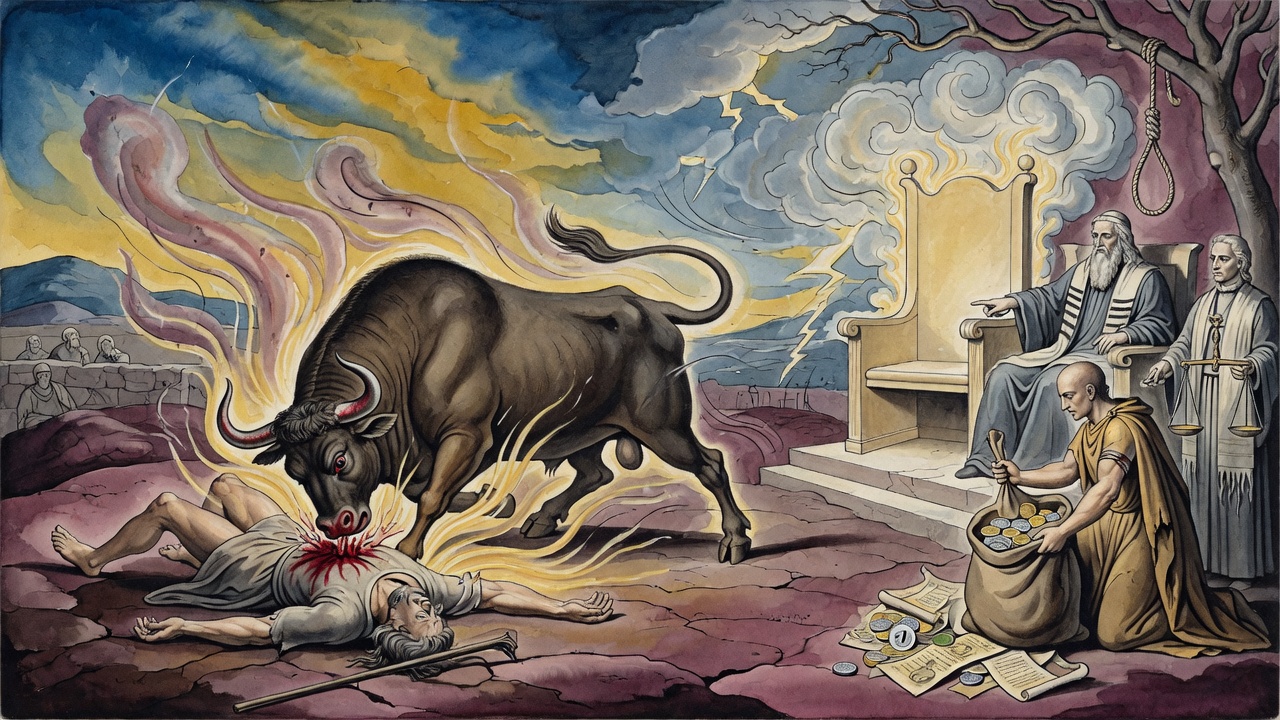
Across the same legal map another body falls. An ox gores. A person dies in the dust of a lane. The court must decide what the owner owes. Scripture ties two fates in one breath in (Exodus 21:29). The ox is stoned, and the owner is liable. The rabbis hear a hinge. The ransom payment comes due only when the animal itself is condemned. Remove the stoning and the owner's payment falls with it.

Then the word "if" is pressed hard. Why say "if a ransom is laid upon him" rather than simply command the coin? When the teaching of Rabbi Yochanan traveled from the Land of Israel with Rav Dimi, the small word stretched to cover accidental killing too. An owner whose ox kills without a long record of goring still owes. Responsibility for what we own does not vanish because we did not wish the harm.

Absolved From What

In the school of Mekhilta DeRabbi Yishmael, Rabban Gamliel, Ben Azzai, and Rabbi Akiva each name a different burden from which the owner of a gentle ox is absolved. They do not deny the verse's mercy. They argue over its target. One chain of reasoning would have forced payment for a killed bondservant's value of thirty shekels. Another would have stacked a different fine.

The Torah's single word "absolved" blocks three different doors, and each sage stands at a different one. Precision is not coldness here. Precision is how a community refuses to invent penalties the verse never wrote, while still forcing a man to face the horn that grew in his own stall. Back at the riverbank the thief learns that ownership sticks. Water does not wash guilt into innocence.

What the Mud Still Owes

At dawn the true owner arrives. He looks at the water and then at the man who stole in a drier month. The Sages' answer is bitter and clean. The field remains his, ruined. The thief does not buy peace by swapping plots as if the earth were a coin he could replace from another pocket. Elsewhere an ox's owner counts coins because blood left a body. Different cases. One pressure.

Stand in any season when disaster follows wrongdoing and people reach for clever distinctions. The midrash already put a man on a bank watching his theft dissolve, and still asked him to speak honestly about what he holds. Between mud and blood the story keeps one demand. Do not pretend the river or the horn made you a stranger to your own acts.

Keep the scene in the body. Law that never touches a hand becomes a speech people quote while they walk past the ox, the field, the beam, and the poor man's door. The teachers stacked names and measures so a later generation would still feel dirt under the nails when it said the verse out loud.


← All myths
From the tradition

Sources

3 sources

The texts behind this telling. Some cards carry a translation of the source; others are our own retelling of it, and each card says which. Every card links out to the original.

Yalkut Shimoni on Torah 479:8Yalkut Shimoni on Torah

Translation of the source text.Torat Emet (Yalkut Shimoni) · CC-BY-NC

It was taught: one who robs a field from his fellow and a river floods it is obligated to provide him another field - the words of Rabbi Eliezer. But the Sages say: he says to him, 'Here is yours before you.' On what do they differ? Rabbi Eliezer expounds by 'amplifications and limitations': 'and deals falsely with his neighbor' is an amplification; 'regarding a deposit, or a pledge, or a robbery' is a limitation; 'or of all that he swears about' returns and amplifies; with amplification, then limitation, then amplification, the verse amplifies everything. What does it amplify? It amplifies all things. And what does it limit? It limits deeds of obligation [documents]. The Rabbis expound by 'generalizations and specifications': 'and deals falsely with his neighbor' is a generalization; 'regarding a deposit, or a pledge, or a robbery' is a specification; 'or of all that he swears about' returns and generalizes; with a generalization, a specification, and a generalization, you may infer only something resembling the specification - just as the specification is explicitly a movable thing whose body is itself money, so too anything movable whose body is itself money. Excluded are lands, which are not movable; excluded are slaves, who are likened to land; excluded are documents, which, though movable, are not themselves money. As for 'or of all that he swears about' - even Rabbi Eliezer concedes that although it is amplified for the matter of return, it is not amplified for the matter of the fifth and the guilt-offering, for when the verse repeats itself it takes up the matter of the fifth and the guilt-offering, as it is written, 'and it shall be when he sins and is guilty' (Leviticus 5:23), 'from all' - and not 'all,' which excludes anything that does not resemble the passage, since there is no obligation of a sacrifice for an oath concerning lands.

Full source
Yalkut Shimoni on Torah 341:6Yalkut Shimoni on Torah

Translation of the source text.Torat Emet (Yalkut Shimoni) · CC-BY-NC

Rava said: An ox that killed a free person without intent exempts its owner from the ransom payment, for it is said (in the verse above, 21:29), "the ox shall be stoned, and its owner also shall be put to death." If there is to be a ransom, then at the time when the ox is liable to stoning the owners pay ransom; when the ox is not liable to stoning the owners do not pay ransom.

When Rav Dimi came he said in the name of Rabbi Yochanan: regarding ransom, what does the verse teach by saying "if ransom"? It comes to include a ransom incurred without intent as equal to a ransom incurred with intent.

When Rav Dimi came he said in the name of Rabbi Yochanan: regarding a slave, what does the verse teach by saying "if a slave"? It comes to include the case of a slave killed without intent as equal to a slave killed with intent.

And Reish Lakish holds: "a slave," "if a slave" is not expounded, because it is not written in the place of payments; "ransom," "if ransom" is expounded, because it is written in the place of payments.

Full source
Mekhilta Tractate Nezikin 10:16Mekhilta DeRabbi Yishmael

Retold in our words. Read the original at the link below.Mechilta, translated by Rabbi Shraga Silverstein · CC-BY

Rabban Gamliel offered a different interpretation of "the owner of the ox is absolved." He argued the tam's owner is absolved from paying the monetary value of a bondservant who is killed by the ox.

His reasoning: both the mued and the tam are stoned when they kill a person. If the mued's owner must pay for the value of a killed bondservant (as established in (Exodus 21:32), which requires thirty shekels for a bondservant), then the tam's owner should logically face the same obligation. The shared punishment of stoning would generate a shared obligation of payment.

The Torah preempts this inference. "The owner of the ox is absolved", specifically, absolved from the bondservant-value payment that the mued owner must make. The tam's lighter legal status means its owner escapes this particular financial burden.

Rabban Gamliel, Ben Azzai, and Rabbi Akiva each identified a different specific obligation from which the tam's owner is absolved. Their disagreement is not about whether the owner is absolved, the verse clearly says so. But about which obligation the absolution targets. Each rabbi traced a different logical chain that would have created a different financial requirement, and each identified the Torah's absolution clause as blocking that specific chain. The word "absolved" appears once in the text, but the Mekhilta shows it doing triple duty.

Full source