The Road Folded So Eliezer Would Not Sleep Alone
Seventeen days from Hebron to Haran collapsed into three hours. An angel folded the road so Abraham's servant would not spend a night alone with the bride.
Table of Contents
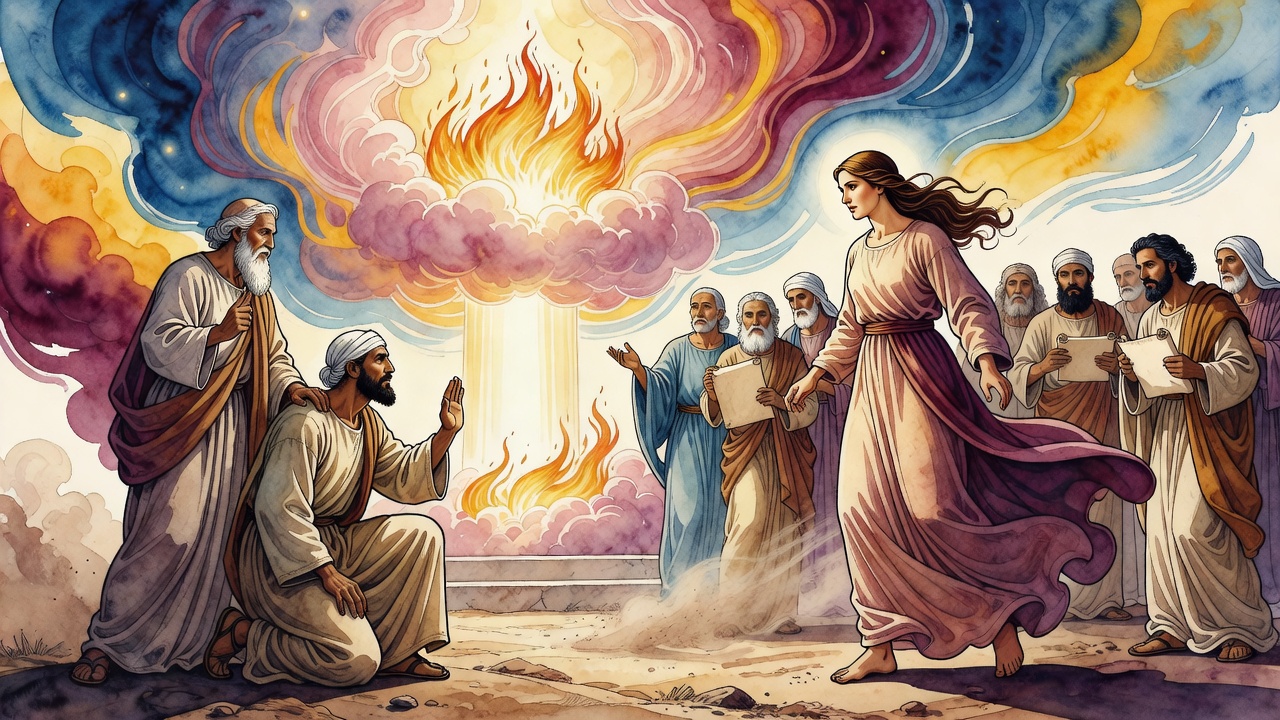
Eliezer said the hard word first, the one a man might hide. "I am Abraham's servant." The sages later praised that honesty. The thing you are ashamed of, say it first. He had nothing to gain by pretending to be more than the hand that runs errands for a house built on promise.
 Click for full size
Then the road itself broke the ordinary rules of distance.
Seventeen Days in Three Hours
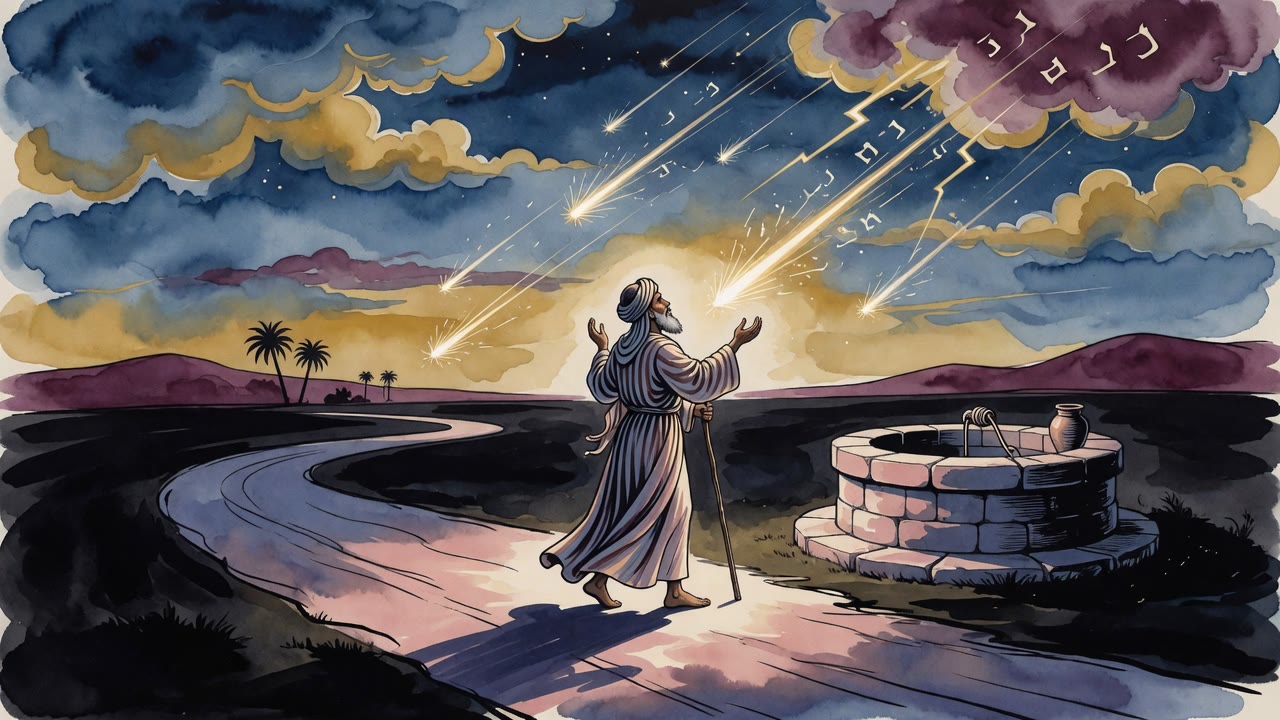
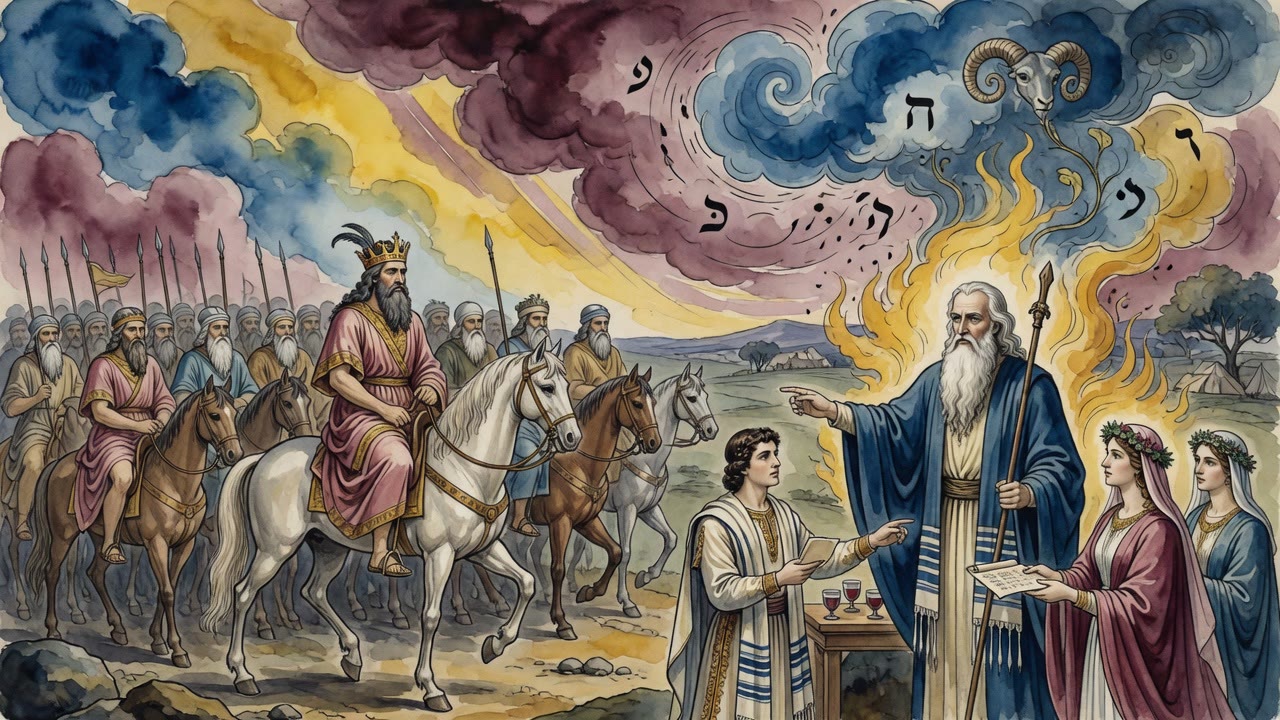
From Kiryat Arba, from Hebron, to Haran was seventeen days of travel for any ordinary caravan. Camels, water, heat, and the long boredom of the trade road. Eliezer arrived in three hours. He stood at the spring stunned at himself, repeating under his breath, "Today I set out and today I arrived," as if naming the miracle would keep it from dissolving when he blinked.
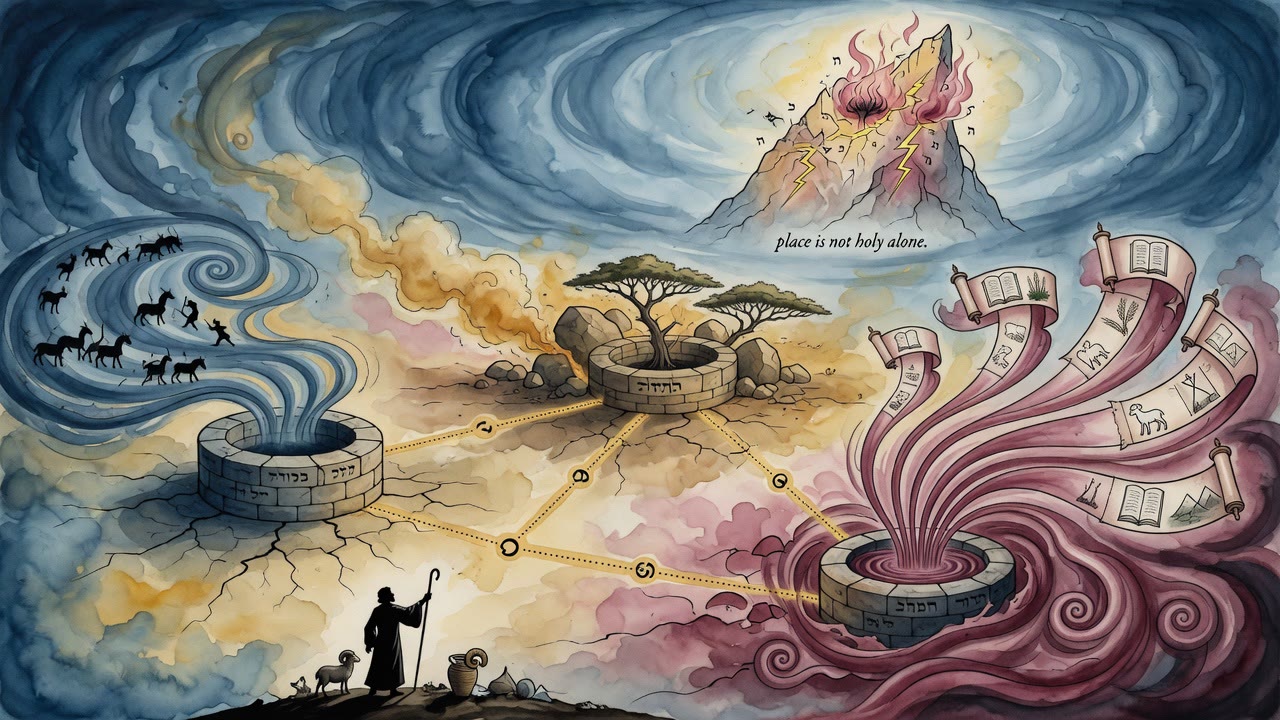
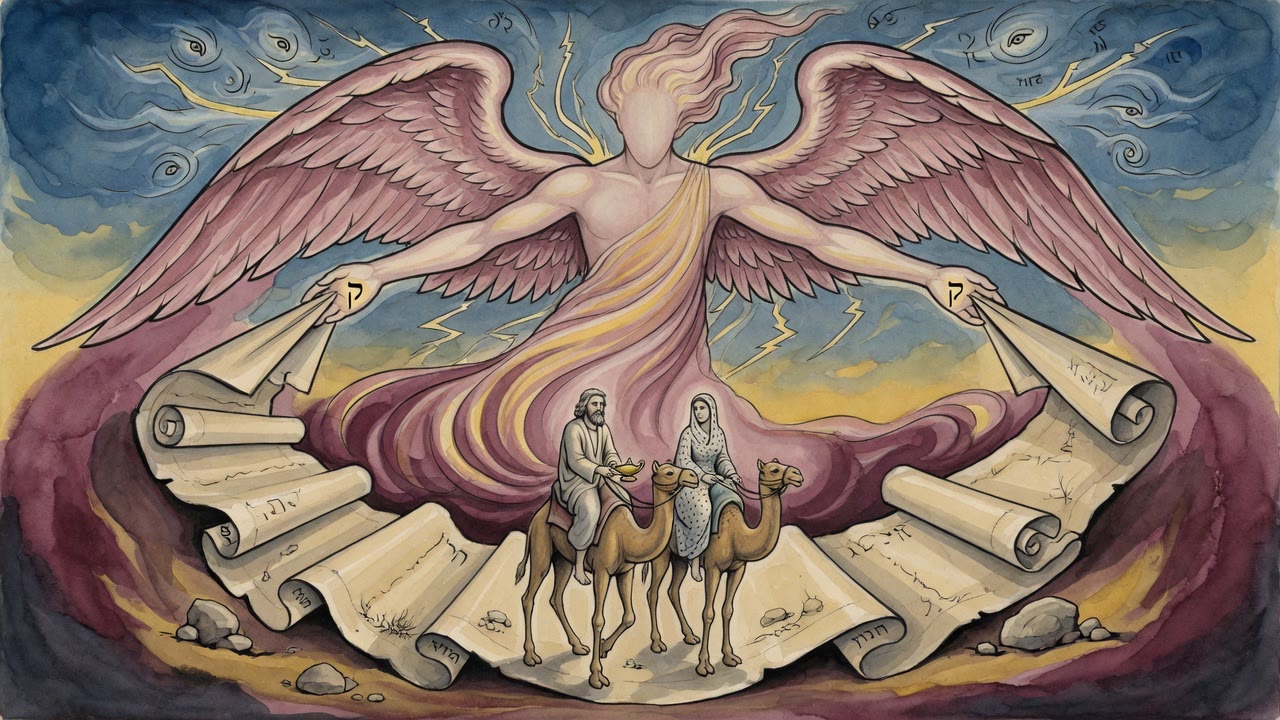
The Holy One wished to deal kindly with Isaac. An angel went ahead of the servant, and the road leaped and folded, earth contracting under the camel's feet until space itself became short for the sake of the covenant's next link. Hills that should have taken days slid past like a dream that refuses to waste time.
At that exact hour a king's daughter who had never once gone out to draw water walked to the spring. A girl who knew nothing of men agreed at once to join herself to Isaac, the man she had been fitted for since the womb. "Behold, Rebekah is before you," the house said, and the match locked into place like a bolt thrown home. Kindness at the well answered kindness on the road. The servant who had prayed for a sign received a sign so clean it almost frightened him.
The Angel Waiting Outside
Eliezer rose early. He saw the angel standing outside, waiting for him. "Do not delay me," he told the family. Gold and garments had already been given. The girl's kin tried to hold the calendar. Heaven held the map.
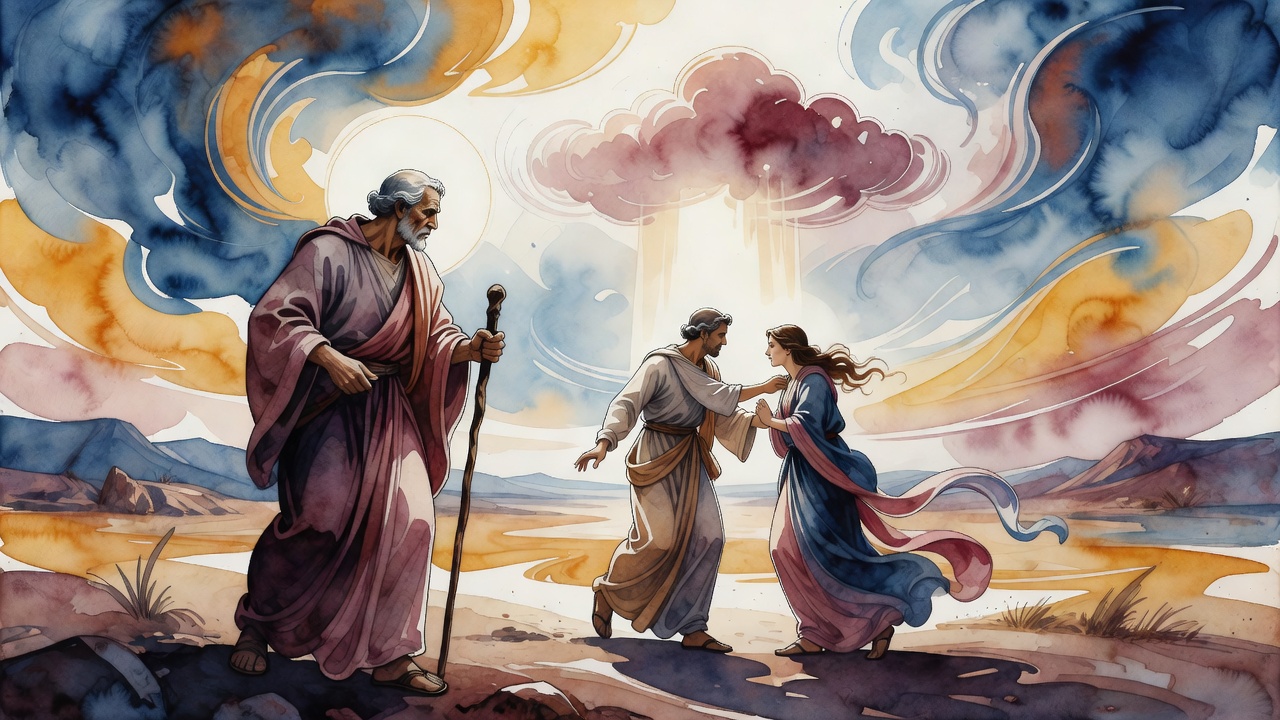
The same folding earth that had brought him east now turned him west. In three hours he reached Hebron at the hour of the evening prayer, just as Isaac went out to the field to pray. Bride and bridegroom met in the hinge of the day, not because the servant was clever with routes, but because the ground itself had agreed to hurry.
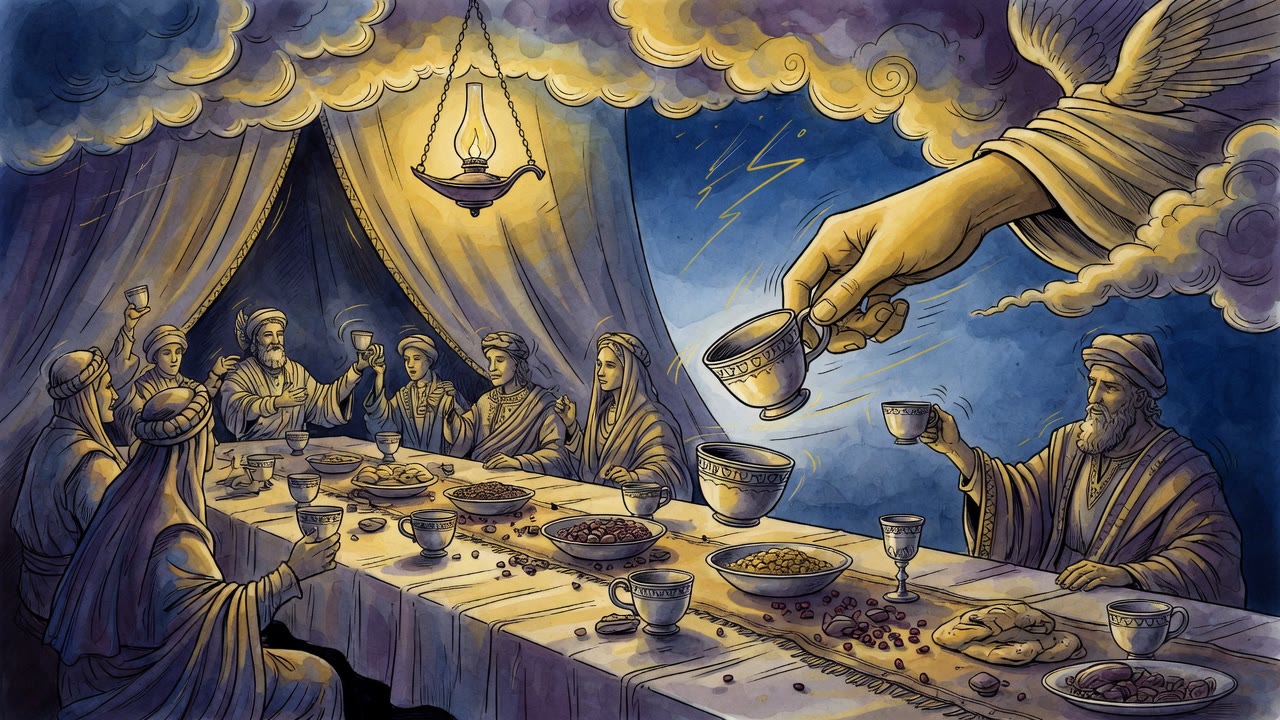
The road shortened a second time for a reason the story does not blush to name: so the servant would not have to spend a night alone with the bride. Heaven folded distance to protect a boundary the house of Abraham would not risk, even for the man who had just worked a miracle of logistics. Speed was not only gift. Speed was fence.
Abraham's Last Caution
Abraham still tested. He told Isaac the servant was suspect by nature, a Canaanite hand that might hold crooked scales. Bring the girl into the tent. Confirm her purity. Only then take her as wife. Eliezer's faithful kindness did not erase Abraham's caution; it survived it. The old man who had sent the errand still knew how to fear for his son's line.
The girl was confirmed. The marriage stood. For the kindness he had done for Isaac, Eliezer was set free. The tradition, daring and strange, identifies him with a king who lived on for ages, Og of Bashan, a servant lifted into another story by the weight of one completed errand. Freedom and a wild second life: payment for three hours that should have been seventeen days, twice.
The Gift That Outlives the Friend
A king once had a beloved friend and promised him a gift if he would walk with him. The friend walked and then died. The king said to the friend's son, "Although your father is dead, I do not take back the gift I promised. Come and take it yourself."
The king is the Holy One. The friend is Abraham, seed of the one God called beloved. "Go forth from your land," the call began, and the land itself was pledged, "for to you I will give it, and to your seed forever." Abraham died. The gift did not. "The word of our God shall stand forever." Grass withers. The flower fades. The promise walks on into the son's house and into the grandson's house after that.
Eliezer's folded road is the promise moving in real time. Heaven shortens the map so the next generation can be seated before the old generation finishes its fear. The servant who said his status out loud becomes the instrument of a covenant that outlives status, distance, and even the first friend who heard the oath.
Isaac looked up from prayer and saw the caravan arrive as if the desert had been a short corridor. Rebekah covered herself. The house of Abraham took in a future mother of twins and nations. Behind them, the road that had leaped lay still again, ordinary dust, as if it had never folded for anyone.
← All myths