The Water Rose to Meet Rebekah at the Well
Eliezer asked for a girl who would offer water. Rebekah came, scolded the others, and the well rose to her jar while Laban's house readied poison.
Table of Contents
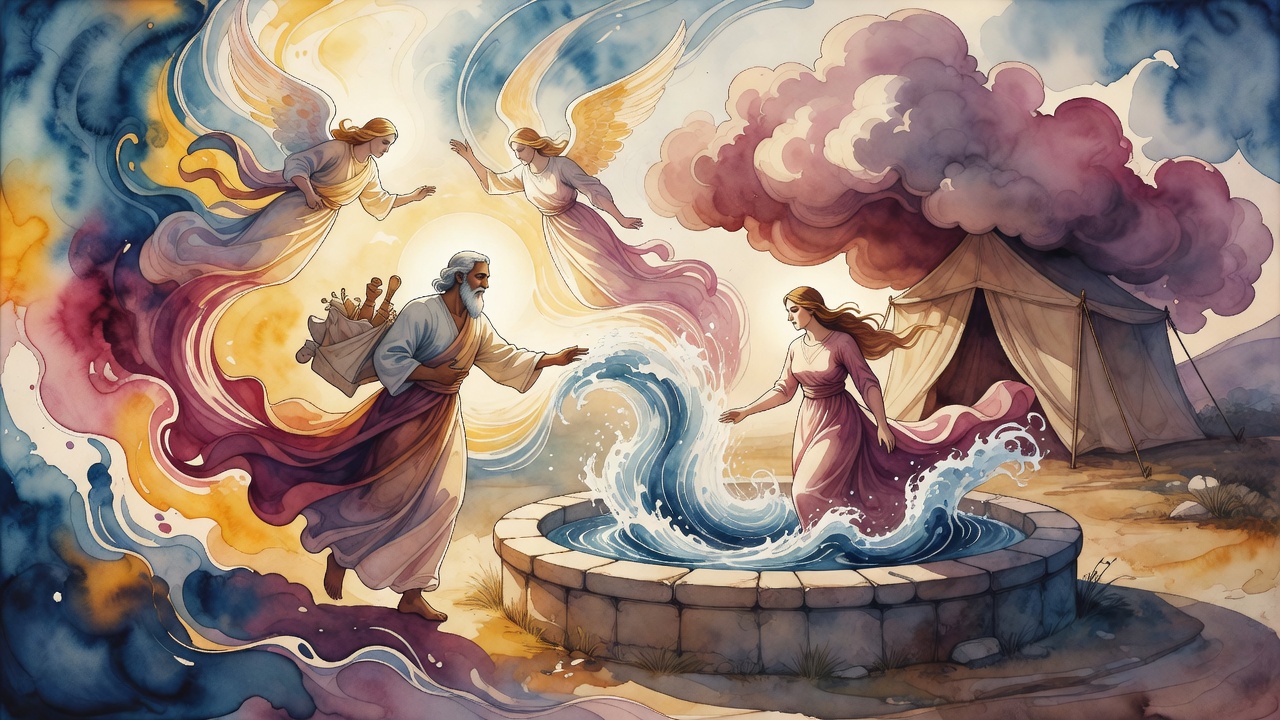
Eliezer reached the well at Haran with camels spitting foam and a prayer already sharp in his mouth. Abraham had loaded him with gifts and a single nonnegotiable: a wife for Isaac from the old kin, not from Canaan's daughters. Two angels walked the mission with him, one for the servant's road and one for the girl not yet chosen. The earth had hurried under his feet. Days of travel had collapsed into hours. Now the water's edge held the test.
 Click for full size
He asked God for a sign some later readers would call unseemly. Let the girl who offers him drink, and offers the camels too, be the one. A servant girl might have done it. A fool might have done it. Eliezer still spoke the condition, because the house that sent him had always bet on heaven finishing what human plans only sketch.
The Jar and the Rising Water
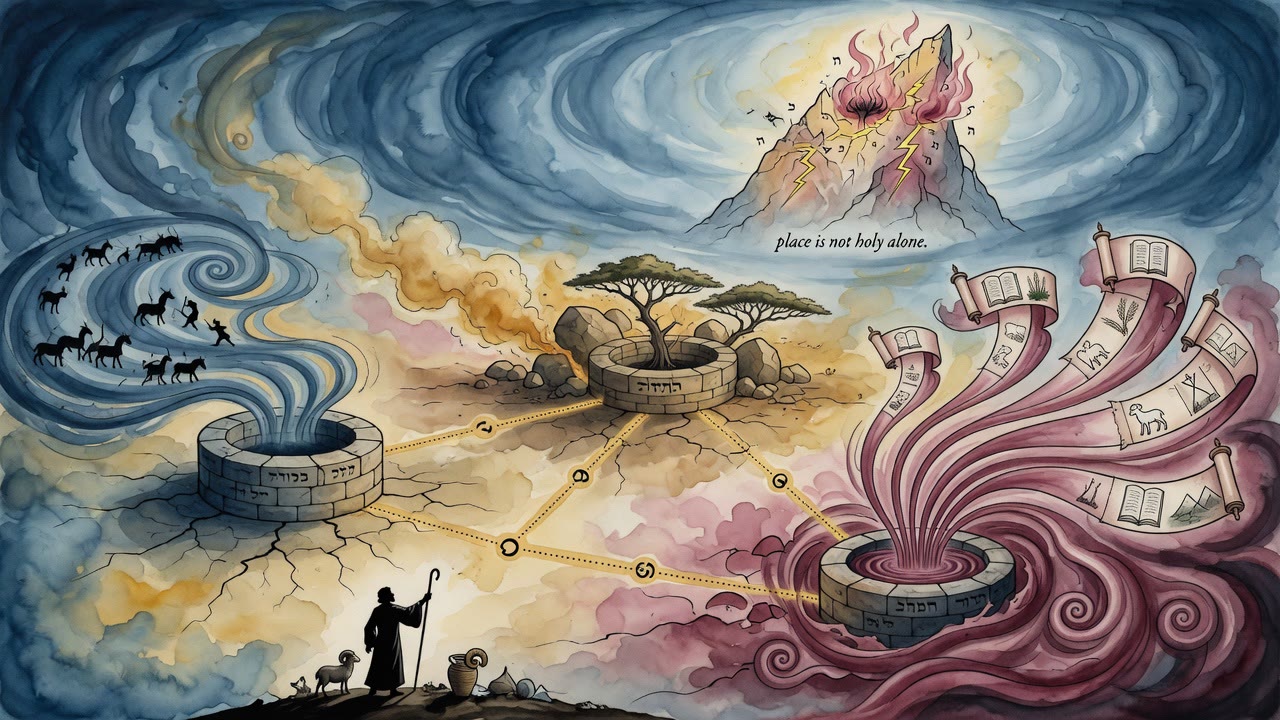
Rebekah came with her jar. She gave Eliezer water without making him beg. She turned on the other maidens for their thin courtesy. Then the well itself moved. Water rose to meet her so the full labor of drawing did not sit on her shoulders alone. Eliezer watched the surface climb and felt the mission lock. This was not manners only. This was the road answering Abraham the way Gabriel's shoulder had once answered Abraham's empty hands before Babylon.
He set a nose ring on her, stone catching light, a weight that later ages would hear as the half-shekel of sanctuary census. Two bracelets followed, heavy as the two tablets still waiting in a future mountain's fire. Rebekah wore covenant metal before she knew the man's name who would love her in a field at evening. She ran home sparkling. The angels did not need to speak. The jewelry spoke first.
Laban saw the gold and ran. Hunger lived in his stride. He meant harm and goods in the same breath, then checked when the stranger's face carried Abraham's weather. "Come in, thou blessed of the Lord," he said. "I have cleansed my house of idols." The clean house still had a kitchen.
Poison at the Welcome Table
Inside, Bethuel's household set food that was not only food. Poison waited in the dish meant for the servant who carried too much silver. Eliezer sat with the smell of cooked meat and the colder smell of a trap. He refused to eat until he had told his errand clean: Abraham's oath, Isaac's need, the prayer at the well, the water that rose, the girl who gave drink.
He did not touch the plate. The angels did not knock the cup over in a flash of wings. The mission itself became the shield. Words first. Bread later, if ever. Laban's hospitality showed its teeth and then had to listen while a foreign servant rearranged the family's future out loud.
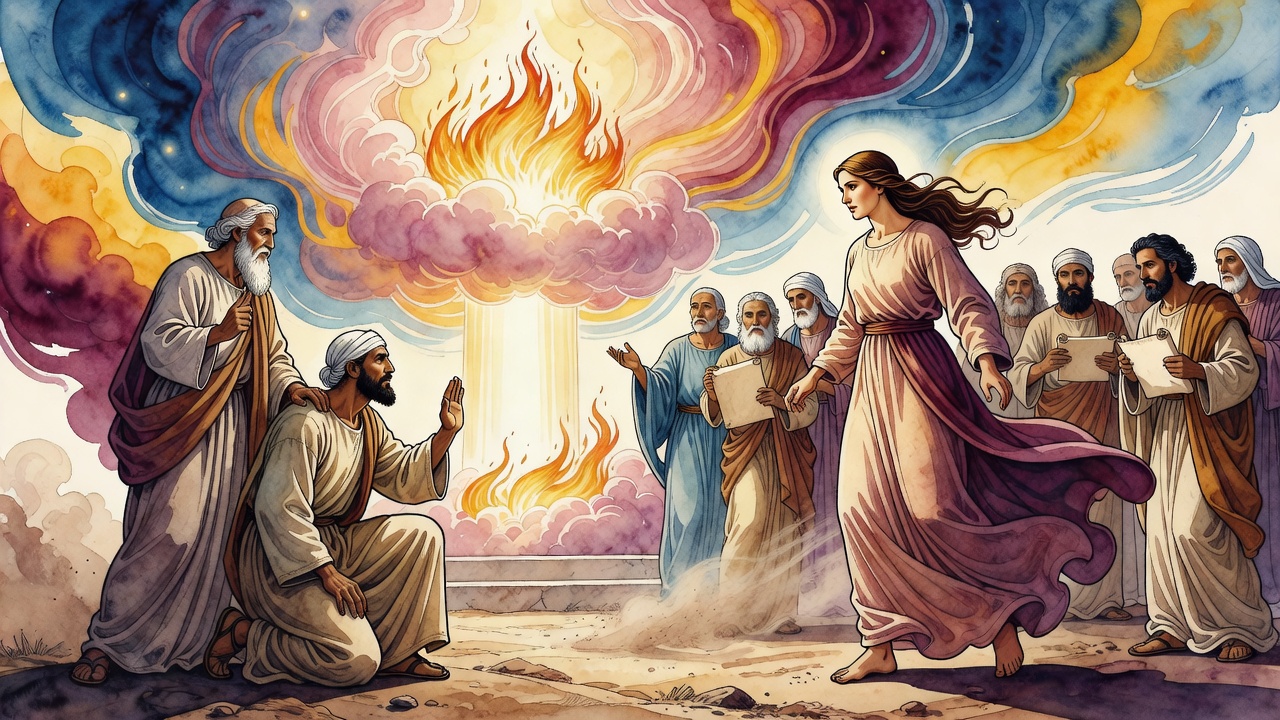
Rebekah heard herself chosen in a story larger than a wedding. When they asked her, she said she would go. The camels rose. The road that had shortened for Eliezer lengthened again under a bride who left a house that cleaned idols for show and mixed death into stew for profit.
From Angel Shoulder to Marriage Field
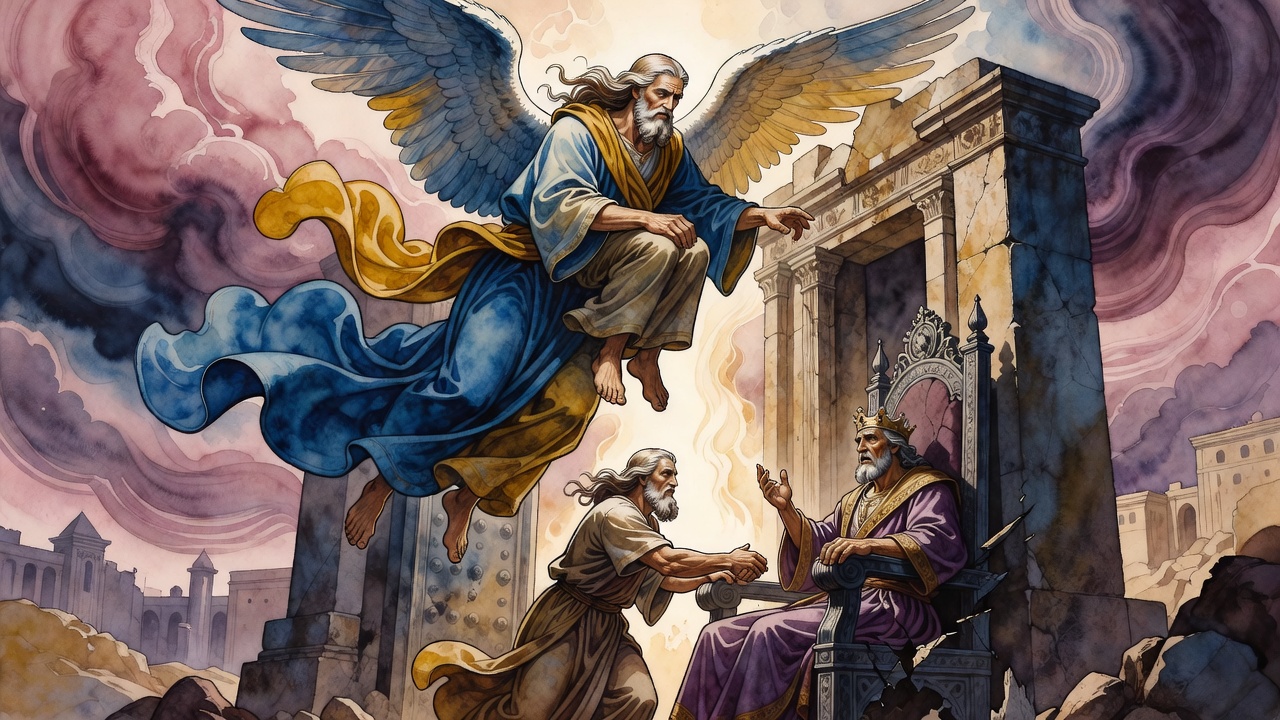
Abraham had once refused a war and been carried to Nimrod's gate on Gabriel's shoulder, forced into public speech against a king. That same stubborn reliance on heaven now ran through a servant at a well. No army. No long siege of Haran. A prayer, a rising water, a girl who rebuked stinginess, a poison refused. The God who needed no warriors for Babylon needed no matchmaker's guile for Isaac. He needed a household willing to ask for a sign and walk when the sign climbed the jar.
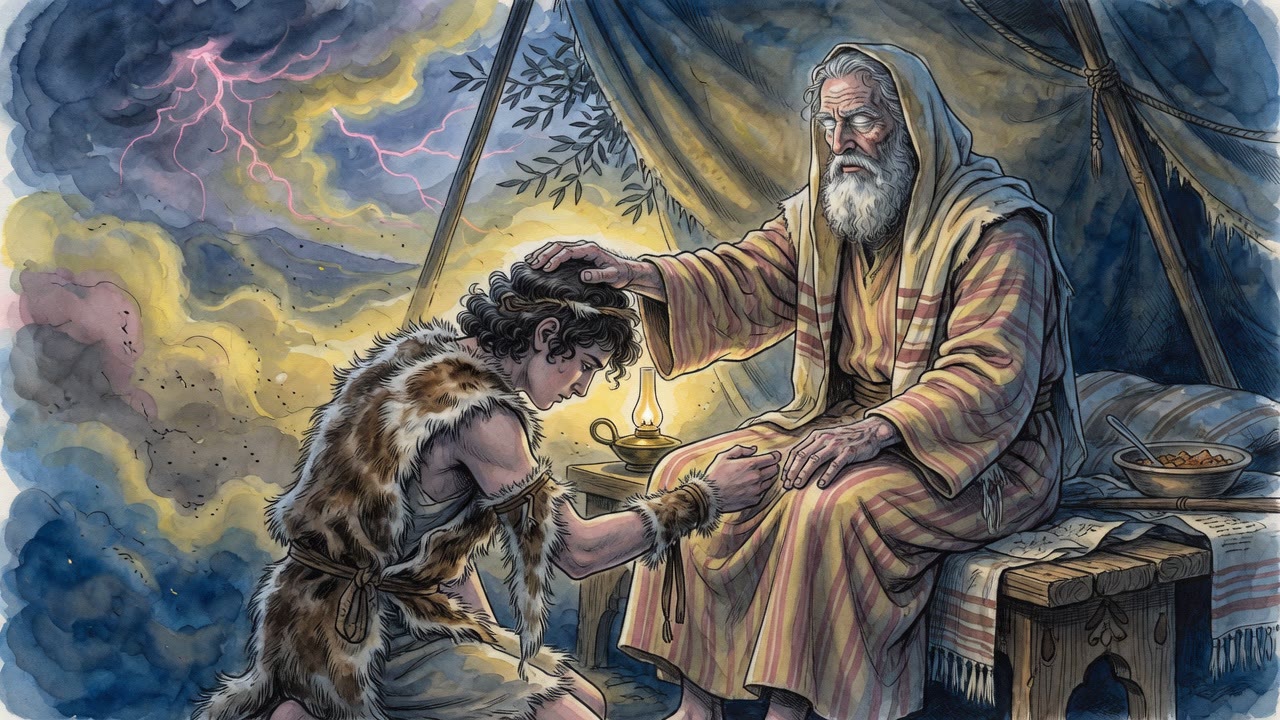
Isaac went out to the field toward evening. Rebekah saw him, slid from the camel, and covered herself. The man who had lain on an altar as a boy met the woman for whom a well had risen. Eliezer told the whole road. Isaac brought her into Sarah's tent. Comfort entered a house that had been empty of a mother's voice. The bracelets flashed once in lamp light and went quiet on her arms.
Covenant does not always arrive as fire on a mountain. Sometimes it arrives as water that refuses to make a righteous girl haul alone, and as a servant who will not swallow a welcoming meal until the truth has cleared the room.
The Nurse, the Night Grave, the Later Cost
The joy did not freeze into permanence. Decades on, Rebekah's nurse Deborah died in Beth-el under Jacob's care and was buried beneath a palm that would one day shade a prophetess of the same name. Rebekah herself died when the family could not stage an honest public mourning. Abraham gone, Isaac blind, Jacob away, only Esau left as the public son, and no one wanted his mouth over her grave. They buried her at night to keep curses off the air.
The girl at the well who received rising water and covenant gold ended in a dark burial because the house of Isaac still carried a violent brother in its open daylight. Heaven that had hurried Eliezer and lifted a well did not cancel every later grief. It had secured a marriage. It had not secured a gentle century.
Still the first image holds: camels at Haran, a jar, a surface climbing without rope enough to explain it, a servant's hand stopping short of a poisoned dish, a yes from a girl who would ride toward a man praying in a field. What changed for good was Rebekah's feet leaving Laban's door while the well behind her settled back to ordinary depth, as if it had only risen for one pair of arms.
← All myths