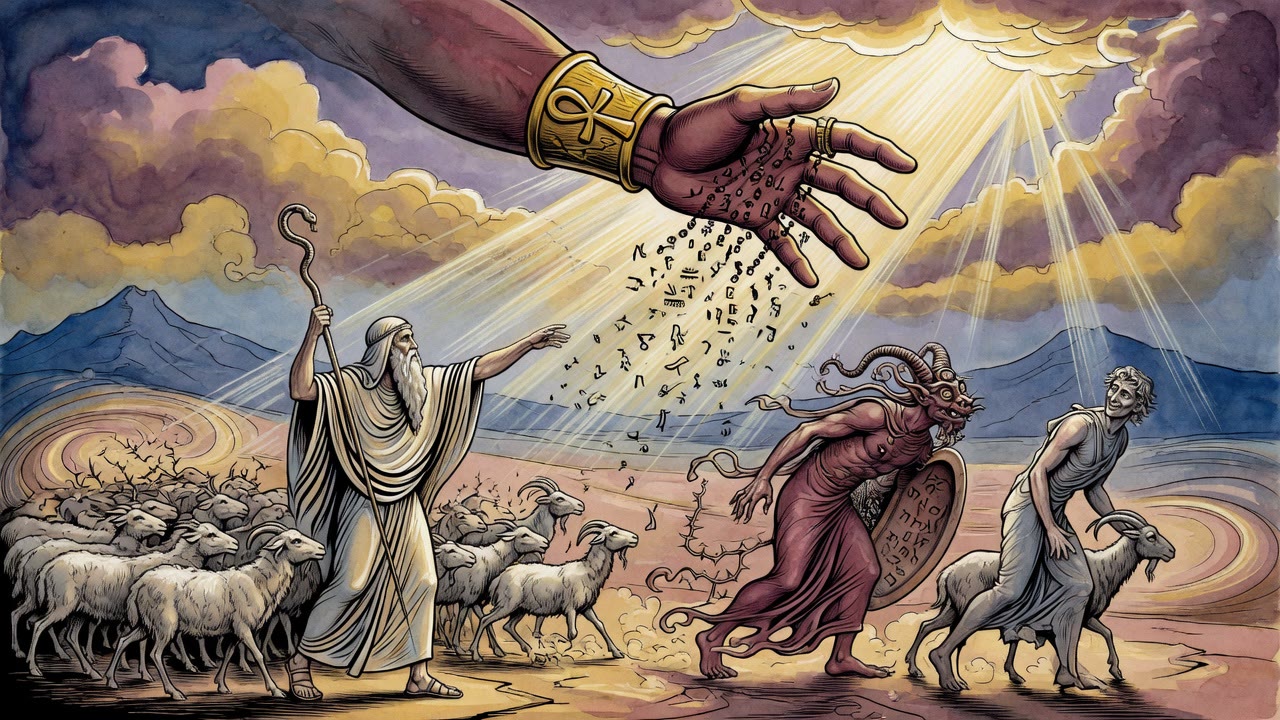
The Sea Became Glass for Israel and Mud for Egypt
The same water that opened smooth as glass beneath Israel's feet turns to mud under Egypt, and one cloud becomes both lantern and blindfold at once.
Table of Contents
 Click for full size
The Water Divided Before the People Did
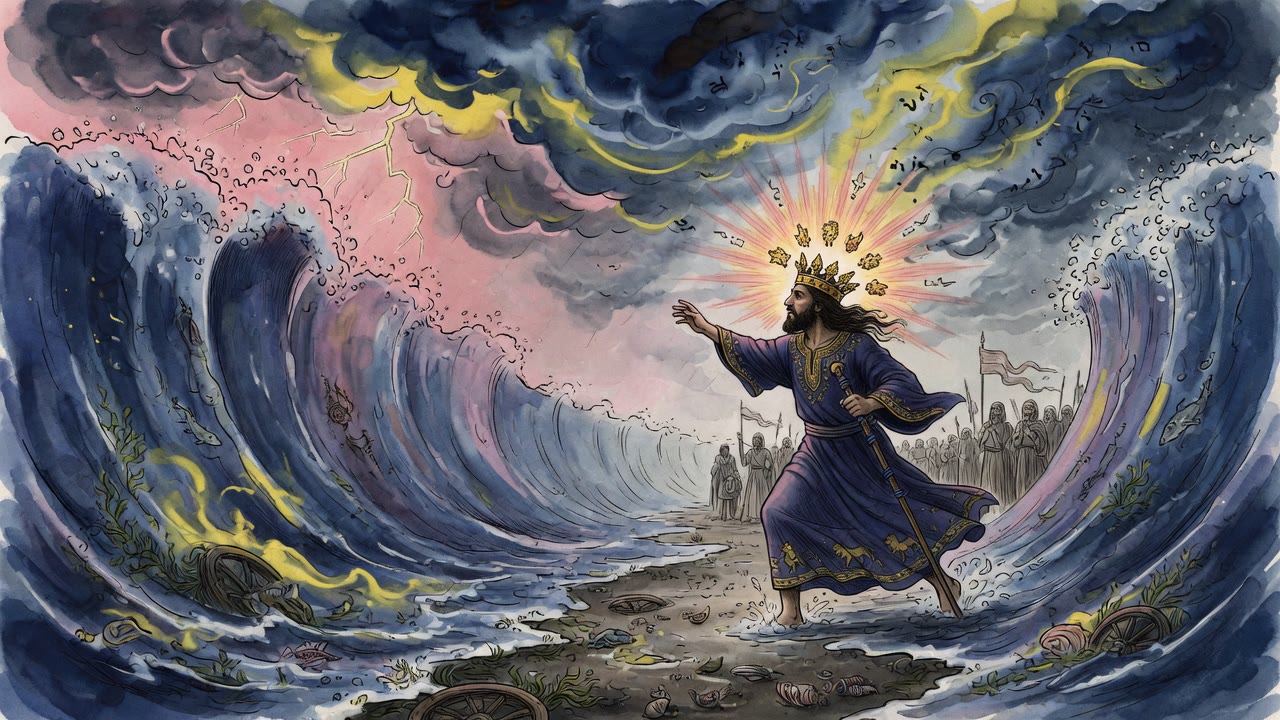
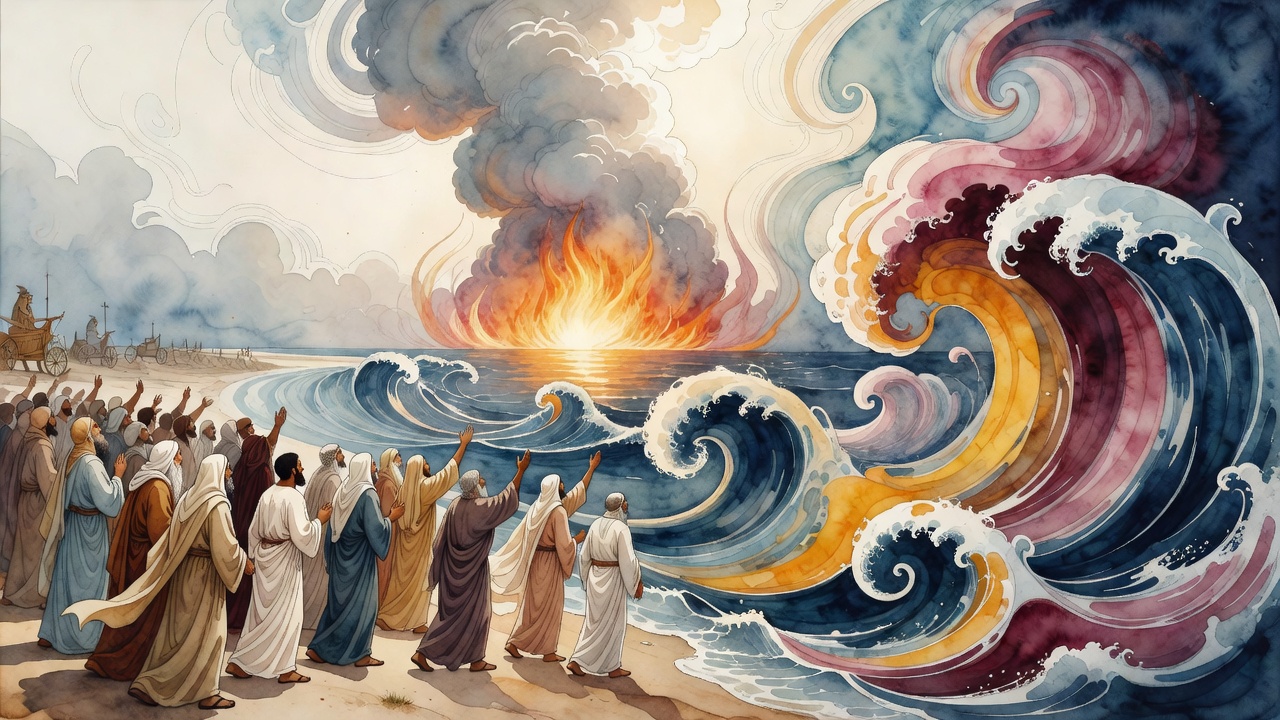
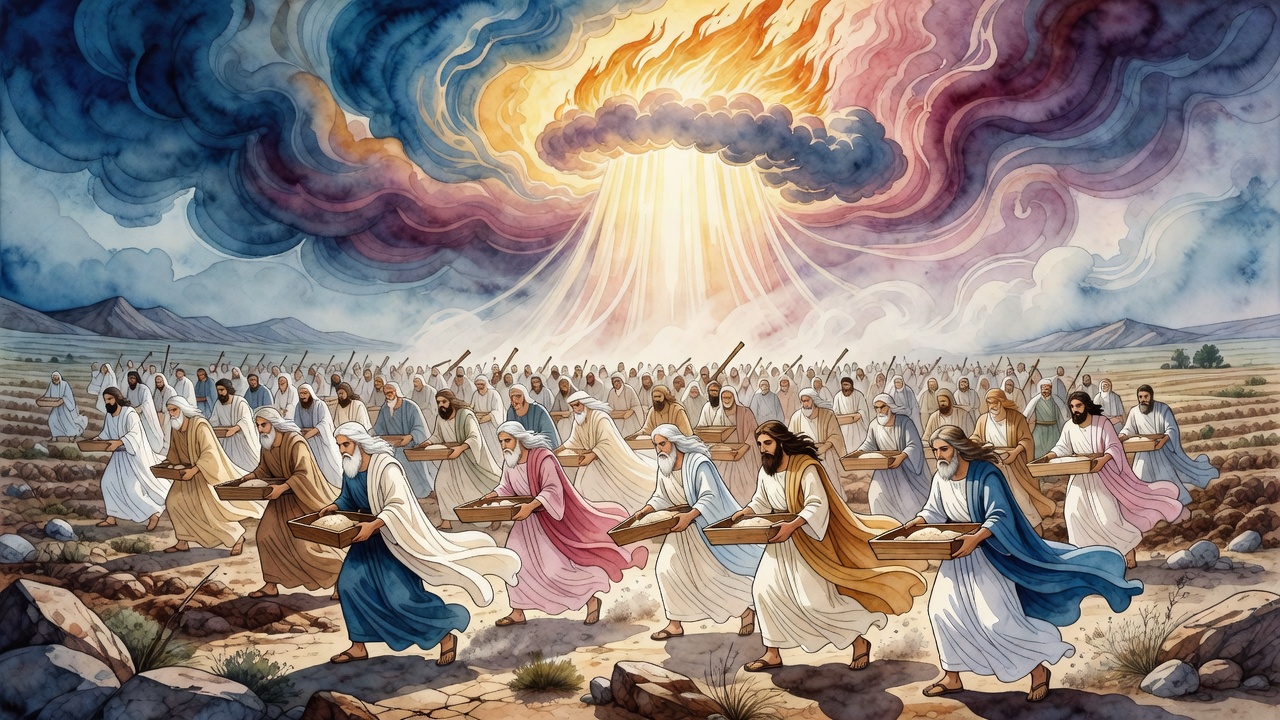
Israel stood at the shore and heard the army behind them. Pharaoh's chariots were close enough to raise dust. The sea was in front. The people cried out and Moses stretched his staff over the water and the sea began to move, and then something stranger than a split sea happened: the water chose sides.
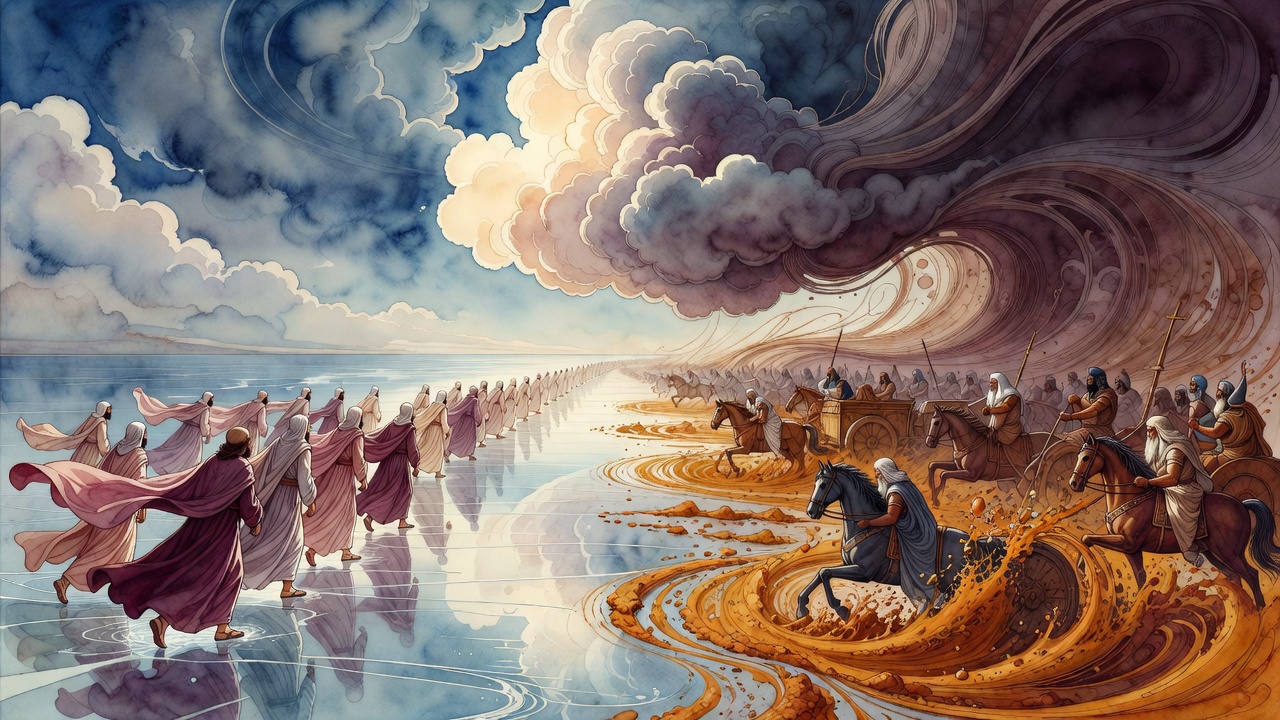
The same surface that opened under Israel's feet became a different thing for the Egyptians who followed. Where Israel walked on dry ground, Egypt sank into mud. Where Israel looked up through a vault of clear water, Egypt looked into darkness. Where Israel tasted sweetness from barrels that flowed out of the salt walls on either side of them, Egypt found nothing to drink. The miracle did not simply make a road. It read the moral position of the people walking through it and responded accordingly.
The Sea Refused to Be One Thing
Mekhilta DeRabbi Shimon Ben Yochai, drawing on tannaitic traditions preserved from the third and fourth centuries CE, counts what happened at the sea as not one miracle but ten. The water did not merely open. It rose, arched into a vault over the people's heads, divided into twelve separate corridors, one for each tribe, turned the floor beneath Israel into firm dry land, then into clay tiles, then into smooth paving stones. The sea stood up in heaps. It congealed like glass.
Then the detail that changes the picture entirely: sweet water ran out of the salt walls on both sides. Israel, walking between walls of the sea, could reach out and drink. They had been terrified at the shore moments before, with Egypt at their backs and the water refusing to yield. Now they walked through a corridor lined with fresh water and looked up through arches of light.
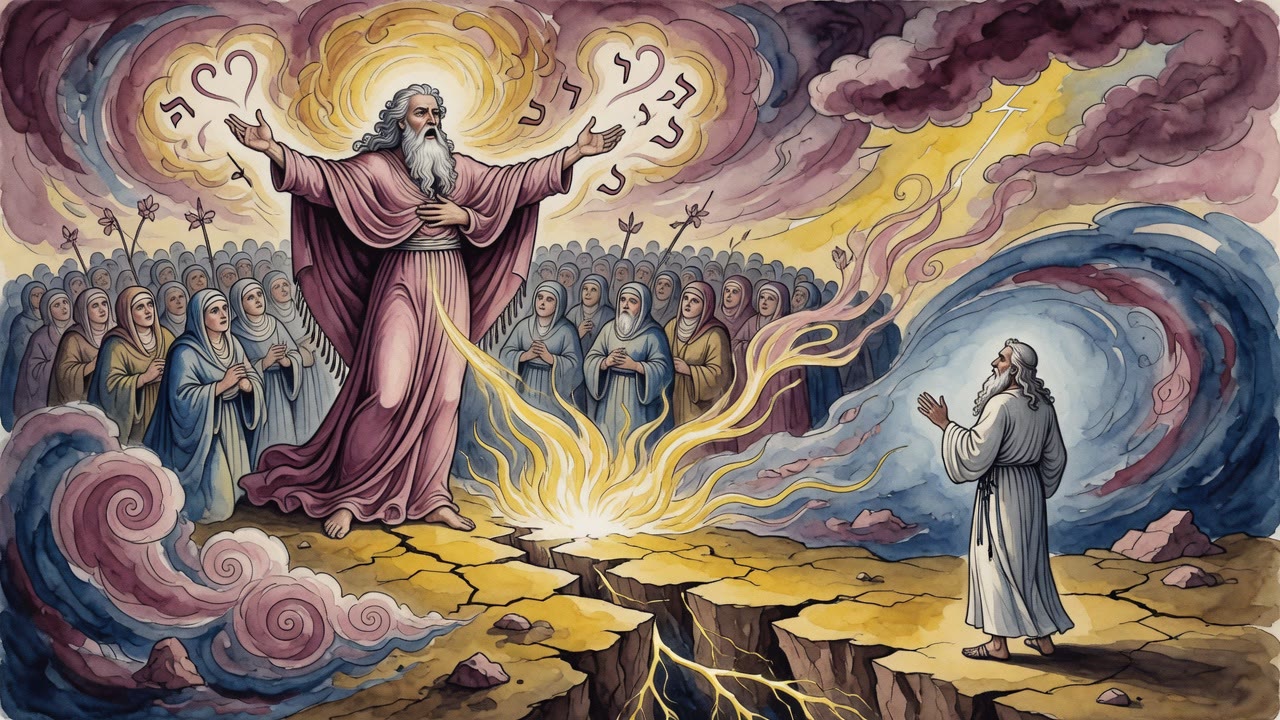
Egypt got the other version. The same corridor, the same walls, the same ground, but the ground became mud under chariot wheels and the darkness became total. Targum Pseudo-Jonathan, the expansive Aramaic translation of the Torah carrying traditions from the second through the thirteenth centuries CE, places the cloud that traveled with Israel between the two camps. It was a single cloud, but not a uniform one. The half facing Israel gave light. The half facing Egypt gave darkness. One cloud with two faces, neither side able to cross to the other.
The Cloud Had Two Faces
The Mekhilta and the Targum are working the same theological ground from different angles. Both want to insist that the same act that saves one group can condemn another, not because God plays tricks, but because the nature of what passes through a people depends on what they bring to the crossing.
Israel brought a willingness to trust a road they could not see the end of. Egypt brought the certainty that what had worked in the sea for Israel would work the same way for them. Egypt was wrong. The floor that held Israel let Egypt's chariots sink. The light that kept Israel oriented left Egypt blind. The water that refreshed Israel was nowhere on Egypt's side of the corridor.
Mekhilta DeRabbi Shimon Ben Yochai pushes this further in its description of the cloud arrangement. There is not just one pillar of cloud but multiple. One goes ahead to flatten the path. One flanks the camp on the right. One flanks on the left. One follows behind. The cloud above absorbs rain and protects from hail. The pillar of fire gives light at night. All of this belongs to Israel and none of it to Egypt, even when both camps stand in the same stretch of wilderness looking at the same sky.
Egypt Followed Into a Trap It Built Itself
The Egyptians saw the sea open and decided to follow. They had watched the plagues, had watched the Nile run with blood, had watched their firstborn die, and still they followed. The Mekhilta does not treat this as irrational. It treats it as the final logical step of a nation that had decided God was only a problem to be managed. Egypt had managed ten plagues by negotiating, by hardening, by calculating. When the sea opened, they made the same calculation: Israel got through, we can get through.
The sea waited until they were committed. Not until the first chariots entered, not until the vanguard was halfway across, but until all of Egypt that had followed was inside the corridor. Then the walls returned. The sea did not attack them from outside. It had already been surrounding them from the moment they stepped in. The miracle Israel walked through became the trap Egypt chose to enter.
← All myths