The Sea Took a Pledge and Kishon Paid Nine Hundred Chariots
They stood dry on the far bank and would not turn inland. The Sea kept Egypt's dead until a dry river signed for the debt.
Table of Contents
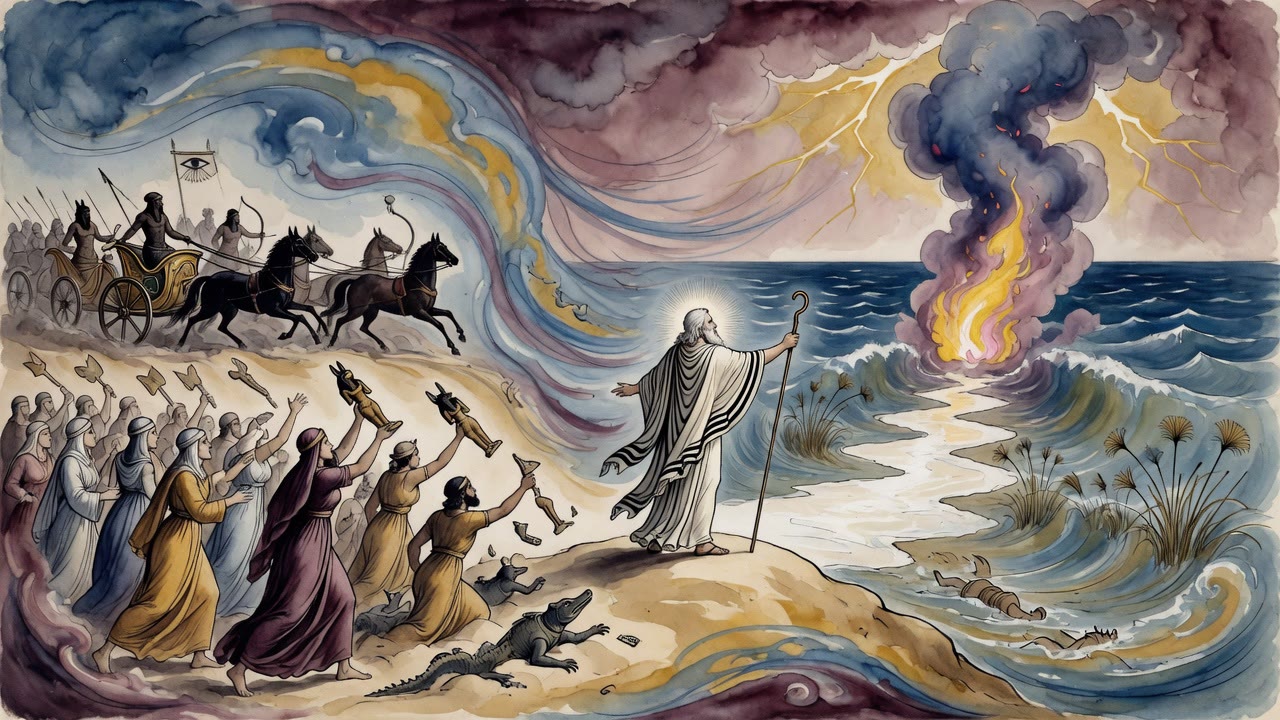
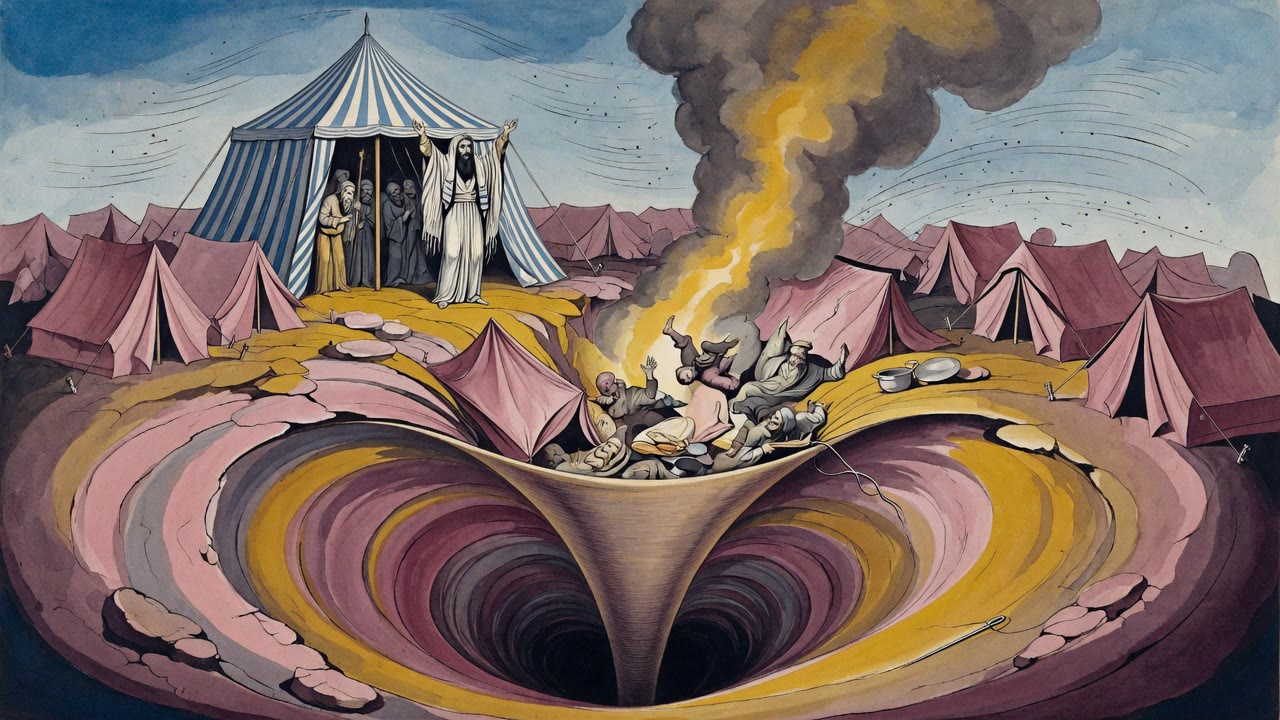
They were across. Dry sandals, dry hems, solid ground under their feet, and still not one of them faced forward. Israel stood in a knot at the water's edge and passed the same sentence down the line. "As we came up on this side, the Egyptians are coming up on that side." Mothers pointed their children inland and looked back themselves.
 Click for full size
The walls had opened for them. The walls had closed behind them. It changed nothing. Somewhere past that foam, in the version of the morning their fear preferred, Egypt was wringing out its cloaks and reaching for the whips.
The Sea Would Not Give Back Its Dead
So the Holy One gave the Sea an order. Spit them onto the dry land. Let the people see them dead.
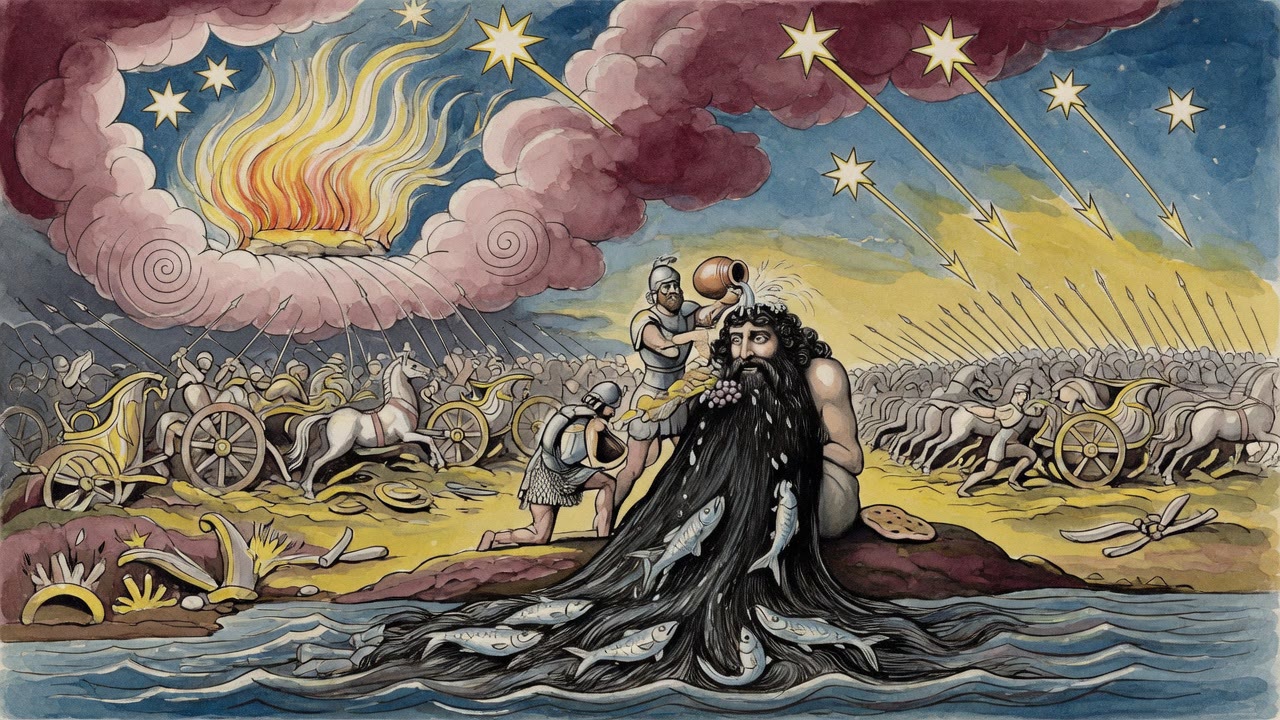
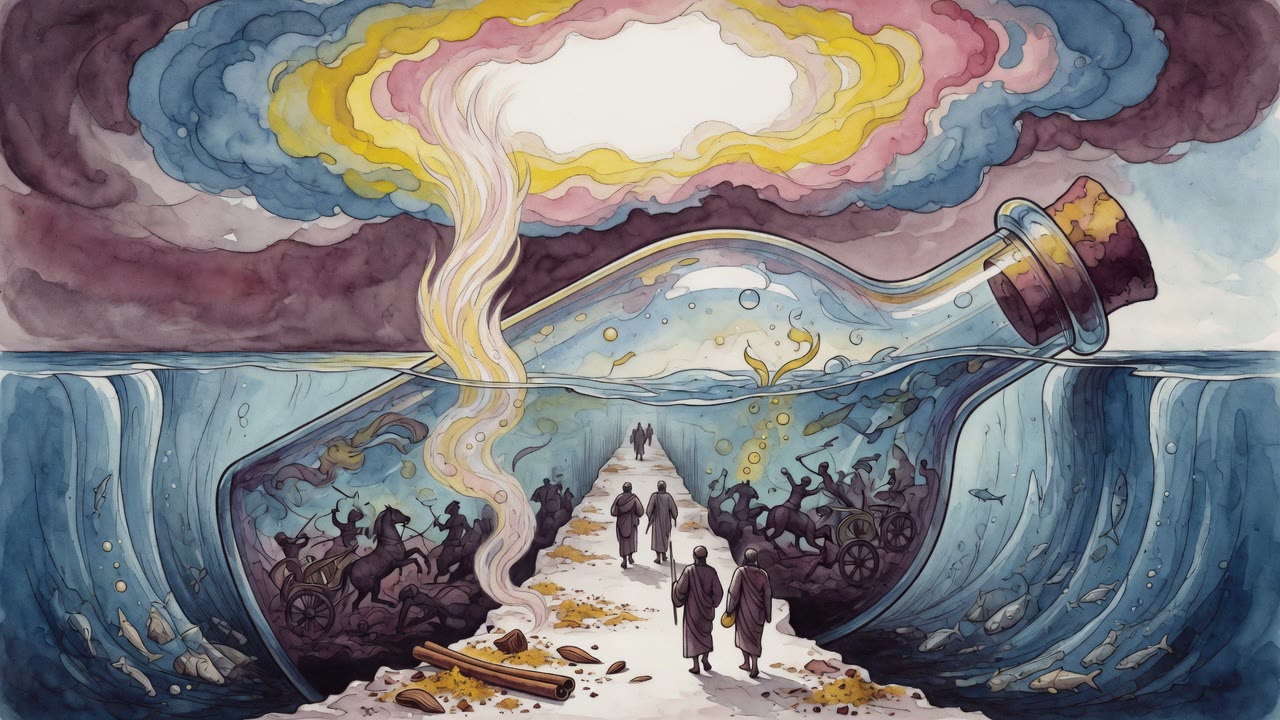
The Sea did not move. It answered the way a servant answers when he has read the terms of the gift. "Master of the worlds, is there a master who hands his servant a present and then takes it back? You gave these men to me. They are mine now, down where I keep what I am given."
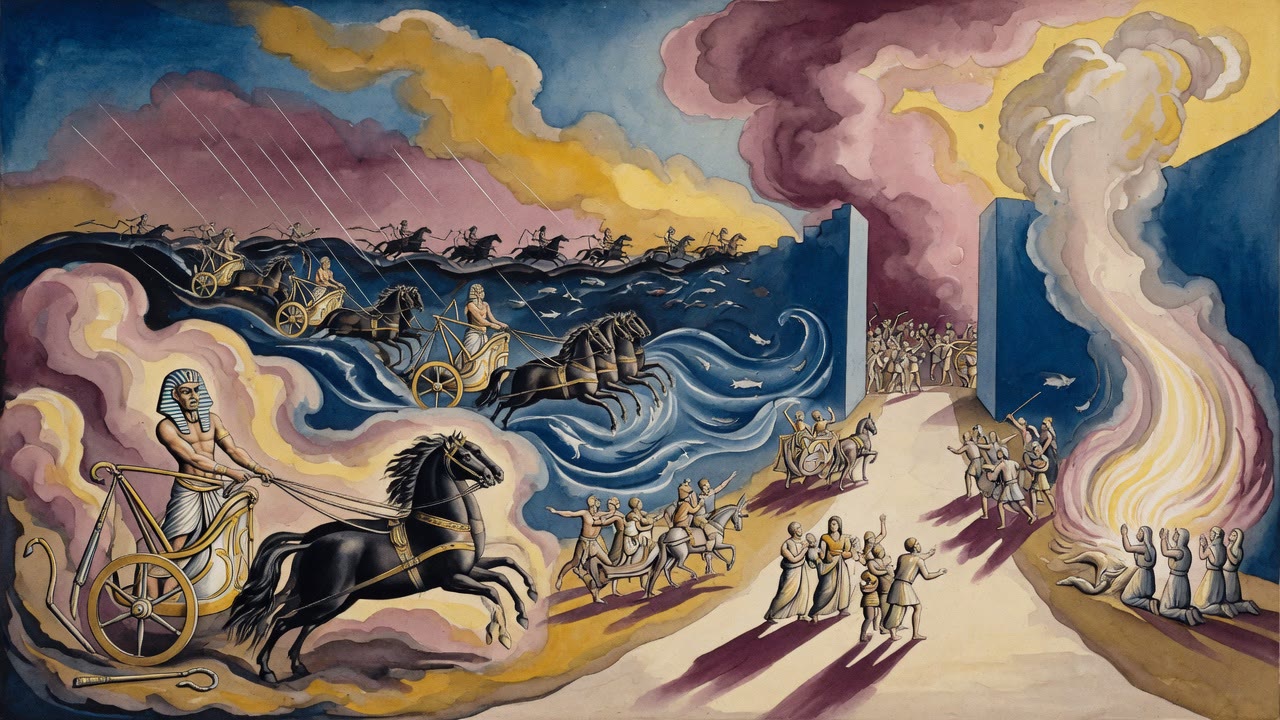
The host lay where it had settled, wheels and horses and men in bronze, and the water held shut over the argument. Heaven wanted a body on the sand. The Sea wanted its property.
A Dry Riverbed Signed for the Debt
"I will pay you one and a half," said the Holy One.
The Sea pressed further. "Master of the worlds, is there a servant who hauls his Master into court?" A thing made on the second day was asking Heaven for security on a loan.
It got security. The Holy One named the Wadi Kishon. That northern torrent ran hard in the wet months and lay trodden flat and dusty the rest of the year. He set the dry trench as surety for the payment.
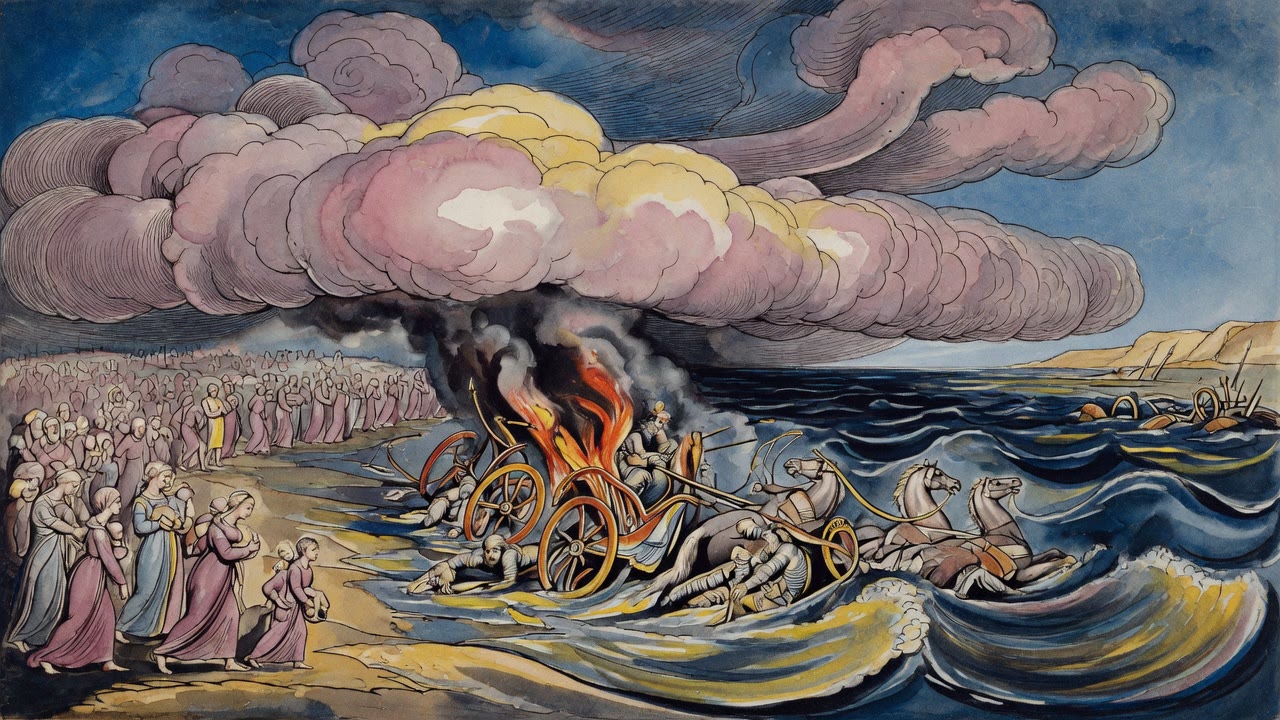
Then the water heaved and let go. Bodies came up along the whole length of the beach, armor bright, mouths full of sand. The people who had been inventing a second Egypt behind them stopped inventing it. They sang on that shore, and one line of the song went, "Your right hand, O LORD, is glorious in power" (Exodus 15:6).
The Right Hand Did Two Jobs
The hand that came down on Egypt in the night spread over the ones who would take the Torah from it later. Another mountain. Another kind of fire. The Holy One said, let My right hand come and be a shade over those who will receive Torah from the right.
The same hand punishes the wicked and shields the righteous. One hand. Two jobs. Israel sang it while the corpses were still wet on the sand.
Years later, when they would not hear the Torah that had been given from that hand, the hand drew back (Lamentations 2:3). The shade lifted. The people who had needed corpses before they could believe anything learned what it is when the hand that saved them turns away. When they keep the Torah, its merit stands even for the rising of the dead (Daniel 12:13). Salvation sits in the right hand (Psalms 60:7). The song on the beach was a claim on a future they had not yet walked into.
The Torrent Collected at Tabor
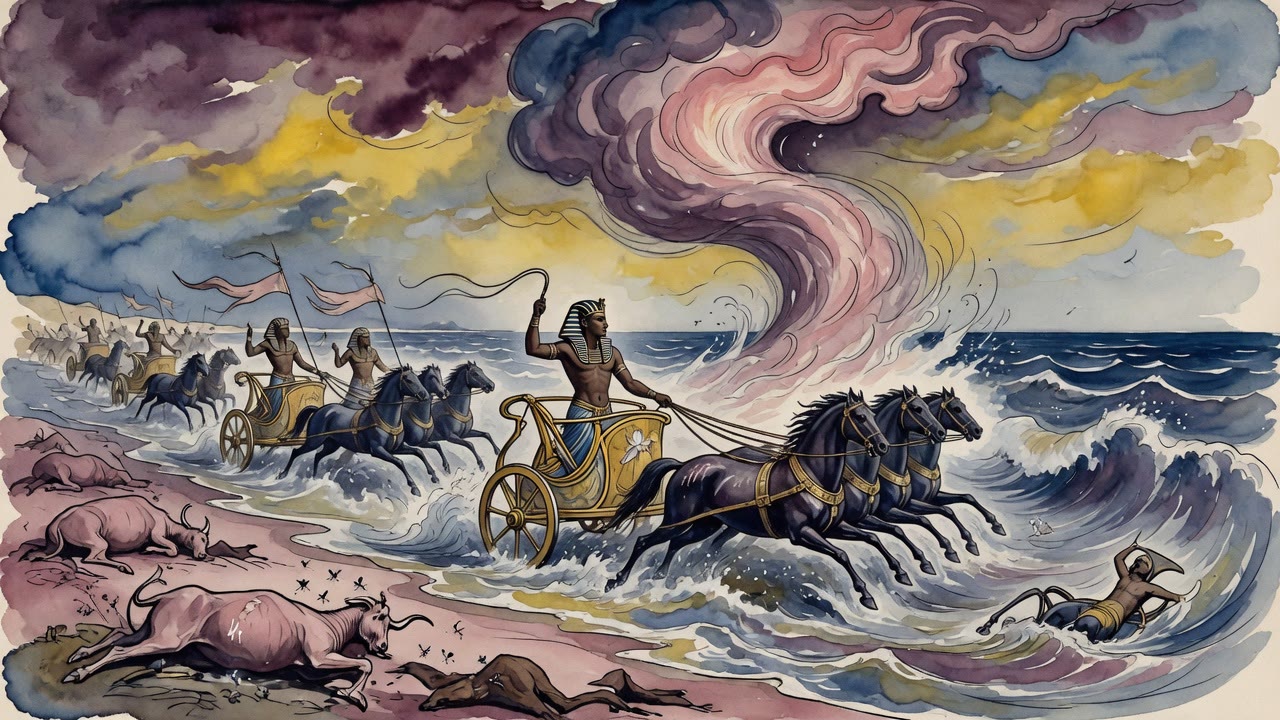
The account stayed open for generations. Pharaoh had driven into the water with six hundred chosen chariots, and six hundred was the principal. The interest waited in the north under a crust of dry mud.
Then Sisera came down against Israel with nine hundred chariots of iron, and Deborah sent Barak off Mount Tabor to meet them on the plain. The Kishon came up. Water took the wheels first, then the axles, then the drivers who had spent their whole lives believing in iron. "The wadi Kishon swept them away" (Judges 5:21).
Nine hundred against six hundred. One chariot and a half for every chariot the Sea had surrendered. That morning a frightened people had needed corpses before they could believe anything. The surety paid, and paid on time, in a ditch that had been dust the summer before.
← All myths