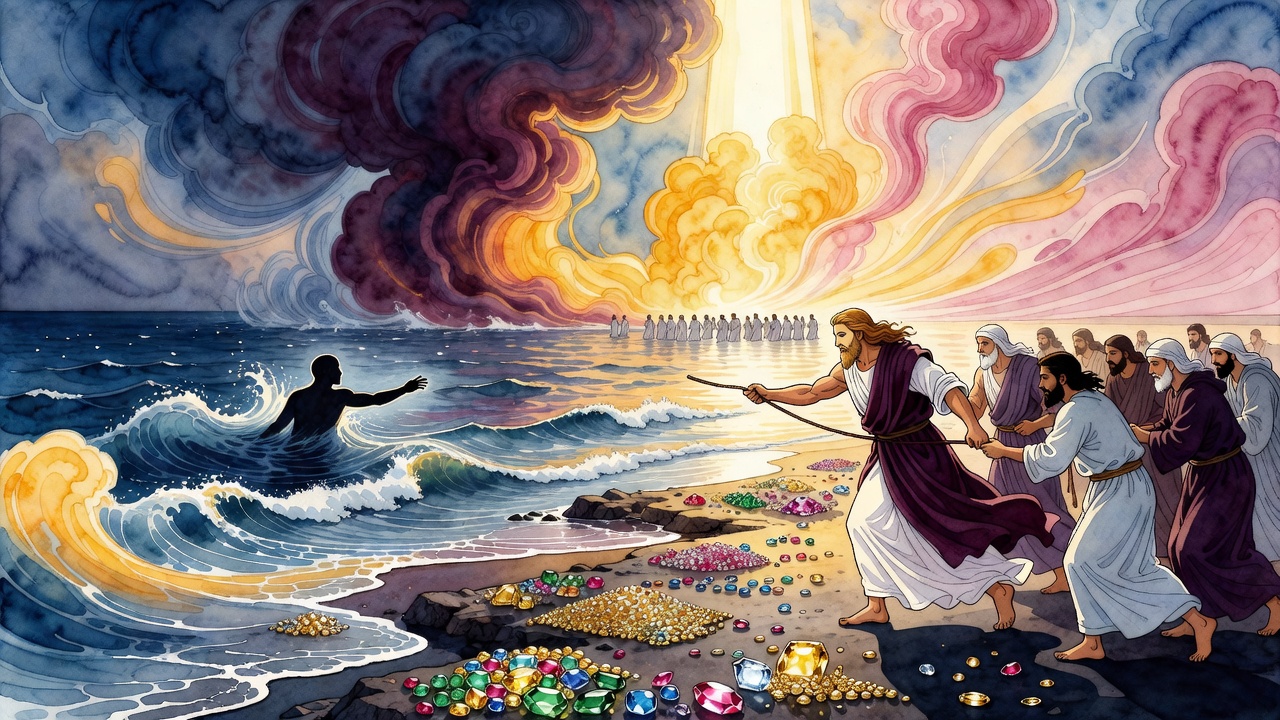
Pharaoh Harnessed His Chariot with His Own Hands
Hatred makes a king his own stable hand, six hundred chariots rise from Egyptians who once feared hail, and at the sea Israel splits into four panicked plans.
Table of Contents
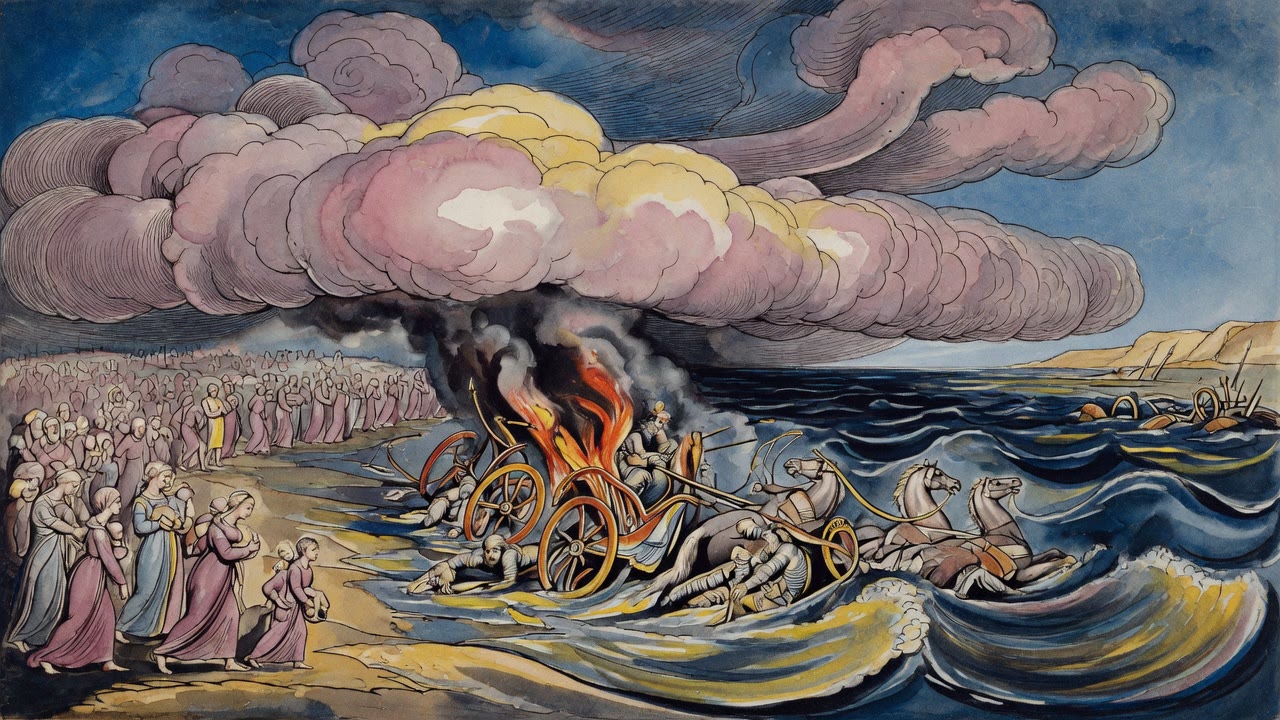 Click for full size
A King Stoops to Leather
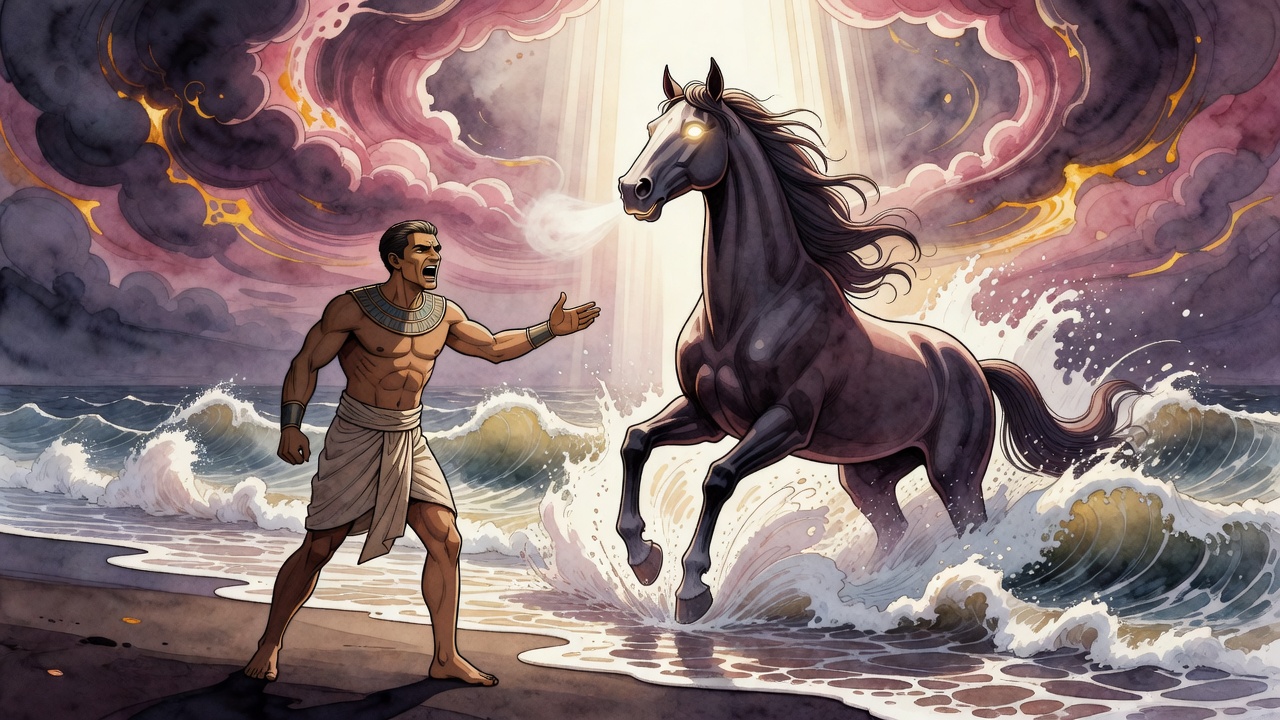
A king does not lift a finger for himself. Servants saddle his mount and ready his chariot while he waits in shade with wine and orders. Here Pharaoh harnessed his own chariot with his own hands, so eager was he to chase down Israel. Straps burned his palms. Buckles fought him. When his nobles saw the king stooping to the work, each one rushed to saddle his own rather than be caught standing idle while royal fingers did slave labor. Hatred made the king his own stable hand.
The same gesture had other owners in Israel's memory. Abraham saddled his donkey before dawn to obey God at the binding of Isaac. Balaam saddled his to curse Israel. Joseph harnessed his chariot to meet his aged father with tears already waiting. Pharaoh harnessed his to destroy. The knife Abraham raised in surrender stands against the sword Pharaoh boasted he would draw. The same motion of straps and buckles can serve heaven or rebel against it, and the midrash will not let the two saddlings be confused.
Where the Horses Came From
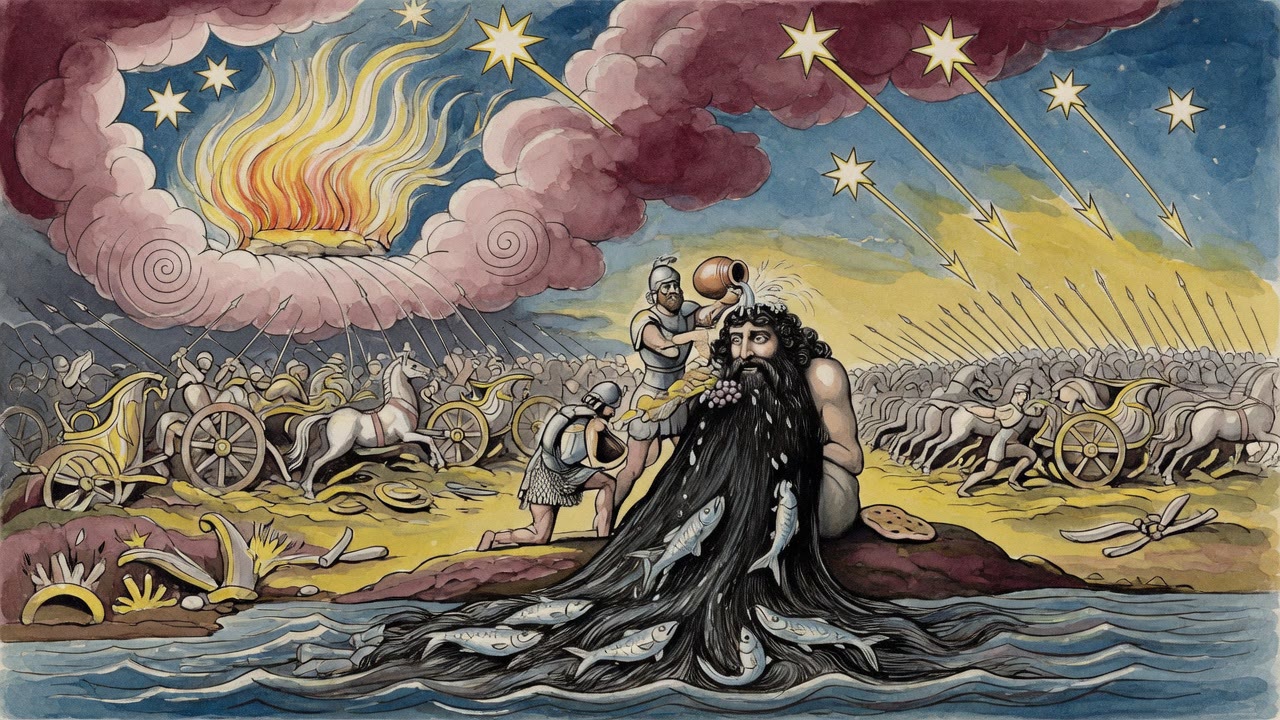
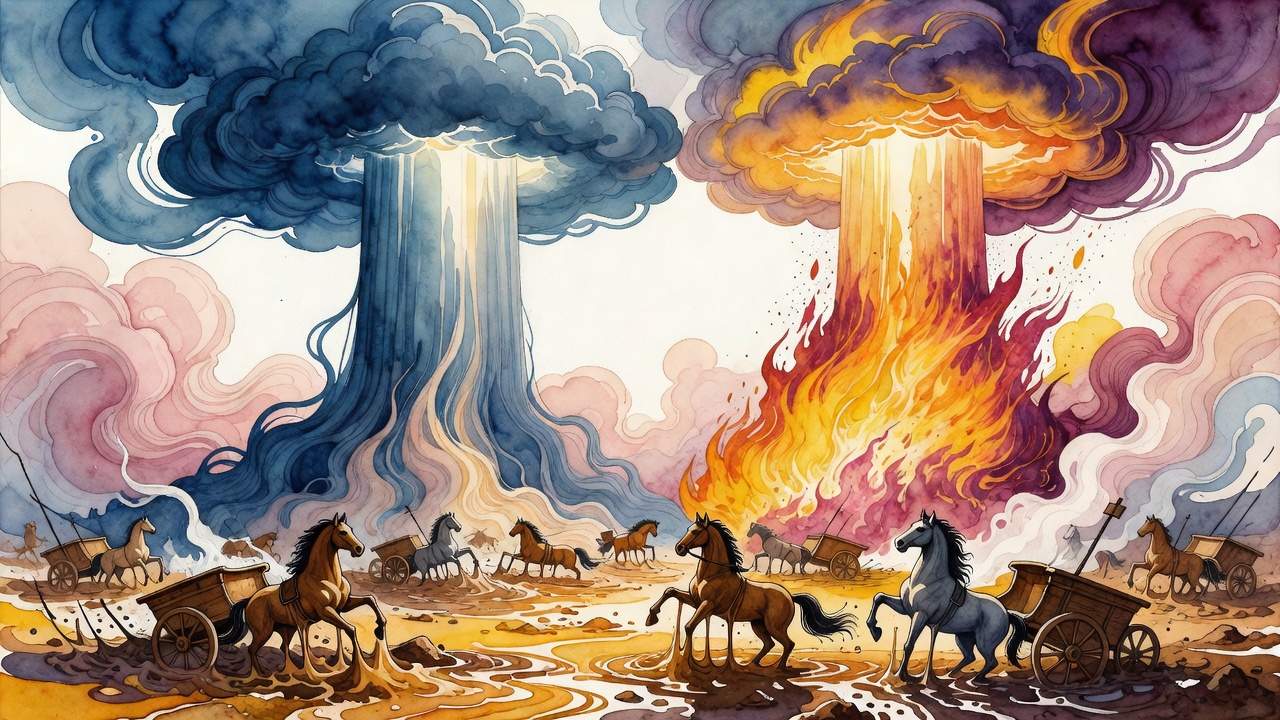
Where did Pharaoh suddenly find six hundred war chariots and their horses? The plague of pestilence had killed Egypt's cattle, and Israel's animals went out with them like a second exodus on four legs. The answer sits in an earlier obedience that now looked like a mistake. The horses belonged to the God-fearing Egyptians who had heeded Moses and rushed their livestock indoors before the hail. Those animals survived because their owners once trembled at a prophet's word. Now the same animals pulled iron toward the sea.
Fear that saves animals can still feed a war. The very ones who once feared the Lord now armed the pursuit against Israel, proof that a single good decision does not freeze a heart forever. Pharaoh took his people not only by force but by flattery. He promised to march at the front, to split plunder evenly, to open treasuries of silver and gold and jewels. With sweet words he marched a nation toward drowning and dressed a death sentence as a windfall. Men who would not have died for him alone died for the promise of equal loot.
Four Plans at the Water
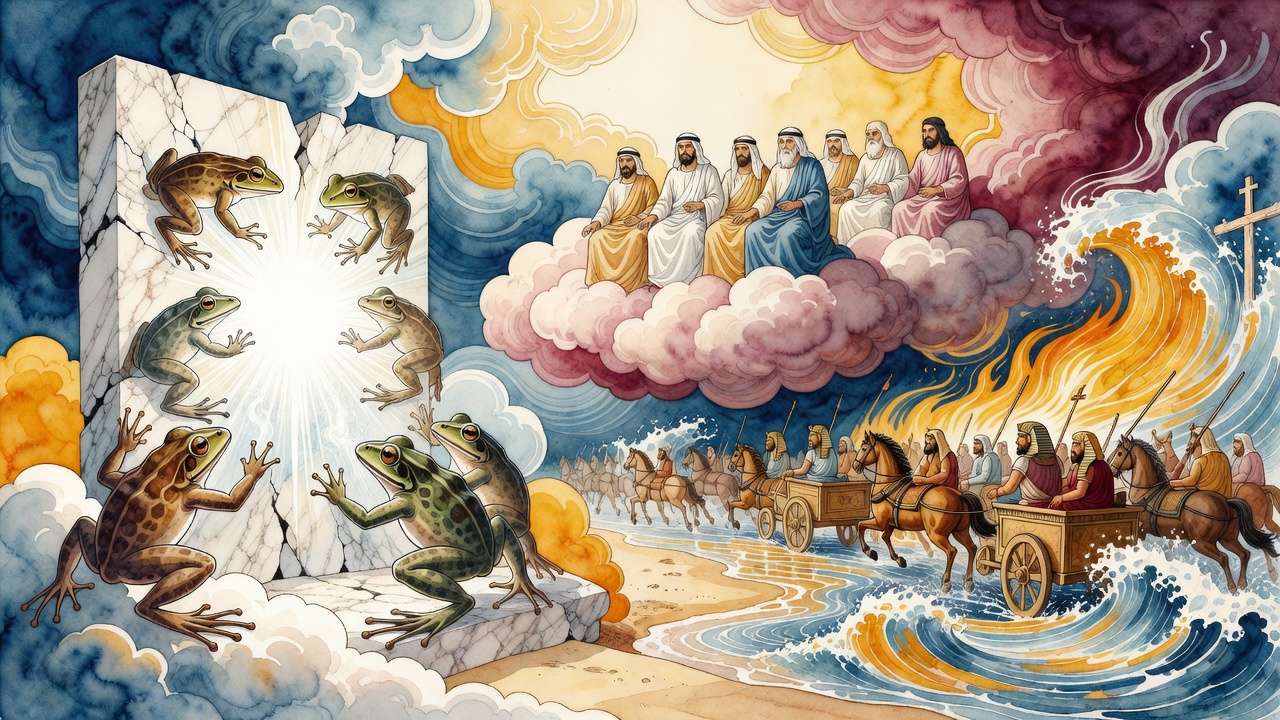
When Israel was trapped between those chariots and the sea, panic split them into four camps the way a dry stick splits under a heel. One group wanted to drown themselves rather than be captured, a clean death preferred to Egyptian revenge. One wanted to surrender and march back to Egypt with hands raised and pride buried. One wanted to draw swords and fight, even if the math of iron was against them. One wanted to shout and rattle the Egyptians with noise, as if volume could be a weapon.
Moses had an answer for each, drawn from a single stretch of verse that refused to become four different books. To those who would drown: stand firm and watch the Lord save you. To those who would retreat: you will never see these Egyptians again. To those who would fight: the Lord will fight for you. To those who would shout: you shall be silent. Four panics, one mouth, one command that sorted them without mocking the fear that produced them.
Silence That Turns into Song
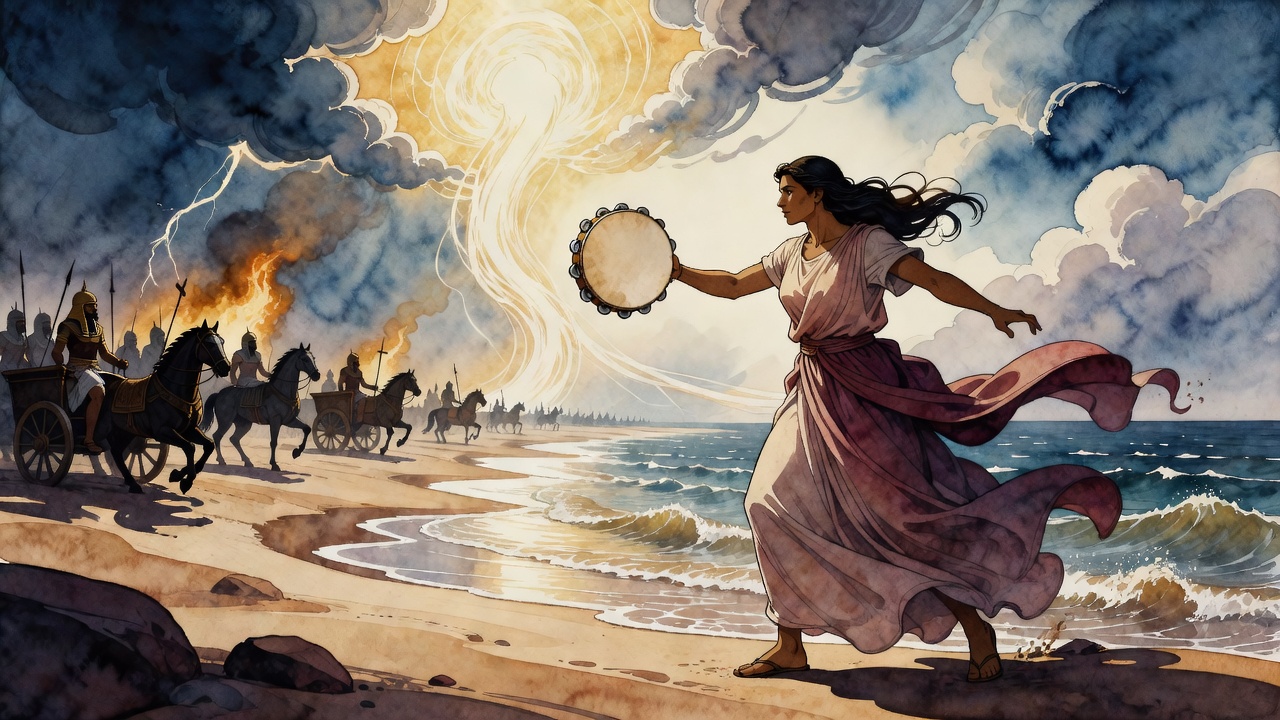
"The Lord will fight for you" was not a one-night slogan painted on water. The sages hear it as a standing pledge for every generation that finds itself between army and impossible edge. Rabbi Meir presses the command to be silent until it yields praise. If God works wonders while His people only stand quiet and afraid, what happens when they answer with song? In that hour the people opened their mouths: "I will sing to the Lord, for He has triumphed gloriously" (Exodus 15:1). Silence was not the end of the story. It was the breath before music.
Pharaoh's hands on his own harness and Israel's four-way quarrel on the shore are the same night's two sides. One man cannot wait to kill. One people cannot agree how to die. Between them the sea still holds its shape, and the horses that survived hail now gallop toward a water that will not care who feared God last season. The king who stooped to leather will learn that water does not honor zeal. The people who argued four ways will learn that one promise can hold a nation longer than four plans can.
Officers who tightened their own straps that morning told themselves they were matching their king's zeal. They were matching his doom. A ruler who cannot wait for servants has already left the ordinary protections of rank. The midrash sets Abraham's pre-dawn saddle beside Pharaoh's so that later generations can smell the difference: obedience that risks a son against hatred that risks a nation. Leather is neutral. Intent is not.
At the water the four factions discovered that panic is a poor strategist. Drowning, surrender, battle, and noise each felt like clarity from the inside. Moses' four answers did not insult the fear; they refused to let fear write policy. When silence finally cracked into song, the people learned that the Lord who fights also waits for mouths to open in praise. The horses from hail-spared barns never reached a victory speech. The king who harnessed himself never got to enjoy the plunder he had promised.
← All myths