The Jewels on the Shore and the Woe Egypt Cried
The tide laid pearls and stones on the sand every morning, and Israel would not leave. Moses had to pull them off the shore by the wrists.
Table of Contents
The sea would not keep Pharaoh's jewelry.
 Click for full size
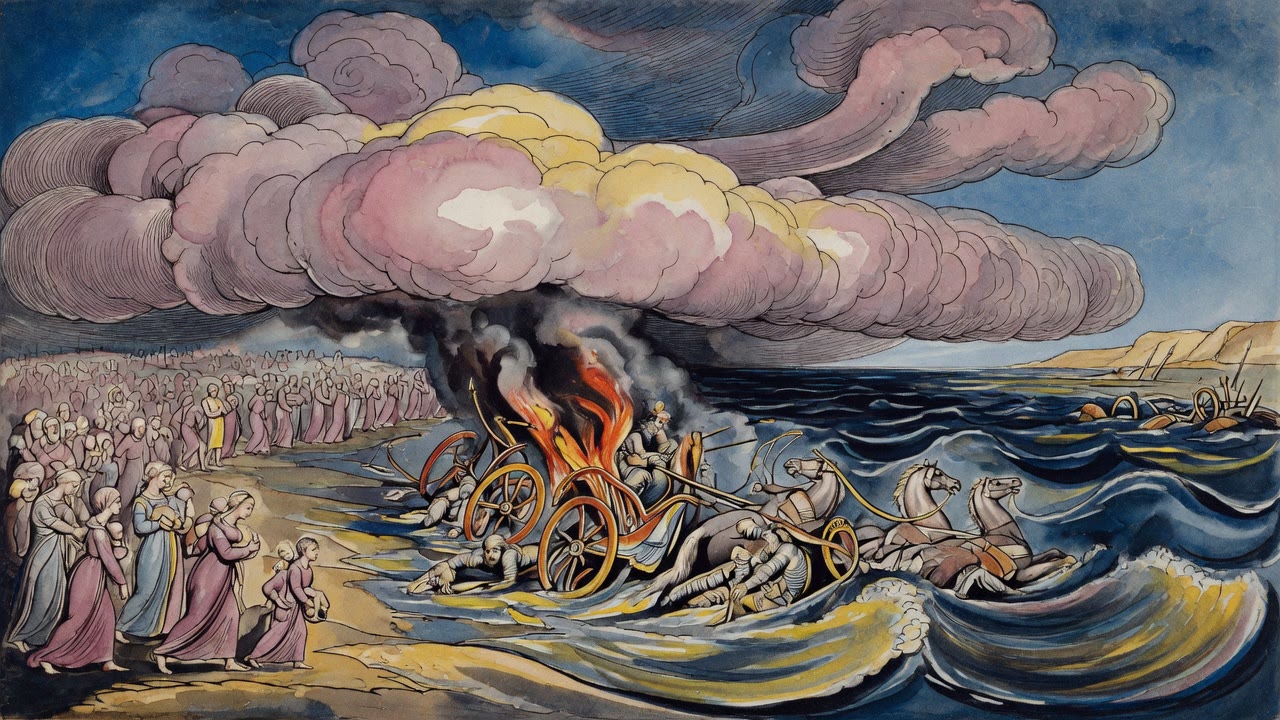
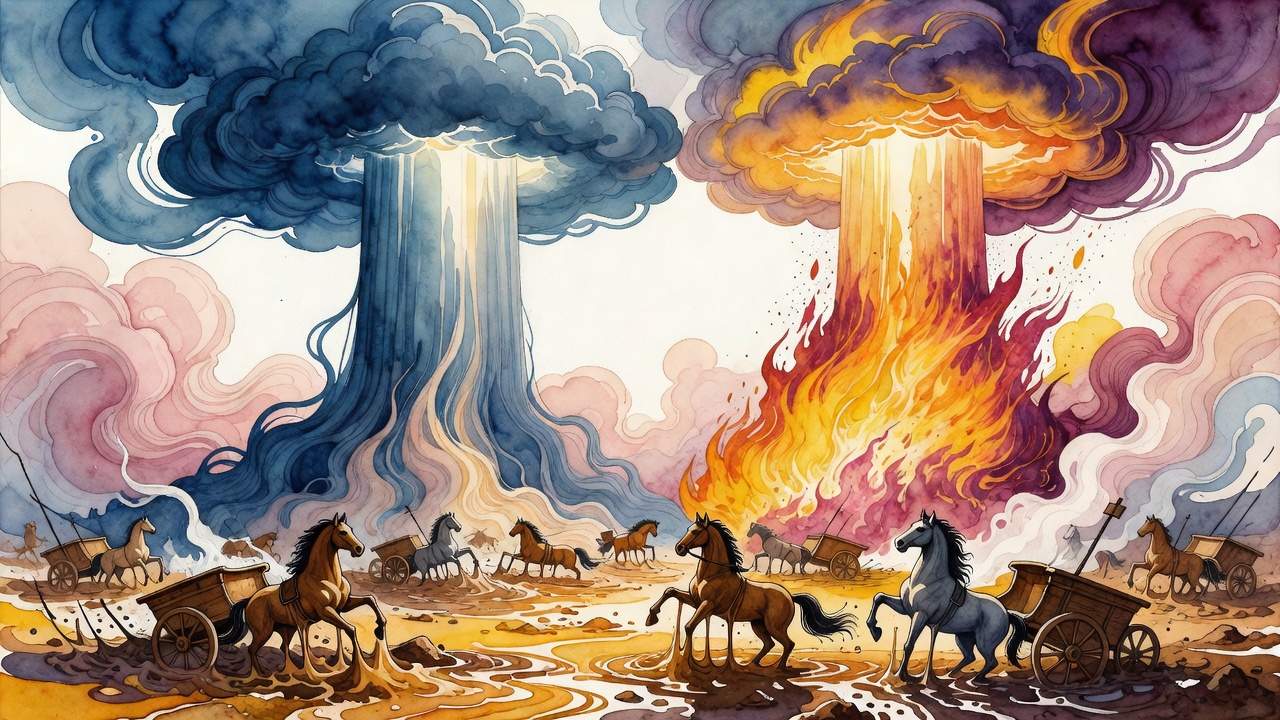
He had ridden out to recapture Israel as if the chase were a parade. Six hundred chosen chariots. Horses dressed in precious stones and pearls, the treasury strapped to their tack, because a king who pursues runaway slaves does not look like a man who might lose. Then the water came down on him. Horse, rider, gem, and king went under together.
The sea kept none of it.
He Dressed the Horses for a Parade
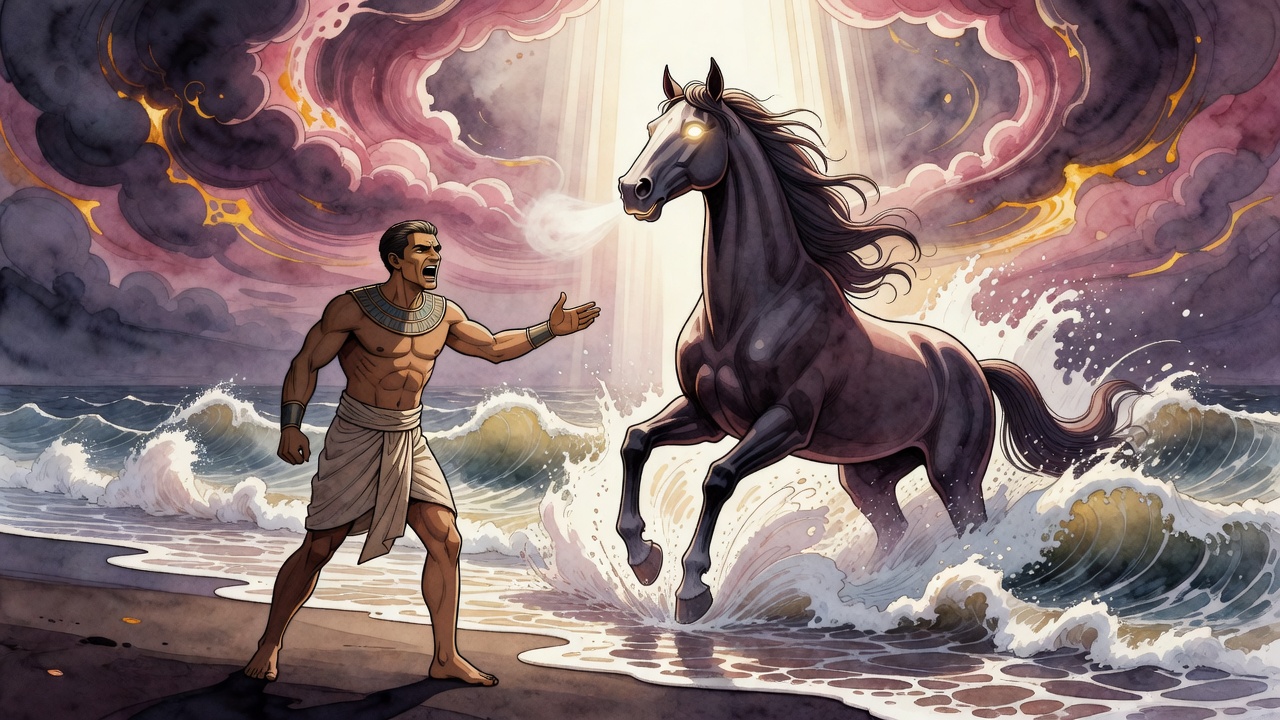
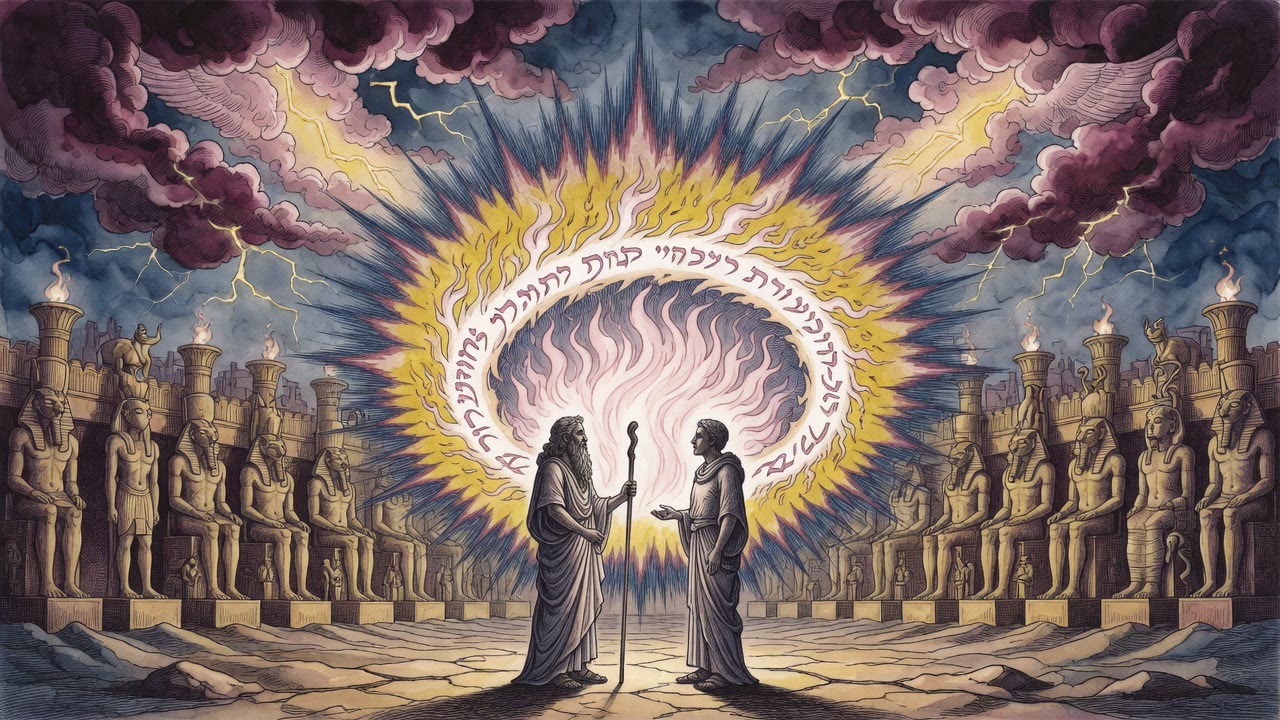
Before the water closed, Pharaoh had already seen what he had let go. In Egypt the people had looked like timber. Mortar on their arms. Brick dust in their hair. Raw beams sold cheap. At the sea they stood under banners, tribe by tribe, a nation carved out of the wood he had undervalued. He beat his breast there on the sand and cried the sound buried in the first word of the leaving: woe.
Then he drove the jeweled horses in anyway. Pride does not turn around because it has already named its own mistake.
The water took the horses. It took the stones sewn to their harness. It took the king who had dressed a war as a triumph.
The Sea Paid Them Every Morning
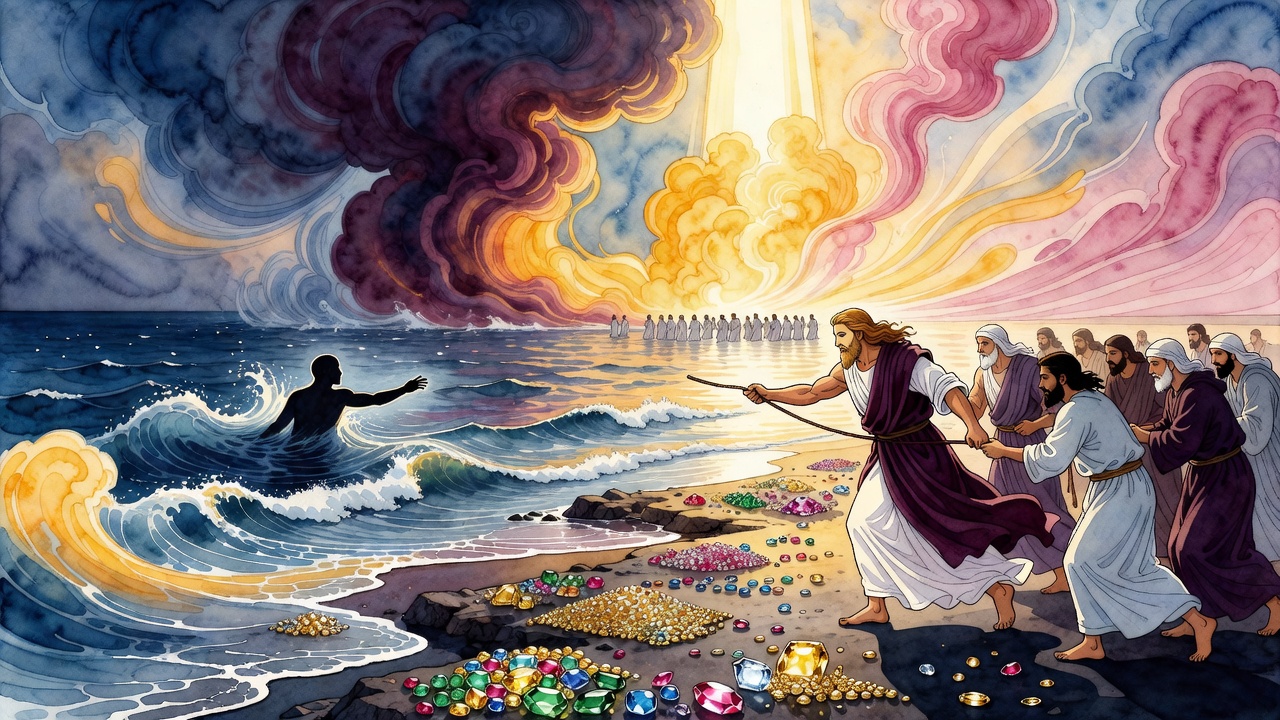
Day after day the tide cast those jewels back onto the Israelite shore. Stones still cold from the deep. Pearls in the wet sand. Israel came down at first light and filled their hands, then their cloaks, then anything that would hold a stone.
Why walk into a wilderness when the water itself was running tribute up to their feet every sunrise? They had been slaves four hundred years. They had built cities for someone else. Now the sea was paying them, and they could not stop gathering.
A child found a pearl the size of a knuckle and would not put it down. A man filled a bag, hid it, came back for another. The camp did not pack. The shore was doing the work of a market.
Moses Pulled Them Off the Shore
Moses saw the danger that glittered. Not Egypt behind them. The riches in front of them, holding their feet to a beach that had nothing left for them except more of what they already held.
He walked into the gathering and asked a plain question. "What do you imagine, that every day the sea will raise up precious stones and pearls for you?"
They did not answer. A woman kept scraping sand. A boy ran past him with both fists closed.
So Moses pulled them. He took wrists. He took elbows. He made the camp break against its will, because God had not brought them out of Egypt to live on a beach collecting a drowned king's tack. The desert was the point. They could not become a people while they were still in sight of the water that had drowned their masters.
"Move," he said. "The gems will not follow you. What follows you is the God who parted the water, and He is going somewhere."
Egypt Cried the Word Israel Had Cried
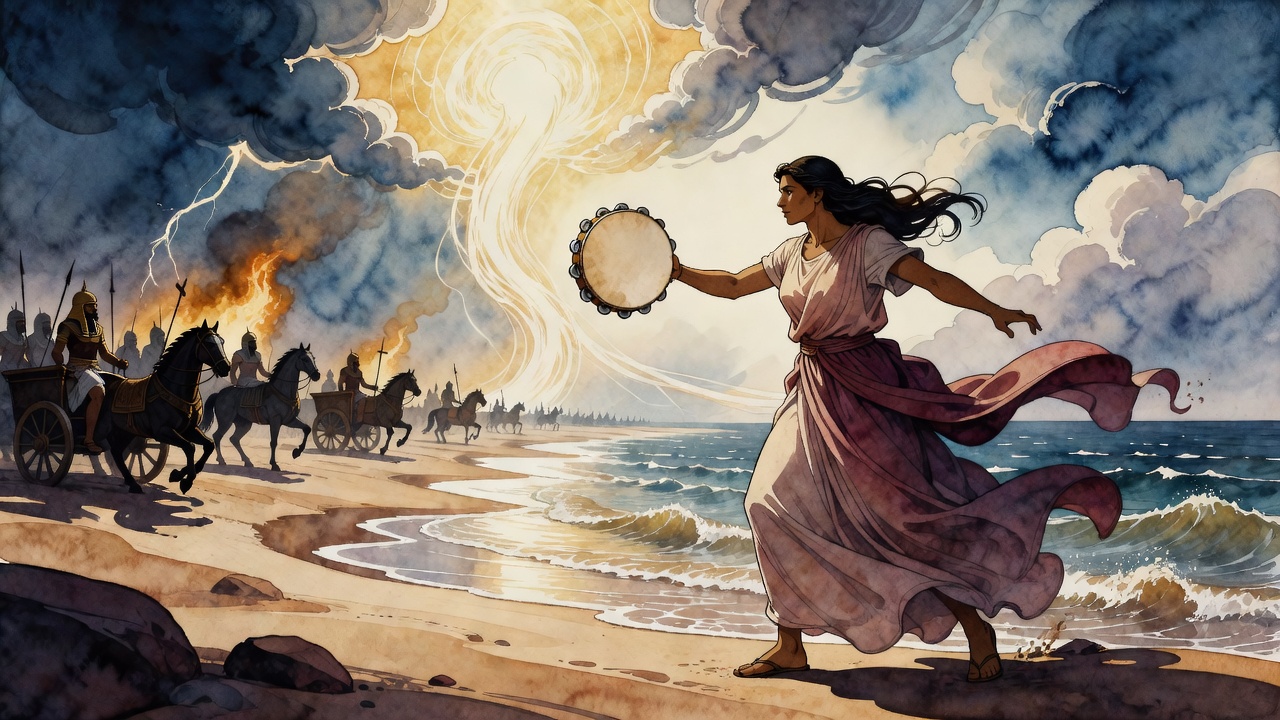
While Israel walked, Egypt did its own counting.
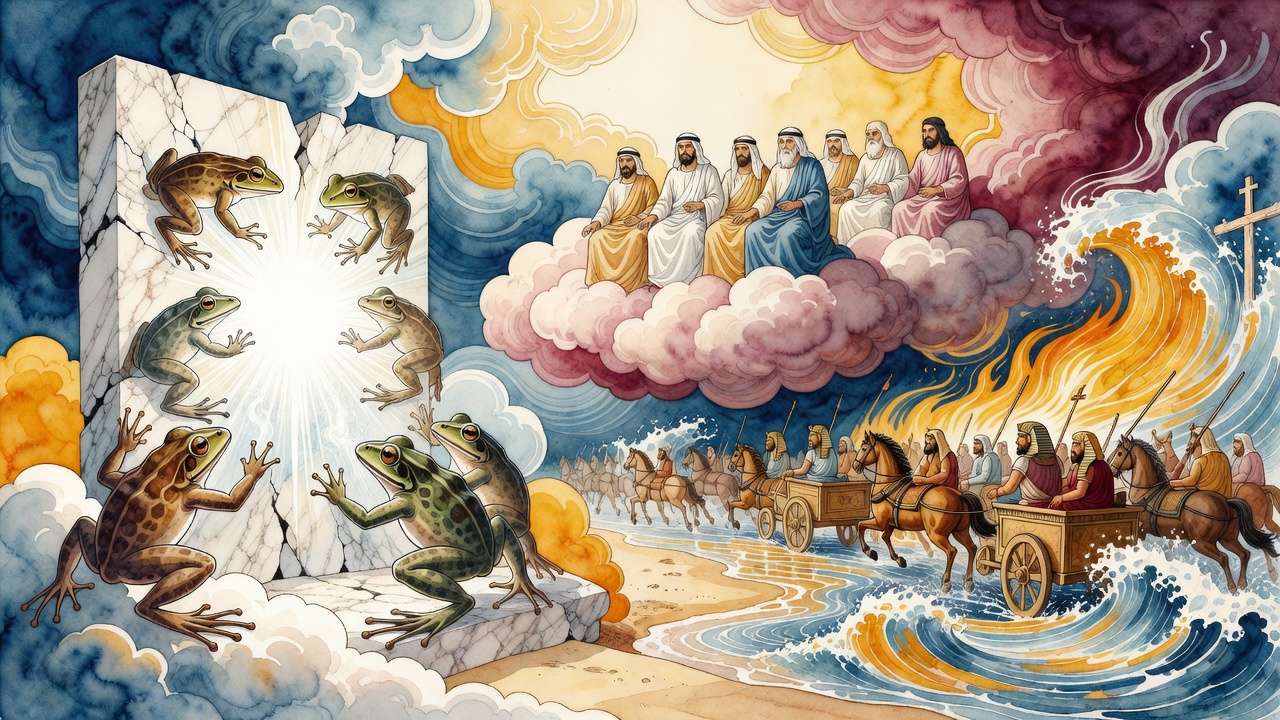
Each time a plague had crashed down, blood, frogs, hail, darkness, the Egyptians had not run to their own gods. They had run to Moses. He prayed. The blow lifted. They never thanked him. They only used him, the way a town uses a physician it does not love. The morning Israel marched out, the physician was gone for good. Houses that had sent for him in the night now stood with their doors open and no one to call. They cried woe, the same word Israel had cried for four hundred years.
Pharaoh had cried it too, earlier, when he first agreed to let them go. Not from mercy. From the ledgers. Israel had cut the stones and set the mortar and laid the brick. When they walked out they took four hundred years of labor with them. The king who had tried to grind them to nothing was left with the buildings and no one who knew how to keep them standing.
Woe from the palace. Woe from the streets. The word followed Israel the way the cloud did, only it came from behind.
The Gems Kept Coming to an Empty Beach
Moses got them off the sand. The sea did not notice. It kept doing the only thing the water knew how to do, which was give back what it had taken.
Jewels washed up on an empty beach. They caught the morning, then the tide took them again, then they came back. No one stooped for them. The bags were on the people's shoulders now, and the shoulders were pointed at the wilderness.
A last pearl rolled in the foam and nobody's hand closed on it. The camp was already a line on the inland track. The sea went on paying a debt that had already been collected.
← All myths