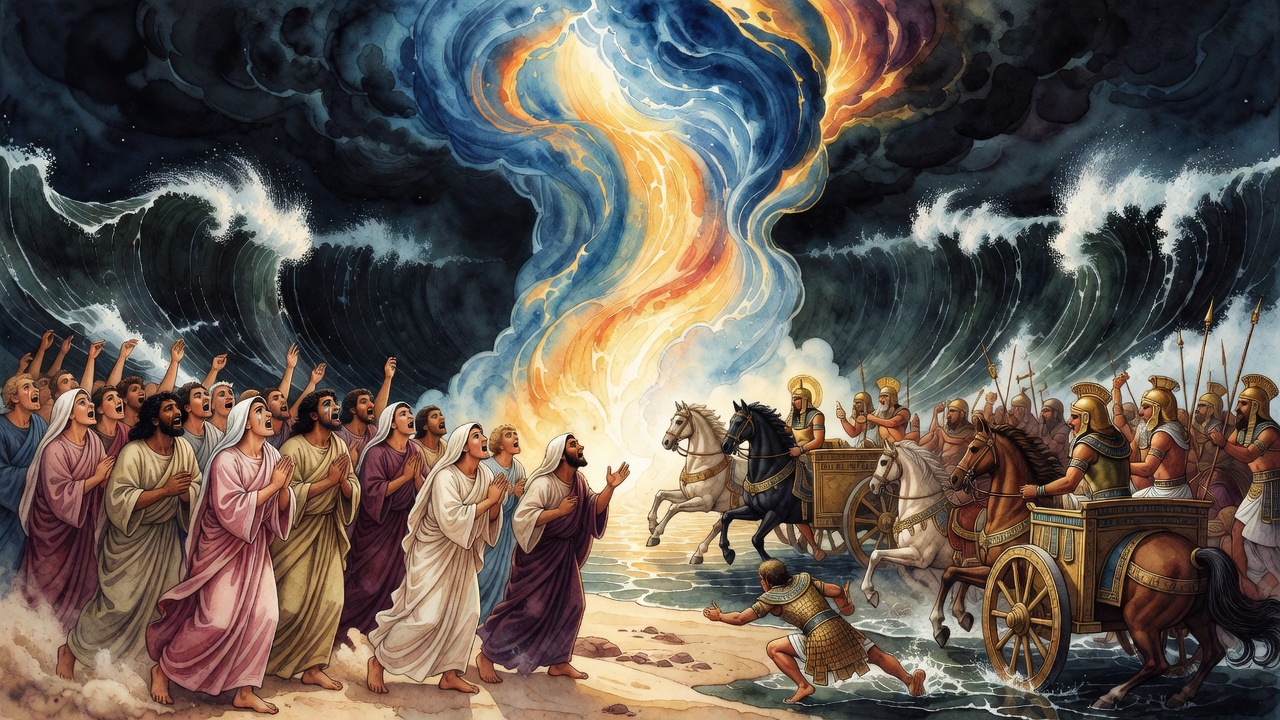
Parshat Beshalach5 min read

The Best Egyptians Drove Chariots into the Deep

Cattle had died, yet six hundred chariots rolled. The beasts belonged to Egyptians who feared God, and their fear became Israel's stumbling block at the sea.

Curated by Arthur · Told by Maggid ·
Table of Contents
  1. Six Hundred Chariots With Nowhere to Graze
  2. Honor Built on a Drowning Army
  3. Horse and Rider Cast as One
  4. Deeps From Above and Stones From the Birthstool

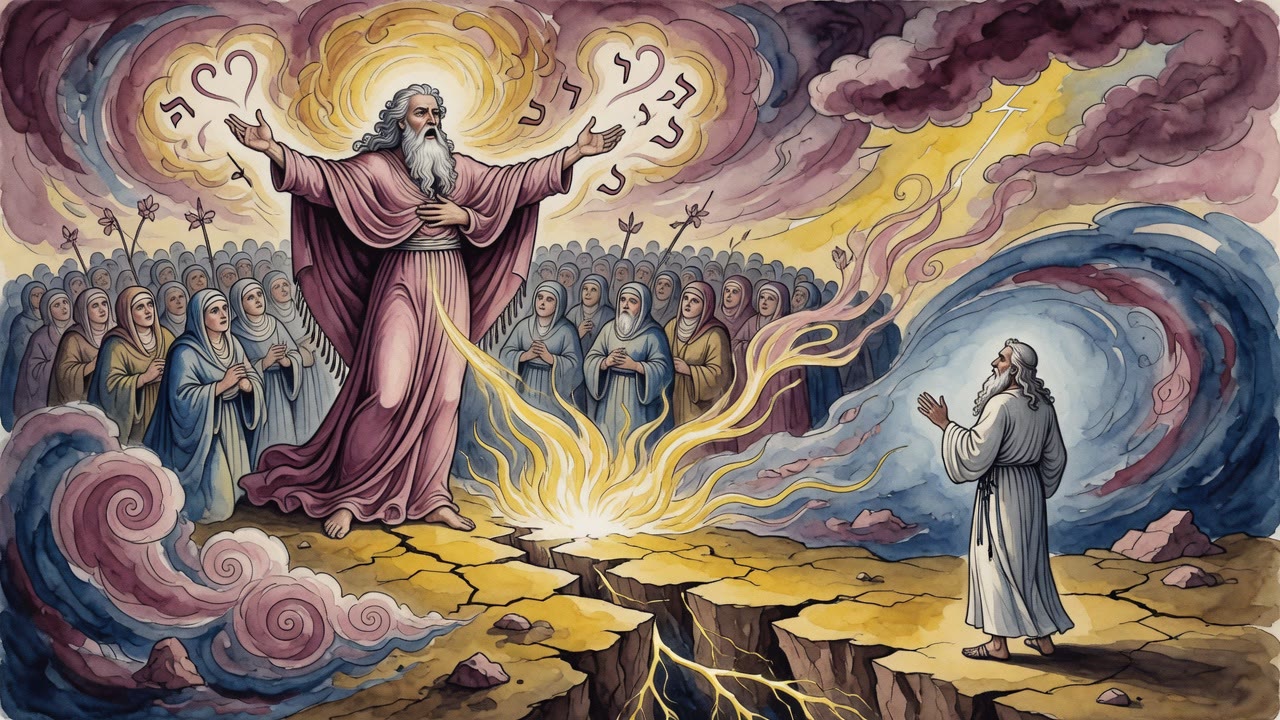
Pharaoh's heart sat on a hinge. Pursue or stay. Heaven pressed the hinge shut toward chase. "I will harden Pharaoh's heart" (Exodus 14:4) was not a whisper to comfort Israel. It was a sentence that finished a man who had already begun his own crime.
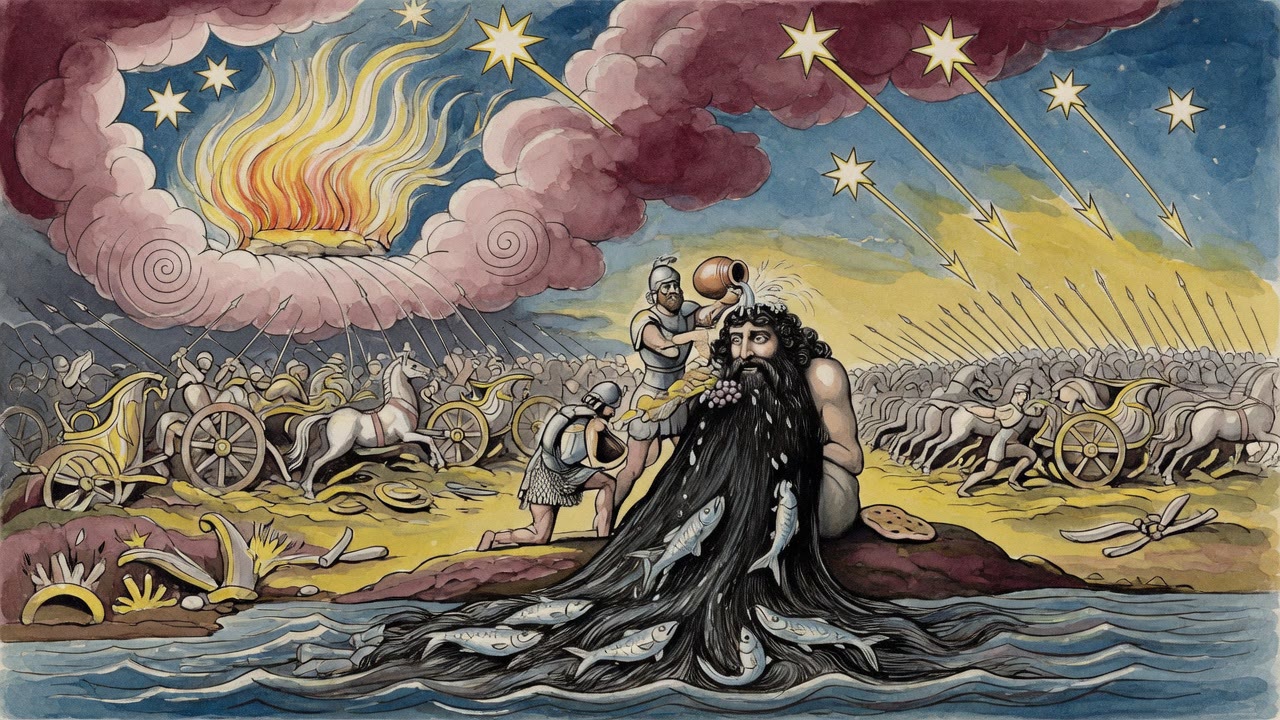
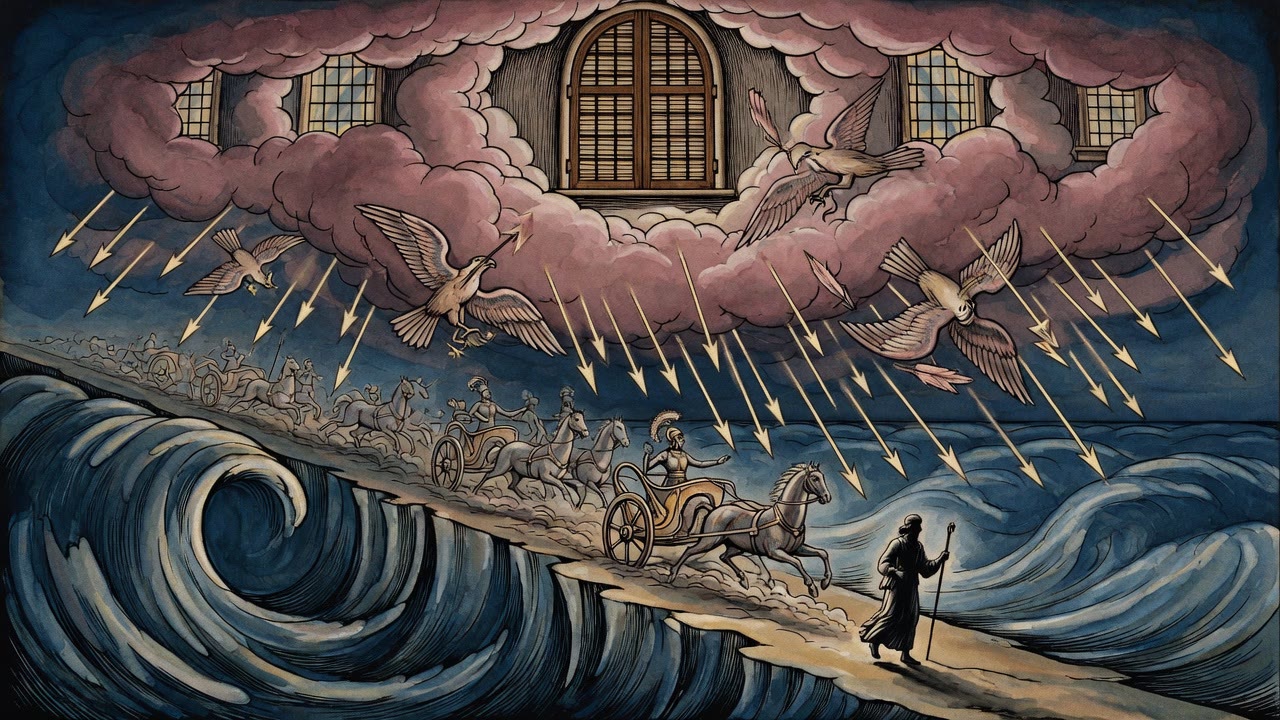
The Best Egyptians Drove Chariots into the Deep Click for full size

He had been first to command the drowning of sons (Exodus 1:22). He had been first to drive the taskmasters (Exodus 5:6). The midrash keeps a cruel ledger. The part that sins first is punished first. Man before beast in the flood. Least before greatest at Sodom's door. Firstborn man before firstborn beast in Egypt. Pharaoh's name stood first in the list of hosts because his hand had stood first in the blood.

Six Hundred Chariots With Nowhere to Graze

"He took six hundred chosen chariots" (Exodus 14:7). Whose animals pulled them? Egypt's cattle had died (Exodus 9:6). Pharaoh's own stock had sat under the hand of the Lord (Exodus 9:3). Israel's hoof had left with Israel (Exodus 10:26). The midrash finds the only herd left standing. The beasts belonged to the slaves of Pharaoh who feared the word of the Lord and had sheltered their cattle during the plague.

Fear of God had saved their livestock. That same fear now saddled the livestock for war against the redeemed. "The best among the Egyptians, kill; the best among serpents, crush its brain." The proverb is hard because the scene is hard. Partial piety that feeds a final chase is still a stumbling block. Goodness that keeps horses for Pharaoh is not goodness when the sea opens.

When Pharaoh drew nigh (Exodus 14:10), he drew nigh to retribution and, without meaning to, drew Israel nigh to repentance. Geography became theology. The camp at Pi-Hahiroth and Baal-Zephon looked to him like agreement from an idol. He burned incense and poured libations, sure the water-god wanted Hebrew bodies. He was wrong about the water's owner.

Honor Built on a Drowning Army

"I will get Me honor upon Pharaoh and upon all his hosts" (Exodus 14:4). Whenever heaven exacts retribution from the nations, the midrash says, the Name is magnified among peoples who never heard it. Escapees will declare glory in far islands (Isaiah 66:19). Chains will walk toward Zion and confess that God is in thee (Isaiah 45:14). Pestilence and hail and fire will teach Gog what Egypt learned in salt water (Ezekiel 38:22-23).

The sea was not only an escape hatch. It was a courtroom with waves for walls. Honor here means public clarity. A hidden God becomes known when a proud host vanishes under a surface that had stood like walls for slaves and like graves for riders.

Israel watched the hinge of a heart become the hinge of history. The same king who would not let them go now could not stop going after them. Hardness became locomotion.

Horse and Rider Cast as One

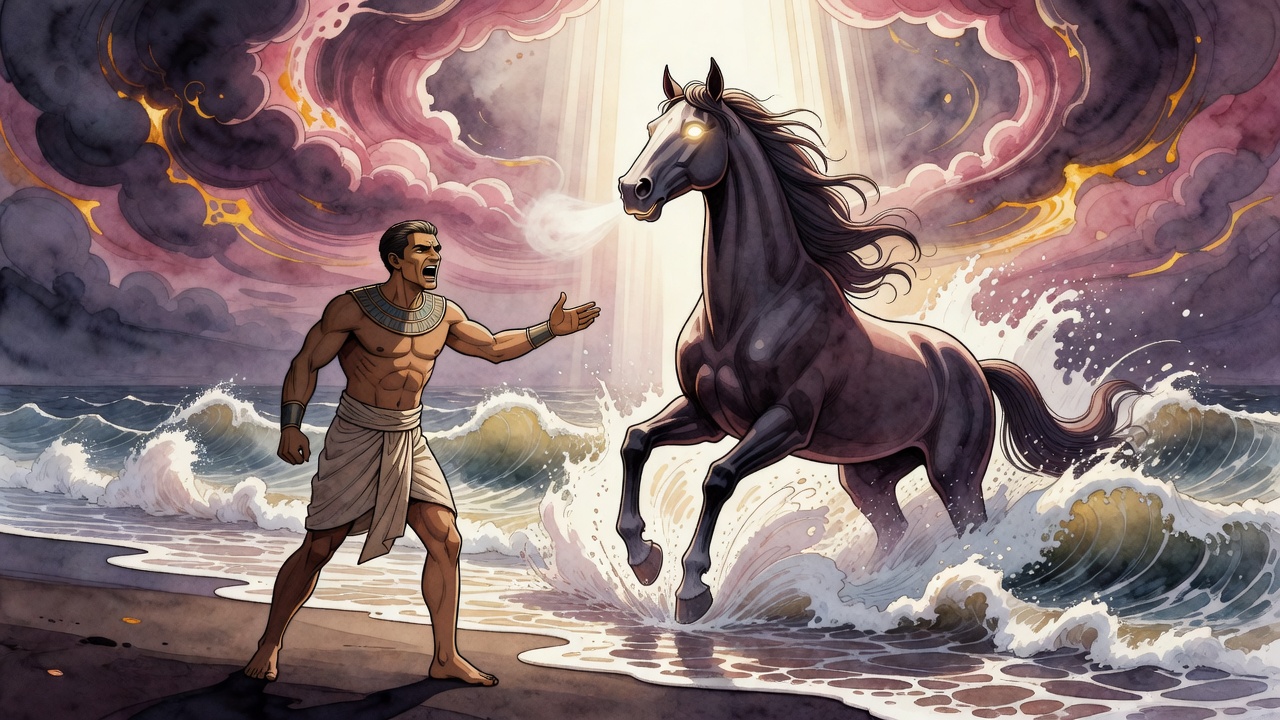
"The horse and his rider hath He thrown into the sea" (Exodus 15:1). Was there only one horse? Of course not. Six hundred chariots. Hosts. Still heaven counts them as one horse and one chariot when Israel does the will of the Omnipotent. Nations shrink to a single bridle in that math.

Horse and rider were joined and cast without separating. Thrown (ramah) and cast (yarah) describe lift and plunge, depth without divorce. Another reading sees the guardian angel of Egypt falling first. Retribution on a people, the midrash teaches, waits until their heavenly patron has been judged. The deep swallowed more than flesh. It swallowed a name that had claimed the Nile.

Pharaoh's best horses and Pharaoh's worst pride entered the same trench. The song on the far shore did not need a census. One phrase held the whole army.

Deeps From Above and Stones From the Birthstool

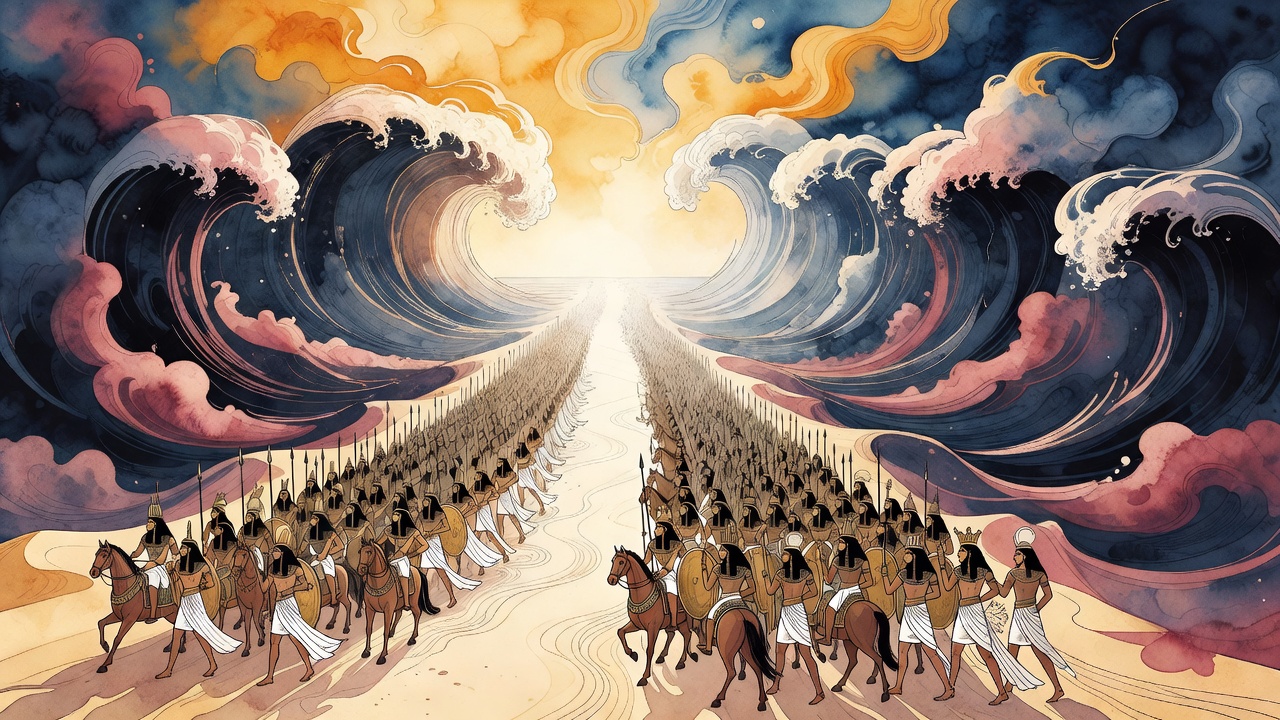
The floor where Israel walked was flat and firm. How then do the deeps cover them (Exodus 15:5)? Upper water and lower water rose together. Egyptians drowned in a press from every direction. The path that had been road became jaw.

They went down like a stone (Exodus 15:5). The midwives had been told to look upon the birth stones (avnayim) and kill the boys (Exodus 1:16). Measure answered measure. Water hardened like stone against the men who weaponized the stones of birth. The midrash divides the dead into three. The most wicked scattered like straw. The middle tossed like stones. The wiser sank like lead, swift and without long torment. One sea. Three sentences.

The best Egyptians who had feared God enough to save cattle, and the worst Egyptians who had never feared God at all, shared the closing of the walls. Fear that stops at livestock is not enough when the deeps begin to stand.

The chase was not only Pharaoh's mood. It was the last chapter of a first crime. Sons in the river had begun the story. Fathers in chariots would end it under a roof of water. Between those two waters stood a people learning to walk a road that had never been dry.

When the walls of water stood, Egypt saw too late that Baal-Zephon had signed no treaty. The idol that seemed to smile at massacre was only stone beside a decision older than Egypt's first brick. The best horses, the best fear, the best partial piety entered the trench together. Song rose on the far bank because something unsingable had closed behind them.


← All myths
From the tradition

Sources

5 sources

The texts behind this telling. Some cards carry a translation of the source; others are our own retelling of it, and each card says which. Every card links out to the original.

Midrash Tanchuma, Beshalach 6Midrash Tanchuma

Retold in our words. Read the original at the link below.Townsend 1989 translation of Midrash Tanhuma, S. Buber Recension · CC-BY

And I will harden Pharaoh’s heart (Exod. 14:4). This was said because his heart was undecided whether to pursue them or not. And I will get Me honor upon Pharaoh and upon all his hosts (Exod. 14:4). Upon Pharaoh is mentioned first because he was the first to sin, as it is said: And Pharaoh commanded all his people, saying (ibid. 1:22). Similarly, And the same day Pharaoh commanded the taskmasters (ibid. 5:6). Hence he was the first to be punished. Therefore, Surely now I have put forth My hand and smitten thee (ibid. 9:15) is followed by And thy people with pestilence.

Similarly, in the verse And he blotted out every living substance which was upon the face of the ground, both man and cattle (Gen. 7:3). He mentioned man first, because man was the first to sin, and after that he refers to beasts and creeping things. Likewise, since Scripture states: And they smote the men that were at the door with blindness, both small and great (ibid. 19:11), they smote the least important ones first and then the greater ones. Likewise, in accordance with the verse I will smite all the firstborn in the land of Egypt, both man and beast, man was punished first and then the beast. Another illustration is in the verse Thou shalt surely smite the inhabitants of that city with the edge of the sword (Deut. 13:16). He smote the inhabitants of the city with the sword, and then he slew the cattle. Similarly, And her belly shall swell (Num. 5:27) is followed by And her thighs shall fall away. That is, the part of the body that sinned first was punished first. Is it not logical to conclude that if retribution is exacted first from the one who commits an evil deed first, then the reward for good deeds, whose reward is far greater, is dispensed according to the same rule.

Full source
Midrash Tanchuma, Beshalach 7Midrash Tanchuma

Retold in our words. Read the original at the link below.Townsend 1989 translation of Midrash Tanhuma, S. Buber Recension · CC-BY

And I will get me honor upon Pharaoh (Exod. 14:4). This verse tells us that whenever the Holy One, blessed be He, exacts retribution from the nations, His name is exalted in the world, as it is said: And I will work a sign among them, and I will send such as escape of them unto the nations, to Tarshish, Pul and Lud, that draw the bow, to Tubal and Javan, to the isles afar off, that have not heard My fame, neither have seen My glory; and they shall declare My glory among the nations (Isa. 66:19). And it is written elsewhere: Thus said the Lord: The labor of Egypt, and the merchandise of Ethiopia, and of the Sabeans, men of stature, shall come over unto thee, and they shall be thine; they shall go after thee, in chains they shall come over; and they shall fall down unto thee, they shall make supplication unto thee; surely God is in thee, and there is none else (ibid. 45:14), and that is followed by: And verily, Thou art a God that hidest Thyself, O God of Israel, the Savior (ibid. v. 15). It says also: And will plead against him with pestilence and with blood; and I will cause to rain upon him, and upon his bands, and upon the many peoples that are with him, an overflowing shower, and great hailstones, fire, and brimstone (Ezek. 38:22). And following that is written: Thus will I magnify Myself and sanctify Myself, and I will make Myself known in the eyes of many nations; and they shall know that I am the Lord (ibid. v. 23). It says: In Salem also is set His Tabernacle; and His dwelling place in Zion. There He broke the fiery shafts of the bow; the shield and the sword, and the battle. Selah (Ps. 76:3–4). And there too it is written: In Judah is God known, His name is great in Israel (ibid. v. 2).

Full source
Midrash Tanchuma, Beshalach 8Midrash Tanchuma

Retold in our words. Read the original at the link below.Townsend 1989 translation of Midrash Tanhuma, S. Buber Recension · CC-BY

And he took six hundred chosen chariots (Exod. 14:7). Whose beasts drew the chariots? If you should say they belonged to the Egyptians, has it not already been said: And all the cattle of Egypt died (Exod. 9:6)? If you should contend that they belonged to Pharaoh, has it not already been stated: Behold, the hand of the Lord is upon thy cattle (ibid. 9:3)? If you should assert that they belonged to Israel, has it not already been written: Our cattle also shall go with us, there shall not a hoof be left behind (ibid. 10:26)? To whom, then, did they belong? They belonged to the slaves of Pharaoh who feared the word of the Lord. Hence we learn that even those who feared the word of the Lord were a stumbling block to Israel. Because of this verse, they say: “The best among the Egyptians, kill; the best among serpents, crush its brain.”

When Pharaoh drew nigh (ibid. 14:10); that is, when he drew nigh to the retribution that was to befall him and (when) he drew Israel nigh to repentance.

When they saw that Israel had turned back and had encamped near Baal-Saphon and Pi-Hahiroth, Pharaoh declared: “Baal-Saphon concurs in my decision to destroy them in the water.” Thereupon he began to offer sacrifices, to burn incense, and to pour libations before the idols. Hence it is said: When Pharaoh drew nigh.

Full source
Midrash Tanchuma, Beshalach 13Midrash Tanchuma

Retold in our words. Read the original at the link below.Townsend 1989 translation of Midrash Tanhuma, S. Buber Recension · CC-BY

The horse and his rider (Exod. 15:1). Was there only one horse? (Of course not!) All the horses were considered by Him as one, as in the verse When thou goest forth to battle against thine enemy, and seest a horse and chariot (Deut. 20:1). All the horses were considered by Him as one in this instance as well. And his rider. Has it not already been stated that He took six hundred chariots (Exod. 14:7), and does not Scripture tell us Pharaoh’s chariots and his hosts (ibid. 15:4)? This indicates that when Israel performs the will of the Omnipotent One, all the nations are considered by Him as one horse and one chariot: The horse and his rider hath He thrown into the sea (ibid., v. 1). This verse informs us that the horse and the rider were joined together, and as Scripture tells us, they were cast (yarah) into the sea without separating. He hath thrown (ramah) into the sea and He Hath cast (yarah) into the sea imply that they were thrown into the depths of the sea. How can these two verses be reconciled? Thrown indicates that they were lifted up and then cast down. This indicates that they descended into the deep without separating.

Another explanation of Hath he thrown into the sea. That is, He saw the guardian angel of Egypt falling. You find that the Holy One, blessed be He, will exact retribution from nations in the future only after He has punished their guardian angels, as it is said: And it shall come to pass in that day, that the Lord will punish the host of the high heaven on high, and the kings of the earth upon the earth (Isa. 24:21). Similarly, How art thou fallen from heaven, O day star, son of the morning! is followed by How art thou cut down to the ground, that didst cast lots over the nations! (ibid. 14:12). And My sword hath drunk its fill in heaven is followed by Behold, it shall come down upon Edom (ibid. 34:3).

Another explanation. As the Egyptians dealt with the Israelites, so they were dealt with. They said: Every son that is born ye shall cast into the river (Exod. 1:22), hence, The deeps cover them (ibid. 15:6). They took six hundred chosen chariots (ibid. 14:7), and therefore, Pharaoh’s chariots … hath He thrown into the sea (ibid. 15:4). They made their lives bitter and with hard service, in mortar (ibid. 1:14), and therefore, Thou has trodden the sea with Thy horses, the foaming of mighty waters (Hab. 3:15).

Full source
Midrash Tanchuma, Beshalach 14Midrash Tanchuma

Retold in our words. Read the original at the link below.Townsend 1989 translation of Midrash Tanhuma, S. Buber Recension · CC-BY

The Song at the Sea declares "The deeps cover them" (Exodus 15:5), and the Tanchuma pauses on the word. Were there truly deeps at the place of the splitting? After all, the floor of the Red Sea where Israel crossed was made flat and firm for them to walk upon dry ground. The midrash answers that the verse teaches a hidden marvel: both the lower depth beneath and the upper level of the sea rose up together against the Egyptians, so that the waters closed in from every direction and inflicted upon them every manner of punishment.

The Song continues "they went down like a stone" (even), and here the rabbis hear a measure-for-measure judgment. The Egyptians had said over the Hebrew midwives, "when you look upon the birth stones (avnayim)" (Exodus 1:16), the command to watch the birthstool and kill the Hebrew boys. Because they decreed death by the stones of birth, God made the water turn hard as stones against them. A further reading divides the drowning Egyptians into three. God judged among them according to their wickedness: the most wicked were consumed and scattered like straw, the average among them were tossed and battered about like stones, and the comparatively wise sank straight down like lead, swiftly and without torment. So the single image of sinking "like a stone" opens into a court of divine justice held in the waters themselves, where each man received the death his deeds had earned.

Full source