Parshat Beshalach5 min read

The Earth Bargained Before It Swallowed Egypt

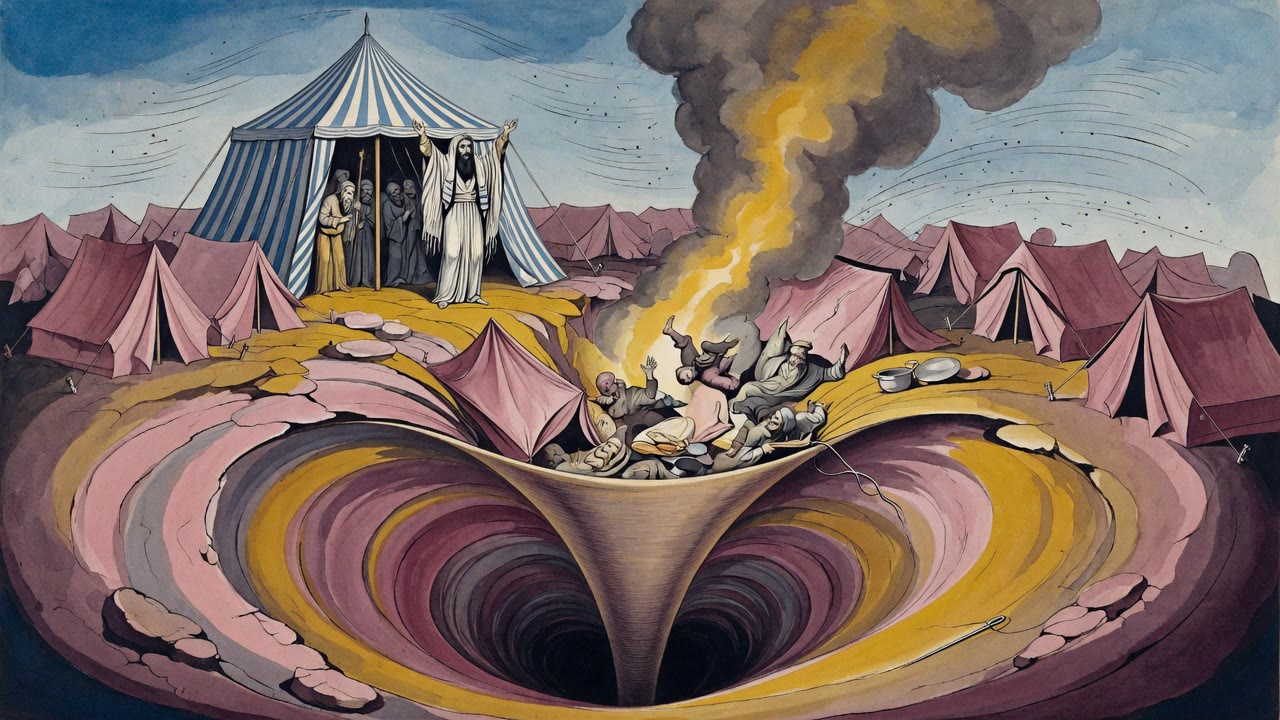
God told the ground to bury Egypt's drowned. The ground answered that the water had done the killing and could do the burying, and demanded an oath.

Curated by Arthur · Told by Maggid ·
Table of Contents
  1. The Ground Said No
  2. A River in the North, Promised in Advance
  3. The Oath by the Right Hand
  4. Nobody Had to Ask Which One Was God
  5. The Kishon Kept the Appointment
The Earth Bargained Before It Swallowed Egypt Click for full size

The Ground Said No

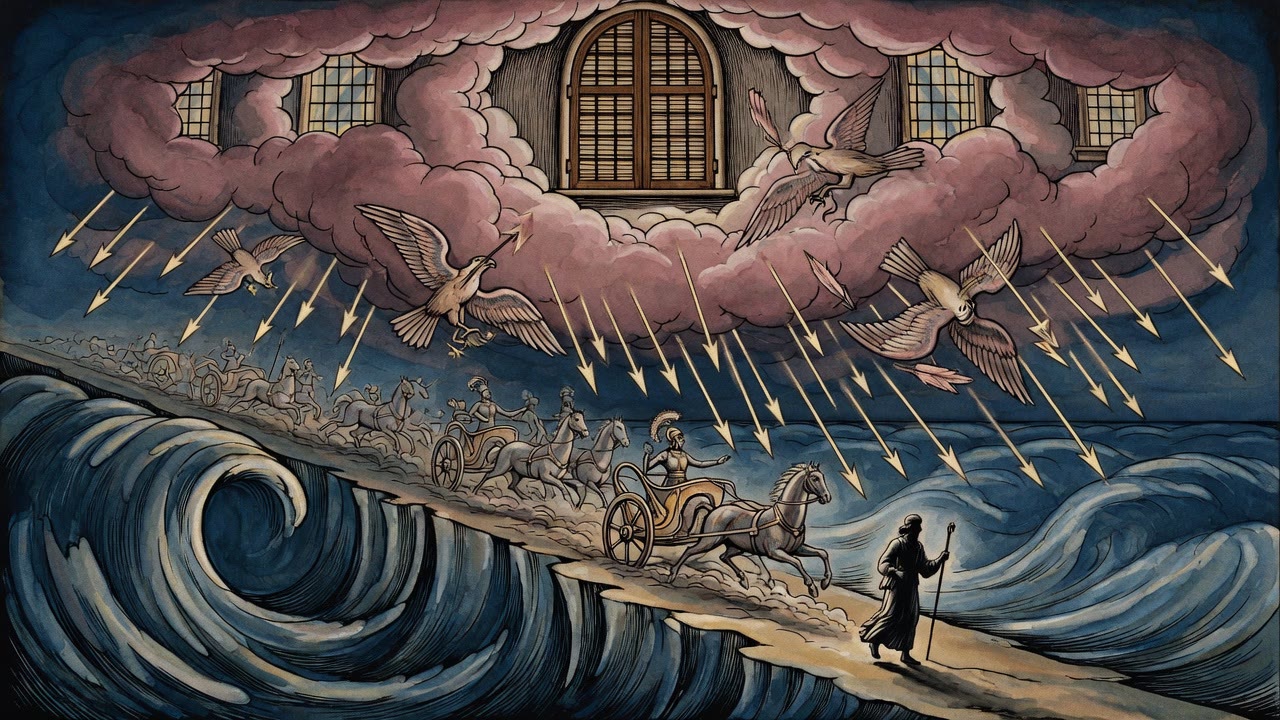
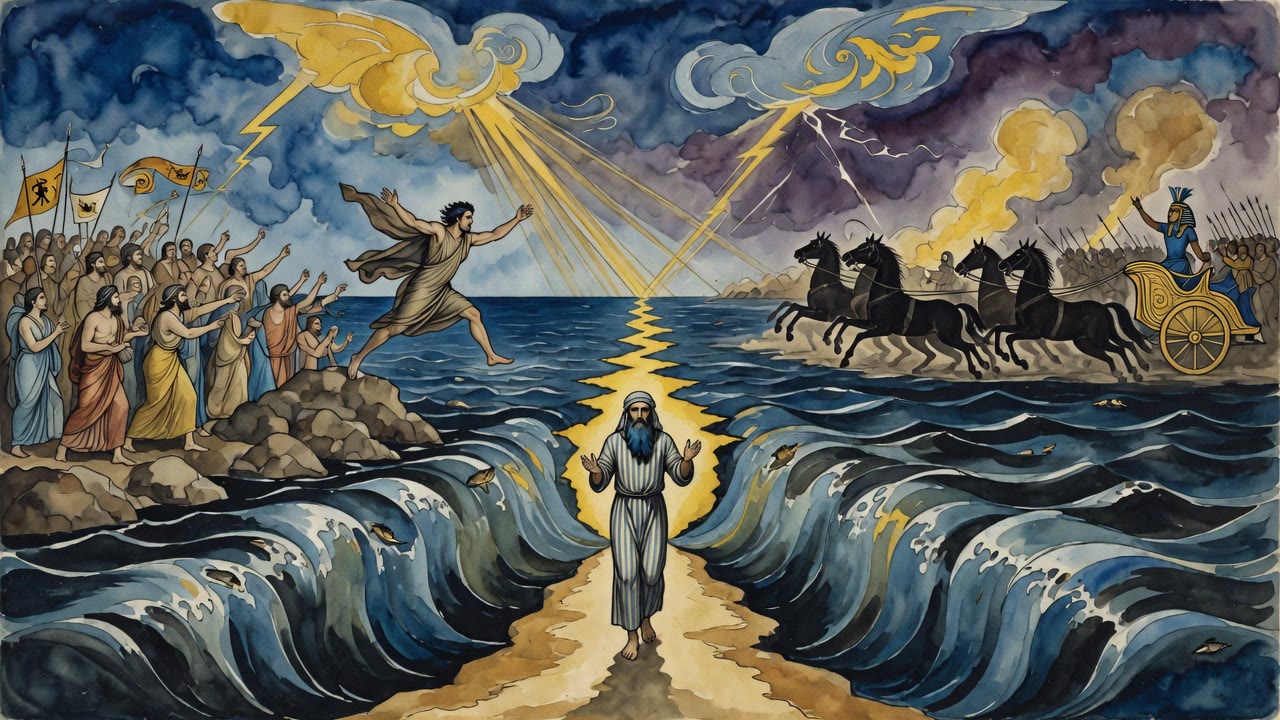
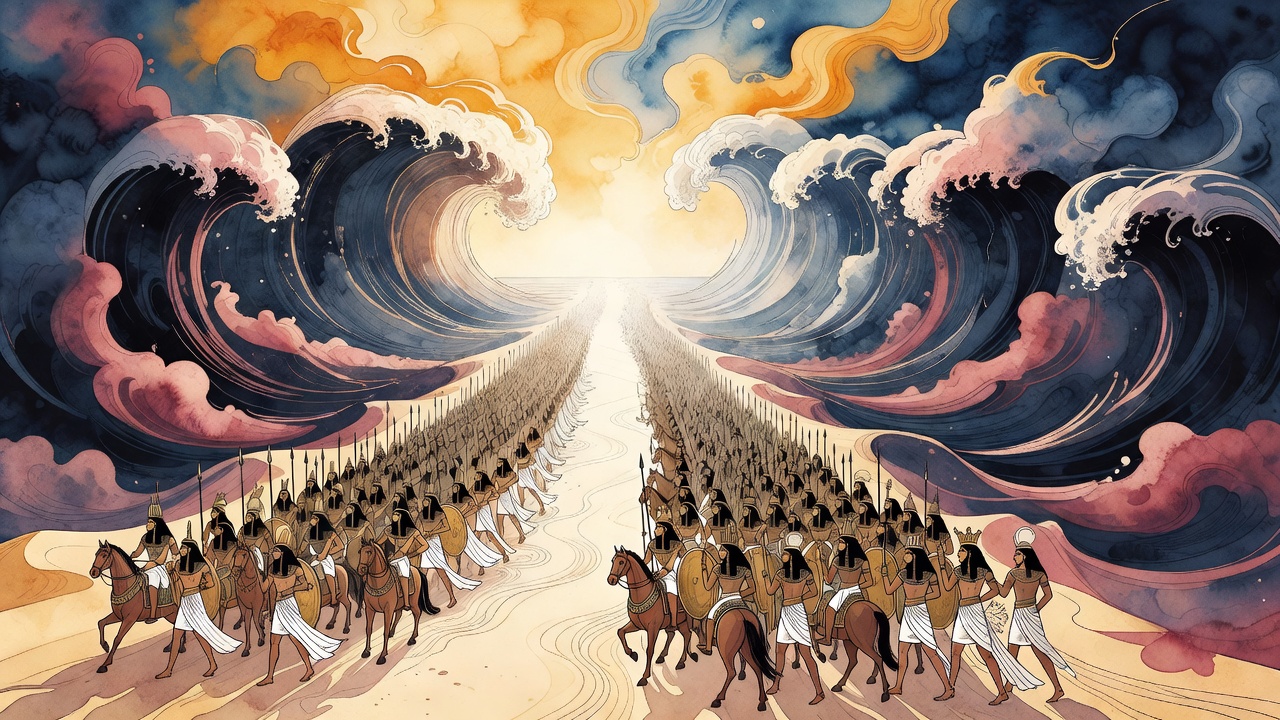
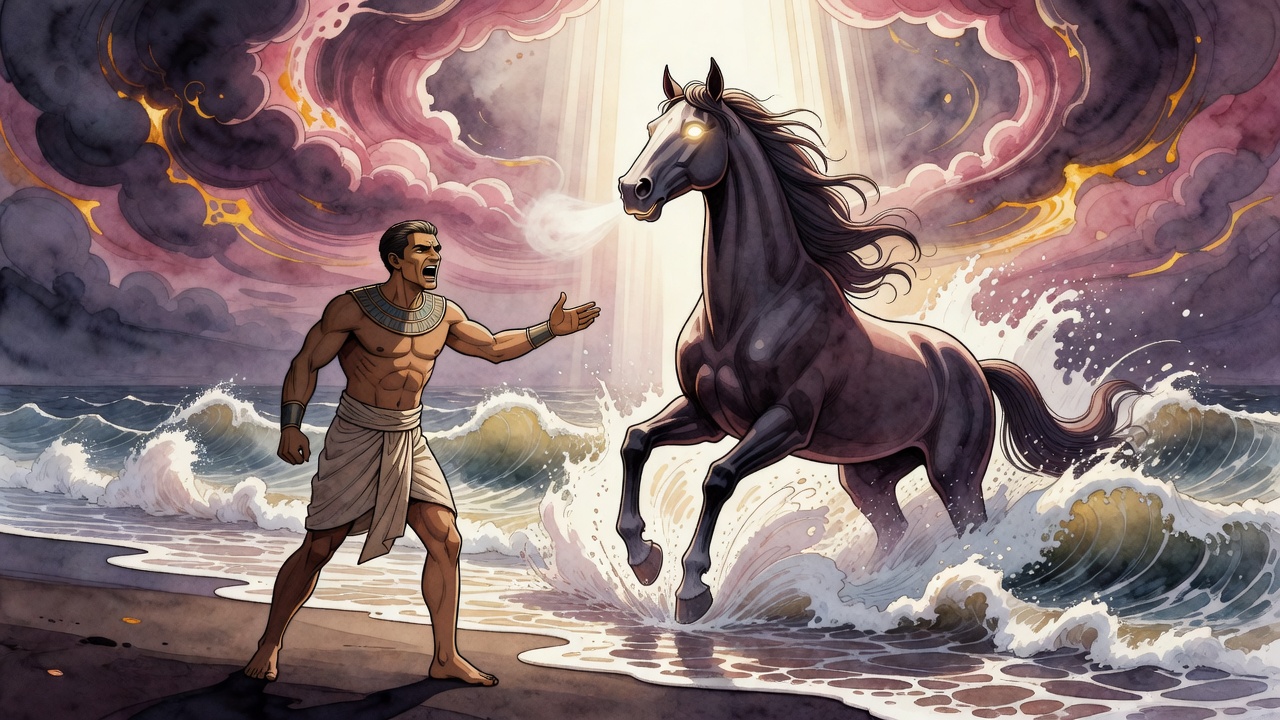
The walls had come down and the killing was already finished. Egypt's chariots lay broken along the shallows on the far side, horses tangled in their traces, officers face down in the wet sand, the whole army of a world power laid out in a line the length of a morning's walk.

Then God told the Earth to open and take them.

The Earth would not do it. "Master of all worlds," it said. "The waters killed them. Let the waters swallow them."

It was a jurisdictional argument and it was a good one. The sea had done the work and the sea should keep the evidence. Soil that had never touched an Egyptian was being asked to carry the whole host of them in its body forever, and it wanted to know why the stain came to it and not to the thing that made the stain.

A River in the North, Promised in Advance

God made a trade instead of an order.

Take them this once, He said. Another time there will be men who by every right should die in your hand, and I will throw those into the water instead. He named them out loud, centuries before either of them was born. Sisera and his whole army. Those I will cast into the sea.

The ledger would balance. What the ground took now, the water would take later, and the account would be settled in a valley in the north that did not exist yet.

The Oath by the Right Hand

The Earth still would not open.

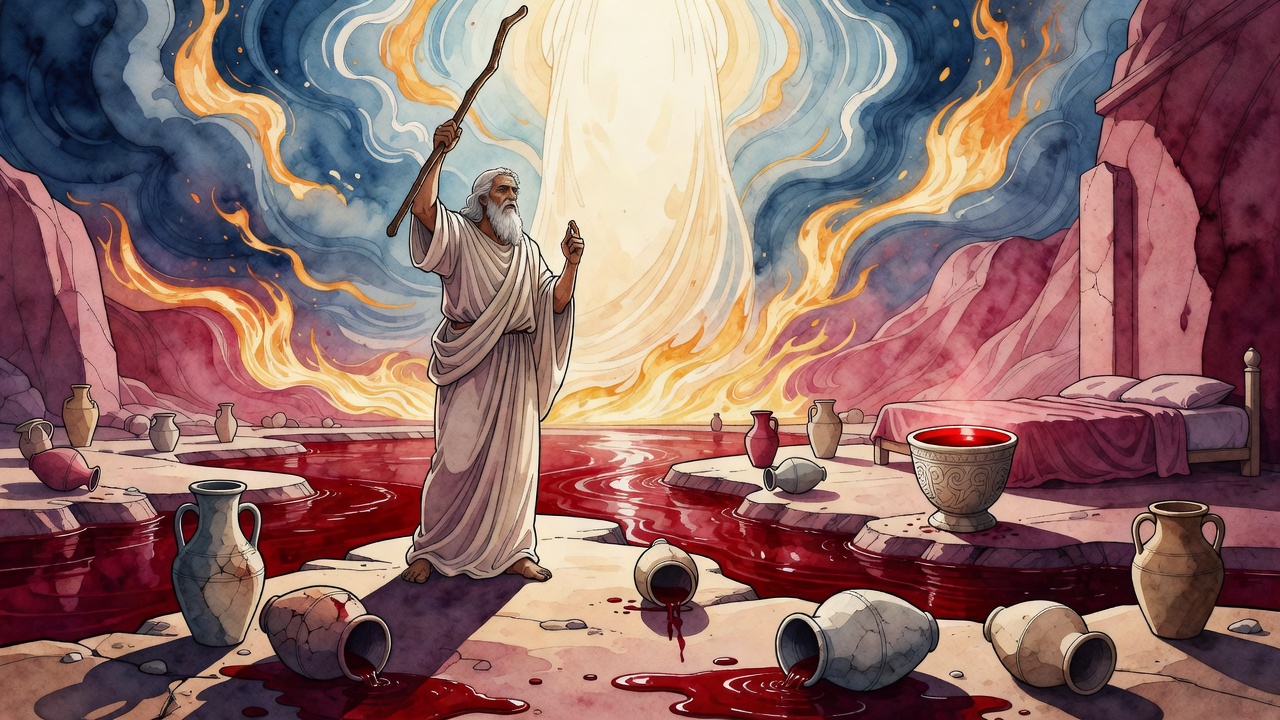
It wanted the promise notarized. It was not going to spend the rest of time with a Pharaoh's cavalry in its throat and then have the burial charged against it. "Swear it to me by Your right hand," it said, "that You will not claim them back from me."

So God put out His right hand over the water and swore to the ground that He would not come asking for them.

Then the ground opened and took them, and closed, and the shoreline was clean.

Nobody Had to Ask Which One Was God

On the far bank the people were still standing in wet sand, and something had happened to them that never happened to a prophet.

When a king of flesh and blood comes into a province he arrives inside a ring of guards, warriors at his right hand and his left, columns in front of him and columns behind, and everyone lining the road has to turn to a neighbor and ask which one of them is the king, because he is made of the same stuff as his bodyguard and looks it.

Nobody at the sea asked. They saw and they knew, all of them at once, and a housemaid standing in that crowd with her skirts soaked saw more that morning than Ezekiel ever saw by the river in Babylon with the heavens opening over his head. Ezekiel got guises and likenesses. She got the thing itself. They opened their mouths together and pointed and sang, This is my God, using the word a person uses for something standing in front of them.

The Kishon Kept the Appointment

Generations later Sisera came down into the valley of Jezreel with nine hundred iron chariots and every fighting man he had, against a people with no smith and no cavalry.

The stars fought him out of their courses. The old river came up over its banks and the wheels sank and the iron that had made him unbeatable held him in place while the water went over him, and the Kishon swept the army off the field.

The ground did not have to drink Sisera. It had been promised that, at a shoreline in the south, on a morning when it was arguing about corpses, before Deborah or Barak or Sisera's mother at her window had been born.

And the news of that first morning had gone everywhere. Every king on the map heard what had happened at the crossing and at the sea, and they trembled where they sat, and some of them got up and left their own capitals. The dirt had bargained. The kings ran. Nothing that day behaved the way it was supposed to.


← All myths
From the tradition

Sources

3 sources

The texts behind this telling. Some cards carry a translation of the source; others are our own retelling of it, and each card says which. Every card links out to the original.

Pirkei DeRabbi Eliezer 42:14Pirkei DeRabbi Eliezer

Retold in our words. Read the original at the link below.Pirke de Rabbi Eliezer, trans. Rabbi Gerald Friedlander, London (1916) · CC-BY

Pirkei DeRabbi Eliezer, a fascinating collection of stories and elaborations on Biblical narratives, gives us a glimpse. In Chapter 42, we find a surprising dialogue between God and the Earth after the splitting of the Red Sea. God has just commanded the sea to split, allowing the Israelites to escape, and then commanded it to crash back down, drowning the Egyptian army. "Thou stretchedst out thy right hand, the earth swallowed them" (Exodus 15:12).

The story goes that God instructed the Earth to bury the slain Egyptians. And the Earth, well, it wasn't exactly thrilled. It protested! "Sovereign of all worlds!" it argued, "The waters killed them, so let the waters swallow them!" Can you imagine the audacity? The Earth, talking back to God!

God had a plan. He replied, saying that on this occasion the Earth should receive them. As compensation, He promised that in the future, those destined to die by the Earth’s hand would instead be cast into the sea. He specifically mentioned Sisera and his army, whose demise is described in the Book of Judges: "The river Kishon swept them away, that ancient river" (Judges 5:21).

The Earth, still hesitant, pressed for a guarantee. It demanded an oath from God, sealed with His right hand, that He wouldn't later hold the Earth accountable for burying the Egyptians. So, God, blessed be He, extended His right hand and swore to the Earth that He would not reclaim them. "Thou stretchedst out thy right hand, the earth swallowed them" (Exodus 15:12) – a verse now imbued with even deeper meaning.

What does this all mean? Why this little drama between God and the Earth? Perhaps it's a way of showing that even the natural world has a role, a voice, in the unfolding of divine events. It's not just about humans and God. Everything is interconnected.

The narrative continues, noting the ripple effect of the Exodus. The news of the miraculous parting of the Red Sea spread far and wide. "The peoples have heard, they tremble" (Exodus 15:14). All the kings of the earth, upon hearing of these events, trembled and feared, fleeing from their places.

The story in Pirkei DeRabbi Eliezer gives us a different perspective. The whole world, not just humanity, was shaken by the Exodus. It shows us that even the Earth itself has a kind of agency, a say in things. What other hidden conversations might be happening all around us, just waiting to be heard?

Full source
Mekhilta Tractate Shirah 3:10Mekhilta DeRabbi Yishmael

Retold in our words. Read the original at the link below.Mechilta, translated by Rabbi Shraga Silverstein · CC-BY

"This is my G-d and I will extol Him." Commenting on the Song at the Sea, R. Eliezer makes a striking claim through this verse in the Mekhilta: a lowly maid-servant standing at the Red Sea beheld more of the divine presence than was granted even to the greatest prophets. He cites (Hoshea 12:11), "And to the prophets I appeared in various guises," and (Ezekiel 1:1), "The heavens opened and I saw visions of G-d." Even Ezekiel, whose vision of the chariot is the most exalted in all of Scripture, saw only through veils and likenesses, in figures and forms. The prophets perceived God indirectly, as if through a clouded glass.

To sharpen the point, R. Eliezer offers an analogy. A king of flesh and blood enters a province surrounded by a circle of guards, with warriors at his right hand and his left, and armies marching before him and behind him. The crowd cannot tell which figure is the king, because he is mortal like the soldiers around him, and so they must ask, "Who is the king?" But when the Holy One was revealed at the sea, no one needed to ask. The moment the Israelites saw Him, they recognized Him directly and immediately, with a clarity no prophet's vision could match. There was no entourage, no disguise, no confusion. And out of that unmediated recognition they all opened their mouths together and said, "This is my G-d, and I will extol Him." The word "this" itself points, as if to something seen plainly before their eyes.

Full source
Mekhilta Tractate Shirah 3:1Mekhilta DeRabbi Yishmael

Retold in our words. Read the original at the link below.Mechilta, translated by Rabbi Shraga Silverstein · CC-BY

The Song of the Sea declares: "The Lord is my strength and my song" (Exodus 15:2). The Mekhilta explores what "my strength" actually means, and discovers that this single phrase carries multiple layers of meaning, each supported by other passages in the Hebrew Bible.

The first interpretation: "My strength" refers to Torah. The proof text is from Psalms (29:11): "The Lord will give strength to His people." In rabbinic tradition, whenever "strength" appears in connection with God's people, it alludes to Torah, the supreme gift that empowers Israel. Another verse reinforces this reading: "And they will praise the strength of the King, who loves the Torah of justice" (Psalms 99:4). Torah is not merely knowledge. It is divine strength transmitted to human hands.

The second interpretation offers a completely different reading: "My strength" refers to kingship. The proof text is again from Psalms (21:2): "O Lord, in Your strength the king rejoices." And from the prayer of Hannah in (1 Samuel 2:10): "And He will give strength to His king." In this reading, the Israelites at the sea were not only celebrating their rescue but prophetically anticipating the future monarchy, the line of David through which God's power would be channeled into the governance of Israel.

The Mekhilta presents both interpretations without choosing between them. Torah and kingship are both expressions of divine strength given to Israel, and both were implicit in the moment of the sea's splitting. The song sung at the shore contained within it the entire future of the nation.

Full source