5 min read

The Serpent That Turned Him Away From Death

A righteous man met a venomous serpent and expected death. The snake led him past a trap he could not see, and fear turned into thanks.

Curated by Arthur · Told by Maggid ·
Table of Contents
  1. The Pattern on the Dust
  2. Nothing Created Without Work
  3. Depth Under Every Act
  4. When Fear Becomes a Teacher

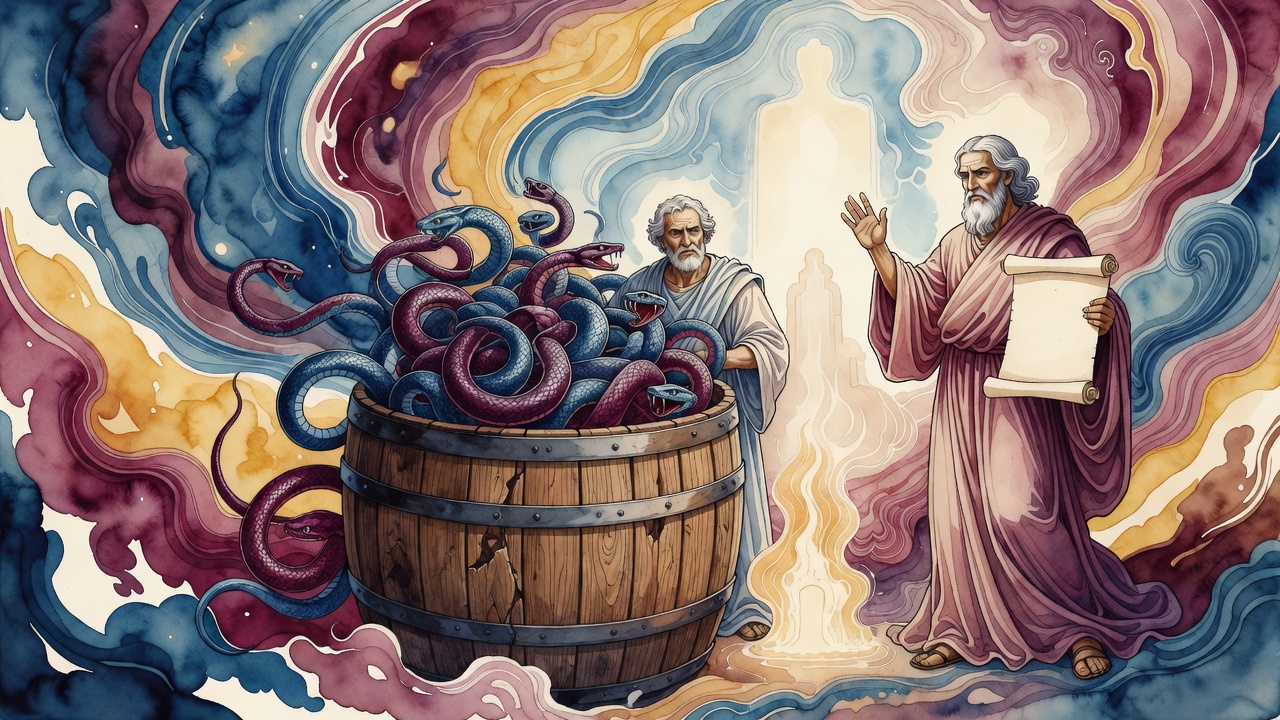
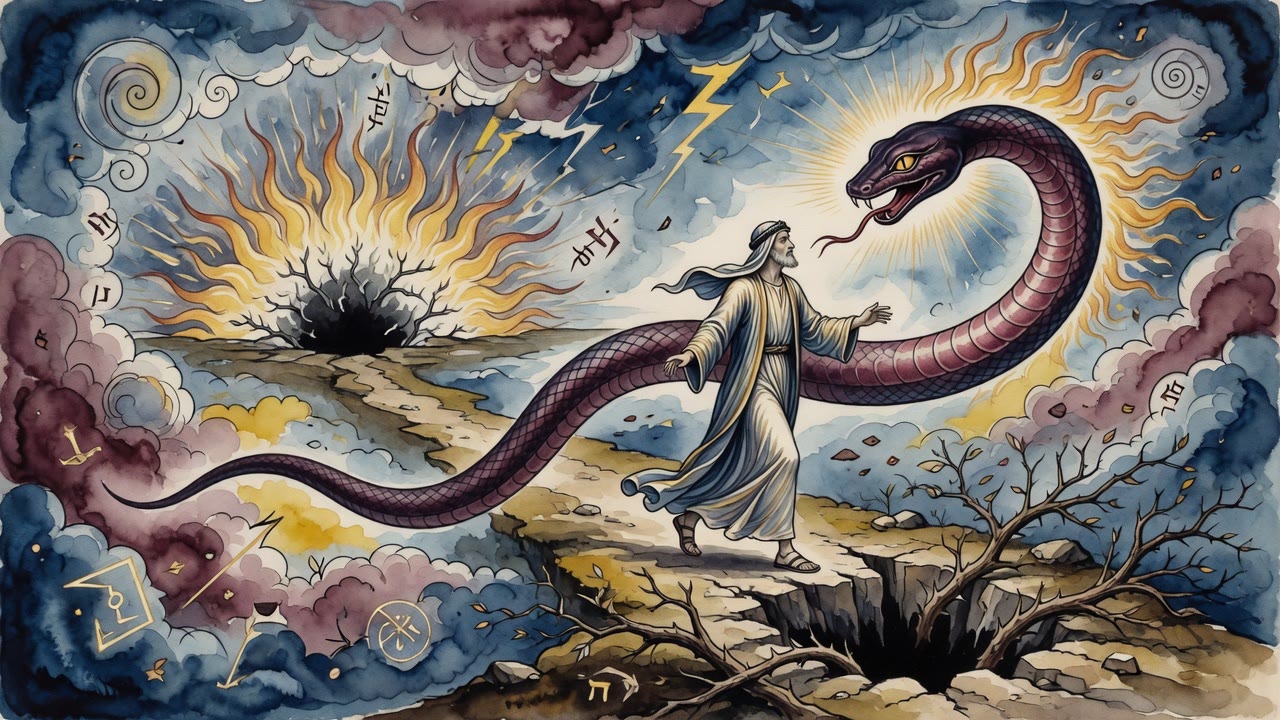
The path narrowed between rocks that still held the day's heat. A righteous man felt the grit under his sandal and heard, too late, the dry scrape of scales.
The Serpent That Turned Him Away From Death Click for full size

The serpent raised its head. Venom sat in the dark of its mouth like a secret. He did not run. Running would have made the strike certain. He stood and watched the way a man watches a knife that has not yet decided which way to fall.

The Pattern on the Dust

The snake moved. Not at him. Across him, in a line that made no sense for hunting. It turned, waited, turned again, as if drawing a map with its belly. The man followed because terror had run out of better ideas, and because something in the motion looked deliberate rather than hungry.

Around the bend the path he would have taken hung over nothing. A bridge-timber had given way in the night. In another telling, bandits crouched in the scrub with iron already warm in their hands. The story does not need both dangers. It needs the fact: the creature built for death knew the trap the man could not see.

He reached safe ground with sweat cold on his neck. The serpent was already gone into the stones. Fear cracked open into gratitude, then into wisdom.

Nothing Created Without Work

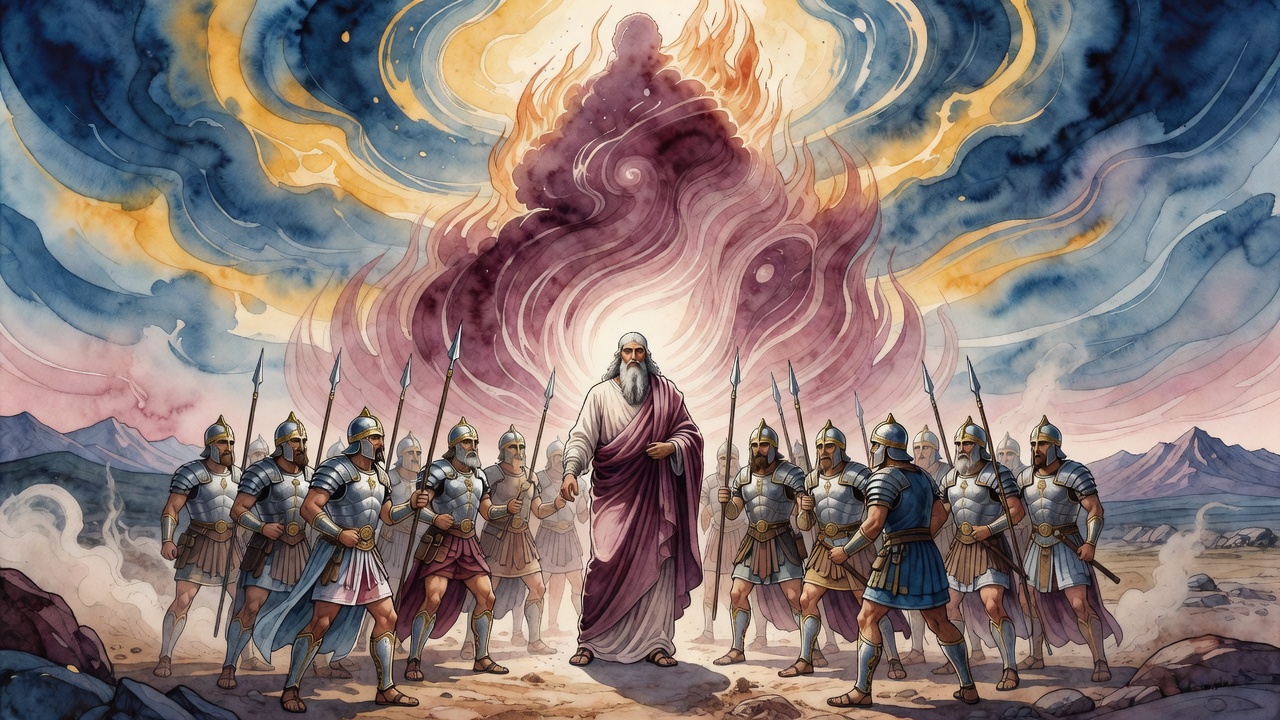
The sages taught that God made no creature without a purpose. Not the serpent. Not the spider. Not the scorpion. King David once hid behind a web spun across a cave mouth, and the soldiers of Saul passed by because a web meant no one had entered. The insect that disgusts a housekeeper becomes a door for a king.

So the man who was led by scales learned the harder sentence. The world is not sorted into clean tools and mistakes. What bites can also steer. What crawls can also guard. The machine of creation wastes nothing, even the parts that make the flesh flinch. He did not go home to keep snakes as pets. He went home less sure that his first reading of any living thing was the whole reading.

Pirkei DeRabbi Eliezer and the tale collections circle this theme until it sticks. Danger is real. Purpose under danger is also real. The two truths share a body the way venom and guidance shared one set of scales that afternoon.

Depth Under Every Act

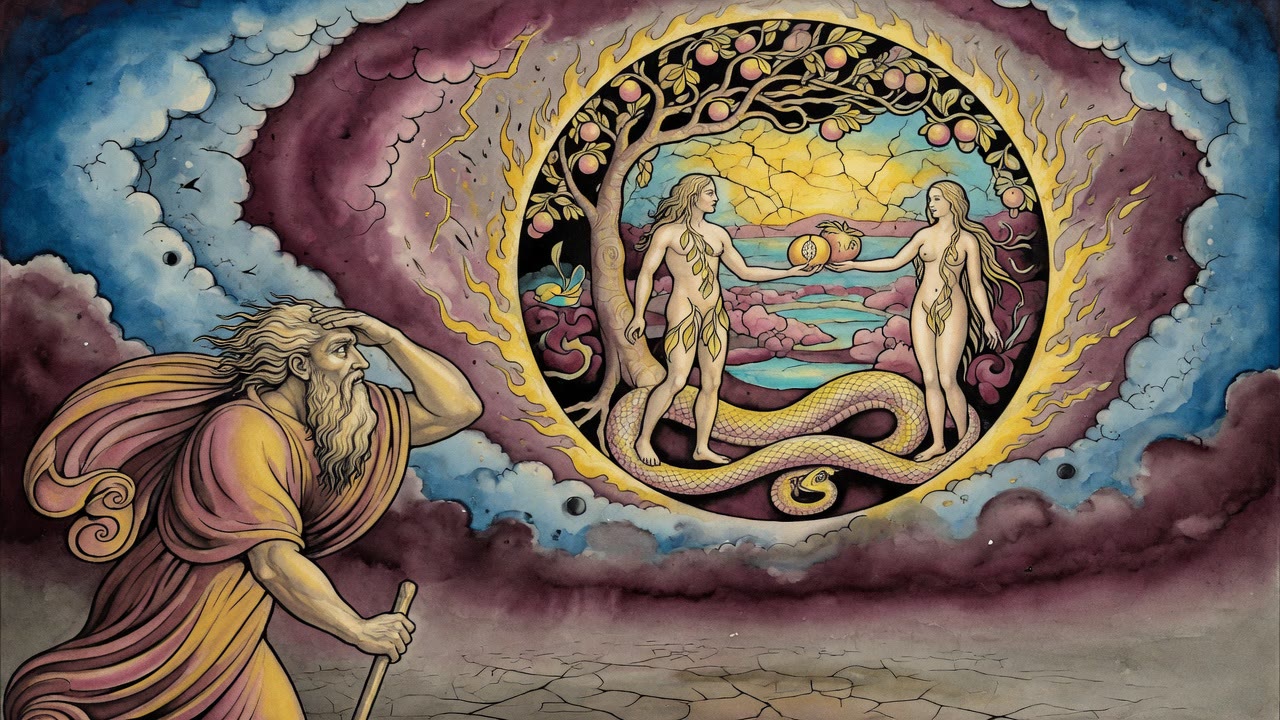
Da'at Tevunot presses further. Every act of God is awesome, wide, deep without limit. The psalmist already sang it: how great are Your works, how very deep Your thoughts. A person sees a snake and writes the word danger. Heaven may be writing the word path.

That does not turn poison into candy. It refuses the shallow reading. If the Infinite moves a creature one cubit to the left, the reason may reach past the man who was saved, past his children's children, into a chain no mortal ledger can finish. Depth is not decoration. It is the refusal to let one glance explain a day.

The man who lived kept both words in his mouth afterward: danger and path. He told the story carefully so no listener would walk toward snakes for sport. He told it honestly so no listener would think God only works through soft animals and gentle weather.

When Fear Becomes a Teacher

He walked home with a different spine. The next time a thing rose in the road that looked like pure harm, he still stepped carefully. He did not bow to serpents. He simply stopped assuming he knew the whole errand of any living thing.

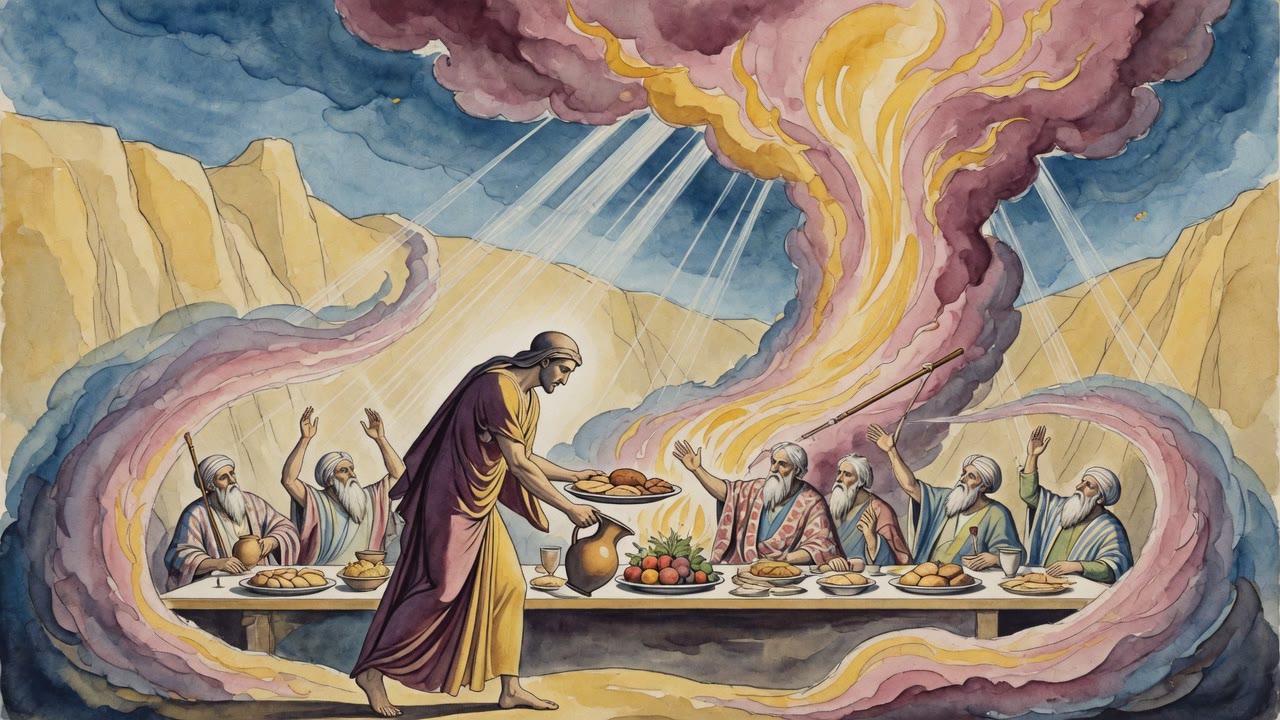
He told his household the story at the table and watched their faces do the same work his had done on the path: first flinch, then curiosity, then a quiet that was not fear. A child asked if every snake was a messenger. He said no, and meant it. Then he said some messengers wear ugly coats, and meant that too.

Years later, when another road looked clean and easy, he remembered the timber that had failed. He took the longer way without explaining himself. Purpose had trained his feet. At night he still heard the scrape on stone. The memory made his pulse jump, then settle into something closer to prayer than panic. Saved from serpent. Saved by serpent. Same scales. Different end.

Hands did the next needed thing: lifted, covered, wrote, refused, blessed, carried. Meaning followed the hands, not the other way around.


← All myths

From the tradition

Sources

2 sources

The texts behind this telling. Some cards carry a translation of the source; others are our own retelling of it, and each card says which. Every card links out to the original.

Exempla of the Rabbis, No. 314Exempla of the Rabbis (Gaster, 1924)

Retold in our words. Read the original at the link below.The Exempla of the Rabbis, Moses Gaster (1924) · Public Domain

The sages taught that God created no creature without a purpose, not the serpent, not the spider, not the scorpion. The story preserved under the title "Saved from Serpent" illustrates this principle with a tale of unexpected deliverance.

A righteous man was walking through a dangerous place when he encountered a venomous serpent. Instead of fleeing, he observed it carefully. The serpent, rather than attacking, moved in a deliberate pattern, as though guiding the man away from a path he had been about to take.

The man followed the serpent's lead and was saved from a greater danger that lay ahead, bandits in ambush, a collapsing bridge, or some other lethal trap that the serpent could see and the man could not. The very creature that seemed most threatening proved to be his savior.

Pirkei DeRabbi Eliezer (Chapter 49) and various midrashic (rabbinic interpretive commentary) sources develop this theme extensively. Every dangerous creature in creation serves a purpose in God's plan. The serpent that terrifies you today may be the instrument of your rescue tomorrow. The spider whose web disgusts you may one day spin a web that hides you from your enemies, as happened to King David in the cave.

The lesson extended beyond animals. The sages taught that even the aspects of creation that seem harmful, ugly, or pointless have hidden functions. God wastes nothing. The world is a machine of infinite complexity, and every part, even the parts that bite, is essential. The man who was saved by a serpent understood this. His fear became gratitude, and his gratitude became wisdom.

Full source
Da'at Tevunot 54:2Da'at Tevunot

Retold in our words. Read the original at the link below.Sefaria Community Translation · CC-BY

Da'at (Knowledge) Tevunot, a profound work of Jewish thought, invites us to do just that. It reminds us that all of haShem's actions – that's one of the many names we use for God, literally "The Name" – are "awesome, and wide and deep without limit." It's like the Psalmist says in (Psalm 92:6), "How great are your actions haShem…how deep are your thoughts."

The text goes on to say that even the tiniest act of God contains such wisdom and depth that we can never fully plumb its depths. We can't possibly comprehend the full scope of it.

Da'at Tevunot acknowledges that haShem's actions aren't always clear to us. We see the surface, the immediate impact, but the true internal essence remains hidden. Why? Because, at their core, all of God's actions are ultimately good. They're designed to bring us goodness in the end.

It's tough to see that sometimes, isn't it? When things are difficult, when we're facing challenges, it's hard to believe that there's goodness at the heart of it all.

But Da'at Tevunot suggests that in the future, we'll at least begin to grasp how the twists and turns of God's strategies are ultimately intended for our benefit. We won't understand the entire wisdom encompassed in these actions – after all, whatever we grasp is just "a drop from the great sea" – but we'll get a glimpse.

The text explains that when haShem chooses to oversee His creations through the attribute of goodness, even actions that seem like reward and punishment are ultimately working towards our rectification, our improvement. There's an inherent goodness that's always progressing, always striving to complete us.

And there's an internal aspect to this that will be revealed in the future. Like it says in (Isaiah 35:5), "Then shall the eyes of the blind be opened..." We will understand from the action itself the intent and thought that lies within it. When we are enlightened with knowledge, we will see.

However, there's also a deep wisdom in God's actions that we simply can't grasp, even with enlightened eyes. It's lofty, beyond our comprehension. These actions, though always motivated by goodness, are tailored to our level, our capacity, not to God's own infinite value. They extend from God's perfection, but they manifest in a way that's relevant and appropriate for us. If God acted according to His own infinite value, we wouldn't even be able to perceive it. It would be like trying to stare directly at the sun. We need the light filtered, adapted to our vision.

So, what does this all mean for us? It means that even when we don't understand, even when things seem confusing or even painful, we can trust that there's a deeper purpose at work. A purpose rooted in goodness and ultimately aimed at our growth and completion. It's a challenging thought, but also a deeply comforting one. It invites us to approach life with a sense of wonder, humility, and faith, trusting that even the smallest details are part of a much grander, more beautiful plan.

Full source