Seven Years in a Barrel for the Serpent's Curse
A philosopher in Rome kept serpents in a barrel for seven years. When he asked how long they carry young, Rabban Gamliel went pale.
Table of Contents
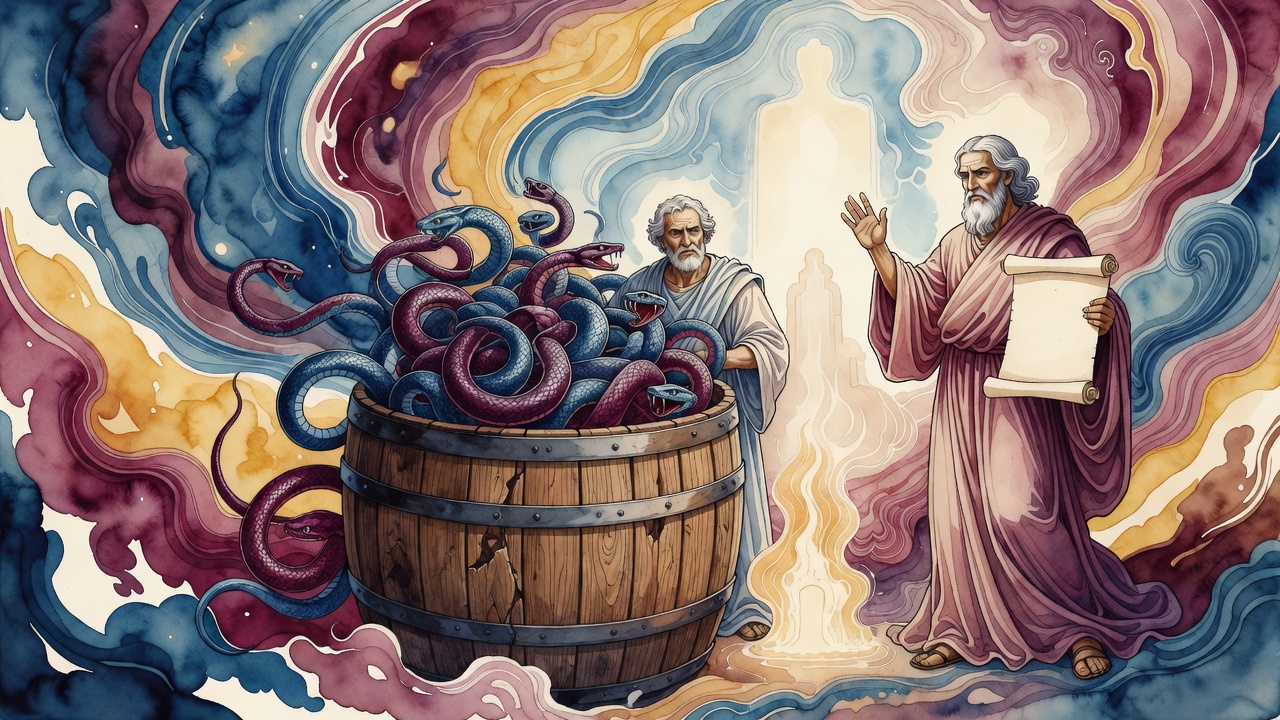
Seven years. A barrel. Scales sliding over eggs in a Roman courtyard. The philosopher took the serpents when he saw them pair, shut them in the cask, and fed what would not thank him. He counted moons. He waited for a number he could throw like a stone.
 Click for full size
When the elders went up to Rome, he cornered Rabban Gamliel. The question was sharp and clean. "How long does the serpent carry its young?"
Rabban Gamliel went pale. The room waited. A man had spent a near-decade of patience, and Israel's spokesman had no answer ready. Shame rose in the face before it settled in the gut. Outside, Rome went on being Rome. Inside, a sage tasted the cost of a blank mind in a public contest.
The Curse Written on Skin
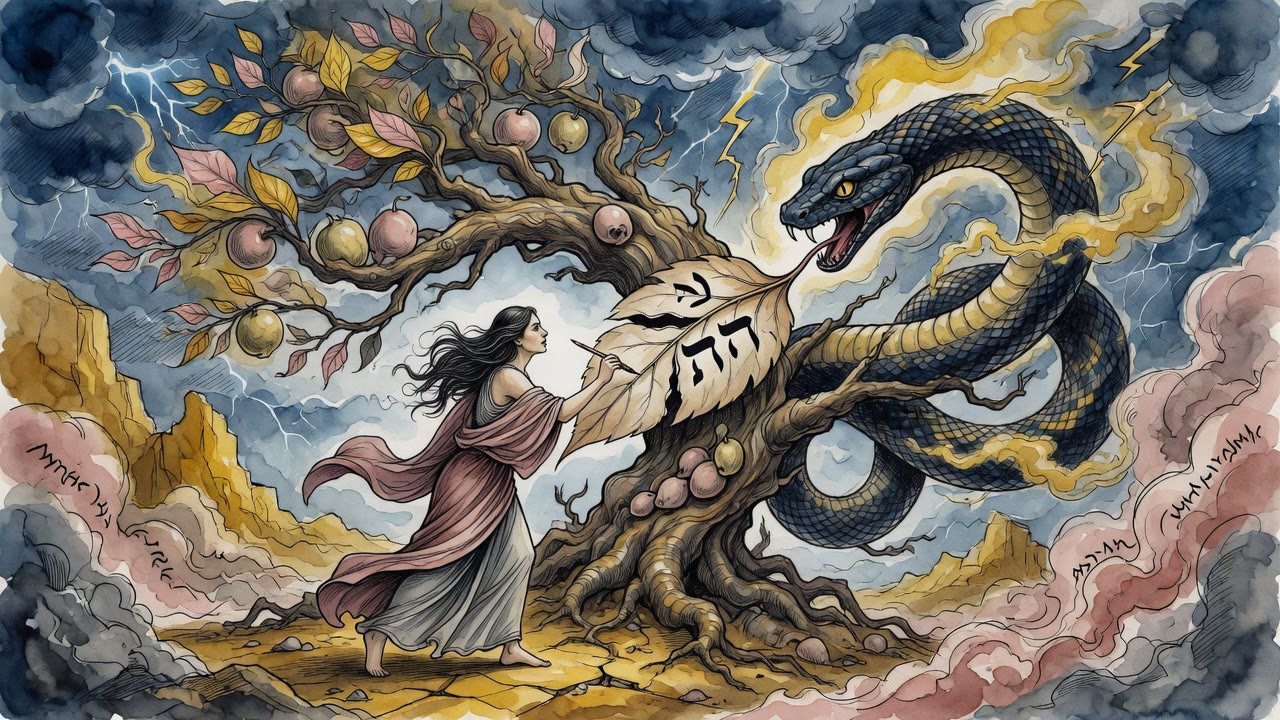
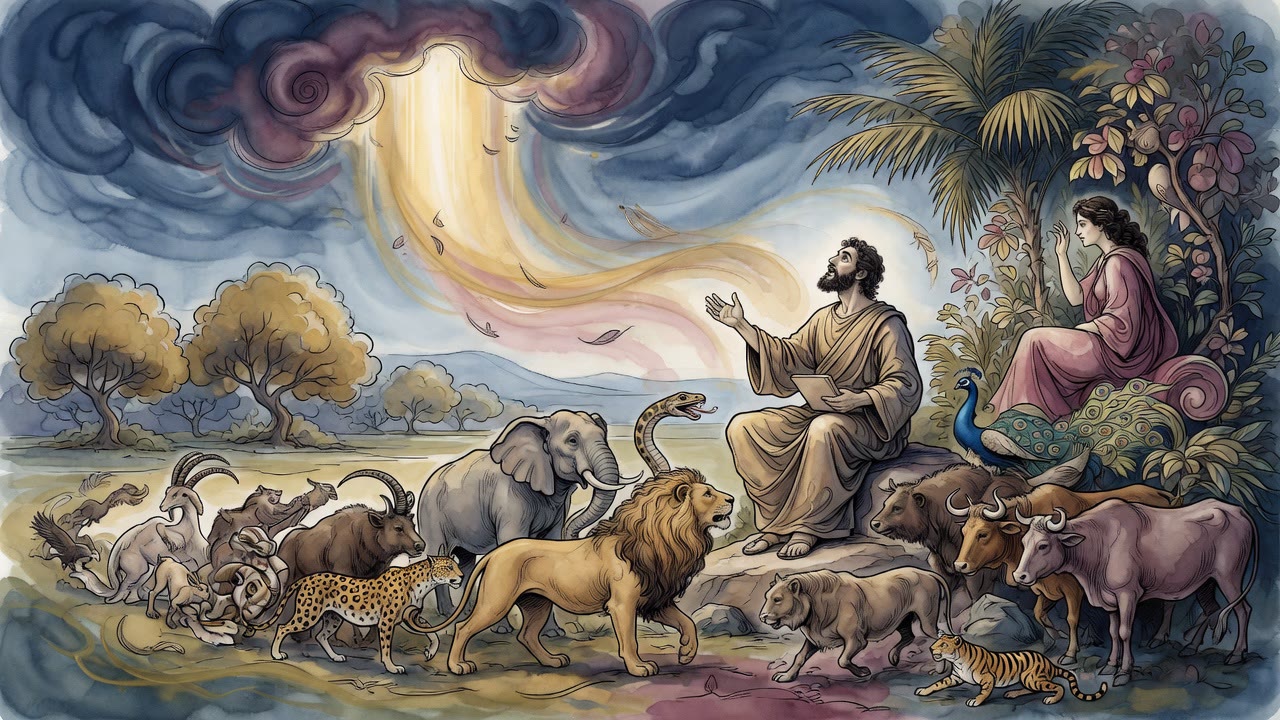
The serpent's curse is written even on its hide. Scales are a kind of leprosy, a mark that it is cursed more deeply than every other animal. Pure large beasts bear in nine months. Impure large beasts in twelve. The dog in fifty days. The cat in fifty-two. The fox in six months. Lion, bear, leopard, elephant, ape in three years. The serpent in seven. The viper in seventy.
Numbers stack until the curse becomes a weight a hand can hold. Longer carrying means heavier judgment. The creature that talked Eve into death now carries its young through seasons no other beast must endure. The barrel in Rome was only a late attempt to catch up to a sentence already written on skin.
Crawl on the belly. Eat dust. Live longer under a pregnancy that outlasts the patience of ordinary animals. Every scale is a reminder. The garden sentence did not stay a vague moral. It became biology with a ledger.
The Number Handed on a Reed
Rabbi Yehoshua found Rabban Gamliel sick-faced and pulled the trouble out of him. "Why is your face ill?"
"I was asked a question and could not answer it."
"What was it?"
"How long does the serpent bear?"
"Seven years," Yehoshua said at once.
"From where?"
He did not reach for a barrel. He reached for a verse and a ladder. "The dog, which is impure, bears in fifty days. An impure beast bears in twelve months. Scripture curses the serpent more than the beasts and more than the wild animals. As the domestic beast is cursed sevenfold beyond the wild one, so the serpent is cursed sevenfold beyond the domestic beast. Seven follows from seven."
What cost the philosopher seven years of labor, the Torah handed over on a single reed. When the Roman heard it, he beat his head against the wall. "All that I labored, and a Jew sat and answered from his mouth." The violence of that gesture is almost comic and completely serious. Empirical patience met a reading that had already done the experiment in language.
Heel and Head in a Longer War
Long before Rome kept barrels, the garden already held a longer war. God set enmity between the serpent and the woman's seed (Genesis 3:15). When the sons of the woman keep the commandments, they are ready to strike the serpent's head. When they forsake the commandments, the serpent is ready to wound them in the heel.
The battlefield is not only Eden. It is every generation that either holds the law or drops it. The poison is mortality, the pull of the yetzer hara (יצר הרע), the evil impulse inside a person, the old bite that never quite leaves the blood.
Heel and head are not equal wounds. A strike to the head ends the snake. A strike to the heel slows the walker. Obedience is the difference between who lands which blow. The war is old, but it is not frozen.
Medicine for One Side Only
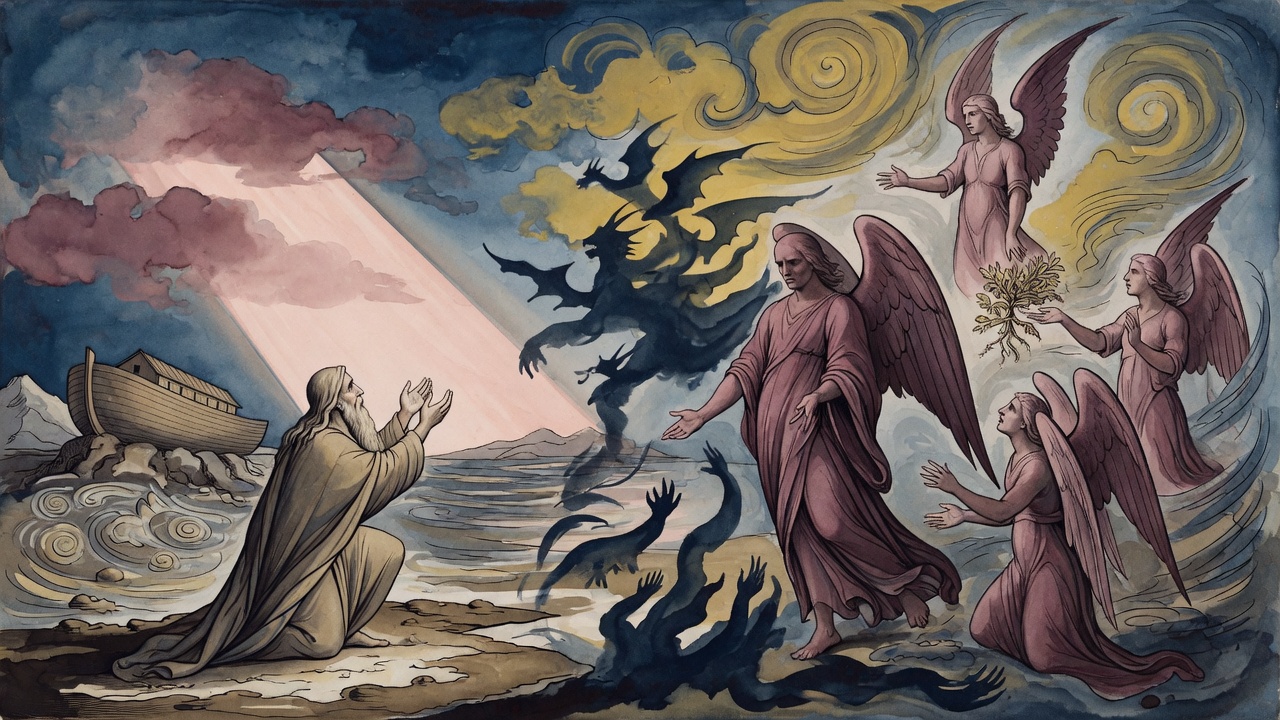
The promise runs one way. For them there shall be a medicine, but for thee there will be no medicine. They shall make a remedy for the heel in the days of the King Messiah.
Before Adam takes a single step into the working world, a fix is already installed. The curse is real. The barrel is real. The seven years of shame and scales are real. The last word is not the bite. It is a king who heals what the first conversation in the garden broke, while the serpent remains outside the pharmacy forever.
Rabban Gamliel's color returned as the Roman left with a bruised forehead and an empty boast. The barrel in Rome still held scales and silence. The verse had already measured both. Far from that courtyard, the older war between heel and head continued, waiting for a medicine that would not be shared with the first tempter.
← All myths