5 min read

The Son Sent Wood Ahead to Claim His Father

A merchant's son sent a woodcutter into an inn before him, then divided pigeons at a table where greed and a sealed dream of swapped fortunes both waited.

Curated by Arthur · Told by Maggid ·
Table of Contents
  1. The Road to the Inn
  2. Five Pigeons and a Knife
  3. The Dream That Packed the Upper Floor
  4. Contracts Written in Poverty
  5. What Wisdom Looks Like at a Table
The Son Sent Wood Ahead to Claim His Father Click for full size

The Road to the Inn

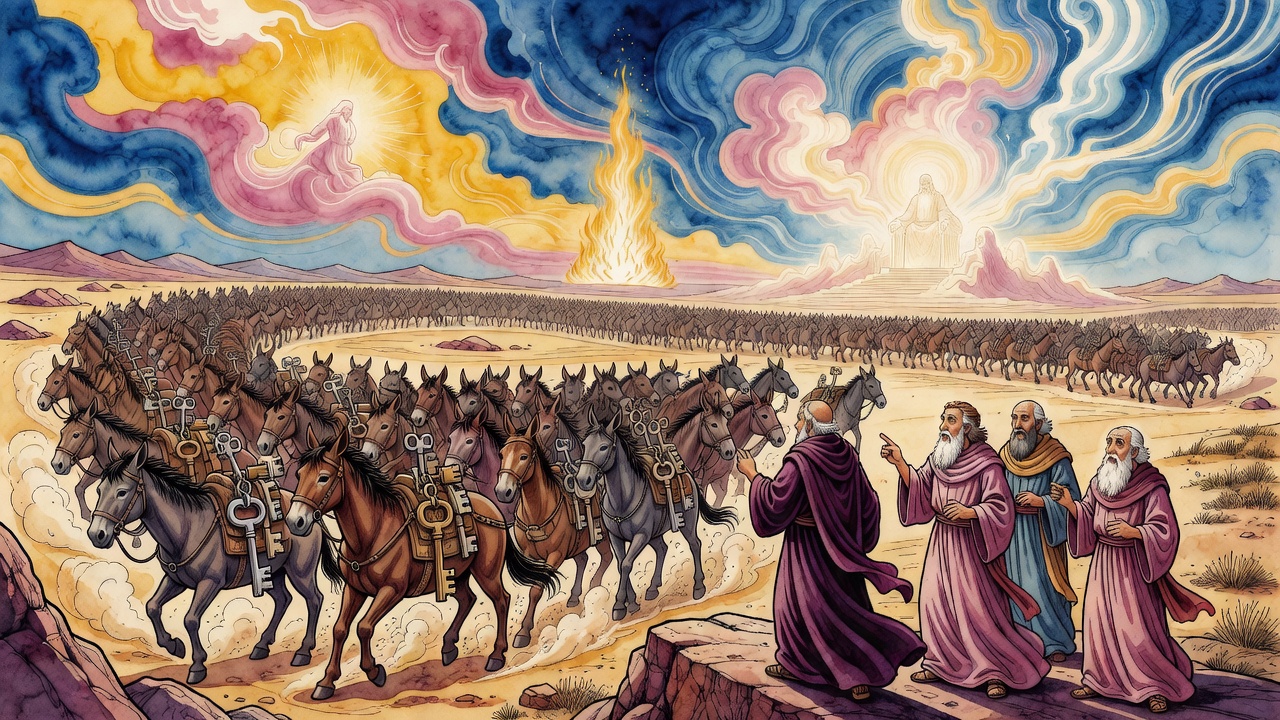
A merchant died far from home, under an innkeeper's roof, leaving a son too young to claim what was left behind. Years later the boy came of age and set out for the town, knowing the innkeeper would never surrender the property willingly. Near the edge of the place he met a woodcutter and made a small plan large enough to change the room he was about to enter.

"Carry this bundle of wood to the inn," he said. "Set it down inside. If the owner asks, say the man who follows me ordered it. Then wait for me." The woodcutter did as he was told. Wood arrived first. The son arrived second. The innkeeper, seeing a man already waiting with a delivery, assumed the guest was known and not alone.

Five Pigeons and a Knife

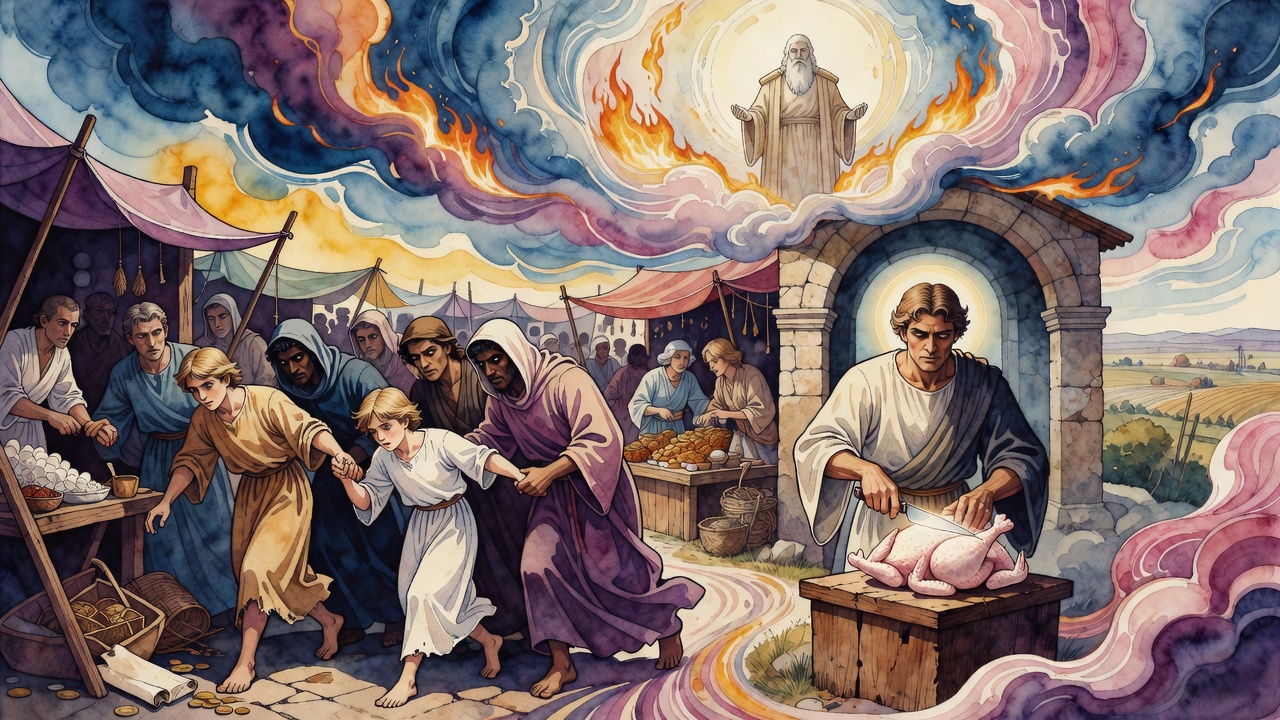
"Who are you?" the innkeeper asked. "The son of the merchant who died in your house," the young man said. The host, rattled, ordered a generous meal. Five pigeons and a chicken came to the table. Host, wife, two sons, two daughters, and the guest sat down: seven mouths, six birds if you count poorly, a test if you count carefully.

"Serve the food," said the innkeeper. "You are the master," said the son. "It is your privilege." The host insisted the guest carve. The son took the knife. How he divided the birds among seven mouths, and what truth the portions exposed, is the hinge older tellings keep half in shadow. Already, before the first cut, he had announced without a speech that he was not a boy who could be cheated in silence.

The Dream That Packed the Upper Floor

In another house, on another night, a wealthy burgher dreamed strangers packing his merchandise, notes, and letters of credit into bundles. "What are you doing?" he asked. "We are bringing everything down to the pauper." He woke to full warehouses and a heart that would not calm. The same night the pauper's wife dreamed the opposite: the burgher's wealth pouring through their lower door like water.

The burgher grew more generous to the couple below, yet every visit tightened his face. When the pauper's wife asked why, the dreams were confessed. They sealed a pact: a son born above would marry a daughter born below. Both births came as expected. Then the burgher died, and through reversals the pauper became as rich as the man who once lived over his head. Wealth arrived. Memory thinned. The former pauper wanted a better match for his daughter than an orphaned merchant's son.

Contracts Written in Poverty

Rabbi Nachman's tale follows those children across years of separation while adults try to break what was written when the writers had nothing to lose. The dream was not a warning to outrun. It was a decree the upper floor feared and the lower floor desired, and both misused when the money changed hands. The pauper, once rich, repeated the burgher's error. He clung to fortune as if clinging could rewrite heaven's transfer.

The son's wood at the inn and the sealed marriage pact share a grammar. Claim what is yours with wit when power sits behind a counter. Remember what you promised when you were still hungry. Property left in an inn and destiny spoken in a dream both test whether the living will honor the dead and the poor version of themselves.

What Wisdom Looks Like at a Table

Wisdom here is not a proverb framed on a wall. It is a bundle of wood walking into a room two minutes early. It is a knife accepted only when forced, then used to make portions that speak. It is a contract written before anyone knew who would end up rich. The innkeeper underestimates the orphan. The newly rich man underestimates the orphan of the upper floor. Both learn that heaven and a clever child keep longer memories than convenience likes.

Send the wood ahead. Keep the pact. Divide the birds so the truth sits on the plate where everyone can see it. Fortune moves downstairs and upstairs and across years, but a person who prepares the room before he enters it is harder to erase than a name left only in an innkeeper's private ledger.

Both stories hate the easy lie that wealth is a stable identity. The innkeeper thinks possession is nine points of the law until a boy arrives with a witness made of firewood. The pauper-turned-burgher thinks a dream-fulfilled fortune erases a signed promise until the children of the decree begin to move on their own. Rabbi Nachman's long plot and the short inn parable meet at the table. Portions can accuse. Contracts can outlive the rich. A father dead in a rented bed can still send a son who knows how to enter a room. Prepare the room. Honor the poor version of the oath. Do not trust a ledger written only by the man who holds the keys.


← All myths
From the tradition

Sources

2 sources

The texts behind this telling. Some cards carry a translation of the source; others are our own retelling of it, and each card says which. Every card links out to the original.

Hebraic Literature (Harris, 1901), Proverbial SayingsHebraic Literature (1901)

Retold in our words. Read the original at the link below.Project Gutenberg eBook #14368, Hebraic Literature · PD-US-pre-1929

A merchant died in an inn, far from home, leaving a young son who was yet to reach manhood. When the son finally came of age, he set off to claim his father’s property from the innkeeper — but he knew the innkeeper would never give it up willingly.

Approaching the town, the son met a woodcutter by the road and said, “Do me a favor. Carry this bundle of wood to the inn. Set it down inside. If the owner asks, just say, ‘The man who follows me ordered it.’ Then wait for me.”

The woodcutter did exactly as instructed. He arrived at the inn with the wood and waited inside. When the son entered a little later, the innkeeper, seeing the woodcutter there, assumed a prior acquaintance. “Who are you?” he asked the son.

“The son of the merchant who died in your house,” the young man replied quietly.

The innkeeper, rattled — for the wood suggested the son was already known in the town and was not alone — ordered a generous meal. Five pigeons and a chicken came to the table. The host, his wife, two sons, two daughters, and the guest sat down together. “Serve the food,” said the innkeeper.

“You are the master,” said the son. “It is your privilege.”

“No,” insisted the innkeeper, sensing some test. “You are my guest. The merchant’s son. Please, serve the food.”

The son took up the knife. How he divided five pigeons and one chicken among seven mouths, and what truth he exposed by it, is the hinge of the tale — but already, with the wood and the waiting woodcutter, he had made his first wise move: he had announced, without saying a word, that he was not someone who could be cheated.

Full source
Sippurei Maasiyot, Tale 10Sippurei Maasiyot (Rabbi Nachman)

Retold in our words. Read the original at the link below.Sefaria-hosted English translation · CC-BY-SA

A wealthy burgher and a poor man lived in the same building, the burgher in the upper floors, the pauper in the lower. Neither had children. One night, the burgher dreamed that strangers entered his home and began packing all his possessions into bundles. "What are you doing?" he asked. "We are bringing everything down to the pauper." He watched helplessly as they carried away his entire fortune, every piece of merchandise, every promissory note, every letter of credit, leaving nothing but bare walls.

He woke up. It was just a dream. His wealth was intact, his warehouses full, his accounts untouched. But his heart was pounding, and the dream would not leave his mind. Every time he closed his eyes, he saw the strangers packing his belongings.

The pauper's wife had her own dream the same night. She dreamed the exact opposite, that all the burgher's wealth was being delivered to their home, that abundance was pouring through their door like water.

The burgher, deeply disturbed, became even more generous to the poor couple below. But every time they entered his home, his face changed, a flicker of terror crossed his features, a tightening around his eyes. He could not help it. The dream haunted him. One day the pauper's wife asked directly: "Why does your expression change every time we visit?" He told her the dream. She told him hers.

They decided: since both had dreamed the same thing from opposite directions, perhaps their destinies were linked. They made a pact. The burgher's wife would give birth to a boy, the pauper's wife to a girl, and the children would marry. They wrote it down and sealed it as a binding agreement.

Both wives gave birth as expected. Then the burgher died. The pauper, through a series of astonishing reversals, became wealthy, as wealthy as the burgher had been. Now rich and powerful, the former pauper forgot the agreement. He wanted a better match for his daughter than the orphaned son of a dead merchant.

Rabbi Nachman's tenth tale follows these two children, the burgher's son raised by strangers and sinking into obscurity, the pauper's daughter raised in her father's new wealth, as their fates intertwine across years of separation and reversal. The dream was not a warning to be heeded or avoided. It was a prophecy that could not be stopped. Everything the burgher feared losing was always destined for the pauper. The transfer of wealth between the two families was decreed in heaven before either man was born.

And the cruelest irony: the pauper, now wealthy, repeats the burgher's original mistake. He hoards what was never truly his. He clings to fortune the way the burgher clung to fortune. And the children, bound by a covenant their parents wrote and then tried to break, must find each other through every obstacle the adult world places between them. The contract written in poverty is more binding than any contract written in wealth, because it was written when the writers had nothing to lose and everything to hope for.

Full source