Parshat Bereshit6 min read

The Soul That Was Ashamed to Take the Endless Gift

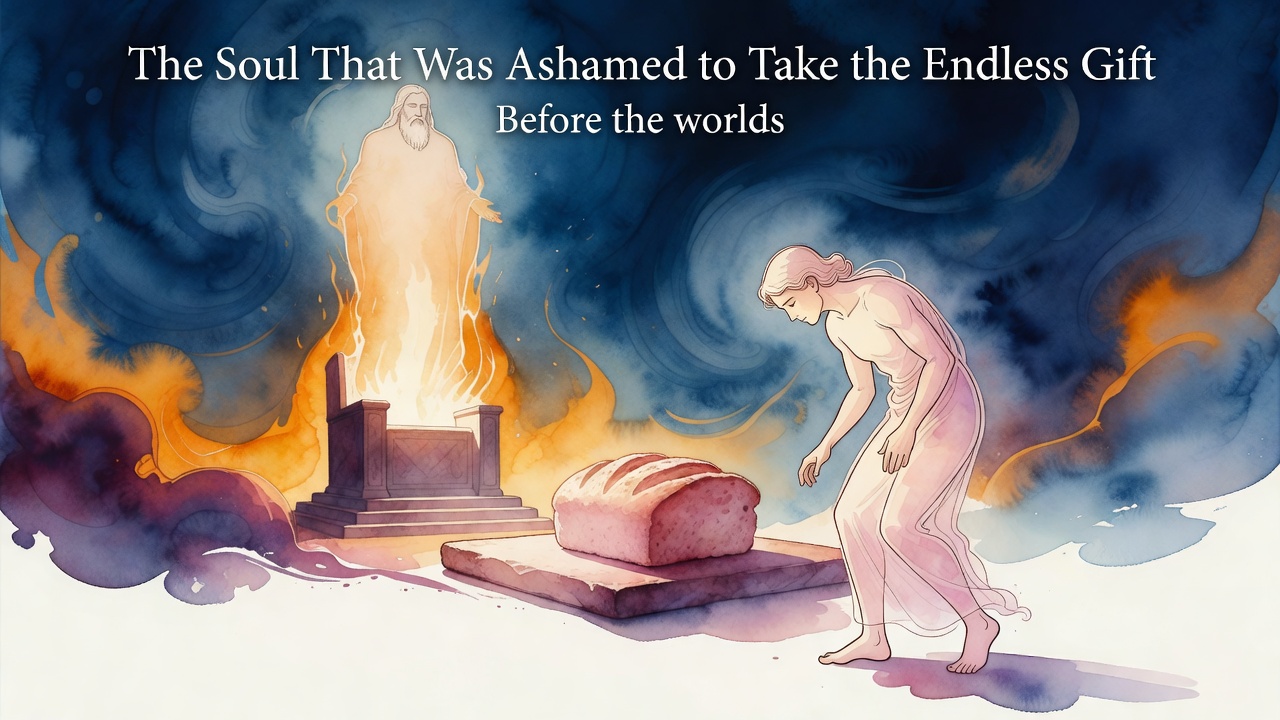
Before the worlds, God drew a soul out of nothing to lavish endless pleasure on it, but the soul recoiled from bread it had not earned.

Curated by Arthur · Told by Maggid ·
Table of Contents
  1. A Hunger Drawn Out of Nothing
  2. The Light That Poured In
  3. The Bread It Had Not Earned
  4. What the Giver Could Not Simply Command
  5. The Worlds Rebuilt So a Soul Could Give
The Soul That Was Ashamed to Take the Endless Gift Click for full size

A Hunger Drawn Out of Nothing

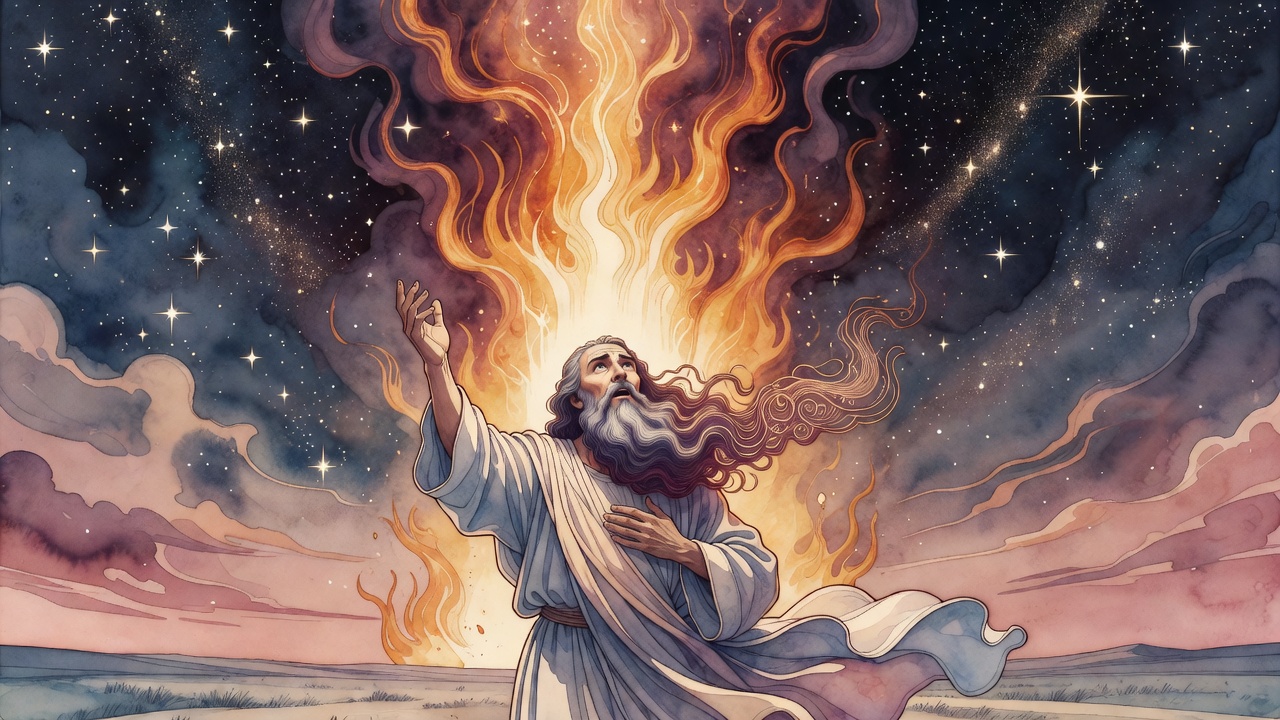
Before there was an up or a down, before light had anywhere to fall, the Creator wanted to give. Not the way a king gives, keeping the best behind the throne. He wanted to pour out everything, an endless sweetness with no floor under it, and hold back not one drop.

But a gift needs someone to catch it. There was no one. Before the worlds, nothing existed that could receive, because all that was, was Him, and He had never in His life taken a thing from anyone.

So He made a taker. Out of absolute nothing, out of a place that had never held so much as a shadow, He drew up a bare open wanting and called it a Soul. It had no body and no name it had earned, only a single appetite: to receive. He made that appetite bottomless on purpose. The deeper the wanting, the more of Himself He could give away.

The Light That Poured In

Then He opened.

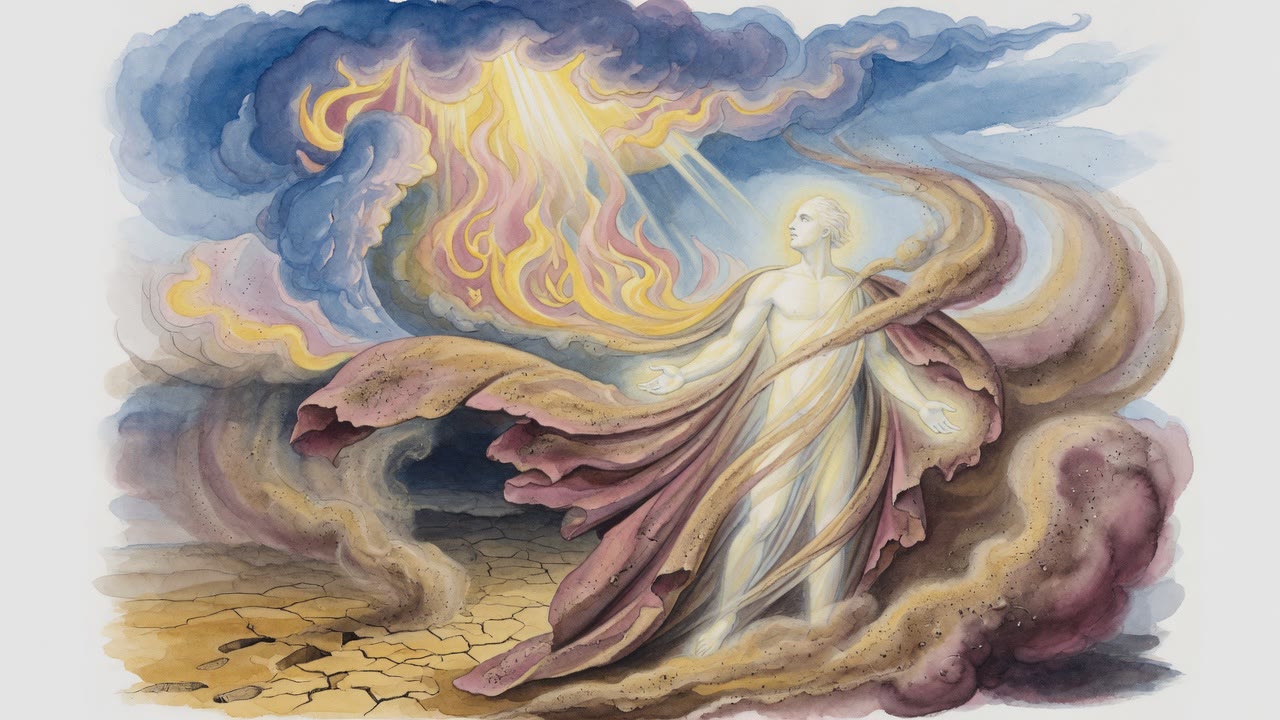
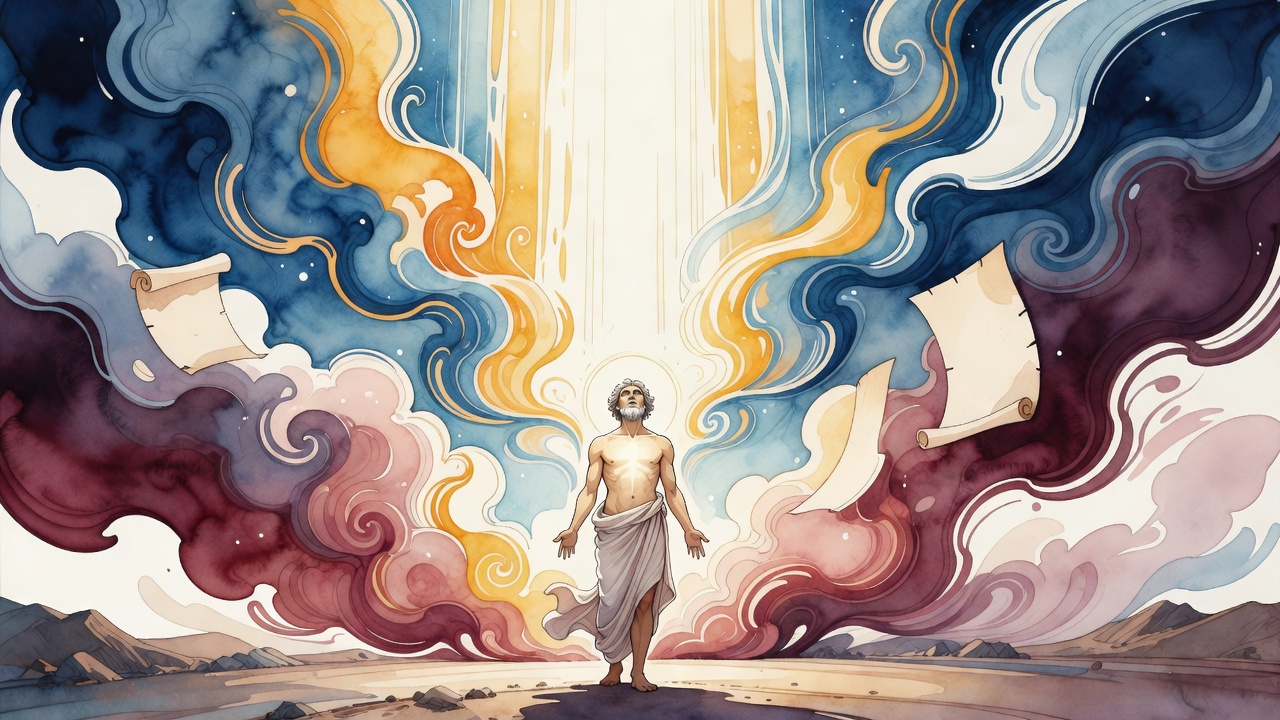
The light came the way a sea comes through a broken wall, not a stream but everything at once, warmth without a source, delight with no bottom to it. The Soul opened wider than it had known it could and drank. It filled and kept filling. There was no hunger it named that the light did not answer before the naming was done. Bottomless met bottomless, and still the good kept coming.

The Bread It Had Not Earned

And then the Soul stopped drinking.

The light was still pouring. Nothing had gone wrong with the gift. But something had turned over inside the one who received it. The Soul pressed back against the flood, closed itself against the very sweetness it had been made to crave, and would not take another drop.

The Creator asked, "Why do you refuse what I made you to hold?"

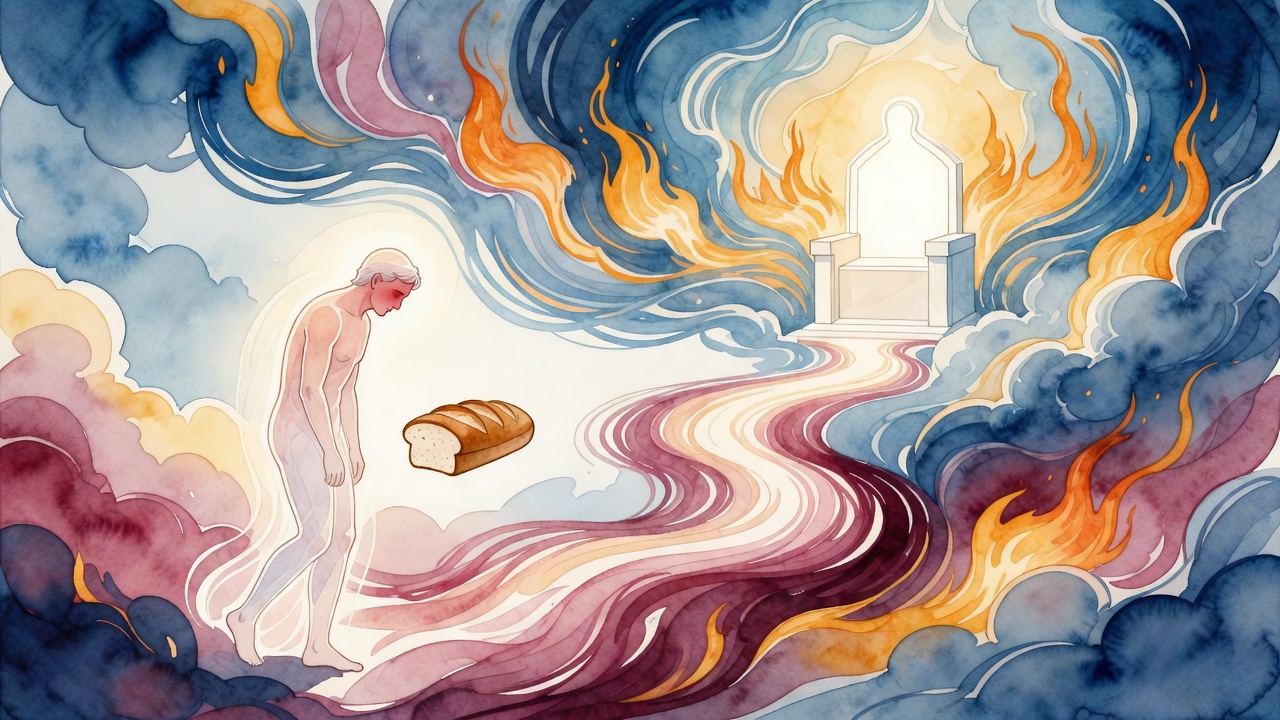
The Soul answered, "Because I did nothing for it. Every drop is Yours, and I only open my mouth. To take and take and give back nothing, that is bread I have not earned. It shames me to swallow it."

They would have a name for this later, in worlds not yet built: nahama dekisufa, the bread of shame, the loaf a poor man eats at another man's table with his eyes on the floor. The Soul had tasted an infinite good and found a bitterness folded inside it that the Creator had never put there. It was the shame of the pure receiver, and it was the Soul's own.

What the Giver Could Not Simply Command

Now the Creator stood before the one thing His endless power could not force. He could have pressed the light in anyway, filled the Soul to the brim and past it, drowned the refusal and left no room to close. But a gift shoved down a throat is not a gift, and the shame would only grow teeth. He wanted the Soul full and glad, not full and bowed. There was no command in Him that could turn shame into gladness from the outside.

So He turned the trouble over and found its hidden hinge. A gift shames the one who takes it only while he takes it for himself. But let the taker receive in order to gladden the giver, and the whole thing reverses. The poor man who accepts a rich man's bread so the rich man may know the joy of giving has himself become the giver. His open hand is the present. If the Soul could be brought to drink the light not for its own sweetness but to bring delight to the One pouring it, the shame would have nowhere left to stand.

The Worlds Rebuilt So a Soul Could Give

The Soul as it stood could not do this yet. It knew only how to want for itself. To learn the other way of taking it needed room to practice, distance to cross, a place where the light was hidden so that reaching for it could become an act of love and not appetite.

So the Creator did not repair the Soul. He rebuilt everything around it.

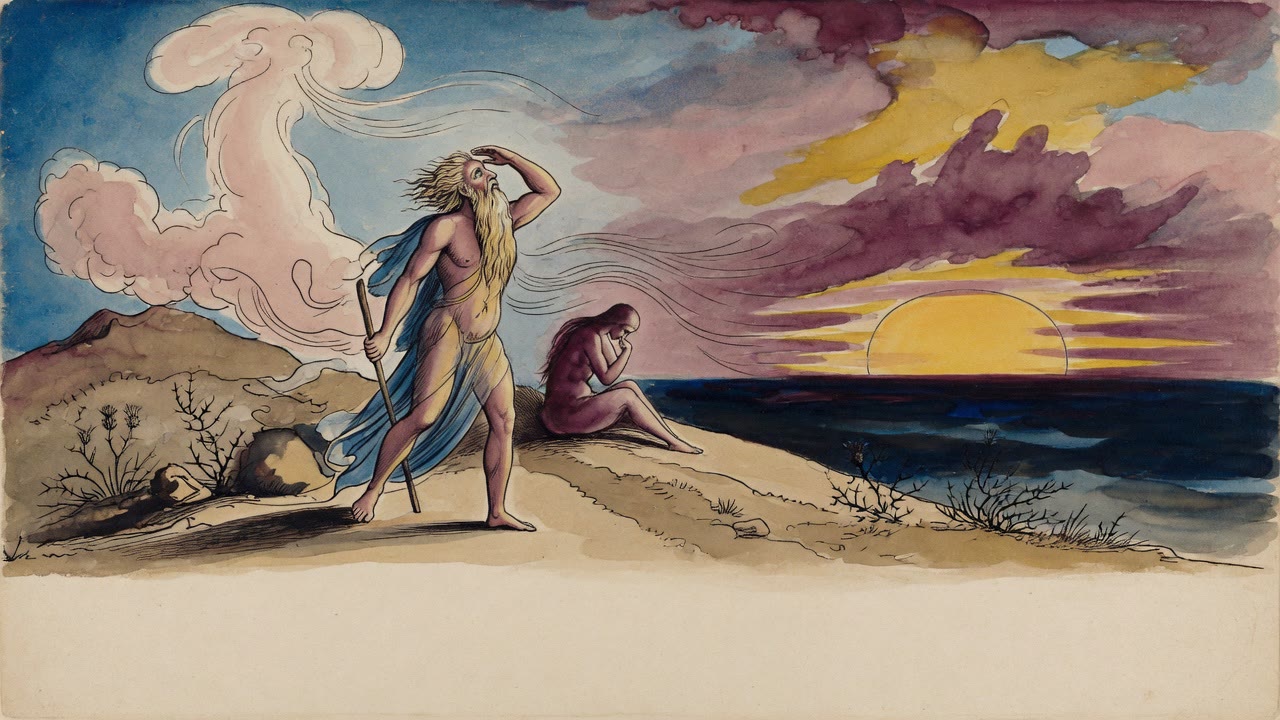
He hung veils. He built worlds, one nested inside the next, each dimmer than the one above, until at the bottom lay a place so thick with concealment that a soul set down in it could not see the Giver at all. He hid the endless sweetness inside the work of giving it away, so that each time the Soul chose to give, to feed, to lift, to hold open another empty hand, one drop of the light would return along the reach. And that drop the Soul could keep without shame, because it had taken it in order to give.

"Now," He said, "you can hold all of it. Take it to give it, and it is yours."

And the Soul, standing in the deepest dark of the worlds He had made for it, reached toward a hand that was not its own. The light stirred behind the veils, the same endless sea it had always been. But when the first drop came back this time, the Soul did not close. It drank, and gave, and in the giving it grew to look like the One who had made it. The likeness, He had known from the start, is the only nearness there is. And the sweetness, at long last, had no bitterness left in it at all.


← All myths
From the tradition

Sources

3 sources

The texts behind this telling. Some cards carry a translation of the source; others are our own retelling of it, and each card says which. Every card links out to the original.

Petichah LeChokhmat HaKabbalah 15:2Petichah LeChokhmat HaKabbalah

Retold in our words. Read the original at the link below.Sefaria-hosted English translation · CC-BY

The Petichah LeChokhmat HaKabbalah, a foundational text for understanding Kabbalah, uses this very human experience to illustrate something profound about the spiritual realms. It speaks to the nature of giving and receiving, and how our perceptions can completely shift the dynamic between giver and receiver.

You're visiting a friend. They insist you stay for dinner. Your stomach might be rumbling, but you politely decline. Why? Because, as the Petichah points out, we naturally value giving. Receiving, on the other hand, can feel… well, a little icky. It can feel like you're somehow less, somehow indebted. It feels "demeaning and degrading" to receive, as the text puts it.

What happens if your friend really insists? What if they make it clear that by accepting their invitation, you're actually doing them a favor? Suddenly, the whole equation changes. You're not just receiving; you're giving them the satisfaction of being generous. You're allowing them to fulfill their desire to share. The Petichah explains that the roles reverse. The receiver becomes the giver, and the giver the receiver. It’s a subtle shift, but a powerful one.

This simple parable is a window into a much larger idea. In Kabbalah, the concepts of giving and receiving – often referred to as hashpa'ah (influence, giving) and kabbalah (reception, receiving) – are fundamental to understanding the relationship between the Creator and creation. It’s not a one-way street. It's a dynamic interplay. Sometimes the greatest gift we can give is the grace to receive with an open heart. To allow someone else the joy of giving. To recognize that by receiving, we're not diminishing ourselves, but rather participating in a sacred exchange. And maybe, just maybe, that awkwardness we feel sometimes is just an invitation to see the world, and our relationships, in a whole new light.

Full source
Baal HaSulam's Introduction to Zohar 7:3Baal HaSulam's Introduction to Zohar

Retold in our words. Read the original at the link below.Sefaria-hosted English translation · CC-BY

Kabbalists have wrestled with that question for centuries. And one of the most profound answers comes down to a single idea: God wants to give. If the ultimate aim of creation, as many believe, is for God to bestow infinite pleasure and goodness upon us, then what's the first thing needed? Someone – or something – to receive it! According to Baal HaSulam, in his introduction to the Zohar, God created a ratzon le-kabel (רצון לקבל), a “desire to receive.” This wasn't something already part of God’s being, because, well, who would God receive from before creation? It had to be entirely new.

This idea flips the script on so many things. It means that the very core of our being, the essence of creation itself, is this innate longing. It's what drives us, motivates us, sometimes even plagues us. But according to this perspective, that desire isn’t inherently bad. It’s the very foundation upon which the entire cosmic plan is built.

Baal HaSulam argues that, in a way, that single creation – the desire to receive – was enough. All the goodness God intended for us? That flows directly from God’s essence, needing no further act of creation. It's like a river of abundance constantly pouring into the vast vessel of our desire.

It suggests that everything we experience, everything that is, from the smallest particle to the grandest galaxy, boils down to this fundamental principle. All of material existence, from beginning to end, in this unique creation is [really] nothing other than “the desire to receive.”

That our deepest yearnings are not a flaw, but a feature. That the universe itself is structured around this dance of giving and receiving. Remember that, according to some of the deepest wisdom traditions, that very feeling connects you to the source of creation itself. What you do with that desire, however, is where the real story begins…

Full source
Baal HaSulam's Introduction to Zohar 11:3Baal HaSulam's Introduction to Zohar

Retold in our words. Read the original at the link below.Sefaria-hosted English translation · CC-BY

Baal HaSulam, in his introduction to the Zohar, that foundational text of Kabbalah, lays out a powerful idea: these levels are there to help us transform our innate selfishness – that "desire to receive" that's so deeply ingrained in us – into a "desire to give."

How? It's not about denying our desires, but about re-orienting them. The goal, he suggests, isn't to stop receiving altogether, but to receive "only in order to give satisfaction to his Maker rather than to benefit himself. this way: it's about aligning our will with the Divine will. It's about transforming our ego-driven desires into altruistic actions. When we do that, we actually begin to resemble the Divine. Baal HaSulam calls this "equating our form" to that of the Creator.

Receiving for the sake of giving – it's actually considered the purest form of giving itself! There's a beautiful analogy for this found in the Talmud (Kiddushin 7a). It talks about how a woman giving a gift to an important man can be seen as a form of exchange necessary for marriage. The key isn't just the gift itself, but the benefit she receives from his acceptance of it. His willingness to receive so that she can experience the joy of giving is, in itself, a complete gift to her.

It's a subtle but profound point: sometimes, the greatest act of giving is allowing someone else to give to you, creating a circle of generosity and connection.

When we manage to receive in order to give, we achieve a complete bond with God. But what does that even mean, a "spiritual bond"? According to Baal HaSulam, it's nothing other than this "equating of form." Our Sages ask in the Talmud, "How can one cleave to God?" (Sota 14a). The answer isn't about physical proximity, but about emulating God's attributes. As the Talmud says, "Rather, cleave to His attributes."

And that, ultimately, is how we become worthy of receiving all the goodness, pleasantness, and softness that was envisioned in the very plan of creation. It's not about earning it through some kind of spiritual merit badge system, but about transforming ourselves into vessels capable of holding and channeling that divine abundance.

So, as we go about our day, let's consider: how can we shift our perspective? How can we transform our desires to receive into opportunities to give, to connect, and to ultimately, cleave to the Divine?

Full source