6 min read

The Soul That Wore Dust to Earn a Body of Light

Before it was born the soul already owned a perfect body of giving, yet it had to wear a garment of hungry dust to make that body its own.

Curated by Arthur · Told by Maggid ·
Table of Contents
  1. The Body That Waited in the Infinite
  2. The Garment of Dust Comes Down
  3. Two Roads Open in the Dark
  4. The King Sent to Break the Stubborn
  5. The Coarse Flesh Remade as Light
The Soul That Wore Dust to Earn a Body of Light Click for full size

The Body That Waited in the Infinite

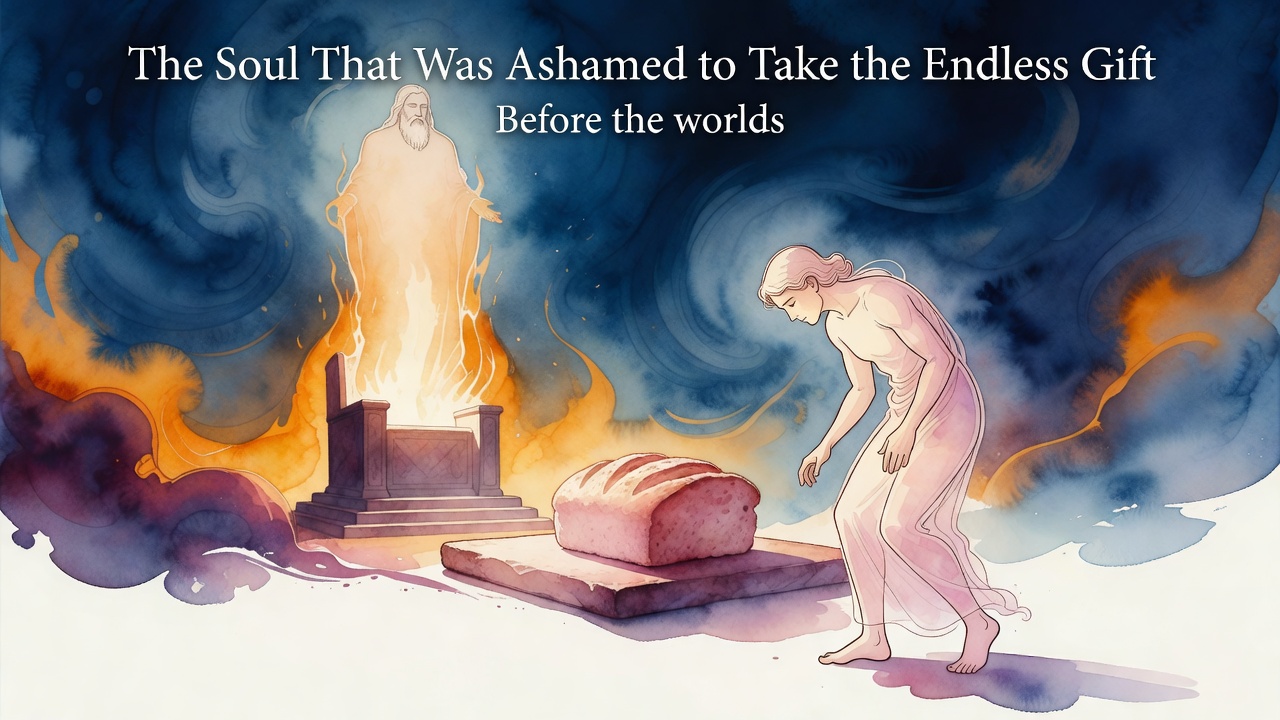
Long before it drew a single breath, the soul already owned a body, and that body was perfect. It stood in Ein Sof, the Infinite, where nothing is withheld and nothing is clutched. There the soul received the way the Infinite itself receives, by giving. Light poured into it and passed straight through, out to everything around it, and the more it let go the fuller it became.

It had one flaw. It had never earned any of it.

The Creator looked at the finished body and did not smile the way a craftsman smiles at good work. A gift no one has labored for sits in the open hand like a cold stone. So the Creator resolved to send the soul down, out of the Infinite, into a country of edges and hunger, and to let it build with its own hands the very thing it already held.

The Garment of Dust Comes Down

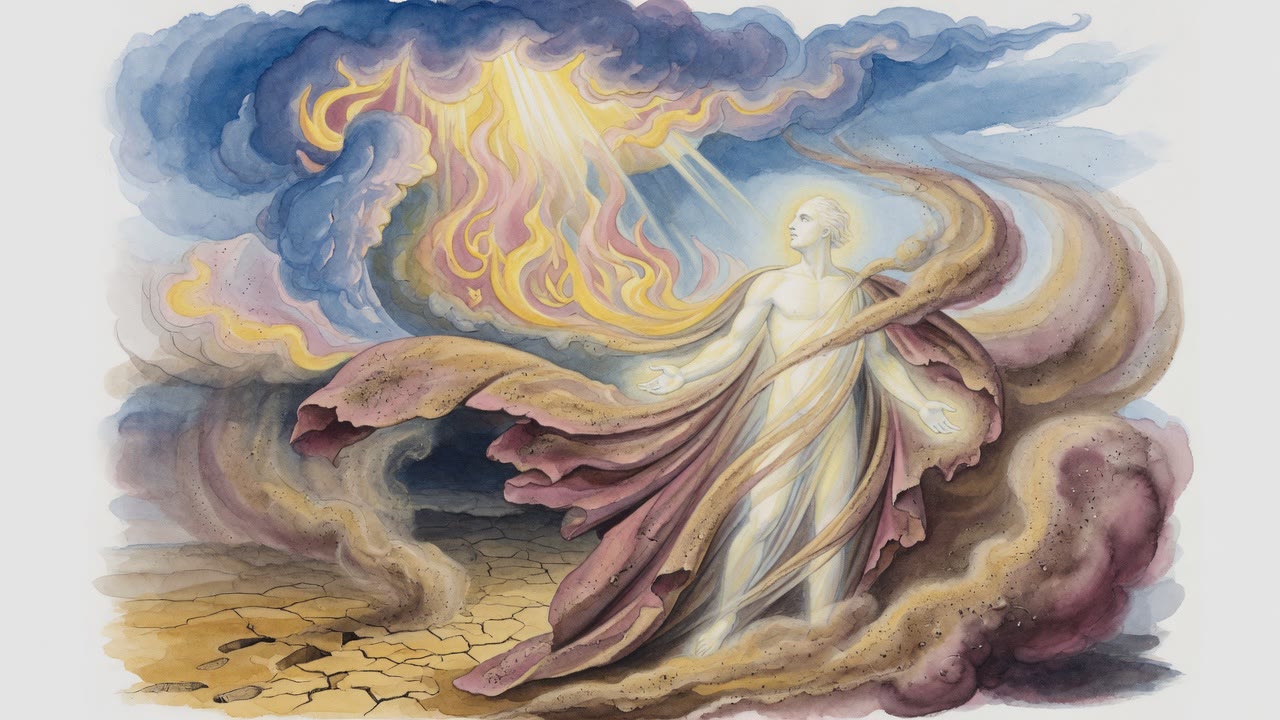
They dressed it for the descent. Over the body of pure giving they drew a second body, coarse and heavy, the color of turned earth. Its name was the desire to receive for oneself, a husk the Kabbalists call the kelipah, and it wanted. It wanted food and warmth. It wanted to be first, and to keep.

This garment was despicable, and it was also the entire purpose. A sculptor cannot carve a masterpiece out of open air. He needs a block of raw, ugly stone standing in front of him, resisting the chisel. The coarse body was that stone. Without something selfish to overcome, the soul would have nothing to overcome, and would stay forever a gift no one had earned. A soul cannot repair what it does not possess.

So the soul went down wearing dust, and forgot the body of light it had left behind.

Two Roads Open in the Dark

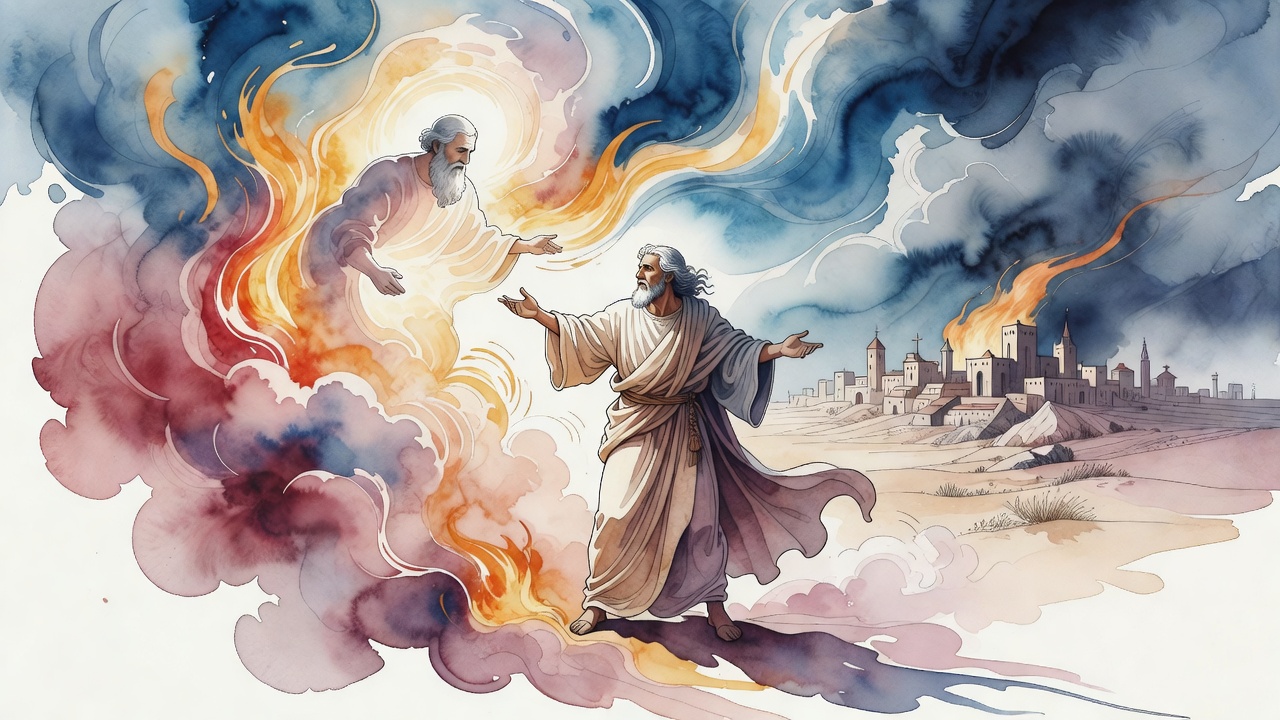
Where it landed, two roads ran forward from its feet, and a voice it half remembered told it that both arrived at the same gate. The gate was the third thing, the finished state, closeness to the Creator, and reaching it was not in question. Only the road was.

The first road climbed uphill by small, patient steps. It was paved with Torah and its commandments, and every step filed a little more selfishness off the garment and turned a little more wanting into willing. A soul that chose this road refined itself slowly, on purpose, and came to the gate worn smooth.

The second road was short. It was also brutal.

The King Sent to Break the Stubborn

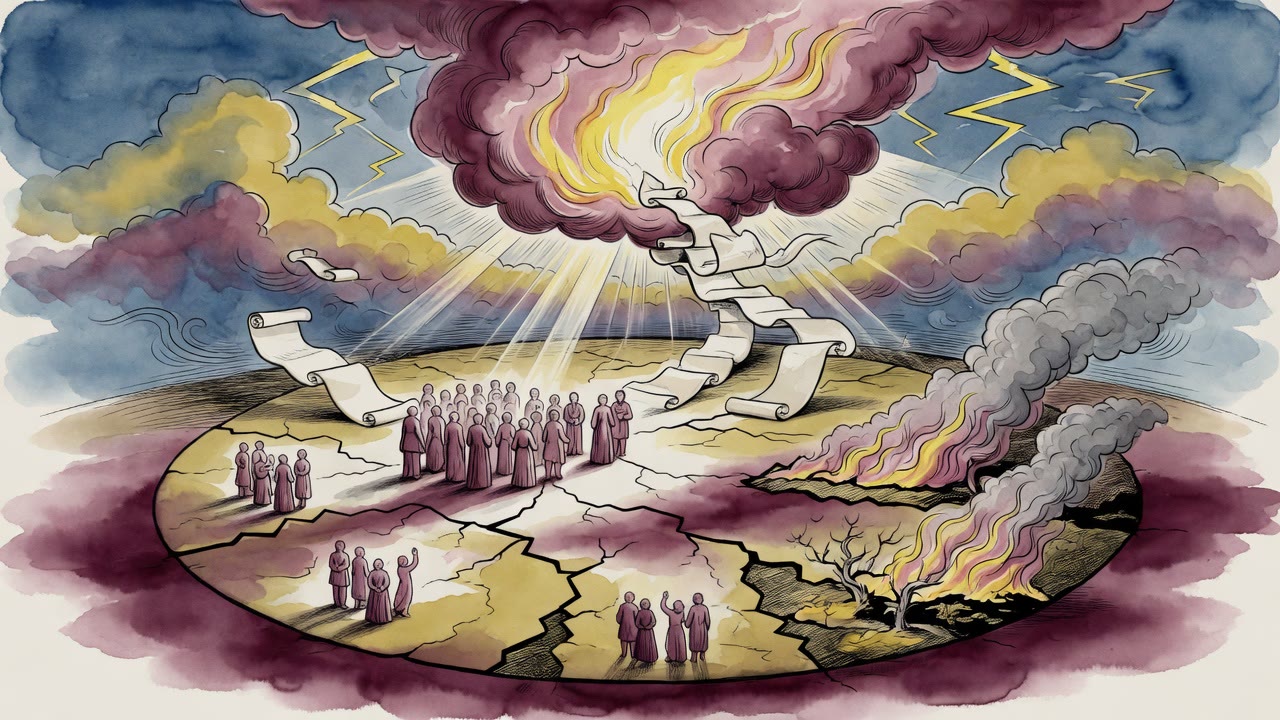
The soul, being dust, wanted the short road, and it wanted to keep its wanting. It clung to the coarse body and would give nothing away. So the Creator spoke the words the Sages later heard in the study house, and they were not gentle. "If you turn back, good. If you will not, I will set over you a king as harsh as Haman, and he will afflict you until you turn back."

Suffering was not punishment. It was a chisel with no patience. Where Torah filed the garment down grain by grain, suffering struck it in great blows. It purified the body by breaking it and made the soul stare straight at its own greed until it could no longer stand to hold it. Some of that striking waited beyond death, in Gehinnom (the realm of judgment after death), where a soul is scoured by fire until nothing selfish is left clinging to it.

Over both roads the same promise hung in the Creator's own voice. "In its time, I will hasten it." The Sages turned the line over and heard two rulings folded inside it. If the soul proved worthy, the Creator would rush the ending forward and spare it the long bitterness. If it did not, the ending would still come, but only in its time, at the crawling pace of pain.

The Coarse Flesh Remade as Light

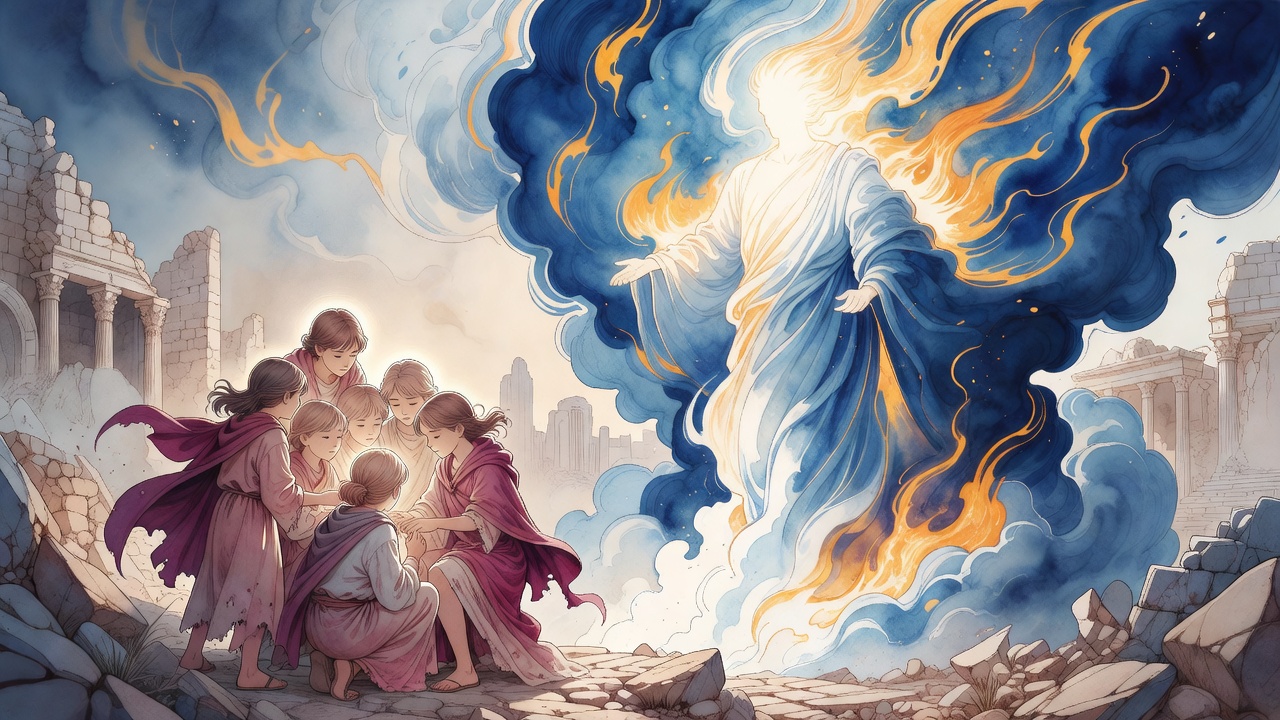
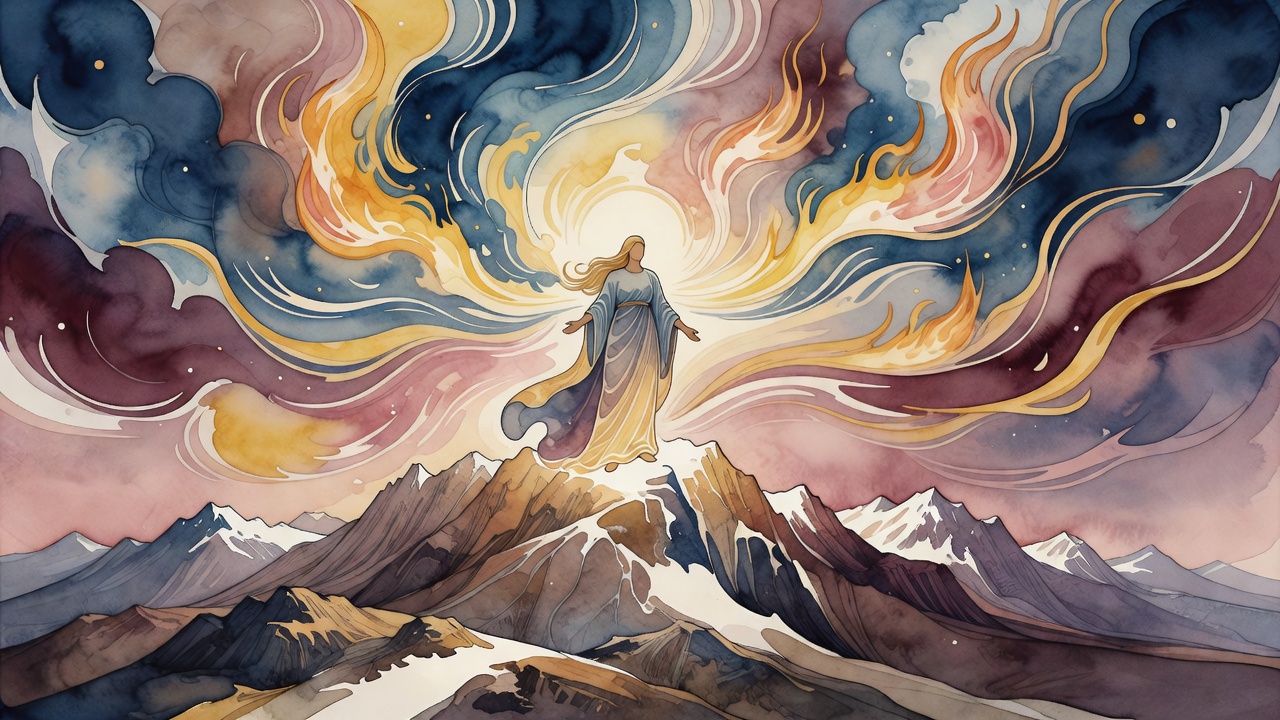
At the end of both roads stood the resurrection, and there the strangest thing happened. The soul expected the coarse garment to be stripped off at last and flung away, the dust discarded for good. Instead the Creator reached for it and remade it. The heavy body was not removed. It was transfigured, the turned-earth flesh reworked until pure giving rested on it and it shone.

Now the soul could receive everything, all the good and pleasure in creation, the whole flood of it, and the receiving no longer stained it. It took the light in order to give the Creator the pleasure of being received from, for the Creator has joy when another takes from His hand. The one that had once grasped for itself now drank the entire ocean, and every swallow was an act of giving.

This is Dvekut, the cleaving, when a soul becomes identical in form to the One it came from. The body of light it had owned before birth and the garment of dust it had worn through the world were a single body now, earned at last, and no one could ever again call it an unlabored gift.


← All myths
From the tradition

Sources

3 sources

The texts behind this telling. Some cards carry a translation of the source; others are our own retelling of it, and each card says which. Every card links out to the original.

Baal HaSulam's Introduction to Zohar 17:2Baal HaSulam's Introduction to Zohar

Retold in our words. Read the original at the link below.Sefaria-hosted English translation · CC-BY

Jewish mysticism, especially through the lens of Kabbalah, offers a pretty radical perspective on that feeling. It suggests that what we perceive as our body, with all its flaws and limitations, is actually just a temporary garment.

The great Kabbalist Baal HaSulam, in his introduction to the Zohar, one of the foundational texts of Kabbalah, offers a fascinating take on this. He proposes that our "true body" – eternal, perfect, and complete – already exists! It exists in the Ein Sof, the Infinite Divine realm.

This "true body," according to Baal HaSulam, takes shape in the Ein Sof in a very specific way: it receives in the form of giving. What does that mean? It means that the ultimate state of being is one of selfless sharing, of giving to others. This is the very nature of the Ein Sof itself, and our perfected selves are aligned with this principle.

So, if our true selves are already perfect, why are we stuck in these imperfect bodies, dealing with selfish desires and limitations? This is where things get interesting. Baal HaSulam explains that in order to reach that perfected state, we need to experience a kind of "husk" or kelipah – a shell of our true body. This kelipah is characterized by the desire to receive for oneself, the very thing that separates us from the Ein Sof.

Sounds grim. But here's the twist: this "despicable and defective form," as Baal HaSulam calls it, is essential. It's the catalyst for our spiritual growth. It's the thing we need to overcome, to repair, in order to truly embody our eternal form. We can't fix what we don't possess. Think of it like this: a sculptor can't create a masterpiece without first having a block of raw stone to work with.

So, should we complain about this temporary, flawed body? Absolutely not! Baal HaSulam argues that our spiritual work, our very avodah, is impossible without it. This "disposable and faulty body" is actually perfectly designed for its purpose – to be a vehicle for our transformation.

This physical body, with all its limitations, isn't meant to last forever. It's temporary, designed to be shed so that we can receive our eternal form. It's like a cocoon that allows the butterfly to emerge.

Perhaps it's an invitation to be a little kinder to ourselves, to recognize that our struggles are part of a larger, divinely ordained process. It's a reminder that even our imperfections have a purpose, that they are the raw material with which we create our best, most realized selves, selves that are already waiting for us in the Ein Sof. And maybe, just maybe, it encourages us to focus a little less on receiving and a little more on giving, aligning ourselves with the very nature of the Divine.

Full source
Baal HaSulam's Introduction to Zohar 14:3Baal HaSulam's Introduction to Zohar

Retold in our words. Read the original at the link below.Sefaria-hosted English translation · CC-BY

It leads us to some pretty incredible places.

The Baal HaSulam, Rabbi Yehuda Leib HaLevi Ashlag, in his introduction to the Zohar, peels back the layers of this concept, and it's not just about us, but about our relationship with the Divine.

He talks about a time, after the resurrection of the dead, when something truly extraordinary happens. It's not just our souls that get a tune-up; even our bodies undergo a transformation.

The Baal HaSulam says it will be transformed so that a form of pure giving will rest upon it. What does that even mean? It suggests that our very nature, our inherent desire to receive, will be reshaped. so much of our lives is driven by what we want, what we need. But what if that desire could be channeled, not just for our own benefit, but for the benefit of… well, everything?

This brings us to the idea of receiving for the sake of giving. It’s a concept central to Kabbalistic thought. The Baal HaSulam explains that once our souls have undergone this complete repair, we become worthy of receiving all the good, pleasure, and pleasantness that exists in creation. All of it! But here's the kicker: we receive it not out of a selfish desire, but out of a desire to give pleasure to our Creator.

Why is this so important? Because, as the Baal HaSulam emphasizes, God has pleasure when others receive from Him. We often think of giving to God, of sacrificing and offering. But here, we learn that our receiving, when done with the right intention, is itself an act of giving.

It's about achieving a state of Dvekut, cleaving to the Divine, becoming "identical in form" to our Creator, as the Baal HaSulam puts it. It’s a state where our actions, even our desires, are aligned with the divine will. We become channels for goodness, conduits for blessing.

So, what does all of this mean for us, here and now? It's an invitation to re-examine our motivations. Are we acting out of a place of lack, of wanting? Or can we find ways to shift our perspective, to receive with gratitude and to give with joy? Can we begin to transform our own "receiving" into a form of giving, a source of pleasure for the Divine?

It's a lifelong journey, this process of repair. But the vision offered by the Baal HaSulam is a powerful one: a future where our very beings are transformed, where receiving and giving become one, and where we find ourselves in perfect harmony with the Divine. And that, my friends, is a future worth striving for.

Full source
Baal HaSulam's Introduction to Zohar 16:2Baal HaSulam's Introduction to Zohar

Retold in our words. Read the original at the link below.Sefaria-hosted English translation · CC-BY

Think of it like this: God wants us to reach a third stage, a state of completion and closeness to Him. To get there, we have a choice. As Baal HaSulam explains in his Introduction to the Zohar, we can choose the path of fulfilling Torah and mitzvot, actions designed to refine our desires and bring us closer to the Divine.

What if we don't? What if we stubbornly cling to our own desires and ignore the call to spiritual growth? Well, then we find ourselves on the second path: the path of suffering.

This isn't some kind of divine punishment in the traditional sense. Instead, suffering acts as a catalyst. It purifies the body and, more importantly, forces us to confront our selfish desires. It compels us, eventually, to transform our "desire to receive" – our ego – into a "desire to give," allowing us to bond with God.

The Sages of the Talmud understood this dynamic. There's a powerful passage in Sanhedrin (97b) that says, "If the Jewish people repent, good [they will be redeemed]; if not, I will appoint a king over you like Haman [who will afflict you with harsh punishments] and force you to repent. Suffering, even at the hands of someone like Haman, can ultimately lead us back to the right path.

This idea echoes in the prophecy from Isaiah (60:22): "In its time, I will hasten it." The Talmud (Sanhedrin 98a) unpacks this further: "If they are worthy, I will hasten it [the redemption]; if they are not worthy, it will be at its time.” In other words, if we actively choose the path of Torah and mitzvot, we can accelerate our spiritual repair and avoid prolonged, bitter suffering.

But if we don't? Well, then the repair will happen "at its time" – when the suffering becomes so intense that it breaks us down and forces us to change. This path can even include the punishments of souls in Gehinnom (the place of spiritual purification after death), Gehinnom, the place of spiritual purification in Jewish tradition, where the soul is cleansed through suffering.

According to Baal HaSulam, the third stage, that state of completion, is inevitable. It's a guaranteed destination. But our free will determines how we get there. Do we choose the path of Torah and mitzvot, actively working to refine ourselves and draw closer to God? Or do we resist, forcing the universe to use suffering as a tool for our transformation?

The choice, as always, is ours. And it's a choice we make every single day. Which path will you choose?

Full source