6 min read

Gehinnom Soul Learns the Lash Is Not the End

A wicked soul begs the fire to finish him, and the Supreme Will answers that punishment is a parent's hand, never the last purpose of creation.

Curated by Arthur · Told by Maggid ·
Table of Contents
  1. The Soul Who Asked for Faster Fire
  2. Clay That Cannot Judge the Sculpture
  3. A Father's Hand on a Living Child
  4. Why the Wicked Still Burn Before Dawn
  5. The Cycle That Refuses a Permanent Hell
Gehinnom Soul Learns the Lash Is Not the End Click for full size

The Soul Who Asked for Faster Fire

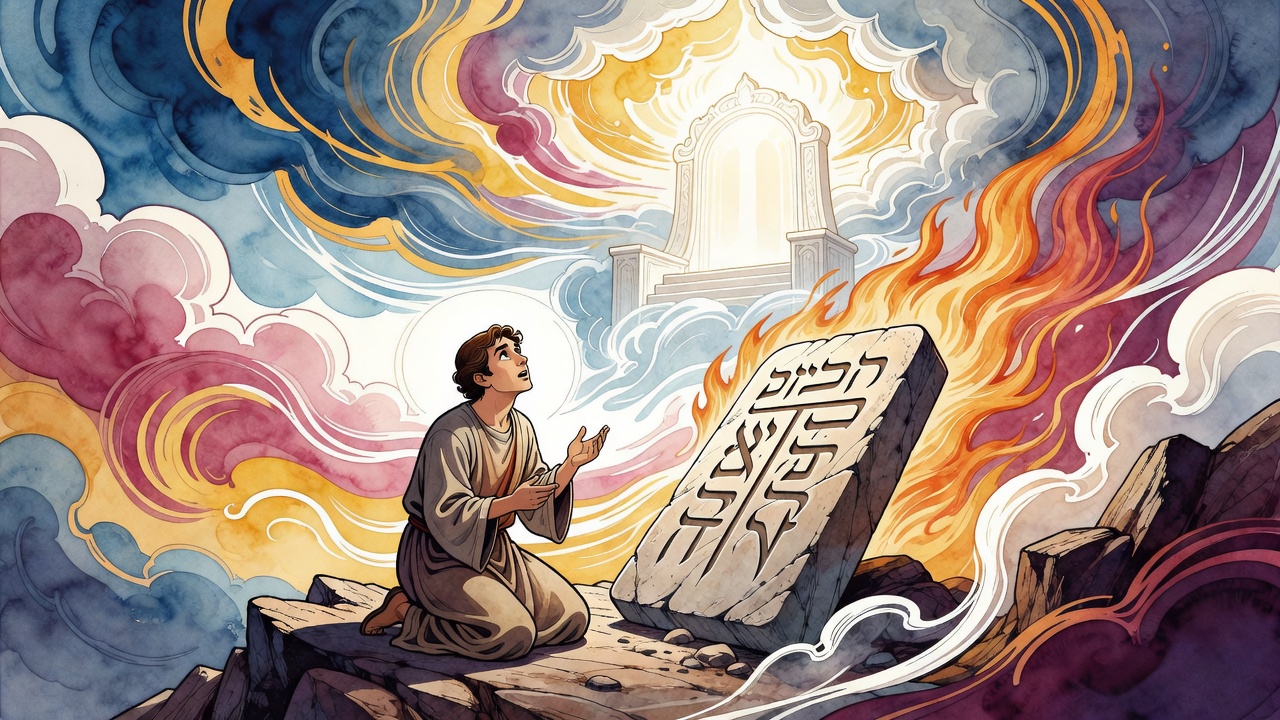
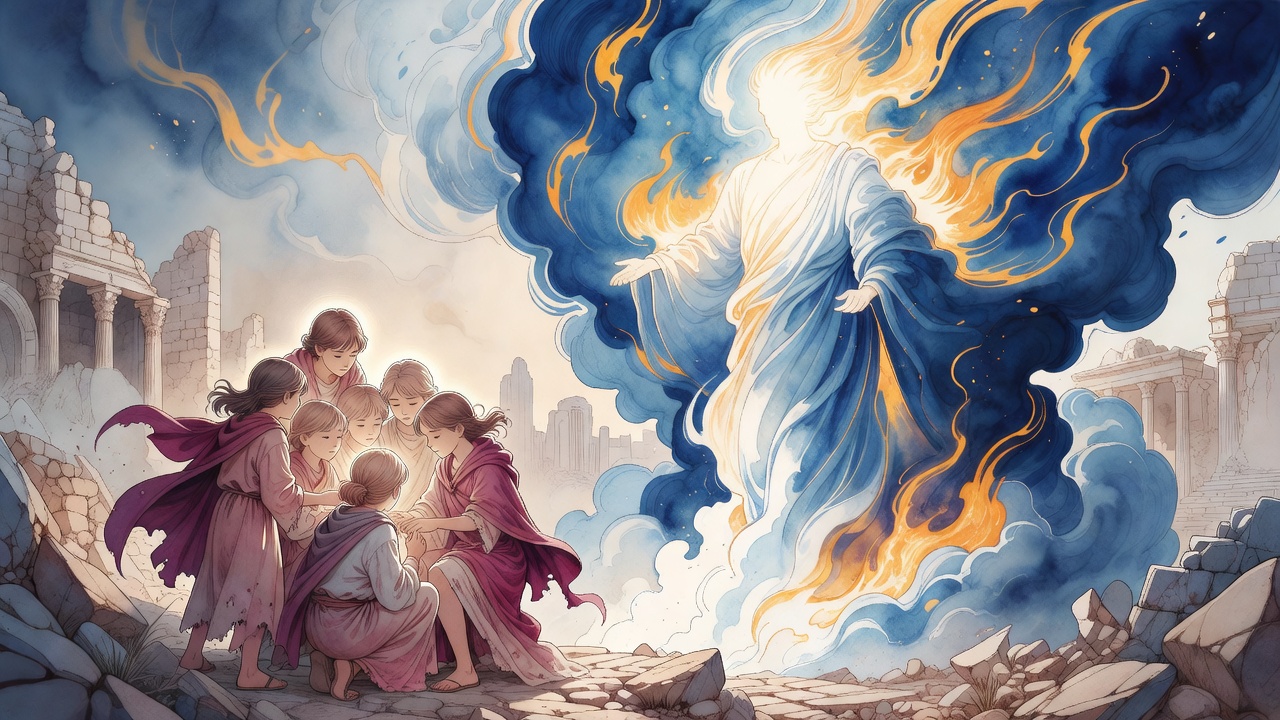
He woke inside heat that had no sun. The air itself chewed. Memory came back in pieces: the market theft, the false oath, the night he laughed when a widow lost her case. Now he stood in a place the living call Gehinnom, and he wanted only one mercy. Finish me. Make the burn absolute. End the story.
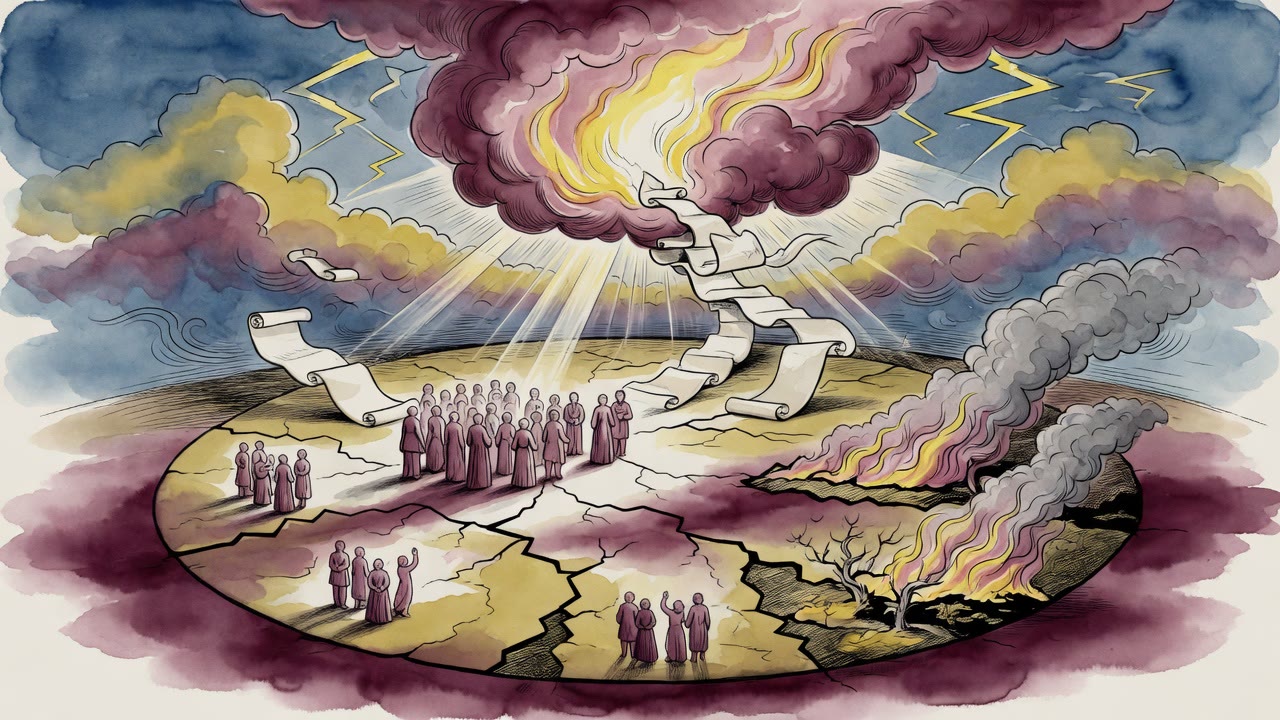
An angel of judgment did not smile. The angel held a lash of light and a ledger of days. "You still think the lash is the purpose," the angel said. "You still think pain is the last word of the Maker."

The soul spat ash. "If God is good, why am I here? If the end is good, why this corridor of fire?"

Far above both of them, something older than fire watched. The Supreme Will did not shout. It remembered. The whole cycle of a life, every rise and fall, every wicked choice and every bruise that followed, was still moving toward a finish the soul could not yet taste.

Other souls rushed past, screaming for erasure. He almost joined them. Then the ledger opened to a page that still had blank lines, and terror changed shape. Blank lines mean the story is not finished.

Clay That Cannot Judge the Sculpture

The angel set a lump of clay in the air between them. Rough. Wet. Ugly. Then the clay twisted under invisible hands into a vessel with a clean rim. The vessel held water. The water held light.

"You are still the clay," the angel said. "You keep comparing the wet lump to the finished cup and calling the Maker cruel. The beginning and the end are not the same kind of thing. Punishment is the pressure of the hands. The end is the vessel that can hold good without cracking."

The soul flinched from the image. In life he had hated pressure. He had wanted pleasure that asked nothing of him. Here the pressure had a name and a face, and neither name nor face looked like hatred.

"Is the fire good, then?" he asked, bitter.

"The fire is not the desire," the angel answered. "The Will never loved the fire for its own sake. The Will loves the end the fire serves when no gentler road will turn a hard heart. If a softer path could reach the same good, that path would be chosen. The lash is not the cake. The lash is the oven when the dough refuses the sun."

He reached for the vessel and burned his fingers. Capacity is not granted by wishing. Capacity is annealed. The angel waited until the soul tried again with a slower hand.

A Father's Hand on a Living Child

For a breath the corridor became a house. A father stood over a child who had run toward a cliff edge. The father's grip bruised the wrist. The child screamed. From the child's height, love looked like violence.

The father did not enjoy the scream. He enjoyed the child still breathing. The bruise was real. The cliff was more real. Guidance sometimes arrives as consequence, and neither parent nor child calls the hour pleasant.

The soul recognized the scene from a street he had once ignored. He had watched a father yank a boy back from a cart and muttered about cruelty. Now he stood on the receiving end of a larger hand and understood the geometry of rescue.

"Even what you named evil," the angel said, "can serve a higher purpose when it is not a rival god but a tool inside one plan. The Supreme Will brings the whole cycle. If the cycle ends in good for the wicked and the righteous alike, then the purpose of the Will itself is only good. A baker who intends a cake does not secretly intend poison."

The child in the vision stopped screaming long enough to look back at the cliff. Fear of the edge finally outweighed fury at the hand. That is the only success punishment can claim. Not adoration of the bruise. Hatred of the fall.

Why the Wicked Still Burn Before Dawn

The soul wanted a clean answer: either the fire is holy or the fire is a mistake. The teaching refused both simplifications. When something transforms, the middle state is not the same as the goal. A wicked life can travel through punishment and still arrive at good without making the punishment identical to the prize.

The end aligns with the original Will. The means can be bitter without becoming the Will's first love. That distinction kept the soul from worshiping pain and from denying justice. Both errors were easy in the dark.

He remembered Isaiah's hard line without needing a scroll in his hand: the Holy One forms light and creates darkness, makes peace and creates evil (Isaiah 45:7). Created. Owned. Not freestanding. Not a second throne.

The angel lowered the lash. The heat did not vanish. Heat that vanishes too soon leaves a soul unshaped. Heat that claims to be forever would lie about the Supreme Will.

Somewhere a living widow still waited for a coin he had stolen. The fire could not replace the coin. The fire could burn the habit that stole.

The Cycle That Refuses a Permanent Hell

"Walk," the angel said. "Not because walking erases what you did. Because the complete cycle of existence, even for the most twisted among the living, is not permitted to end in evil as its final purpose. Good is the governing aim. Remember that when the next wave of fire comes. The fire is not the story's last sentence."

The soul took one step. Then another. His legs shook. Somewhere a parent's hand still held a child's wrist on a cliff road of spirit. Somewhere clay still spun under patient pressure. Somewhere the Supreme Will kept the end in view while the middle burned.

He no longer asked the fire to finish him. He asked the end to keep its promise. The corridor answered with more heat and less despair. That was not comfort. That was architecture.

Behind him, the ledger closed one page and opened another. Ahead of him, good waited as a finished vessel waits for water: not as flattery, but as purpose. When the next wave came, he did not bow to it as a god. He endured it as a tool he had forced heaven to use.


← All myths
From the tradition

Sources

4 sources

The texts behind this telling. Some cards carry a translation of the source; others are our own retelling of it, and each card says which. Every card links out to the original.

Kalach Pitchei Chokhmah 2:7Kalach Pitchei Chokhmah

Retold in our words. Read the original at the link below.138 Openings of Wisdom, trans. Rabbi Avraham Greenbaum, Azamra Institute (2005) · CC-BY

Kalach Pitchei Chokhmah argues that evil cannot be the final purpose of creation because the complete cycle of existence ends in good.

Way, way out.

In this teaching, the “complete cycle” of human existence – encompassing everyone, even the most wicked among us – ultimately leads to good. Yes, you read that correctly. This cycle, with all its ups and downs, its joys and sorrows, eventually culminates in goodness.

If the final outcome of this entire cycle is good, then good is the ultimate purpose governing the entire process. It's the cosmic cake we’re all baking, so to speak!

And here’s where it gets really interesting.

The Kalach Pitchei Chokhmah argues that it is the Supreme Will – some might say God – that brings about this entire cycle. If the cycle's ultimate purpose is good, then the very purpose of the Supreme Will must also be inherently good.

Think of it this way: if the baker intended to make a delicious cake, then the baker's very intention, their will, was geared toward the creation of something delicious.

Therefore, the entire purpose of the Supreme Will is only good.

This isn't just wishful thinking; it's presented as a logical deduction. A chain of reasoning built upon the idea that purpose governs all actions.

Of course, this raises all sorts of questions. If the Supreme Will is entirely good, why is there so much suffering and evil in the world? Why do bad things happen to good people? These are questions that theologians and philosophers have wrestled with for centuries.

Perhaps the answer lies in the nature of cycles. Like the seasons, there are periods of darkness and light, of growth and decay. Maybe evil is a necessary part of the process, a temporary phase that ultimately leads to a greater good. Or perhaps our limited human perspective prevents us from fully grasping the grand design. As the Zohar, a central text of Kabbalah, often reminds us, the ways of the Divine are beyond human comprehension.

But this concept from the Kalach Pitchei Chokhmah offers a glimmer of hope. A reassurance that, despite the darkness we see around us, there is an underlying purpose, a divine intention, that is ultimately geared toward goodness.

So, the next time you're feeling overwhelmed by the world's problems, remember this: the cycle isn’t finished yet. And according to this ancient wisdom, its ultimate destination is good.

Full source
Kalach Pitchei Chokhmah 2:8Kalach Pitchei Chokhmah

Retold in our words. Read the original at the link below.138 Openings of Wisdom, trans. Rabbi Avraham Greenbaum, Azamra Institute (2005) · CC-BY

The core of the question boils down to this: is the punishment that the wicked endure before the ultimate end a good thing, or not? But like many things in Jewish thought, the answer is layered and nuanced.

The text posits that when something undergoes a transformation, where its final state is drastically different from its initial one, we can't really compare the beginning and the end. Think of a lump of clay being molded into a beautiful sculpture. The clay is the starting point, and the sculpture the end. They're fundamentally different, aren't they?

So, applying this to the wicked: their journey, according to Kalach Pitchei Chokhmah (Wisdom), involves suffering punishment, but ultimately leads to good. The final state – redemption, perhaps, or atonement – is fundamentally different from the painful process they undergo to get there.

The text then makes a crucial distinction: the end – the ultimate good – aligns with the original intention, the "Will" that set the entire cycle in motion. But the means – the punishment itself – is not in the same category. It wasn't the initial desire. It's not inherently "good" in the same way the final outcome is.

Okay, so if punishment isn’t intrinsically good, why does it exist at all?

Here’s the kicker: the text argues that the ultimate good, that final positive transformation, is impossible to achieve without the intermediate stage of suffering. It's a difficult pill to swallow, but the idea is that growth, change, and ultimately, redemption, often require us to confront the consequences of our actions, to experience discomfort, even pain.

Think of it like this: a caterpillar must undergo a complete metamorphosis within its chrysalis – a process that surely involves struggle and perhaps even a kind of "suffering" – to emerge as a butterfly. The beautiful butterfly is the intended end, but the transformative process within the chrysalis is the necessary, albeit potentially unpleasant, means.

Kalach Pitchei Chokhmah is saying that if there were a way to reach the desired end without this intermediary stage, then that suffering simply wouldn't exist. Its very existence implies its necessity.

It’s a tough concept, and one that doesn't offer easy answers to the problem of evil. But it does offer a framework for understanding suffering not as an arbitrary infliction, but as a potentially necessary component of a larger, ultimately benevolent, process. It suggests that even in the darkest moments, there might be a purpose, a path towards transformation, even if we can't see it in the midst of the storm. It invites us to consider the possibility that even the most painful experiences can be a catalyst for growth, leading us towards a better version of ourselves. So, the next time you confront the question of suffering, remember the wisdom of Kalach Pitchei Chokhmah: the end and the beginning are not the same, and sometimes, the journey through darkness is the only way to reach the light.

Full source
Kalach Pitchei Chokhmah 2:9Kalach Pitchei Chokhmah

Retold in our words. Read the original at the link below.138 Openings of Wisdom, trans. Rabbi Avraham Greenbaum, Azamra Institute (2005) · CC-BY

No parent wants to punish their child. The whole point is to guide them, to help them grow into a responsible, kind person. But sometimes, that guidance involves consequences, things that neither the parent nor the child enjoys. Is punishment good, in and of itself?

That’s the kind of thorny question that the Kalach Pitchei Chokhmah (Wisdom) grapples with. (The name itself means something like "Garlands, Openings of Wisdom.") It's a deep dive into some core concepts in Jewish thought.

What happens when what we think is the divine plan seems...well, kinda awful? If God is all-good, all the time, how do we explain suffering, hardship, even punishment?

The Kalach Pitchei Chokhmah suggests that punishment – whether it's a personal setback or a global crisis – isn't the ultimate goal. It's a means to an end. A tough, unpleasant, but ultimately necessary step on the path to something better.

The text argues that if there were another way, a gentler, easier way to reach that same destination, that would be the preferred route. Because, at its core, God's will is for good. Pure, unadulterated good.

The idea that punishment is antithetical to God's inherent goodness isn't new. We see echoes of this in other Jewish texts, too. The goal is always tikkun (spiritual repair) olam, repairing the world. And that repair, ideally, wouldn't require so much…pain.

The Kalach Pitchei Chokhmah takes it a step further. Just as individual punishments eventually cease (we hope!), so too, the text implies, will the need for punishment on a grand scale eventually fade away. The suffering, the hardship, the things that make us question everything – they won't last forever.

A reminder that even in the darkest times, even when things feel utterly unfair, there's a bigger picture. A picture where goodness prevails, and the need for harsh lessons disappears. It's a vision of a world where love, compassion, and understanding are the guiding principles, not painful consequences. A world we should all strive to create.

Full source
Kalach Pitchei Chokhmah 2:10Kalach Pitchei Chokhmah

Retold in our words. Read the original at the link below.138 Openings of Wisdom, trans. Rabbi Avraham Greenbaum, Azamra Institute (2005) · CC-BY

The Kabbalists certainly did. And they wrestled with this very question: If God is good, and only good, then how do we make sense of the not-so-good things that happen?

The Kalach Pitchei Chokhmah, a profound work of Jewish mystical thought, dives headfirst into this seeming paradox. It suggests that even the things that appear to be "evil" – and let's be real, the world has seen its fair share – ultimately serve a higher purpose.

Think of it this way: Imagine a parent who knows their child needs a tough lesson to learn. The parent might allow the child to experience a consequence – something that feels unpleasant in the moment – so that the child can grow and mature. The parent's intention isn't to cause pain, but to guide the child towards a better future.

The Kalach Pitchei Chokhmah posits something similar on a cosmic scale. It argues that just as God provides the means for each individual to eventually attain good, God also possesses the power to create circumstances, even those that seem like punishments, that ultimately lead the entire world towards goodness.

The text emphasizes that God's will is, and always will be, for good. This isn't just a nice sentiment; it's a fundamental truth that underpins all of creation. Even if the path to that good involves what we perceive as "evil," that doesn't negate the ultimate goal. On the contrary, the "evil" serves as a catalyst, a necessary step in the journey. It's a means to an end.

And this end, this ultimate good? It's not temporary or fleeting. It endures forever. Because, as the Kalach Pitchei Chokhmah reminds us, God's power is eternal, and only God's will prevails. What emerges from this whole cycle, from every angle, is nothing less than God's essential goodness.

It's a challenging idea. It requires us to trust that there's a bigger picture, a divine plan that we may not always be able to see or understand. It asks us to believe that even in the darkest of times, God's goodness is still at work, guiding us toward a brighter future.

So, the next time you're confronting the presence of suffering in the world, remember this teaching from the Kalach Pitchei Chokhmah. Remember that even the things that seem bad may ultimately be part of a larger, more beautiful design. And that, ultimately, God's will for good will endure.

Full source