Evil Builds a Throne and Finds It Vacant
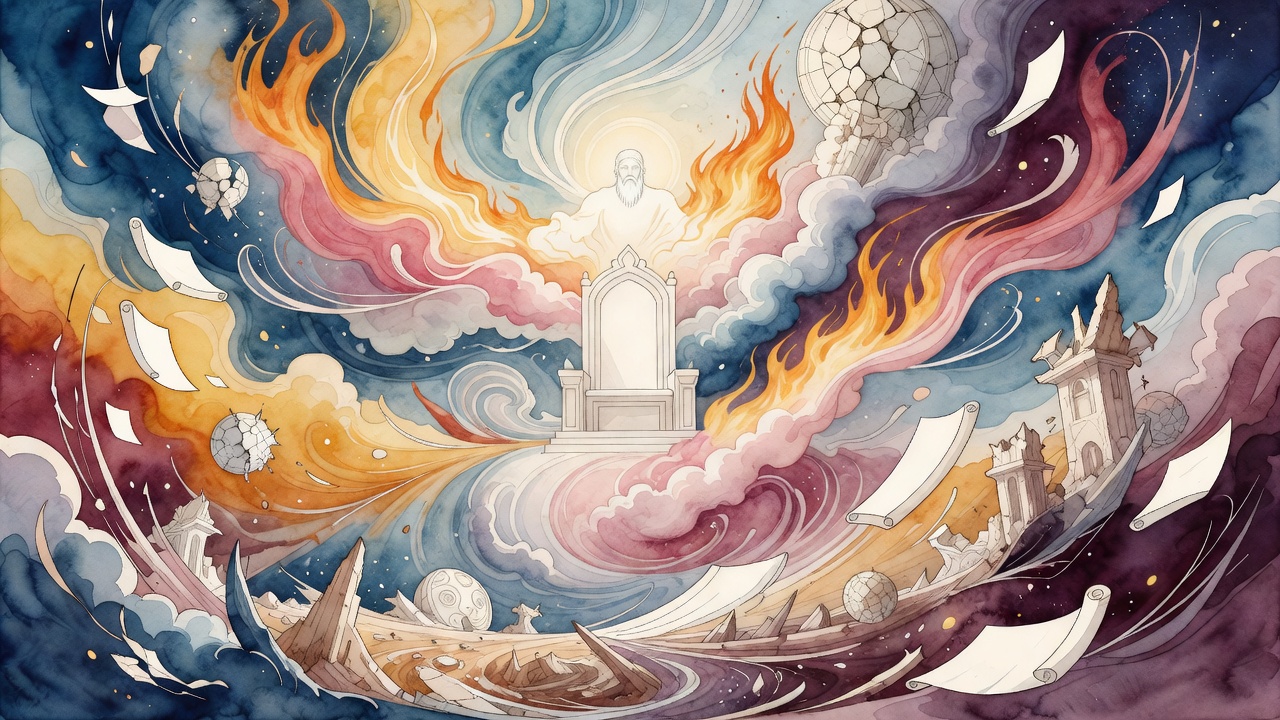
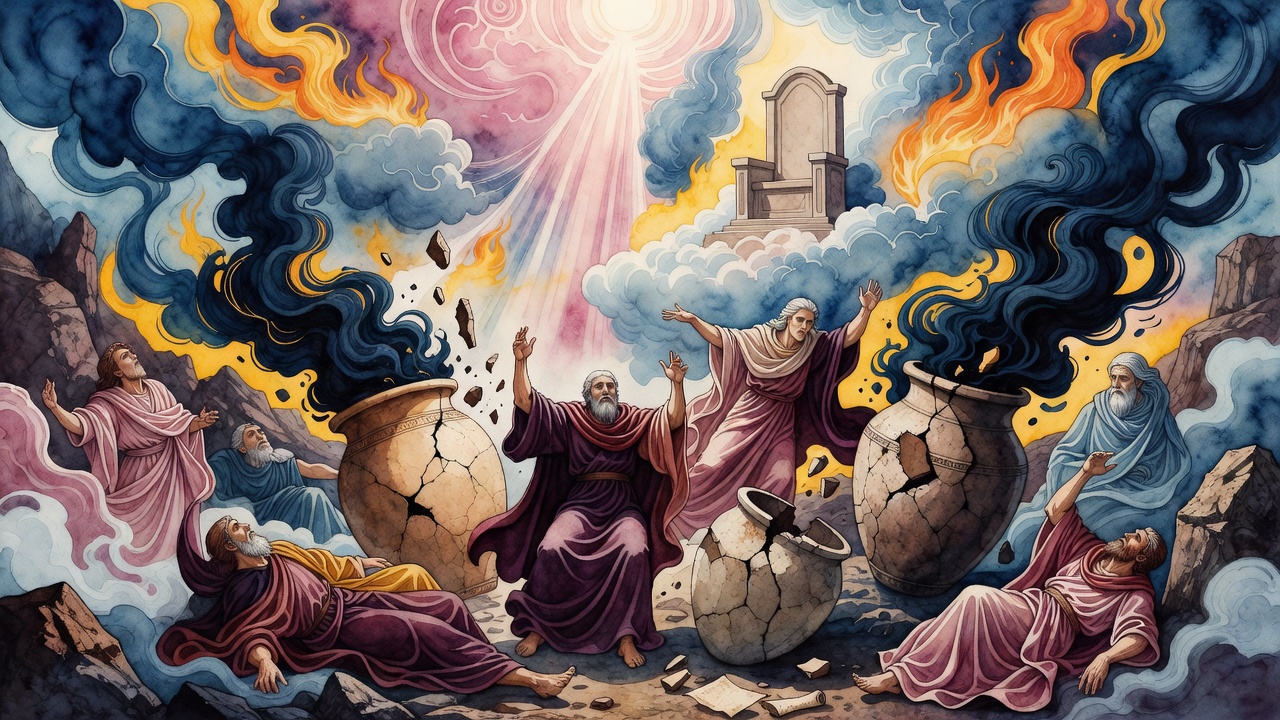
He set a second chair opposite the Throne and waited for a rival to sit. The gold looked solid. Samael would not take the seat.
Table of Contents
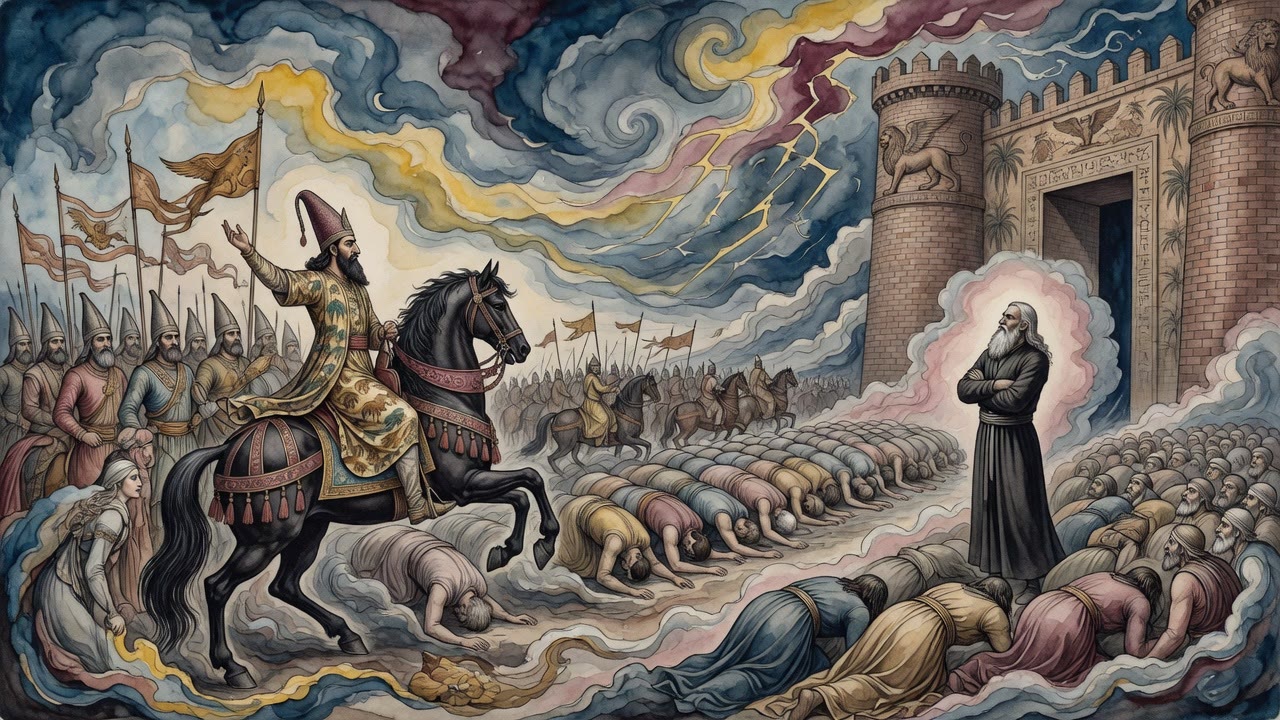
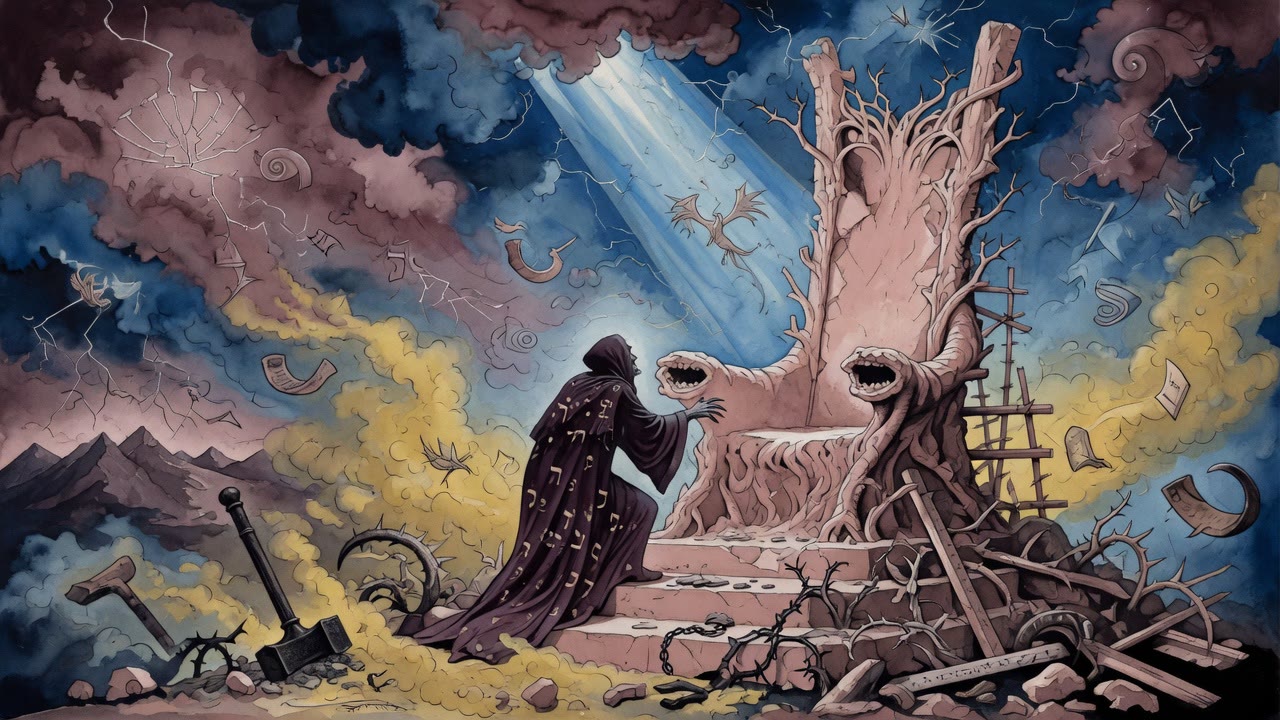
A scholar dragged a second chair across the marble of the upper court and set it opposite the Throne. Gold leaf. Sharp edges. Room for a rival. Samael watched from the side and did not sit.
 Click for full size
"Two domains," the scholar said. "Light and dark. God and a second power. Otherwise the slaughter makes no sense."
Angels of accusation leaned in to see if the furniture would hold.
The Voice That Would Not Rise
God did not stand. Standing would have honored the chair. A voice moved through the chamber like a law, not like a debate. "There is one domain. Echad (אחד), One. One Will. No other source."
The scholar pointed at history's blood. "Then who owns this?"
"I do," the voice said. "Even what you fear."
Samael's shadow stretched along the floor and stopped short of the Throne. He is an officer of testing, not a founder of a second sky. The scholar had tried to promote him. The promotion failed before it was stamped.
Isaiah's Line Across the Floor
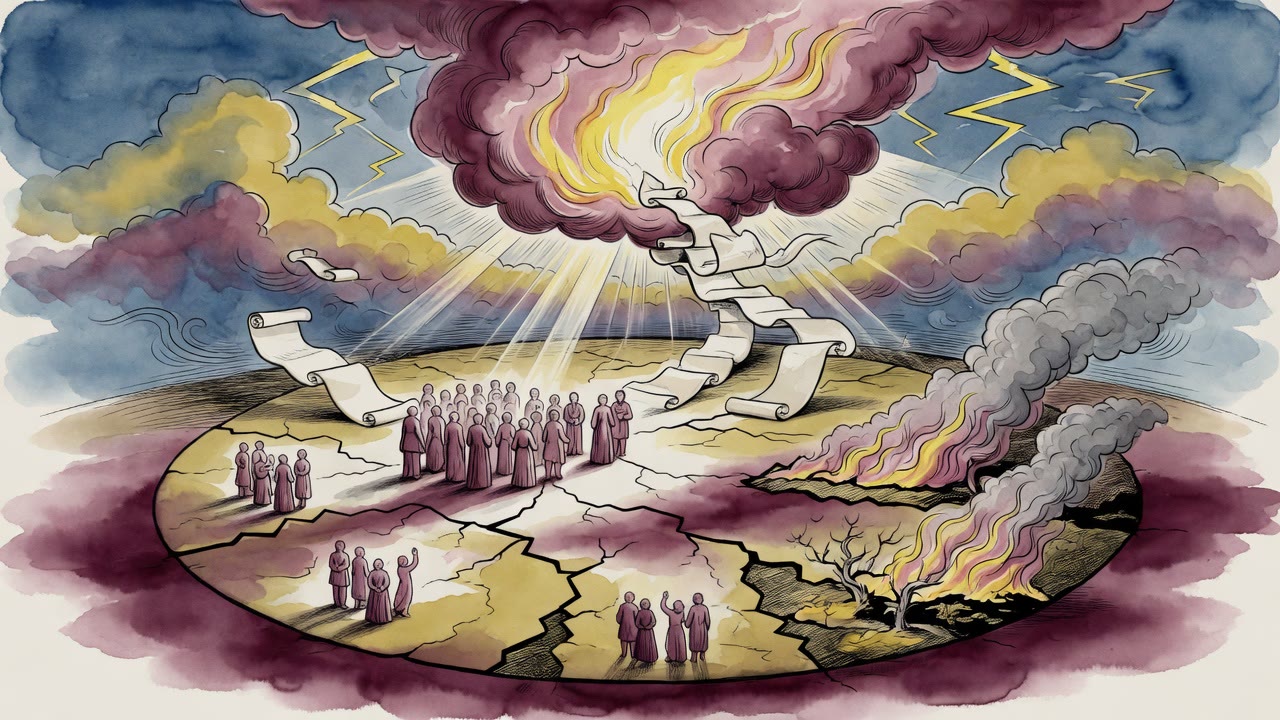
A scroll unrolled without hands. The line fell across the marble: "I form the light, and create darkness: I make peace, and create evil: I the Lord do all these things" (Isaiah 45:7).
The scholar's throat closed. If evil is created, it is not co-eternal. If it is not co-eternal, it cannot wear a crown of its own. The chair under his theory began to tilt.
"Why invent the opposite of Your own face?" he whispered.
God did not soften the answer. He willed what looks like evil so that good would stand out sharp, and so that no creature could claim a rival that stood on its own. Only unlimited power can bring forth what looks like its opposite and still remain One. Samael's shadow lengthened, then thinned. He would accuse. He would not found a court of night.
The scholar tried to bargain. "Let evil be a tool, but a lasting tool." The scroll did not add a verse for that. A tool that lasts forever stops being a tool and starts being a throne.
What Dies Cannot Be a God
The court filled with images of empires, plagues, private cruelties. Each one screamed independence for a season. Each one ended. A procession of fallen tyrants crossed the vision, crowns already rust. Their cruelty had been real. Their forever had been a claim that time stripped.
"Even when events look as if they run on a created force," an angel of mercy said to the scholar, "the source remains good. Horror that ends is not a second throne. Horror that ends is a lie that time will peel."
The scholar wanted the comfort of two kings. Two kings make the world simple. Blame the other one. One Will leaves no such door. The blood still belongs to the One who claims the whole field.
He fell to his knees, not in piety. In arithmetic. One domain. Everything else is weather.
The Crown Hits the Floor
Another chamber opened. There the Will was not a mood. Goodness poured according to a plan that includes service, and a gift that does not shame the one who receives it. Evil was allowed a place to act the way a builder allows scaffolding that will later be taken down.
"At the end," a scribe of light said, "damage is repaired. Evil turns back into actual good. Concealment first. Revelation last. Your chair has no seat in that ending."
The second crown slid off the stolen chair and rang on the floor like cheap metal. No one picked it up.
Samael bowed, not as a rebel king, as an officer of a court that never shared sovereignty.
The scholar asked what to say when a child dies and the street wants a second god to hate. The scribe did not soften it. "Do not crown darkness to make grief easier. Easy grief that seats a rival is still a lie."
The Empty Chair Left Standing
They left the empty chair in the chamber as a warning, not as an altar. Students of mystery who later climbed in dream would see it and feel the itch to stock it again. The chair would hold nothing. That is its only honest work.
The scholar woke in his body with Isaiah's line still cutting his sleep. He never again taught two thrones. When disciples asked why evil bites, he said, "Because the One who makes peace also creates the tool that proves no tool is a god."
Outside his window a market cheated and a widow prayed. Both sounds rose into the same air. The hard line did not soften the widow's day. It refused to crown her enemies as eternal.
Night returned. The empty chair waited in the upper court, polished, useless, and true. In the morning he smashed a small two-domain diagram he had once drawn for students. Charcoal dust rose. He swept it into the street and did not apologize to the dust.
← All myths