A Soul Refuses Free Bread and Asks to Earn It
Other souls grabbed the loaf and could not lift their eyes. He left the table hungry. Years later he came back with work on his hands.
Table of Contents
 Click for full size
Bread He Would Not Take
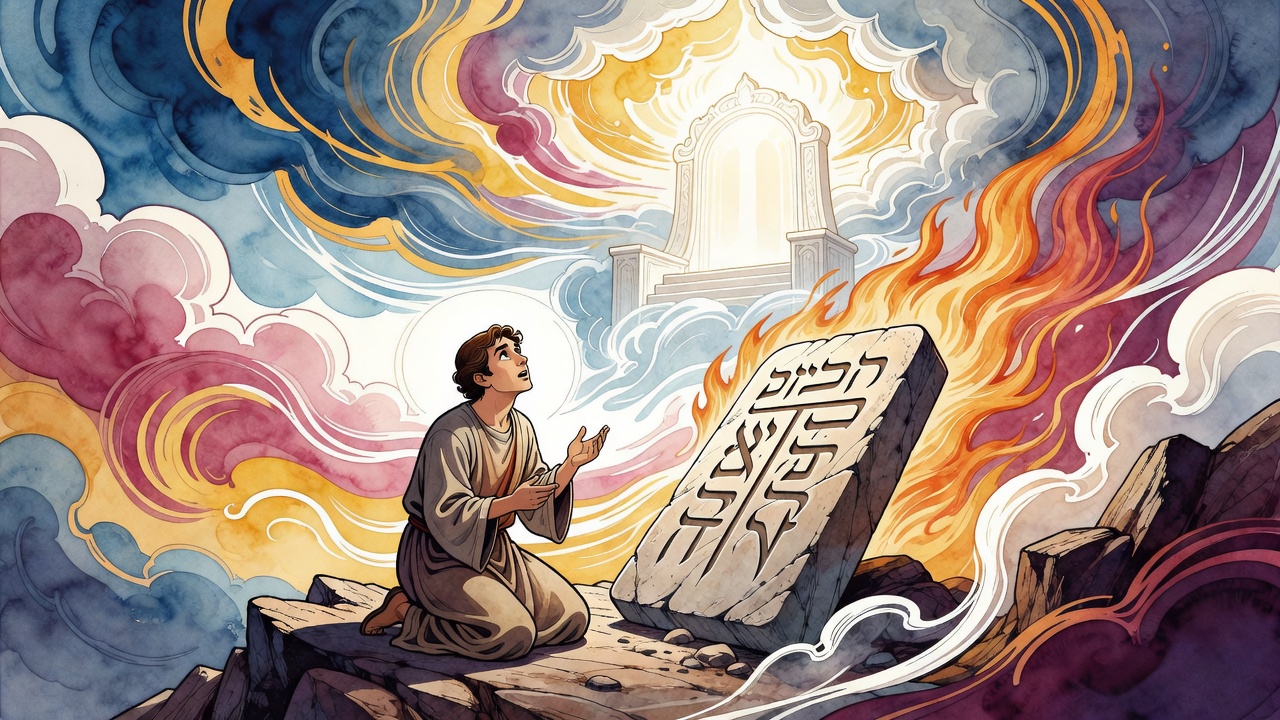
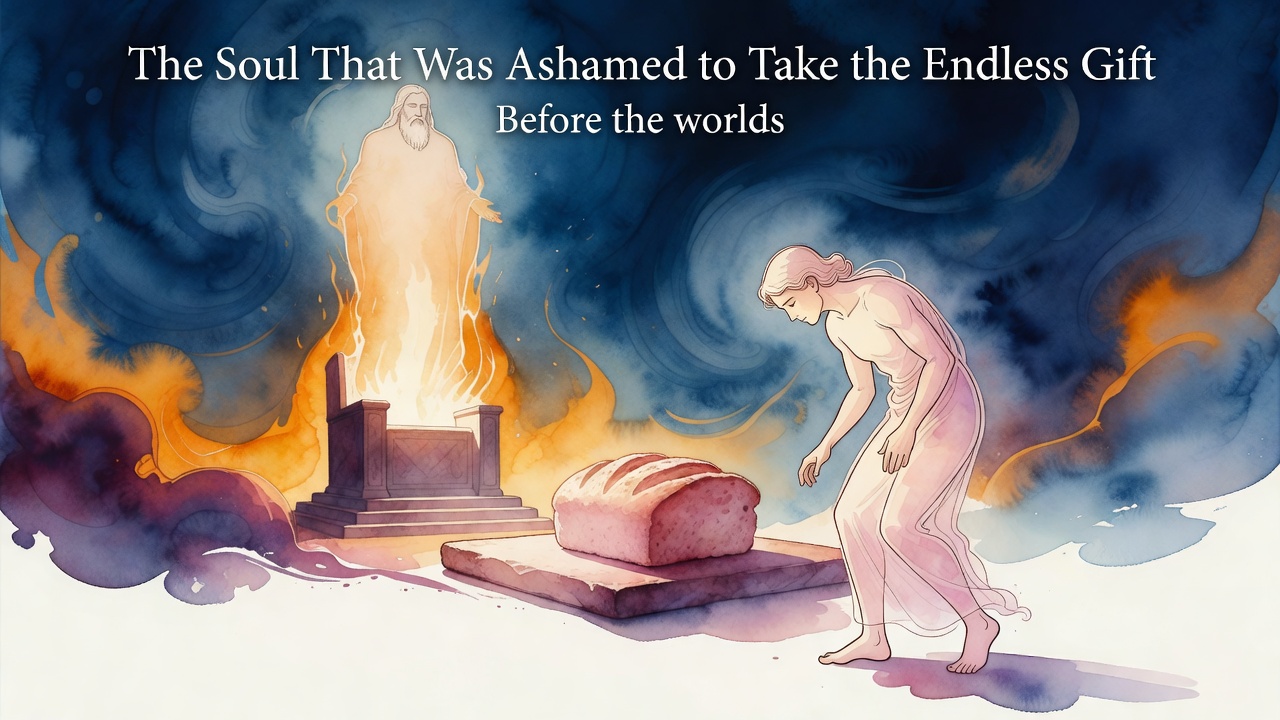
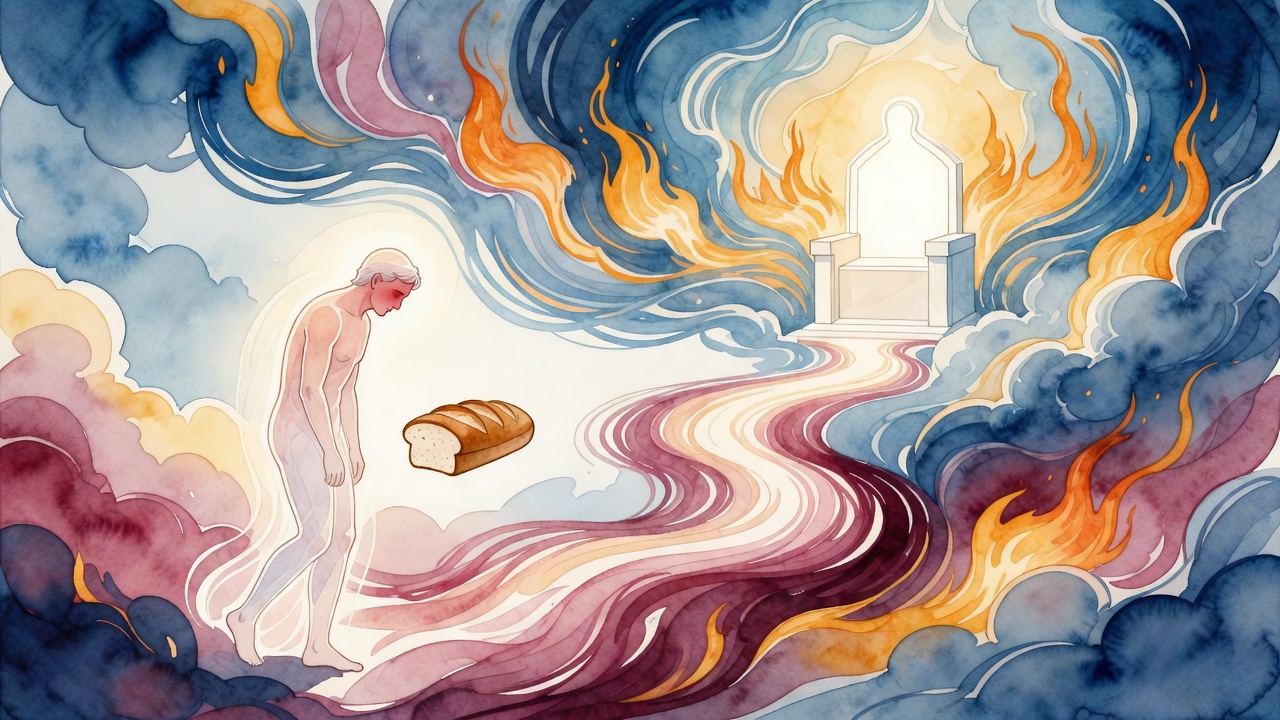
A soul stood before light that had no edge. The light held out bread that smelled like every hunger ending at once, with no price, no labor, and no scar, perfect good offered the way an infinite giver offers, without need.
The soul reached, then stopped, because heat climbed his face. In the lower world a saying still lived from the sages of the land of Israel: one who eats what is not his is ashamed to look his benefactor in the face. The bread was pure and the shame was pure, and both burned.
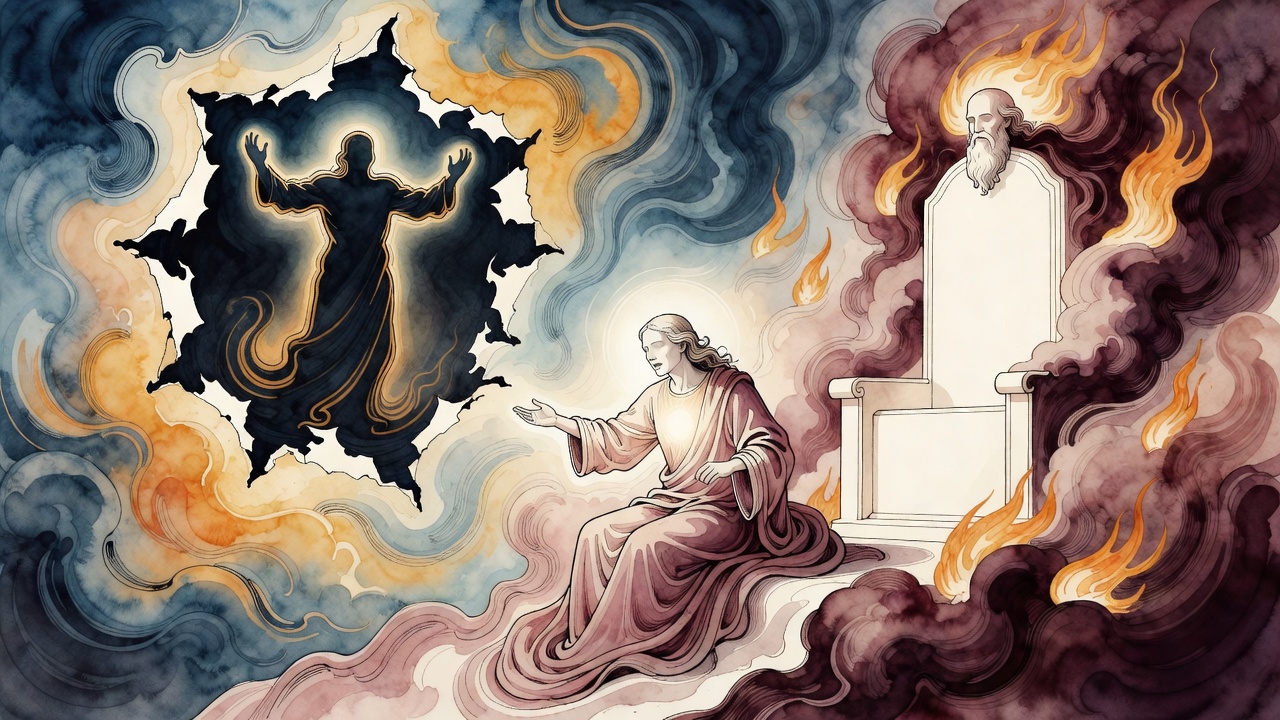
Eyn Sof (אין סוף), the Endless, did not snatch the loaf back in anger, because the Endless had never wanted half-good. Half-good is a feast that leaves the guest staring at the floor, so complete good means the receiver can lift his eyes.
"I will not take it free," the soul said. "Make me able to stand."
Other souls behind him grabbed and ate and could not meet the light afterward, because their mouths were full and their gaze stayed broken. He watched them and chose hunger a little longer, because he refuses their free bread and asks to earn.
The Endless Opened a Road
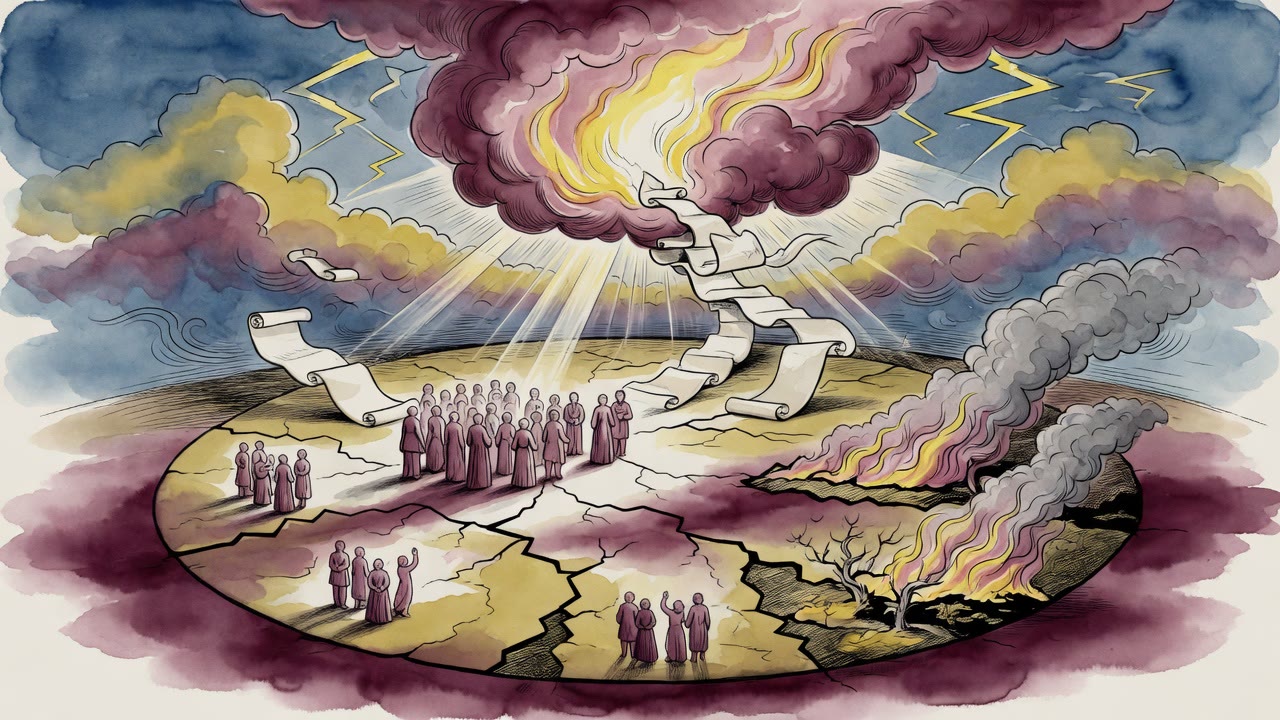
Before there were worlds, there was only perfection with no stage for service. Giving would still be giving, and receiving would still taste of charity that cannot be answered. The Endless planned, in the only way the Infinite plans, how to reveal perfect oneness in actuality, not as an idea locked above history.
The soul was led through four doors. Behind the first, the desire to give complete good, so full that shame would have no room left. Behind the second, a design that would reveal oneness without crushing the creature who had to receive it. Behind the third, a place granted where lack and even evil could act for a season, so that free will and merit would become real. Behind the fourth, the structure of worlds and laws and commandments, the machinery of a gift that can be earned.
Bread waited on the far side of the last door, but work waited harder.
"Creation's goal is not My need," the light said without a mouth. "Creation's goal is bestowing perfect good on those I make. Shame is the crack I refuse to leave in the gift."
He asked whether effort would make him a partner or a customer. The light did not use either word. The light opened a road where deeds leave prints, and prints are how a face learns to rise.
Hunger Given a Body
A block of raw stone appeared in the chamber, scarred, unfinished. From the side of God's perfection there are no barriers that can finally stop Him, but from the side of the creature, chips fly and dust chokes the air. Deficiency shows first, then repair follows, so that oneness becomes visible in the mending, not in a world that never needed hands.
The soul understood why hunger exists under a perfect King. Hunger is not a second god of lack, but the stage on which avodah (עבודה), service, can stand. Without a missing piece, work has no room, so without work the bread remains free and the face stays down.
He asked for tools. The tools looked like mitzvot (commandments), like refusals, like love that costs a day, like truth spoken when silence would have paid better, hard tools and honest ones.
"Work," the light said. "Not because I am incomplete. Because you must become able to receive without disgrace."
He took the chisel and felt how easily a wrong angle ruins the stone. Service is not safe, but service is how shame is answered without denying the gift.
The Corridor That Was Not a Throne
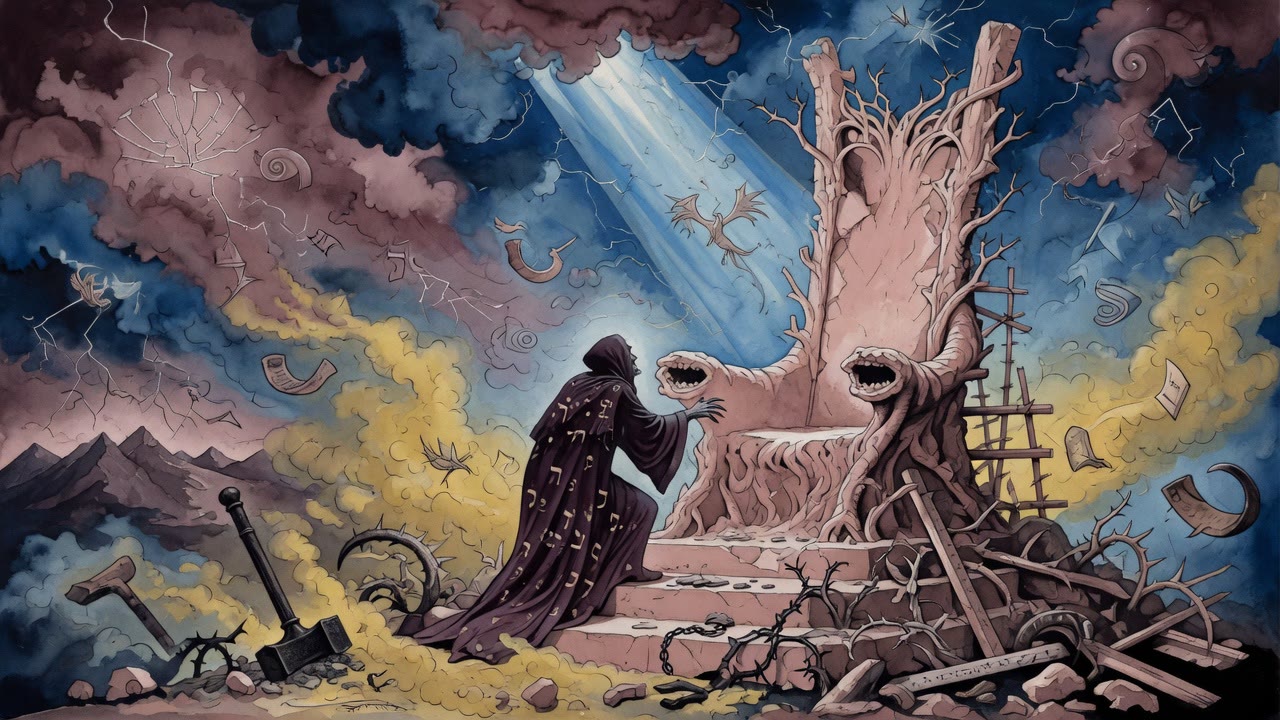
A darker corridor opened beside the table of bread. Evil walked there with temporary authority, enough to make choice bite. The plan already held the end: damage repaired, evil turned back into actual good, oneness no longer only potential but shown.
The soul did not love the corridor, but he loved the chance to cross it carrying something of his own. Merit is not arrogance. Merit is the answer to shame, so reward and consequence exist so that the gift can arrive as wages of a day as well as the kindness of a King.
He took one tool and entered the lower world with a body that could fail. The bread's smell followed him like a promise that would not force his mouth open.
In flesh he stole once and felt the old blush return double, so he returned the coin. The corridor did not applaud. It only stayed a corridor, not a throne. Years stacked. Some nights he wanted the free bread again and almost hated the Endless for inventing effort, but then he remembered the souls who ate and could not look up, so he kept the tools.
He Looked Up
Years of flesh later, the same soul returned thinner and brighter. He set his labor on the table: torn, partial, real. The Endless did not weigh it like a merchant cheating a scale. The Endless received it as the condition that lets a face rise.
The bread returned. This time the soul ate and looked up, and shame thinned to a memory. Perfect good no longer felt like a handout that unmade him, because it felt like the goal that had worn his hands.
He blessed the bread with a voice that did not shake. Looking up was the whole miracle, because looking up was what free bread alone could never buy.
← All myths