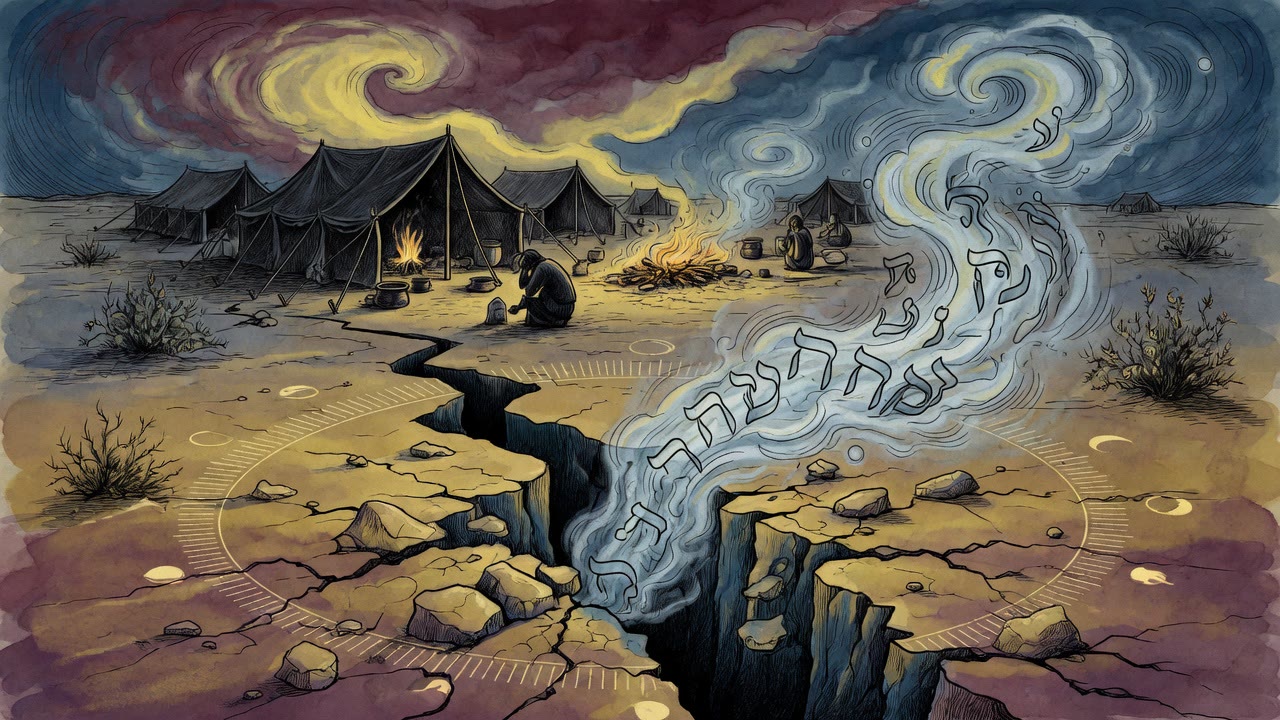
The Teacher Who Sat When the King Entered
A schoolmaster kept his rod and his seat when a king walked in, then bowed outside class, while Rabbi Zeira refused to rise for bought honor.
Table of Contents
 Click for full size
The Rod and the Crown
The children heard the horses before the master did, so they were already turning toward the door when the king came through it.
They went down the way children do, all at once, in a rush of knees and elbows, faces to the floor of the schoolroom because that is what a subject does when the crown walks in and nobody has to be taught it twice. The room emptied of everything except one seated man.
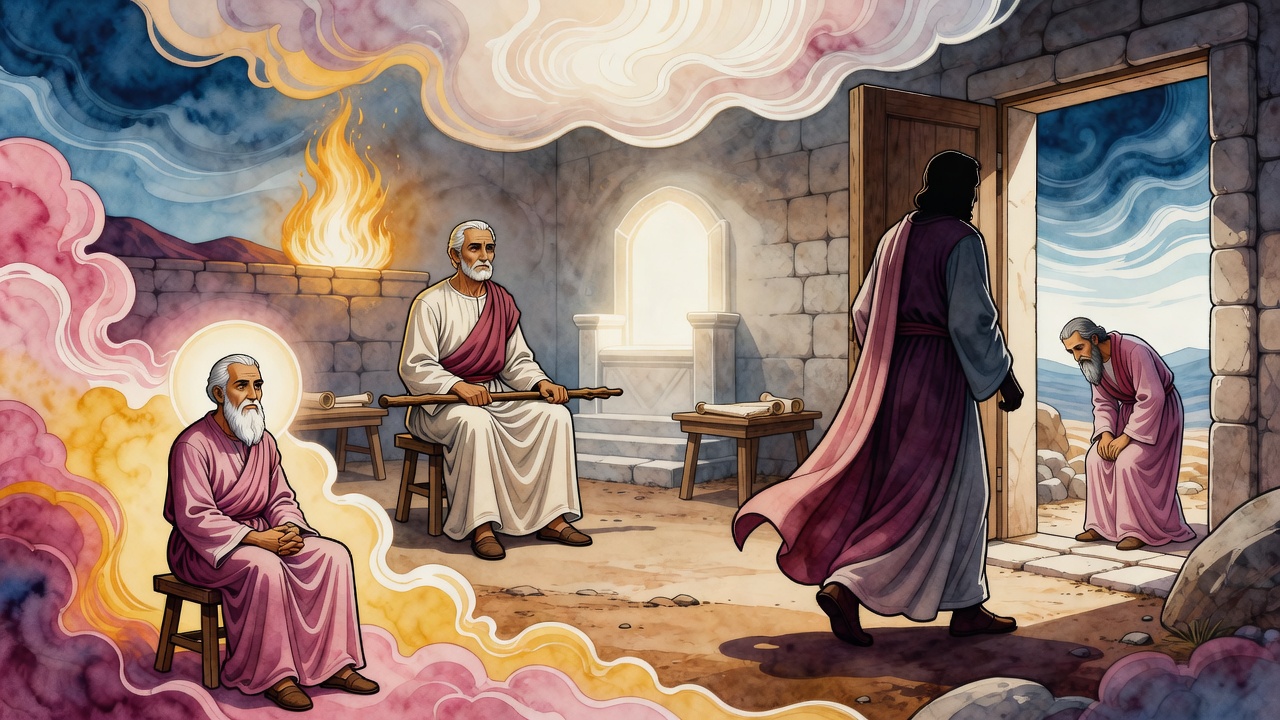
The master did not stand. He did not put down the rod, and he did not look toward the door, and his hand stayed exactly where it had been resting a moment earlier. Somewhere under his ribs he understood what he was doing while he did it, since a king in a doorway is not a thing a man overlooks by accident. He kept his seat anyway, because the ten seconds in front of him would decide what his rod meant for the rest of his career, and he had only one chance to spend them.
The king looked at him for a while. Then he left, and gave an order on the way out that the teacher was to come and stand in front of him the next day.
The Night Between
The children went home and told their households what they had seen, so by dark the whole quarter knew that the schoolmaster had sat in his chair while the king stood in his doorway.
He knew what happened to men who withheld that. It was not a thing kings were required to forgive, and no one in the town had standing to speak for a teacher of small boys. He went over the summons for a long time and found nothing in it to hope for, since a king who summons a man for tomorrow has already decided that today's silence needs answering.
What he did not do was change his answer. He had one, it was true, and the trouble was that it was going to sound like insolence dressed up, which is exactly what an insolent man would say.
The Bow He Owed
He came in the morning and went straight down on the floor, full length, the whole obeisance, and held it there in front of the throne until he was told to get up.
The king wanted the account. So he gave it plainly. In the school, he said, he is the king. Not by any grant, but by the plain mechanics of the work: the moment a teacher loses the respect of his pupils, his discipline is finished and the rod in his hand is a stick. His task in that room is to raise children who will be loyal to the crown, and he cannot raise them for the crown out of a chair he has been driven from. If he had bowed while they were watching, they would have learned in one motion that their master can be interrupted, and every one of them would have carried that home. His power over them grows in proportion to their seeing that he defers to nobody inside those walls, not even to a king. Outside the school he had bowed already that morning, and would again, gladly, as often as he was in the same country as his sovereign.
The king was not offended. He had been served, and he could see the shape of the service once it was laid out for him: a man had risked a crown's anger in order to hold a room where loyalty to that crown is manufactured, one child at a time.
The master went back to the school. The children, who had spent a night deciding whether their teacher was a dead man or a madman, learned that he had gone and bowed to the ground outside their walls and come home. Honor was not being denied to anybody. It had an address, and the schoolroom was not it.
Who Rises in the House of Study
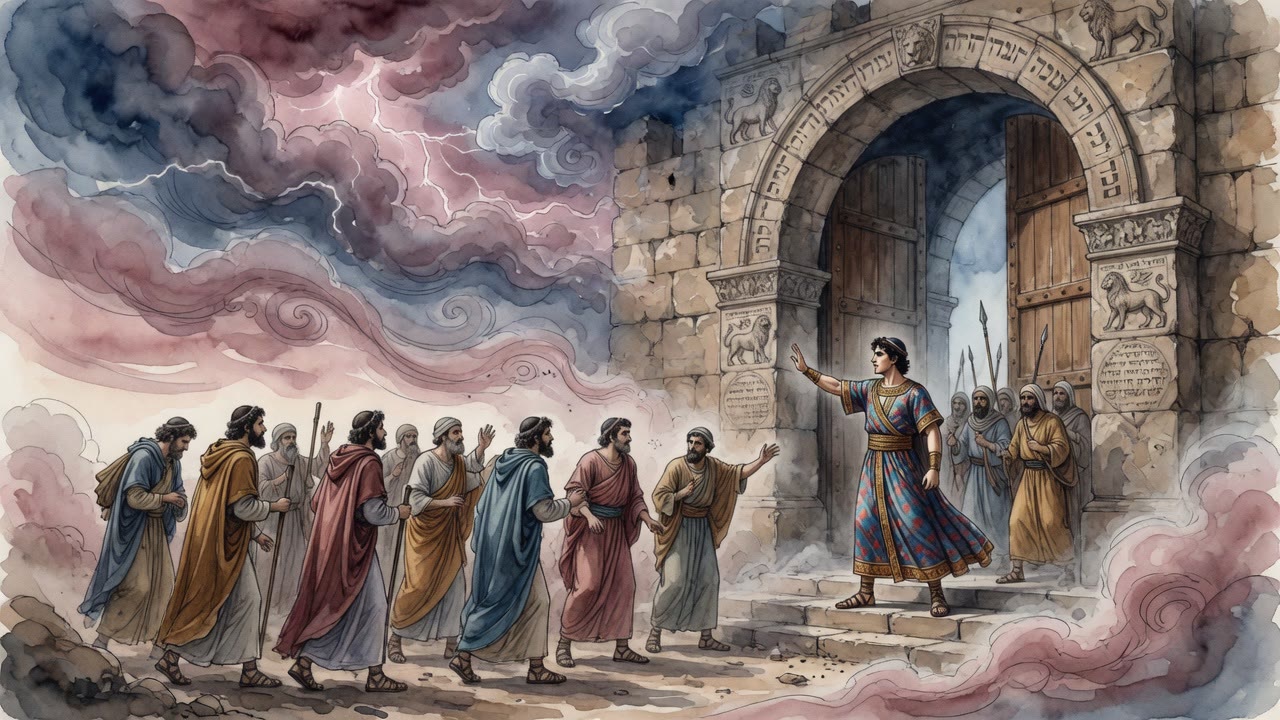
Centuries later and in another country, a man walked into the beit midrash with a new appointment behind his name.
He had not earned it over a text. He had money, or his family did, and the office had come the way offices come to such men. Chairs went back all around the room, one after another, until the standing was nearly total and the scraping had the sound of a chant.
Rabbi Zeira stayed in his seat. He was not rude to the man, and he did not say anything about him at all. He simply would not spend on a purchased title the one gesture the study hall keeps for Torah, since a gesture spent on everyone who enters is worth nothing by the time a scholar walks in.
It happened again in Caesarea, where Rabbi Isaac ben Elazar sat through the same entrance and did not get up either. The other sages, who had all risen, did not rebuke either of them. They praised them.
← All myths