5 min read

He Bought the Best Fish Only for Shabbat

He set aside the best fish on Sunday and the good meat on Thursday, and ate none of it before Friday night. The neighbors laughed until he grew rich.

Curated by Arthur · Told by Maggid ·
Table of Contents
  1. A House That Smelled of the Seventh Day
  2. Inheritance Poured into Bricks for Children
  3. Bread Brought from Distant Ports
  4. What the Table Teaches the Ledger

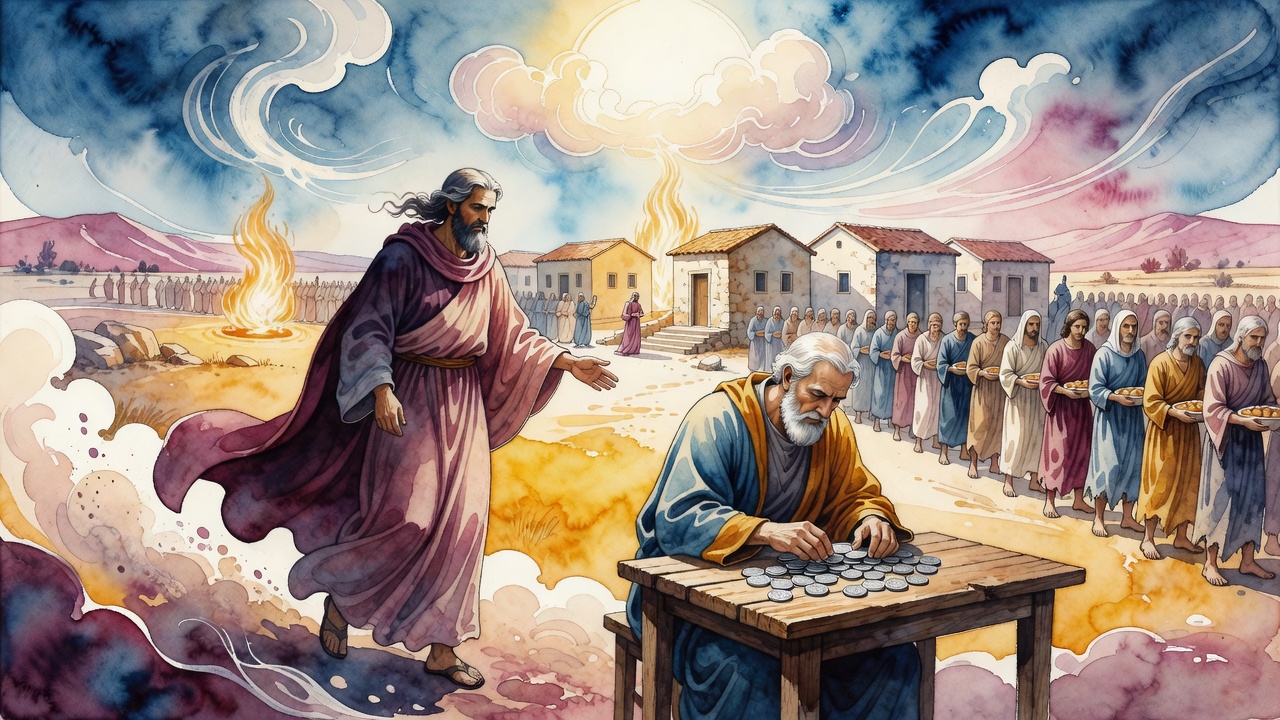
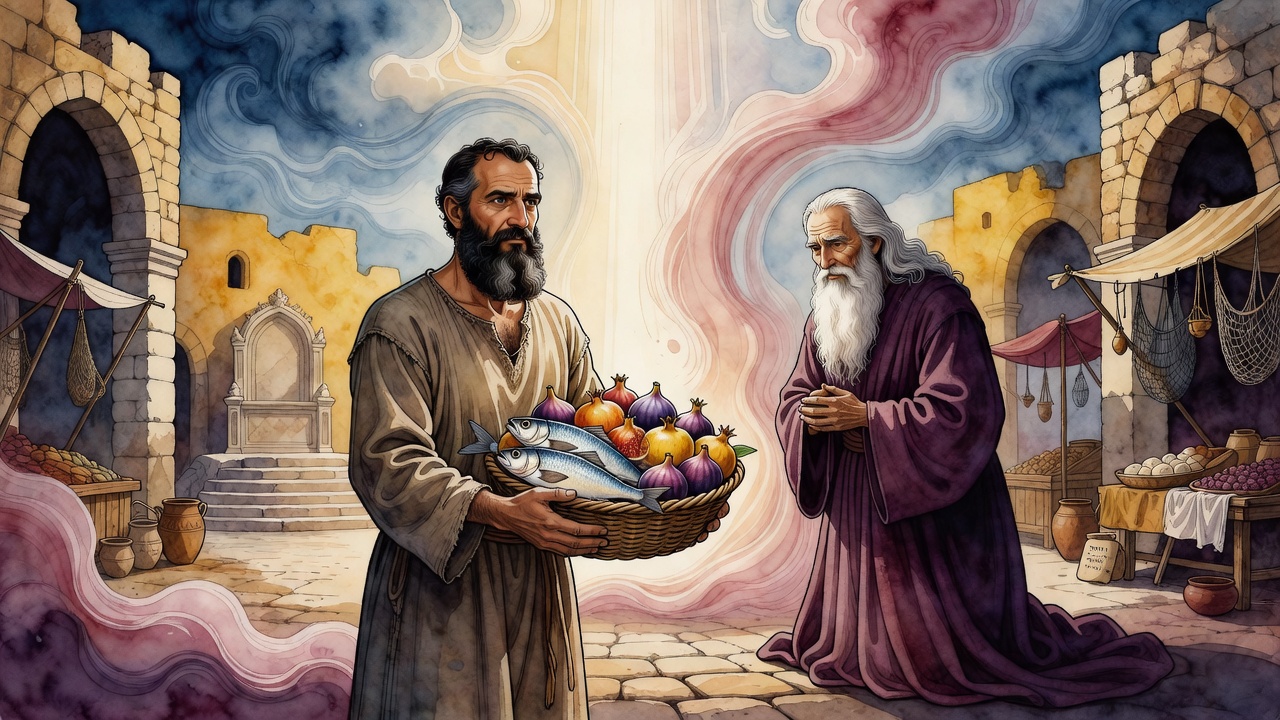
In the markets of Laodicea the man walked with his hands open and his week closed. If he saw the best fish on Sunday, he bought it and set it aside. If he saw tender meat on Thursday, he bought it and set it aside. Fresh fruit that made other buyers reach did not reach his weekday table. Everything truly good waited for Shabbat. His children learned to ask, is this for now or for the guest who comes with the candles?
He Bought the Best Fish Only for Shabbat Click for full size

A House That Smelled of the Seventh Day

Neighbors laughed at first. Who starves his Tuesday for a Saturday that has not yet arrived? The man kept his rule. The house learned the rhythm. Fine things entered the door and disappeared into cool storage, as if the family were feeding a guest who came only once a week. When Friday light slanted across the floor, the guest arrived: white cloth, lamps, the reserved fish, the fruit at peak. Steam rose. Song rose. The week finally spent what it had saved.

Wealth followed him. The tradition does not treat that wealth as a market accident. Kavod Shabbat, honor of the Sabbath, was so complete that the world began to honor him back. Rabbi Hiyya came through the city, accepted a meal, and found a table that had been building all week toward one night of glory. A sage can taste intention in gravy. He tasted a man who would rather be a little hungry on Wednesday than let Shabbat look poor.

This is not a trick for riches. It is a training of desire. The market shouts that the best must be eaten at once. The Laodicean answers that the best has an appointment with holiness and will not be early.

Inheritance Poured into Bricks for Children

Another man inherited a large sum and faced the ordinary temptations: land, interest, a mansion with his name on the gate. He built a school. Brothers raged that he had poured their inheritance into bricks for other people's children. His wife wept. Neighbors mocked. He remembered Rabbi Yehoshua ben Gamla's decree that every town must have a school so orphans need not grow up without letters. Before that decree, only children with fathers learned. After it, buildings were required, and buildings required money someone had to release.

The school filled. Children who would have stayed illiterate learned to read. Some became teachers. One became a judge. The builder never grew rich in coin. The merit of Torah spoken in those rooms, the sages say, was written to his account in a currency gold cannot buy. Gold perishes. Wisdom endures. The brothers who wanted land received a harder truth: an empty field can outlive a generation and still grow nothing that speaks.

Place the Laodicean and the school-builder side by side. One saves the best for holy time. One spends the best for holy learning. Both refuse to let the ordinary week devour what belongs to God.

Bread Brought from Distant Ports

The Woman of Valor sails like merchant ships, bringing bread from afar. Rabbi Shimon ben Chalafta reads her as the seeker of Torah. If you will not stretch yourself, leave comfort, sail beyond the easy harbor, you will never truly learn. The bread she carries is Torah itself, for Wisdom calls, come eat of my bread. She rises while it is still night, and so does the scholar. As long as a person labors over Torah through the dark hours, the Holy One draws a thread of grace over him by day.

The Laodicean's market walk is a small voyage. He sails past the weekday appetite to land a cargo on Friday. The school-builder sails past family pressure to land a cargo of letters in children's mouths. Both pay freight. Both arrive with bread that feeds more than one body. Night study and reserved fish are cousins: each says the holy portion is worth the wait and the sweat.

Noah's dove once returned with a bitter olive leaf, and the midrash hears even bitter Torah as food that keeps a world alive. The Woman of Valor does not only bring sweet loaves. She brings what will keep the household standing when storms return.

What the Table Teaches the Ledger

Honor is not a speech. Honor is what you refuse to eat on Tuesday so that Saturday can be full. Honor is what you refuse to invest in empty display so that a room of orphans can hold a teacher. When Rabbi Hiyya sits at the Laodicean's table, he tastes a week of restraint turned into joy. When a child reads his first verse in the school of the stubborn heir, heaven tastes a different feast.

The fish on the white cloth and the chalk on the school wall answer the same charge: do not spend the holy portion on the ordinary day. If wealth follows, receive it without turning it into the new idol. If wealth does not follow, you still own a Friday that looks like you meant it, and a town that can read.

Tomorrow the market will shout again. Practice the quiet answer until your feet know the way to the fish stall and the school door without needing a sermon.


← All myths
From the tradition

Sources

3 sources

The texts behind this telling. Some cards carry a translation of the source; others are our own retelling of it, and each card says which. Every card links out to the original.

Gaster, Exempla of the Rabbis, no. 119; cf. Shabbat 119aThe Exempla of the Rabbis (1924)

Retold in our words. Read the original at the link below.The Exempla of the Rabbis, Moses Gaster (1924) · PD-US-pre-1929

There was a man who lived in the Greek city of Laodicea, and he had a rule he followed every week of his life. Whenever he found some particularly fine food in the market, the best fish, the tenderest meat, the freshest fruit, he would buy it and set it aside, not for today's table, but for Shabbat. If he saw it on Sunday, he saved it for Saturday. If he saw it on Thursday, he saved it for Saturday. Nothing truly good entered his house during the week. Everything good was reserved for the seventh day.

The tradition says he became immensely rich. His kavod Shabbat, his honoring of the Sabbath, was so complete that the world began honoring him back.

The story reaches its climax when Rabbi Hiyya, one of the great sages of the early third century, came through Laodicea and was invited to a meal at this man's house. Rabbi Hiyya stepped inside, and the servants brought in the food. But not on ordinary plates. The trays were silver and gold.

The rabbi stared. Even for a prince, this was lavish beyond reason. And the Laodicean, watching his guest's face, explained: "Everything you see is because I save my best for Shabbat. What I give God returns me in kind."

Gaster's Exempla (no. 119, 1924) uses this story to argue that the Sabbath is not a tax on the week. It is an investment in the week. The man who gives the seventh day his finest finds the other six days quietly enriched.

Full source
Exempla of the Rabbis, No. 108Exempla of the Rabbis (Gaster, 1924)

Retold in our words. Read the original at the link below.The Exempla of the Rabbis, Moses Gaster (1924) · Public Domain

The Talmud in tractate Kallah (5:1) tells the story of a man who inherited a large sum of money and faced a decision that would define the rest of his life. He could invest the money in land, which would make him wealthy. He could lend it at interest, which would make him wealthier still. Or he could do what no one expected.

He built a school.

His family was furious. "You have taken our inheritance," his brothers protested, "and poured it into bricks and mortar for other people's children." His wife wept. His neighbors laughed. Who builds a school when he could build a mansion?

The man was unmoved. He had studied the teachings of Rabbi Yehoshua ben Gamla, who centuries earlier had established the principle that every town in Israel must have a school, and that no child should have to travel far to learn Torah. Before Rabbi Yehoshua's decree, only children with fathers learned. Orphans grew up ignorant. The decree changed everything. But it required buildings, and buildings required money.

Leviticus Rabbah (ch. 34) confirms what happened next. The school flourished. Children who would have grown up illiterate became scholars. Some became rabbis. One became a judge. The man who built the school never became rich, but the merit of the Torah learned within its walls was credited to his account in heaven. The rabbis taught that whoever uses their wealth to build a house of learning receives a reward in the World to Come that no amount of gold could purchase, because gold perishes, but wisdom endures forever.

Full source
Midrash Mishlei 31:3Midrash Mishlei

Translation of the source text.Midrash Mishlei (Buber) · CC-BY

"She is like the merchant ships; she brings her bread from afar" (Proverbs 31:14) - Rabbi Shimon ben Chalafta said: If a person does not expose himself for the words of Torah, he will never learn Torah; and "bread" means nothing other than Torah, as it is said, "Come, eat of my bread" (Proverbs 9:5). "She rises while it is still night" (Proverbs 31:15) - as long as a Torah scholar sits and engages in Torah at night, the Holy One, blessed be He, draws over him a thread of grace [by day], as it is said, "By day the LORD commands His lovingkindness, and at night His song is with me" (Psalms 42:9). And not only that, but the Holy One, blessed be He, supplies him his sustenance each and every day, as it is said, "She rises while it is still night and gives food to her household," and "food" means nothing other than sustenance, as it is said, "He has given food to those who fear Him" (Psalms 111:5); and it says, "And the dove came to him toward evening, and behold, in her mouth was a freshly plucked olive leaf" (Genesis 8:11), and she says, "Happy is the person whose food is bitter as an olive and given over into the hand of the Holy One, blessed be He, and not sweet as honey and given over into the hand of flesh and blood." Why? Because the Holy One, blessed be He, feeds and sustains all His creatures, as it is said, "You open Your hand and satisfy the desire of every living thing" (Psalms 145:16).

Full source