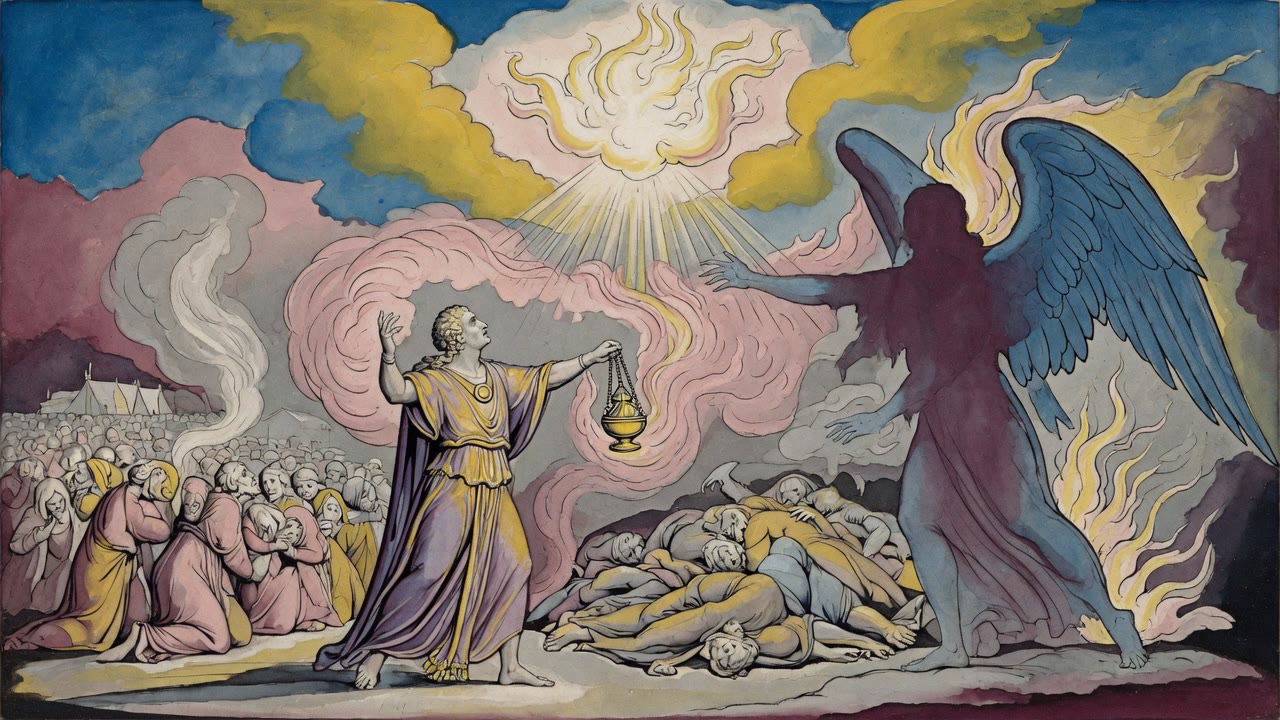
Doeg's Tongue Killed Three People With One Short Speech
Doeg the Edomite told King Saul nothing but true things about the priest at Nob. Eighty five priests died for it, and so did Saul, and so did Doeg.
Table of Contents
Doeg the Edomite was standing in the sanctuary at Nob the day David came through it, detained there before the Lord on some business of his own, and he watched everything.
 Click for full size
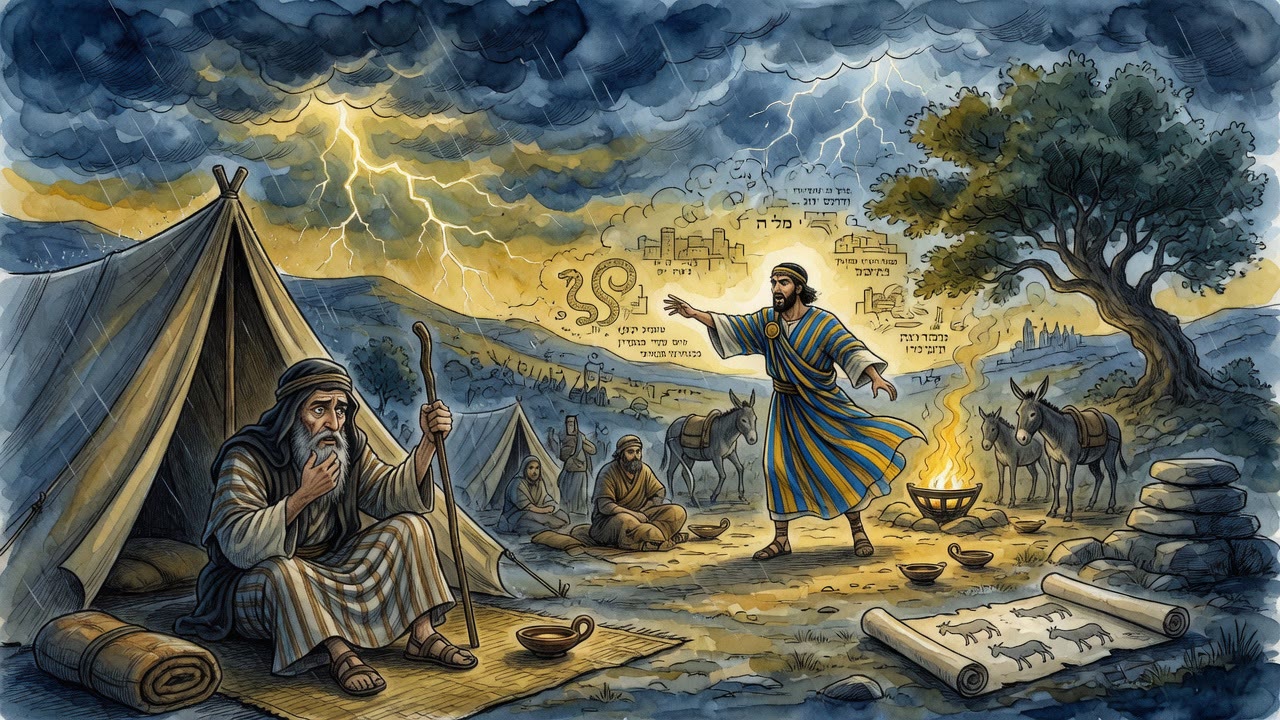
He watched David arrive alone and out of breath and tell Ahimelech the priest that the king had sent him on an urgent errand and that his men were waiting nearby. He watched Ahimelech look at the man's empty hands, ask whether the young men had kept themselves clean, and hand over the holy bread off the table because there was no ordinary bread in the house. He watched David ask if there was a sword anywhere, and heard Ahimelech say there was one, the Philistine's, wrapped in a cloth behind the ephod, and heard David say there is none like it, give it to me.
Every fact in that room was a fact. What Doeg did not see, because it was not visible, was that the priest had no idea he was feeding a fugitive.
What He Said and What He Left Out
King Saul was sitting under the tamarisk on the hill at Gibeah with his spear in his hand and his officers standing around him, and he was in the mood where a king starts counting who has not spoken to him lately. Nobody tells me anything, he said. My own son makes a covenant with him and nobody tells me. Not one of you is sorry for me.
Doeg was standing with the servants. He spoke up.
He said he had seen the son of Jesse come to Nob, to Ahimelech son of Ahitub. He said the priest had inquired of God for him, and given him supplies, and given him the sword of Goliath the Philistine.
It was a short speech, three sentences, all of them accurate. He left out the bread on the table and the empty hands and the story about the king's urgent errand. He put down the facts like evidence on a table and let the shape they made do the accusing, and Saul, who had come to that hill already looking for a conspiracy, found one.
The Runners Would Not Raise Their Hands
Saul sent for Ahimelech and for the whole priestly house of his father, and they came, all of them, eighty five men.
Ahimelech did not understand the question. Who in all your service, he said, is as faithful as David, the king's son in law, the captain of your bodyguard, honored in your own house? Did I begin inquiring of God for him that day? Far be it from me. Let the king not lay anything against his servant, because your servant knew nothing of this, small or great.
Saul told him he would die, and his father's house with him.
Then the king turned to the runners standing on either side of him and told them to go and kill the priests of the Lord, because their hand was with David and they knew he was running and did not tell him.
The runners would not put out their hands. Not one of them moved. There were soldiers standing in front of a king holding a spear, and every one of them refused.
So Saul turned to Doeg and told him to do it, and Doeg turned and did it, and killed eighty five men who wore the linen ephod, and then went to the town of Nob and killed the men, the women, the children, the infants, the oxen, the donkeys and the sheep. One son of Ahimelech got out. Abiathar ran until he found David's camp, and David heard what had happened and said, I have brought about the death of every person in your father's house.
Three Died, Not One
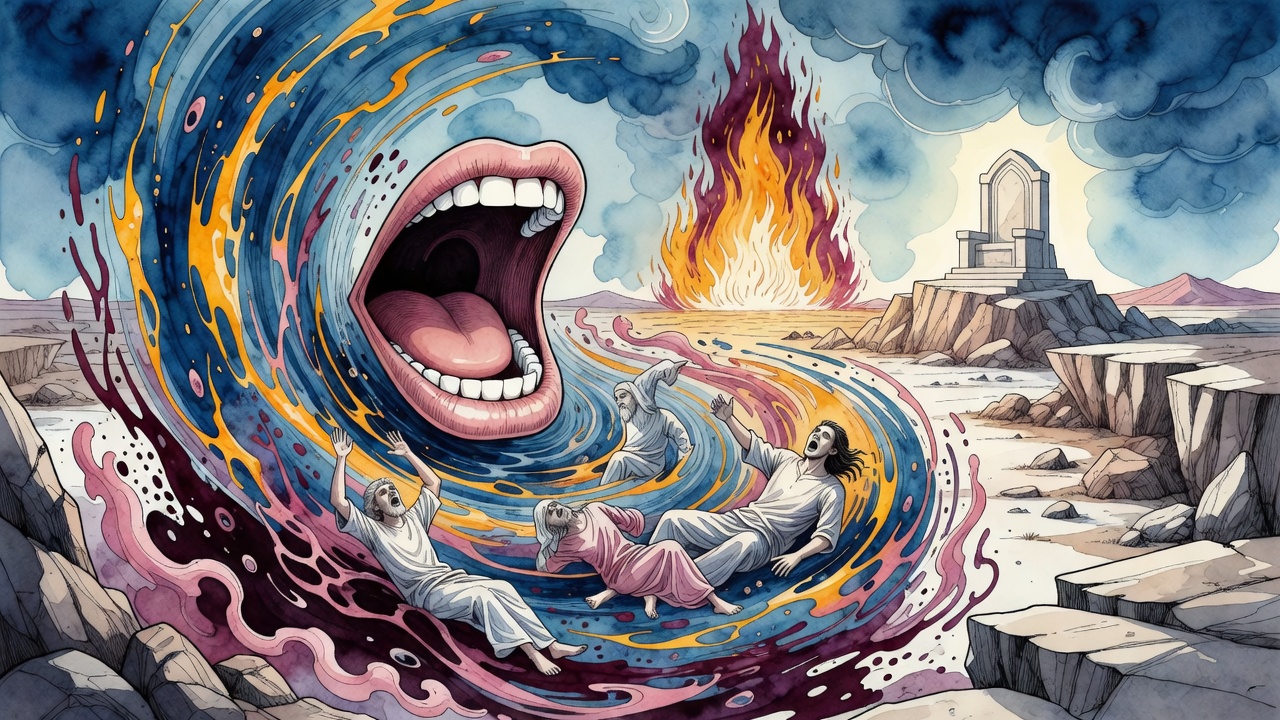
Murder kills one. Evil speech kills three: the one who says it, the one it is said about, and the one who listens.
The one it was said about was Ahimelech, killed for handing bread to a guest. The one who listened was Saul, who died on Gilboa with the Philistines closing in and was buried under the verdict that he had been unfaithful to God. The one who said it was Doeg, uprooted out of the land of the living, torn out of his tent, and the whole point of the psalm written against him is that his mouth was the weapon and his mouth was the wound.
Slander is heavier than idolatry, heavier than forbidden union, heavier than bloodshed. Each of those three is called a great sin in the Torah. Only the tongue is credited with great things, plural, because it can reach into rooms the speaker will never walk into and cut people the speaker will never see.
Even Gehinnom Said It Could Not
There are men who deny the whole category. With our tongue we will prevail, they say. Our lips are our own. Who is master over us?
The Holy One calls out over them: who will rise up for Me against the wicked? And the answer does not come. Even Gehinnom, asked to take them, says out loud that it is not able. The fires that were built for exactly this are not built big enough for this.
I am above and you are below, God tells it, and takes the work back Himself.
The Same Mouth, and a Fig
The cure is not silence. Silence is only the first half.
Take a fig out of a basket and eat it and say nothing, and death was in the power of the tongue. Take the same fig, say the blessing over it, eat it, and life was. Nothing about the fig changed. Nothing about the hand changed.
The mouth that emptied Nob and the mouth that blesses a piece of fruit are the same organ, and the tradition keeps them side by side on purpose. God gave splendor to Moses, and majesty to Joshua, and royal glory to Solomon, and holds both in reserve for the King Messiah, and gives them out besides to anyone at all who wears himself out on the Torah. The only work God is on record as having done with His own hand is a set of writing cut into stone.
← All myths