The Twenty-Year Silence Over Jacob's Impossible Flocks
For twenty years heaven says nothing while Jacob toils for Laban, until his flocks swell to a hundred and twenty myriads and the snarling breaks it.
Table of Contents
 Click for full size
Twenty Years of Silence
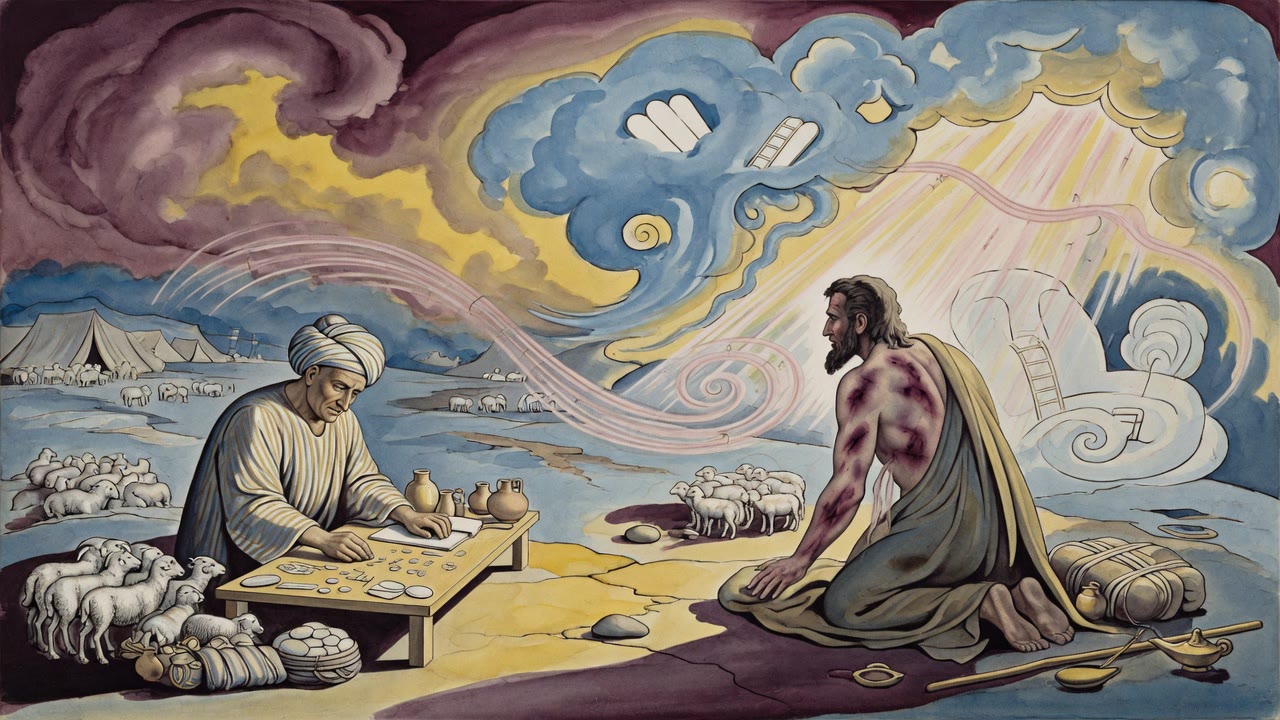
For twenty years the voice did not come. Jacob had heard it once, at Bethel, with a ladder standing on the earth and its top lost in heaven and angels climbing it in both directions. "And behold, I am with you," the voice had said, "and I will keep you wherever you go." Then he crossed into Aram, into the house of Laban, and heaven shut its mouth.
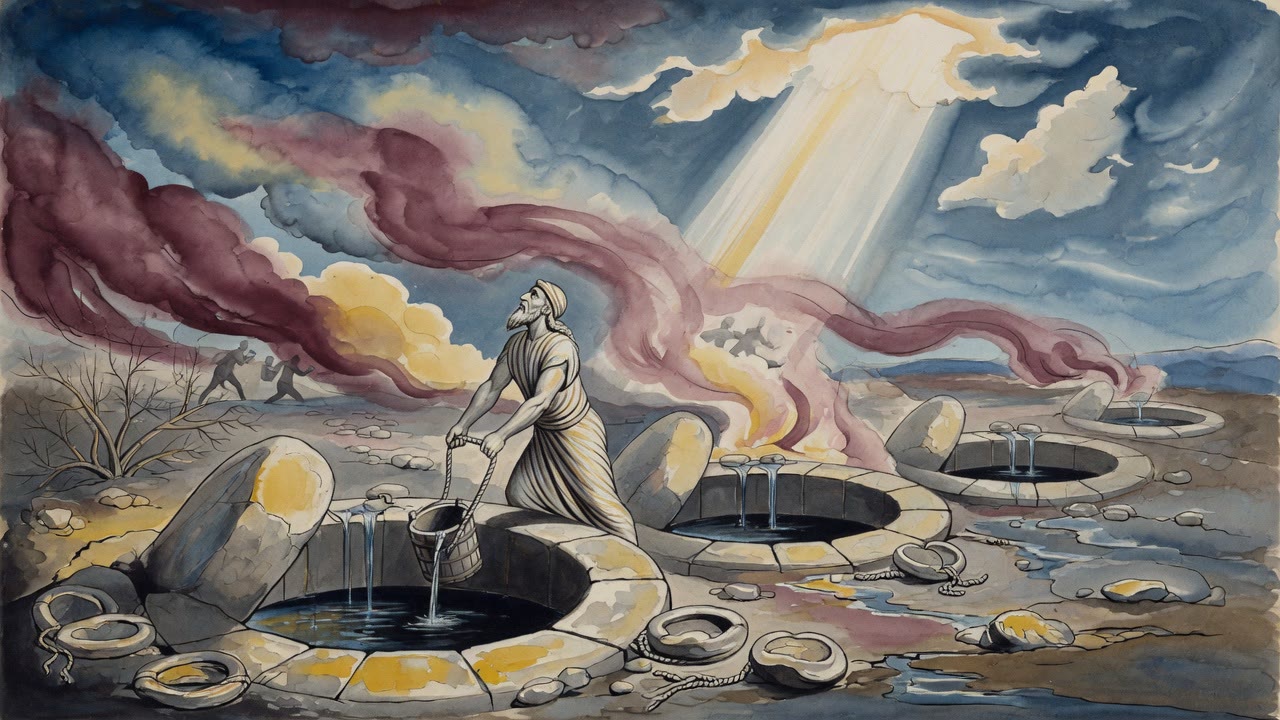
He worked. He rolled the stone off the well and watered the sheep. He served seven years for one daughter and woke to another and served seven more. He fed Laban's flocks through frost and drought, and the seasons turned, and the years stacked up, one on the next, until they were twenty. Every night, lying in the field with the cold at his back, he waited for the voice and heard nothing. Had the Holy One abandoned him? He turned the old promise over in the dark the way a man tests a coin he no longer trusts. And behold, I am with you. Where, then, was He?
The Flocks That Would Not Stop Multiplying
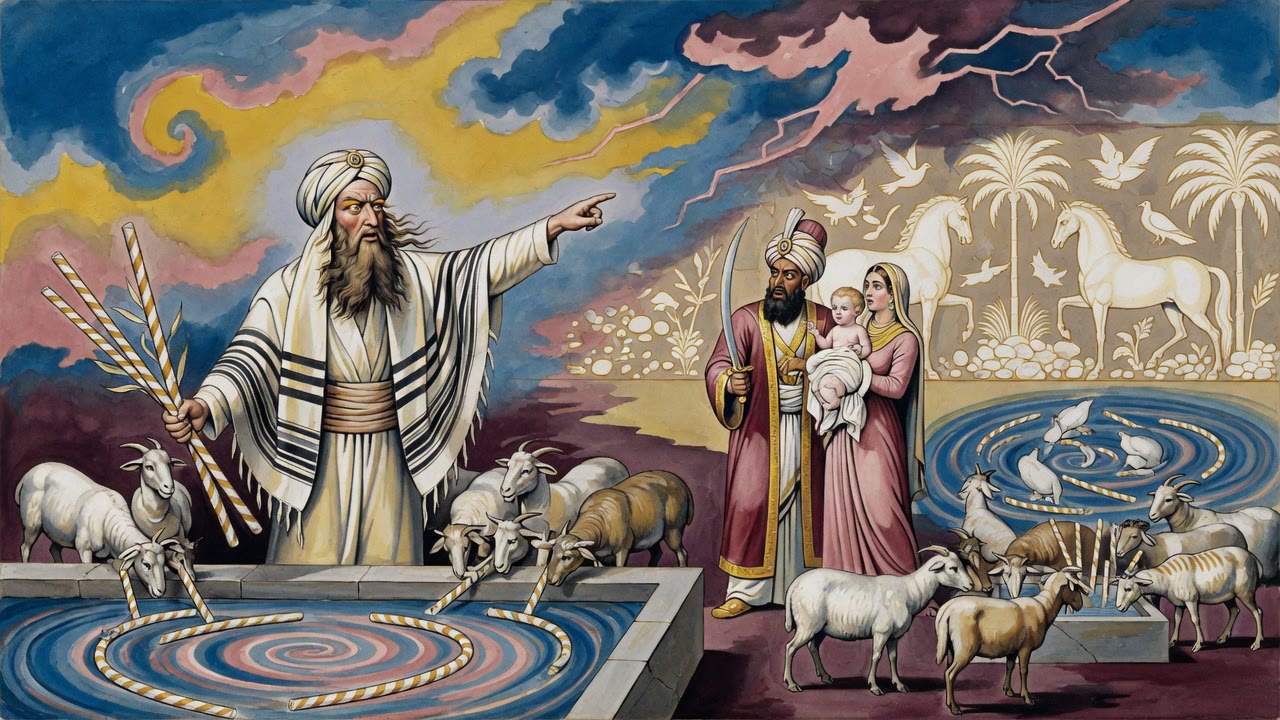
The sheep bred. Not as Laban's sheep bred. Jacob's ewes dropped striped and speckled and spotted lambs in numbers no herdsman had counted, twins and more than twins, until the fields could not hold them. When the loads of the day grew too heavy for one man, when a bale or a carcass or a hurdle was more than a back could carry, something unseen took the other end, so that what should have cracked his spine rode light on his shoulder. Ministering hands had come down to bear the weight beside him, though he never turned fast enough to see them.
Then the caravans came. Laban had owned no silver and no gold, only sheep, but Jacob's sheep pulled treasure out of the nations. Traders arrived from far countries and laid down silver and gold to carry away a few of the striped and speckled beasts, and still the flock did not thin, because it grew faster than any buyer could empty it.
A Hundred and Twenty Myriads
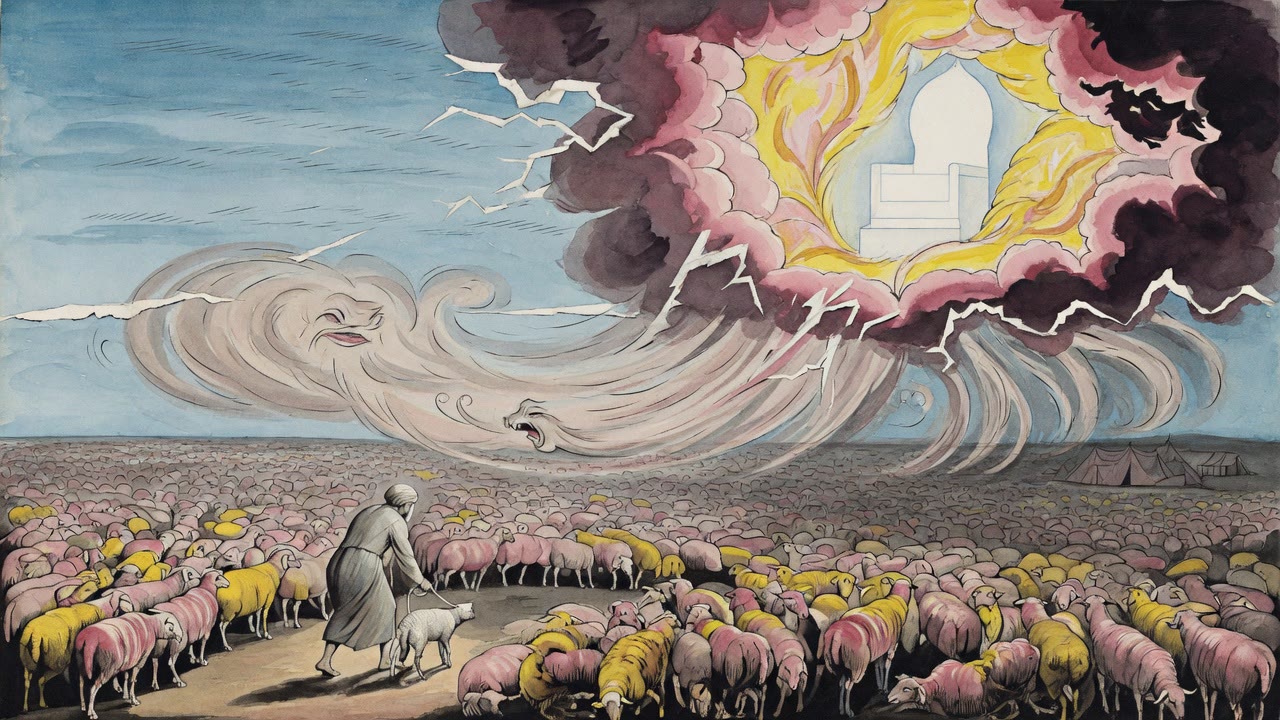
The number was past what a shepherd could hold in his head. Generations later, in Egypt, Jacob's children would multiply until they were sixty myriads, and Scripture would call that "exceedingly." Over the flock in Aram the word fell doubled, "exceedingly, exceedingly," and the tally doubled with it. A hundred and twenty myriads of sheep scattered across the hills. To guard them Jacob kept dogs, and someone counted the dogs and reached three hundred and nine. Three hundred and nine throats to bark down the wolf and the thief across a field too wide for one man to see its far fence.
The Snarl of Laban's Sons
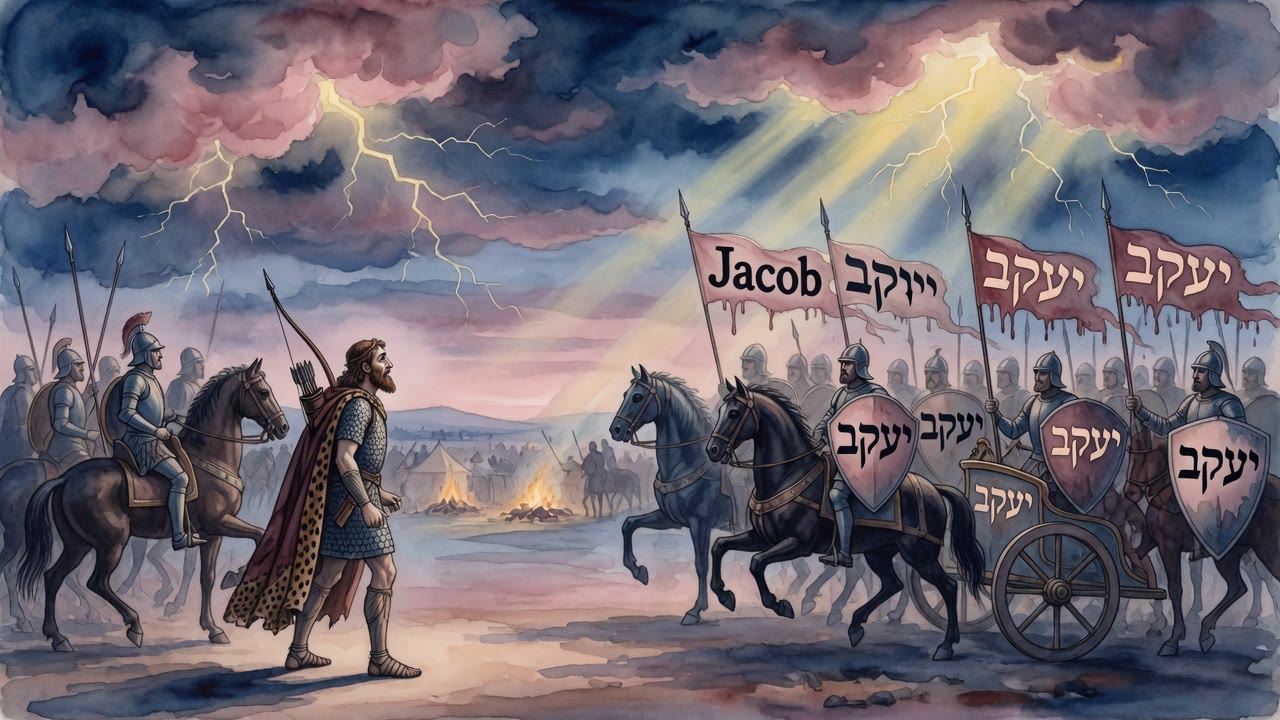
Laban's sons watched the treasure move the wrong way. Every caravan that came laid its silver in Jacob's hand and not their father's. Their inheritance seemed to walk off on four legs into a stranger's fold. They began to talk, and Jacob heard the words. "Jacob has taken all that was our father's," they said, "and from what was our father's he has made all this glory." The word they used for glory is the word for silver and gold. Plunder silver, plunder gold. In their eyes he had plundered it, though he had only stood in the field and let the sheep do in his hand what sheep did.
Laban's own face changed toward him. It was not as it had been the day before, or the day before that. The father who had swapped one bride for another under a wedding veil, who had changed the wages ten times, now looked at the son-in-law grown rich on speckled lambs the way a man looks at a thief he cannot yet prove.
The Condition Spoken at Last
Jacob, in the field, was still brooding. Twenty years, and no word. Once, before Lot parted from Abraham, heaven had stayed shut over Abraham too. Only when Lot took his herds and his quarrels and rode down toward Sodom did the voice fall, "after Lot had separated from him." The Holy One does not set His name down in a house He shares with the wicked.
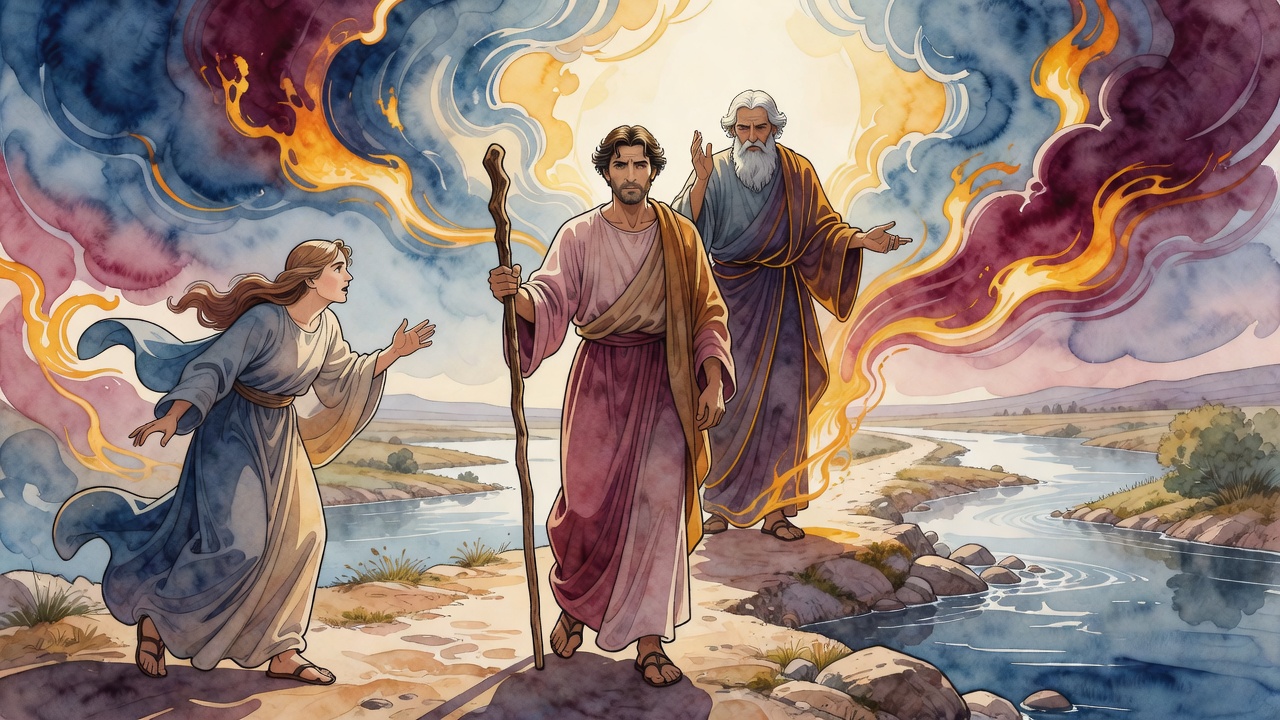
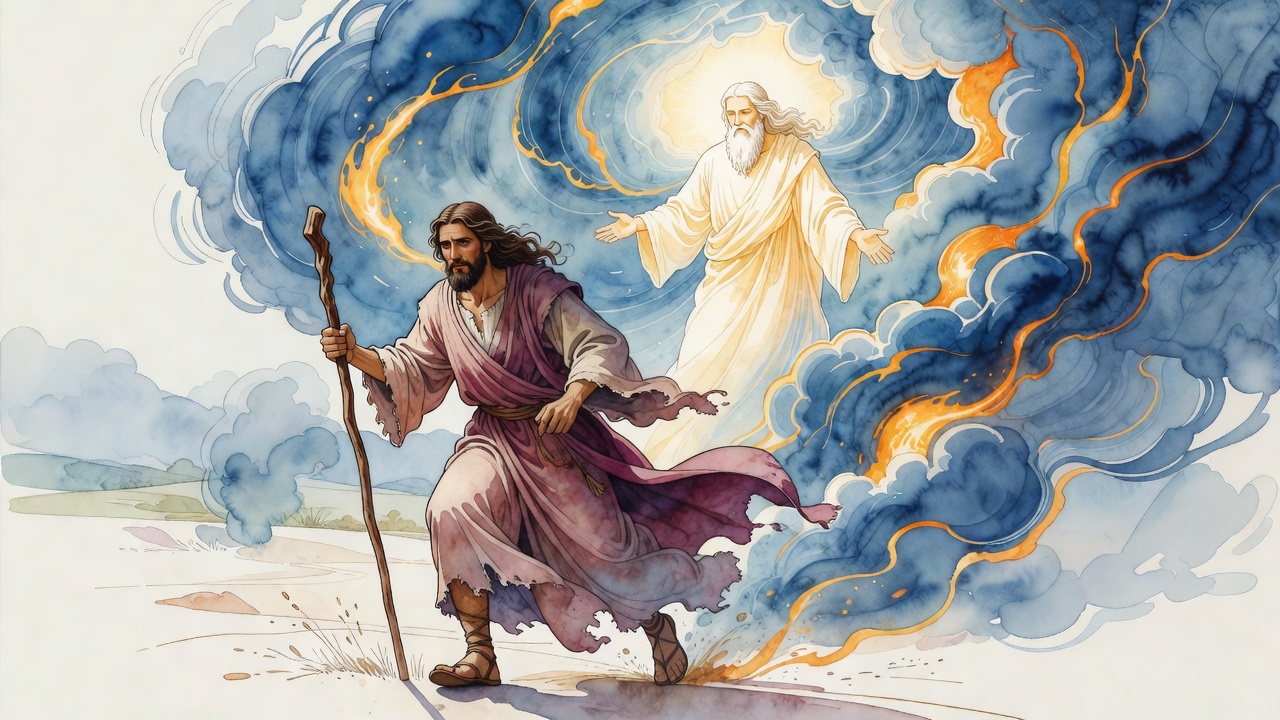
So the voice, when it finally came, came with a condition folded inside its comfort. It knew what Jacob had been turning over in the dark, and it answered the brooding. "You seek that I be with you? Separate yourself from Laban the wicked, and I will be with you." Then it said, "Return to the land of your fathers and to your birthplace, and I will be with you." The silence had never been abandonment. It was the length of a house Jacob had not yet walked out of.
As he made ready to go, the wall of the world broke open ahead of him. He had broken through the fence of ordinary increase, one man's flock swelling past a hundred myriads, and the same breach was a promise. The one who breaks through goes up before them. Thus, said the voice, will I break through for your children's children, in the time to come.
← All myths