6 min read

The Vampire-Spirit Solomon Turned Against the Demons

A vampire-spirit drinks the life from Solomon's young builder to stall the Temple, until the king turns the night-creature into his own catalog of demons.

Curated by Arthur · Told by Maggid ·
Table of Contents
  1. The King Who Read the Wound
  2. The Ring With the Name Inside It
  3. The Thing That Drank in the Dark
  4. The Demon Who Gave Up the Others

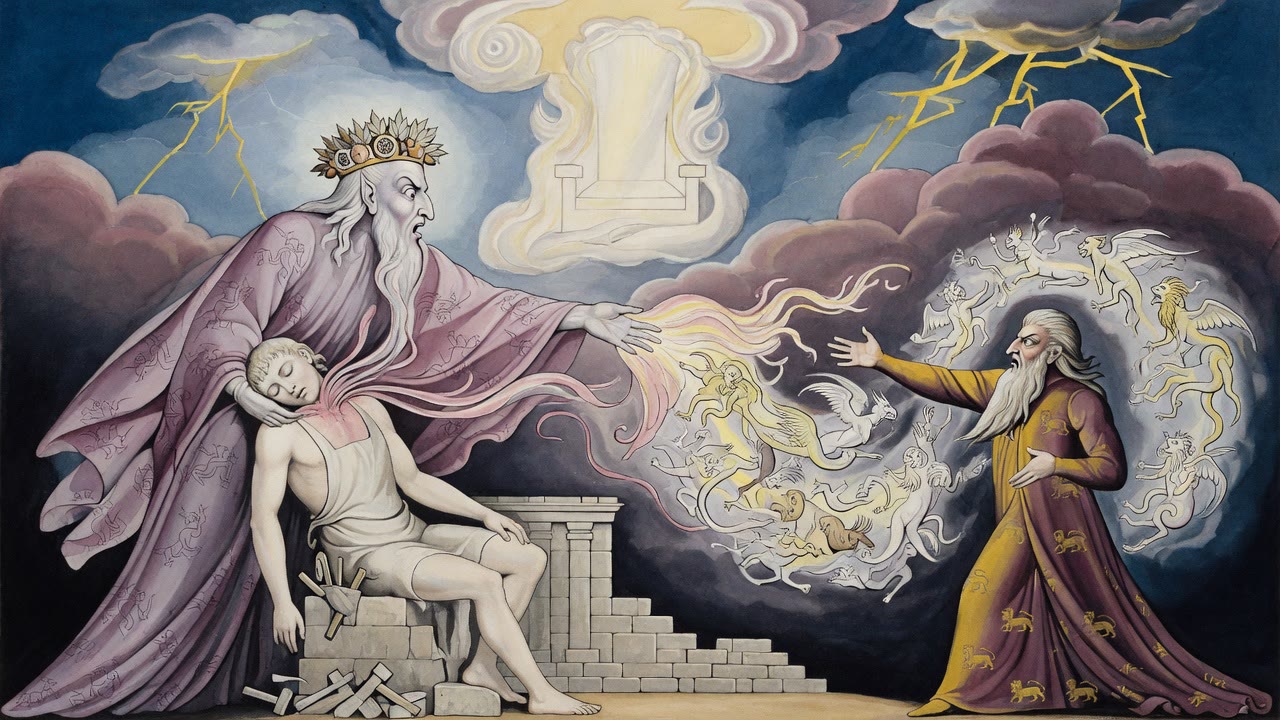
The chief builder's son came to the quarry each dawn pale as candle tallow, and by the third week he could not lift a chisel. His thumb wore a small wound that never closed. Around him the Temple stood half-raised, its cedar beams waiting, its stones cut and silent, and the workmen muttered that the place was cursed before it could ever be holy.

Solomon walked the site every morning. He was a king who read what other men threw away. A foreign visitor had once been kept three days from his court, and rather than complain the man had walked to a stack of bricks by the gate and set one brick on top of another, then gone home. The courtiers reported the gesture as the act of a fool. Solomon did not. "He means," the king said, "give the king more wine, pour it on what he has already drunk." The next day the visitor lifted the top brick away, and Solomon said, "He means take food from me, give me less." The man who could read a stranger speaking only in bricks now read the boy's grey face, the wound that would not heal, the way the child flinched when the sun went down.

The King Who Read the Wound

"What ails you?" Solomon asked him.

The boy's hands shook. For a long moment he said nothing, the way a child says nothing when the truth is worse than the silence. Then it came out of him all at once. Every night a thing came to him in the dark. It bent over his cot, took his thumb, and drank. It drank slowly, the way a man savors something he has waited a long time for, and each morning the boy woke emptier than before. He did not know its name. He only knew it would come again when the lamps were out.

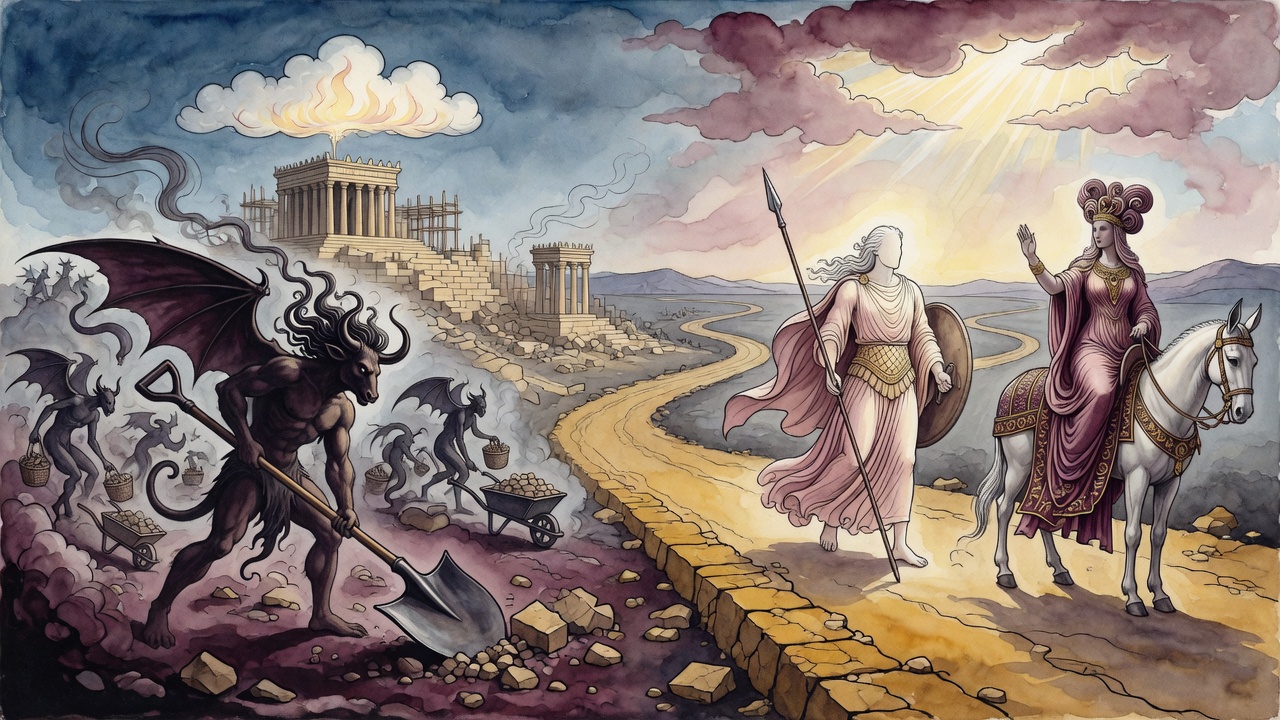
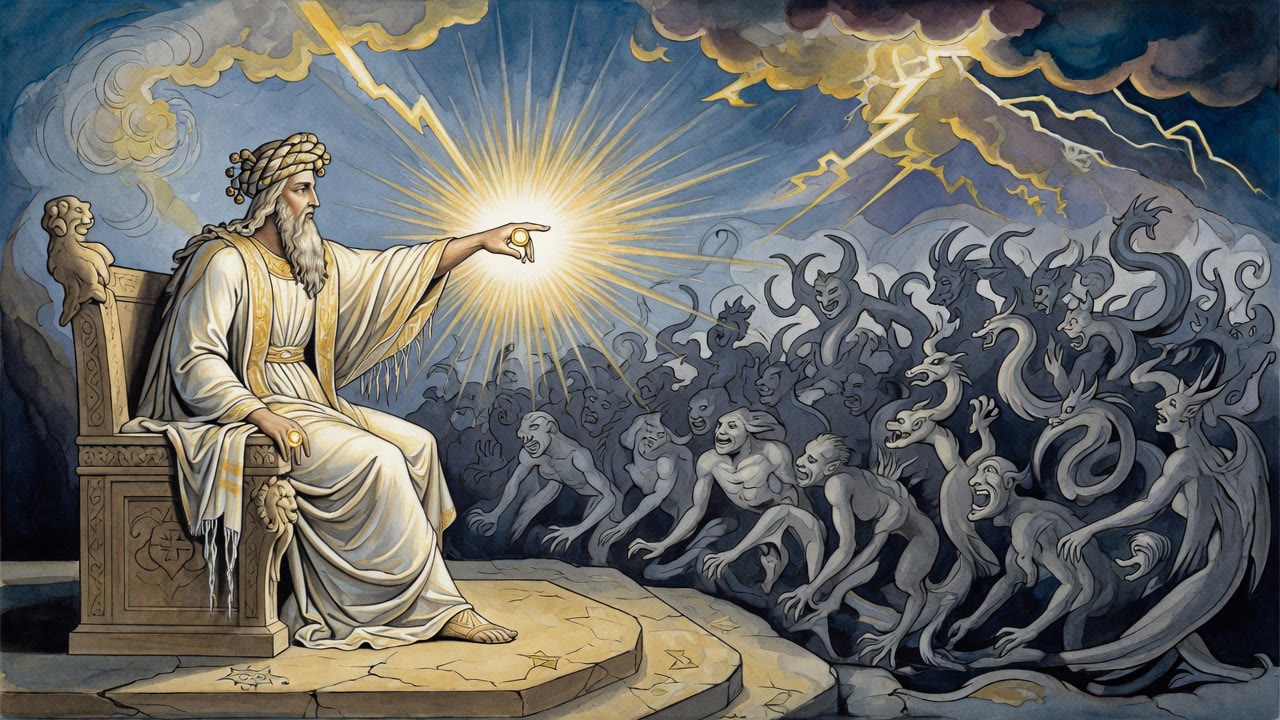
Solomon did not flinch and did not pray for the boy to be spared. The demons of the world had no quarrel with sick children. Their quarrel was with the building rising stone by stone in Jerusalem, the house meant to hold the Presence of God, and they had no power to lay a hand on Solomon himself or on the men he guarded. So they had found the one door left open. They fed on the builder's son to break the builder, and break the builder to halt the work, and halt the work to keep holiness out of the world a little longer.

The Ring With the Name Inside It

The king took the ring from his own hand. It was cut with the four letters that are almost never spoken aloud, the Name itself pressed into the metal. He closed the boy's fingers around it.

"When it comes tonight," Solomon said, "do not run. Do not hide your hand. When it bends to drink, throw this at it. The moment the ring touches it, it is your prisoner. Then bring it to me."

That night the boy lay in the dark with the ring sweating in his fist. The lamp guttered out. He listened to the house settle and the wind move through the unfinished colonnades, and then he heard the other sound, the soft greedy sound of something that had come for him many nights and expected no resistance. It bent over the cot. It reached for the thumb.

The boy threw the ring.

The Thing That Drank in the Dark

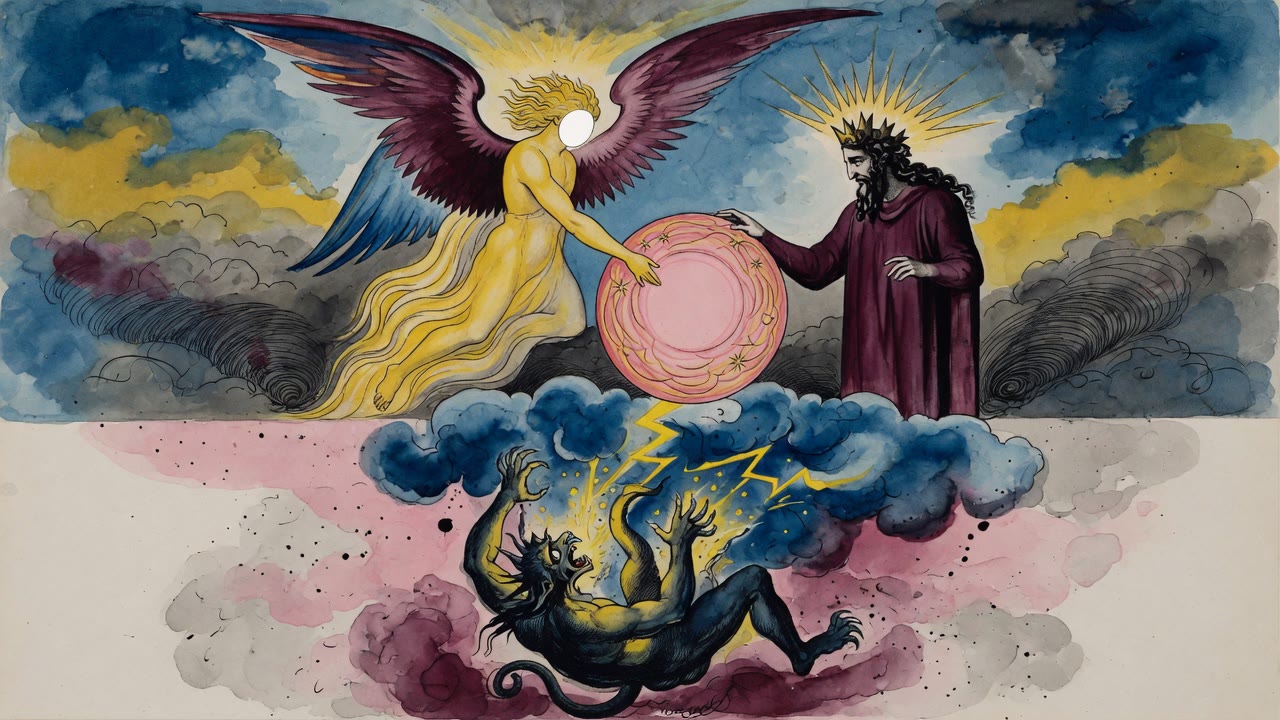
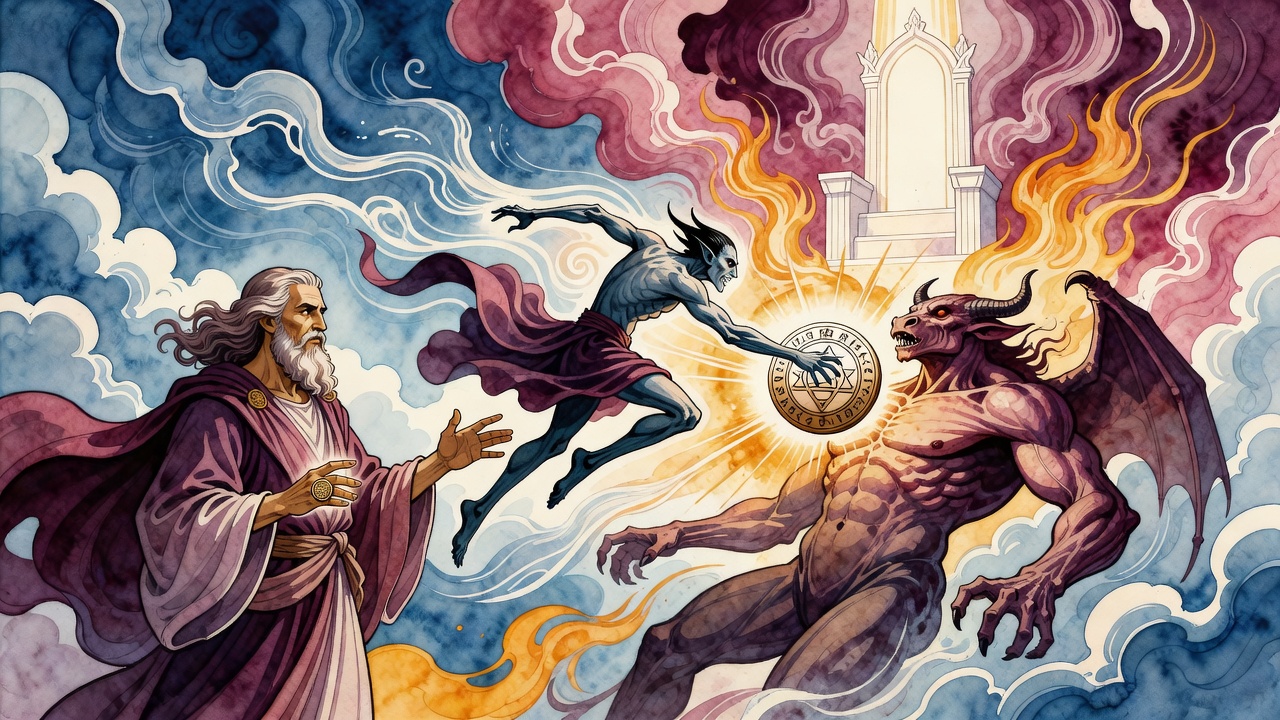
It struck Omasis the way a fist strikes a wineskin. The vampire-spirit that had drunk men's blood since before the boy's grandfather was born went rigid, pinned by four letters it could not bear, and all its patient hunger turned to terror in an instant. It could not flee. It could not lift the wound it had been feeding on. It belonged to the child now, and the child, half dead and shaking with triumph, dragged the night-creature out of the dark and across the city and laid it down before the king.

Solomon looked at the thing that had been emptying his builder's son one swallow at a time. He did not kill it. A dead demon told you nothing.

The Demon Who Gave Up the Others

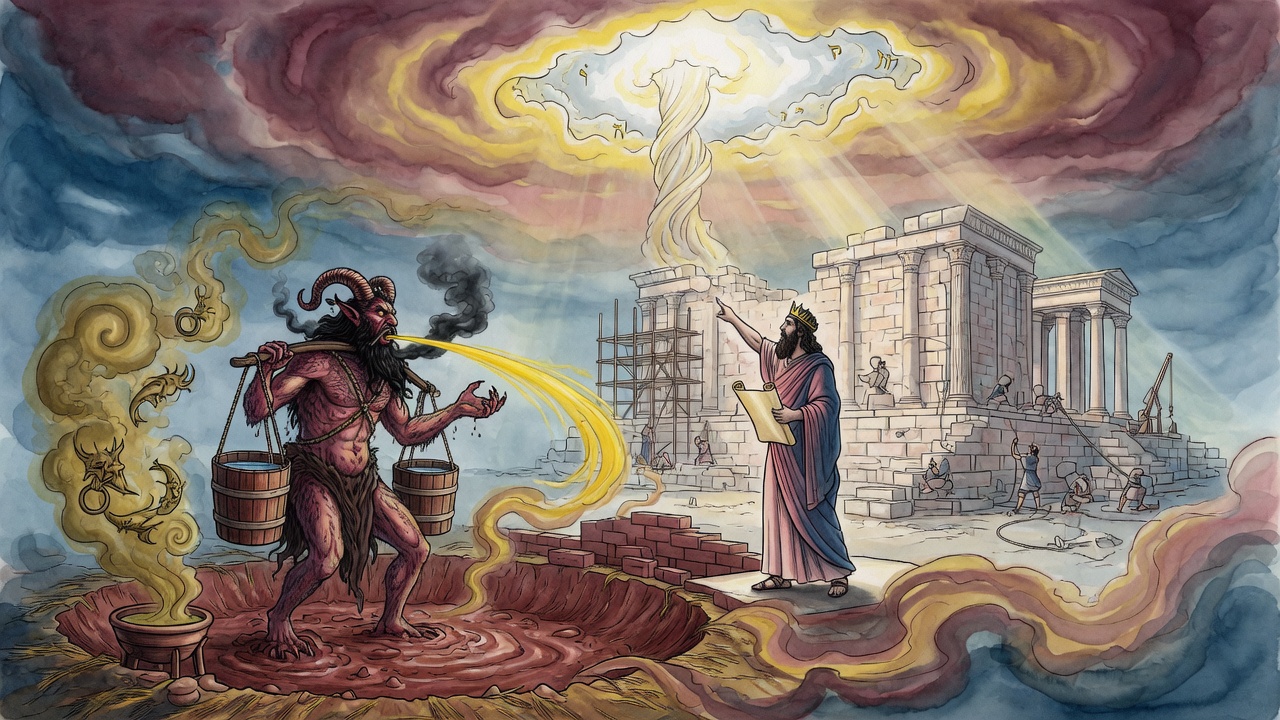
He questioned it instead. He pressed Omasis the way he had pressed every riddle set before him, and Omasis, powerless under the Name, gave up everything. The names of the other demons. Which of them came at noon and which at midnight. What each one feared, what bound it, what drove it back into the dark. The spirit that had come to stall the Temple became the catalog by which the Temple was finished.

With the names in his hand Solomon had the demons themselves. He bound them and set them to the work they had come to wreck, and the same powers that fed on his workmen now hauled and hewed under his ring. The boy's wound closed. The thumb healed. The Presence had its house.

And for as long as Solomon reigned, no demon laid a hand on him, because he held all their names, and a name in the mouth of the wisest king is a leash. The thing that drinks in the dark had taught him how to bind the dark, one frightened confession at a time, in a room where it had expected to feed.


← All myths
From the tradition

Sources

2 sources

The texts this telling draws on, in full. Open a card to read inline, or expand it for a wider, quieter read.

Beit HaMidrash 2:86Beit HaMidrash (Jellinek)

It's wild, and it's connected to none other than King Solomon and the building of the Beit HaMikdash, the Holy Temple in Jerusalem.

The story goes that the demons were, shall we say, not thrilled about Solomon’s plan to build the Temple. After all, the Temple was meant to be a place where God's presence would dwell, a beacon of holiness in the world. And let’s just say demons aren't exactly fans of holiness. But they couldn't directly mess with King Solomon himself, or the chief builder of the Temple – Solomon was too powerful, protected by God. So, what's a demon to do?

Enter Omasis. According to Howard Schwartz in Tree of Souls, Omasis was a vampire demon. And Omasis had a plan. He targeted the chief builder’s son. Can you imagine the fear and dread?

Every day, Omasis would approach the boy and suck blood from his thumb. Not just once, but repeatedly. Until the poor kid was utterly drained, weak as a kitten. King Solomon, ever observant, noticed the boy’s declining health. He asked, “What ails you, my boy?”

The boy, trembling, confessed everything. Solomon, wise and powerful, didn't panic. Instead, he gave the boy his royal ring. This wasn't just any ring; it was engraved with the sacred letters of God’s Name, YHVH, the Tetragrammaton, a name so holy it’s rarely spoken aloud. King Solomon instructed the boy that the next time Omasis approached, he should throw the ring at the demon. Doing so, he said, would make Omasis his prisoner. And once he had the demon captive, he was to bring him straight to the king.

And that’s exactly what happened. The boy, scared but trusting in Solomon’s wisdom and the power of the Divine Name, did as he was told. The ring struck Omasis, and the vampire demon was instantly subdued. The boy, no doubt with a mix of terror and triumph, dragged the demon before King Solomon.

Now, what would you do with a captured vampire demon? King Solomon, ever the strategic genius, saw an opportunity. He didn't just punish Omasis; he interrogated him. He besieged Omasis with questions about all the other demons: their names, their weaknesses, how to stop them.

And Omasis, now powerless against the king, spilled the beans. In this way, King Solomon extracted the names of all the demons. With this secret knowledge, Solomon ensured the Temple’s completion and kept the demons at bay throughout his reign, for they had no power over him.

So, what's the takeaway? This tale, as Howard Schwartz points out, is considered the earliest Jewish vampire story, a fascinating glimpse into the intersection of folklore and religious belief. It's a reminder that even in the face of darkness, wisdom, faith, and a good ring engraved with God’s name can triumph.

And it makes you wonder.. what other secrets are hidden within the ancient stories, waiting to be uncovered?

Full source
Rosh Hashanah 26aHebraic Literature (1901)

A visitor arrived at the royal court of Solomon, hoping for an audience with the wisest of kings. He was not admitted. Three days passed, and each day he was told to wait.

On the first day he asked the servants, "Why does the king not invite me into his presence?" The answer came back, "He has drunk too much, and the wine has overpowered him." The visitor said nothing. He walked to a pile of bricks near the gate, picked one up, and set it carefully on top of another. Then he went back to his lodgings.

The courtiers reported this strange gesture to Solomon. The king did not need anyone to explain. "He means," Solomon said, "give him more wine. Pour it on top of what he has already drunk. Make him drunker still."

On the second day the visitor asked again, "Why does the king not invite me in?" He was told, "He has eaten too much." The visitor returned to the bricks. This time he lifted the top brick off the stack and set it aside.

Solomon heard the report and again understood at once. "He means: take food away from me. Give me less." The king who could read the language of birds could also read a stranger who spoke only in bricks. The story is preserved in the Talmud's tractate Rosh Hashanah (26a) and elsewhere.

Solomon's wisdom was not a body of information. It was the habit of noticing what other people dismissed as meaningless.

Full source