The Wife Who Kept the Poor Priest in the Land
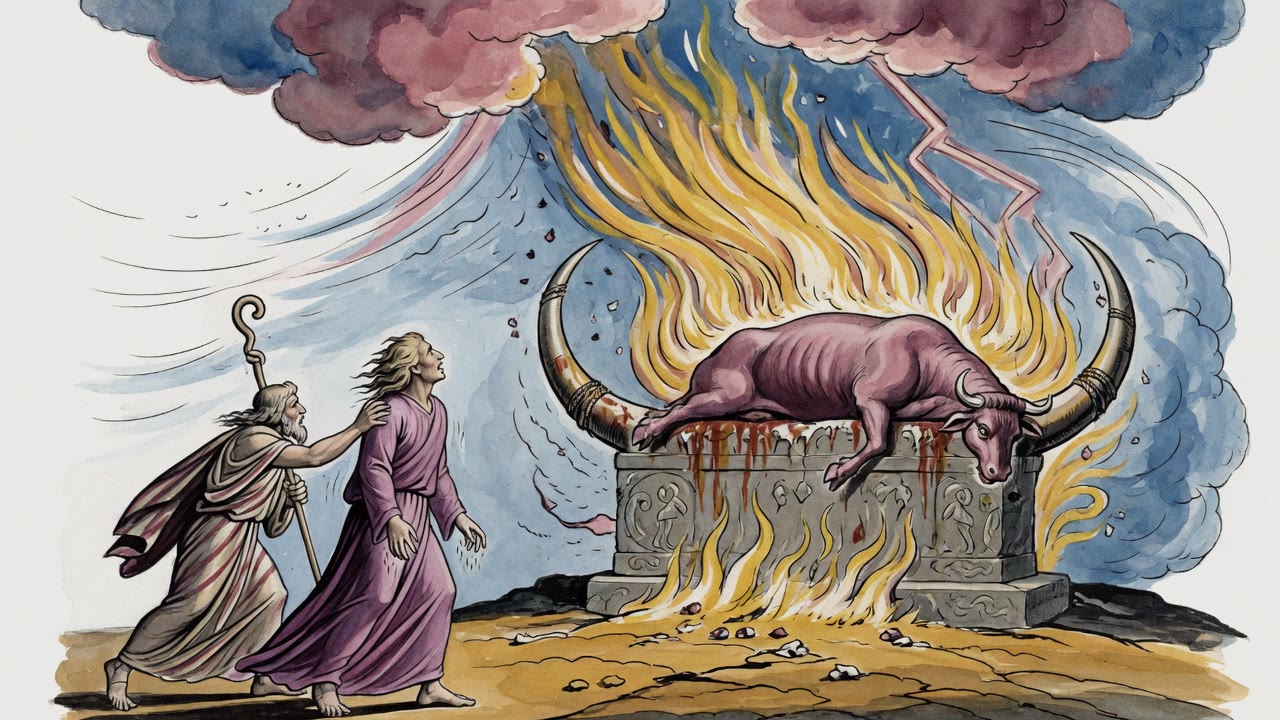
Job raged that God crushed him with a tempest. Heaven answered with wells for every hair. A poor priest packed to leave until his wife turned the teaching home.
 Click for full size
A Tempest Made of Hairs
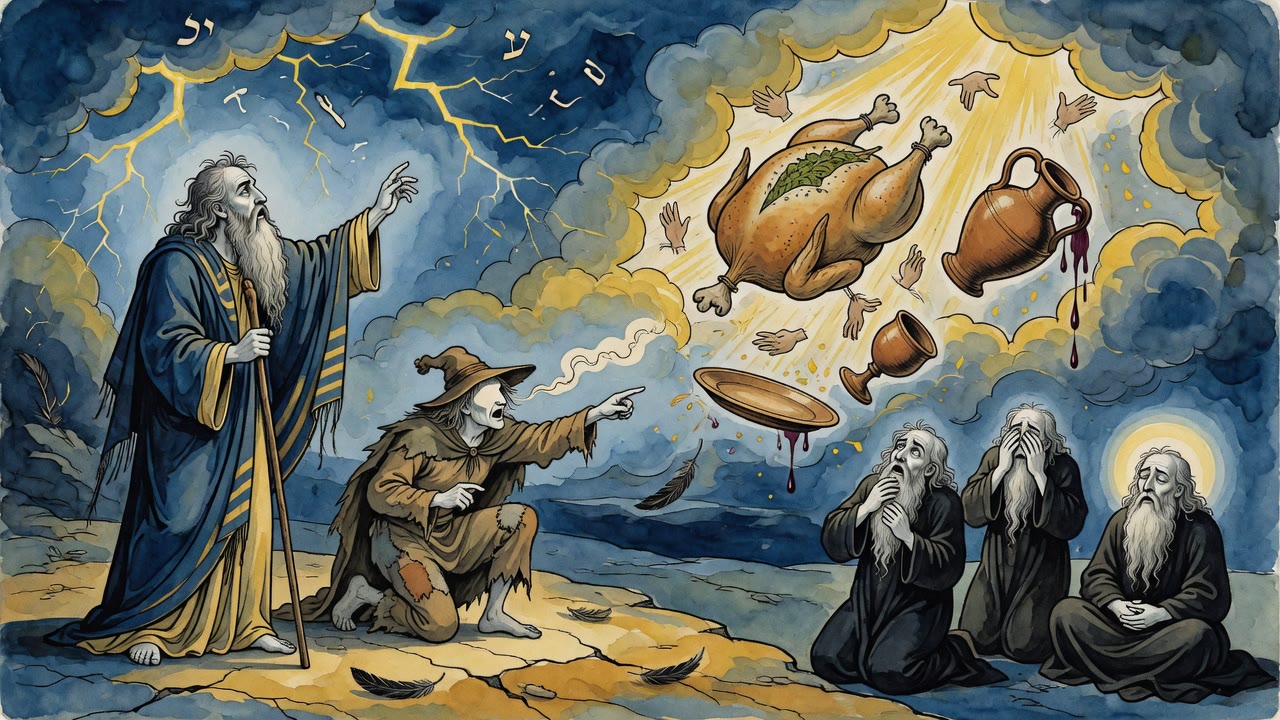
Job sat in ash and accused the sky. God had crushed him "with a tempest" and wounded him for nothing (Job 9:17). The Hebrew carried another word the sages heard in Arabia, where hair is named with the sound of flood. Out of that double meaning rose a strange answer, smaller than empire and larger than comfort.
Rabbi Yehoshua of Sikhnin, in the name of Rabbi Levi, taught that the LORD splits open a private channel, a well, for every single hair on a human body. Not a speech about thrones. A ledger of follicles. Far be it from the Almighty to do wrong, said Elihu. He repays each man by measure, never heaping suffering the way grain is heaped carelessly into a basket until the stalks break and the count is lost.
Rabbi Abba bar Kahana put it in one motion of the scales: this one He lowers, and that one He raises, all by justice. Even your hairs, God told Job in the midrash's hearing, I numbered and watered one by one. The tempest Job named was not chaos. It was attention so fine it reached the root of each strand.
Job wanted the storm explained in the language of courts. Heaven answered with irrigation under the skin.
The Kitchen Lesson
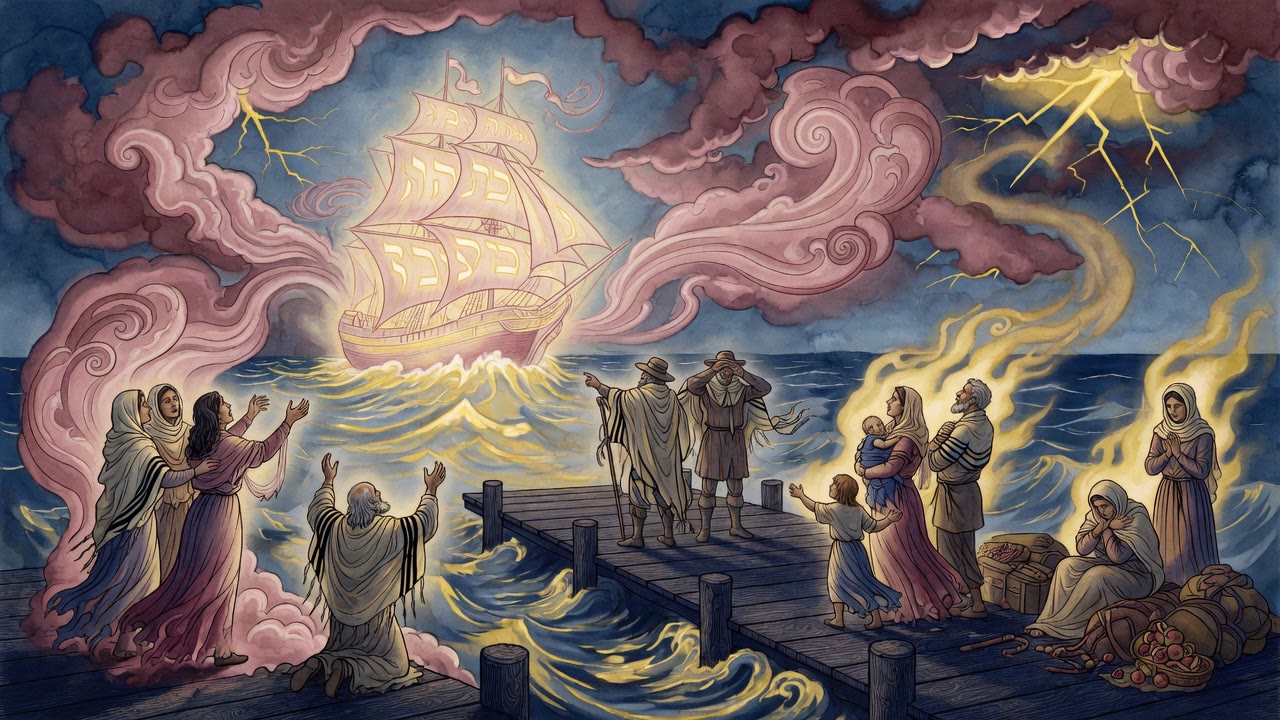
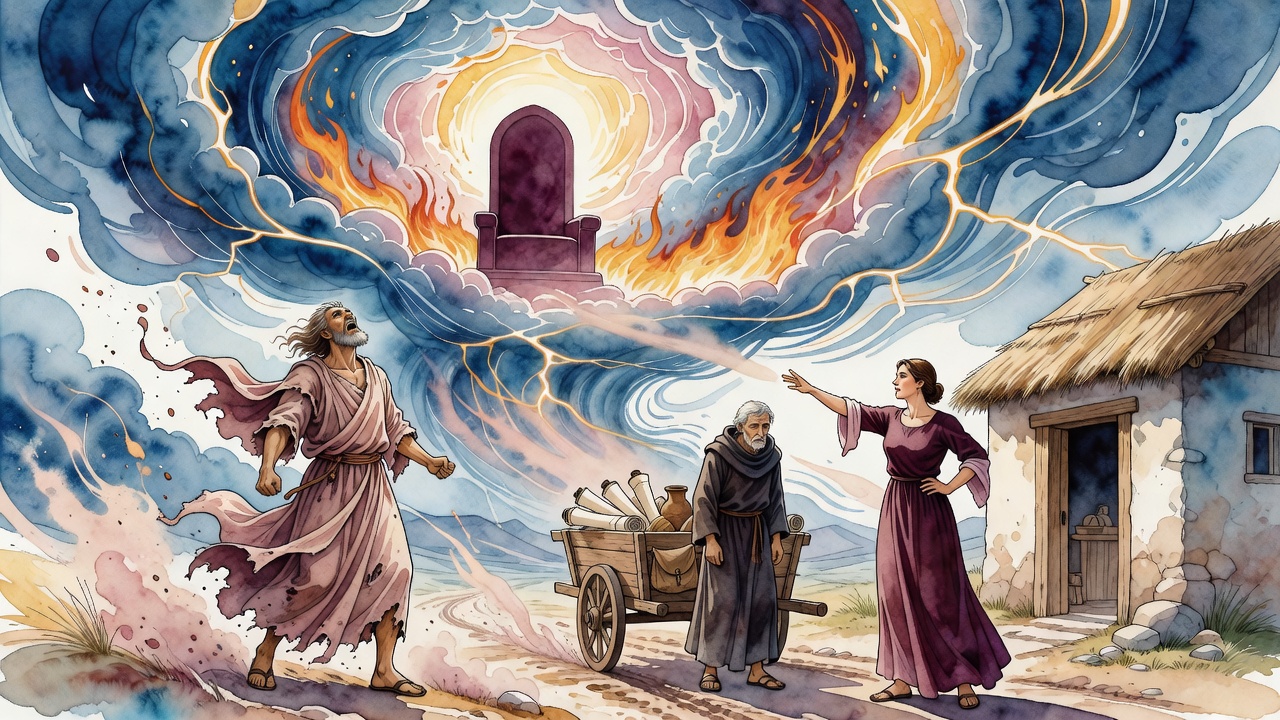
A priest learned the teaching in his own house. Grown poor, he packed to leave the Land. Bags by the door. Children watching the knot tighten on the last rope. Before he went he taught his wife how to read the plagues of skin: when a hair's well dries, the man is stricken. Knowledge as farewell gift. Theology as luggage he could drop on the table and abandon with a kiss.
She turned the scroll back on him. If the Holy One digs a well for every hair, will He not provide for you, a whole man whose children eat from his hand? She would not let him go. Her body blocked the doorway. The Land kept a priest because a wife refused to treat Providence as a lecture for someone else's scalp.
He had been ready to trade the covenant ground for a wage in a foreign market. She held him to the arithmetic he had just taught. One hair, one well. One household, one God who still counts.
The bags stayed left closed that night. The children slept in the Land.
Judgment That Lifts the Throne
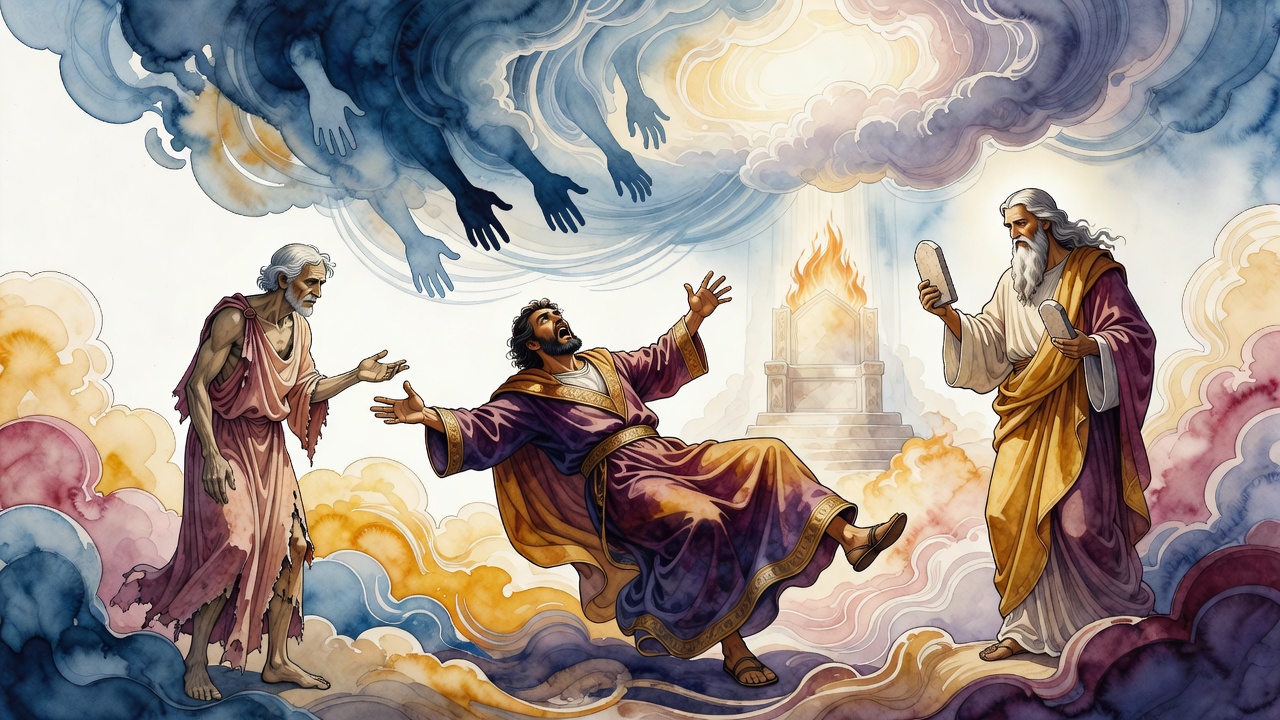
Elsewhere the sages asked when the Holy One rises highest in His own world. Not in thunder. In justice, when He sets judgment among the nations. Daniel saw thrones in the plural. Isaiah saw the Lord on a single throne. How many seats does judgment need?
R. Jose the Galilean and R. Akiva wrestled over footstools and empires. One said throne and footstool. The other said the thrones of the empires, which God is destined to cast down, the same verb that hurled horse and rider into the sea. Cast down, not politely rearranged. Holiness is not only white garments on a quiet mountain. "You shall be holy, for I the Lord your God am holy" (Leviticus 19:2) sits beside a God exalted by fair measure among peoples who thought dread was enough to rule forever.
The priest's wife argued from that same measure without naming Daniel. If judgment is fine enough for hairs, it is fine enough for bread on a poor table in the Land. If empires fall by justice, a household can stay by justice. She did not need a vision of thrones. She needed her husband to stop treating poverty as permission to flee the place where wells are still dug under invisible roots.
Stay
Job wanted the storm explained. Heaven answered with irrigation no eye can see until a strand dies. The priest wanted a new country. His wife answered with the same irrigation, scaled up from hair to household, from scalp to cupboard.
He stayed. The wells he had described kept working where he could not see them, in the market when a gift arrived, in the field when a share was offered, in the ordinary day that did not look like a miracle and still fed three children. Justice that lowers and raises did not always look like a throne room. Sometimes it looked like a woman blocking a doorway with a question sharp enough to cut a travel rope.
The Land did not grow richer overnight. The priest did not become a prince. He became a man who had been forced to live inside his own teaching. Job's complaint and a wife's refusal shared one grammar: nothing is random enough to excuse despair, and no tempest is too large for a God who waters hairs one by one.
← All myths