The Rich Man Mocked the Poor Man and Fell
A poor man asked for help and a rich man mocked his body. Heaven answered the sneer with empty hands, while Moses warned that any brother can sink.
Table of Contents
 Click for full size
Consider Me
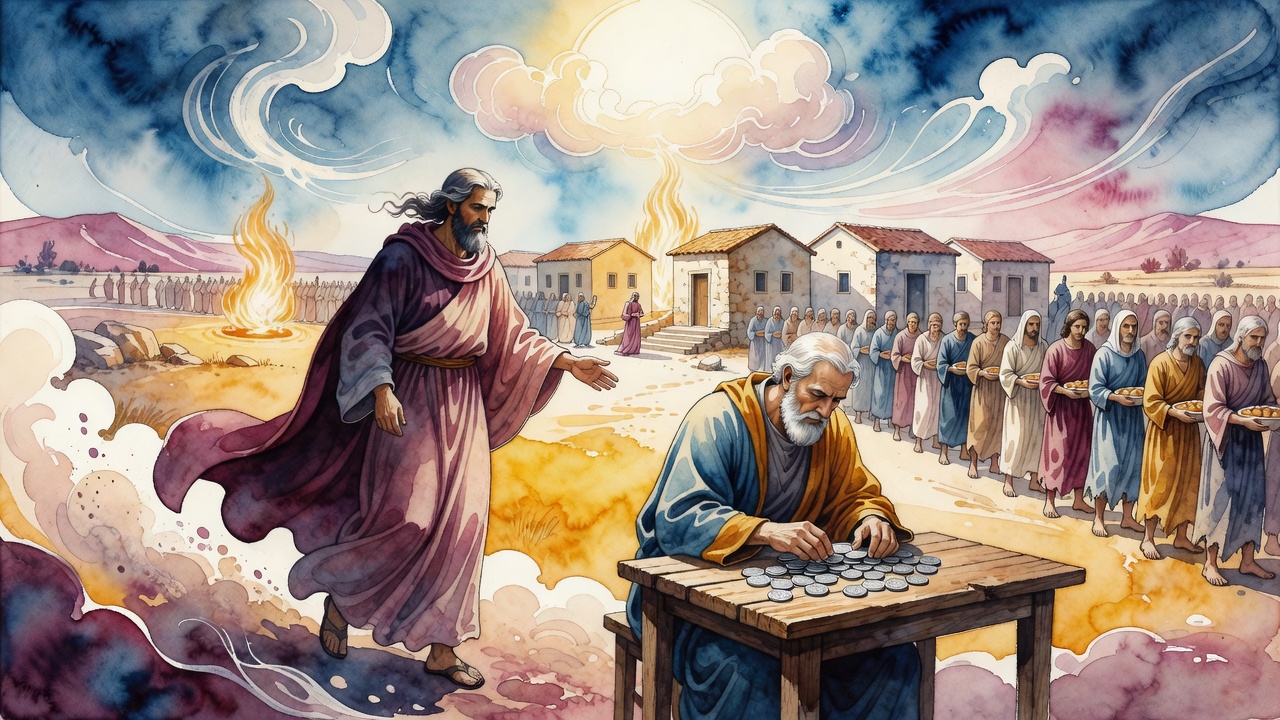
The poor man stood in the dust and did not waste words. "Consider me, look at me," he said, the way Rabbi Ḥagai heard the Land's speech when need still kept its dignity. Another beggar in that country might say, "Gain through me, be exalted through me," turning charity into the rich man's own elevation, a spiritual profit named without shame. Rabbi Ze'eira said even the conversation of the Land of Israel is Torah. Need arrives wearing phrases that teach.
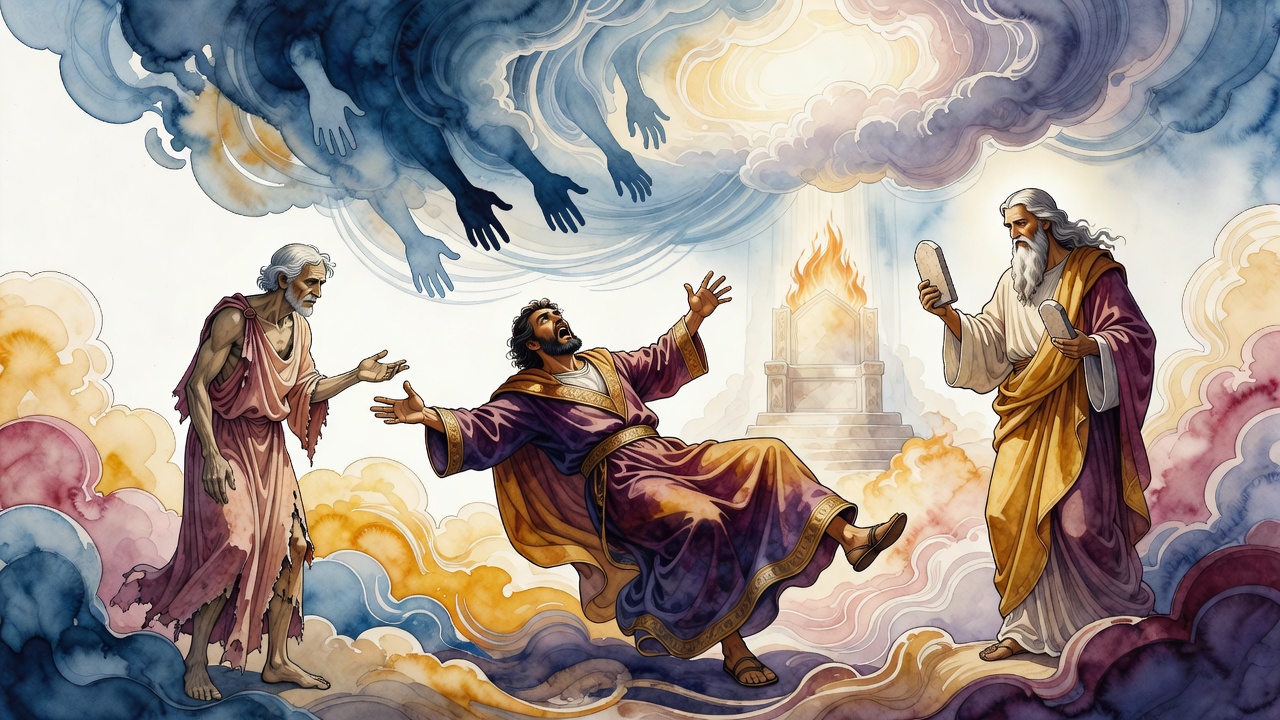
This day the rich man did not answer with bread. He looked the poor man up and down as if measuring livestock and laughed with his throat. "Why don't you work? Look at your thighs, your legs, your belly. You're fat." The insult landed harder than a slammed door. It made the body itself a crime and the hunger a fraud.
People nearby pretended not to hear. Dust settled on the refusal.
The Evil Eye on a Blessing
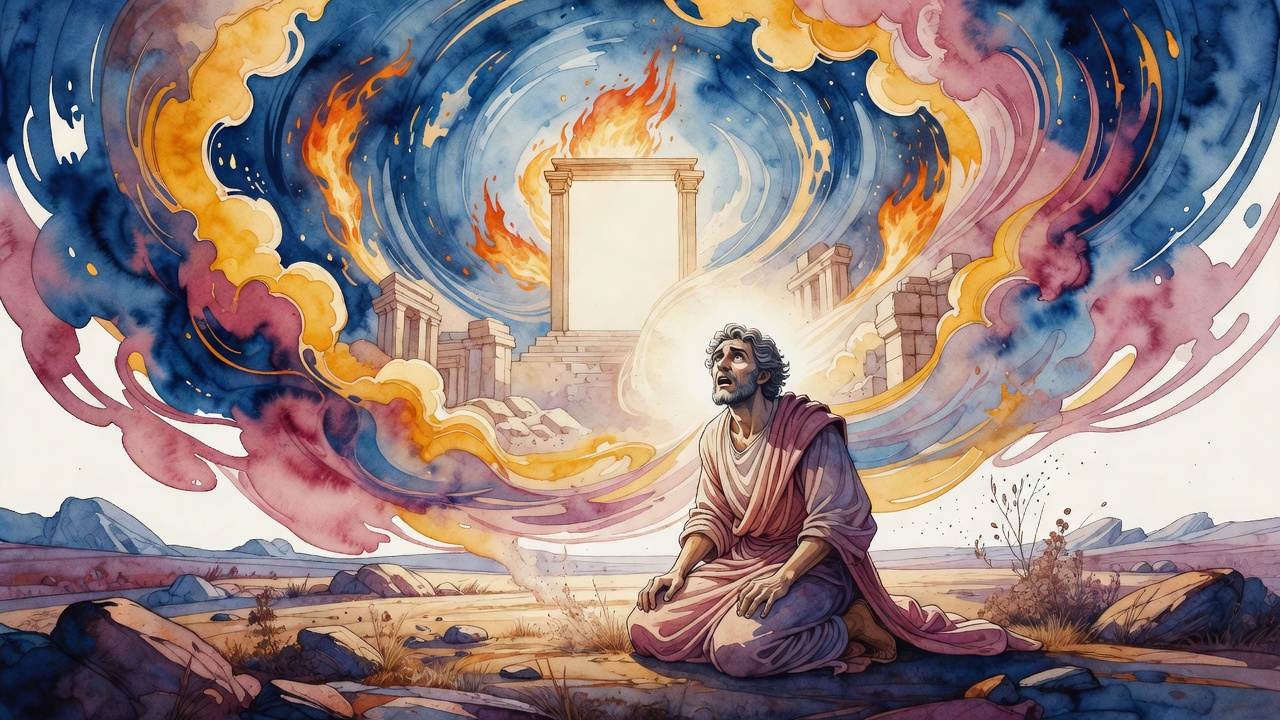
God's answer, in the midrash's hearing, was immediate and cold. Is it not enough that you gave him nothing? You put an evil eye on the body I fed? You resent the little fullness left in a man who came with empty hands? Ecclesiastes had already named wealth lost in an ill-fated matter (Ecclesiastes 5:13). The story ends with a son born into empty hands, inheritance gone before it can be counted. The sneer cost more than the coin refused. It cost the house its future grip.
Fortunes turn. The midrash wants the currently wealthy to remember former hunger, their own or someone else's, before the mouth invents a medical exam for a starving stranger. Look at me, the poor man said. The rich man looked and used the look as a weapon.
If Your Brother Becomes Poor
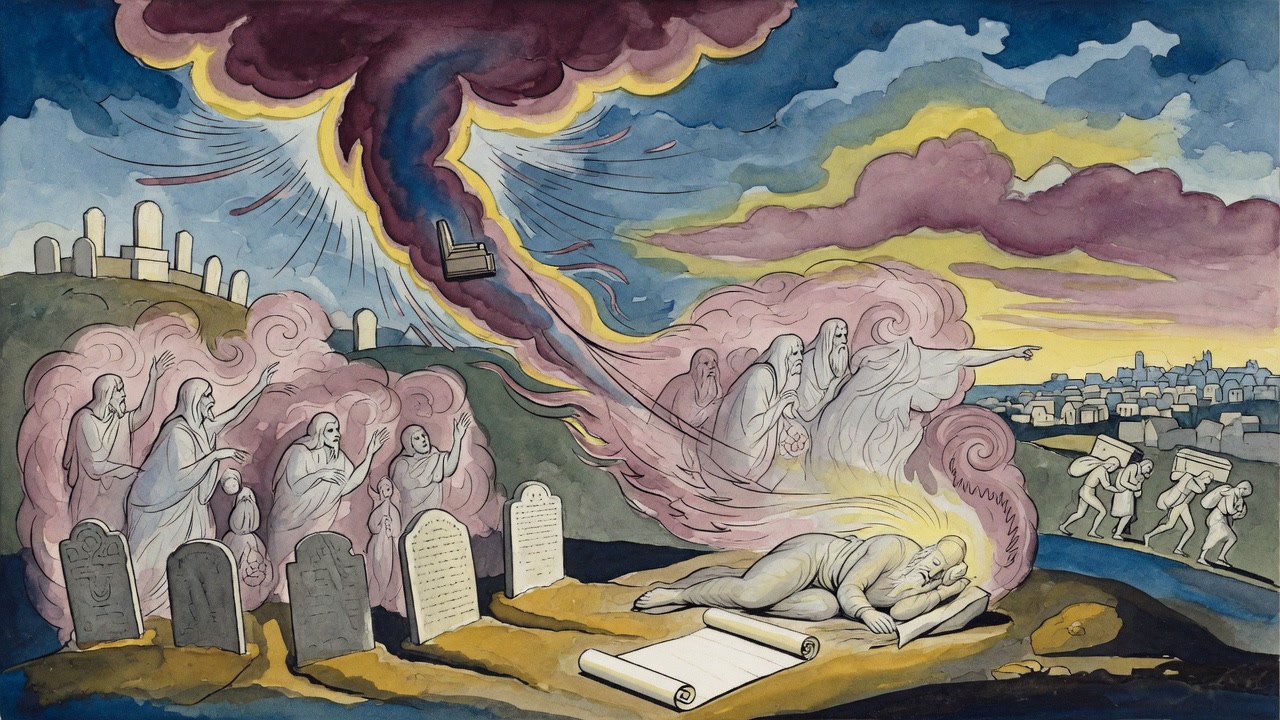
Moses had already framed the fear in law-language that is also story-language: "If your brother will become poor" (Leviticus 25:25). Not a stranger first. A brother. The near one. Vayikra Rabbah reads Israel's cycle in the days of the Judges: fall into idolatry, conquest, cry, rescue, fall again (Psalm 106:43). How low before heaven must act? One amora said until they were impoverished of mitzvot (commandments), spiritual thinness named with the same root as material dwindling (Judges 6:6). Another said until they could not afford even the poor man's offering, rock bottom measured in a bird they could not buy (Leviticus 14:21).
Poverty is not one word. The midrash lines up eight: ani, the simple poor; evyon, who desires everything because lack has trained desire to run wild; misken, whose wisdom is scorned (Ecclesiastes 9:16); rash, stripped of property; dal, depleted by slow drain; dakh, depressed, seeing good and unable to touch it; makh, low as a threshold everyone steps over; helekh, the walker with no fixed place. Moses lists them so no one can say poverty is only an empty purse. Dignity, desire, status, and spirit all have their ways of going hungry.
The Cycle and the Coin
In the Judges' years, Israel sank, rose, sank. Spiritual thinness and material thinness braided until rescue without repair became a wheel that threw the same riders. "Many times He rescued them, but they were defiant in their counsel, sinking low in their iniquity." The rich man who mocks a belly has forgotten that a nation can lose both kinds of fullness in one generation, and that a brother can become any of the eight names before the market week ends.
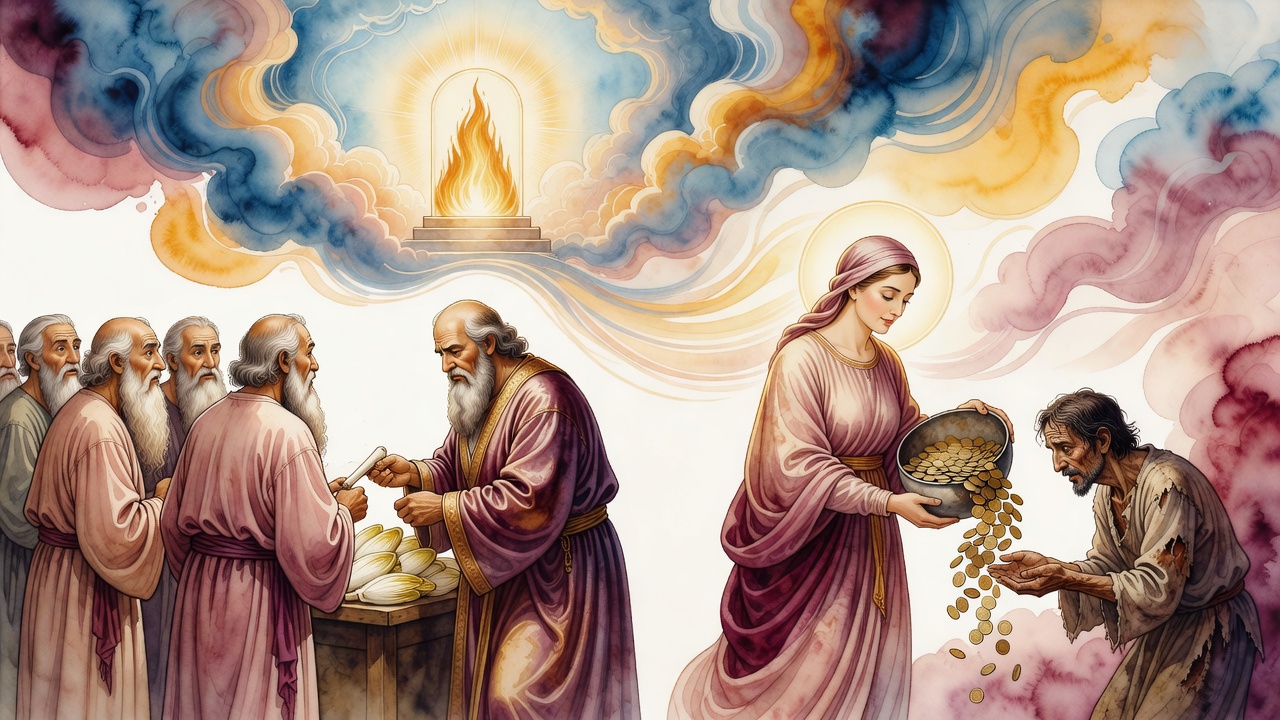
Charity in the Land's idiom tries to break the wheel before it grinds. Gain through me. Look at me. The phrases keep the poor man human while the rich man still has a choice that heaven has not yet closed. A coin given without the sneer would have been a different story. The midrash tells the one that ends in empty hands on purpose.
Empty Hands
The rich man's storerooms, in the midrash's justice, do not stay full. He begets a son and has nothing in his hand. The poor man who asked to be seen becomes the measure of a house. Moses' warning stands over both of them: any brother can become poor, in purse, in mitzvot, in dignity, in the ability to taste what he sees across a table he cannot join.
On the next road a different wealthy man might hear "be exalted through me" and open his hand before heaven has to close it for him. The dust will still be there. The choice will still be there. The eight names will still be waiting for anyone who thinks a full belly is a permanent citizenship.
Years later people still pointed at the empty house when they taught children how not to speak. The son's name was known. The father's sneer was known. The poor man's request, "look at me," had become a proverb in alleys where Torah and hunger shared a wall. Moses' eight names for poverty hung over the story like a net: any brother could fall into any mesh. The Land's speech had tried to teach the rich man how to be exalted through giving. He chose the other lesson, and heaven graded it in full.
← All myths