5 min read

They Broke One Sabbath to Keep Many Sabbaths

Under a fallen beam a body still breathes on the Sabbath. Rabbi Nathan sends rescuers with tools while Moses sets life and death as open roads.

Curated by Arthur · Told by Maggid ·
Table of Contents
  1. Breath Under the Beam
  2. Profane One to Keep Many
  3. Two Roads, One Choosing
  4. Not an Exception, a Fulfillment
  5. After the Chest Rises Free
They Broke One Sabbath to Keep Many Sabbaths Click for full size

Breath Under the Beam

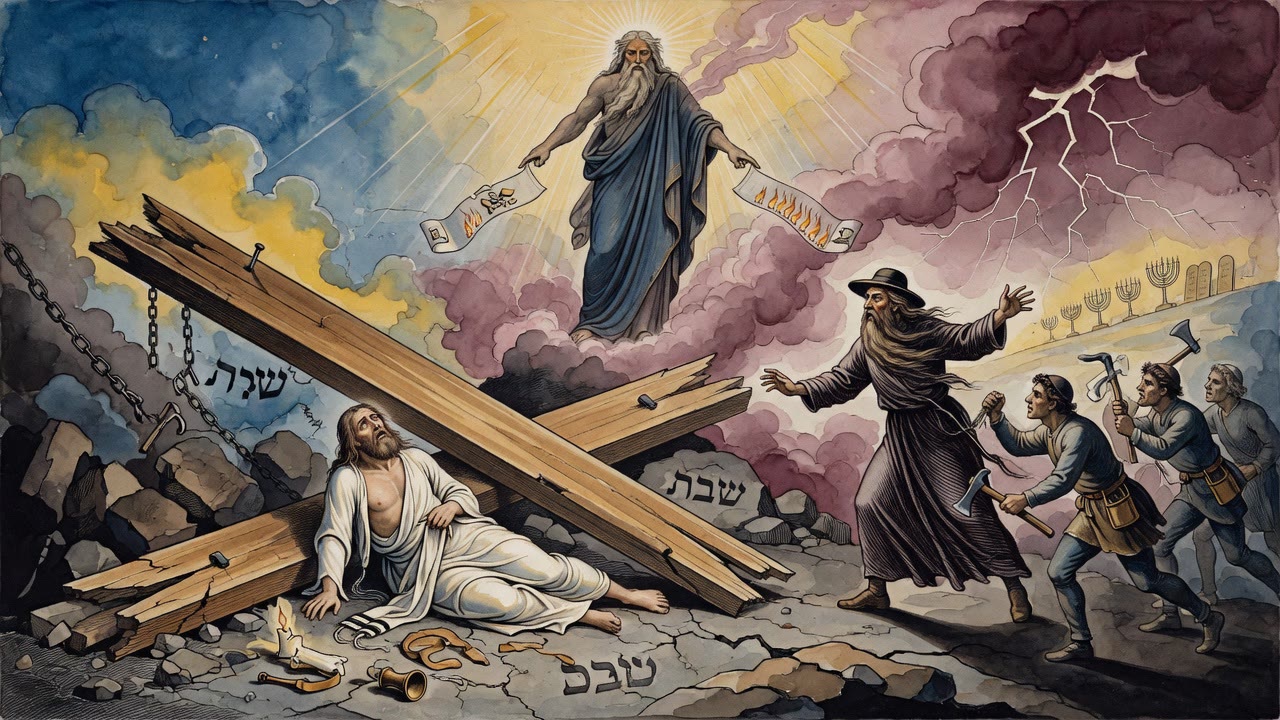
The beam had come down at the edge of the afternoon, when the light was already leaning toward holy time. Dust filled the mouth of the man pinned beneath it. His fingers twitched once against the dirt. Someone shouted for quiet so they could hear whether the chest still moved. It moved. The sun kept sinking.

On an ordinary day the answer would have been only muscle and wood. On the Sabbath the answer had to pass through law first, or so fear claimed. A few men stepped back as if holiness were a rope around their wrists. A woman with torn knuckles stepped forward and put her ear to the dust. The breath was shallow. It was real. Then a teaching older than their fear stepped into the alley with a clear mouth.

Profane One to Keep Many

Rabbi Nathan said, in the school of Mekhilta DeRabbi Yishmael, "Profane for him one Sabbath so that he will keep many Sabbaths." The Torah commands, "And the children of Israel shall keep the Sabbath, to observe the Sabbath for their generations," in (Exodus 31:16). A dead man has no generations of Sabbaths left. Saving the breath under the beam is not a hole punched in the day. It is the day buying its own future.

Tools came out. Hands that had been trained to rest now dug, lifted, tore. No one called it a light matter. They called it the Sabbath keeping itself alive in a human chest. The Mekhilta's force is the must, not the may. Life in danger turns rest into work as a duty, not as a loophole for the lazy.

Two Roads, One Choosing

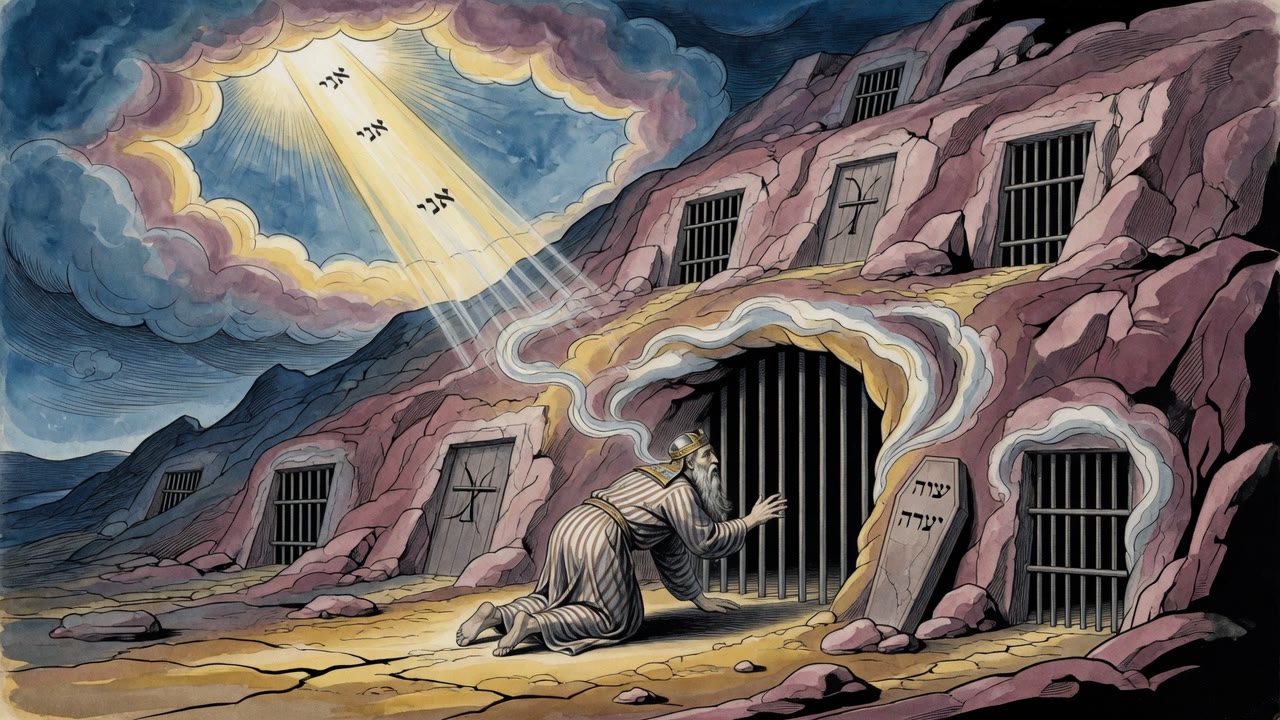
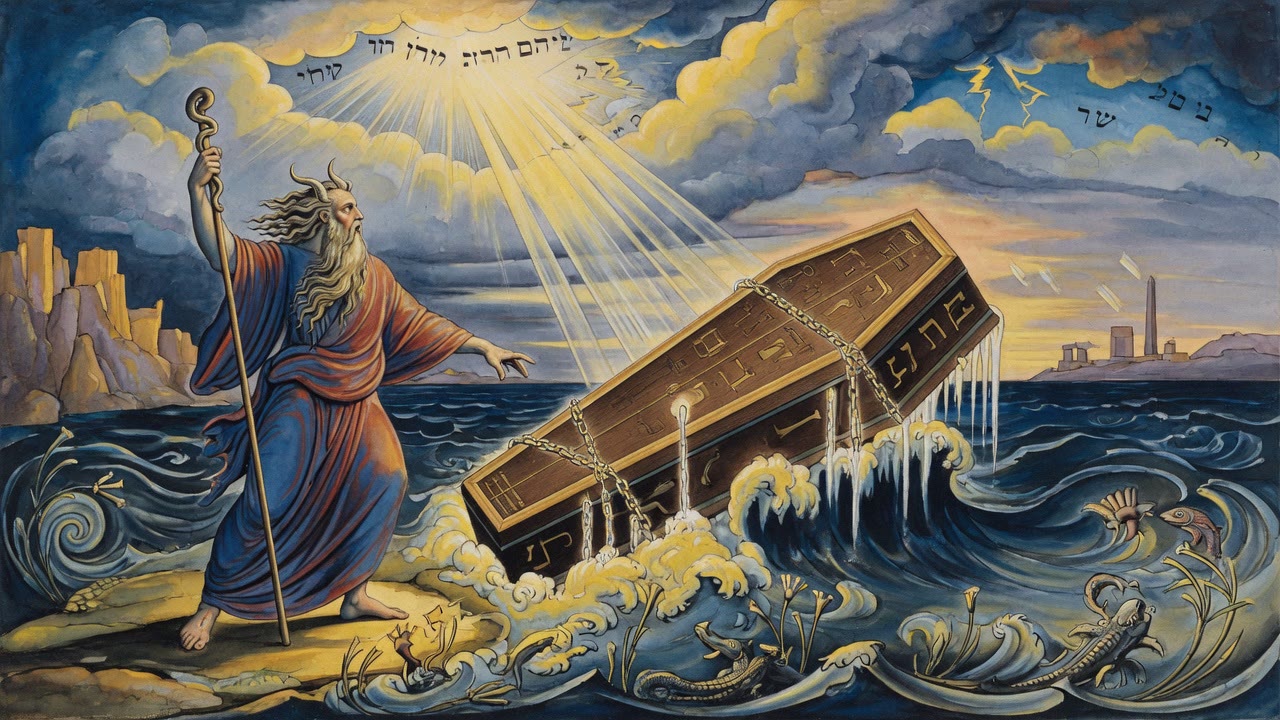
Midrash Tanchuma sets another scene beside the alley. Moses speaks for God. "See, I am setting before you today a blessing and a curse," in (Deuteronomy 11:26). Jeremiah's language joins it. "See, I am setting before you the road of life and the road of death," in (Jeremiah 21:8). The roads are not hidden behind clouds. They are set down in front of a people that still likes to pretend it had no options.

In the alley the roads shrink to a single choice. Dig and live. Freeze in piety and bury a man who might have lit candles next week. The midrash and the Mekhilta agree that life is not a soft preference. It is a commanded direction. Choosing life can look noisy on a holy day. The Tanchuma still calls it the road that was offered in daylight.

Not an Exception, a Fulfillment

What makes Rabbi Nathan's line cut clean is its logic. He does not say life is an emergency escape hatch from the Sabbath. He says the Sabbath exists for their generations, for ongoing life. Letting someone die to protect the day's stillness would contradict the day's own reason for being. One violation now purchases a lifetime of sacred rest.

Doctors lean over beds. Neighbors lift rubble. Midwives work through sunset. The same sentence walks with them. Keep the person who can keep the day. The categories of prohibited labor do not vanish. They bow. They wait their turn until the chest rises free. Anyone who turns this into contempt for the Sabbath has misheard.

After the Chest Rises Free

When the beam finally rolled and the man dragged air like a drowning swimmer, no one needed a lecture. The dirt on their hands was the sermon. Blessing and curse had been abstract on the mountain. Under wood they were weight, angle, and time. Someone brought water. Someone checked the light left in the sky and still did not apologize for the work.

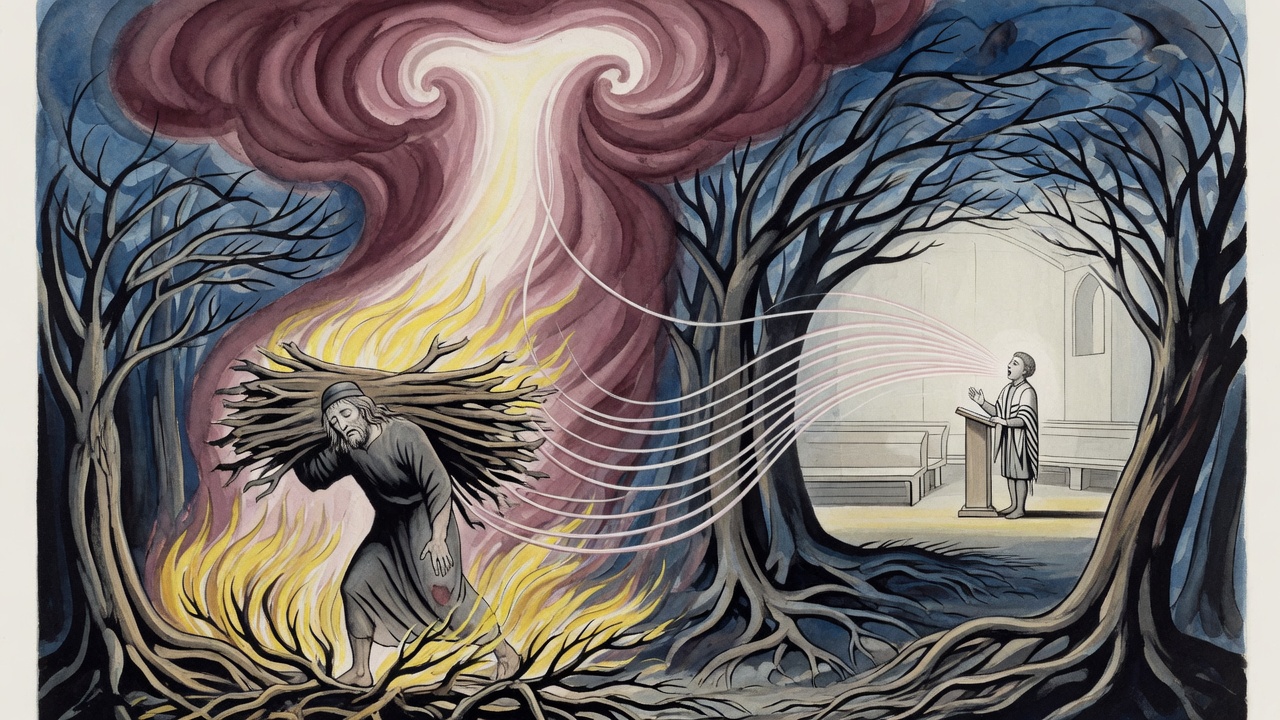
In every age some voice will call rescue a modern softness. The tannaitic school already answered. The Tanchuma already set life and death as open roads. Choose the road that leaves a mouth free to bless the next Sabbath by name. When your hands hesitate over a tool on a holy day while a body still breathes, remember the alley, the beam, and the generations packed into one twitching finger.

Do not trade that pressure for a cleaner summary. The myth lives where a person must choose while the sun moves and the animal breathes and the calendar turns. A mouth can recite while feet refuse. The midrash refuses that split and keeps returning you to the moment of decision.

Stand again where the story began. Dust on the sandal, rope on the wrist, water on the field, gold on the floor, knife in the yard, tears in the camp, foot on the chest, smoke in the street, beam on the chest, awl at the door, ink on the court table. Those are the true citations.


← All myths

From the tradition

Sources

2 sources

The texts behind this telling. Some cards carry a translation of the source; others are our own retelling of it, and each card says which. Every card links out to the original.

Mekhilta Tractate Shabbata 1:25Mekhilta DeRabbi Yishmael

Retold in our words. Read the original at the link below.Mechilta, translated by Rabbi Shraga Silverstein · CC-BY

The Torah commands: "And the children of Israel shall keep the Sabbath, to observe the Sabbath for their generations" (Exodus 31:16). The Mekhilta DeRabbi Yishmael connects this verse to a teaching by Rabbi Nathan that became one of the most consequential principles in all of Jewish law.

Rabbi Nathan says: "Profane for him one Sabbath so that he will keep many Sabbaths." The principle is startling in its clarity. If a person's life is in danger, you must violate the Sabbath to save them. Not "you may", you must. The Torah commands Sabbath observance "for their generations," and a dead person has no future generations. Saving a life now ensures that person will observe many Sabbaths in the years to come.

This teaching became the foundation of the rabbinic principle known as pikuach nefesh, the preservation of human life overrides virtually every other commandment. A doctor must treat a critically ill patient on Shabbat (the Sabbath). A person trapped under rubble must be rescued even if it means digging, carrying, and performing every category of prohibited labor.

What makes Rabbi Nathan's formulation so powerful is its logic. He does not argue that saving a life is an exception to the Sabbath. He argues that saving a life is the fulfillment of the Sabbath's own purpose. The Sabbath exists "for their generations", for the ongoing life of the people. Letting someone die in order to keep the Sabbath would contradict the Sabbath's own reason for being. One violation now purchases a lifetime of sacred observance.

Full source
Midrash Tanchuma, Re'eh 1Midrash Tanchuma

Retold in our words. Read the original at the link below.Townsend 1989 translation of Midrash Tanhuma, S. Buber Recension · CC-BY

(Deut. 11:26:) “See, I [am setting before you today a blessing and a curse]. This text is related (to Jer. 21:8), “And (to) [unto] this people you shall say, ‘Thus says the Lord, “See, I am setting before you the road of life and the road of death.”’” It is also written (in Ps. 78:1), “A maskil of Asaph. Give ear, O my people, to my Torah […].” And it is written (in Deut. 4:9-10), “Only take heed to yourself and watch [yourself closely, lest you forget the things that your eyes have seen and lest they depart from your heart all the days of your life; make them known to your children and to your children's children]: The day that you stood [before the Lord your God at Horeb]….” [This is] to tell you that [when] anyone despises the words of Torah, it is as though he were denying the Holy One, blessed be He, because He only bestowed Torah so that Israel would be occupied with it day and night, as stated (in Josh. 1:8), “and you shall meditate on it (i.e., on the Torah) day and night.” And it is written (in Ps. 1:2), “But their delight is in the law (Torah) of the Lord, [and on his law (Torah) they meditate day and night].” And when anyone occupies himself with the Torah and fulfills it, [it is] as though he had received it from Sinai. It is therefore written (in Deut. 4:9), “make them known to your children […],” and adjacent to it (in Deut. 4:10), “The day that you stood before the Lord your God….” When Asaph came, he began to say (in Ps. 78:1) “Give ear, O my people, to my Torah.” So also did Solomon say (in Prov. 4:2), “For I gave you good instruction; [do not abandon my Torah].” Israel said to Asaph, “Is there another Torah, such that you say (in Ps. 78:1), ‘Give ear, O my people, to my Torah?’ We have already received it from Mount Sinai.” He said to them, “The sinners of Israel say that the Prophets and the Writings are not Torah, and they do not believe in them, as stated (in Dan. 9:10), “And we have not obeyed the voice of the Lord our God by walking in His Torah, which He set before us at the hand of His servants the prophets.” Ergo, the Prophets and the Writings are Torah. As so is it stated (in Ps. 78:1), “Give ear, O my people, to my Torah (in this case to a writing of Asaph).” Another interpretation (of Ps. 78:1), “Give ear, O my people, to my Torah.” This text is related (to Prov. 16:23), “The heart of a wise person, instructs his mouth […].” When Israel sins, they are withheld from anything good; and so you find that, when they committed the act (of the golden calf), everything good was withheld from them, as stated (in Exod. 32:19), “And it came to pass that as soon as he drew near unto the camp and saw the calf [and the dancing, Moses burned with anger; so he threw down the tablets from his hands and shattered them at the foot of the mountain].” Then when Moses sought mercy for them, the Holy One, blessed be He, said to him, “Moses, I created the world only for Torah, as stated (in Is. 51:16), “Moreover, I have put My words (i.e., the Torah) in your mouth …, [so that I may plant the heavens and lay the foundations of the earth].” But they have exchanged My glory for the image of a bull, and you have broken the tablets; so how will the world continue without Torah? He said to Him, “What shall I do?” He said to him (in Deut. 10:1), “Carve out two tablets of stone like the first ones.” It is therefore said (in Prov. 16:23), “The heart of a wise person, instructs his mouth….” For that reason, when Asaph [was alive], he mentioned above (in Ps. 77:21), “You led Your people like a flock [by the hand of Moses and Aaron].” Then after that it is written (in Ps. 78:1), “A maskil (a psalm of wisdom) of Asaph.”

Full source