When Tabor and Carmel Raced for the Torah
Tabor and Carmel uprooted themselves and quarreled on the move. God chose Sinai instead, then forced Moses off that pure peak when the calf rose below.
Table of Contents
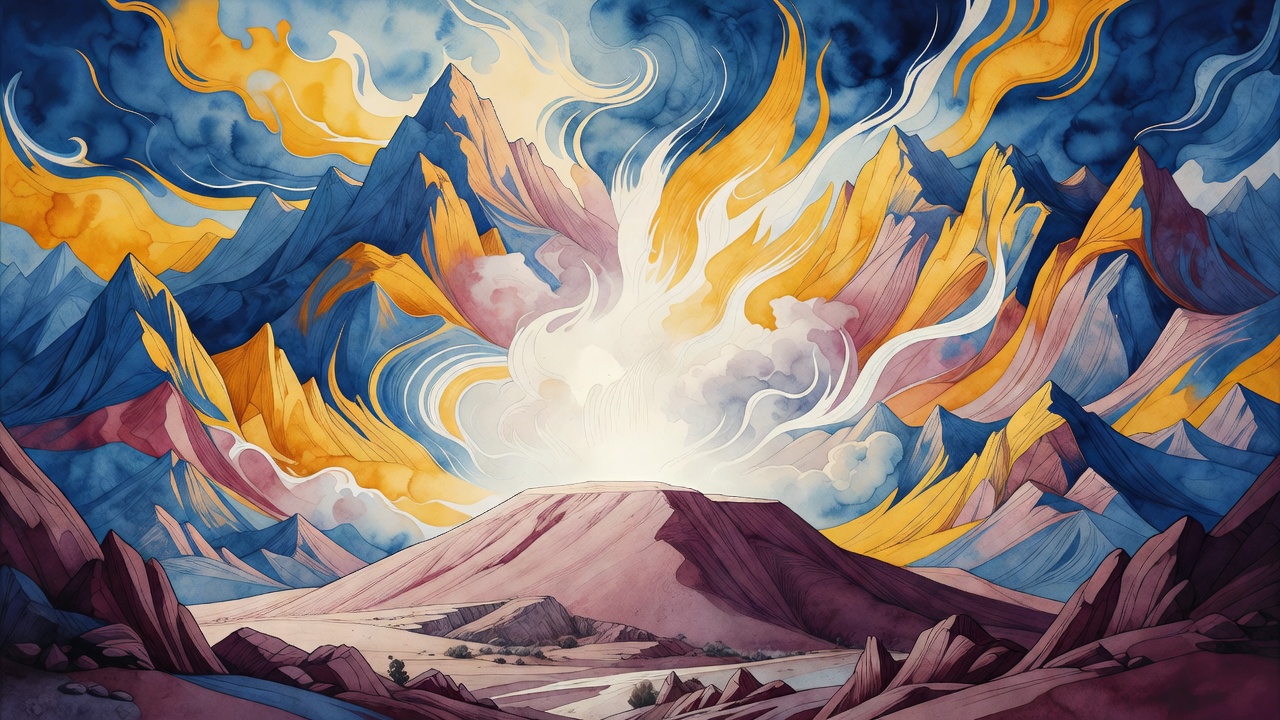
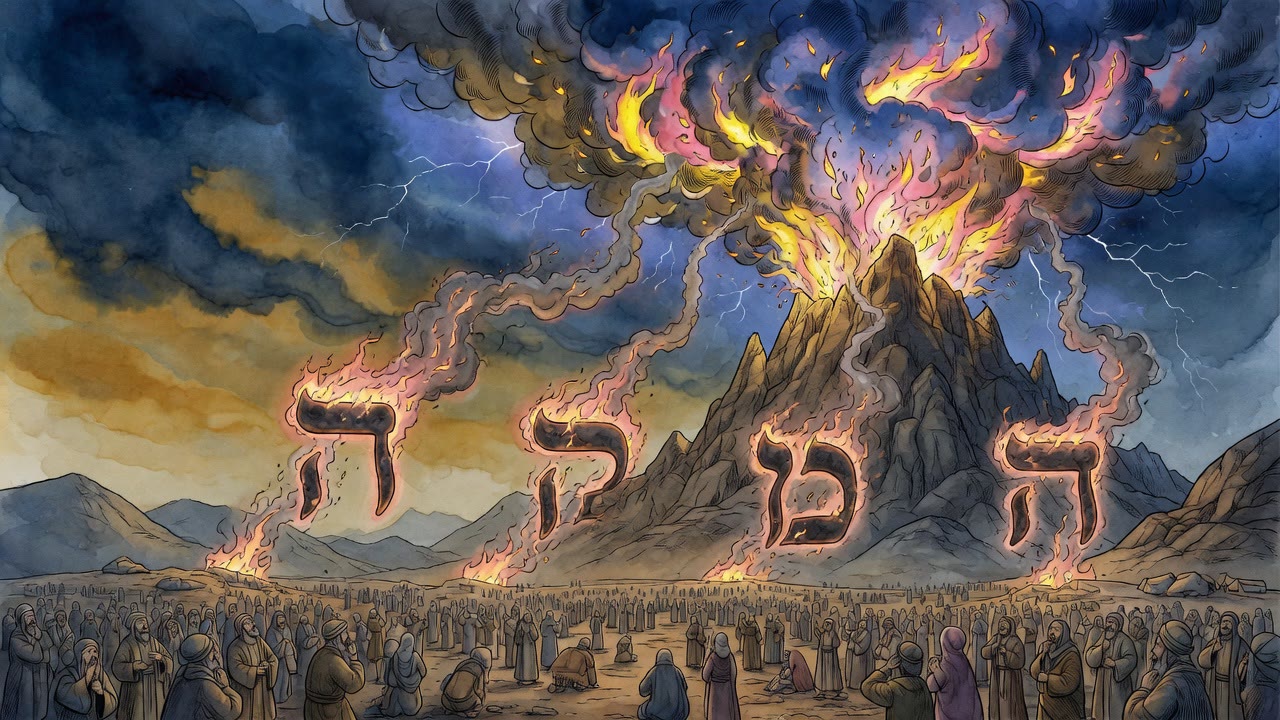
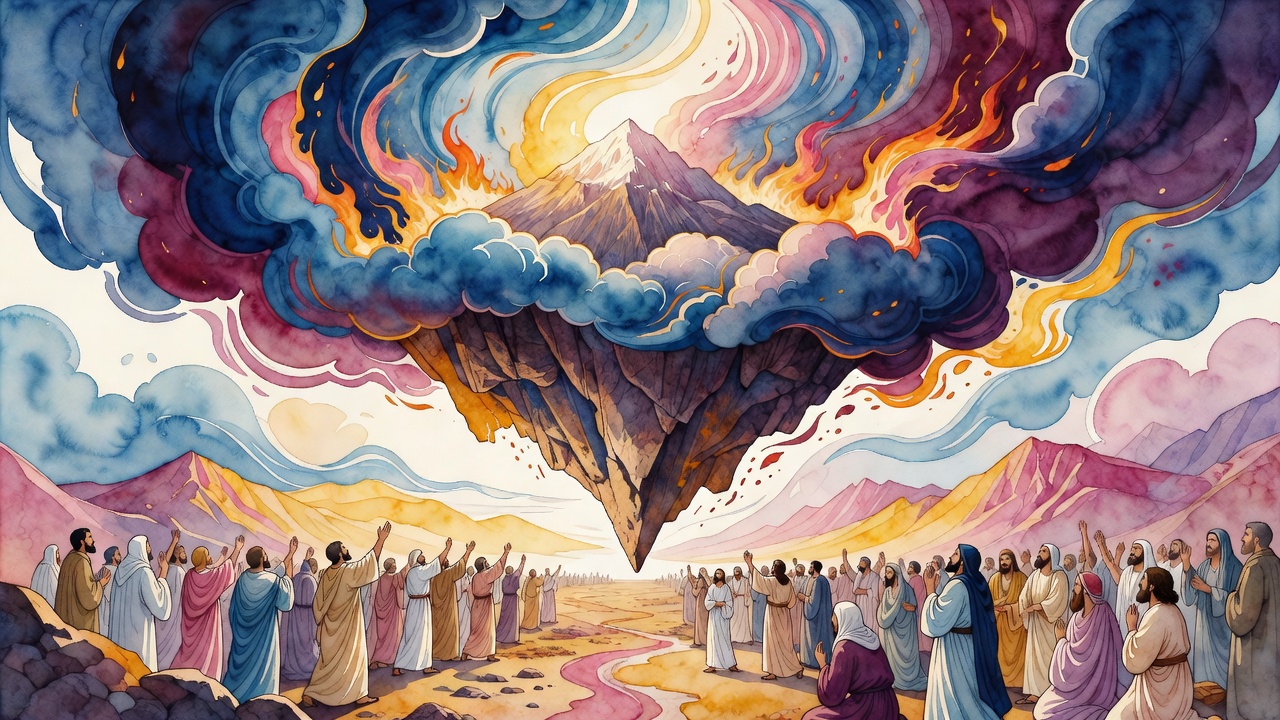
Mount Tabor came out of the ground with a sound nobody in the world had heard before. Roots of rock tore loose along seams that had held since the third day, dirt slid off its shoulders in sheets, and the whole ridge went walking south into open country, because the news had reached every high place at once: the Holy One meant to give the Torah on a mountain, and it would have to be a mountain that belonged to nobody.
 Click for full size
Mount Carmel heard the same thing and came out after it. Its cliffs split along the old cracks and the fruit came off the trees on its slopes into the dust. Behind the two of them the rest of the ranges pulled free one after another, until the wilderness was full of moving stone and the sand was scarred wherever they had passed.
Go Back Where You Belong
Tabor reached the empty ground first and stopped there, and when Carmel came up alongside it neither one would give way to the other.
"Go back where you belong," Tabor said, "because He has not called you."
"You go back," Carmel said, "since you were not chosen either."
They stood arguing in the heat with the grit blowing between their faces, and behind them every other mountain in the country was making the same case at the top of its voice, measuring itself against the others by height and by the green on its flanks. Not one of them was standing still, because standing still was what the losers were going to do.
Sinai never came out at all. It sat where it had always sat, low and bald and scrubby and claimed by nobody, and although the noise of the race carried for miles across that country, nothing rose from its scrub to answer.
Neither of You Measures Up
The voice came across the whole quarrel and stopped it mid-step.
"What is all this noise? Neither of you measures up to Mount Sinai."
Then He said why, and the reason had nothing to do with height, though height was the only measure any of them had brought. Men had built on their heights. Altars had smoked on their crowns for powers that had never made anything, and carved faces had stood where the cloud was supposed to stand, so there was not one clean summit in the racing crowd except the peak that had never entered the race. Sinai alone had never been rented out to another name.
Tabor came down out of its stride and Carmel settled a fraction into the sand. The others stopped with their bases still half out of the ground and their torn roots hanging in the air, because there is nothing to do with a claim once it has been answered like that, and one after another they turned around and went back and sat down in their old places.
The Gold Moved While He Was Above the Cloud
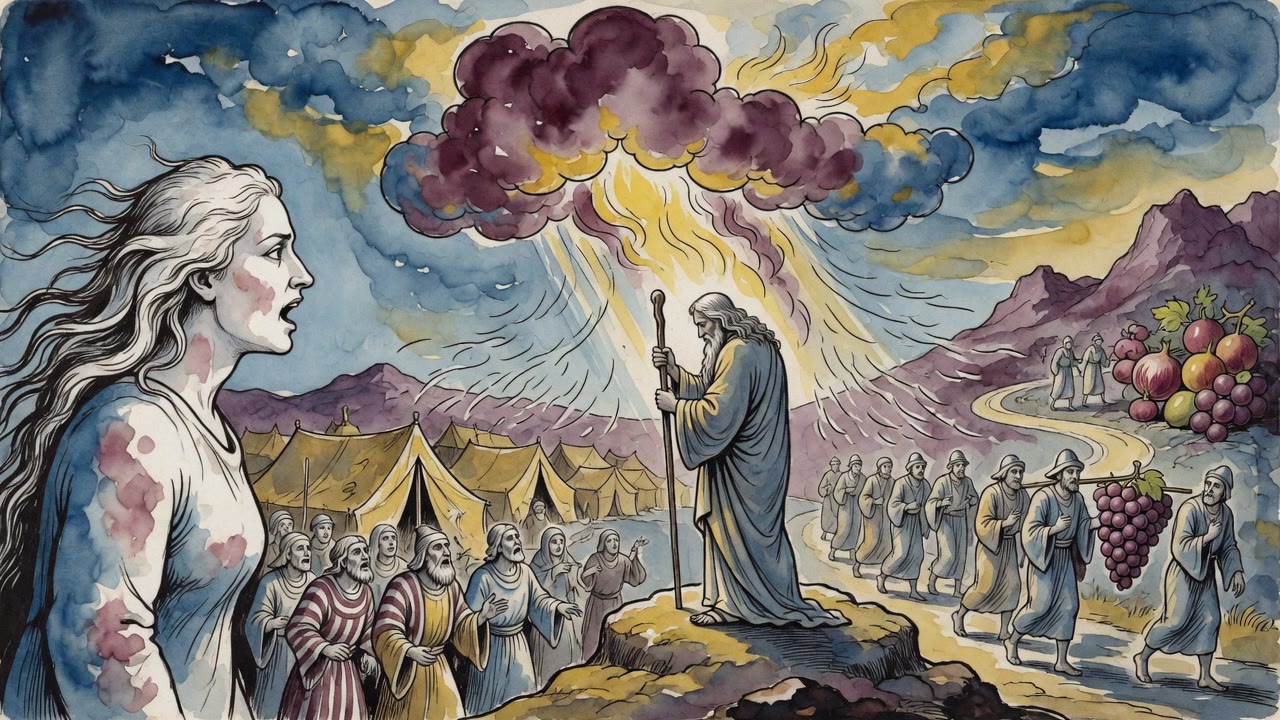
Moses went up the mountain that had not competed while the camp stayed at the bottom, and forty days is a great deal longer at the bottom of a mountain than at the top of one.
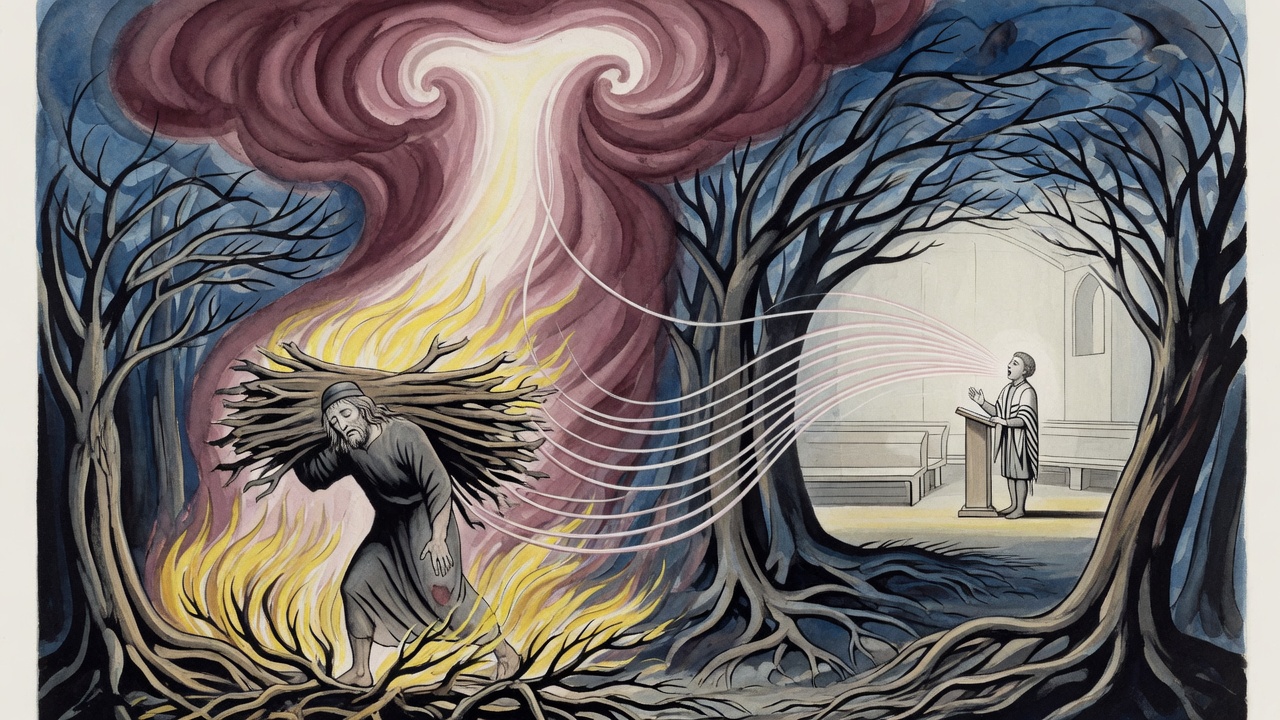
So the earrings came off. Gold went into the fire and came out under a graving tool as a calf, a hundred and twenty-five talents of it, though the voices around the thing did not say this is our god. They said, "This is thy god, O Israel," which is what people say about somebody else's god when they have decided to try it out. They had walked out of Egypt about a year before that.
Go, Get Thee Down
Up on the clean summit the Holy One said, "Go, get thee down" (Exodus 32:7), and then gave the order a reason that left Moses nothing to hold onto.
Mankind had already forced Him down once, to the tower, to come and see for Himself what was being put up; and again toward Sodom, to go down and look at it. So a servant goes down when his master has gone down, and that was the whole of the argument.
It was not the people in the sentence either. It was thy people, the ones Moses himself had insisted on bringing out, the mixed multitude he had gathered at the border on the argument that a man who wants to leave should be allowed to leave. They had been idol-servants before he collected them. The calf was standing in the camp because he had won that argument.
You Saw One Vision and I Saw Two
Moses said nothing out loud, though he thought it, and what he thought was that there was no forgiveness left for them.
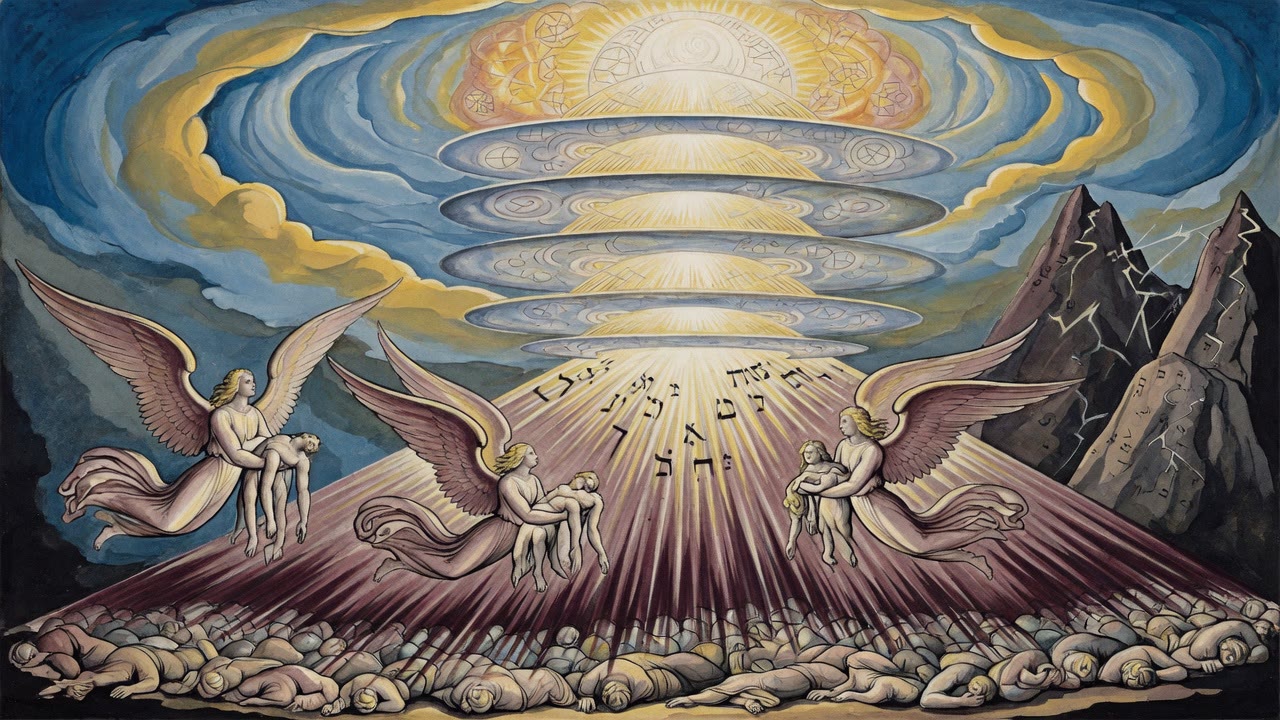
The thought was answered before it finished. Did I not tell you at the thorn bush that I had seen? You saw one vision standing there. I saw two. I saw them come to this mountain and take the Torah out of My hand, and I also saw them walk up to the chariot with four faces on it, look it over, unhitch the ox and set it up in the sand to provoke Me.
They had traded their glory for a thing that eats grass (Psalms 106:20).
Carve Out Two
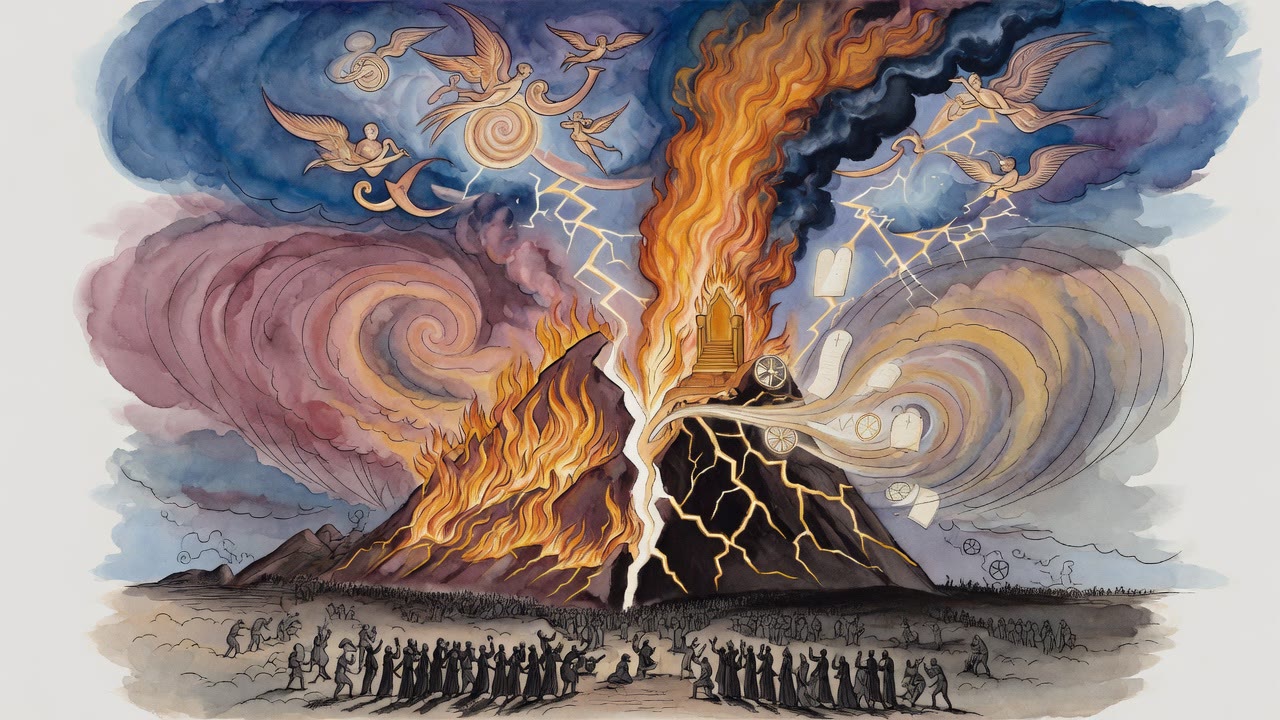
He came down, and he got close enough to see the calf and the dancing before the tablets went out of his hands onto the rocks at the foot of the mountain. Every good thing that had been on its way to Israel stopped that morning and did not arrive, because there was nothing left in the camp for it to arrive at.
Then the Holy One put the problem to him plainly. I made the world for one reason and the reason was the Torah. They have traded My glory for the image of a bull and you have broken the tablets, so tell Me how the world is supposed to keep going now.
"What shall I do?" Moses asked, since there was no answer to the question as it had been put.
"Carve out two tablets of stone like the first ones."
The first pair had been cut by a hand that was not human and put into his arms finished. This pair he made himself, on his knees at the foot of the low bare uncontested mountain, with a chisel and a great deal of time, while the ranges that had once torn across the desert to be chosen sat still in their old places and watched the dust come off the stone.
← All myths