The Vaults of Reward Opened for Moses and the Dying
God leads Moses past the sealed vaults where the reward of the righteous waits, then draws the same curtain back for sages at the hour of death.
Table of Contents
 Click for full size
A Place With Me on the Mountain
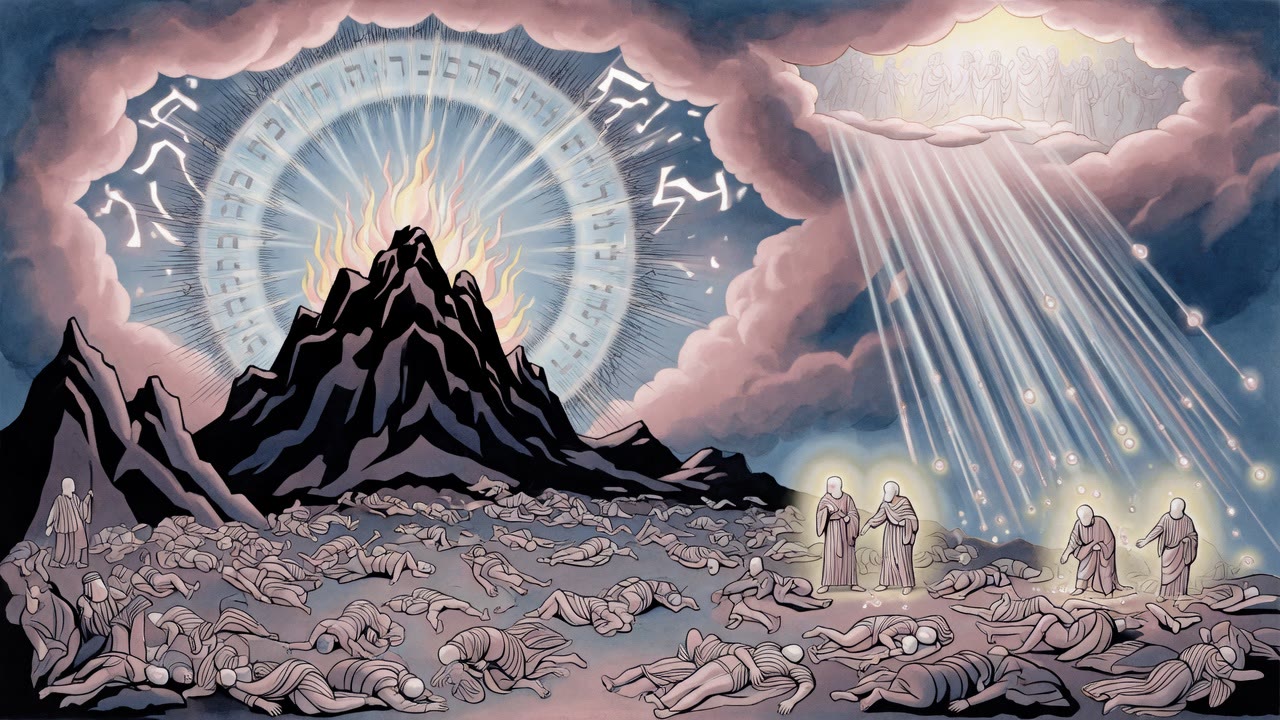
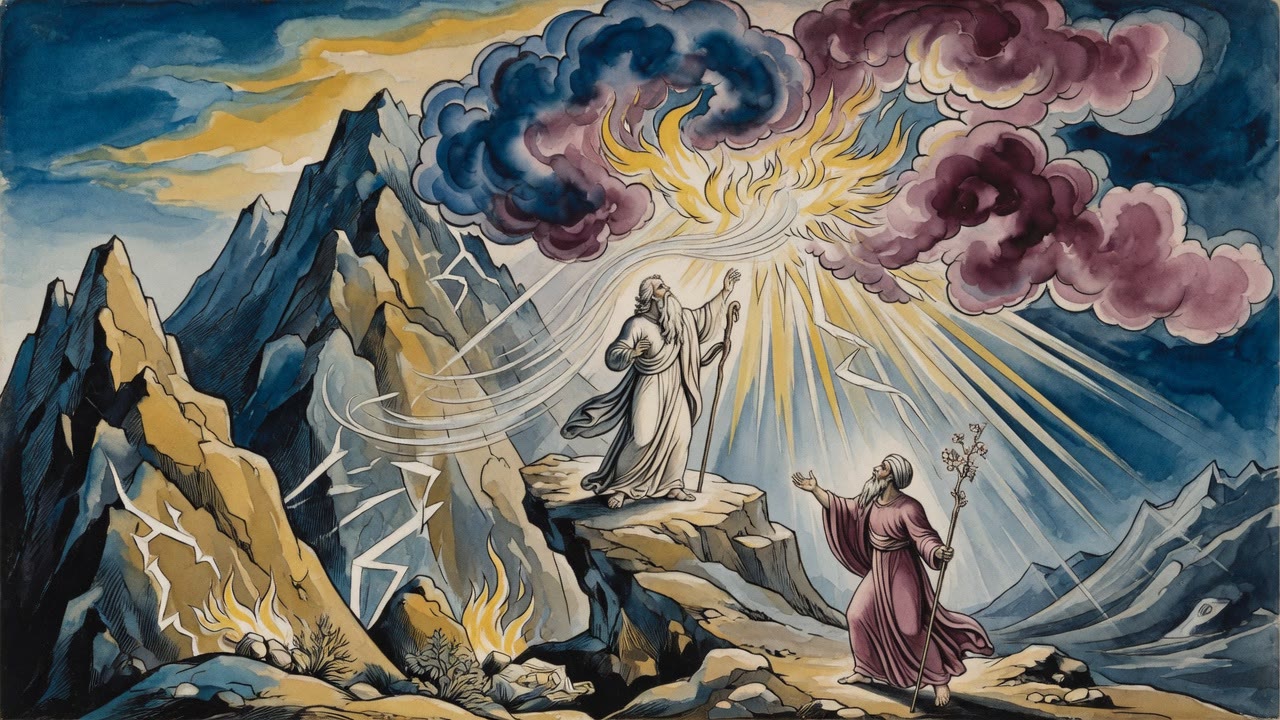
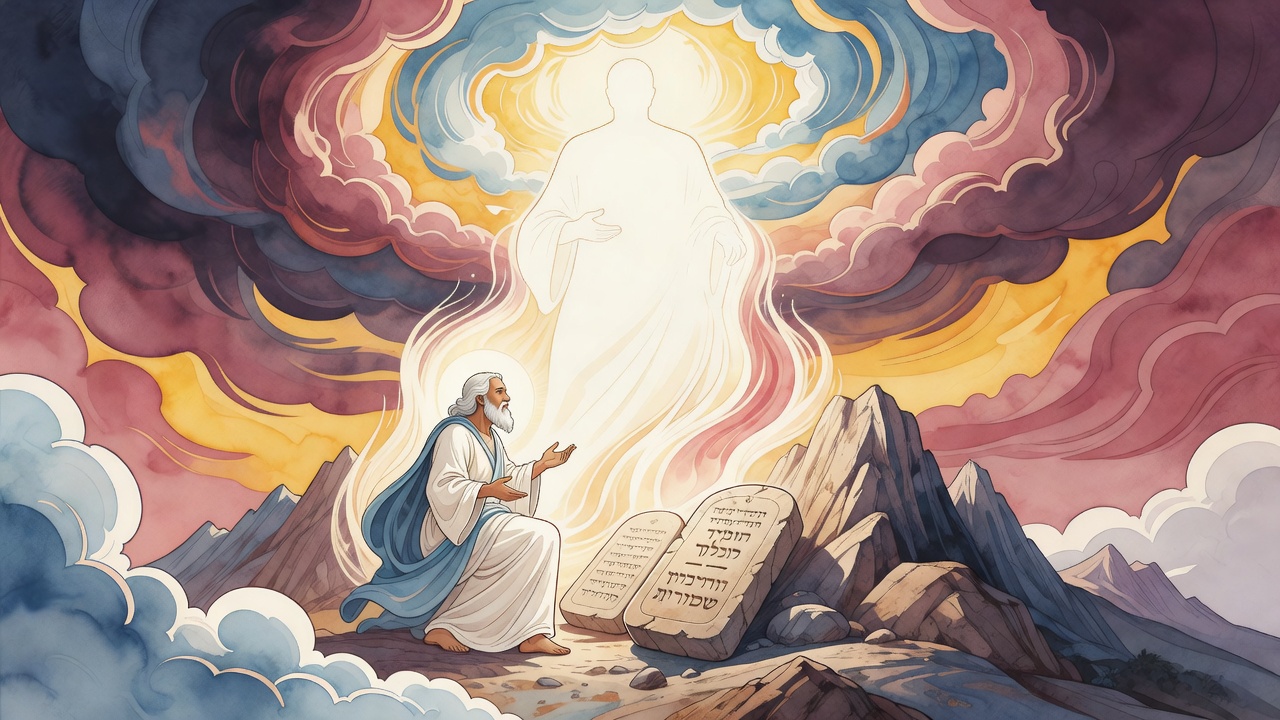
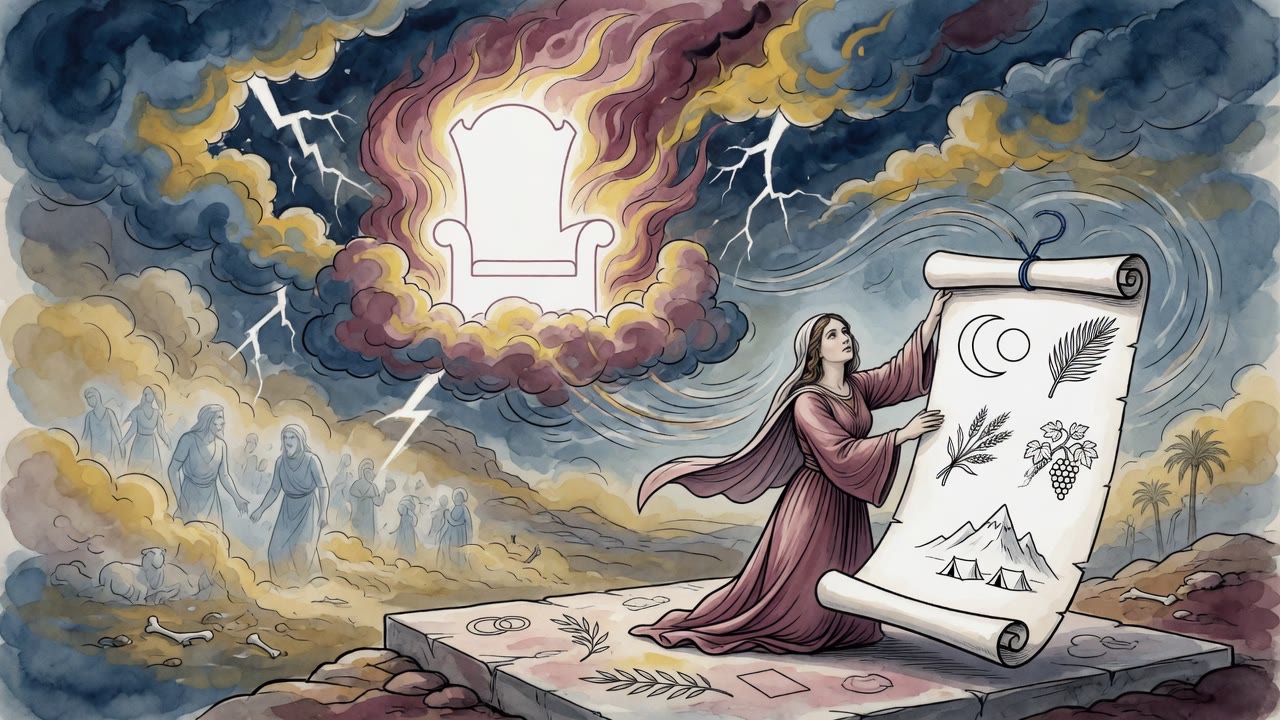
Moses stood in the cleft of the rock and asked to see the glory of God. The answer that came back was not the one he braced for. "Behold, there is a place with Me," the voice said, "and you shall stand upon the rock."
Rabbi Yose bar Halafta would later turn that sentence over like a stone in the sun. God did not say, "Behold, I am in this place." He said the place was with Him. His place is secondary to Him, and He is secondary to nothing. So when Moses pressed himself flat against the stone and waited, he waited inside a place that held together only because its Owner willed it to hold him.
"I will cause all My goodness to pass before you," the voice went on. All of it. Even the goodness that wears the face of punishment. "And I will be gracious to whom I will be gracious." Then the rock face opened onto something no prophet had been promised.
The Vaults Are Opened One by One
What passed before Moses was not fire and not thunder. It was storerooms. Treasury after treasury, sealed and stacked and waiting, each one heavy with a reward that had not yet been paid out to a single soul on earth.
Moses looked at the first and could not read its mark. "Sovereign of the World," he said, "this treasury, to whom does it belong?"
"To those who do righteousness," God answered.
Moses moved to the next. "And this one, to whom does it belong?"
"To those who sustain orphans."
And so it went, vault after vault, each with a name that was not a name but a deed. The ones who fed the hungry from their own bread. The ones who took in the child no one else would claim. Every kindness that had ever gone unthanked on earth had a room here, locked, its contents rising higher while the doer slept in the dust, certain the good he had done was gone. None of it was gone. It had been carried up and stored.
The Vault That Answers to No Merit
Then Moses came to one treasury larger than all the rest, its doors dwarfing the doors he had already passed. He turned to God. "This one," he said, "to whom does it belong?"
The answer broke the pattern. Every other vault had an owner who had earned it. This one had no such lock. "Whoever has merit," God said, "I give to him from what is his. And whoever has not, I act toward him for free."
That is what lay hidden inside the words "I will be gracious to whom I will be gracious." Not "to whom it is fitting." Not to the deserving alone. The largest storehouse in heaven was held in reserve for the ones who would arrive with empty hands. Moses had asked to see God's glory, and God had walked him to the room where grace is kept for people who could never buy their way in.
Thirteen Rivers of Balsam for a Dying Sage
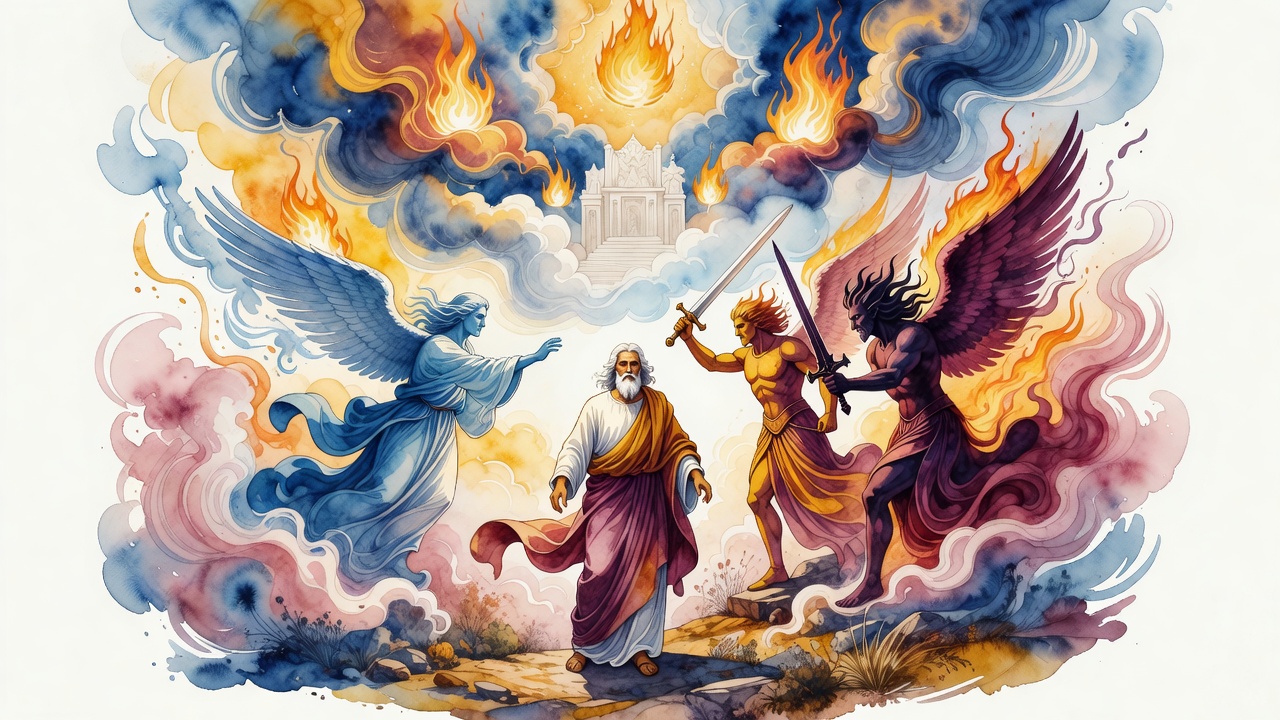
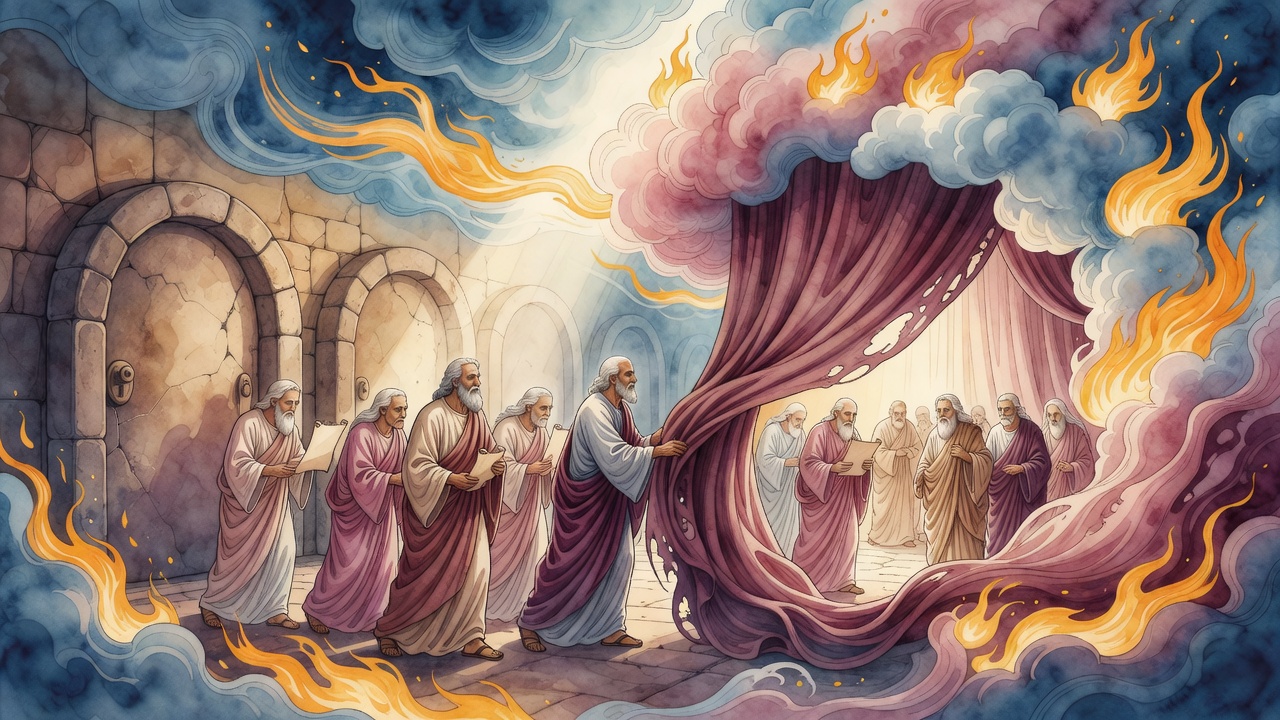
Centuries fold. The same curtain that lifted for Moses on the mountain lifts again, this time in a sickroom, over a man at the edge of his last breath.
Rabbi Abbahu was leaving the world. As the strength went out of him, the Holy One drew back the veil and let him see what stood ready on the far side. Thirteen rivers of balsam passed before his dimming eyes, thick and fragrant, flowing toward him.
He stared. He could not make the sum come out right. "Are all these for Abbahu?" he kept asking. "All of this, for Abbahu?" The man had spent a lifetime in the study house half-convinced he had built nothing worth the name, and now the reckoning rolled past him like a river he could not dam.
The words of Isaiah rose in his mouth. "I have spent my strength for emptiness and vanity," he said, "yet surely my judgment is with the LORD, and my recompense with my God." He had thought his labor was poured out into sand. The rivers told him where it had gone.
The Curtain Drawn Back at the Threshold
Abbahu was not alone at that threshold. Zavdi ben Levi, Levi ben Paytam, and Rabbi Yehudah ben Levi each came to the same edge, and each, at the last moment, opened his mouth with a verse. One said, "For this let every pious one pray to You." One said, "How abundant is Your goodness." One said, "Let all who take refuge in You rejoice." Each had been shown the gift waiting on the other side, and each answered heaven with Scripture as he crossed.
Ben Azzai named the rule beneath it all. "Precious in the eyes of the LORD is the death of His pious ones," he said. When does the Holy One show the righteous the honor stored up for them? Close to their death. The vaults Moses walked past on the mountain are the same vaults that swing open, one soul at a time, at the final door. The strong woman of the Proverb laughs at the latter day because she has already been shown what the latter day keeps.
← All myths