They Hung Their Harps on Babylon's Willows
By the rivers of Babylon captors demand Temple songs for idols. Israel hangs its harps, chooses death over that music, and waits for Elijah's hand.
Table of Contents
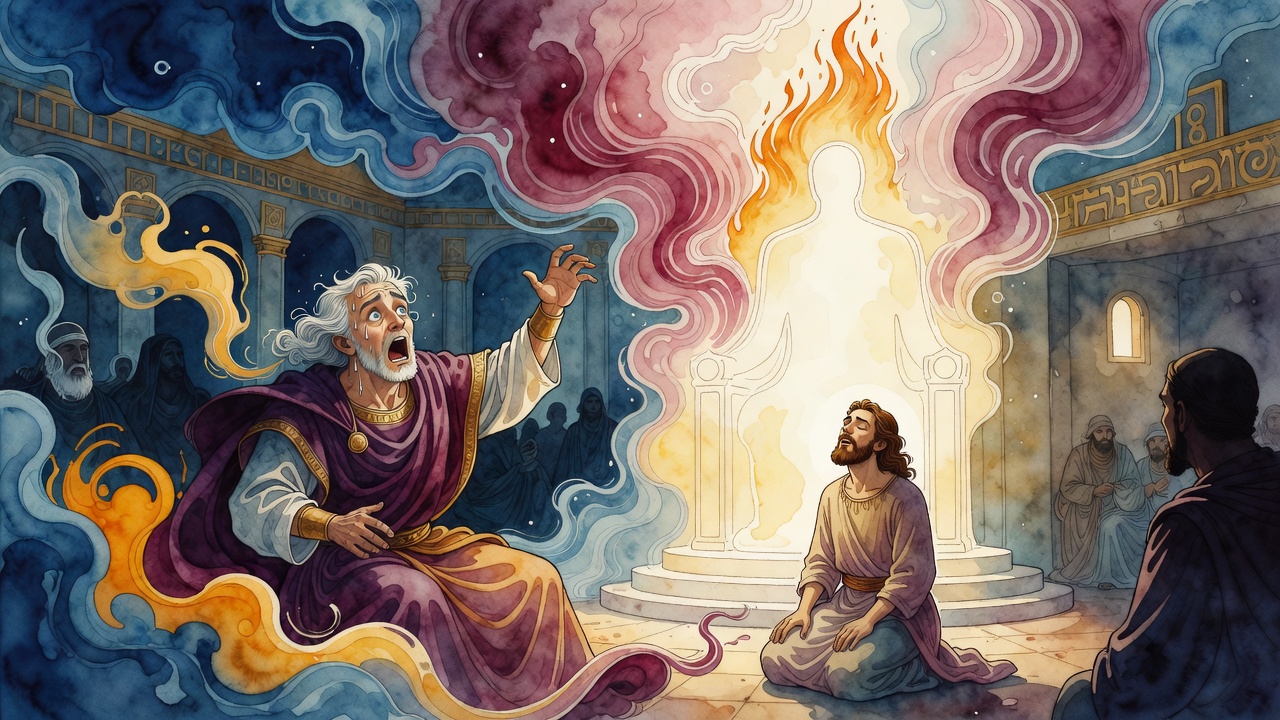
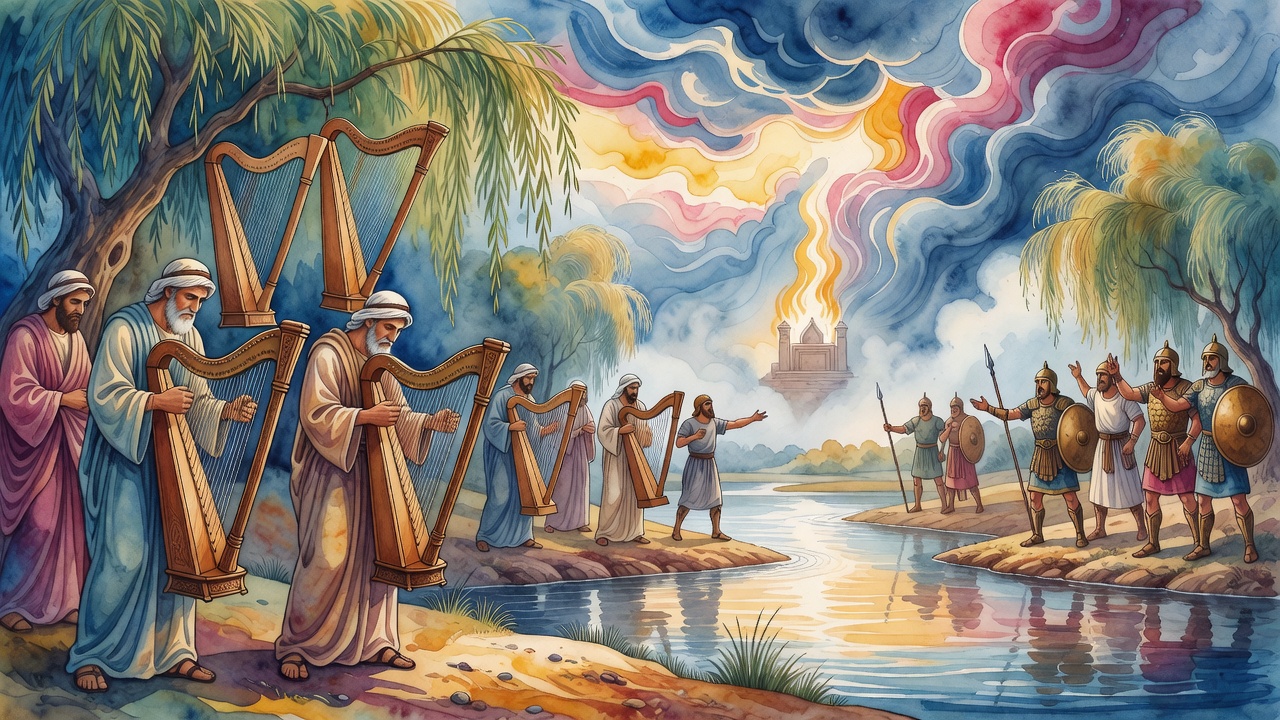
The captors clapped and pointed at the instruments. "Stand up," they said. "Sing before our gods the way you sang in the House."
 Click for full size
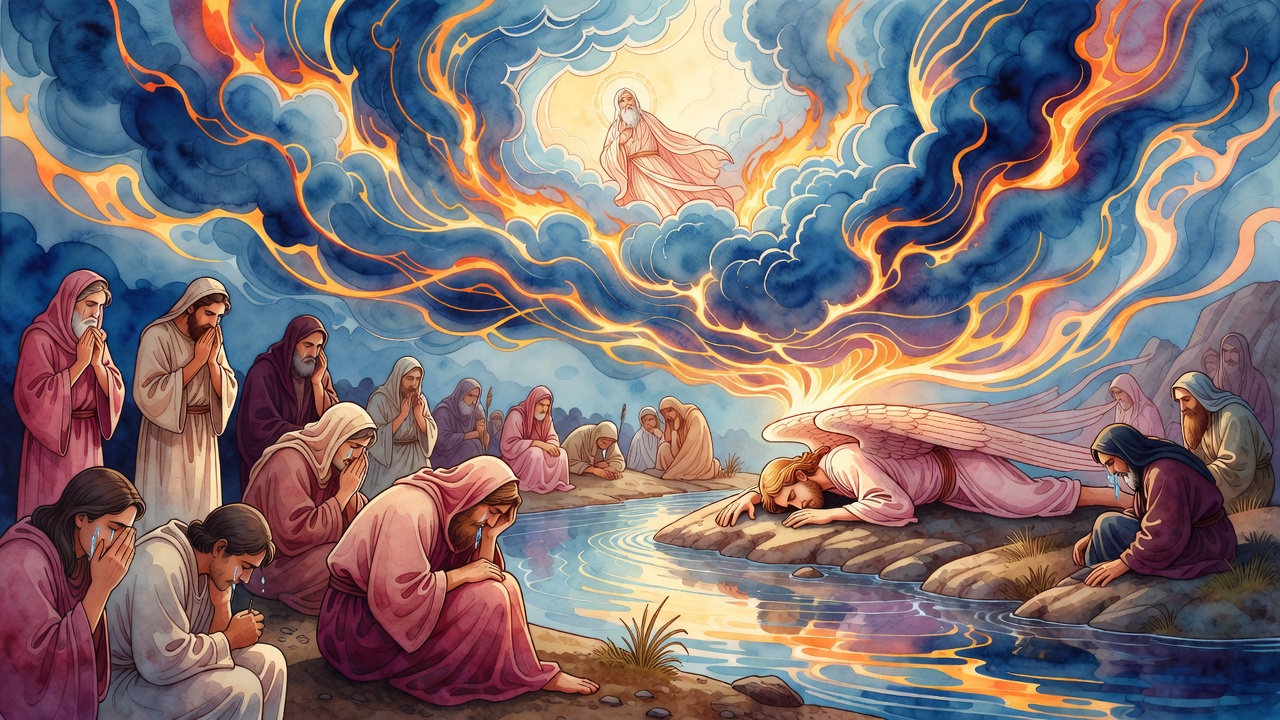
Israel looked at the willows along the water and at the harps in their hands. The wood still remembered Zion. The strings still knew the intervals of thanksgiving. To play those intervals for idols would turn memory into betrayal. They walked to the trees and hung the harps on the branches until the instruments looked like strange fruit no one would eat.
"If we had sung in our place," they answered, "we would not be exiles. And now how should we sing before idols?"
The demand hardened. Refusal became a body count. Heaps fell, and those who remained rejoiced that the song had not been sold. Torment asked for mirth and received silence sharp enough to cut rope.
Dirt That Could Have Been Repentance
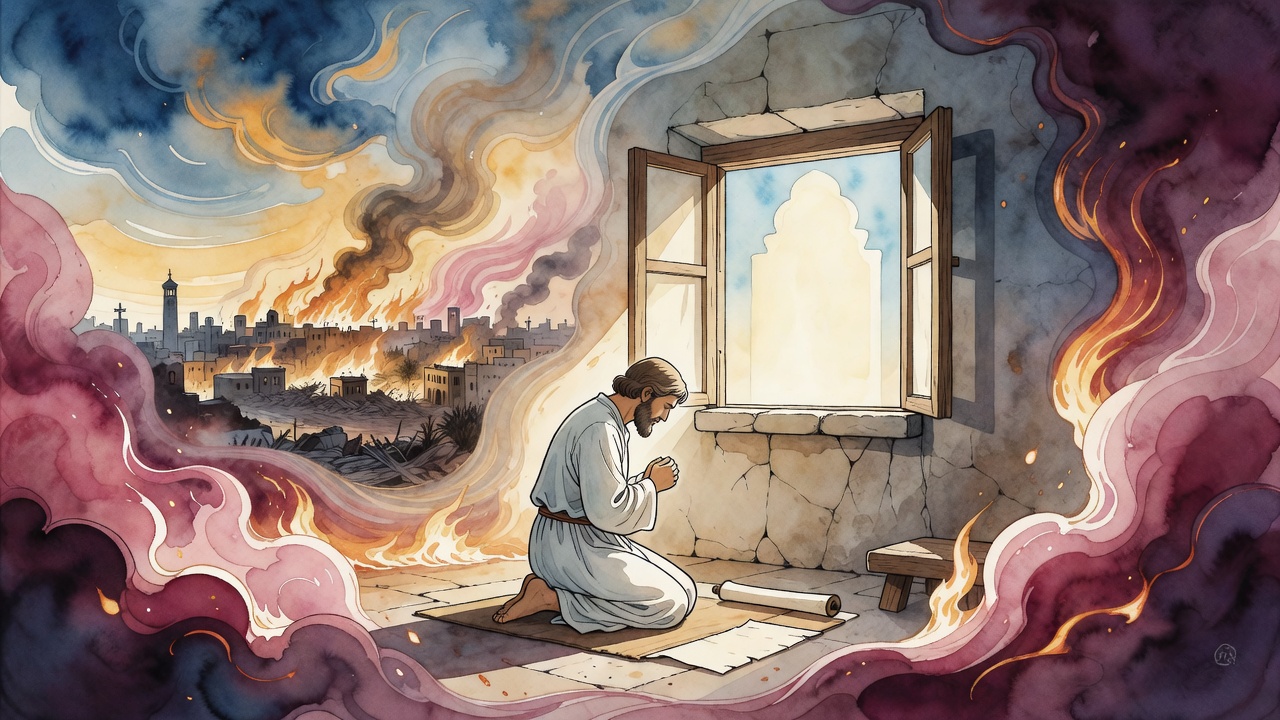
While they were still on their own soil, Jeremiah had walked the streets saying repent before the judgment is sealed. They did not accept his words. R. Yitzchak taught that the dirt of the land of Israel is for repentance, a ground that helps return if you use it in time. They used it for markets and arguments and the confidence of people who think walls last forever.
Once the seal closed, the same people kept commandments in a foreign city with a fierceness that hurt. The harps on the willows were not only grief. They were a last boundary. Music that belonged to the Temple would not become entertainment for the ones who tore the Temple's people out of their beds.
Some nights the wind moved the hanging strings and a thin accidental note crossed the water. No one stood up to finish the melody. Finishing it for the wrong audience was the one skill they refused to learn.
The King's Daughter and the Boil-Covered Man
R. Yitzchak Tavlai told a mashal. A king married a princess and asked her to bring a cup. She refused. He drove her out. She married a man covered in boils who then ordered the same service. She laughed in pain. I would not serve a king, and you think I will serve you?
So Israel said to the nations. If we had sung before the Holy One for all the miracles in our place, we would have stayed. Now you want idol songs from the mouths that failed to sing when singing was loyalty? The mashal does not flatter the exiles. It admits the first refusal. It only refuses to stack a second desecration on top of the first.
The princess in the mashal still knows what a palace cup is for. The exiles still know what a Temple harp is for. Knowledge without the right address becomes a kind of ache that will not hire itself out cheap.
A Hand Placed Behind the Back
At the moment of exile, the midrash says, the Holy One placed His right hand behind Him, as Lamentations speaks of a withdrawn right hand. Then He swore, as it were, upon that displaced hand. If I forget Jerusalem, let the skill of the right hand fail. The oath binds God to memory while the people bind themselves to silence before false altars.
Anyone who mourns for Jerusalem in this world will rejoice with her in the time to come. Joy, Abaye said, is scheduled even for the ninth of Av, because mourning now is the seed of a holiday God will declare later. The First Temple fell by human hands. The final Sanctuary, built by the Lord who gathers outcasts, will not be a project enemies can reverse with the same tools.
Mourners by the river practiced a joy they could not yet afford. The calendar of destruction became, in promise, a calendar of reversal. That promise did not put the harps back into their hands for Babylon's parties.
Ten Roads Out, Two Hands Home
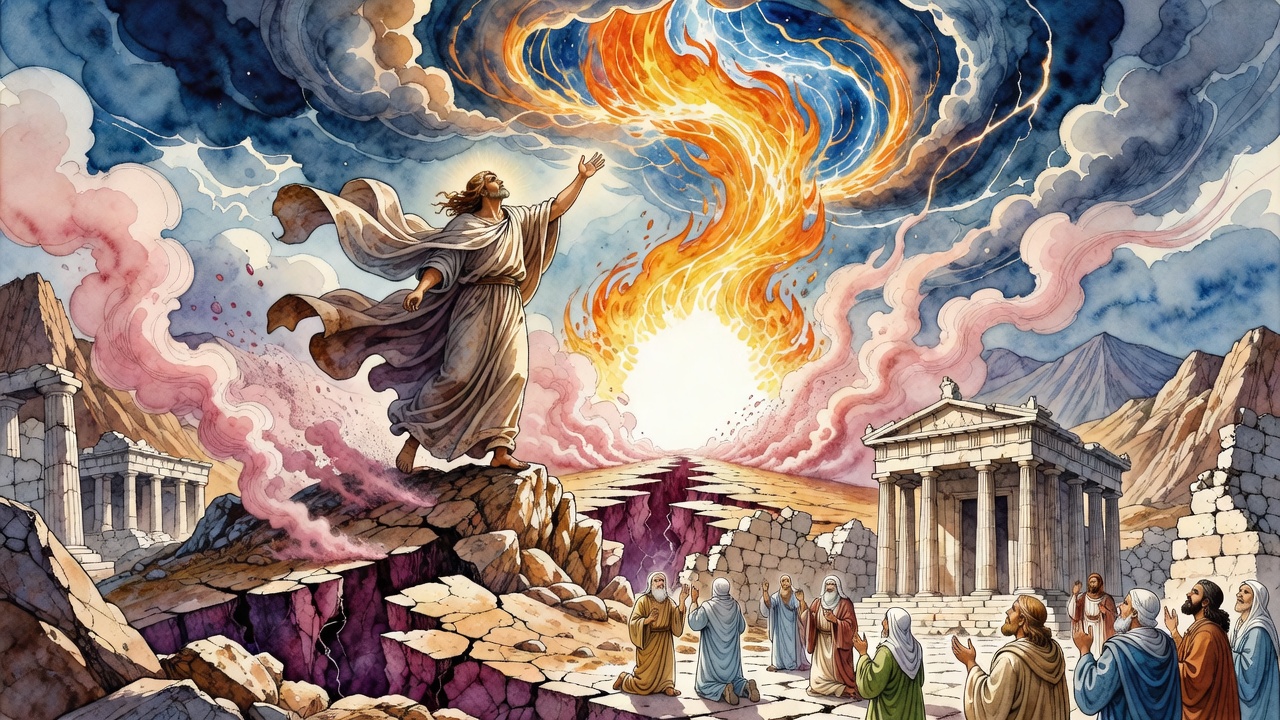
The accounting of exiles stacks roads. Assyria, Babylon, and the later scatterings that turn a people into a map of departures. Ten movements of loss in one schematic memory. Against that arithmetic the Targum sets two agents of return. From there the Word of the Lord will gather you by the hand of Elijah the great priest, and from there He will bring you by the hand of the King Messiah.
Repentance itself rises to the glorious throne. God does not only accept a mood. His Word receives return with favor. The foolishness of the heart is scheduled for removal. Evil desire is not pampered as a permanent roommate of the soul. In that future the Torah is near in the schools. Open the mouth. Purify the heart. Choose the life of the world to come.
By the rivers the harps still hang in the mind even when museums claim the wood. The willows keep the shape of refusal. Somewhere ahead, two hands, prophet and king, lift what empire tried to catalog as finished. Until then, silence before idols is a song of a different key, and the water keeps time.
← All myths