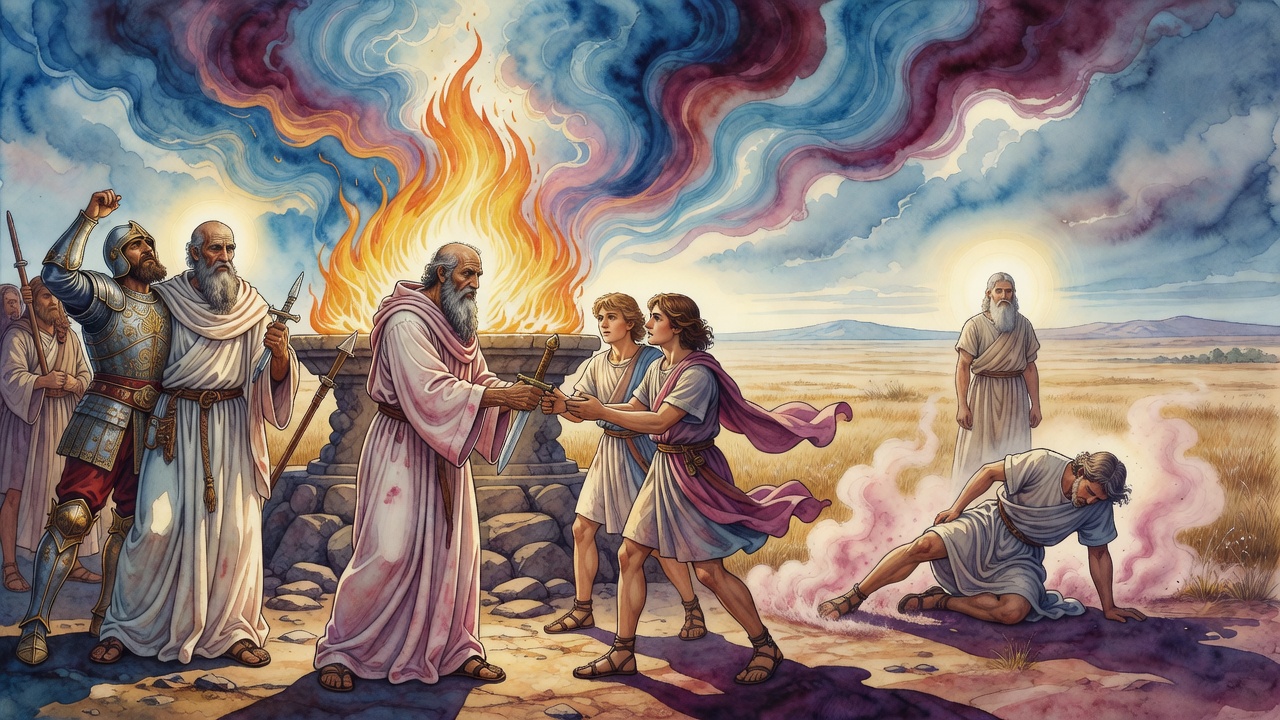
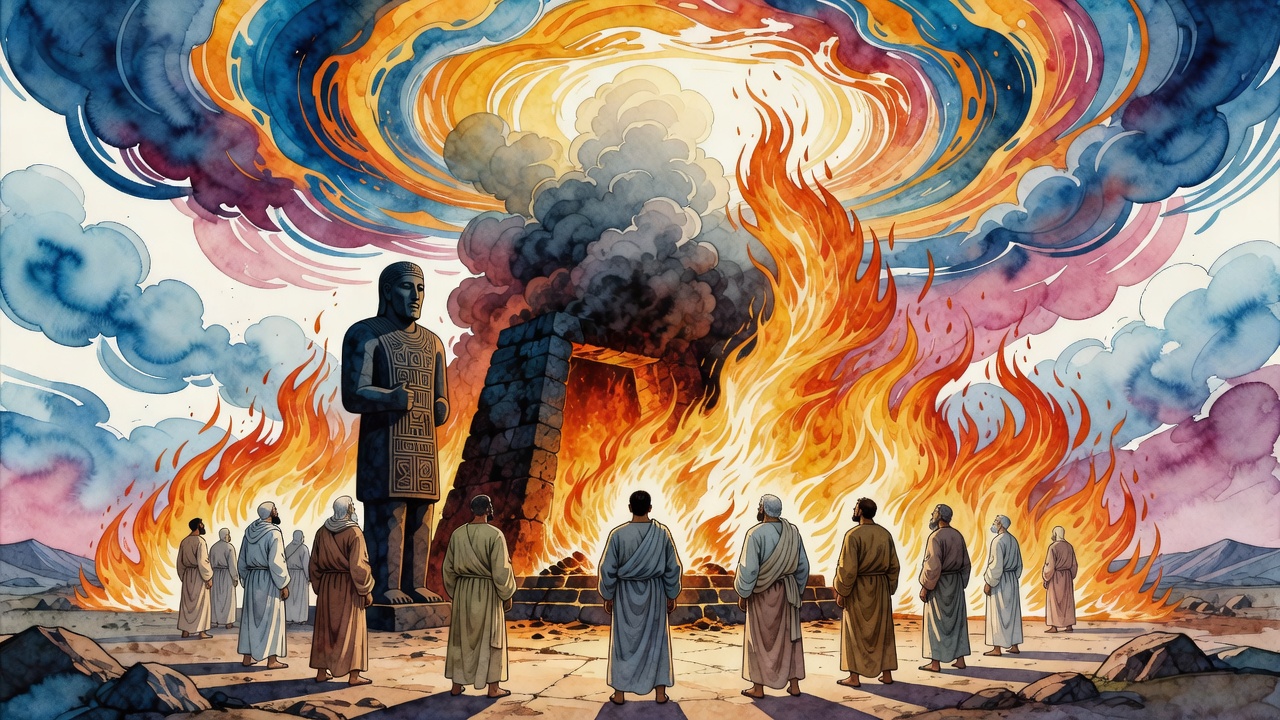
They Made a Covenant With Death and Chose a Man to Break
They toasted the shortness of life, named strength their only law, and staked a wager on whether God would come for the one man they broke.
Table of Contents
 Click for full size
They Counted Their Days and Found Them Short
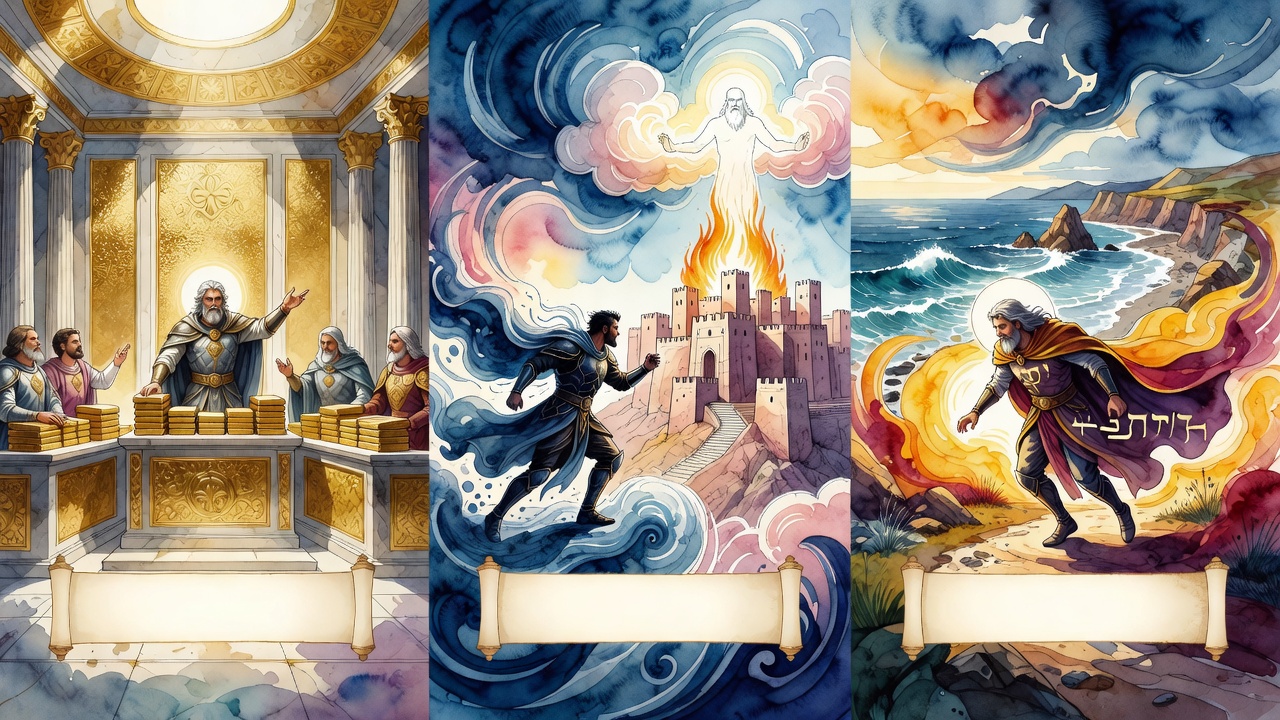
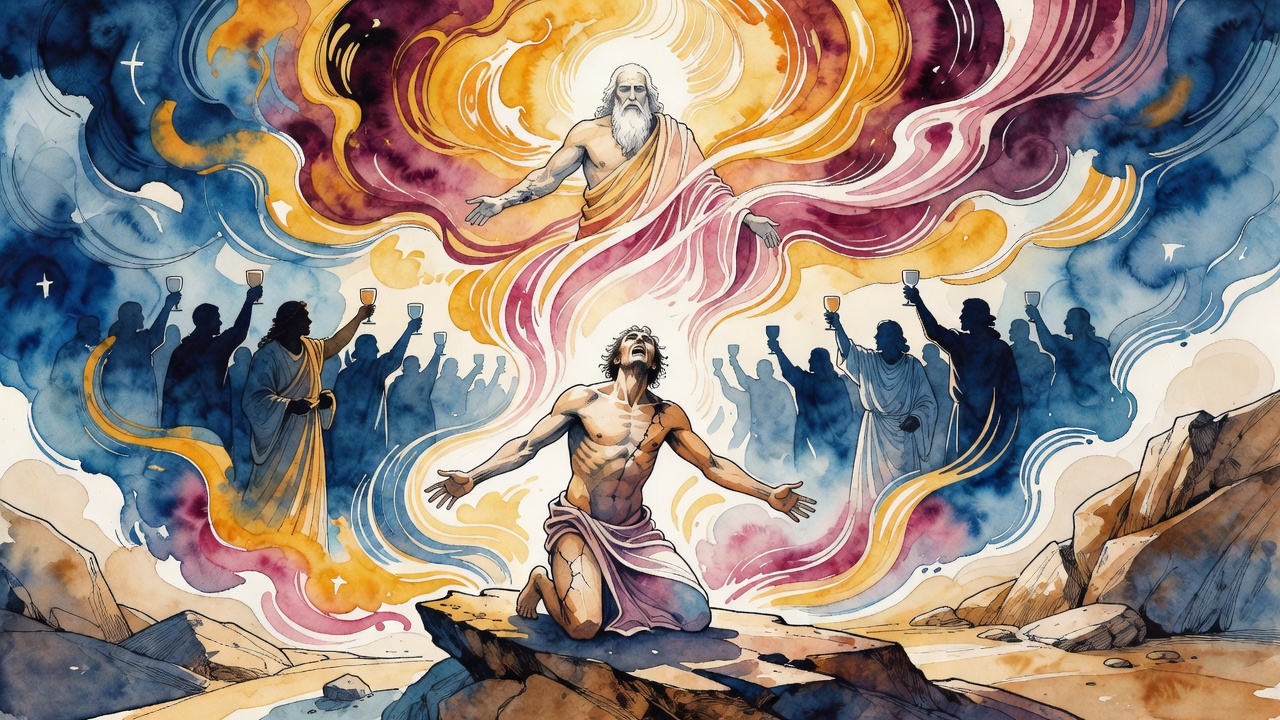
The wine had been going around since noon, and by dusk one of them climbed onto the bench to prove that nothing mattered.
"Short and full of grief," he said, holding his cup out to be filled again. "That is the whole account of a life. Nobody has ever come back out of Sheol (the underworld of the dead), the land of the dead, to say otherwise."
The others struck the table with their palms. He was saying aloud what each of them had thought alone.
"We were born in a mishap," he went on. "Afterward we shall be as though we never were at all. The breath in our nostrils is smoke. Our words are a spark struck off a beating heart, and when the spark goes out the flesh goes back to dust and the soul scatters like a thin wind."
Someone objected that great names last.
"Our name will be forgotten before the ash is cool. Our lives pass like the trail of a cloud, scattered like mist when the sun gets warm on it. The door is sealed from the far side and nobody has ever turned the latch."
Strength Became the Only Law They Kept
He had the second half ready.
"Then take the good things while they exist," he said, and the room roared. They sent out for costly wine and oils, and somebody bought a flower seller's whole armful so no blossom of that spring would pass unclaimed. They crowned each other with rosebuds while the buds were still shut tight. "This is our portion," the man on the bench called down. "This is our lot."
Then he said the thing that turned the night.
"Let our strength be our law of righteousness. What is weak has already proved itself useless."
They worked the rest out with the patience of men doing arithmetic on a ledger. Oppress the righteous poor man, since he has no answer to give. Do not spare the widow. Do not go soft at the gray hairs of an old man.
The Man Whose Face Was a Reproach
One man in that city would not drink with them.
He kept the law, and when they broke it he said so out loud, in daylight. He called himself a child of YHWH. His refusal was visible from a distance, the way a wall is visible.
"He is an inconvenience to us," one of them said, turning his cup on the table. "He stands across our doings. He throws our sins back in our faces and calls the way we were raised a training in wickedness."
"The sight of him is heavy to carry," another said. "His paths are strange. He counts us as bad coin and stays off our roads as though we left filth on them."
"And he calls the end of the righteous blessed," said the man on the bench. "He boasts that God is his father."
The word father sat in the room a moment, unanswered. Then somebody laughed, and the trap swung open.
They Set a Wager on the Hand of God
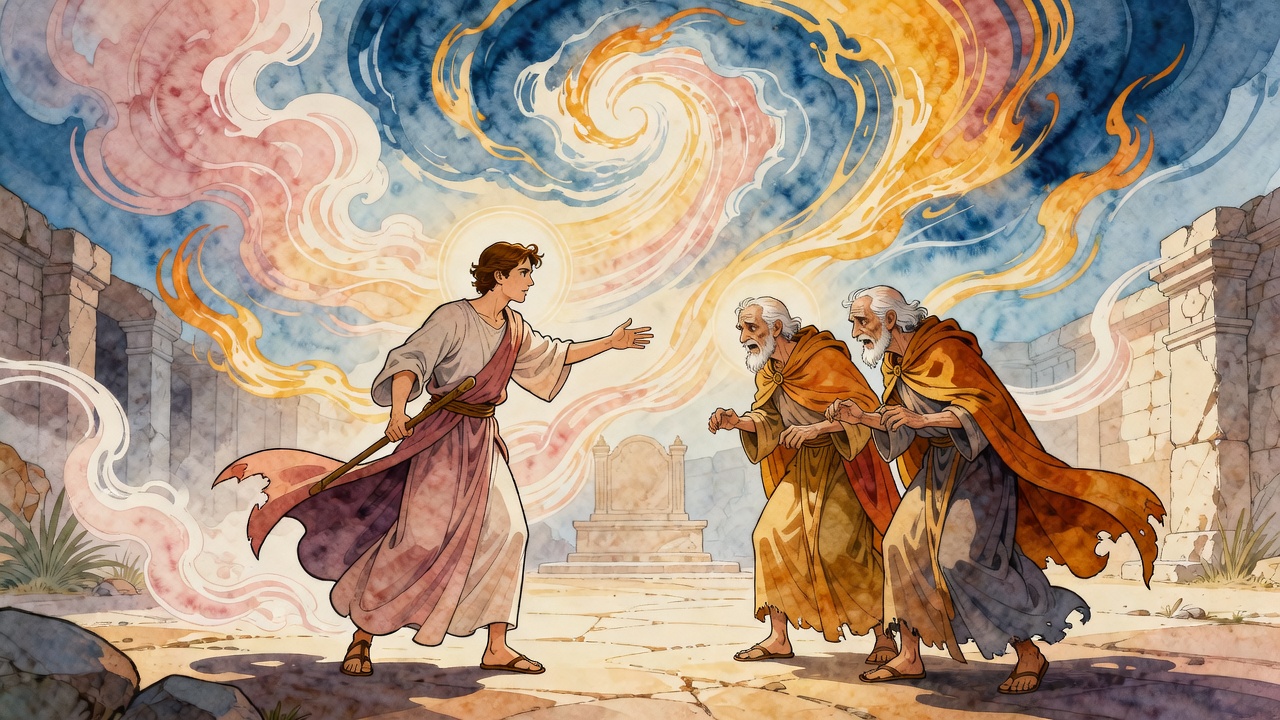
"Let us find out whether his words are true. Let us test what happens to him at the end. If the righteous man is a son of God, God will take his part and pull him out of his enemies' hands."
They agreed on the method before the wine was finished. Insult first, to see how gentle he really was. Then torture, to make trial of that famous patience. Then a shameful death, since by his own account he would be protected.
They lay in wait for him and took him in the street.
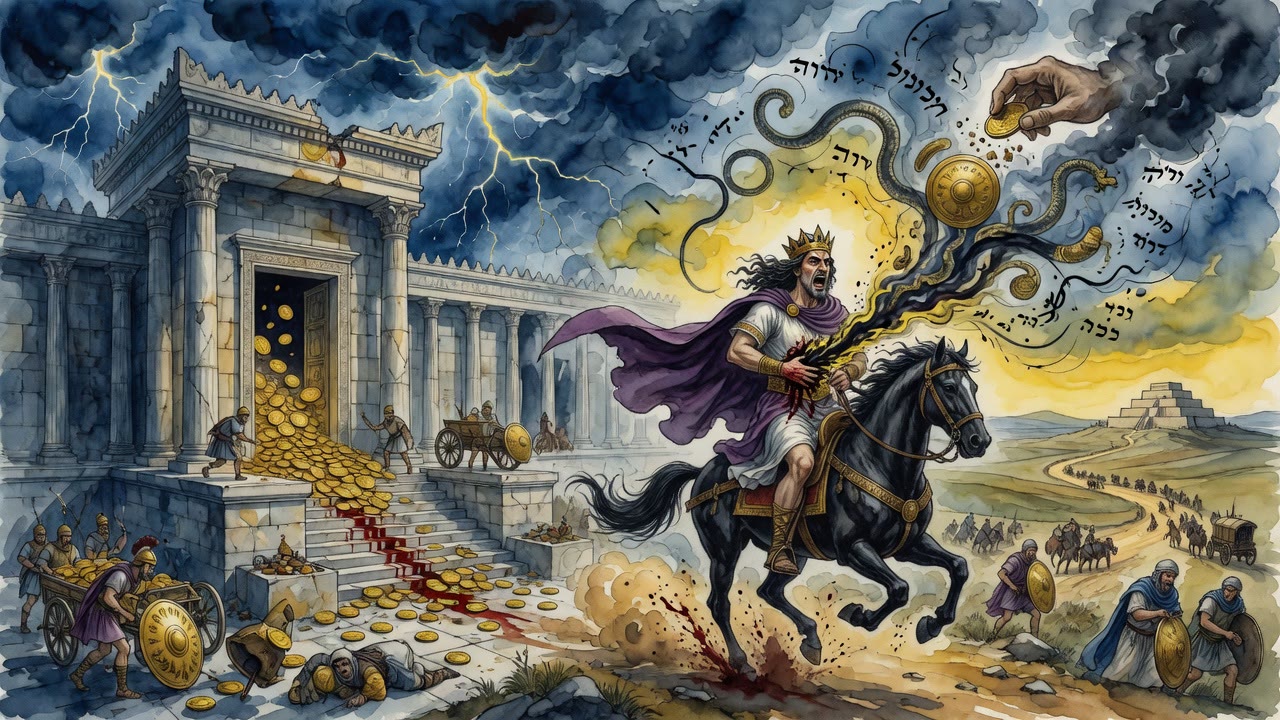
They started with words, because words cost nothing and they wanted his face to change. His face did not change. So they went on to the rest of it. One of them kept glancing past the roofline at a sky as blue as it had been all afternoon. Nothing came down. They condemned him to a shameful death and carried out the sentence, watching heaven the way men watch a door that never opens.
The Verdict They Never Saw Arriving
Every step of their reasoning followed from the step before it, and they were wrong from the first line.
Their own wickedness had put out their eyes. They did not know the hidden purposes of God and never reckoned on a prize set aside for a blameless soul. The whole argument stood on an assumption nobody in that room had examined, that death is the floor of the world.
God made no death. He takes no pleasure in the ruin of the living. He created all things so that they would keep existing, and Sheol holds no kingdom on the earth.
Death came in by another road. Envy let it through, the envy of the Adversary, and the men who take his side get what he has to give. These had summoned it themselves, trusting it the way a man trusts a friend, making their covenant with it in a room full of roses. The One who holds all things together had been there from the first cup. Nothing muttered into a sleeve falls to the ground.
Sparks Running Through the Stubble
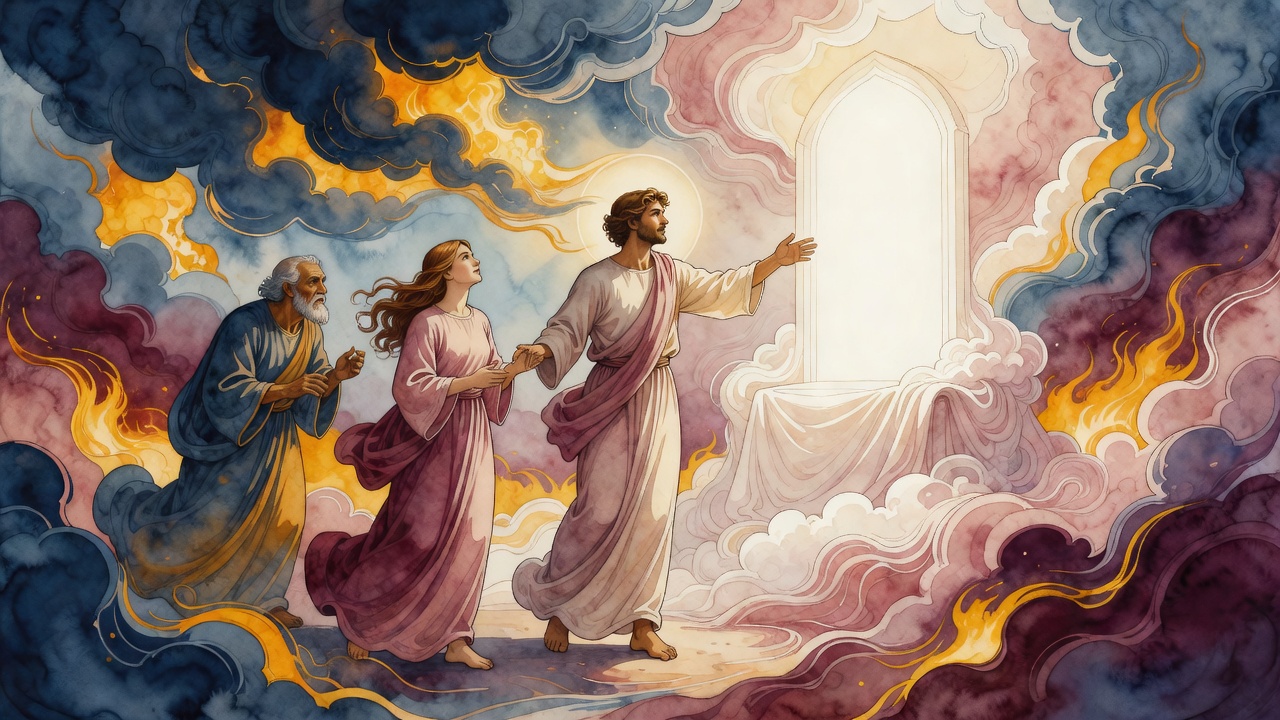
The souls of the righteous are in the hand of God, and no torment reaches them there.
In the eyes of the fools who broke him the man had simply died, one more spark gone dark exactly as predicted. He was at peace.
He had been punished a little in the sight of men, and his hope was full of deathlessness. God tested him and found him worth having, the way gold is tried in a furnace.
In the time of their visitation the righteous will shine out, and they will run like sparks through dry stubble.
In the hall the rosebud crowns had gone brown by morning, and the servants swept the petals into the street with the rest of the ash.
← All myths