5 min read

They Ran for the Scroll While Others Took Gold

Ammon and Moab wanted one sentence gone: no Ammonite or Moabite shall enter the assembly. Cut that line out of the scroll and the ban dies with the ink.

Curated by Arthur · Told by Maggid ·
Table of Contents
  1. The Slave Who Steals His Writ
  2. The Hidden One Who Ruined Two Houses
  3. The Dove at the Corner of the Wall
  4. What Survives a Plunder

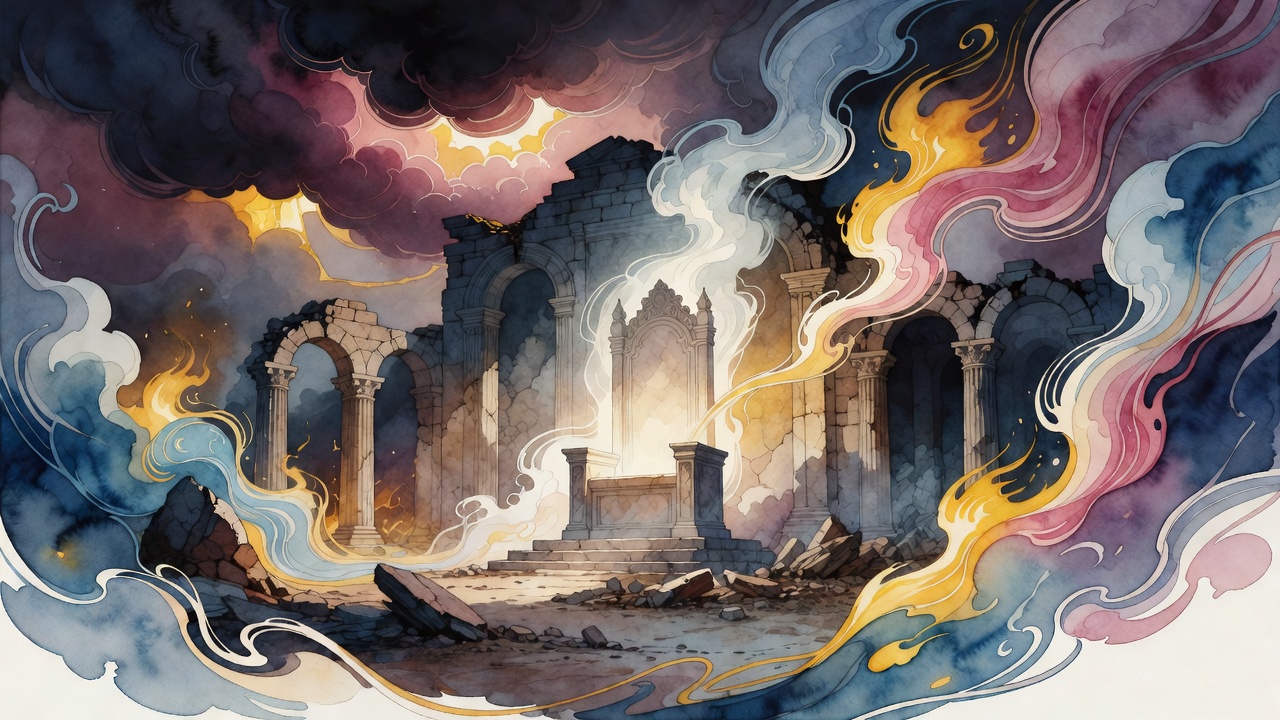
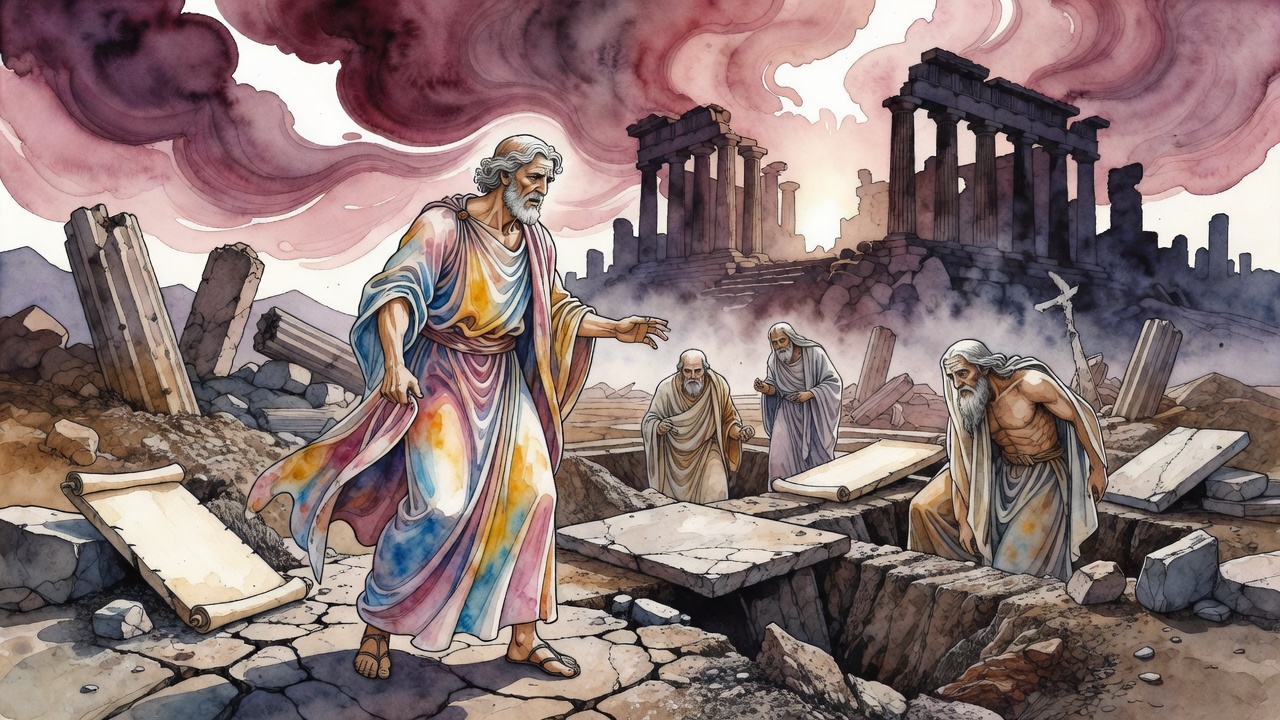
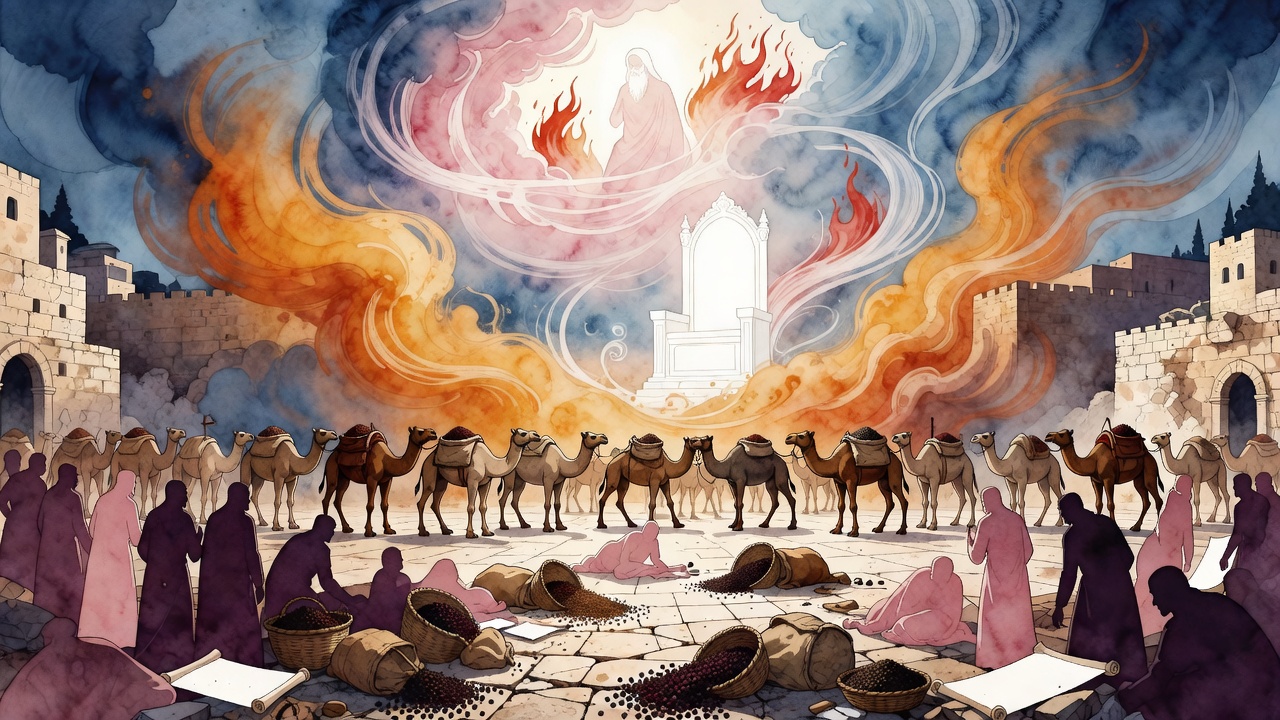
The sanctuary doors gave way, and the crowd split by appetite. Most ran for silver and gold. The Ammonites and Moabites ran for the Torah.
They Ran for the Scroll While Others Took Gold Click for full size

They wanted the verse that barred them. "An Ammonite and a Moabite shall not enter the assembly of the Lord" (Deuteronomy 23:4). If they could seize the scroll and cut the line, the ban might vanish with the ink. Lamentations names the moment: the adversary stretched his hand over all her delights, and she saw nations enter the Sanctuary who had been commanded not to enter the assembly (Lamentations 1:10).

The Slave Who Steals His Writ

Rabbi Yehuda ben Rabbi Simon said in the name of Rabbi Levi ben Perata: a king's palace catches fire. Everyone runs to plunder silver and gold. One slave runs to plunder his writ of servitude. Burn the paper, and the chain becomes a rumor. So too when enemies entered the Temple. Most looted metal. Ammon and Moab looted text. They were not hungry for jewelry. They were hungry for a legal silence.

Abraham had given Lot four kindnesses: company on the road, share in wealth, rescue in war, memory in the upheaval of Sodom. Lot's descendants repaid with four cruelties: Bilam hired to curse, Eglon's oppression, armies against Jehoshaphat, and the long refusal of bread and water. Four prophets sealed their sentence: Isaiah, Jeremiah, Ezekiel, Zephaniah. The scroll they tried to erase kept writing back.

The Hidden One Who Ruined Two Houses

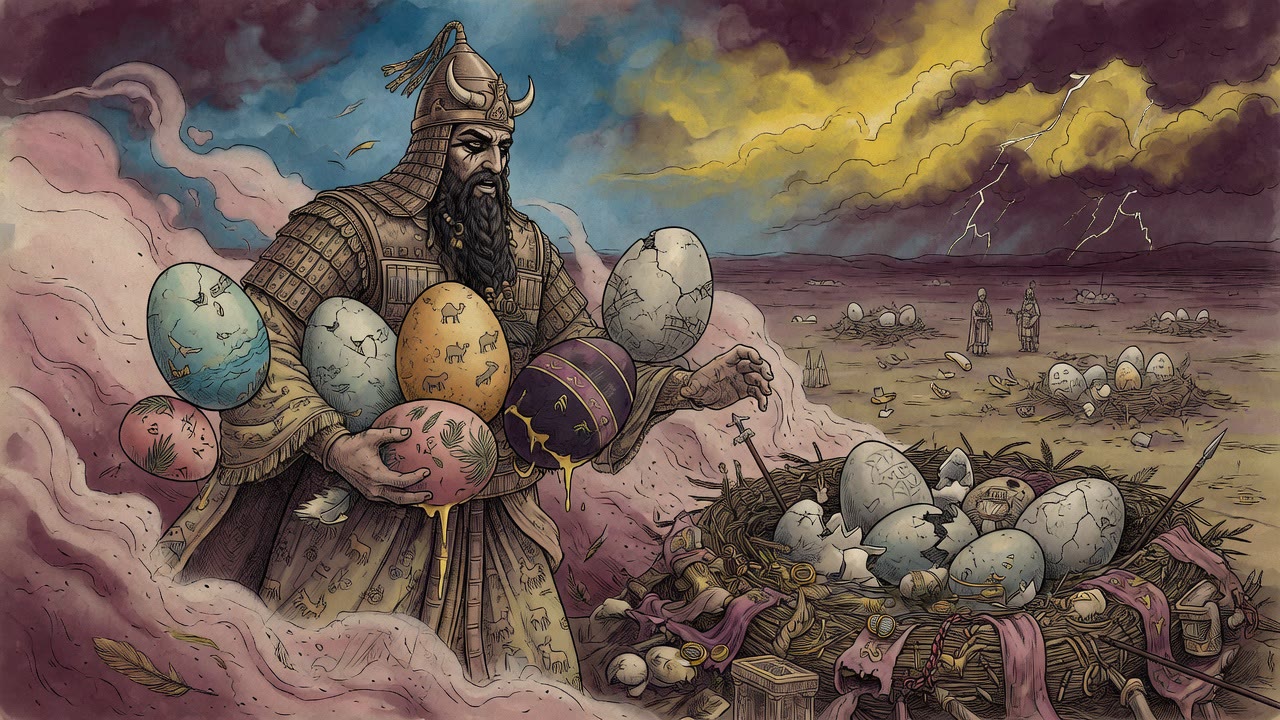
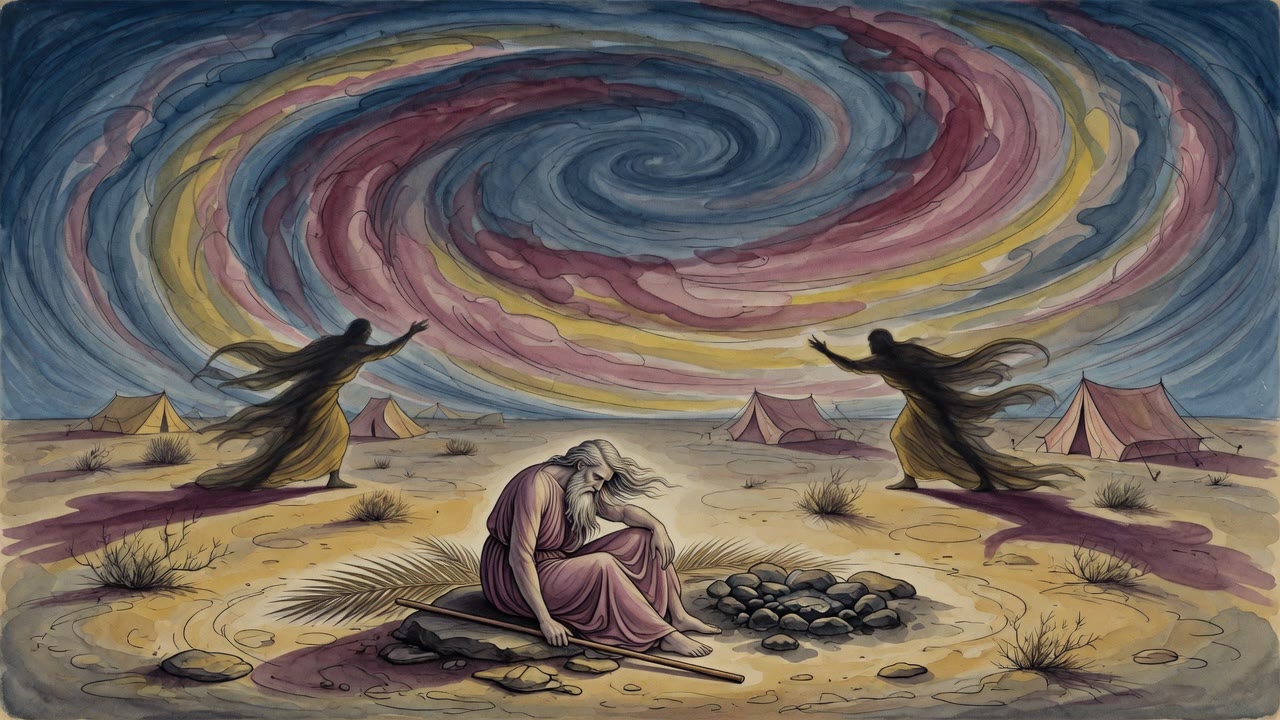
Joel called him "the hidden one," and the sages took the phrase at full weight. "I will remove far from you the hidden one" (Joel 2:20). That hidden one is the yetzer hara, the evil inclination that keeps itself out of sight in the human heart. His face toward the former sea, his hinder part toward the latter: the sages read each direction as a Temple. Face fixed on the First, destroyed by corruption of those who served and by the cutting down of disciples of the wise. Back turned toward the Second, ruined the same slow way.

Armies can burn a building. The hidden one burns the people who should have guarded it. Ezekiel's promise of a heart of flesh in place of stone is the surgery that finally drives him out (Ezekiel 36:26). Until then, the stone is his handiwork, hardened year by year.

The Dove at the Corner of the Wall

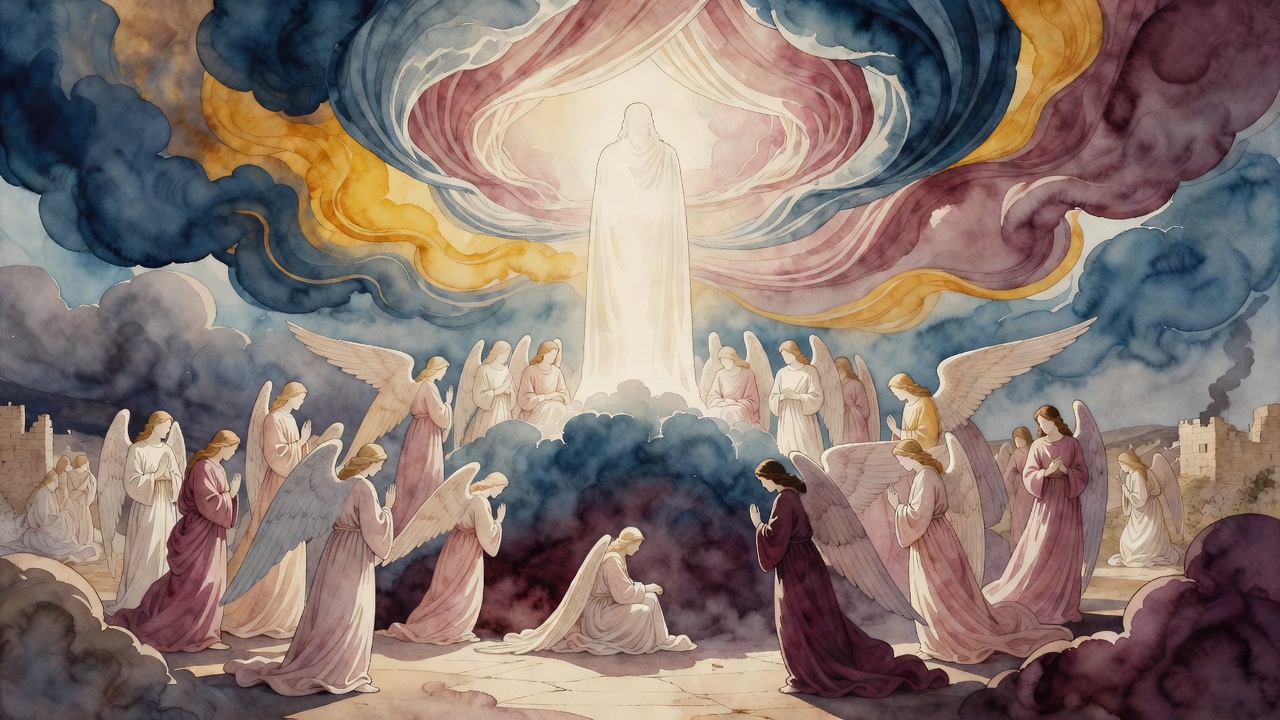
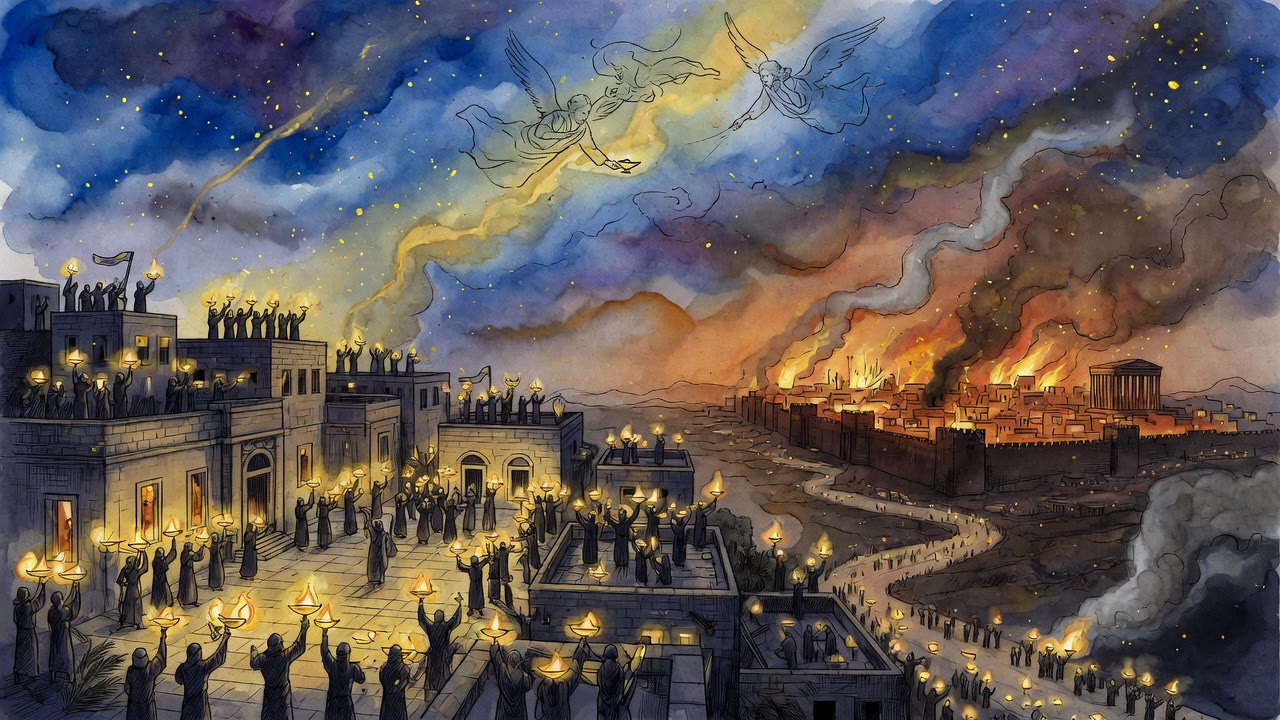
On the Ninth of Av the weeping rises at the remaining Wall. In the dark, tradition says, a white dove appears and stands at the corner, wailing with the people. Sometimes a heavenly voice joins the cooing: "Alas, because of the sins of My sons I destroyed My house, I burned My sanctuary, and scattered My children among the nations." Some hear the dove as the grief of the Presence itself. Some name the Shekhinah (God's presence dwelling among Israel) in three forms: a bride in white, an old woman in black, a dove in mourning.

Rabbi Yose once prayed in a Jerusalem ruin and heard a voice like a dove regretting the destruction and the exile. Later folk memory fixed the bird at the Wall on the fast day. Gold is gone. The ban on Ammon and Moab still stands in the scroll they failed to erase. The yetzer still hides. The dove still sounds like a wound that has not closed.

What Survives a Plunder

The adversary's hand reached delights, vessels, rooms, and still the verse outlived the raid. A slave can steal a writ only if the fire is hot enough and the guard is gone. Israel lost two houses to a hidden tempter working through human choices, and still the assembly's boundaries and the people's mourning remain legible. On the night when enemies chose parchment over gold, they confessed without meaning to: the most dangerous treasure in the Temple was a sentence.

Listen for the dove. Watch which way the crowd runs when a palace burns. The tradition remembers both the loot and the law, both the hidden destroyer and the bird that will not stop grieving what the hidden one helped to ruin.

Gold can be melted and recast. A verse, once loose in the world, is harder to kill. Ammon and Moab understood that better than the looters with sacks of vessels. They aimed at the sentence that named their exclusion and found that fire does not always burn what it is told to burn. The writ of servitude the slave wanted destroyed was, in their case, a ban written by the God of Abraham, who had once rescued Lot from a different fire.

The hidden yetzer needs no army when the heart of stone is already installed. The dove needs no army when the Wall still has a corner to stand on. Between the raid on the scroll and the cooing on the Ninth of Av, the tradition keeps a ledger of what empire can take and what it cannot. It can take buildings. It can take gold. It cannot take the ban it hates without first becoming the kind of power that the ban was written to keep out of the assembly. And even then, the prophets keep writing the sentence again in four mouths that will not close.


← All myths
From the tradition

Sources

3 sources

The texts behind this telling. Some cards carry a translation of the source; others are our own retelling of it, and each card says which. Every card links out to the original.

Eikhah Rabbah 1:38Eikhah Rabbah

Retold in our words. Read the original at the link below.The Sefaria Midrash Rabbah, 2022 · CC-BY

“The adversary extended his hand over all her delights; for she saw the nations entering her Sanctuary, whom You had commanded that they should not enter Your assembly” (Lamentations 1:10).“The adversary extended his hand.” You find that when the enemies entered the Temple, Amonites and Moavites entered with them. Everyone was running to plunder silver and gold, and the Amonites and Moavites were running to plunder the Torah, in order to remove “An Amonite and Moavite shall not enter the assembly of the Lord” (Deuteronomy 23:4). Rabbi Yehuda ben Rabbi Simon [said] in the name of Rabbi Levi ben Perata: This is analogous to a conflagration that was ignited in a king’s palace. Everyone was running to plunder the silver and the gold while a slave ran to plunder his writ of servitude. So too, when the enemies entered the Temple, Amonites and Moavites entered with them. Everyone was running to plunder silver and gold, and the Amonites and Moavites were running to plunder the Torah, in order to remove “An Amonite and Moavite shall not enter the assembly of the Lord.”Abraham bestowed four good things upon Lot. That is what is written: “Abram went, as the Lord had spoken to him, and Lot went with him” (Genesis 12:4). And it says: “Lot, too, who was going with Abram [had sheep, cattle and tents]” (Genesis 13:5). And it says: “He returned all the property, [and also his brother Lot and his property he returned]” (Genesis 14:16). And it says: “It was when God destroyed the cities of the plain [God remembered Abraham, and He sent Lot from the midst of the upheaval]” (Genesis 19:29). Correspondingly, they should have repaid them with goodness;143Lot’s descendants, the nations of Amon and Moav, should have been kind to Abraham’s descendants. however, they performed acts of wickedness. That is what is written: “He sent messengers to Bilam…now, please go and curse for me…. The elders of Moav and the elders of Midian went…” (Numbers 22:5–7). “He gathered to him the children of Amon and Amalek, [and he went and smote Israel]” (Judges 3:13).144The verse is stated regarding Eglon, king of Moav. “It was thereafter, the children of Moav, and the children of Amon, and with them some Amonites, came against Yehoshafat” (II Chronicles 20:1). And this: “The adversary extended his hand...”Correspondingly, their sins are written in four places. “An Amonite and Moavite [shall not enter the assembly of the Lord]…because they did not greet you with bread and with water…” (Deuteronomy 23:4–5). “My people, remember now what Balak king of Moav devised…” (Micah 6:5). “Because they did not greet the children of Israel with bread and with water, and hired Bilam against them, to curse them” (Nehemiah 13:2). “He sent and summoned Bilam son of Beor to curse you” (Joshua 24:9).Correspondingly, four prophets stood and sealed their sentence, and they were: Isaiah, Jeremiah, Ezekiel, and Zephaniah. Isaiah said: “A prophecy of Moav: For on the night that Ar of Moav is plundered, it is ruined; for on the night that Kir of Moav is plundered, it is ruined” (Isaiah 15:1). Jeremiah said: “Behold, days are coming, the utterance of the Lord, and I will sound to Raba of the children of Amon an alarm of war, and it will become a mound of desolation, and its environs will be burned in fire, and Israel will inherit its inheritors, said the Lord” (Jeremiah 49:2). Ezekiel said: “To the children of the east, against the children of Amon, and I will give it as a heritage, so that the children of Amon will not be remembered among the nations. I will administer punishments to Moav, and they will know that I am the Lord” (Ezekiel 25:10–11). Zephaniah said: “Therefore, as I live, the utterance of the Lord of hosts, God of Israel, Moav will be like Sodom and the children of Amon like Gomorrah, a rustling thornbush, a salt mine, a desolate wasteland forever. The remnant of My people will plunder them and the rest of My nation will inherit them” (Zephaniah 2:9).

Full source
Sukkah 52aHebraic Literature (1901)

Retold in our words. Read the original at the link below.Project Gutenberg eBook #14368, Hebraic Literature · PD-US-pre-1929

The prophet Joel called him "the hidden one," and the sages took the phrase at its full weight. "I will remove far from you the hidden one, and I will drive him into a land barren and desolate" (Joel 2:20). That hidden one, the rabbis taught, is the yetzer hara, the evil inclination that keeps itself out of sight in the human heart.

The verse continues: "with his face toward the former sea, and his hinder part toward the latter sea." The sages read each direction as a Temple. The face, looking backward, is fixed on the First Temple, which the tempter destroyed by corrupting those who served in it and cutting down the disciples of the wise who studied there. The back, turned forward, is fixed on the Second Temple, which he destroyed the same way, by the same slow work.

This is why Ezekiel records the divine promise, "I will take away the heart of stone out of your flesh, and I will give you a heart of flesh" (Ezekiel 36:26). The stone is not an ornament. It is the tempter's handiwork, hardened over years of being fed. The heart of flesh is what remains when the hidden one is finally driven off (Sukkah 52a).

The rabbis were blunt about the lesson. Enemies with armies destroy a sanctuary once. The enemy inside destroys it twice, and can destroy it again.

Full source
Berakhot 3aTalmud Bavli, Berakhot

Translation of the source text.William Davidson Edition - Vocalized Aramaic · CC-BY-NC

Rav Yitzchak bar Shmuel said in the name of Rav: The night has three watches, and over each and every watch the Holy One, blessed be He, sits and roars like a lion and says: "Woe, that I destroyed My house and burned My sanctuary and exiled My children among the nations of the world."

It was taught: Rabbi Yose said: Once I was walking along the way and I entered one of the ruins of Jerusalem to pray. Elijah, may he be remembered for good, came and guarded the entrance for me until I finished my prayer.

And he said to me: My son, what sound did you hear in this ruin? And I said to him: I heard a Divine voice cooing like a dove and saying: "Woe, that I destroyed My house and burned My sanctuary and exiled My children among the nations of the world." And he said to me: By your life and by the life of your head, it is not this hour alone that says so, but on each and every day, three times it says so.

Full source